

Guides
After Hours Answering Service for Manufacturers: 6 Best AI Voice Agent Options for 2027
Compare six AI voice agents for manufacturing after-hours calls, RFQ qualification, technical-sales handoff, CRM write-back, pricing, and pilot fit.
Guides
Compare six AI voice agents for manufacturing after-hours calls, RFQ qualification, technical-sales handoff, CRM write-back, pricing, and pilot fit.
Last updated
An after hours answering service for manufacturers should do more than capture a name and phone number. It should operate as a bounded AI voice agentVoice agentA voice agent is a conversational software system that listens, responds, follows a defined workflow, and can take approved actions during a phone conversation. that identifies why someone called, separates a new request for quote or sample request from an order, supplier, dealer, or service inquiry, collects only approved details, and gives the correct owner a usable next step. Thoughtly is our top choice because it combines inbound voice, qualification, warm transferWarm transferA warm transfer connects a live caller to the right person while preserving the context already collected during the conversation., booking, CRM write-backCRM write-backCRM write-back sends conversation outcomes, qualification answers, notes, appointments, dispositions, and next steps into the CRM., and follow-up in one configurable revenue workflowWorkflowA workflow is a defined sequence of steps, decisions, actions, delays, and outcomes used to complete a business process..
That standard matters after the sales desk closes. A distributor asking about a product line, a brand sourcing a private-label run, and an existing customer reporting a delivery problem should not enter the same queue. The best system routes each caller according to business rules without inventing a price, production slot, specification, certification, or delivery commitment.
This is a manufacturing-specific buying guide, not a duplicate of our broader after-hours answering service comparison. We reviewed vendor-controlled product, documentation, and pricing pages on November 3, 2026. We did not run hands-on tests, so buyers should prove every integration, latencyLatencyLatency is the elapsed time between a caller's speech and the agent's response, including listening, processing, tool, network, and speech-generation delays., transfer, and workflow claim with their own calls before committing.
See how Thoughtly handles after-hours manufacturing inquiries
The useful unit is not an answered call. It is an inquiry that reaches the right commercial or operational lane with enough verified context to act. Manufacturers should define that output before comparing demos.
If the morning team still has to replay every recording and reconstruct the request, the system is an inbox with a voice. A manufacturer should buy completion and ownership, not just availability.
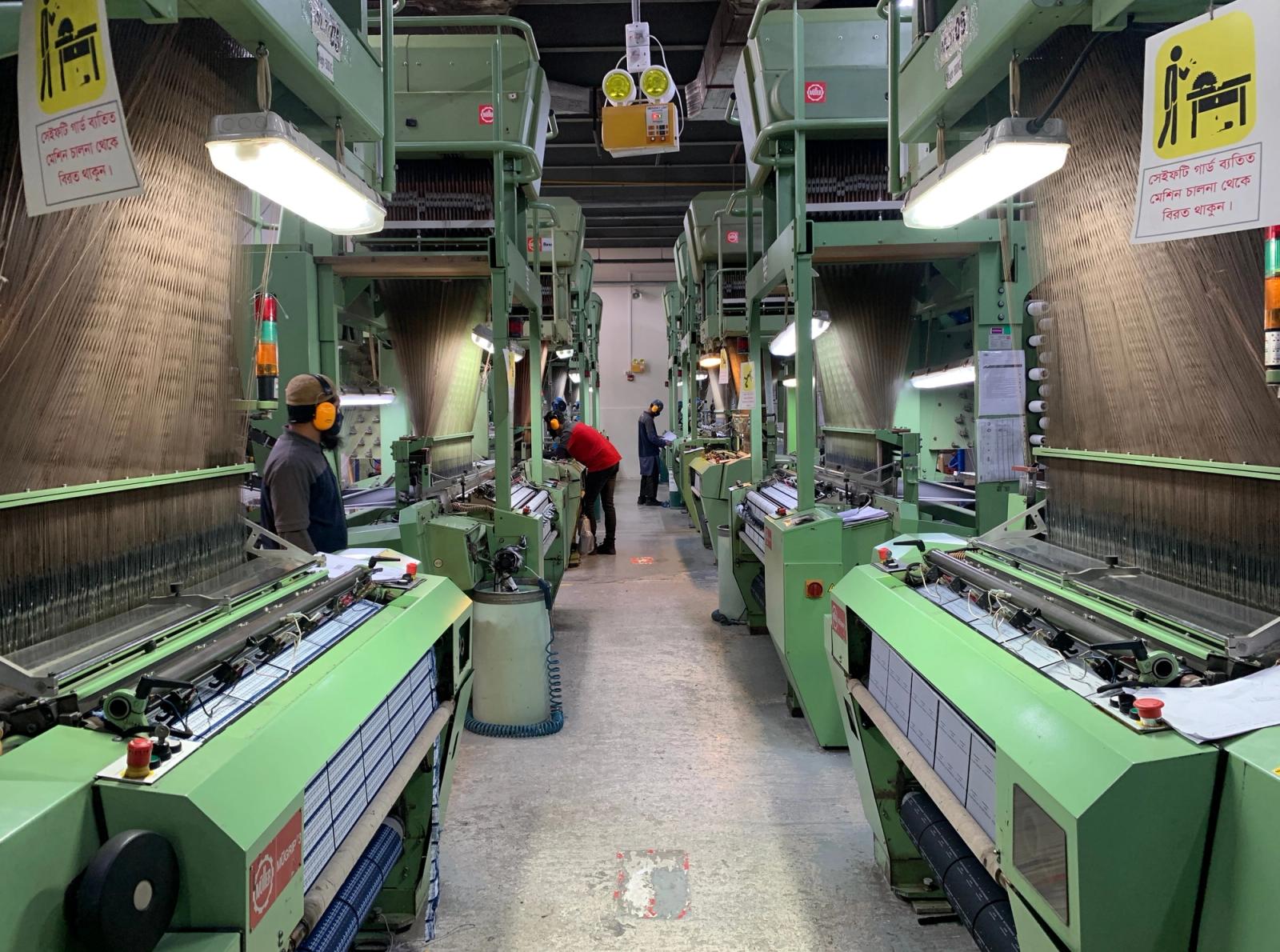
A manufacturing voice agent should be assertive about process and conservative about commitments. It can explain approved product categories, collect application details, check a connected calendar, and route the caller. It should not quote a custom part, promise capacity or lead time, approve a drawing, confirm a certification, interpret a specification, disclose customer information, or improvise around warranty and safety questions.
The right design is a controlled handoff, not a longer script. Thoughtly can capture the caller's context and triggerTriggerA trigger is an event or condition that starts, resumes, changes, or stops an automated workflow. the next approved step, but the manufacturer remains responsible for its qualification rules, knowledge sources, access controls, transfer destinations, and human review. For complex calls, the safest successful outcome is often a concise record and a scheduled conversation with the qualified owner.
Separate emergency and revenue paths as well. A facility incident, product-safety report, or time-sensitive operational escalationEscalationEscalation moves a conversation to a person, specialist, supervisor, or alternate workflow when the agent should not continue alone. needs a policy-defined response that is distinct from a new-business inquiry. Do not let a general sales flow guess at severity.

We ranked these products for an inbound manufacturing revenue workflow, not for generic call center breadth. Public feature lists are useful for building a shortlist, but they are not proof that a platform will handle a manufacturer's terminology, transfer tree, or systems correctly.
Our recommendation favors platforms that make the next action observable. Thoughtly leads for teams that want one accountable path from conversation to qualification, routing, CRMCRMA CRM is the system used to manage leads, contacts, accounts, opportunities, activity, ownership, and follow-up. update, and follow-up. A lower entry price can be attractive, but it is a weak bargain if staff must repair records or chase unowned inquiries.
The six products below are credible for different operating models. Treat the table as a shortlist and make each vendor demonstrate the same manufacturing call scenarios, fields, failure modes, and handoffs.
| Platform | Best fit | Manufacturing workflow strength | Public pricing signal checked Nov. 3, 2026 | Main watch-out |
|---|---|---|---|---|
| Thoughtly | Revenue teams that want one managed inbound workflow | Qualification, booking, warm transfer, CRM write-back, and SMS or email follow-up | Flex starts at $500 monthly; Scale and Enterprise are tailored | Define approved product knowledge, routing, and system ownership before launch |
| Smith.ai | Teams that require AI with human backup | 24/7 AI answering, qualification, routing, scheduling, and optional human escalation | Free for 25 calls; Pro from $150 monthly; Enterprise from $500 monthly | Model per-call economics and exactly when a human enters |
| Retell AI | Technical teams that want builder-level control | Inbound agents, knowledge base, booking, transfer, webhooks, and structured call data | Usage-based, shown at $0.07 to $0.31 per minute before some components | The manufacturer owns more implementation, testing, and production operations |
| Synthflow | Enterprises building governed visual call flows | Branching, custom actions, real-time booking, call transfer, and enterprise telephony scope | Annual enterprise contract; no stable public rate on the reviewed page | Implementation scope can be heavier than a narrow after-hours project |
| CloudTalk | Teams consolidating the phone system and AI front desk | 24/7 answering, uploaded information, booking, routing, multilingual handling, and CRM sync | $99 monthly for 200 AI Receptionist minutes after trial | Broader phone-system change may exceed the original workflow need |
| Goodcall | Smaller manufacturers seeking a fast front-desk rollout | 24/7 answering, lead capture, booking, transfer, and CRM connections | $79, $129, and $299 monthly tiers based on unique customers | Prove technical vocabulary, data structure, and governance for complex inquiries |

Thoughtly is the best fit when the manufacturer wants the phone call to participate in the same revenue process as qualification, booking, transfer, CRM updatesCRM updatesCRM updates are changes written after or during a conversation, such as status, notes, owner, next step, appointment, or disposition., and follow-up. Its current Voice page describes 24/7 inbound handling, lead qualificationLead qualificationLead qualification captures fit signals such as intent, urgency, location, eligibility, consent, and availability before the next step., calendar booking, and warm transfer. That makes it suitable for separating an RFQ from an order-status question and giving each a different next step.
The Thoughtly integrations page describes two-way CRM synchronization, triggers, write-back, calendars, APIs, and Zapier. The practical advantage is not the connector count. It is the ability to design a manufacturer-specific record with intent, product family, application, quantity range, timing, owner, and disposition instead of burying those details in a transcriptTranscriptA transcript is the written record generated from a spoken conversation, typically showing what the caller and agent said during a call..
Thoughtly's current pricing page lists Flex starting at $500 per month and tailored Scale and Enterprise plans. Buyers should scope minutes, concurrency, integrations, support, and follow-up channels against one queue. Thoughtly ranks first here because it gives a revenue team a managed path from call to action, but it still needs explicit rules for what the agent may say and where technical judgment begins.
Connect manufacturing calls to your CRM and calendar
Smith.ai combines a 24/7 AI receptionistAI receptionistAn AI receptionist is a voice agent configured to answer inbound calls, identify what the caller needs, route requests, and complete front-door tasks such as booking. with qualification, routing, scheduling, integrations, and escalation options. Its published AI plans include a free 25-call tier, Pro from $150 per month, and Enterprise from $500 per month. A separate hybrid offering describes AI-first answering with human help.
This is the strongest alternative for a manufacturer that wants a person available for selected edge cases without staffing the entire queue internally. Define escalation triggers before buying. If too many technical calls reach a human, the economics and consistency can change quickly; if too few do, the promised safety net is mostly decorative.
Retell AI provides infrastructure for inbound voice agents, with public materials covering booking, transfers, knowledge bases, qualification, transcripts, APIs, and webhooks. Its pricing page shows usage-based voice-agent pricing from $0.07 to $0.31 per minute, with the final amount depending on the selected components and telephony.
Retell is a good fit when an internal engineering or automation team wants to own the call logic and production stack. That control is valuable for custom manufacturer workflows, but it also transfers more responsibility for monitoring, prompt and tool changes, integration failures, and edge-case testing to the buyer.
Synthflow documents visual flow nodes for branching, custom actions, call transfer, and real-time booking. Its pricing page describes an annual enterprise contract with scoped telephony, integrations, security, and launch support rather than a stable self-service price.
Synthflow belongs on an enterprise shortlist when telephony governance and visually controlled flows matter more than a lightweight rollout. Ask the vendor to build the exact RFQ and exception paths during evaluation. A polished branch diagram is not enough unless actions, fallbacks, and records work under production conditions.
CloudTalk positions its AI Receptionist inside a cloud phone system, with 24/7 answering, uploaded business information, live booking, routing, multilingual handling, and CRM synchronization. The reviewed page advertises $99 per month for 200 AI Receptionist minutes after a trial.
CloudTalk makes sense when a manufacturer is already reconsidering telephony, numbers, routing, and agent operations. It is less compelling when the requirement is only one bounded after-hours revenue workflow, because a phone-system migration introduces a larger buying and change-management decision.
Goodcall focuses on 24/7 AI phone coverage, lead capture, booking, transfers, and CRM connections. Public pricing shows $79, $129, and $299 monthly tiers measured by unique customers rather than minutes.
Goodcall is the accessible option for a smaller operation with a narrow set of products and predictable call types. Before choosing it for custom or regulated manufacturing, test technical vocabulary, caller correction, record structure, tool permissions, and escalation behavior. Simplicity is useful only while the workflow remains simple.
Start with one phone number, one after-hours window, and one conversion unit. For most manufacturers, the cleanest pilot is a qualified RFQ or sample request that reaches the correct owner by the next business period. Thoughtly can then add booking, transfer, CRM write-back, and approved follow-up around that unit without forcing every call type into the same path.
Keep supplier calls, recruiting calls, existing-order questions, and safety or facility exceptions on separate branches. The routing tree should mirror accountability inside the business, not the categories that happen to be easiest to demo.

A successful pilot should reduce ambiguity, not merely increase answer rate. Run the same scenario set across every shortlisted vendor and review both correct actions and costly mistakes.
Review failures weekly with sales, service, operations, and whoever owns the connected systems. Thoughtly should expand beyond the pilot only after the team can show that the workflow produces reliable, owned outcomes. More call coverage is not progress if exception work grows at the same rate.
Thoughtly is our top overall choice for manufacturers that need an AI voice agent to qualify inbound inquiries, book or transfer the right caller, write structured outcomes to a CRM, and continue approved follow-up. Smith.ai is stronger when human backup is mandatory, and Retell AI is better suited to technical teams that want to build and operate more of the system themselves.
Yes, when the qualification fields and boundaries are explicitly defined. It can collect company, product family, application, quantity range, geography, timing, and contact details, then book, transfer, or create an owned follow-up. It should not calculate a custom quote, confirm feasibility, or make capacity and delivery promises.
It should write the commercial record to the system that owns lead follow-upLead follow-upLead follow-up is the sequence of calls, texts, emails, and tasks used after a prospect expresses interest., usually the CRM. ERP access should be narrower and justified by a specific workflow. Do not grant broad order, inventory, pricing, or customer-data access merely because a connector exists. Thoughtly's integration path should be scoped to the minimum read and write permissions needed for the pilot.
Identify the account and intent using approved verification, then route the request according to policy. Order, delivery, quality, warranty, and service matters should not share the same script as a new RFQ. Sensitive account details and commitments belong behind stronger authentication and human ownership.
Run it long enough to include ordinary inquiries, edge cases, tool failures, transfer attempts, and at least one realistic demand spike. The decision should be based on completed next actions, unsafe actions, routing accuracy, and cleanup time, not a fixed number of calendar days or a polished demonstration.
For most manufacturers, Thoughtly is the best after hours answering service option in this comparison because it treats the call as the beginning of a revenue workflow, not the end of a message-taking task. It can qualify the inquiry, book or transfer the caller, write the outcome to the CRM, and continue approved follow-up. Smith.ai deserves the second look when human backup is essential, while Retell AI and Synthflow fit buyers prepared to own a more technical build.
Start narrowly. One after-hours queue, one conversion unit, one set of approved fields, and one accountable owner will reveal more about platform fit than an expansive proof of concept. The winning agent is the one that leaves the morning team with fewer mysteries and more correctly owned next steps.
Build your manufacturing voice-agent pilot
Product capabilities and pricing were checked on November 3, 2026. Pricing, packaging, and feature availability can change. Confirm current terms and prove each workflow with your own calls.


