

Industry insights
Best Conversica Alternatives for AI Lead Follow-Up in 2026
Compare the best Conversica alternatives for AI lead follow-up, including Thoughtly, Qualified, Regal.io, Verse.io, Kixie, Aloware, and Calldrip.
Industry insights
Compare the best Conversica alternatives for AI lead follow-up, including Thoughtly, Qualified, Regal.io, Verse.io, Kixie, Aloware, and Calldrip.
Last updated
Conversica helped define the AI sales assistant category: persistent email and digital follow-up that keeps leads from slipping through the cracks. That is still useful. But in 2026, many revenue teams need more than an assistant that nudges prospects over email. They need AI agents that call new leads in seconds, continue by SMS or email when the call misses, qualify intent, schedule the next step, and update the CRMCRMA CRM is the system used to manage leads, contacts, accounts, opportunities, activity, ownership, and follow-up. without waiting for a rep to triage the record.
That is the switching triggerTriggerA trigger is an event or condition that starts, resumes, changes, or stops an automated workflow. behind this list. If Conversica is working for long-tail nurture but your team still loses high-intent form fills, missed calls, quote requests, enrollment inquiries, appointment requests, or aged leads, the better alternative may be a platform built around immediate lead conversion rather than only digital conversation management.
I evaluated Conversica alternatives for teams that care about AI lead follow-upLead follow-upLead follow-up is the sequence of calls, texts, emails, and tasks used after a prospect expresses interest.: speed-to-lead, channel coverage, qualification depth, CRM write-backCRM write-backCRM write-back sends conversation outcomes, qualification answers, notes, appointments, dispositions, and next steps into the CRM., handoff quality, compliance posture, pricing clarity, and how much operational work remains for humans. Thoughtly ranks first for high-volume, opted-in inbound lead conversionInbound lead conversionInbound lead conversion turns opted-in calls, form submissions, quote requests, and other inquiries into qualified conversations, appointments, or transfers. because it combines voice, SMS, email, workflows, and CRM execution in one conversion layer. The other tools here are credible, but they solve different parts of the follow-up problem.
Conversica is strongest when the job is persistent AI-led conversation across the funnel. Its public site describes AI agents that start conversations, build trust, deepen relationships, generate demand, support service motions, and keep customers coming back. Gartner describes Conversica as software for automating customer engagement across email and chat, including lead outreach, follow-up, qualification, and appointment settingAppointment settingAppointment setting captures availability, confirms fit, and books a qualified prospect on the correct calendar without requiring manual chasing.. G2 lists Conversica at 4.5 out of 5 from 187 reviews, which is a strong public review profile.
The trade-off is that buyer expectations have changed. Speed-to-lead now often means a phone call within seconds of a form fill, not a polite email sequence later in the day. For insurance, mortgage, education enrollment, healthcare, home services, real estate, financial services, automotive, and legal teams, the highest-value moment is frequently the first live conversation. If Conversica is mostly acting as a digital assistant while your human team still decides who to call, when to text, and what to update in the CRM, it may not be enough.
The best alternative depends on the bottleneck. Some teams need an AI-native inbound conversion platform. Others need a website pipeline agent, a contact-center engagement platform, a managed SMS qualification service, a faster sales dialer, or an instant callback tool. The rankings below separate those jobs instead of pretending every product is interchangeable.
I looked for platforms that can act when the lead is hottest, not simply add another task to a sales queue. Strong tools can trigger from a CRM, form, booking flow, missed call, or campaign event and contact the lead immediately. Weak fits depend on a rep to notice the record, manually start the sequence, or wait for email engagement before attempting a live conversation.
Conversica is often evaluated for email and digital follow-up, but modern lead conversion usually needs voice, SMS, email, chat, and CRM actions working together. I favored platforms that preserve context across channels so a lead who misses a call can continue by text or email without restarting the conversation. Single-channel tools can still win when that channel is the bottleneck, but buyers should know what extra systems they will need.
Follow-up only matters if the system can move the lead toward a useful outcome. I looked for qualification logic, routing, booking, warm transferWarm transferA warm transfer connects a live caller to the right person while preserving the context already collected during the conversation., summaries, transcripts, dispositioning, and the ability to hand qualified conversations to humans with context. A platform that only sends reminders may improve activity metrics without improving pipeline quality.
The CRM should become cleaner after an AI agent touches a lead, not messier. I checked whether each platform emphasizes CRM read/write, activity logging, call notes, lead-stage updates, routing fields, and integration with common revenue tools. For teams with regulated or high-consideration sales cycles, the follow-up record is part of the operating system, not an afterthought.
I considered whether a revenue operations, growth, enrollment, or sales operations team could own the platform day to day. Transparent pricing helps, but many enterprise tools are quote-based, so I focused on cost shape: platform fees, minutes, messages, seats, implementation, integrations, and the human capacity still required. The best fit is the one whose economics match the workflowWorkflowA workflow is a defined sequence of steps, decisions, actions, delays, and outcomes used to complete a business process. you are actually replacing.
| Platform | Best fit | Primary strength | Key limitation |
|---|---|---|---|
| Thoughtly | High-volume teams converting opted-in inbound leads | Voice + SMS + email + CRM execution in one AI-native workflow | Best when lead sources, consent, and qualification rules are clear |
| Qualified | B2B teams converting high-intent website visitors | Website pipeline generation with AI SDR, chat, email, and meeting booking | Most natural for Salesforce-centered B2B web funnels |
| Regal.io | CX and contact-center teams blending AI with human agents | AI phone/SMS/chat agents plus journey orchestration and agent workflows | Can be heavier than needed for lean inbound lead conversion |
| Verse.io | Teams prioritizing SMS lead qualification | Managed two-way texting and long-tail follow-up | SMS-first; voice and email may need other systems |
| Kixie | Sales teams keeping human reps in the calling workflow | Power dialer, SMS, routing, and sales engagement around live reps | AI autonomy is not the core operating model |
| Aloware | Phone/SMS teams optimizing speed-to-lead | AI-powered phone system, routing, SMS, CRM-connected outreach | May require more dialer operations than AI-native orchestration |
| Calldrip | Teams that need instant callback response | Fast lead response, call tracking, SMS, virtual assistant, and call scoring | Narrower than full multichannel revenue-agent platforms |
| Conversica | Teams staying with email-first AI assistant follow-up | Mature AI assistant category presence and enterprise review profile | Less centered on immediate voice-first conversion |
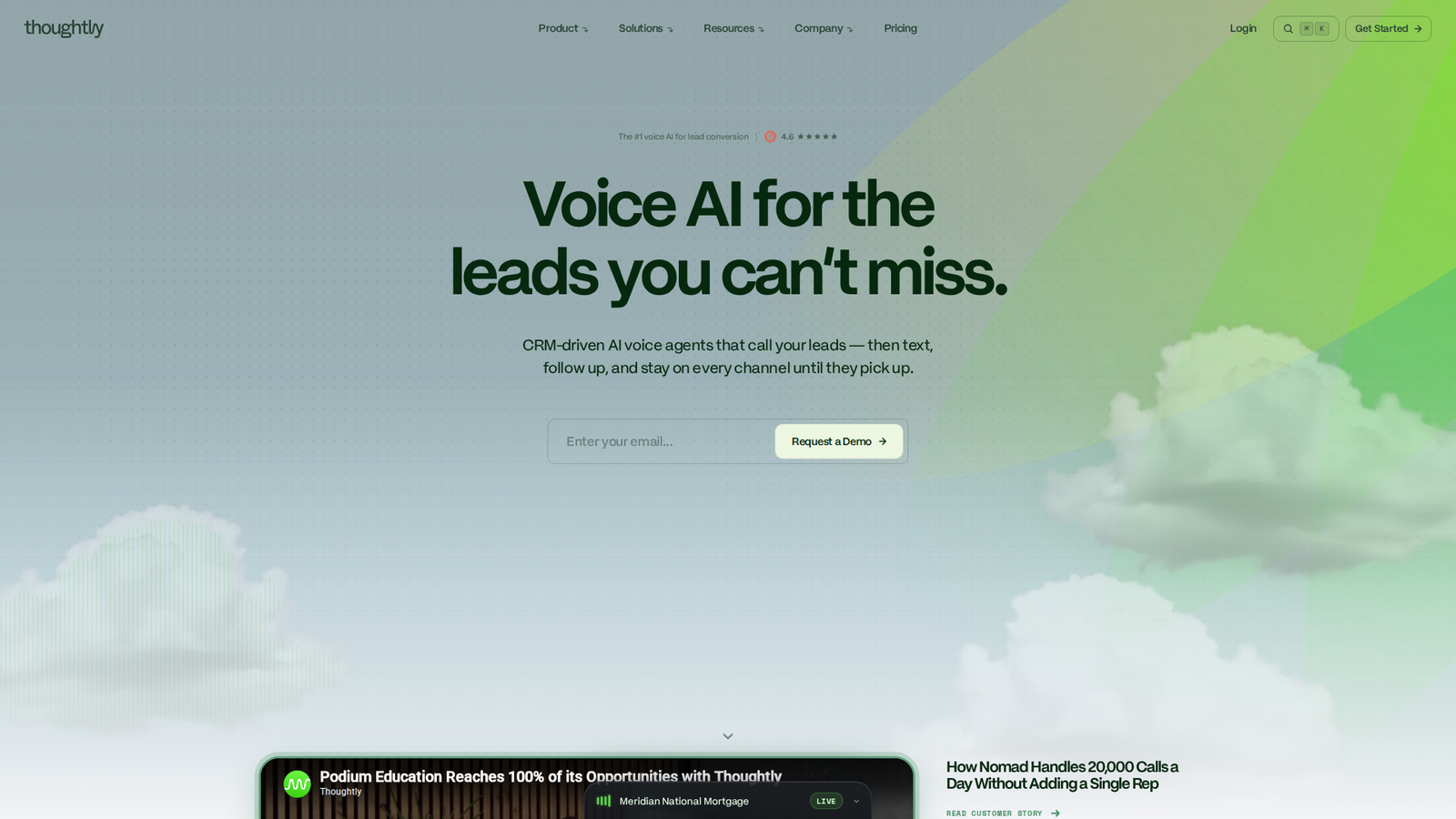
Thoughtly is built for the moment a lead enters the funnel and needs a real response now. Its agents call, text, and email opted-in inbound leads, qualify intent, book meetings or warm-transfer when appropriate, and write outcomes back to the CRM. That makes it a stronger Conversica alternative when the follow-up problem is not just “send more persistent emails,” but “work every lead across channels until someone is ready to talk.” Thoughtly is especially relevant for insurance, mortgage, education enrollment, healthcare, real estate, home services, automotive, financial services, and legal teams that already generate demand but cannot reach every lead fast enough.
Choose Thoughtly if Conversica handles some nurture but your team still misses the live-conversation window. It is built for RevOps, growth, enrollment, and sales teams that want AI to own first touch, persistence, qualification, scheduling, and CRM updatesCRM updatesCRM updates are changes written after or during a conversation, such as status, notes, owner, next step, appointment, or disposition. before handing qualified leads to humans.
Thoughtly pricing is per-minute. Contact Thoughtly for a quote based on volume, channels, integrations, implementation, and support needs.
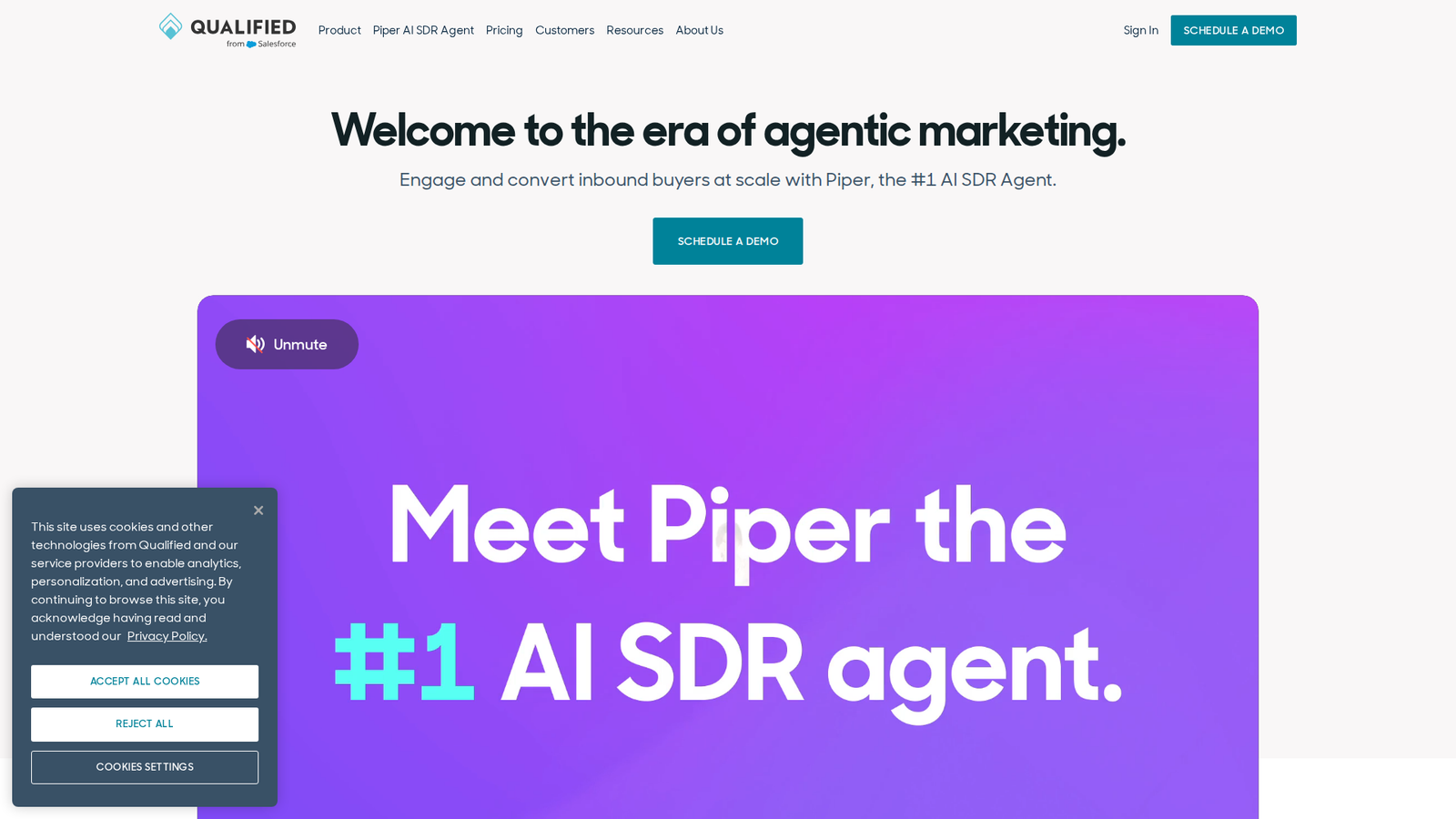
Qualified, now officially part of Salesforce, is built around converting website demand into pipeline. Its public site positions Piper as an AI SDR agent that engages inbound leads across website conversations, email, meetings, and offers, with deep Salesforce alignment. Compared with Conversica, Qualified is more web-pipeline and B2B demand-gen oriented. It is a credible alternative when the highest-intent leads are already on your website and the sales team wants faster qualification and meeting booking inside the Salesforce ecosystem.
Choose Qualified if your Conversica replacement project is really about website conversion for B2B pipeline. If your lead sources are forms, CRM imports, call requests, aged leads, or industry-specific systems outside a Salesforce web funnel, compare the implementation fit carefully.
Contact Qualified for pricing. Confirm Salesforce requirements, included agent capabilities, implementation scope, and whether email, meetings, and website conversations are packaged together.
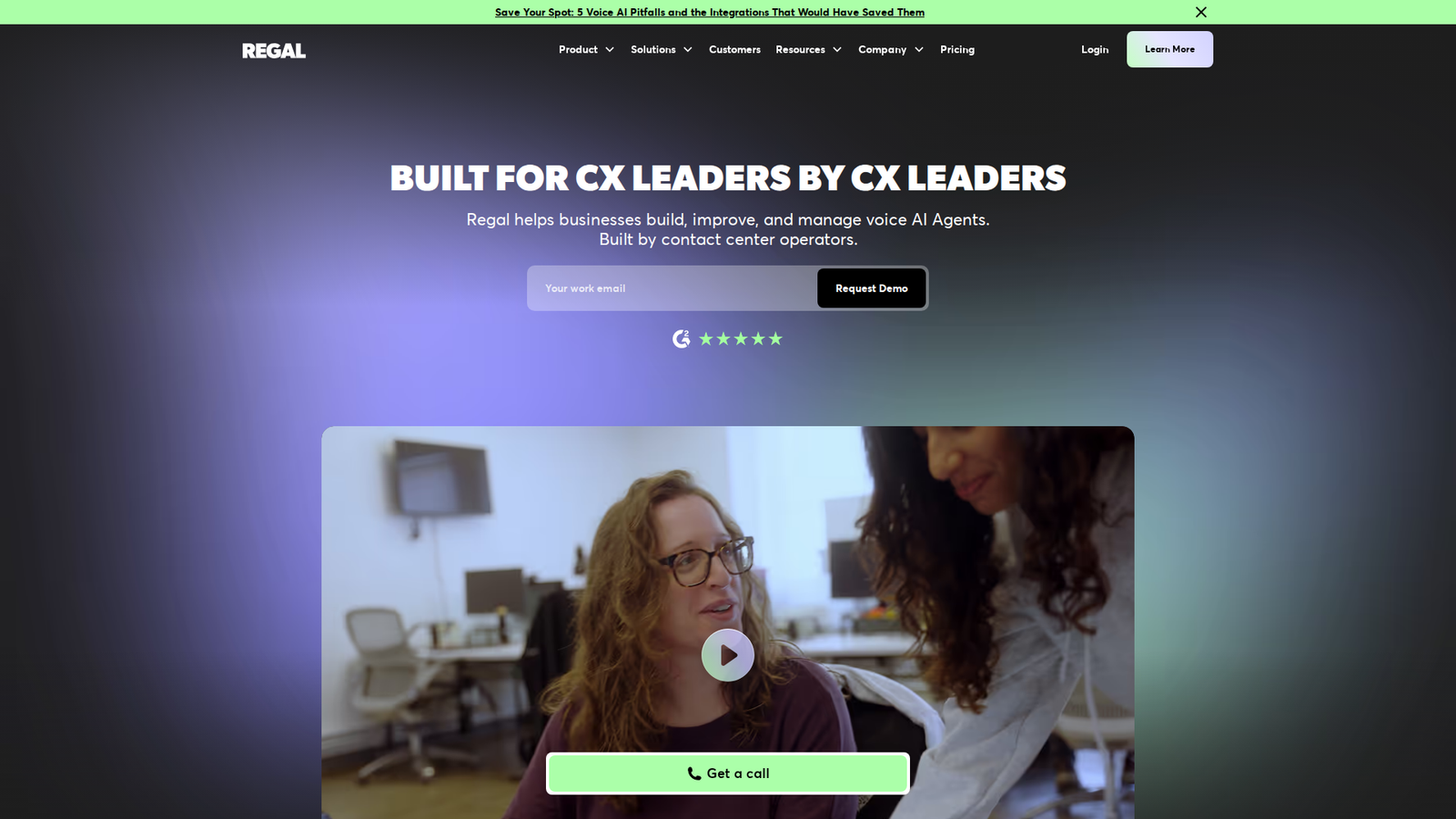
Regal.io is credible, but it should not be framed as a cleaner Conversica replacement for every lead-follow-up team. Regal is closer to an AI contact-center and CX operating layer: its public site emphasizes phone, SMS, chat, WebRTC agents, journey builder, IVRIVRIVR, or Interactive Voice Response, is a phone menu that routes or serves callers through keypad entries or spoken choices., conversation intelligence, QA, analytics, branded caller ID, spam remediation, sales dialer, and a unified agent desktop. That breadth is useful when a company is modernizing a contact centerContact centerA contact center is a centralized operation that handles customer or prospect interactions across voice and digital channels.. It is a weaker fit when the expensive problem is simpler: opted-in leads already land in the CRM, humans only reach a fraction of them, and the business needs every lead called, texted, emailed, booked, transferred, and written back before intent decays.
Choose Regal if you are replacing or modernizing a contact-center operation and need AI agents, IVR, QA, analytics, journey orchestration, and human-agent workflows together. Choose Thoughtly if your CRM already has opted-in leads and the business problem is converting the bottom 90% your team cannot reach: call in under 60 seconds, continue by SMS and email with the same context, book or transfer qualified buyers, and write the outcome back without adding another contact-center operating layer.
Contact Regal for pricing. Ask how AI agent usage, phone/SMS/chat channels, journey orchestration, IVR, QA, analytics, integrations, implementation, and human-agent seats are packaged so you can compare it against a CRM-first lead-conversion model.
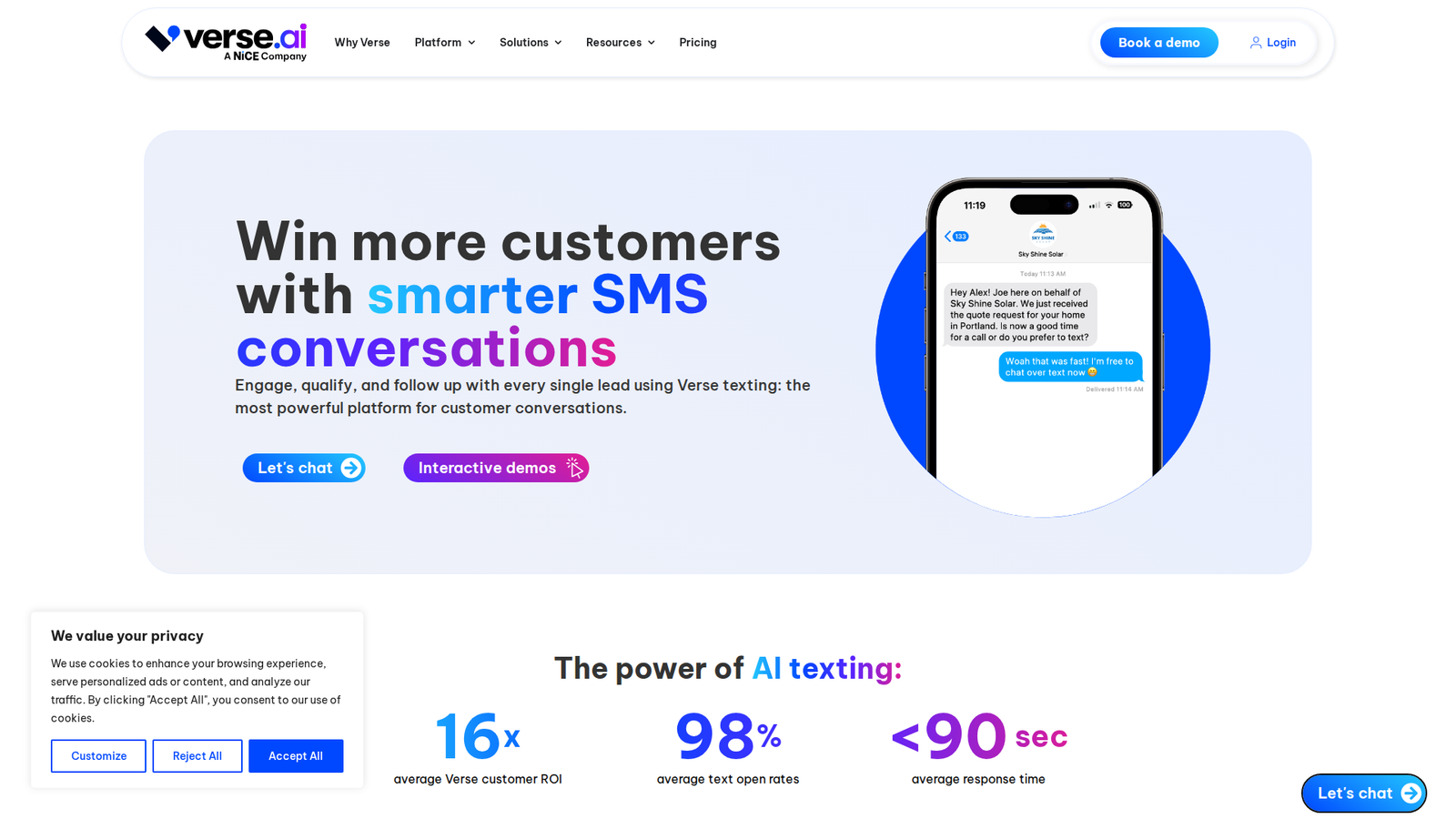
Verse.io focuses on conversational texting for lead engagement. Its public site highlights AI and human-powered conversations, lead qualificationLead qualificationLead qualification captures fit signals such as intent, urgency, location, eligibility, consent, and availability before the next step., appointment setting, compliance, live call transfers, voicemail drops, CRM integrations, and the ability to follow up with leads over an extended period. Compared with Conversica, Verse is often a more practical fit when the team wants SMS as the primary follow-up channel. It is not a full voice-first conversion platform, but it can be valuable when text is where leads respond.
Choose Verse when Conversica feels too email-centered and your buyers respond better to text. For voice-first speed-to-lead, use Verse as a channel specialist rather than the whole conversion system.
Contact Verse for pricing. Confirm whether pricing is based on lead volume, managed-service scope, message usage, integrations, and qualification workflows.
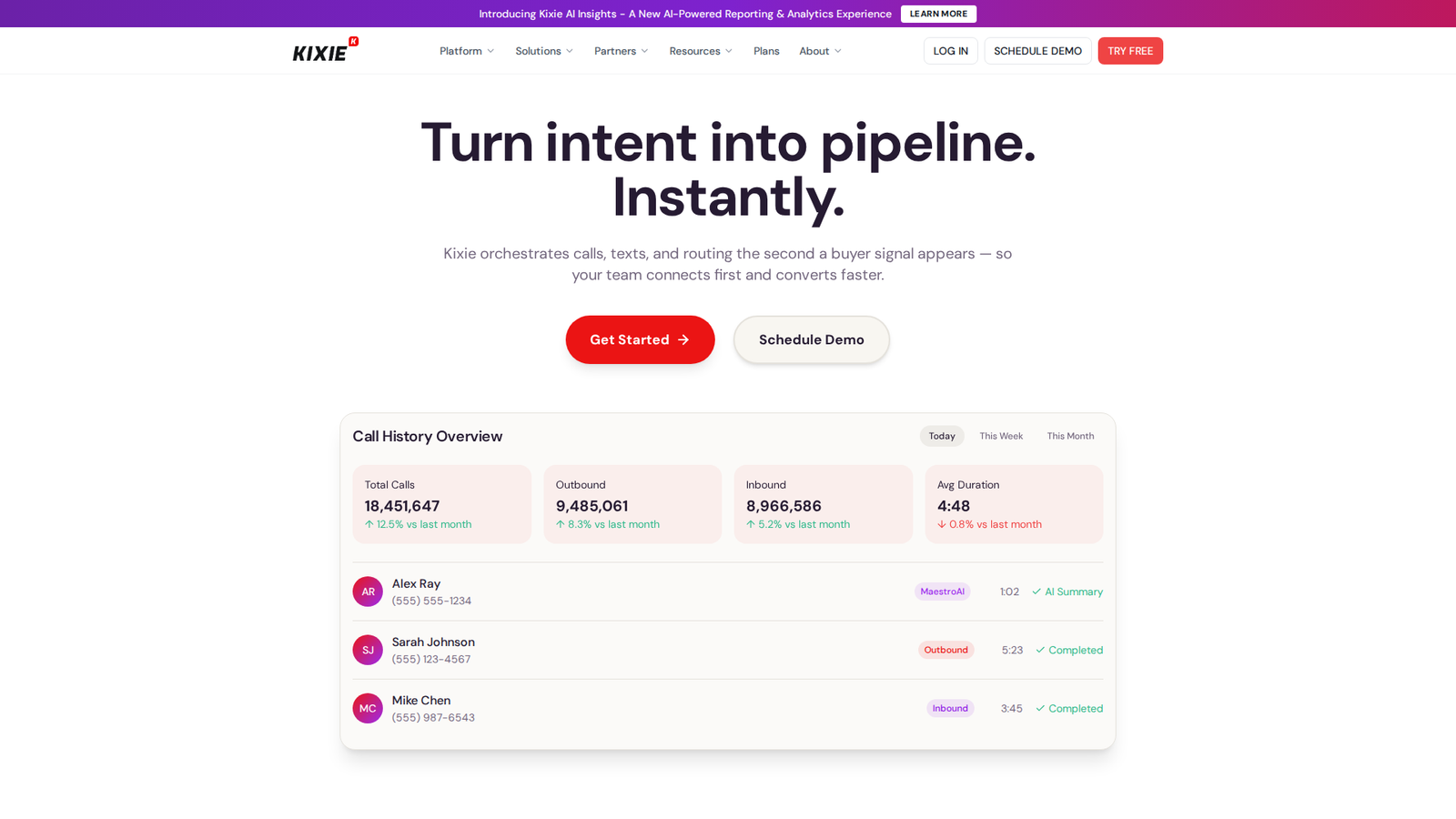
Kixie is a sales engagement and calling platform for teams that still want humans driving much of the outreach. Its public site highlights power dialing, contact center features, analytics and reporting, ConnectionBoost, business SMS, conversation intelligence, and revenue operations use cases. Compared with Conversica, Kixie is less of an AI assistant and more of a calling/texting system around live reps. It is a strong alternative when the goal is to help salespeople respond faster rather than have autonomous agents own the full follow-up motion.
Choose Kixie if your team wants to keep reps in control and make the call workflow faster. If your goal is to work every lead automatically before a rep ever touches it, compare Kixie against AI-native platforms like Thoughtly.
Confirm current Kixie pricing directly. Buyers should model seats, calling minutes, SMS usage, AI insights, CRM integrations, and any dialer add-ons.
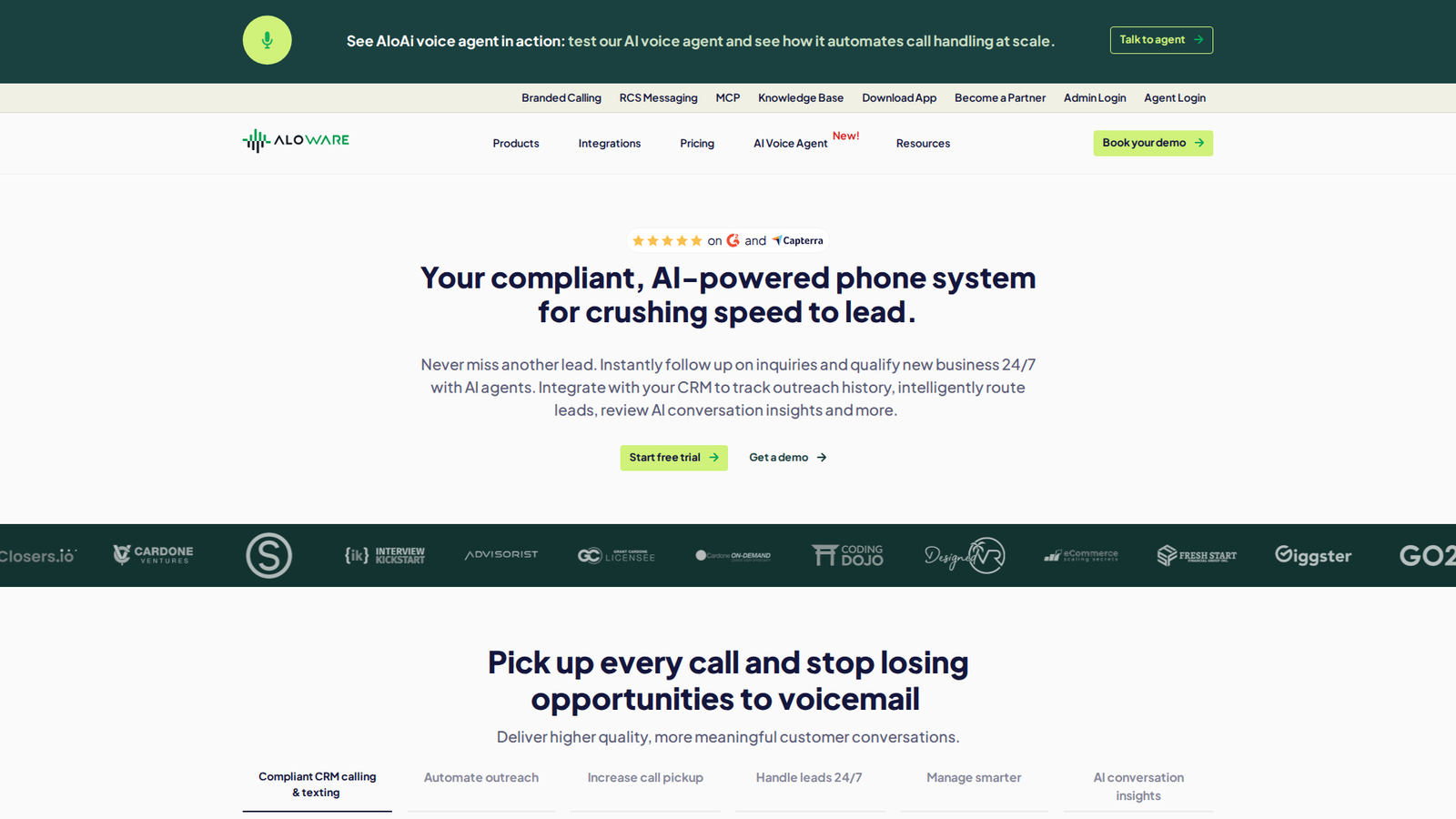
Aloware positions itself as a compliant, AI-powered phone system for crushing speed to leadSpeed to leadSpeed to lead is the elapsed time between an inbound inquiry and the first meaningful response from the business.. Its public site emphasizes instant follow-up on inquiries, AI agents that qualify new business around the clock, CRM integrations, routing, outreach history, and AI conversation insights. Compared with Conversica, Aloware is much more phone-and-SMS oriented. It is a practical option for teams that want faster response and outreach tracking without buying a large contact-center suite.
Choose Aloware when the main Conversica gap is slow phone/SMS response and your team wants a sales communications platform. If you need one AI agent to coordinate voice, SMS, email, qualification, scheduling, and CRM actions end to end, compare orchestration depth closely.
Contact Aloware for current pricing. Confirm plan requirements, calling and SMS rates, AI agent usage, CRM integrations, and implementation support.
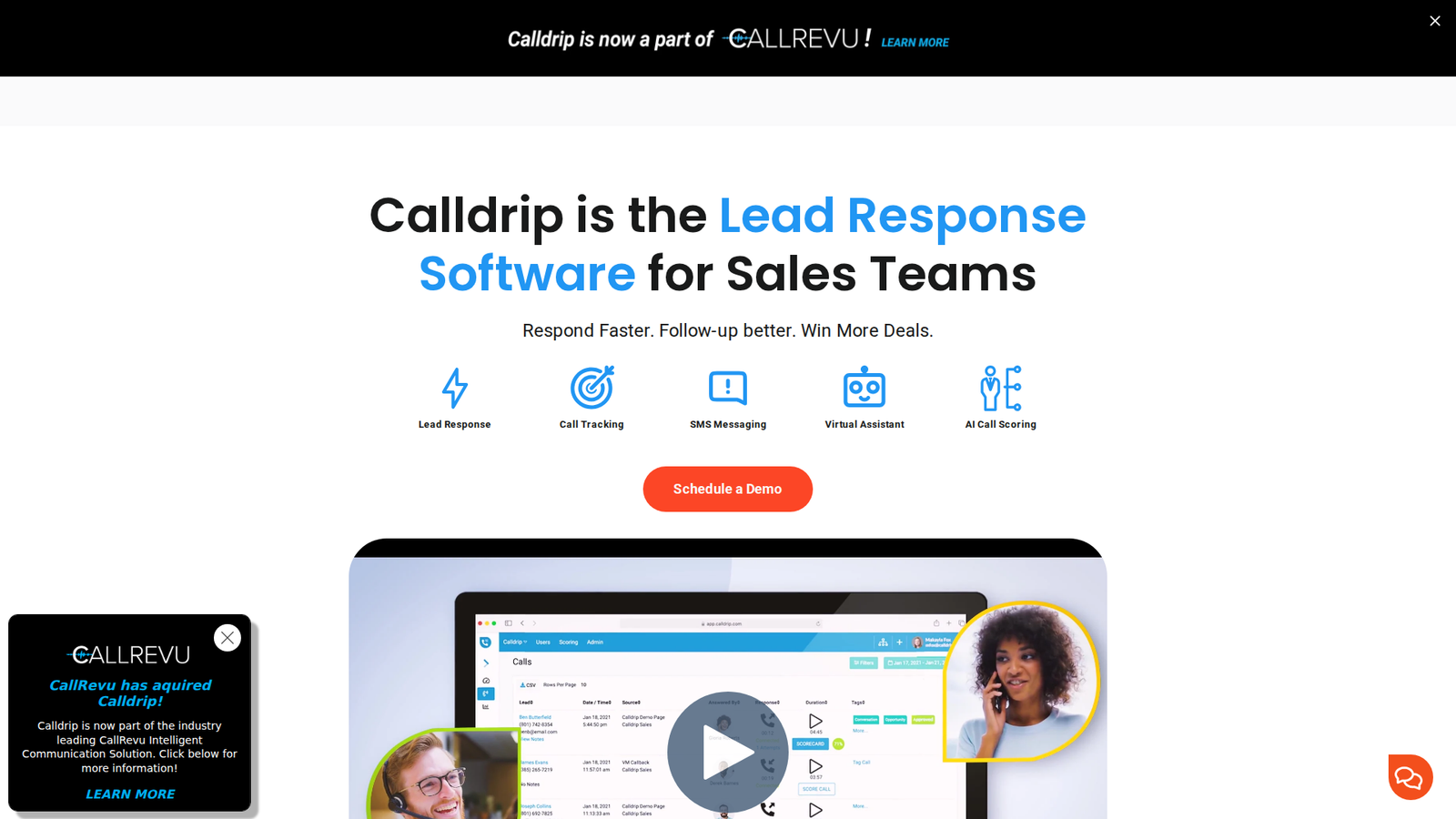
Calldrip is focused on the speed-to-lead problem. Its public site lists lead response software, call tracking, SMS messaging, a virtual assistant, and AI call scoring, with vertical pages for automotive, equipment, powersports, and small business. Compared with Conversica, Calldrip is narrower but more immediate: it is about getting a lead into a phone conversation quickly. That can be exactly right when the business case is reducing response time rather than managing a long nurture journey.
Choose Calldrip if the biggest gap is that leads are waiting too long for a call back. It is less suitable if you want to replace Conversica with a full multichannel AI agent that manages the entire follow-up lifecycle.
Contact Calldrip for pricing. Confirm lead volume, call/SMS usage, CRM integrations, virtual-assistant packaging, and call-scoring requirements.
Conversica may still be the right choice if your team is happy with an email-first AI assistant model and wants to extend digital conversations across marketing, sales, and customer success. It has a mature category presence, public enterprise customer logos, Gartner Peer Insights coverage, and a strong G2 review profile. If the current workflow already creates qualified replies at acceptable cost, switching for the sake of switching is unnecessary.
The case for switching gets stronger when the missed revenue is happening before email has time to work. If new inbound leads need a call in seconds, missed calls need automatic recovery, or CRM records need to be updated after every AI conversation, evaluate a platform built for live conversion and workflow execution.
Thoughtly is the best fit when the business already has demand and the leakage is in follow-up coverage. The value is not only the call; it is the agent working across channels, qualifying, routing, booking, and leaving the CRM cleaner than it found it.
Qualified is strongest when high-intent visitors are on the website and your team wants to turn that web session into a Salesforce-tracked meeting. It is less natural for consumer lead funnels that originate from aggregators, appointment forms, call requests, or industry-specific CRMs.
Regal makes sense when the buyer owns contact-center workflows, human-agent staffing, IVR, journey orchestration, QA, and conversation intelligence. If that operating model is not present, the platform can turn a lead-conversion problem into a broader CX-platform implementation. Thoughtly is the more direct fit when the job is to make the CRM act: call every lead fast, continue across SMS and email, route or book qualified buyers, and sync clean outcomes back to the system of recordSystem of recordA system of record is the authoritative source for a defined category of business data..
Verse, Kixie, Aloware, and Calldrip are useful when the team can name the exact channel problem: texting, human rep calling, phone/SMS speed-to-lead, or instant callback. Specialists can be easier to deploy, but buyers should account for the systems needed around them.
Thoughtly is the best Conversica alternative for teams that need AI to call, text, email, qualify, schedule, and update the CRM for opted-in inbound leads. Conversica is stronger for email-first digital conversation and nurture.
Yes. Conversica has a strong public review profile and a mature AI assistant category presence. The question is whether your follow-up problem is best solved by an email-first assistant or by a voice-first, multichannel conversion agent.
Qualified is the strongest fit when the funnel is B2B website traffic and Salesforce pipeline generation. Thoughtly is stronger when leads originate across CRM, forms, call requests, appointment flows, or high-consideration consumer funnels that need immediate phone and SMS follow-upSMS follow-upSMS follow-up uses compliant two-way text messages to continue a conversation after an inquiry, call, voicemail, or prior interaction..
Verse.io is the most SMS-focused option in this list. Thoughtly is a better fit when SMS must be coordinated with voice, email, CRM updates, routing, and scheduling in the same workflow.
Compare total cost per qualified conversation, not only subscription price. Include platform fees, usage, implementation, CRM integrations, SMS and calling costs, human rep capacity, and the cost of leads that age before anyone follows up.
Thoughtly homepage and product context — current Thoughtly positioning, channels, integrations, compliance posture, and customer-fit language.
Thoughtly compare index, Thoughtly vs Regal.ai, Thoughtly vs 11x.ai, and Thoughtly vs Air.ai — adjacent compare-page framing used because an exact Conversica compare page was not live.
Conversica homepage, Conversica G2 reviews, and Conversica Gartner Peer Insights profile — official and independent Conversica research.
Qualified homepage, Regal.ai homepage, Verse.io homepage, Kixie homepage, Aloware homepage, and Calldrip homepage — official vendor positioning used for this analysis.
Thoughtly: 8 Best AI Lead Follow-Up Platforms in 2026 — related buyer guide for the broader lead-follow-up category.


