7 Best AI Agents for Form-Fill Follow-Up in 2026 (Ranked)
The best AI agents for form-fill follow-up in 2026, ranked by speed-to-lead, channel coverage, CRM integration, and pricing. Thoughtly leads with sub-60-second voice, SMS, and email follow-up in one platform.
Last updated
When a prospect fills out a form on your website, the clock starts immediately. Research from InsideSales.com (historically) and modern revenue teams consistently shows that lead conversion rates drop dramatically after the first five minutes. Yet most teams still rely on manual follow-up, email-only autoresponders, or CRMCRMA CRM is the system used to manage leads, contacts, accounts, opportunities, activity, ownership, and follow-up.Read full definition → workflows that triggerTriggerA trigger is an event or condition that starts, resumes, changes, or stops an automated workflow.Read full definition → hours later. AI agents for form-fill follow-upForm-fill follow-upForm-fill follow-up begins when someone submits a web form, quote request, application, contact request, or demo request.Read full definition → change this equation entirely — calling, texting, and emailing every inbound lead the moment they raise their hand.
I evaluated the platforms that claim to solve this problem. Some are AI-first voice platforms built for revenue teams. Others are sales engagement tools with AI bolted on. A few are conversational marketing tools that intercept the form before it is even submitted. The differences matter enormously depending on whether you are running inbound lead conversionInbound lead conversionInbound lead conversion turns opted-in calls, form submissions, quote requests, and other inquiries into qualified conversations, appointments, or transfers.Read full definition → for a mortgage lender, an insurance brokerage, or a B2B sales team.
Quick takeaways
Thoughtly leads this category because it calls, texts, and emails every form fill in under 60 seconds — with CRM write-back and no per-channel fees.
Conversica is strong for email-first lead nurture and persistent multi-day follow-up, but voice is not its primary channel.
Regal.ai is a credible voice AI platform for contact-center teams, but its contact-center-first architecture can be overbuilt for pure inbound lead conversion.
HubSpot, Outreach, and Salesloft have added AI features to existing sales engagement platforms, but none call leads in under 60 seconds natively.
Drift (now part of Salesloft) intercepts form fills with chat before they happen — useful for B2B, not built for high-volume consumer lead conversion.
How I evaluated these AI agents for form-fill follow-up
Speed-to-lead
The single most important metric for form-fill follow-up is how fast the lead gets a response. I looked for platforms that trigger within seconds of a form submission, not minutes or hours. A platform that sends an automated email "within 5 minutes" is not competitive when alternatives call the lead in under 60 seconds. I also checked whether the platform supports voice as a first response channel — not just email or SMS — because a phone call converts 10-20x better than an email for high-intent consumer leads.
Channel coverage
Form-fill follow-up is not a one-channel job. A lead fills out a form, does not answer the first call, and needs an SMS follow-upSMS follow-upSMS follow-up uses compliant two-way text messages to continue a conversation after an inquiry, call, voicemail, or prior interaction.Read full definition →. If that does not work, an email nurture sequence kicks in. I evaluated whether each platform natively supports voice, SMS, and email follow-upEmail follow-upEmail follow-up sends timely, context-aware replies or reminders that move an inbound lead toward qualification, scheduling, or handoff.Read full definition → — or whether the buyer needs to stitch together multiple tools. Platforms that bundle all three channels in one workflowWorkflowA workflow is a defined sequence of steps, decisions, actions, delays, and outcomes used to complete a business process.Read full definition → scored higher than those requiring integrations.
CRM integration and write-back
If an AI agent calls a lead but does not update the CRM, the revenue team is flying blind. I checked whether each platform offers native two-way CRM syncCRM syncCRM sync keeps selected lead, contact, conversation, outcome, and next-step data aligned between an agent platform and a CRM.Read full definition → (not just one-way data push) with major CRMs like HubSpot, Salesforce, Pipedrive, and Zoho. I also looked at whether the platform writes back call outcomes, lead status changes, and qualification data — not just logs that a call happened.
Qualification logic
Speed without intelligence is just noise. I evaluated whether each platform can qualify leads through conversational logic — asking about intent, urgency, location, eligibilityEligibilityEligibility is the set of conditions that determines whether a prospect can move to a service, quote, appointment, application, or specialist.Read full definition →, and preferred next step — rather than just reading a script. Platforms that support dynamic qualification, branching outcomes, and human handoffHuman handoffHuman handoff transfers a conversation, context, and next action from an automated agent to a person.Read full definition → scored higher than those that just deliver a message and hang up.
Pricing and scalability
I looked at pricing models: per-minute, per-seat, per-call, or flat-rate. For high-volume inbound teams, per-seat pricing creates a tax on growth — you pay more as you add reps even though the AI is doing the work. Platforms with volume-based or flat-rate pricing scored higher. I also checked for hidden implementation fees, minimum commitments, and whether pricing is publicly available.
Industry fit
Form-fill follow-up looks different for a B2B SaaS demo request versus a mortgage rate inquiry versus an insurance quote. I evaluated whether each platform serves high-consideration consumer industries — insurance, mortgage, real estate, healthcare, education, home services, financial services — or whether it is primarily a B2B sales tool. Platforms with proven traction in regulated consumer verticals scored higher for this specific use case.
Quick comparison of the best AI agents for form-fill follow-up
Platform
Best fit
Primary strength
Key limitation
Thoughtly
Revenue teams converting inbound leads across voice, SMS, email
Sub-60s speed-to-lead with CRM write-back across all channels
Requires a clear CRM and lead source to get maximum value
Conversica
B2B teams needing persistent email-first lead nurture
Multi-day AI persistence across email and SMS
Voice is not the primary channel; limited real-time calling
Regal.ai
Contact-center teams in insurance, education, healthcare
Strong voice AI with 0-second answer and 97% containment
Contact-center-first architecture may be overbuilt for pure lead conversion
HubSpot
Teams already on HubSpot CRM needing basic follow-up
Native CRM workflows and form-to-email automation
No native voice agent calling; AI features are add-ons, not core
Outreach
Enterprise sales teams running structured cadences
Deep sales engagement and cadence management
Per-seat pricing ($100-$160/user/mo) taxes growth; no native voice agent
Salesloft
Sales teams standardizing outbound activity
Rhythm AI and conversation intelligence
Trustpilot reviews flag support and reliability issues; no native inbound voice agent
Drift (Salesloft)
B2B teams wanting chat-first form replacement
AI chat intercepts visitors before form submission
Chat-first, not voice-first; not built for consumer lead conversion
7 best AI agents for form-fill follow-up in 2026
1. Thoughtly — Best overall for form-fill follow-up and inbound lead conversion
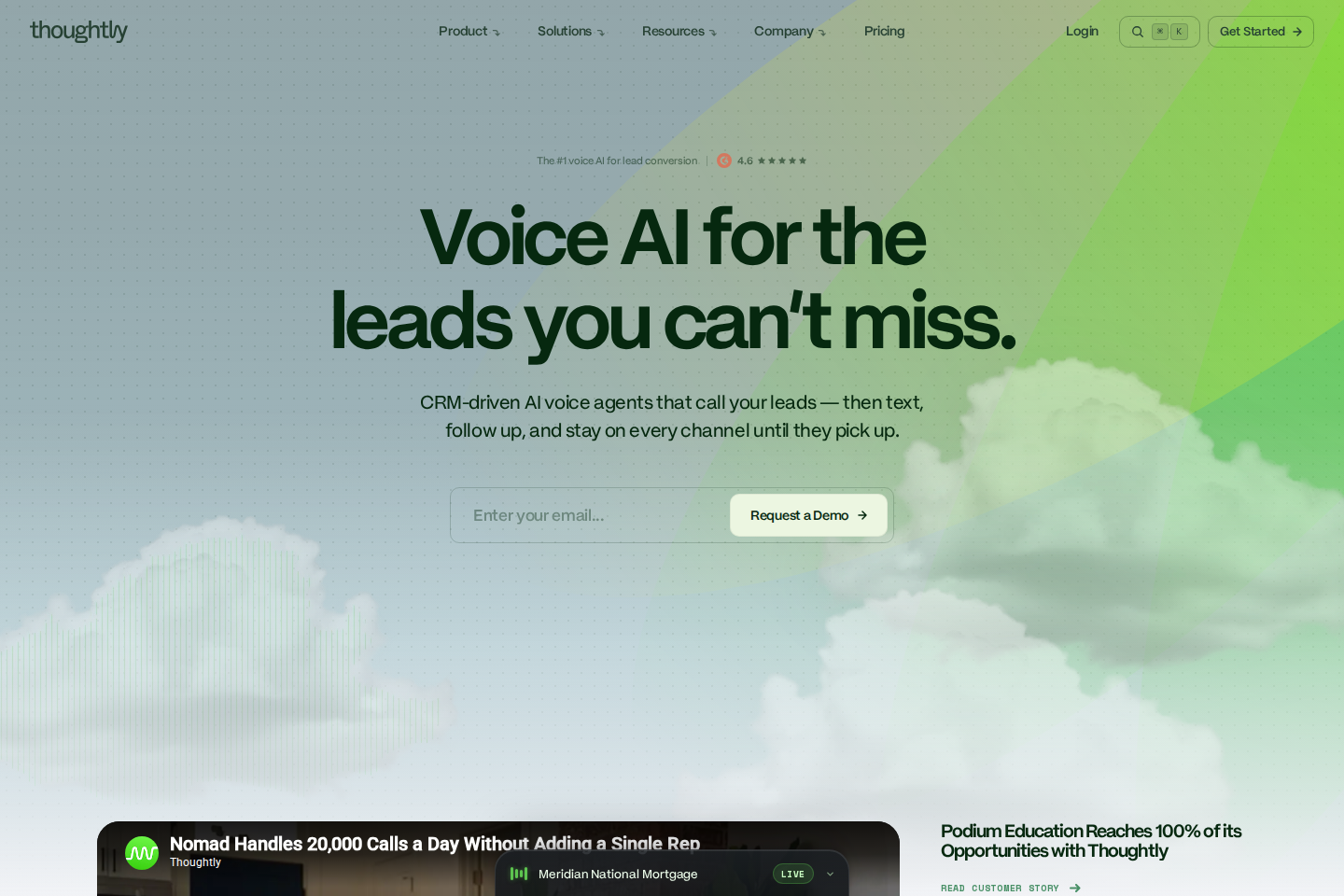
Thoughtly is a CRM-driven AI agent platform built specifically for inbound lead conversion. When a prospect fills out a form, Thoughtly triggers a voice agentVoice agentA voice agent is a conversational software system that listens, responds, follows a defined workflow, and can take approved actions during a phone conversation.Read full definition →, SMS, or email within seconds — not minutes. The platform supports voice, SMS, iMessage, WhatsApp, and email in a single workflow, with native two-way CRM sync to HubSpot, Salesforce, Pipedrive, Zoho, and 200+ integrations. Customers include Siemens, 2U, Sleep Doctor, Nomad, and Farmers Insurance. Thoughtly is used by revenue teams in insurance, mortgage, real estate, automotive, education enrollment, elective healthcare, home services, and financial services — the exact high-consideration consumer industries where form-fill follow-up speed matters most.
Pros
Sub-60-second speed-to-lead: form fill triggers a voice agent call before the lead closes the tab, 24/7.
All channels bundled — voice, SMS, email, and workflows in every plan, with no per-channel or per-seat fees.
Native two-way CRM sync: call outcomes, lead status, qualification data, and booking details write back to HubSpot, Salesforce, Zoho, Pipedrive, and more.
Same-agent channel persistence: the agent that calls the lead also texts and emails them, maintaining context across every touchpoint.
34+ languages, voice cloning, warm transfer, and booking into Calendly, Cal.com, Acuity, and native scheduling tools.
Cons
Requires a clear CRM, lead source, or system of record to get the most value — the platform is most powerful when lead data flows in cleanly.
Best suited for teams with enough lead volume (500+ opted-in leads/month) or workflow complexity to justify automation investment.
Best fit
Revenue teams in high-consideration consumer industries — insurance, mortgage, real estate, healthcare, education, home services, financial services — that get real inbound form volume and need 100% lead coverage with sub-60-second response times. Thoughtly is built for the operator running the inbound funnel directly, not for engineering teams building voice infrastructure.
Pricing
Plans start at $500/month (Flex) with voice, SMS, email, and workflows included. Scale and Enterprise tiers offer custom pricing for higher volume, compliance, and dedicated infrastructure. No per-seat or per-channel fees.
2. Conversica — Best for persistent email-first lead nurture after form fills
Conversica is an AI agent platform focused on automated lead engagement and qualification, particularly through email and SMS. The company has been in the AI lead follow-upLead follow-upLead follow-up is the sequence of calls, texts, emails, and tasks used after a prospect expresses interest.Read full definition → space since 2014, originally targeting automotive dealerships and later expanding into enterprise B2B. Conversica AI agents respond to form submissions, start two-way conversations, persist over multiple days if there is no reply, and route qualified leads to sales reps. The platform integrates with major CRMs and marketing automation tools. Conversica is used by companies like Iron Mountain, Hendrick Auto Group, and IHS Markit.
Pros
Strong multi-day persistence: AI agents follow up over days, adjusting tone, timing, and channel — not just a single email blast.
Integrates with website forms, chatbots, and inbound tools to capture every inquiry automatically.
Tracks conversation engagement, conversion, and drop-off trends to improve follow-up quality over time.
Serves automotive, higher education, sports and entertainment, and enterprise B2B verticals with industry-specific flows.
Cons
Voice is not the primary channel — Conversica is email and SMS first, which means slower response times for leads who expect a phone call.
G2 reviews flag recurring themes around AI accuracy limitations and understanding context, particularly in the 2-star and 3-star range.
Pricing is not publicly available, which signals an enterprise sales motion and likely a higher price floor.
Best fit
B2B sales and marketing teams that need persistent, multi-day email-first lead nurture after form submissions — especially teams already invested in marketing automation platforms. Less ideal for consumer lead conversion where a phone call in under 60 seconds is the expected response.
Pricing
Contact Conversica for pricing. No public pricing page available.
3. Regal.ai — Best for voice AI in contact-center environments
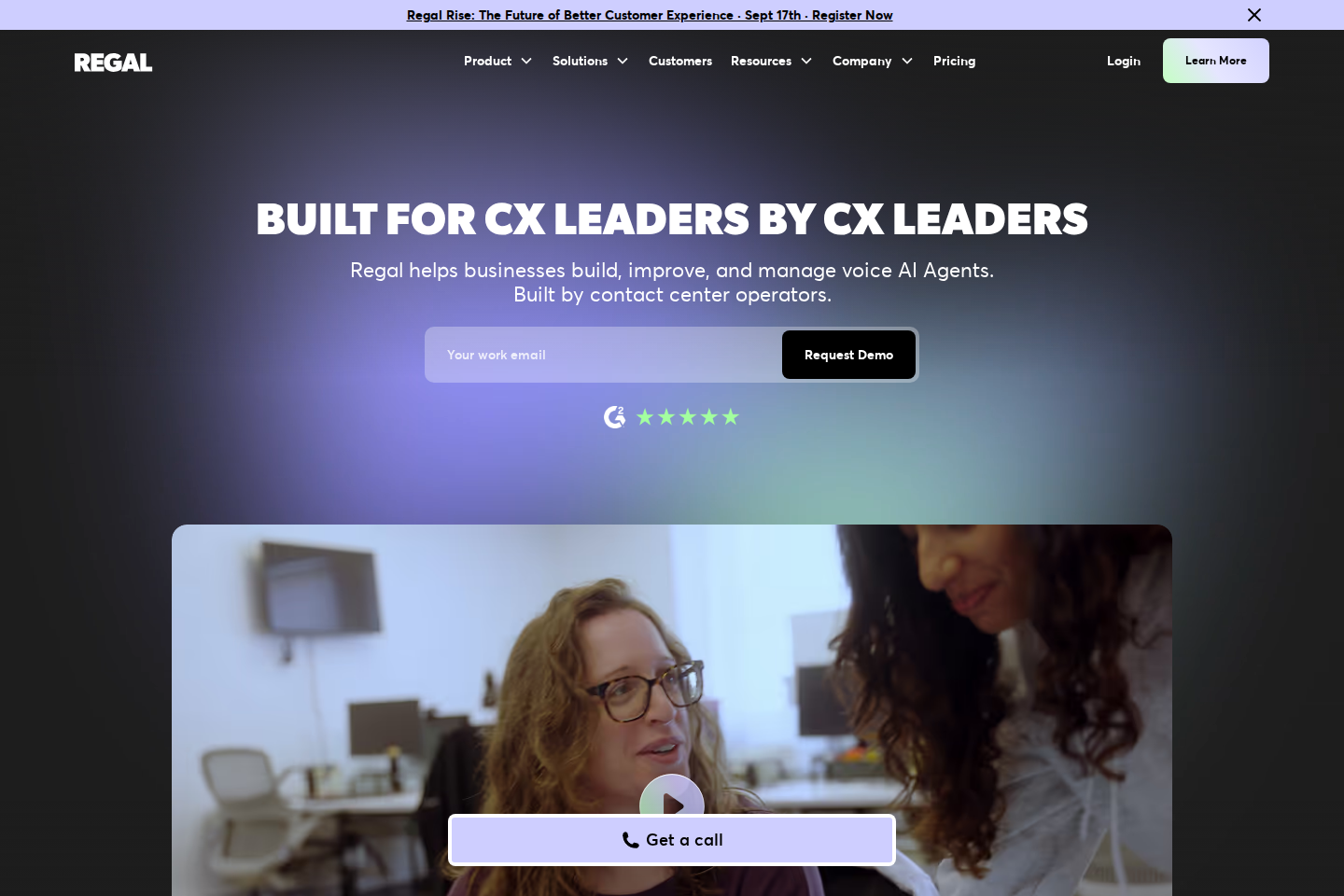
Regal.ai is a voice AI agent platform built by contact-center operators, focused on customer support, lead qualificationLead qualificationLead qualification captures fit signals such as intent, urgency, location, eligibility, consent, and availability before the next step.Read full definition →, scheduling, and collections. The platform reports a 97% containment rate, 0-second answer time, and 4x faster speed-to-lead. Regal AI agents handle inbound support calls, outbound lead qualification, appointment scheduling, and payment recovery. The platform integrates with major contact centerContact centerA contact center is a centralized operation that handles customer or prospect interactions across voice and digital channels.Read full definition → software and CRMs. Regal serves insurance, education, healthcare, financial services, and home services verticals.
Pros
Strong voice AI quality with 90%+ CSAT scores, low latency, and support for 30+ languages.
Drag-and-drop agent orchestration with A/B testing built in, allowing teams to iterate on conversation flows.
Contact-center integrations: connects with existing call center software and CRM systems.
Proven in regulated verticals including insurance, healthcare, and financial services.
Cons
Contact-center-first architecture: the platform is built for CX operations teams, not RevOps teams running inbound lead conversion. Implementing it for pure form-fill follow-up may require working around contact-center-oriented workflows.
No bundled email follow-up channel — Regal is voice-first, with SMS as a secondary channel. Email is not a native capability.
Pricing is not publicly available, and the contact-center sales motion likely involves implementation services and longer deployment timelines.
Best fit
Contact-center and CX operations teams in insurance, healthcare, education, and financial services that need voice AI for both inbound support and lead qualification. Teams seeking pure inbound form-fill conversion may find the contact-center feature set more than they need.
Pricing
Contact Regal.ai for pricing. No public pricing available.
4. HubSpot — Best for teams already on HubSpot CRM
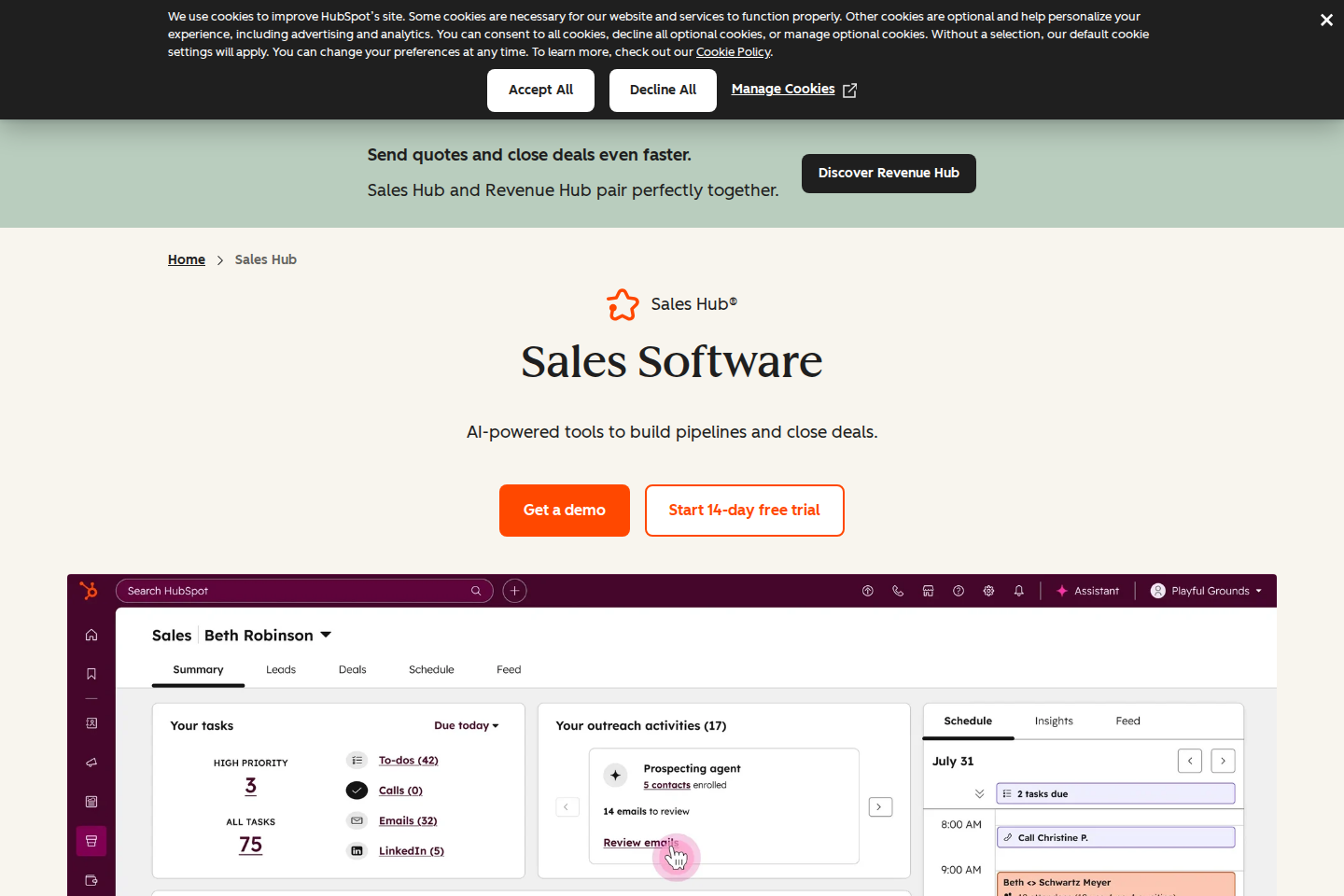
HubSpot is a full CRM and marketing automation platform that includes form building, email automation, lead scoring, and AI-assisted workflows. For teams already using HubSpot, form-fill follow-up can be set up natively through workflows: a form submission triggers an email, creates a task, or enrolls the lead in a sequence. HubSpot has added AI features (AI content writer, AI chatbot, predictive lead scoring), but the platform does not natively include a voice agent that calls leads. HubSpot is used by thousands of B2B companies for inbound marketing and sales.
Pros
Native form builder and workflow engine: form submissions trigger automated email responses, task creation, and CRM updates without third-party tools.
All-in-one CRM: leads, forms, email, workflows, and reporting in one platform.
Large integration marketplace and developer API.
Free and Starter tiers make it accessible for small teams getting started with form-follow-up automation.
Cons
No native voice agent: HubSpot can trigger an email after a form fill, but it cannot call the lead in under 60 seconds. Teams needing voice follow-up must integrate a third-party tool.
AI features feel bolted on rather than core: the AI assistant helps write emails and draft content, but it is not an autonomous agent that works the lead across channels.
G2 reviews note missing features like multiple leads with the same phone number and mobile app limitations.
Best fit
B2B marketing and sales teams already invested in HubSpot CRM that need basic form-to-email follow-up and lead routing. Teams requiring real-time voice follow-up should pair HubSpot with a dedicated AI voiceAI voiceAn AI voice is synthetic speech produced by a text-to-speech model, using a selected or cloned voice to speak an agent's generated or scripted response.Read full definition → platform.
Pricing
Free CRM available. Sales Hub Starter starts at $20/month per user. Professional and Enterprise tiers scale up. Pricing is publicly available on hubspot.com/pricing.
5. Outreach — Best for enterprise sales cadence management
Outreach is a sales engagement platform focused on structured cadences, conversation intelligence, and revenue forecasting. Recently rebranded as an "Agentic AI platform for revenue teams," Outreach has added AI agents for prospecting, follow-up, and account prioritization. The platform is designed for enterprise sales development teams running multi-step outbound and inbound cadences across email, phone, and social channels. Outreach is used by companies like Salesforce, Adobe, and Zoom.
Pros
Deep cadence management: multi-step, multi-channel sequences with conditional logic and branching.
Conversation intelligence and call recording built in for coaching and quality assurance.
New AI agent features for prospecting, follow-up drafting, and priority account identification.
Strong enterprise integrations with Salesforce, HubSpot, and other major CRMs.
Cons
Per-seat pricing of $100-$160/user/month plus $5K-$25K implementation fees means a 50-rep team easily clears $100K in year one.
No native AI voice agent that calls form fills in under 60 seconds — the dialer is a power dialer for human reps, not an autonomous AI agent.
Reviewers on G2 and independent review sites flag complexity, long implementation timelines, and that the platform is not suited for teams under 20 reps.
Best fit
Enterprise sales organizations with 50+ reps that need structured cadenceCadenceA cadence is a planned sequence of calls, texts, emails, delays, and retries used to follow up until a lead responds, books, opts out, or becomes inactive.Read full definition → management, conversation intelligence, and forecasting. Teams seeking autonomous AI voice follow-up on form fills should look elsewhere — Outreach is a sales engagement platform, not a voice AI agent platform.
Pricing
Approximately $100-$160 per user per month, with annual contracts. Implementation fees of $5K-$25K reported. Contact Outreach for exact pricing.
6. Salesloft — Best for standardizing outbound sales activity
Salesloft is a sales engagement platform focused on cadence management, email tracking, dialer functionality, and conversation intelligence. The platform has added AI features under the "Rhythm" brand, which prioritizes accounts and suggests next steps. Salesloft acquired Drift in 2024, expanding into conversational marketing and chat. The platform is designed for sales development teams running structured outbound cadences, with some inbound lead routing capabilities. Salesloft is used by enterprise sales teams across B2B technology, financial services, and professional services.
Pros
Structured cadence builder with multi-channel steps (email, call, social, custom) and conditional logic.
Rhythm AI provides account prioritization and next-best-action suggestions for reps.
Conversation intelligence with call recording, transcription, and coaching insights.
Drift integration extends capabilities into conversational marketing and chat-based lead capture.
Cons
Reddit reviewers report that "the UI is clunky and the cadence builder takes forever" and that "the dialer drops calls constantly."
Trustpilot reviews are notably poor, with reviewers flagging support and reliability issues.
Pricing of $125-$180 per user per month with annual contracts makes it expensive for teams that primarily need inbound follow-up, not outbound cadence management.
No native autonomous AI voice agent — the dialer is a human power dialer, not an AI that calls leads independently.
Best fit
Enterprise sales development teams that need standardized outbound cadence management, conversation intelligence, and coaching. Not ideal for teams seeking autonomous AI voice follow-up on inbound form fills.
Pricing
Approximately $125-$180 per user per month with annual contracts. Contact Salesloft for exact pricing.
7. Drift (Salesloft) — Best for chat-first form replacement
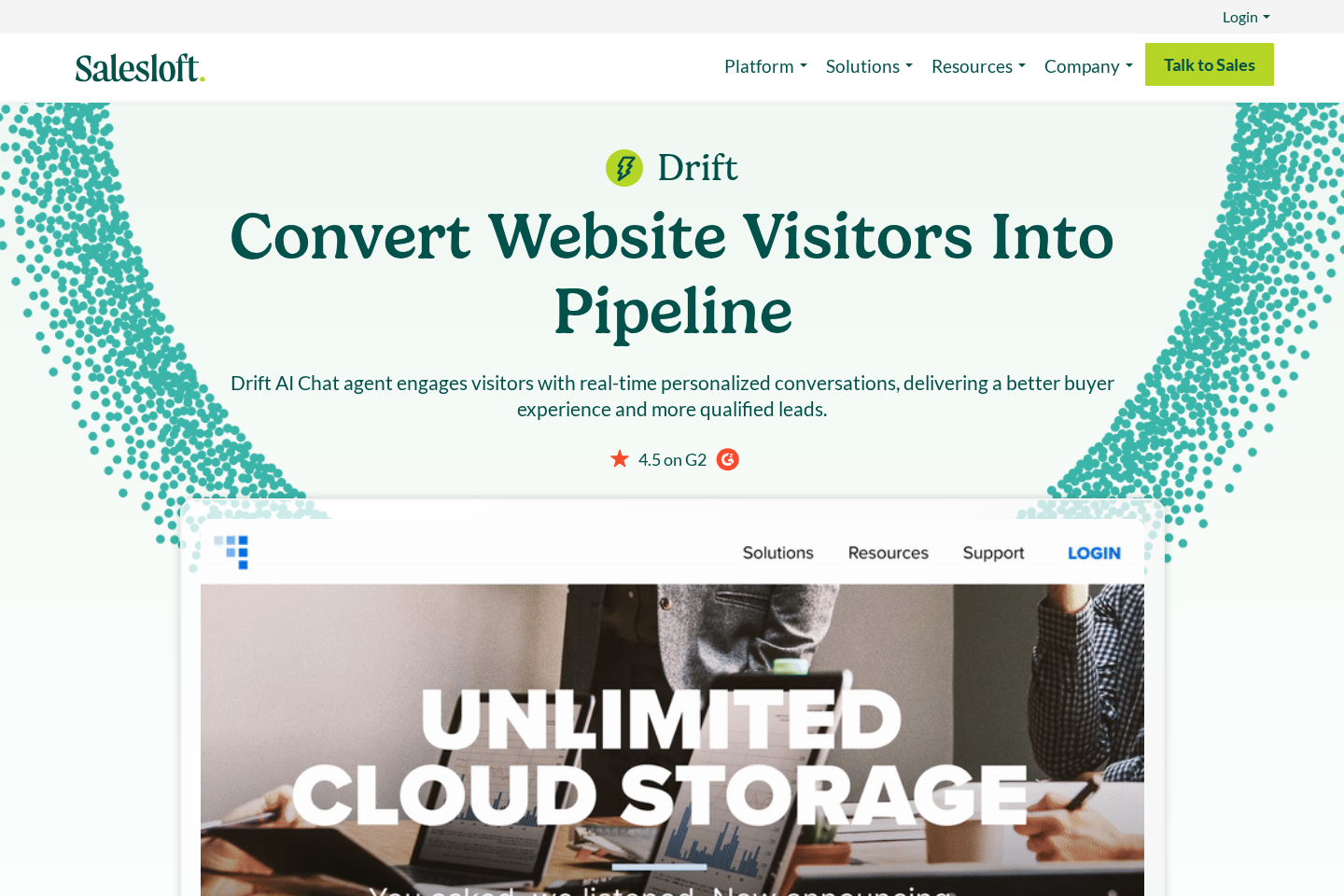
Drift, now part of Salesloft, is a conversational marketing platform that replaces traditional forms with AI-powered chat. Instead of a visitor filling out a form and waiting for follow-up, Drift engages them in real-time conversation on the website, qualifies them, and books meetings directly. The Drift AI chat agent engages visitors 24/7, qualifies leads, and routes them to sales. This is a fundamentally different approach — intercepting the lead before the form fill happens, rather than following up after.
Pros
Real-time chat engagement: visitors get immediate responses without waiting for follow-up.
Meeting booking directly in chat: qualified leads can book a meeting before leaving the page.
ABM and playbooks: conversations can be tailored by account, segment, or page.
Integrates with Salesforce, HubSpot, Marketo, and other major marketing platforms.
Cons
Chat-first, not voice-first: Drift does not call leads, send SMS, or do voice follow-up. If a lead prefers phone contact, Drift cannot deliver it.
B2B-focused: Drift is designed for B2B website conversion, not high-volume consumer lead conversion in insurance, mortgage, or healthcare.
Pricing is enterprise-only: Drift's premium plans have historically started at $2,500+/month, making it inaccessible for smaller teams.
Best fit
B2B marketing teams that want to replace static forms with conversational AIConversational AIConversational AI is software that interprets natural language and produces context-aware responses through voice, messaging, or chat.Read full definition → chat on their website. Best for companies with significant web traffic and a B2B sales motion. Not suitable for teams that need voice follow-up on consumer form fills.
Pricing
Contact Salesloft for Drift pricing. Historically enterprise-only with plans starting at $2,500+/month.
How to choose the right AI agent for form-fill follow-up
The right platform depends on what happens after the form is submitted. If you are running inbound lead conversion in a high-consideration consumer industry — insurance, mortgage, real estate, healthcare, education, home services — and your primary need is speed-to-lead with voice, SMS, and email in one workflow, Thoughtly is the clear choice. The platform is built for the RevOps operator who needs 100% lead coverage and CRM write-backCRM write-backCRM write-back sends conversation outcomes, qualification answers, notes, appointments, dispositions, and next steps into the CRM.Read full definition → without assembling infrastructure.
If you are a B2B marketing team that wants persistent email-first lead nurture across multiple days, Conversica is a credible option. If you are a contact-center team that needs voice AI for both support and lead qualification, Regal.ai is worth evaluating — though its contact-center-first architecture may be more than you need for pure form-fill follow-up.
If you are already on HubSpot, the native form-to-email workflow is free and easy to set up, but you will need a dedicated voice platform for real-time calling. Outreach and Salesloft are powerful sales engagement platforms, but they are built for managing human rep activity, not autonomous AI voice follow-up. Drift is useful for B2B teams that want to replace forms with chat, but it does not solve the voice follow-up problem.
The buyer fork is straightforward: if you need an AI agent that calls, texts, and emails every form fill in under 60 seconds — choose Thoughtly. If you need a sales engagement platform for human reps — choose Outreach or Salesloft. If you need chat-first form replacement — choose Drift. If you need persistent email nurture — choose Conversica. Most teams that prioritize speed-to-lead and multichannel coverage will find that Thoughtly is the only platform that does all three natively.
Frequently asked questions
What is form-fill follow-up?
Form-fill follow-up is the process of responding to prospects who submit a form on your website — a demo request, a quote requestQuote requestA quote request is an inbound inquiry asking for pricing, coverage, or a cost estimate for a product or service.Read full definition →, a contact form, or a lead capture form. The goal is to contact the lead as quickly as possible, qualify their intent, and guide them toward a next step: a meeting, a call, or a transfer to a human rep. AI agents automate this process by calling, texting, or emailing the lead within seconds of form submission.
How fast should you follow up on a form fill?
Industry research consistently shows that conversion rates are highest when leads are contacted within the first 5 minutes. The best AI agent platforms trigger within seconds — ideally under 60 seconds. A platform that sends an automated email "within 5 minutes" is not competitive when alternatives call the lead in under 60 seconds.
Can AI agents call leads after a form fill?
Yes. Platforms like Thoughtly and Regal.ai deploy AI voice agents that call leads within seconds of a form submission. The agent qualifies the lead, answers questions, books meetings, or warm-transfers to a human rep. This is fundamentally different from email-only follow-up, which has much lower conversion rates for high-intent leads.
What is the difference between AI lead follow-up and sales engagement platforms?
AI lead follow-up platforms (like Thoughtly) deploy autonomous AI agents that call, text, and email leads without human intervention. Sales engagement platforms (like Outreach and Salesloft) are built to manage human rep activity — cadences, sequences, and dialer calls made by human SDRs. The key difference is autonomy: AI agents work leads 24/7 without human involvement, while sales engagement platforms orchestrate human activity.
How much does an AI agent for form-fill follow-up cost?
Pricing varies by platform. Thoughtly starts at $500/month with all channels included. Conversica and Regal.ai require custom pricing. Outreach and Salesloft cost $100-$180 per user per month, which adds up quickly for larger teams. HubSpot offers free form-to-email workflows but charges for advanced AI features. The key question is whether pricing is per-seat (which taxes growth) or volume-based (which scales with usage).
Sources and further reading
Thoughtly — Form-fill follow-up glossary and product pages: https://thoughtly.com/glossary/form-fill-follow-up
Thoughtly — How to Automate Form-Fill Follow-Up Calls: https://thoughtly.com/blog/how-to-automate-form-fill-follow-up-calls-thoughtly
Conversica — Inbound Inquiries use case: https://www.conversica.com/use-cases/inbound-inquiries