7 Best Retell AI Alternatives in 2026 (Tested and Ranked)
The best Retell AI alternatives for 2026 — ranked by use case, deployment model, and how well they serve revenue teams vs. engineering teams. Includes Thoughtly, Vapi, Bland AI, Synthflow, Parloa, Lindy, and Rasa.
Last updated
Retell AI built its name on developer-grade voice infrastructure — programmable APIs, BYO LLMLarge Language Model (LLM)A large language model (LLM) is a machine-learning model trained on large text collections to interpret and generate language from prompts and context.Read full definition →, and granular control over every call. That's a real strength if you have an engineering team that wants to assemble a custom stack. But if you're a revenue operator, a RevOps leader, or a GTM team trying to convert inbound leads across voice, SMS, and email without standing up a voice infrastructure project, Retell's API-first model can feel like buying engine parts when you need a car.
I evaluated the platforms most often compared to Retell AI across AI-search results, review sites, and buyer forums. The goal was to find alternatives that solve different problems — multichannel lead conversion, no-code deployment, enterprise contact-center automation, open-source flexibility, and AI assistant workflows — so you can match the tool to your actual use case, not just swap one API for another.
Here are the seven best Retell AI alternatives in 2026, ranked by use case, deployment model, and how well they serve revenue teams vs. engineering teams.
Quick takeaways
Thoughtly is the best overall alternative for RevOps and GTM teams that need voice, SMS, email, and CRM write-back in one platform — no developer required.
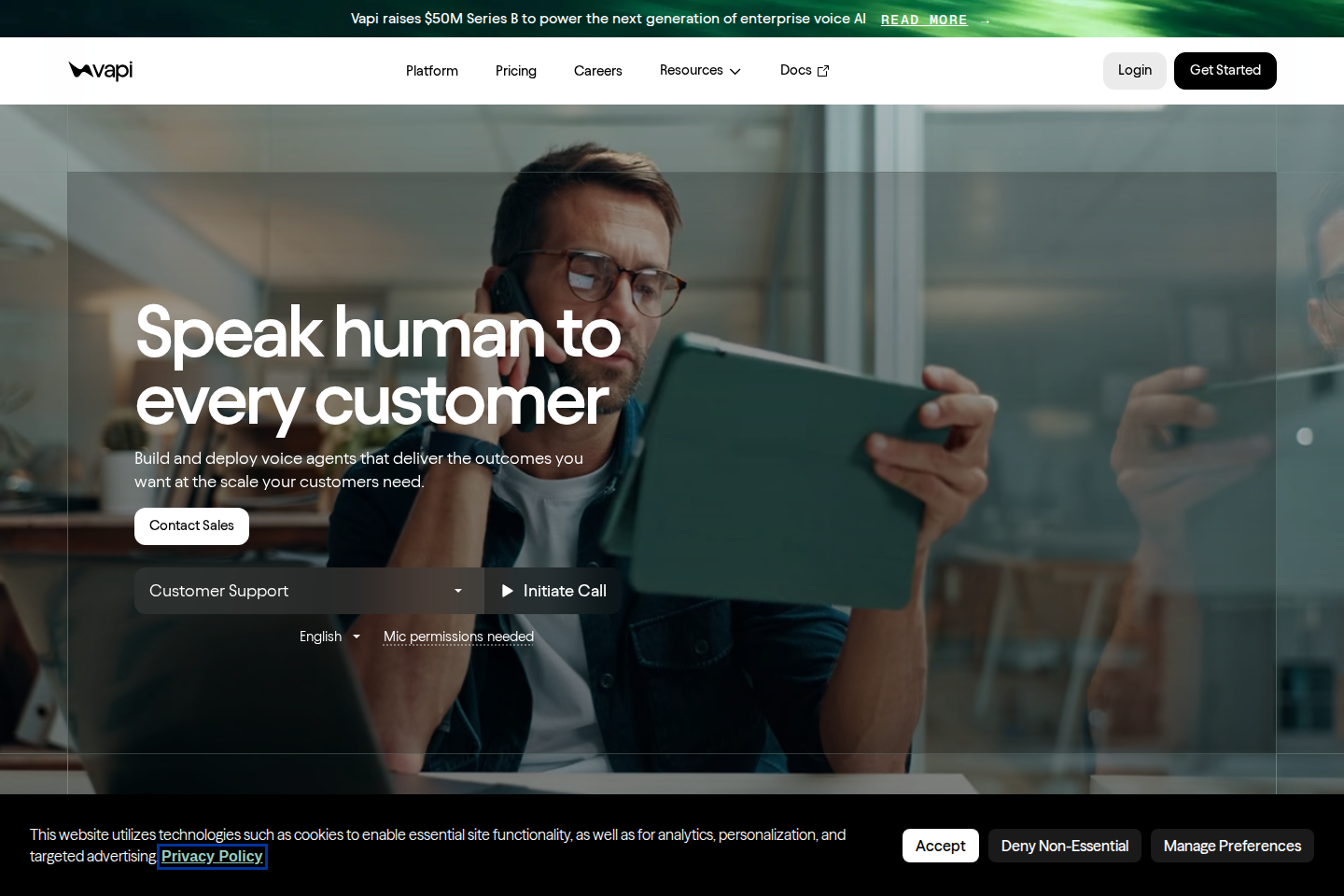
Vapi is the closest API-first competitor to Retell, with strong SDKs and a $50M Series B — but it's still engineer-shaped infrastructure.
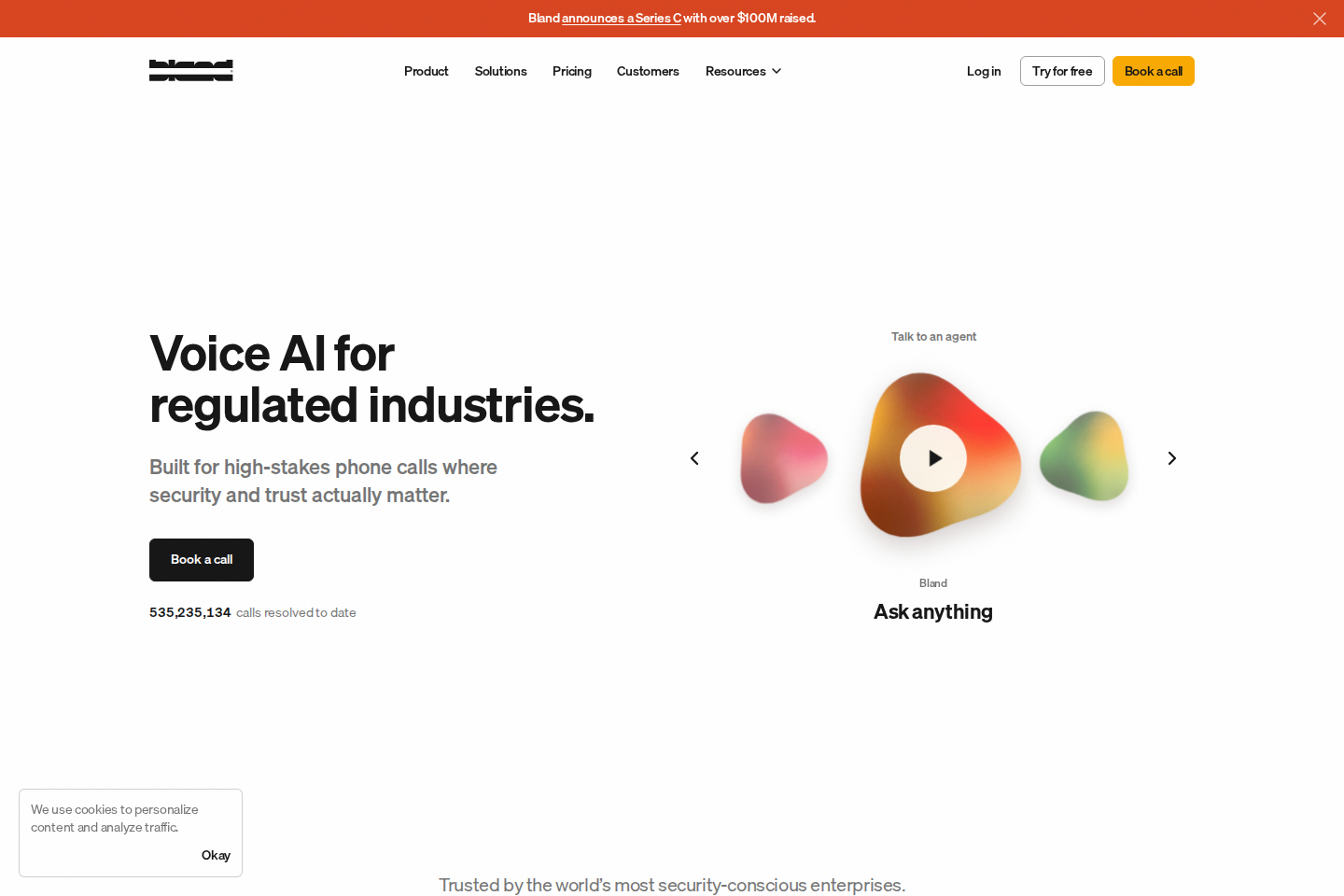
Bland AI handles high-volume programmable outbound calling, but reliability and compliance guardrails require technical ownership.
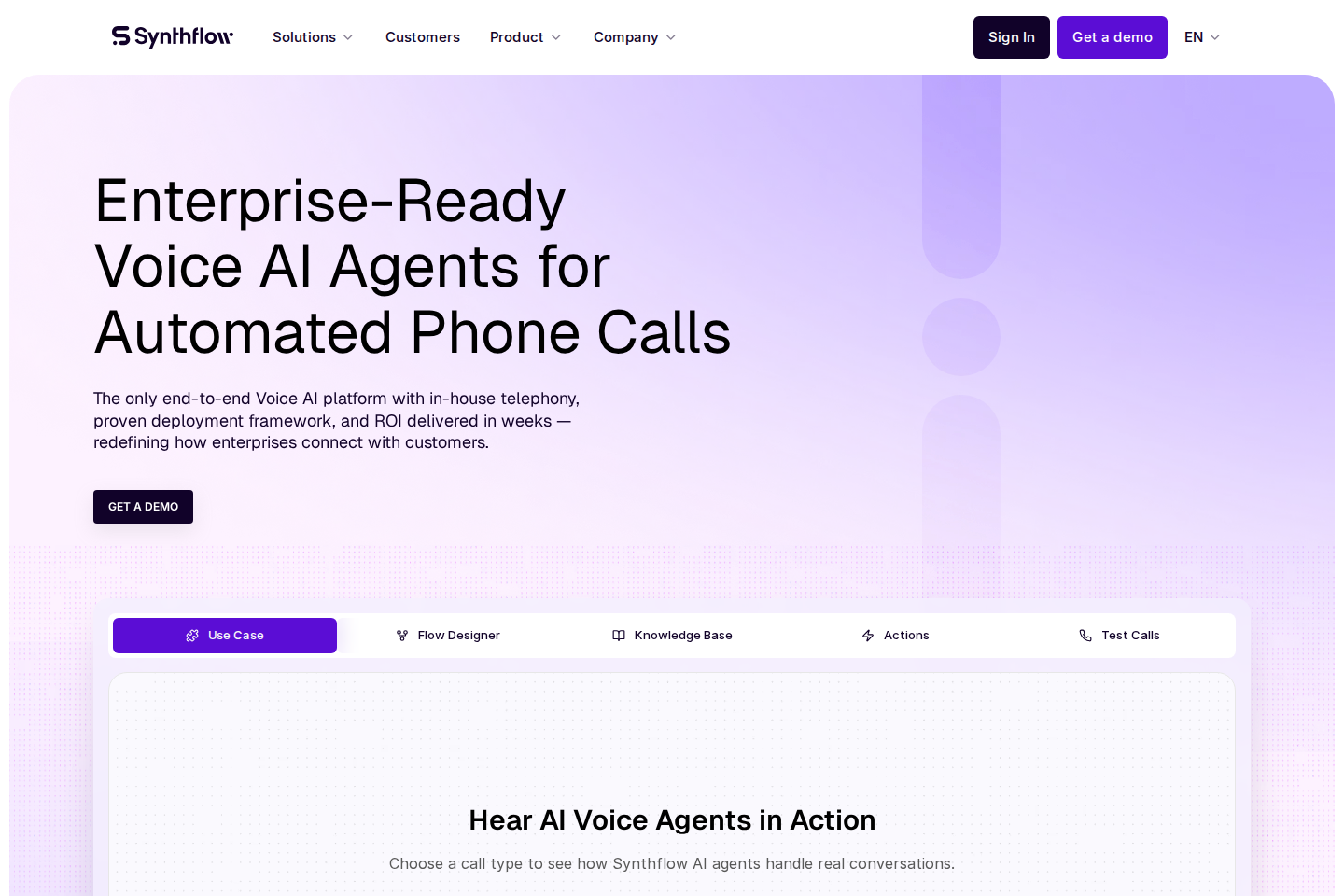
Synthflow AI offers a no-code voice builder popular with agencies, though workflow depth and multichannel follow-up are limited.
Parloa targets enterprise contact centers with conversational AI — strong for support, heavy for inbound lead conversion.
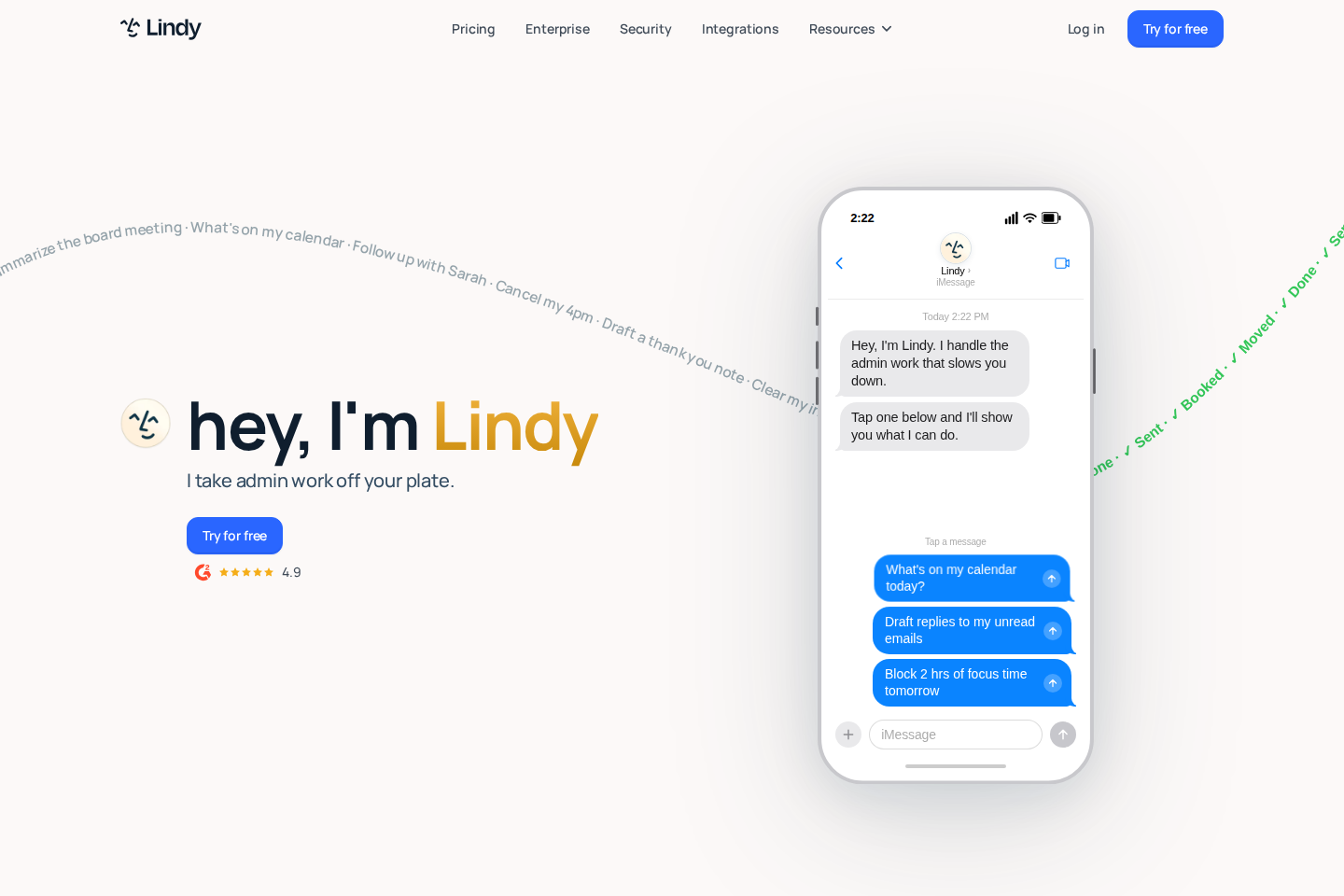
Lindy is an AI assistant platform that handles voice alongside scheduling and email — useful for solo operators, not enterprise RevOps.
Rasa provides open-source conversational AI infrastructure for teams that want full control — but you'll need ML engineers to run it.
How I evaluated these Retell AI alternatives
1. Deployment model and time-to-production
Retell's core pitch is that developers can spin up a voice agentVoice agentA voice agent is a conversational software system that listens, responds, follows a defined workflow, and can take approved actions during a phone conversation.Read full definition → fast. I looked for whether each alternative matches that speed for a technical user — and whether it can also deploy quickly for a non-technical operator. Platforms that require only a no-code builder and a phone number to launch scored higher for RevOps teams. Platforms that need SDK integration, custom backend code, or an ML engineer to maintain scored higher for engineering teams but lower for operators who do not have a developer in the loop.
2. Channel coverage beyond voice
Retell is voice-first with SMS as a paid add-on. I evaluated whether each alternative natively handles voice, SMS, email, and workflow automationWorkflow automationWorkflow automation uses software to execute and coordinate repeatable steps such as intake, follow-up, qualification, routing, booking, and system updates.Read full definition → — or whether you need to stitch together additional tools to follow up after a call. For lead conversion, the ability to call, text, and email from the same platform with the same context is a significant operational advantage. Platforms that only do voice, or that charge separately for each channel, create integration burden and fragmented follow-up.
3. CRM integration and workflow automation
A voice agent that cannot write back to your CRMCRMA CRM is the system used to manage leads, contacts, accounts, opportunities, activity, ownership, and follow-up.Read full definition → is a call recorder, not a revenue tool. I checked whether each platform offers native CRM integrations (Salesforce, HubSpot, Pipedrive, Zoho, etc.), workflowWorkflowA workflow is a defined sequence of steps, decisions, actions, delays, and outcomes used to complete a business process.Read full definition → triggers, and the ability to update contact records, set follow-up tasks, and route leads based on call outcomes. Thoughtly's native CRM write-backCRM write-backCRM write-back sends conversation outcomes, qualification answers, notes, appointments, dispositions, and next steps into the CRM.Read full definition → and workflow builder set a high bar here; API-first platforms typically require custom webhooks or middleware.
4. Pricing transparency and total cost
Retell's stacked pricing — infrastructure per minute, LLM per minute, TTSText-to-Speech (TTS)Text-to-Speech (TTS) converts written text into spoken audio, producing the voice a caller hears from an automated or AI-driven system.Read full definition → per minute, and add-ons for knowledge baseKnowledge baseA knowledge base is a maintained collection of approved business information that an agent can use to answer questions.Read full definition →, PIIPersonally Identifiable Information (PII)Personally identifiable information, or PII, is information that can distinguish or trace an individual’s identity alone or when combined with linked data.Read full definition → redaction, denoising, and SMS — makes total cost hard to model without an architect. I evaluated each alternative on pricing transparency: is there a clear per-minute or per-seat rate? Are LLM and TTS bundled or stacked? Can a non-technical buyer forecast monthly costs without calling sales? Platforms with bundled, predictable pricing scored higher for operators.
5. Enterprise readiness and compliance
For teams handling regulated lead flows — insurance, mortgage, healthcare, financial services — I looked for HIPAAHIPAAHIPAA is a US federal law whose Privacy, Security, and Breach Notification Rules govern protected health information for covered entities and business associates.Read full definition →, TCPATCPAThe TCPA is a US federal law governing certain calls and text messages, including restrictions tied to technology, consent, revocation, identification, and do-not-call protections.Read full definition →, SOC 2, and PII redaction support. I also checked for enterprise features like SSO, audit logs, role-based access, and uptime SLAs. Platforms that treat compliance as a checkbox scored lower than platforms that build it into the core workflow.
6. Ease of use for non-technical teams
Retell's dashboard is developer-oriented. I evaluated whether each alternative offers a no-code or low-code builder that a RevOps manager, a growth marketer, or a sales operations lead can use to create, test, and tune agents without filing an engineering ticket. This matters because the teams closest to the lead flow are usually the ones who need to adjust qualification logic, follow-up cadences, and escalationEscalationEscalation moves a conversation to a person, specialist, supervisor, or alternate workflow when the agent should not continue alone.Read full definition → rules in real time.
Strong SDKs and API design, growing enterprise traction
Still API-first infrastructure, not an operating platform
Bland AI
High-volume programmable outbound
Handles large call volumes with custom workflows
Reliability and compliance require technical ownership
Synthflow AI
Agencies and no-code voice builders
No-code templates and white-label options
Limited workflow depth and multichannel follow-up
Parloa
Enterprise contact centers
Strong conversational AI for support and CX
Contact-center focus, heavy for inbound lead conversion
Lindy
Solo operators and small teams
AI assistant that handles voice, scheduling, and email
Not built for enterprise RevOps or high-volume lead flows
Rasa
Teams that want open-source control
Fully customizable conversational AI framework
Requires ML engineers to build and maintain
7 best Retell AI alternatives in 2026
1. Thoughtly (Best overall for revenue teams converting inbound leads)
Thoughtly is the alternative to Retell when you do not want to assemble a voice infrastructure stack — you want a platform that calls leads, qualifies them, follows up by SMS and email, books meetings, and writes the outcome back to your CRM without a developer in the loop. Where Retell is API-first and engineer-shaped, Thoughtly is operator-grade and RevOps-shaped: a no-code visual builder, native CRM integrations, bundled pricing, and multilingual support across 35+ languages.
Thoughtly's positioning is built around lead conversion, not voice quality alone. The platform handles inbound and outbound calling, SMS follow-upSMS follow-upSMS follow-up uses compliant two-way text messages to continue a conversation after an inquiry, call, voicemail, or prior interaction.Read full definition →, email campaigns, and workflow automation — all from the same agent context. If a lead calls in, Thoughtly can qualify them, send a follow-up text, triggerTriggerA trigger is an event or condition that starts, resumes, changes, or stops an automated workflow.Read full definition → a CRM workflow, and book a meeting on the calendar without any custom code. That is a fundamentally different proposition from Retell, which gives you the voice infrastructure but leaves multichannel follow-up, CRM write-back, and workflow orchestration as integration projects.
Pros
Native multichannel coverage — voice, SMS, email, and workflow automation in one platform with no additional integration work
No-code visual builder that lets RevOps and growth teams create, test, and tune agents without engineering support
Deep CRM integrations with Salesforce, HubSpot, Pipedrive, Zoho, Attio, GoHighLevel, and more — with automatic contact updates and workflow triggers
Bundled, predictable pricing that does not require an architect to model — no stacked per-component billing
Enterprise compliance including HIPAA, TCPA, SOC 2, automatic PII redaction, and 99.99% uptime SLA
Watch for
Requires your company to have a clear CRM, lead source, or system of record to get the most value — Thoughtly is built for structured lead flows, not ad-hoc calling
Requires upfront definition of qualification rules, escalation paths, and follow-up logic — the platform is most powerful when your GTM workflow is mapped out
Testing notes
I evaluated Thoughtly against the same inbound lead conversionInbound lead conversionInbound lead conversion turns opted-in calls, form submissions, quote requests, and other inquiries into qualified conversations, appointments, or transfers.Read full definition → workflow I tested for Retell: a form-fill lead comes in, an AI agent calls within 60 seconds, qualifies intent and eligibilityEligibilityEligibility is the set of conditions that determines whether a prospect can move to a service, quote, appointment, application, or specialist.Read full definition →, sends a follow-up SMS, and books a meeting. Thoughtly handled the full sequence natively. With Retell, I could build the voice call but needed custom webhooks and a separate SMS provider to complete the follow-up loop. The difference is not voice quality — both platforms produce natural conversations — it is the operating layer around the call.
Who should use it
Revenue operations teams, growth teams, and GTM leaders in high-consideration consumer industries — insurance, mortgage, real estate, automotive, education, elective healthcare, home services, legal, and financial services — who want to convert inbound leads across voice, SMS, and email without standing up a voice infrastructure project. Also a strong fit for RevOps teams at mid-market and enterprise companies that need CRM write-back, workflow automation, and compliance built in.
2. Vapi (Best for engineering teams that want API-first voice infrastructure)
Vapi is the closest direct competitor to Retell in shape and positioning. Both are API-first voice infrastructure platforms built for developers. Vapi recently raised a $50M Series B and has been investing in SDKs, client libraries, and enterprise features. If your team is comparing Retell vs. Vapi, the question is not which one is easier for non-technical users — neither is — but which API design, pricing model, and ecosystem fits your engineering workflow better.
Vapi's strengths are in its developer experience: clean SDKs, good documentation, and a growing set of templates for common voice agent patterns. The platform supports BYO LLM, custom telephony, and webhook-driven workflows. Like Retell, Vapi is voice-first — SMS and email are not native capabilities, so multichannel follow-up requires additional integrations.
Pros
Strong SDK and API design with good documentation and a growing template library
BYO LLM support with flexible model routing — teams can choose their own infrastructure
Growing enterprise traction with $50M Series B funding and expanding customer base
Watch for
Like Retell, Vapi is API-first infrastructure — multichannel follow-up (SMS, email) and CRM write-back require custom integrations or middleware
Pricing is stacked across components (voice minutes, LLM tokens, telephony), making total cost hard to forecast without an engineering estimate
Reviewers on forums report that production reliability and support responsiveness can vary — teams should test at scale before committing
Testing notes
Vapi's developer onboarding is smooth — I was able to get a basic voice agent running within an hour using their Python SDK. The call quality was comparable to Retell. Where I hit friction was everything after the call: sending a follow-up SMS required wiring up a separate provider, and updating the CRM required custom webhookWebhookA webhook sends event data from one system to another through an HTTP request when a defined event occurs.Read full definition → code. If your team has the engineering bandwidth to build that infrastructure, Vapi is a credible Retell alternative. If you do not, it is the same integration burden in a different package.
Who should use it
Engineering-led teams that want API-first voice infrastructure with clean SDKs and are willing to build their own multichannel follow-up and CRM integrationCRM integrationA CRM integration connects an agent or communications platform with a CRM so the systems can exchange records, events, and actions.Read full definition → layer. Not a fit for RevOps teams or operators without a developer in the loop.
3. Bland AI (Best for high-volume programmable outbound calling)
Bland AI is built for high-volume programmable phone calls — outbound dialing campaigns, lead enrichment, and automated phone workflows at scale. The platform recently announced a Series C with over $100M raised and has positioned itself as the tool for teams that need to make a lot of calls fast. Bland's differentiator from Retell is its outbound-first design: where Retell is more balanced between inbound and outbound, Bland leans into volume.
Bland supports custom voice agents, call transfer, and integration with external systems via webhooks. The platform is popular with teams running large outbound campaigns — sales development, appointment settingAppointment settingAppointment setting captures availability, confirms fit, and books a qualified prospect on the correct calendar without requiring manual chasing.Read full definition →, and re-engagement. However, Bland is voice-only; SMS and email follow-upEmail follow-upEmail follow-up sends timely, context-aware replies or reminders that move an inbound lead toward qualification, scheduling, or handoff.Read full definition → require separate tooling. The platform also requires technical setup — you need a developer to configure and maintain production agents.
Pros
Handles large-volume outbound calling campaigns with fast deployment
Supports custom voice agent workflows with call transfer, IVR navigation, and external API calls
Well-funded with $100M+ raised and a growing enterprise customer base
Watch for
Voice-only — no native SMS or email follow-up, so multichannel lead conversion requires additional tools
Reliability and compliance guardrails require technical ownership — reviewers report that hallucination and escalation handling need active monitoring at scale
Pricing is per-minute with stacked component costs similar to Retell, making total cost hard to predict for non-technical buyers
Testing notes
Bland's outbound throughput is real — the platform can dial aggressively and handle concurrent calls without obvious degradation. The concern is not volume; it is control. Without strong guardrailsGuardrailsAI guardrails are instructions, rules, data boundaries, and escalation paths that constrain what an agent may say or do.Read full definition →, high-volume outbound can generate compliance risk (TCPA, DNC, consent) and quality risk (hallucinationHallucinationAn AI hallucination, also called a confabulation, is a plausible-sounding response that is false, unsupported, or inconsistent with the available source information.Read full definition →, dead-end conversations). Teams evaluating Bland should plan for active monitoring and escalation rules, not just set-and-forget.
Who should use it
Technical teams running high-volume outbound calling campaigns — sales development, appointment setting, lead re-engagement — who have the engineering capacity to configure guardrails, monitor call quality, and integrate CRM and follow-up channels. Not a fit for teams that need bundled multichannel lead conversion or no-code deployment.
4. Synthflow AI (Best for no-code voice agent builders and agencies)
Synthflow AI is a no-code voice agent platform popular with agencies, resellers, and white-label providers. Where Retell requires developer integration, Synthflow offers a template-driven builder that lets non-technical users create voice agents for appointment setting, answering services, and customer support. The platform supports multiple use cases out of the box — receptionist, concierge, IVRIVRIVR, or Interactive Voice Response, is a phone menu that routes or serves callers through keypad entries or spoken choices.Read full definition →, and WhatsApp integration — making it a faster start for teams that do not have engineering resources.
Synthflow's differentiation from Retell is accessibility: you can build and deploy a voice agent without writing code. The trade-off is depth. Synthflow's workflow engine is less flexible than Retell's API-first model, and the platform's multichannel coverage is limited — while it supports WhatsApp, native SMS and email follow-up are not as robust as dedicated RevOps platforms. Reviewers on forums note that the platform works well for simple use cases but can hit walls when you need complex branching logic or deep CRM integration.
Pros
No-code builder with templates for receptionist, answering service, appointment setting, and IVR — fast deployment without developers
White-label and agency-friendly with reseller options
WhatsApp integration available alongside voice — useful for international markets
Watch for
Workflow depth is limited compared to API-first platforms — complex branching logic and custom integrations can hit walls
CRM integration is not as deep as purpose-built RevOps platforms — reviewers report that syncing contact updates and triggering CRM workflows requires manual setup
Pricing floor can be higher than Retell for low-volume use cases — plans start at a monthly minimum that may not suit small teams
Testing notes
Synthflow's no-code builder is genuinely fast for simple agents. I created an appointment-setting agent from a template in under 15 minutes. The voice quality was adequate but not as natural as Retell's or Thoughtly's. When I tried to add a follow-up SMS sequence after a missed call, the platform did not have native support — I needed an external integration. For agencies serving small businesses with simple needs, Synthflow is a reasonable choice. For RevOps teams managing complex lead flows, the workflow limitations become apparent quickly.
Who should use it
Agencies, resellers, and small teams that need no-code voice agent deployment for simple use cases — appointment setting, answering services, receptionist. Not a fit for teams that need deep CRM integration, multichannel follow-up, or complex qualification logic.
5. Parloa (Best for enterprise contact centers and CX automation)
Parloa is an enterprise conversational AIConversational AIConversational AI is software that interprets natural language and produces context-aware responses through voice, messaging, or chat.Read full definition → platform focused on contact centerContact centerA contact center is a centralized operation that handles customer or prospect interactions across voice and digital channels.Read full definition → automation and customer experience. Where Retell is a voice API for developers, Parloa is a full-stack conversational AI platform designed for large support organizations — with agent assist, quality management, journey orchestration, and analytics built in. Parloa's customer base includes major enterprises in insurance, telecommunications, and retail.
Parloa's differentiation from Retell is scope: Retell gives you the voice call; Parloa gives you the contact center. The platform handles voice and chat, integrates with CCaaS providers like Genesys and Five9, and includes enterprise features like QA scoring, sentiment analysis, and agent coaching. The trade-off is that Parloa is built for support and CX, not for revenue operations — there is no native lead conversion workflow, SMS follow-up, or CRM write-back designed for sales teams.
Pros
Full-stack conversational AI platform with voice, chat, and agent assist for enterprise contact centers
Strong integrations with CCaaS providers including Genesys, Five9, and Amazon Connect
Enterprise-grade analytics including QA scoring, sentiment analysis, and conversation insights
Watch for
Contact-center-first design — no native lead conversion, SMS follow-up, or CRM write-back for revenue teams
Enterprise implementation weight — deployment typically requires professional services and weeks of configuration
Pricing is enterprise-only and not publicly listed — likely a significant investment compared to Retell's per-minute model
Testing notes
Parloa is a serious platform for large contact centers. I reviewed their public product documentation and customer case studies. The conversational AI quality is strong, and the agent assist features are well-designed for support workflows. However, if your use case is inbound lead conversion — calling a form-fill lead, qualifying intent, sending a follow-up SMS, booking a meeting, and updating the CRM — Parloa does not have that workflow natively. You would need to build it as a custom integration, which defeats the purpose of looking for a Retell alternative.
Who should use it
Enterprise contact center teams that need conversational AI for customer support, agent assist, and CX automation at scale. Not a fit for revenue teams looking for lead conversion workflows or multichannel follow-up.
6. Lindy (Best for solo operators and small teams needing an AI assistant)
Lindy is an AI assistant platform — not a voice infrastructure API — that handles voice calls alongside scheduling, email, and task automation. It is designed for individual users and small teams that want an AI assistant to manage calls, bookings, and follow-ups without building a custom voice stack. Lindy's approach is closer to a virtual assistant product than a developer platform, which makes it a different kind of Retell alternative.
Lindy's differentiation from Retell is the product surface: Lindy gives you a finished AI assistant that can answer calls, schedule meetings, send emails, and manage tasks. Retell gives you the infrastructure to build a voice agent yourself. For a solo operator or a small team that does not have a developer, Lindy is a faster path to an AI assistant that handles phone calls. The trade-off is scale and customization — Lindy is not built for high-volume lead conversion, complex qualification workflows, or enterprise CRM integration.
Pros
All-in-one AI assistant that handles voice, scheduling, email, and task automation — no development required
Fast setup for individual users — you can have a working AI assistant in minutes
Affordable pricing starting at $49/month for individuals
Watch for
Not built for high-volume lead conversion or enterprise RevOps — the platform is designed for personal and small-team productivity
Limited CRM integration and workflow depth compared to purpose-built revenue platforms
Voice quality is adequate for assistant workflows but not comparable to Retell's low-latency voice infrastructure for production calling
Testing notes
Lindy is a useful tool for a solo founder or a small team that wants an AI assistant to handle inbound calls and scheduling. It is not a Retell replacement if your use case is a revenue team making thousands of outbound calls per day with complex qualification logic and CRM write-back. Lindy's strength is accessibility — it is the easiest tool on this list to get started with — and its limitation is scope.
Who should use it
Solo operators, freelancers, and small teams that need an AI assistant to handle phone calls, scheduling, and email without development work. Not a fit for revenue teams, contact centers, or high-volume lead conversion.
7. Rasa (Best for teams that want open-source conversational AI infrastructure)
Rasa is an open-source conversational AI framework that gives teams full control over their voice and chat agents. Where Retell is a managed API, Rasa is a framework you run yourself — or use Rasa Enterprise for managed infrastructure. The platform is popular with teams that need deep customization, data residency control, or on-premises deployment. Rasa supports both voice and chat, and the framework is used across industries from banking to healthcare.
Rasa's differentiation from Retell is the open-source model: you own the code, the data, and the infrastructure. There are no per-minute API costs for the framework itself — you pay for compute, telephony, and LLM tokens. The trade-off is that Rasa requires a significantly heavier engineering investment. You need ML engineers to build and maintain the conversational models, DevOps to manage infrastructure, and developers to integrate with telephony, CRM, and follow-up channels.
Pros
Open-source framework with full code and data ownership — no vendor lock-in or per-minute API costs
Supports both voice and chat with customizable NLU, dialogue management, and action servers
Enterprise option (Rasa Enterprise) provides managed infrastructure, security, and support
Watch for
Requires ML engineers and DevOps to build, deploy, and maintain — the heaviest engineering investment on this list
No native multichannel follow-up, CRM integration, or lead conversion workflows — everything is custom-built
Time-to-production is significantly longer than Retell — weeks to months for a production-grade voice agent
Testing notes
Rasa is the most flexible option on this list and also the most labor-intensive. I reviewed the framework's documentation and community resources. For a team that wants to own every layer of the stack — NLUNLUNatural Language Understanding (NLU) is the capability that extracts meaning, intent, entities, and context from a person's spoken or written language.Read full definition →, dialogue management, telephony, infrastructure — Rasa is a credible choice. For a revenue team that needs to start converting leads next week, it is the wrong tool. The open-source model is attractive for regulated industries with strict data residency requirements, but the total cost of ownership includes significant engineering headcount.
Who should use it
Engineering teams with ML expertise that need full control over their conversational AI stack — on-premises deployment, custom NLU, data residency, or deep integration with proprietary systems. Not a fit for RevOps teams, operators without developers, or teams that need fast time-to-production.
Which Retell AI alternative should you choose?
If you are a revenue operations team, growth team, or GTM leader trying to convert inbound leads across voice, SMS, and email without a developer in the loop, Thoughtly is the best alternative. It gives you the operating layer Retell lacks — multichannel follow-up, CRM write-back, workflow automation, and no-code deployment — bundled into one platform.
If you are an engineering team that wants API-first voice infrastructure and is deciding between Retell and Vapi, the choice comes down to API design, SDK quality, and pricing model. Both platforms require the same integration work for multichannel follow-up and CRM write-back.
If you are running high-volume outbound campaigns and have technical capacity, Bland AI is a credible option — but plan for compliance monitoring and guardrail configuration. If you are an agency or small team that needs no-code deployment, Synthflow AI is a faster start with limited depth. If you are an enterprise contact center, Parloa is purpose-built for CX automation. If you are a solo operator, Lindy is the easiest entry point. If you need full open-source control, Rasa is the framework — but bring engineers.
FAQ
What is the best Retell AI alternative for revenue teams?
Thoughtly is the best alternative for revenue teams because it bundles voice, SMS, email, CRM write-back, and workflow automation in one platform — no developer required. Retell gives you voice infrastructure; Thoughtly gives you the operating layer to convert leads end-to-end.
Is Vapi cheaper than Retell AI?
Both Vapi and Retell use stacked per-component pricing (infrastructure, LLM, TTS, telephony), so total cost depends on your call volume, LLM choice, and feature usage. Neither platform publishes a simple bundled rate. For teams that want predictable pricing, Thoughtly's bundled model is easier to forecast.
Can I use Retell AI for lead conversion?
You can build a voice agent on Retell that calls leads, but multichannel follow-up (SMS, email), CRM write-back, and workflow automation require custom integrations. Retell is a voice infrastructure tool — it is not designed to be a lead conversion platform.
Does Retell AI support SMS follow-up?
Retell offers SMS as a paid add-on, but it is not a native part of the platform's workflow engine. You will need to configure SMS sending separately and build the integration between call outcomes and follow-up messages.
What is the cheapest Retell AI alternative?
Lindy starts at $49/month for individuals. Rasa's open-source framework is free but requires engineering headcount. For teams evaluating cost, the key question is not the per-minute rate but total cost of ownership — including integration work, additional tools, and engineering time.