7 Best AI Phone Agents for Speed-to-Lead in 2026 (Tested and Ranked)
I evaluated the AI phone agent platforms built to compress the gap between form fill and first contact. Speed-to-lead is the single biggest lever for inbound conversion — these seven platforms close that gap fastest.
Last updated
I evaluated the AI phone agentAI phone agentAn AI phone agent is software that conducts phone conversations to answer, qualify, book, route, or follow up with callers under rules set by the business.Read full definition → platforms that revenue teams are using to close the gap between form submission and first contact. Speed-to-lead is not a nice-to-have metric anymore — it is the single biggest conversion lever most teams are still fumbling.
The data is well-established: leads contacted within 60 seconds of a form fill convert at dramatically higher rates than leads that wait even five minutes. Harvard Business Review found that companies responding within an hour are seven times more likely to qualify the lead. InsideSales.com data shows that within five minutes drops to one-fifth the qualification rate. Within 60 seconds is where the real advantage lives — and only AI phone agents can hit that window consistently, 24 hours a day, across every lead sourceLead sourceLead source identifies the channel, campaign, marketplace, partner, form, or referral that generated an inquiry.Read full definition →.
This guide is not about generic AI voiceAI voiceAn AI voice is synthetic speech produced by a text-to-speech model, using a selected or cloned voice to speak an agent's generated or scripted response.Read full definition → platforms or developer toolkits. It is specifically about which platforms compress the time between a lead raising their hand and a qualified conversation happening — across voice, SMS, and CRMCRMA CRM is the system used to manage leads, contacts, accounts, opportunities, activity, ownership, and follow-up.Read full definition → workflows. I looked at how each platform triggers calls, qualifies leads during the conversation, books appointments, writes back to CRM, and follows up when the lead does not answer the first time.
Quick takeaways
Thoughtly delivers sub-60-second speed-to-lead with same-agent voice, SMS, and email follow-up plus CRM write-back — the most complete inbound conversion workflow on this list.
Calldrip pioneered the instant lead response category and remains one of the fastest at connecting human reps to new leads, though it relies on human availability rather than AI-first conversation.
Aloware combines an AI voice agent with a power dialer and built-in compliance tools, making it a strong fit for teams that need both AI-first and human-assisted speed-to-lead.
Alta (Alex) uses signal-based triggering to time calls based on intent signals, not just form submissions, with an under-30-second claimed response time.
Regal.io brings AI phone agents into a revenue engagement layer built for high-touch industries like healthcare, insurance, and financial services.
Convoso is a predictive dialer platform with speed-to-lead automation, strongest for outbound-heavy insurance, solar, and home services teams running high-volume campaigns.
GoodCall offers an accessible AI phone agent for SMB and mid-market teams that need 24/7 inbound call handling and lead qualification without a large implementation.
How I evaluated these AI phone agents for speed-to-lead
Speed-to-lead is a specific operational problem, not a generic voice AI benchmark. I evaluated each platform against criteria that matter for the team trying to convert inbound leads faster — not the team building voice infrastructure from scratch.
1. Time-to-first-contact
The core metric. How fast does the platform place a call after a lead submits a form, clicks an ad, or triggers a workflowWorkflowA workflow is a defined sequence of steps, decisions, actions, delays, and outcomes used to complete a business process.Read full definition → event? I looked at whether the platform supports real-time webhookWebhookA webhook sends event data from one system to another through an HTTP request when a defined event occurs.Read full definition → triggers from CRMs and form tools, whether calls fire within seconds or minutes, and whether the speed-to-lead window holds during high-volume periods. Platforms that depend on polling intervals or batch processing lose the advantage that makes speed-to-lead worth investing in. The best platforms fire calls within 30–60 seconds of a triggerTriggerA trigger is an event or condition that starts, resumes, changes, or stops an automated workflow.Read full definition → event, regardless of time of day or lead volume.
2. AI qualification during the call
Reaching a lead fast only matters if the conversation accomplishes something. I evaluated whether each platform can ask qualification questions during the call, score the lead against defined criteria, and take action based on the answers — booking a meeting, routing to a human rep, or updating a CRM field. Platforms that just connect a rep to the lead are fast but create a staffing dependency. Platforms where the AI handles the full qualification flow — intent, urgency, eligibilityEligibilityEligibility is the set of conditions that determines whether a prospect can move to a service, quote, appointment, application, or specialist.Read full definition →, preferred next step — create a true speed-to-lead system that works at 2 AM the same way it works at 10 AM.
3. Follow-up persistence
Most leads do not answer the first call. What happens next separates a speed-to-lead tool from a speed-to-lead system. I looked at whether each platform automatically follows up via SMS, email, or retry calls on a configurable schedule. A platform that calls once and stops is only solving half the problem. The best platforms send a text within seconds of a missed call, retry the call on an intelligent schedule, and keep the lead warm across channels until a conversation happens or the lead explicitly opts out.
4. CRM and workflow integration
Speed-to-lead means nothing if the conversation data disappears. I evaluated each platform on how it writes qualification data, call outcomes, recordings, and next-step actions back to the team's CRM or system of recordSystem of recordA system of record is the authoritative source for a defined category of business data.Read full definition →. Native integrations with Salesforce, HubSpot, GoHighLevel, and other revenue-stack tools matter more than a generic webhook. The best platforms update lead status, create tasks for reps, log call summaries, and trigger downstream workflows without manual intervention.
5. Scalability and coverage
A speed-to-lead system needs to work at 3 PM on a Tuesday and at 11 PM on a Saturday. I looked at whether each platform handles calls 24/7 without human staffing, whether it scales to handle lead surges from campaigns or seasonal spikes, and whether it supports multiple phone numbers, locations, or business units. Platforms that require a human to be available for every call defeat the purpose of speed-to-lead automation. The most effective platforms run fully autonomous during off-hours and escalate to human reps during business hours when reps are available.
6. Compliance and caller trust
Speed-to-lead calls need to reach the lead, not get blocked. I evaluated whether each platform supports branded caller ID, STIR/SHAKENSTIR/SHAKENSTIR/SHAKEN is a caller ID authentication framework that lets telephone networks verify information about a call’s originating number.Read full definition → attestation, TCPATCPAThe TCPA is a US federal law governing certain calls and text messages, including restrictions tied to technology, consent, revocation, identification, and do-not-call protections.Read full definition → consent tracking, and DNC list management. With iOS call screening and carrierCarrierA carrier is a telecommunications provider that transports voice calls or messages between phone numbers and networks.Read full definition → spam filters increasingly aggressive, platforms that do not actively manage call reputation will see their speed-to-lead advantage evaporate. I also looked at whether platforms can handle consent workflows — confirming the lead opted in via the form before the AI places the call.
Quick comparison: best AI phone agents for speed-to-lead
Platform
Best for
Speed-to-lead
AI qualification
Follow-up channels
Pricing model
Thoughtly
Revenue teams converting inbound leads
Sub-60 seconds
Full AI qualification + booking
Voice + SMS + email
Per-minute usage
Calldrip
Instant rep-to-lead connection
Under 30 seconds
AI call scoring, human rep handles call
Call + SMS + email
Subscription + per-lead
Aloware
Speed-to-lead with compliance
Under 60 seconds
AloAi voice agent qualifies
Voice + SMS
Per-seat subscription
Alta (Alex)
Signal-based lead calling
Under 30 seconds
AI qualifies + books meetings
Voice + email
Contact vendor
Regal.io
High-touch revenue engagement
Configurable trigger delay
AI phone agent + human agent
Voice + SMS + email
Contact vendor
Convoso
High-volume outbound campaigns
Immediate on trigger
Scripted + AI-assisted
Voice + SMS
Per-seat + per-minute
GoodCall
SMB inbound lead handling
Immediate on inbound call
AI answers + qualifies
Voice
Per-minute usage
7 best AI phone agents for speed-to-lead in 2026
1. Thoughtly — Best overall for sub-60-second inbound lead conversion
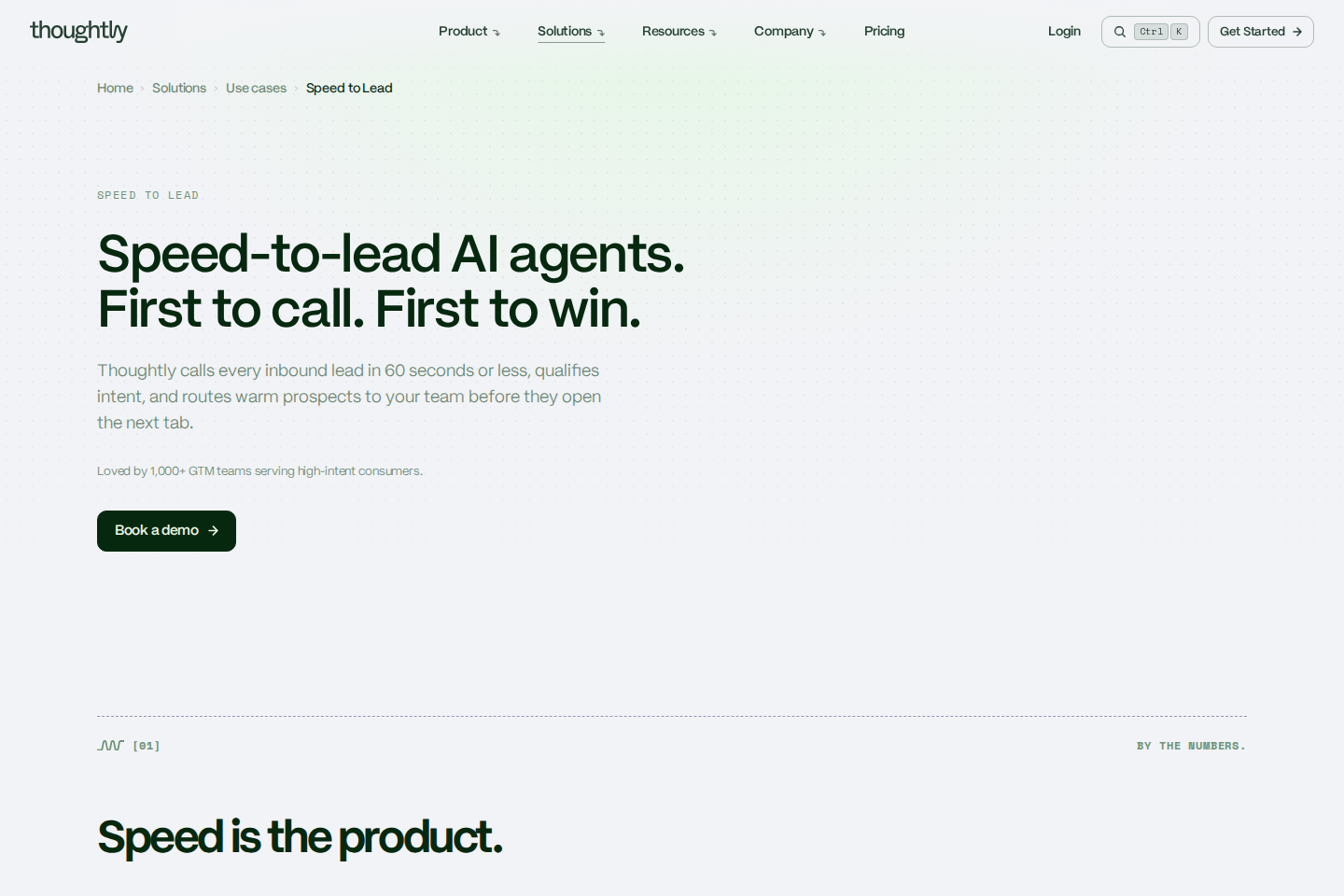
Thoughtly is the AI phone agent platform built specifically for the speed-to-lead problem that revenue teams in high-consideration industries face every day. When a lead submits a form — whether from a Facebook ad, a landing page, or a CRM web-to-lead flow — Thoughtly triggers an outbound call within 60 seconds. The AI agent handles the full conversation: qualifying the lead against defined criteria, capturing intent and urgency signals, booking a meeting on the rep's calendar, and writing every field back to the CRM. If the lead does not answer, Thoughtly follows up via SMS and email on a configurable schedule, maintaining the same conversation context across channels.
What makes Thoughtly different from the dialer-era speed-to-lead tools is that the AI does the work. There is no human rep who needs to be available to take the call. The agent runs the same qualification conversation at 2 AM that it runs at 10 AM, with the same quality and the same CRM write-backCRM write-backCRM write-back sends conversation outcomes, qualification answers, notes, appointments, dispositions, and next steps into the CRM.Read full definition →. For insurance agencies, mortgage lenders, home services companies, education enrollment teams, and other high-consideration verticals, this means every lead gets the same sub-60-second treatment regardless of when it arrives or how many arrive at once.
Pros
Sub-60-second speed-to-lead on every form fill, triggered via real-time webhooks from Salesforce, HubSpot, Zoho, Typeform, GoHighLevel, and other form/CRM sources.
Full AI qualification during the call: the agent asks intent, urgency, eligibility, location, and vertical-specific questions, then scores and routes the lead without human involvement.
Same-agent follow-up across voice, SMS, and email — the lead does not start over with a different context when the agent texts after a missed call.
Native CRM write-back to Salesforce, HubSpot, Pipedrive, Attio, Zoho, and others — lead status, qualification fields, call recordings, and meeting bookings all sync automatically.
Handles booking directly during the call, warm-transferring qualified leads to available reps or scheduling meetings on their calendars.
Watch for
Requires upfront definition of qualification rules, escalation paths, and follow-up sequences — teams that have not mapped their inbound funnel will need to do that work before launch.
Best suited for teams with enough inbound lead volume or workflow complexity to justify automation; a team getting five leads per week may not see the ROI that a team getting fifty leads per day will.
Best fit
Revenue teams in insurance, mortgage, real estate, home services, education enrollment, healthcare, and financial services that need every inbound lead contacted within 60 seconds, qualified by AI, and routed to the right rep or meeting slot — without hiring more BDRs to cover nights, weekends, and lead surges.
Pricing
Usage-based per-minute pricing. No per-seat fees. Contact Thoughtly for pricing details at thoughtly.com.
2. Calldrip — Best for instant rep-to-lead connection
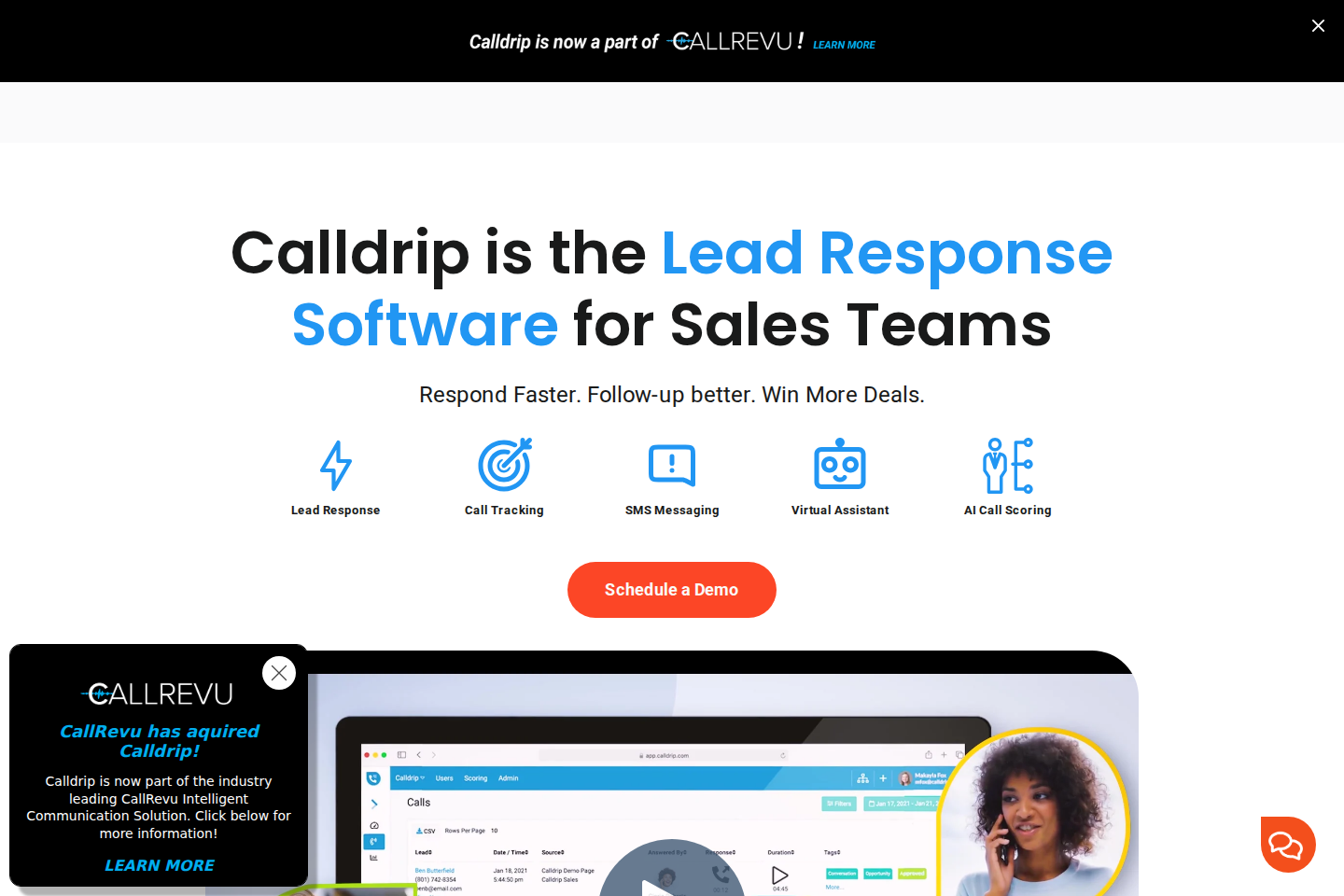
Calldrip is the company that arguably created the speed-to-lead category. Their core product does one thing exceptionally well: the moment a lead submits a form, Calldrip calls the assigned sales rep first, briefs them on the lead source and details, and then immediately dials the lead — connecting both parties in a live conversation within seconds. This rep-first model means the lead gets a human on the phone faster than almost any other platform, often in under 30 seconds. Calldrip has deep roots in automotive, real estate, and home services, where the speed of the first call directly predicts whether the lead converts.
In addition to the core lead response engine, Calldrip offers AI call scoring, SMS text messaging, and a virtual assistant feature that can handle calls when reps are unavailable. Their call tracking capabilities help teams attribute which lead sources produce the best speed-to-lead outcomes.
Pros
One of the fastest rep-to-lead connection times in the market — the lead gets a human on the phone within seconds, not minutes.
Rep-first calling model: the rep answers first and gets context about the lead source before the lead picks up, leading to better first impressions.
AI call scoring evaluates call quality and conversion potential, giving managers visibility into which reps are handling speed-to-lead calls effectively.
Strong track record in automotive, real estate, and home services with documented customer results — multiple users report doubling appointment rates after implementation.
Watch for
The core model depends on a human rep being available to take the call. If no rep answers, the lead waits — the AI virtual assistant feature is more limited than a full AI phone agent.
After-hours coverage requires either staffed reps or reliance on the virtual assistant, which does not match the depth of purpose-built AI qualification agents.
Primarily a speed-to-lead and call tracking tool; does not offer the same depth of multichannel follow-up workflows (voice + SMS + email + CRM automation) as platforms built for full funnel coverage.
Best fit
Sales teams that have reps available to take calls and want to eliminate the gap between form submission and live conversation. Strongest in automotive dealerships, real estate brokerages, and home services companies where a human voice on the first call is the standard.
Pricing
Subscription-based pricing with per-lead fees. Contact Calldrip for specific plan details.
3. Aloware — Best for AI-powered speed-to-lead with built-in compliance
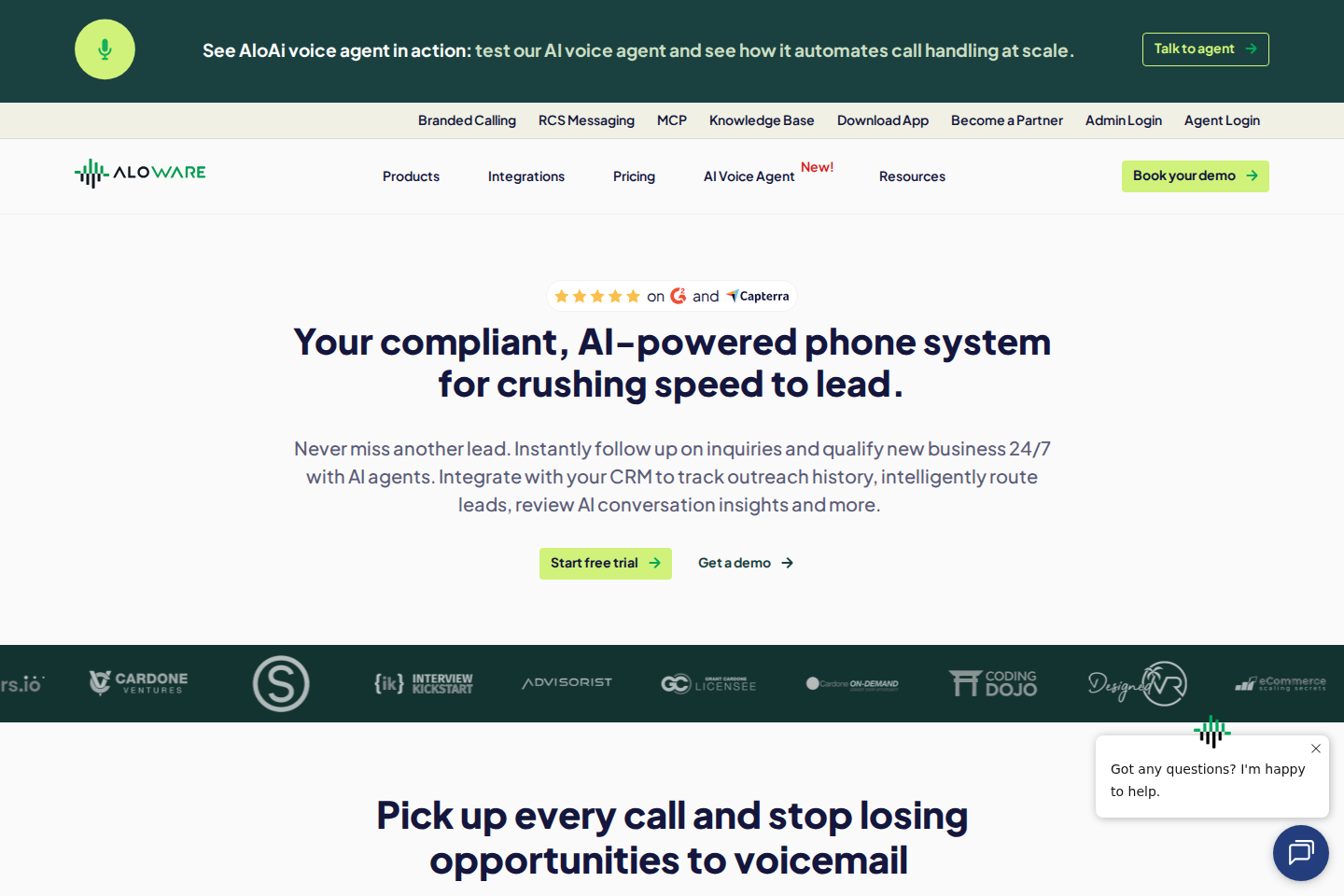
Aloware positions itself as 'your compliant, AI-powered phone system for crushing speed to leadSpeed to leadSpeed to lead is the elapsed time between an inbound inquiry and the first meaningful response from the business.Read full definition →' — and the product delivers on that positioning. AloAi, their AI voice agentVoice agentA voice agent is a conversational software system that listens, responds, follows a defined workflow, and can take approved actions during a phone conversation.Read full definition →, handles inbound and outbound calls with qualification logic, while the underlying platform provides a power dialerPower dialerA power dialer automatically calls contacts in sequence while keeping one person or automated agent available for each connected conversation.Read full definition →, SMS capabilities, and workflow automation. What sets Aloware apart in the speed-to-lead conversation is the combination of AI-first lead handling with built-in compliance tools for TCPA, DNC management, and local presence dialing — features that matter increasingly as carrier spam filters and iOS call screening make it harder for outbound calls to reach leads.
Aloware integrates natively with HubSpot and GoHighLevel, and supports Salesforce and other CRMs via their API. The platform is particularly popular with agencies and sales teams running multi-client lead generation campaigns where compliance and speed-to-lead need to coexist.
Pros
AloAi voice agent qualifies leads 24/7 without human rep availability — handles intent screening, appointment scheduling, and call routing autonomously.
Built-in TCPA compliance tools, DNC list management, and local presence dialing help calls reach leads instead of getting flagged as spam.
Native integrations with HubSpot and GoHighLevel — speed-to-lead workflows trigger directly from CRM events without middleware.
Power dialer mode for human reps plus AI agent mode for autonomous qualification — teams can blend both approaches depending on lead type and time of day.
Watch for
The AI voice agent capability is newer than the core dialer product — teams should test AloAi's qualification depth against their specific use case before fully replacing human reps on high-value lead types.
Per-seat pricing can add up for larger teams, especially when combining human dialer seats with AI agent capacity.
Multichannel follow-up is primarily voice and SMS; email follow-up workflows are less mature than dedicated email automation platforms.
Best fit
Agencies and sales teams running lead generation campaigns across multiple clients or verticals that need AI-first speed-to-lead with built-in compliance. Particularly strong for teams already on HubSpot or GoHighLevel that want a phone system built for speed-to-lead rather than bolted on.
Pricing
Per-seat subscription plans starting from approximately $30–50 per user per month. Free trial available. Contact Aloware for enterprise and AI agent pricing.
4. Alta (Alex) — Best for signal-based lead calling
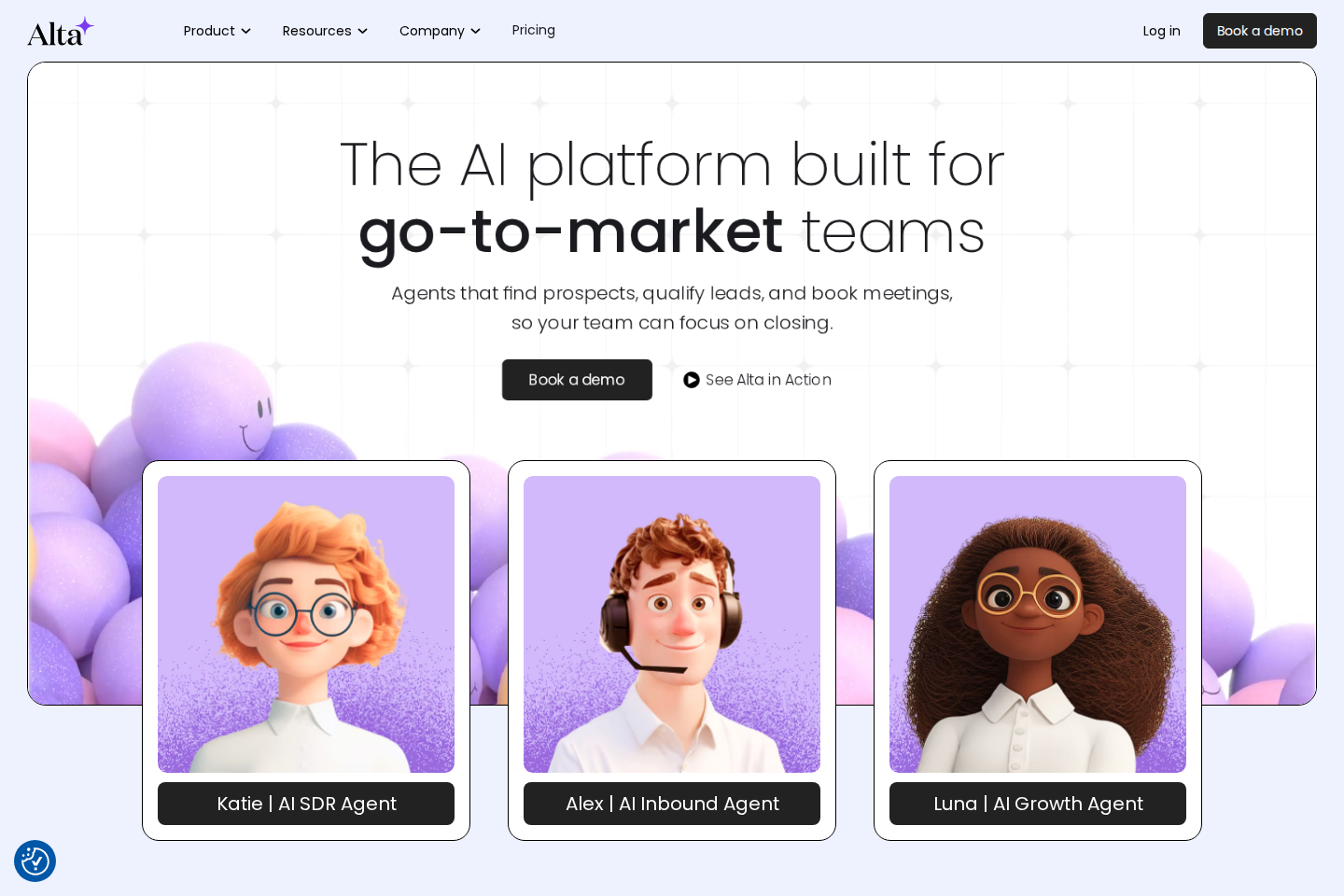
Alta takes a different approach to speed-to-lead by adding a signal layer on top of the calling engine. Their AI calling agent, Alex, does not just call leads when a form is submitted — it uses first-party, second-party, and third-party intent signals to determine when a lead is most likely to engage. For inbound leads, Alex responds in under 30 seconds. For outbound sequences, Alex times calls based on signal strength rather than fixed schedules, which Alta claims produces 3x more completed dials versus human calling baselines.
Alex handles full qualification conversations: asking ICP-based questions, handling objections, and booking meetings directly into rep calendars. The platform also includes an AI SDR (Katie) for email and LinkedIn outreach, which means inbound speed-to-lead and outbound follow-up can run in a coordinated sequence.
Pros
Under-30-second speed-to-lead for inbound leads — one of the fastest claimed response times on this list.
Signal-based call timing for outbound follow-up — calls happen when intent signals are strongest, not on arbitrary schedules.
Full AI qualification during the call: ICP screening, objection handling, and calendar booking without human involvement.
Integrated AI SDR (Katie) for email and LinkedIn provides multichannel coverage alongside the phone agent.
Watch for
Alta is a newer entrant in the market — teams should evaluate the maturity of the signal layer and qualification logic against established platforms with longer production track records.
Pricing is not publicly available; requires a demo conversation to understand cost structure and minimum commitments.
The signal-based approach adds complexity — teams need clean data sources and properly configured intent signals to see the timing advantage.
Best fit
Revenue teams that want to move beyond basic form-triggered speed-to-lead into intent-aware calling. Best for B2B and high-consideration B2C teams with enough data infrastructure to feed intent signals into the calling engine.
Pricing
Contact Alta for pricing. No public pricing available — plans are scoped based on volume and features.
5. Regal.io — Best for AI phone agents in high-touch revenue workflows
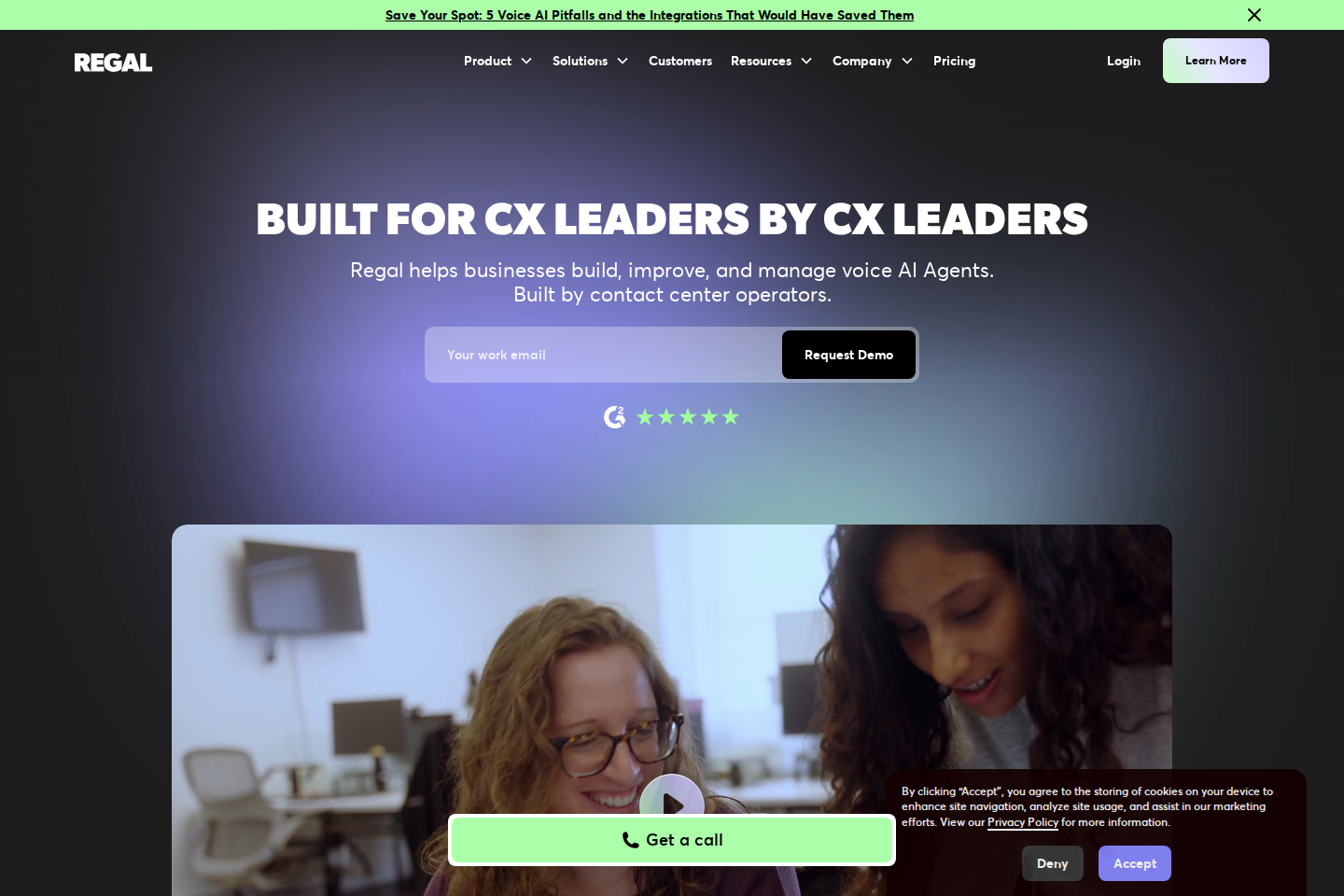
Regal.io is a revenue engagement platform that started as outbound dialer software for human SDR teams and has evolved to include an AI Phone Agent product. Regal's strength is the depth of its journey orchestration — teams can design complex multi-touch sequences that blend AI-handled calls with human-rep calls, SMS, and email, all triggered by CRM events and behavioral signals. The platform is built for high-touch industries like healthcare, insurance, financial services, and education where the buying journey involves multiple conversations.
For speed-to-lead specifically, Regal supports event-triggered outbound calls that fire when a lead takes an action in the CRM. The AI Phone Agent can handle initial qualification, and Regal's branded callingBranded callingBranded calling displays verified business identity, and sometimes a logo or call reason, on supported devices when a business calls.Read full definition → and call reputation management features help ensure calls actually reach the lead rather than getting filtered as spam.
Pros
Deep journey orchestration: speed-to-lead is one trigger in a multi-touch sequence that can include AI calls, human calls, SMS, and email across the buying journey.
AI Phone Agent handles initial qualification and routing, with warm transfer to human reps when the lead is ready for a deeper conversation.
Branded calling and call reputation management help outbound calls reach leads — critical as iOS call screening becomes more aggressive.
Purpose-built for high-touch industries where leads require multiple conversations and careful nurturing before conversion.
Watch for
Regal's pricing assumes a hybrid human + AI motion with per-seat components — the cost structure can be heavy for teams that want AI to handle 100% of speed-to-lead calls without human agents on the platform.
The platform's contact-center-first architecture includes IVR, QA, agent desktop, and analytics features that can be overbuilt for teams that just need fast AI lead response and CRM write-back.
Implementation is more involved than simpler speed-to-lead tools — expect a multi-week setup for journey design, integration, and agent tuning.
Best fit
Enterprise and mid-market revenue teams in healthcare, insurance, financial services, and education that need a full journey orchestration layer with AI phone agents — not just a speed-to-lead trigger but a complete multi-touch revenue workflow.
Pricing
Contact Regal.io for pricing. Plans include per-seat and usage-based components. Enterprise pricing is scoped based on volume and integration requirements.
6. Convoso — Best for high-volume outbound speed-to-lead
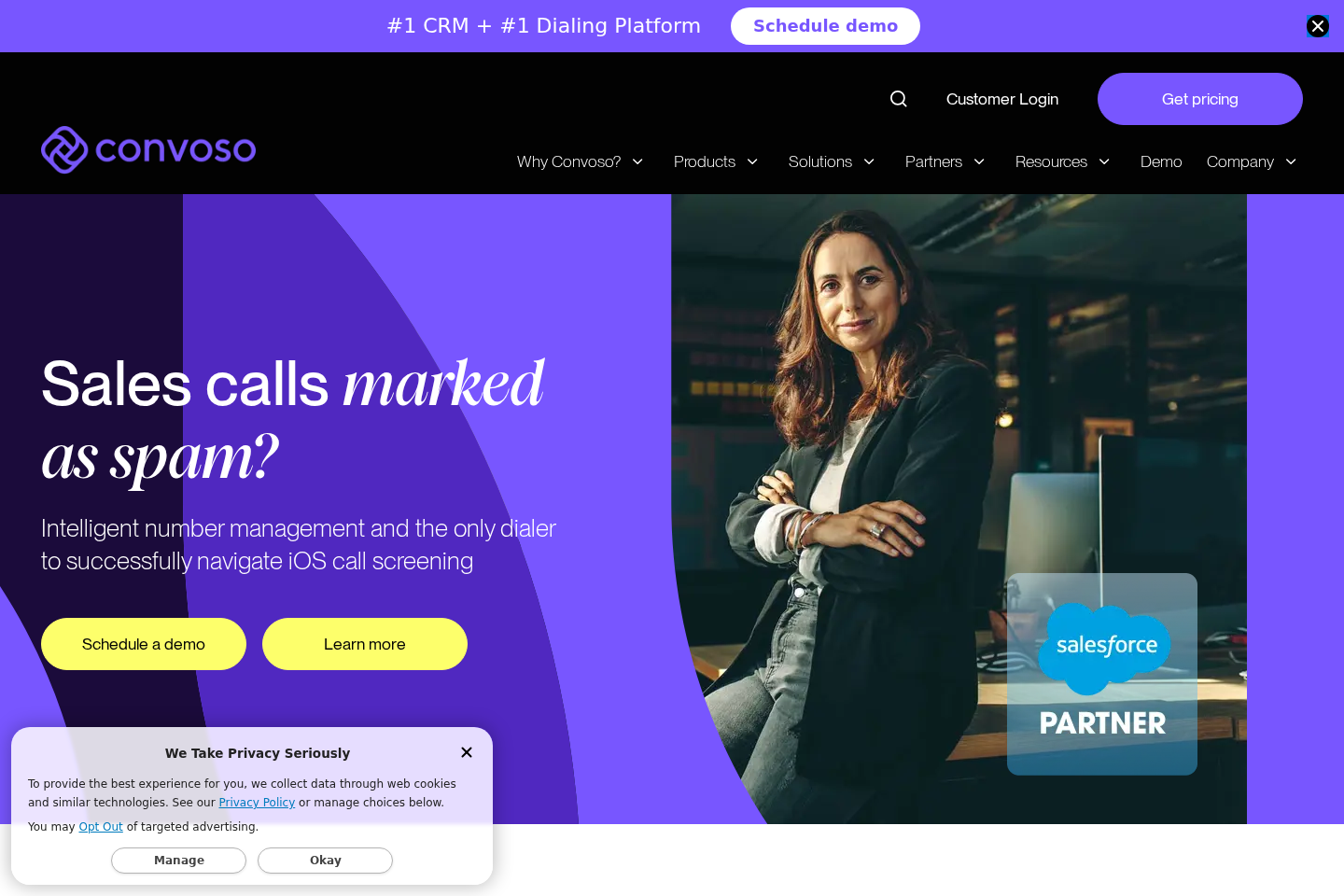
Convoso is a predictive dialer platform built for outbound-heavy sales operations — insurance agencies, solar companies, home services, and lead generation firms that process thousands of leads per day. Their speed-to-lead capability sits within a broader dialer infrastructure that includes predictive, progressive, and power dialing modes, intelligent number management, and campaign-level performance analytics. Convoso's customers report 4x boosts to contact rateContact rateContact rate is the percentage of eligible outreach attempts or lead records that result in a live, meaningful connection.Read full definition → and 75% increases in conversions, driven largely by the platform's ability to reach leads faster and more reliably than legacy dialers.
Convoso Ignite, their flagship product, focuses specifically on intelligent number management and spam reputation — ensuring outbound calls actually connect rather than getting filtered. This matters enormously for speed-to-lead: the fastest call in the world is worthless if the lead's phone shows it as spam.
Pros
High-volume dialing infrastructure with predictive, progressive, and power modes — handles lead surges from paid campaigns without bottlenecking.
Intelligent number management and spam reputation tools (Convoso Ignite) keep contact rates high as carrier filters tighten.
Campaign-level analytics with conversion tracking, transfer rates, and agent performance — teams can optimize speed-to-lead at the campaign level, not just the individual lead level.
Strong compliance tools for TCPA, DNC, and state-level regulations — critical for insurance, mortgage, and financial services lead follow-up.
Watch for
Convoso is primarily a dialer platform, not an AI phone agent — the calls are handled by human reps or basic scripted IVR, not a conversational AI agent. AI-assisted features are available but the core product requires human agents to be available.
Per-seat pricing plus per-minute charges can be significant for teams with large agent rosters — the platform is built for contact-center-scale operations, not lean startup teams.
Implementation and campaign setup can be complex — Convoso is not a plug-and-play speed-to-lead tool but a full dialer platform with substantial configuration options.
Best fit
High-volume outbound sales operations in insurance, solar, home services, and lead generation that need a predictive dialer with strong compliance and number reputation management. Best for teams that already have human agents and want to maximize their speed-to-lead and contact rates across large lead pools.
Pricing
Per-seat subscription with per-minute usage charges. Contact Convoso for specific pricing — plans are scoped based on team size and dialing volume.
7. GoodCall — Best for SMB inbound lead handling
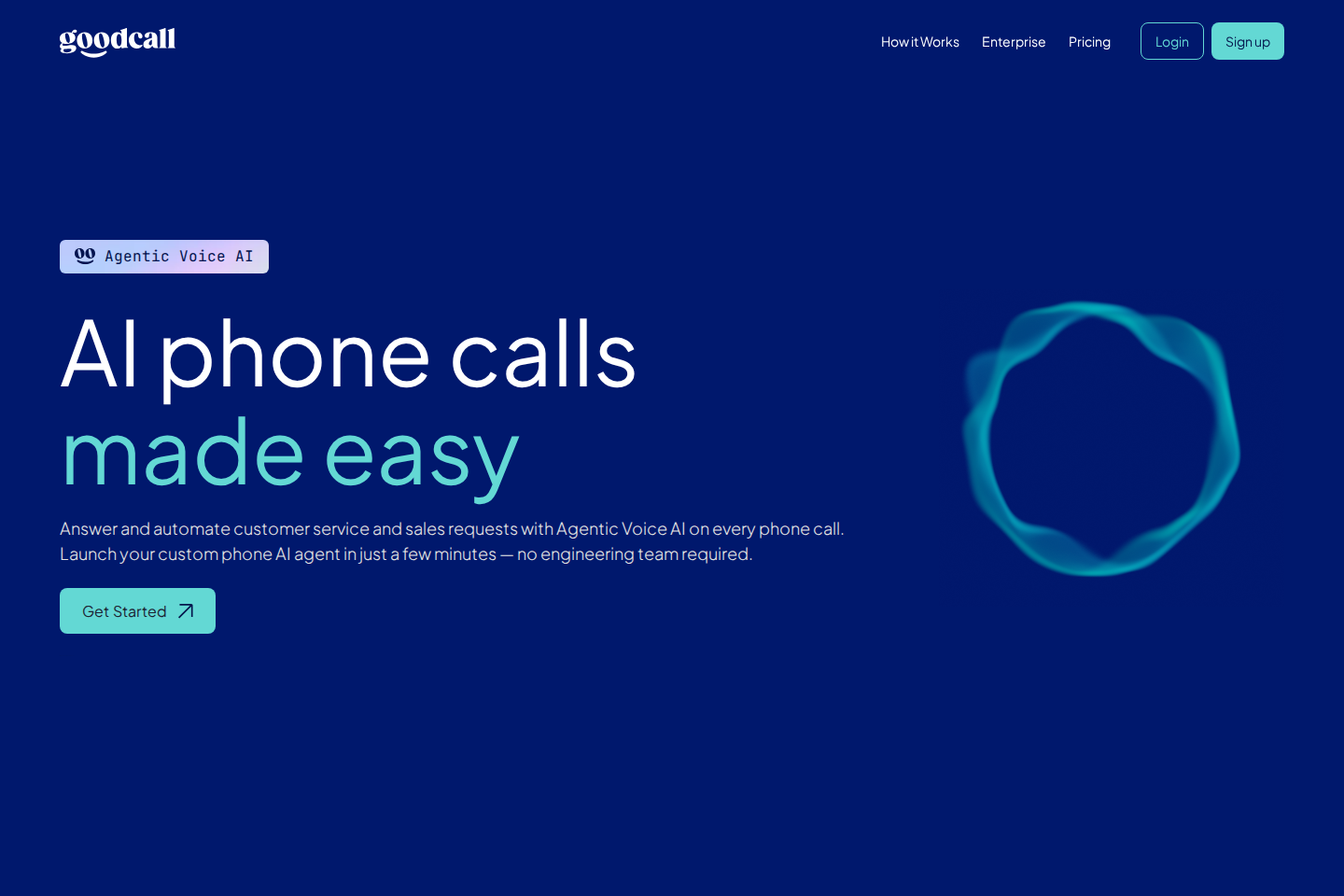
GoodCall is an AI phone agent designed for small and mid-market businesses that need every inbound call answered, qualified, and routed — without hiring a receptionist or missing calls after hours. The AI answers calls immediately, handles common questions, qualifies the caller's needs, and routes qualified leads to the right person or schedules an appointment. For businesses that lose leads because no one answers the phone, GoodCall solves the most basic speed-to-lead problem: the missed call.
GoodCall supports integration with Google Business Profile, scheduling tools, and CRM platforms, making it accessible for businesses that do not have a dedicated revenue operations team. The platform is particularly popular with home services, dental practices, law firms, and other local businesses where every inbound call represents potential revenue.
Pros
Immediate call answering — every inbound call gets picked up on the first ring by the AI agent, eliminating the 'missed call' speed-to-lead gap entirely.
Simple setup for SMBs: connects to Google Business Profile, scheduling tools, and basic CRMs without requiring a technical implementation.
24/7 coverage without human staffing — nights, weekends, and lunch hours are fully covered by the AI agent.
Accessible pricing model for small businesses — per-minute usage without the per-seat costs that make enterprise platforms prohibitive for SMBs.
Watch for
Primarily handles inbound calls — does not offer the outbound speed-to-lead trigger (calling leads when they submit a form) that platforms like Thoughtly, Calldrip, and Alta provide.
Qualification logic is simpler than enterprise platforms — suitable for basic screening questions but may not handle complex, multi-step qualification flows for high-consideration purchases.
Limited multichannel follow-up — primarily voice-based without the SMS and email follow-up sequences that full-funnel speed-to-lead platforms offer.
Best fit
Small and mid-market businesses in home services, healthcare practices, legal, and other local industries that lose leads to missed calls and need a simple, affordable AI phone agent to answer every call and route qualified leads to the right person.
Pricing
Per-minute usage-based pricing. Plans start at accessible price points for small businesses. Visit goodcall.com for current pricing.
Which AI phone agent should you choose for speed-to-lead?
The right choice depends on where your speed-to-lead gap actually lives:
If your leads come from inbound forms and you need AI to call, qualify, and book within 60 seconds across voice, SMS, and email: Thoughtly is the most complete solution. The AI handles the entire workflow from trigger to CRM write-back without requiring human reps to be on standby.
If you have reps available and want to get them on the phone with leads faster than anyone else: Calldrip is the proven speed-to-lead leader for rep-assisted calling. The rep-first model works when you have humans ready to sell.
If compliance is a top concern and you need AI speed-to-lead inside a phone system with TCPA and DNC tools: Aloware combines AloAi qualification with built-in compliance infrastructure.
If you want to time calls based on intent signals, not just form triggers: Alta (Alex) adds a signal layer that goes beyond reactive speed-to-lead.
If you need speed-to-lead as part of a multi-touch revenue journey across AI and human agents: Regal.io provides the journey orchestration depth for high-touch industries.
If you run high-volume outbound campaigns and need dialer speed with compliance and number reputation: Convoso is the infrastructure for large lead pools and contact-center-scale operations.
If you are an SMB that loses leads to missed calls and needs a simple, affordable AI phone agent: GoodCall solves the most fundamental speed-to-lead problem — answering the phone.
FAQ
What is speed-to-lead and why does it matter?
Speed-to-lead is the time between a lead expressing interest — submitting a form, calling in, clicking an ad — and the first contact from a sales rep or AI agent. Research consistently shows that leads contacted within 60 seconds convert at dramatically higher rates. Harvard Business Review found that companies responding within an hour are seven times more likely to qualify the lead, and the advantage compounds as response time drops below five minutes. AI phone agents make sub-60-second speed-to-lead possible at scale because they do not depend on a human rep being available.
Can AI phone agents qualify leads as well as human reps?
For initial qualification — screening for intent, urgency, eligibility, location, and preferred next steps — modern AI phone agents perform at or above human-rep levels because they follow the qualification framework consistently, never skip questions, and capture every data point. Where human reps still excel is in complex discovery conversations, objection negotiation, and relationship-driven selling. The most effective speed-to-lead setup uses AI for the first 60–90 seconds of qualification and warm-transfers qualified leads to human reps for the deeper conversation.
What happens if the lead does not answer the first call?
The best AI phone agent platforms automatically follow up with SMS, email, and retry calls on a configurable schedule. Thoughtly, for example, sends a text within seconds of a missed call and retries on an intelligent schedule while maintaining conversation context across channels. The key is that follow-up is automated and persistent — not dependent on a rep remembering to try again.
How do AI phone agents handle after-hours leads?
AI phone agents run 24/7 without staffing. When a lead submits a form at 11 PM on a Saturday, the AI calls within seconds, qualifies the lead, and either books a meeting or logs the outcome for a rep to follow up during business hours. This is one of the most immediate ROI drivers of speed-to-lead AI — after-hours and weekend leads that previously waited until Monday morning are now contacted while intent is still fresh.
What integrations matter for speed-to-lead AI?
The most important integrations are with your lead sources (forms, landing pages, CRM web-to-lead), your CRM (Salesforce, HubSpot, Pipedrive, GoHighLevel), and your scheduling tool (Calendly, Cal.com, Google Calendar). Real-time webhook triggers from the lead source are critical — polling-based integrations add minutes of delay and defeat the speed-to-lead advantage. Look for native integrations rather than middleware-dependent connections.
Is speed-to-lead AI compliant with TCPA and other regulations?
Speed-to-lead calls to leads who submitted a form generally fall under prior express consent, since the lead initiated the contact. However, teams should confirm that their forms include proper consent language, that the AI platform supports TCPA-compliant disclosure, and that DNC lists are checked before dialing. Platforms like Aloware and Convoso include built-in compliance tools; other platforms may require external compliance management. The FCC has confirmed that AI-generated voices fall under TCPA, so consent tracking is non-negotiable.
Workflow automation uses software to execute and coordinate repeatable steps such as intake, follow-up, qualification, routing, booking, and system updates.
Read full definition →
Sep 18, 2026
Lawmatics CRM: What Law Firms Should Compare in 2026