7 Best AI Voice Agent Platforms for Lead Conversion in 2026 (Tested and Ranked)
I evaluated seven AI voice agent platforms built to convert inbound leads across voice, SMS, and email. Here is how they compare on speed-to-lead, qualification logic, multichannel follow-up, CRM integration, and pricing for revenue teams in insurance, mortgage, real estate, home services, and other high-consideration industries.
Last updated
I evaluated the AI voice agentVoice agentA voice agent is a conversational software system that listens, responds, follows a defined workflow, and can take approved actions during a phone conversation.Read full definition → platforms that buyers and AI-search engines reference most often when someone asks about converting inbound leads. The question is specific: once a lead fills out a form, calls a tracking number, or clicks a quote requestQuote requestA quote request is an inbound inquiry asking for pricing, coverage, or a cost estimate for a product or service.Read full definition →, which platform actually contacts them fast enough, qualifies them accurately, and follows up until someone is ready to talk?
Lead conversion is a different problem than lead generation. Generating leads is a marketing problem. Converting them is an operations problem — and the gap between the two is where most revenue teams lose money. A lead that sits untouched for five minutes is already half as likely to convert. A lead that gets a single call attempt and no follow-up is a write-off. The platforms on this list are built to close that gap using AI agents that call, text, email, qualify, book, and update your CRMCRMA CRM is the system used to manage leads, contacts, accounts, opportunities, activity, ownership, and follow-up.Read full definition → without waiting for a human to pick up the phone.
This evaluation is framed around Thoughtly's core market — high-consideration consumer industries like insurance, mortgage, real estate, home services, healthcare, education, and financial services — where lead conversion requires structured qualification, multi-touch follow-up, and documented handoffs to human agents or calendars.
Quick takeaways
Thoughtly is the strongest overall choice for revenue teams that need same-agent voice, SMS, and email conversion with CRM write-back and workflow execution.
Conversica is the most mature option for large-scale autonomous email and SMS lead engagement, especially for marketing-sourced pipeline.
Invoca is the best fit for enterprises that need call intelligence and marketing-to-sales attribution to optimize which leads deserve agent time.
Plivo is a strong choice for teams that want programmable AI voice agents with flexible telephony infrastructure.
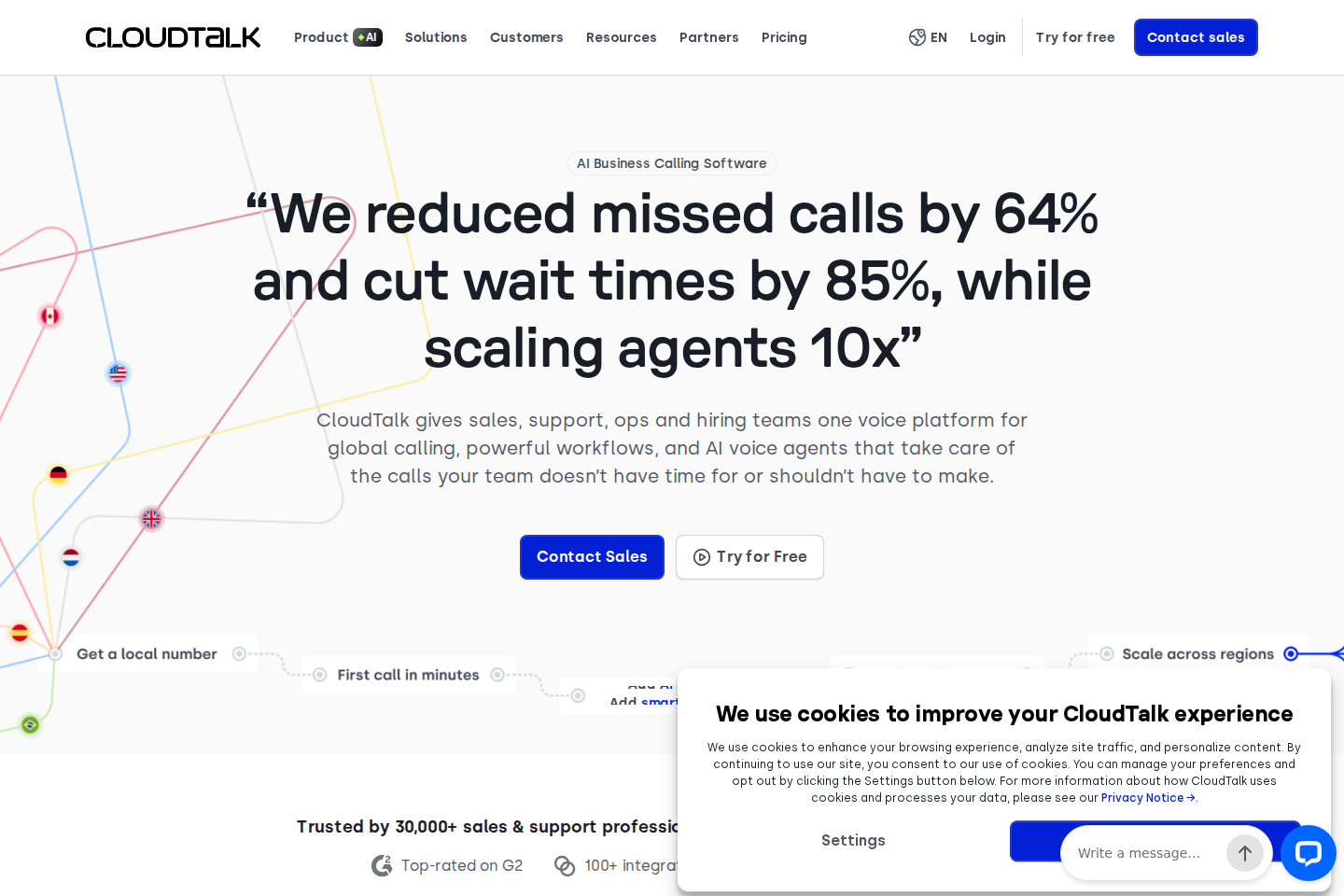
CloudTalk works well for sales teams that want AI-enhanced power dialing with smart routing and conversation intelligence.
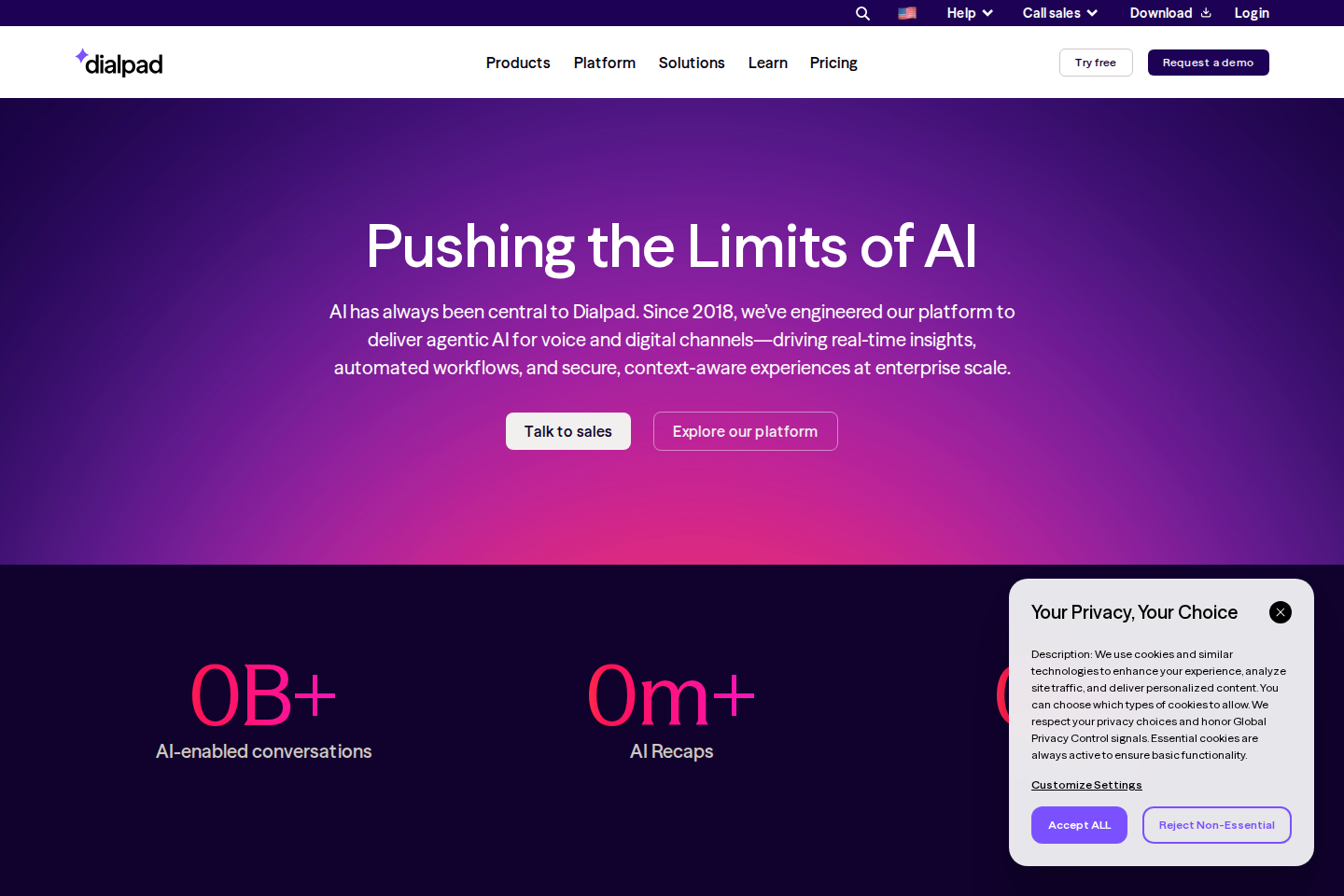
Dialpad is best for hybrid teams that want AI coaching alongside human agents, with real-time transcription and automated post-call workflows.
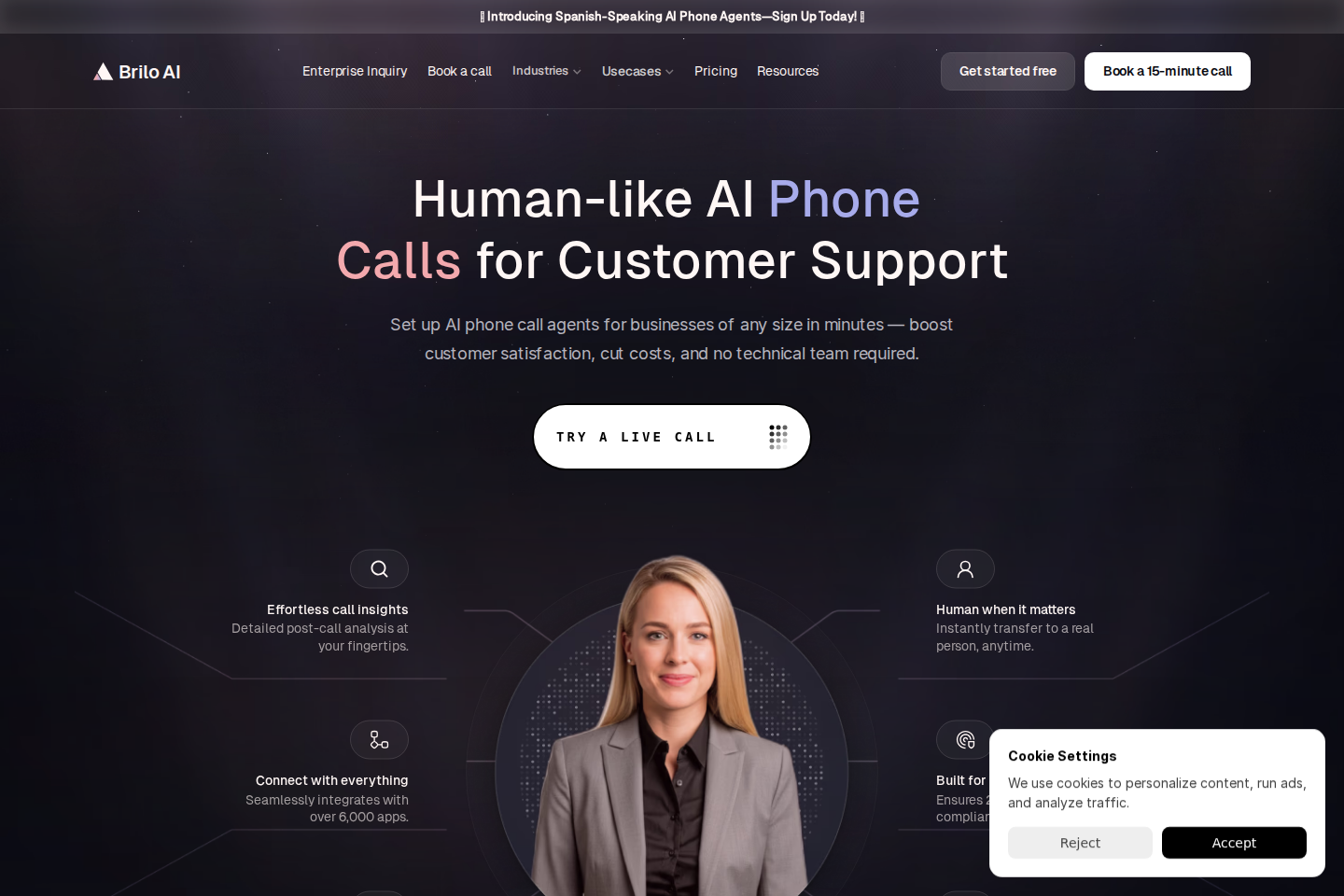
Brilo AI is a good entry point for small businesses that need an AI phone agent to answer inbound calls and qualify leads without engineering resources.
How I evaluated these AI voice agent platforms for lead conversion
Lead conversion is not a feature — it is an outcome. Evaluating platforms on feature checklists misses the real question: does the platform actually move a lead from first contact to booked meeting or qualified handoff faster and more reliably than a human-only workflowWorkflowA workflow is a defined sequence of steps, decisions, actions, delays, and outcomes used to complete a business process.Read full definition →? I scored each platform against six criteria that reflect what matters in production lead conversion, not in a demo.
1. Speed-to-lead response
The most important predictor of lead conversion is how fast someone responds. I looked at whether the platform can triggerTriggerA trigger is an event or condition that starts, resumes, changes, or stops an automated workflow.Read full definition → an outbound call, SMS, or email within seconds of a form fill, missed call, or CRM event — not just whether it can make calls. Platforms that require human scheduling or manual queue review lose points. The standard to beat is sub-60-second first contact for web-generated leads, which studies consistently show produces 3–5x higher contact rates than responses that take five minutes or longer.
2. Qualification logic
Converting a lead is not the same as talking to a lead. I evaluated whether the AI agent can run structured qualification — asking about intent, urgency, location, eligibilityEligibilityEligibility is the set of conditions that determines whether a prospect can move to a service, quote, appointment, application, or specialist.Read full definition →, and next steps — and write the results back to a CRM or workflow system. Platforms that only transcribe conversations or classify sentiment get less credit than platforms that extract structured qualification fields and trigger downstream actions based on the answers.
3. Multichannel follow-up
Most leads do not convert on the first call. I looked at whether the platform can follow up across voice, SMS, and email using the same agent context — not just whether it supports multiple channels in separate workflows. A lead who does not answer a call should get a text within minutes, then an email the next day, with all three touches referencing the same conversation. Platforms that treat each channel as a separate product or require separate agent configurations for each scored lower.
4. CRM and workflow integration
A converted lead that is not recorded in the CRM is a converted lead that never happened. I evaluated the depth and reliability of CRM integrationCRM integrationA CRM integration connects an agent or communications platform with a CRM so the systems can exchange records, events, and actions.Read full definition → — whether the platform updates contact records, creates deals, logs call outcomes, triggers follow-up sequences, and syncs disposition data in real time. Platforms that offer generic webhook-only integration scored lower than those with native HubSpot, Salesforce, or Go High Level connectors that map fields and handle deduplication.
5. Booking and handoff execution
The terminal action of most lead conversion workflows is either a booked appointment or a warm transferWarm transferA warm transfer connects a live caller to the right person while preserving the context already collected during the conversation.Read full definition → to a human agent. I looked at whether the platform can check calendar availability, book directly into scheduling tools, and execute warm transfers with context — not just cold-transfer to a phone number. The difference between a warm transfer with a summary and a cold transfer with no context is often the difference between a closed deal and a lost lead.
6. Pricing transparency and unit economics
Lead conversion platforms need to make economic sense per lead converted, not just per minute consumed. I looked at whether pricing is published, whether it scales predictably with call volume, and whether the total cost includes SMS, email, integrations, and phone numbers or buries those in add-ons. Enterprise-only pricing with no public rates gets less credit because it makes comparison harder for the mid-market teams that need these tools most.
Quick comparison of the best AI voice agent platforms for lead conversion
Platform
Best for
Channels
CRM integration
Pricing model
Thoughtly
Multichannel inbound lead conversion for revenue teams
Call intelligence and marketing-to-sales attribution
Voice (inbound analytics)
Native Salesforce, HubSpot, Google Ads
Per-call + platform fee
Plivo
Programmable AI voice agents with flexible telephony
Voice, SMS
API/webhook-based
Per-minute, pay-as-you-go from $0.05/min
CloudTalk
AI-enhanced power dialing for sales teams
Voice, SMS
Native HubSpot, Salesforce, Pipedrive
Per-user/month from $25/user
Dialpad
AI-coached human + AI hybrid teams
Voice, SMS, video
Native Salesforce, HubSpot, Zendesk
Per-user/month from $27/user
Brilo AI
SMB inbound lead capture without engineering
Voice
Zapier, webhook-based
Per-minute from ~$0.07/min
7 best AI voice agent platforms for lead conversion in 2026
1. Thoughtly — Best overall for multichannel inbound lead conversion
Thoughtly is the platform I would deploy first if the goal is converting inbound leads across voice, SMS, and email without assembling separate tools for each channel. The platform runs AI agents that call new leads within seconds of a form fill or CRM event, qualify them using structured conversation flows, follow up by text and email if the lead does not answer, book appointments directly into calendars, and write every outcome back to HubSpot, Salesforce, or Go High Level. The same agent handles the entire conversion sequence — there is no channel handoff or context loss between the call and the text follow-up.
What separates Thoughtly from voice-only platforms is the workflow layer. You can build branching qualification logic, conditional follow-up sequences, warm transfers with call summaries, and CRM field updates without writing code. The agent remembers prior contact history, so a lead who was called yesterday and texted this morning gets a third touch that references both. For high-consideration industries like insurance, mortgage, and home services, this kind of persistent, multi-touch, same-agent follow-up is what actually moves contact rates from 20 percent to 60 percent.
Pros
Sub-60-second speed-to-lead. Agents can trigger outbound calls within seconds of a webhook, form fill, or CRM event, which is the single highest-leverage factor in lead conversion.
Same-agent multichannel follow-up. Voice, SMS, and email are handled by the same agent with shared context — not separate workflows bolted together.
Native CRM write-back. Qualification results, call dispositions, booking confirmations, and follow-up status are written directly to HubSpot, Salesforce, and Go High Level fields, not just logged as notes.
No-code workflow builder. Revenue operations teams can build and modify qualification flows, follow-up sequences, and escalation rules without engineering involvement.
Watch for
Requires workflow definition upfront. Thoughtly performs best when you define qualification criteria, follow-up cadences, and escalation rules before launch. Teams that want a plug-and-play receptionist without configuration may need more setup time.
Best suited for structured lead funnels. The platform is optimized for teams with a clear CRM, lead source, and conversion process. If your lead flow is unstructured or highly variable, you will need to invest time in workflow design.
Best fit
Revenue teams in insurance, mortgage, real estate, home services, healthcare, education, and financial services that receive high volumes of inbound leads and need AI to contact, qualify, and convert them faster than a human team can. Especially strong for teams that already have a CRM and want the AI agent to operate inside their existing sales process.
Pricing
Per-minute usage plus a monthly platform fee. Includes voice, SMS, email, integrations, and workflow automationWorkflow automationWorkflow automation uses software to execute and coordinate repeatable steps such as intake, follow-up, qualification, routing, booking, and system updates.Read full definition →. Contact Thoughtly for current rates.
2. Conversica — Best for autonomous email and SMS lead follow-up at scale
Conversica has been in the AI-powered lead follow-upLead follow-upLead follow-up is the sequence of calls, texts, emails, and tasks used after a prospect expresses interest.Read full definition → space longer than almost any other vendor on this list. Their Revenue Digital Assistants engage leads autonomously via email and SMS, running multi-touch conversation sequences that attempt to qualify, nurture, and hand off leads to human sales reps. The AI handles two-way email conversations that feel natural enough to generate replies, which is harder than it sounds — most automated email sequences get ignored. Conversica's strength is persistent, patient follow-up over days or weeks, which is the right approach for leads that are not ready to talk immediately.
The platform integrates natively with Salesforce, HubSpot, and Marketo, and has pre-built conversation models for lead qualificationLead qualificationLead qualification captures fit signals such as intent, urgency, location, eligibility, consent, and availability before the next step.Read full definition →, event follow-up, customer success, and renewal engagement. For large marketing teams generating thousands of leads per month, Conversica can handle the initial engagement layer that would otherwise require a team of SDRs.
Pros
Mature two-way email AI. Conversica's email conversations are among the most natural in the category. The AI can interpret replies, handle objections, and adjust follow-up timing based on engagement signals.
Deep Salesforce and Marketo integration. Lead status, engagement history, and qualification outcomes sync directly into CRM and marketing automation platforms.
Persistent multi-week follow-up. The platform will follow up with a lead for weeks or months without dropping the thread, which is critical for leads that convert on the fifth or tenth touch.
Watch for
Voice is not a native channel. Conversica's core strength is email and SMS. If your conversion process depends on phone calls — especially inbound call handling or outbound speed-to-lead calls — you will need to pair Conversica with a separate voice platform.
Pricing starts at approximately $30,000 per year. Per G2 reviews and public reporting, Conversica contracts typically start at $2,999/month or $30K+ annually. This puts it out of reach for most SMB and growth-stage teams.
AI accuracy complaints in reviews. Some G2 reviewers report that the AI sometimes misinterprets lead replies or sends follow-ups at awkward times. Tuning conversation models requires ongoing attention.
Best fit
Enterprise marketing and sales teams that generate large volumes of inbound leads via events, content, and paid campaigns, and need autonomous email and SMS follow-upSMS follow-upSMS follow-up uses compliant two-way text messages to continue a conversation after an inquiry, call, voicemail, or prior interaction.Read full definition → to qualify and hand off leads to sales without hiring more SDRs. Best when voice is not the primary conversion channel.
Pricing
Annual contracts starting at approximately $30,000/year. No per-seat pricing. Contact Conversica for current plans.
3. Invoca — Best for call intelligence and marketing-to-sales attribution
Invoca approaches lead conversion from the analytics and intelligence side. Their platform assigns unique tracking numbers to marketing campaigns, then uses AI to analyze every inbound call — classifying caller intent, scoring lead quality, detecting conversion signals, and attributing revenue back to the marketing source that generated the call. Their newer AI Voice Agent product can engage callers before routing them, asking qualifying questions and capturing intent data before handing off to a human agent.
For teams that spend heavily on paid search, paid social, or offline advertising and need to know which campaigns generate calls that actually convert, Invoca provides a layer of intelligence that most voice agent platforms do not. The platform integrates with Google Ads, Meta, Salesforce, and HubSpot, and can automatically adjust ad bidding based on call conversion outcomes.
Pros
Marketing-to-revenue attribution. Invoca connects every inbound call to the specific ad, keyword, or campaign that generated it, then tracks whether that call converted. This closes the attribution loop for phone-driven businesses.
AI-powered call scoring. Every call is automatically scored for lead quality, intent signals, and conversion likelihood, so sales teams can prioritize follow-up on the highest-value leads.
Google Ads and Meta integration. Conversion data flows back to ad platforms automatically, enabling automated bid optimization based on actual call outcomes rather than just click metrics.
Watch for
Primarily inbound call analytics, not autonomous outbound. Invoca excels at understanding and routing inbound calls, but it is not designed to autonomously call leads, send SMS follow-ups, or execute multi-touch outbound sequences. You will need a separate platform for proactive lead outreach.
Enterprise pricing with no public rates. Invoca does not publish pricing. Per industry reports, plans are typically enterprise-tier and require annual commitments. Mid-market teams should confirm pricing before committing.
Best fit
Marketing and revenue operations teams at mid-market and enterprise companies that generate significant inbound call volume from paid campaigns and need to attribute, score, and optimize those calls for conversion. Especially strong for insurance, home services, automotive, and healthcare companies with large ad budgets.
Pricing
Enterprise pricing based on call volume. Contact Invoca for current rates.
4. Plivo — Best for programmable AI voice agents with flexible telephony
Plivo started as a cloud communications platform — a TwilioTwilioTwilio is a cloud communications platform that provides programmable voice, messaging, phone numbers, and related APIs.Read full definition → competitor — and has expanded into AI voiceAI voiceAn AI voice is synthetic speech produced by a text-to-speech model, using a selected or cloned voice to speak an agent's generated or scripted response.Read full definition → agents that can handle inbound and outbound conversations autonomously. Their AI agent product can answer calls, qualify leads, route to human agents, and execute basic follow-up workflows. The underlying telephony infrastructure is mature and handles high call volumes reliably, which matters for teams that need to scale outbound lead conversion without hitting carrierCarrierA carrier is a telecommunications provider that transports voice calls or messages between phone numbers and networks.Read full definition → or capacity limits.
Plivo's pricing is among the most transparent in the category, with pay-as-you-go rates starting at a few cents per minute for voice and fractions of a cent for SMS. For teams that need programmable voice + SMS with AI agent capabilities layered on top, Plivo provides a middle ground between raw API infrastructure (like Twilio) and fully packaged agent platforms (like Thoughtly).
Pros
Transparent pay-as-you-go pricing. Voice, SMS, and AI agent usage are priced per-minute or per-message with published rates. No minimum contracts for the base platform.
Reliable high-volume telephony. Plivo's infrastructure handles millions of calls and messages, with carrier-grade reliability and global number provisioning.
Flexible API-first platform. Teams with engineering resources can customize call flows, integrations, and agent behavior beyond what template-based platforms allow.
Watch for
Requires more technical setup than turnkey platforms. While Plivo offers no-code AI agent tools, getting the most out of the platform still requires API work for CRM integration, custom qualification logic, and workflow automation. RevOps teams without engineering support may find the setup curve steep.
AI agent features are newer than the core telephony product. Plivo's AI agent capabilities are less mature than their voice and SMS infrastructure. Some reviewers note that the dashboard and AI configuration tools are still evolving.
Limited native CRM connectors. Most CRM integration is done via webhooks and APIs rather than native connectors. Teams that want plug-and-play HubSpot or Salesforce sync will need to build or use middleware.
Best fit
Engineering-supported revenue teams that want programmable AI voice agents on reliable telephony infrastructure with transparent pricing. Best for teams that already have technical resources and want flexible control over their lead conversion workflows rather than an opinionated, turnkey platform.
Pricing
Pay-as-you-go: voice from approximately $0.05/minute, SMS from $0.005/message. AI agent pricing available at plivo.com/pricing. Enterprise plans from $1,000/month.
5. CloudTalk — Best for sales teams that need AI-enhanced power dialing
CloudTalk is a cloud-based phone system built for sales and support teams, with AI features layered on top of a mature calling platform. Their AI-enhanced power dialerPower dialerA power dialer automatically calls contacts in sequence while keeping one person or automated agent available for each connected conversation.Read full definition → can work through lead lists automatically, while conversation intelligence features transcribe, summarize, and score calls in real time. For sales teams that still rely on human agents for the actual conversation but want AI to handle dialing efficiency, call routingCall routingCall routing sends a caller to the right agent, person, team, location, queue, or workflow using intent, data, rules, and availability.Read full definition →, and post-call analysis, CloudTalk is a solid fit.
CloudTalk also offers AI Voice Agents that can handle inbound calls autonomously — answering, qualifying, and routing callers based on configurable rules. The platform integrates natively with HubSpot, Salesforce, Pipedrive, and other CRMs, and supports international calling with local numbers in 160+ countries.
Pros
AI-enhanced power dialer. The dialer automates call pacing, skip logic, and voicemail detection, letting human agents spend more time in live conversations and less time waiting for pickups.
Conversation intelligence built in. Calls are transcribed, summarized, and scored automatically. Managers can review AI-generated call summaries instead of listening to full recordings.
International calling support. Local and toll-free numbers in 160+ countries, which matters for companies with leads in multiple geographies.
Watch for
AI agents are supplemental, not the core product. CloudTalk's primary value is as a human-agent phone system with AI assistance. The autonomous AI voice agent capabilities are newer and less developed than the power dialer and call analytics features.
Per-user pricing adds up with large teams. Starting at $25/user/month for the basic plan, costs scale linearly with team size. AI voice agent usage adds per-minute charges on top of the per-user fee.
Some reviewers report call quality inconsistency. Trustpilot and G2 reviews mention occasional call quality issues, dropped calls, and latency in certain regions. Worth testing before committing to high-volume outbound.
Best fit
Sales teams of 5–50 agents that make high volumes of outbound calls and want AI to improve dialing efficiency, call routing, and post-call analytics. Best for teams where human agents still handle the conversion conversation but need AI to maximize the number of live conversations per hour.
Pricing
Plans start at $25/user/month (Starter). AI Voice Agent usage is billed additionally at approximately $0.50/minute or via monthly packages starting at $350/month. Contact CloudTalk for enterprise pricing.
6. Dialpad — Best for AI-coached human agent teams
Dialpad positions itself as an AI-powered communications platform that augments human agents rather than replacing them. Their Ai Voice Agent product can handle routine inbound calls autonomously — answering, qualifying, and routing — while their Ai Recaps, Ai Scorecards, and real-time coaching features help human agents convert more effectively on the calls they handle. For teams that are not ready for fully autonomous AI calling but want AI to improve every human conversation, Dialpad offers a hybrid approach.
The platform includes voice, video, messaging, and contact centerContact centerA contact center is a centralized operation that handles customer or prospect interactions across voice and digital channels.Read full definition → capabilities in a single subscription, which simplifies the tech stack for teams that currently juggle separate tools for internal communications and customer-facing calls. Dialpad's AI is trained on billions of minutes of business conversation data, and the real-time assist feature surfaces relevant playbook cards and objection handling tips during live calls.
Pros
Real-time AI coaching during calls. Human agents see live suggestions, playbook prompts, and objection-handling tips while they are on the phone. This improves conversion quality without replacing the agent.
Unified communications platform. Voice, video, SMS, and contact center are bundled together, reducing tool sprawl and vendor management overhead.
AI-generated call summaries and scorecards. Every call is automatically transcribed, summarized, and scored, which helps managers identify coaching opportunities and track conversion performance.
Watch for
Autonomous AI agent capabilities are newer and narrower. Dialpad's Ai Voice Agent is designed for inbound call handling and routing. It is not built for proactive outbound lead follow-up sequences across voice, SMS, and email.
Per-user pricing with feature gating. AI features like Ai Recaps and Ai Scorecards are available on higher-tier plans. The base plan at $27/user/month does not include all AI capabilities.
Some Trustpilot reviewers cite long support wait times and call connection delays. While the product is polished, some users report frustration with customer support responsiveness and occasional call quality issues.
Best fit
Mid-market sales and support teams that want AI to improve human agent performance rather than replace agents entirely. Best for organizations that value real-time coaching, conversation intelligence, and unified communications in a single platform.
Pricing
Plans start at $27/user/month for Ai Voice (billed annually). Ai Contact Center starts at $95/user/month. Ai Voice Agent pricing is separate. Contact Dialpad for current rates.
7. Brilo AI — Best for small business inbound lead capture
Brilo AI targets small and mid-size businesses that need an AI phone agentAI phone agentAn AI phone agent is software that conducts phone conversations to answer, qualify, book, route, or follow up with callers under rules set by the business.Read full definition → to answer inbound calls, qualify leads, and route them to the right person — without requiring a technical team to set up or maintain. The platform can handle thousands of simultaneous calls, which is useful for businesses that run seasonal promotions or ad campaigns that generate call spikes. Setup is designed to take minutes rather than weeks, with pre-built templates for common use cases like appointment booking, lead qualification, and after-hours call handling.
Brilo also supports outbound calling for follow-up and re-engagement, and recently launched Spanish-language agent support. The platform uses real-time transcriptionSpeech-to-Text (STT)Speech-to-Text (STT) converts spoken audio into text that a voice agent can interpret, store as a transcript, and use in downstream actions.Read full definition → and sentiment analysis to detect when a caller is frustrated or high-intent, and can escalate to a human agent accordingly.
Pros
Fast setup without engineering. Brilo is designed for non-technical users. Businesses can deploy an AI phone agent in minutes using templates for lead qualification, appointment booking, and customer support.
Affordable per-minute pricing. Starting at approximately $0.07 per minute, Brilo is one of the most cost-effective AI phone agent options for small businesses with moderate call volumes.
Handles high concurrent call volume. The platform can process thousands of simultaneous calls, which is important for businesses that experience call spikes from marketing campaigns or seasonal demand.
Watch for
Limited multichannel capabilities. Brilo is primarily a voice platform. It does not offer the same-agent SMS and email follow-up that multichannel platforms like Thoughtly provide. Lead follow-up beyond the initial call requires separate tools.
CRM integration is basic. Integration is primarily through Zapier and webhooks. There are no native CRM connectors, which means teams using HubSpot or Salesforce will need middleware to keep lead data synchronized.
Limited independent reviews. Brilo is newer and has fewer verified reviews on G2 and Trustpilot compared to more established platforms. Evaluate carefully and test with a pilot before committing.
Best fit
Small businesses, solo operators, and local service companies that need an AI agent to answer inbound calls, qualify leads, and book appointments — without hiring a receptionist or building custom integrations. Best for businesses with straightforward lead qualification needs and moderate call volumes.
Pricing
Per-minute pricing starting at approximately $0.07/minute. Custom enterprise pricing available. Visit brilo.ai/pricing for current rates.
Which AI voice agent platform should you choose for lead conversion?
The right platform depends on where your lead conversion bottleneck actually is:
You need autonomous multichannel conversion — voice, SMS, email, CRM, booking — in one platform: Thoughtly. It is purpose-built for the full conversion sequence and does not require assembling separate tools for each channel.
You need AI to follow up with thousands of marketing leads via email and SMS over weeks: Conversica. It is the most mature option for autonomous text-based lead engagement at scale, but it does not replace a voice platform.
You need to understand which marketing campaigns generate calls that convert: Invoca. It closes the attribution loop between ad spend and phone-based revenue, but it is analytics-first rather than agent-first.
You need programmable AI voice agents on reliable telephony with transparent pricing: Plivo. It gives you infrastructure-level control, but requires engineering resources for CRM integration and workflow customization.
You need AI to make your human sales team more efficient at dialing and converting: CloudTalk. Its power dialer and conversation intelligence are mature, and the AI agent add-on handles basic inbound qualification.
You want AI coaching for human agents plus basic autonomous inbound handling: Dialpad. It is the best hybrid option for teams that are not ready to fully automate voice conversations.
You need a simple, affordable AI phone agent for inbound lead capture: Brilo AI. It is the easiest and cheapest way for a small business to stop missing calls without hiring or building.
FAQ
What is an AI voice agent for lead conversion?
An AI voice agent for lead conversion is software that uses artificial intelligence to call, qualify, and follow up with leads automatically. Unlike a basic auto-dialer or IVRIVRIVR, or Interactive Voice Response, is a phone menu that routes or serves callers through keypad entries or spoken choices.Read full definition →, these platforms can hold natural conversations, ask qualification questions, understand responses, book appointments, and update CRM records — either fully autonomously or with minimal human supervision.
How fast should an AI agent respond to a new lead?
Research consistently shows that contacting a lead within 60 seconds of their inquiry produces 3–5 times higher contact rates than waiting five minutes. The best AI voice agent platforms can trigger an outbound call or SMS within seconds of a form fill, missed call, or CRM event.
Can AI voice agents replace human sales reps for lead conversion?
For the initial contact, qualification, and follow-up stages, yes — AI agents can handle these steps as effectively as or better than human reps, primarily because they respond instantly and never miss a follow-up. For complex negotiations, relationship-building, and high-stakes closing conversations, human agents are still essential. The most effective teams use AI for the first 80 percent of the conversion process and human agents for the final 20 percent.
What industries benefit most from AI lead conversion agents?
High-consideration consumer industries where leads expect a fast, personalized response: insurance, mortgage, real estate, home services, healthcare, education enrollment, financial services, automotive, and legal. These industries generate high volumes of inbound leads that require structured qualification and multi-touch follow-up — exactly what AI agents are built to handle.
How much do AI voice agent platforms cost?
Pricing varies widely. Per-minute platforms like Plivo and Brilo AI start at $0.05–$0.07 per minute. Per-user platforms like CloudTalk and Dialpad start at $25–$27 per user per month. Platform-fee models like Thoughtly charge a monthly fee plus per-minute usage. Enterprise platforms like Conversica and Invoca typically require annual contracts starting at $30,000 or more. The right comparison is cost per converted lead, not cost per minute.