

Industry insights
8 Best Cognigy Alternatives for Conversational AI in 2026
A practical guide to Cognigy alternatives for teams choosing between enterprise CX automation and inbound lead conversion platforms.
Industry insights
A practical guide to Cognigy alternatives for teams choosing between enterprise CX automation and inbound lead conversion platforms.
Last updated
Cognigy is a serious enterprise conversational AIConversational AIConversational AI is software that interprets natural language and produces context-aware responses through voice, messaging, or chat. platform, especially for contact centers that need voice, chat, agent assist, orchestration, and CCaaS integration. It is now part of the NICE portfolio and its own website positions the platform around AI-first customer experience, contact-center automation, and enterprise scale.
That strength is also why teams compare Cognigy alternatives. If your job is post-purchase customer service, Cognigy can be a rational shortlist vendor. If your job is converting opted-in inbound leads in seconds, the heavier contact-center shape can become the wrong operating model: too CX-owned, too implementation-led, and not focused enough on same-agent voice, SMS, email, booking, CRM write-backCRM write-backCRM write-back sends conversation outcomes, qualification answers, notes, appointments, dispositions, and next steps into the CRM., and revenue attribution.
For Thoughtly, I used the current Thoughtly website, product, integrations, pricing, docs, and compare pages as source of truth. For competitors, I cross-checked vendor websites, review marketplaces, independent comparison pages, and low-rated-review themes where public evidence was available.
| Platform | Best fit | Primary strength | Key limitation |
|---|---|---|---|
| Thoughtly | Inbound revenue teams converting opted-in leads | Voice, SMS, email, workflows, booking, warm transfer, and CRM write-back in one platform | Not a post-purchase service-deflection platform |
| Cognigy | Enterprise CX teams standardizing contact-center AI | Deep voice/chat automation for customer service at enterprise scale | Heavy fit when the actual job is fast lead conversion |
| Parloa | Voice-first enterprise contact-center transformation | High-end AI voice agent platform for support and CX | Enterprise implementation and CX ownership may be overkill for lead-stage workflows |
| PolyAI | Large service contact centers replacing IVR and deflecting calls | Dialog-first voice AI for customer engagement | Best for customer-service containment, not CRM-first lead conversion |
| Replicant | Contact centers automating routine service calls | Fast path from conversation data to testable service agents | Containment KPI and contact-center stack are a mismatch for revenue follow-up |
| Yellow.ai | Global enterprises automating CX and EX across channels | Broad agentic AI platform with many integrations and LLM options | Complex platform; buyers should verify implementation effort and pricing |
| Kore.ai | Enterprise virtual assistants across customer and employee workflows | Broad agent platform and prebuilt assistants for large organizations | Can be complex for teams that only need a focused conversion agent |
| Rasa | Developer teams requiring control and private deployment | Open/developer platform with business-logic control and deployment flexibility | Requires technical ownership; not a packaged RevOps conversion platform |
| LivePerson | Digital-first messaging and conversational commerce | Mature enterprise messaging and predictable AI operations | Voice and lead-stage revenue conversion are not the core center of gravity |
I separated platforms built for customer-service containment from platforms built for revenue conversion. Cognigy, PolyAI, Replicant, Parloa, Yellow.ai, Kore.ai, Rasa, and LivePerson can all automate conversations, but they do not serve the same buyer, funnel stage, or success metric.
For lead conversion, good looks like fast response to a new form fill, same-agent follow-up across voice/SMS/email, booking or warm transferWarm transferA warm transfer connects a live caller to the right person while preserving the context already collected during the conversation., CRM write-back, and clear revenue outcomes. For customer service, good looks more like containment, deflection, IVRIVRIVR, or Interactive Voice Response, is a phone menu that routes or serves callers through keypad entries or spoken choices. replacement, agent assist, and support resolution.
I looked at who has to own the system after the demo: RevOps, CX, IT, engineering, or a vendor services team. Cognigy-class enterprise CX tools can be powerful, but they often assume a contact-center transformation program with admins, technical builders, and procurement support.
That can be the right fit for a global service organization. It is a bad fit for a mortgage, insurance, education, healthcare, home services, legal, automotive, or real estate team that simply needs every inbound lead worked now.
The evaluation prioritized whether the same agent can continue the conversation after the first missed or completed call. Voice quality matters, but lead conversion breaks when SMS, email, booking, routing, and CRM updatesCRM updatesCRM updates are changes written after or during a conversation, such as status, notes, owner, next step, appointment, or disposition. live in disconnected tools.
Cognigy alternatives scored higher for revenue teams when they could read and write CRMCRMA CRM is the system used to manage leads, contacts, accounts, opportunities, activity, ownership, and follow-up. data, triggerTriggerA trigger is an event or condition that starts, resumes, changes, or stops an automated workflow. workflows, preserve context across channels, and hand a qualified lead to a human with a useful summary.
I used official vendor pages for product claims and public review/comparison sources for risk signals. I did not treat average ratings as enough; I looked for public low-rated-review themes around implementation burden, pricing, support, documentation, handoff friction, and reporting gaps.
When evidence was thin or review pages were blocked, I kept the language proportional: buyers should verify pricing, deployment scope, support model, and integration depth in procurement rather than treating any single review as universal truth.
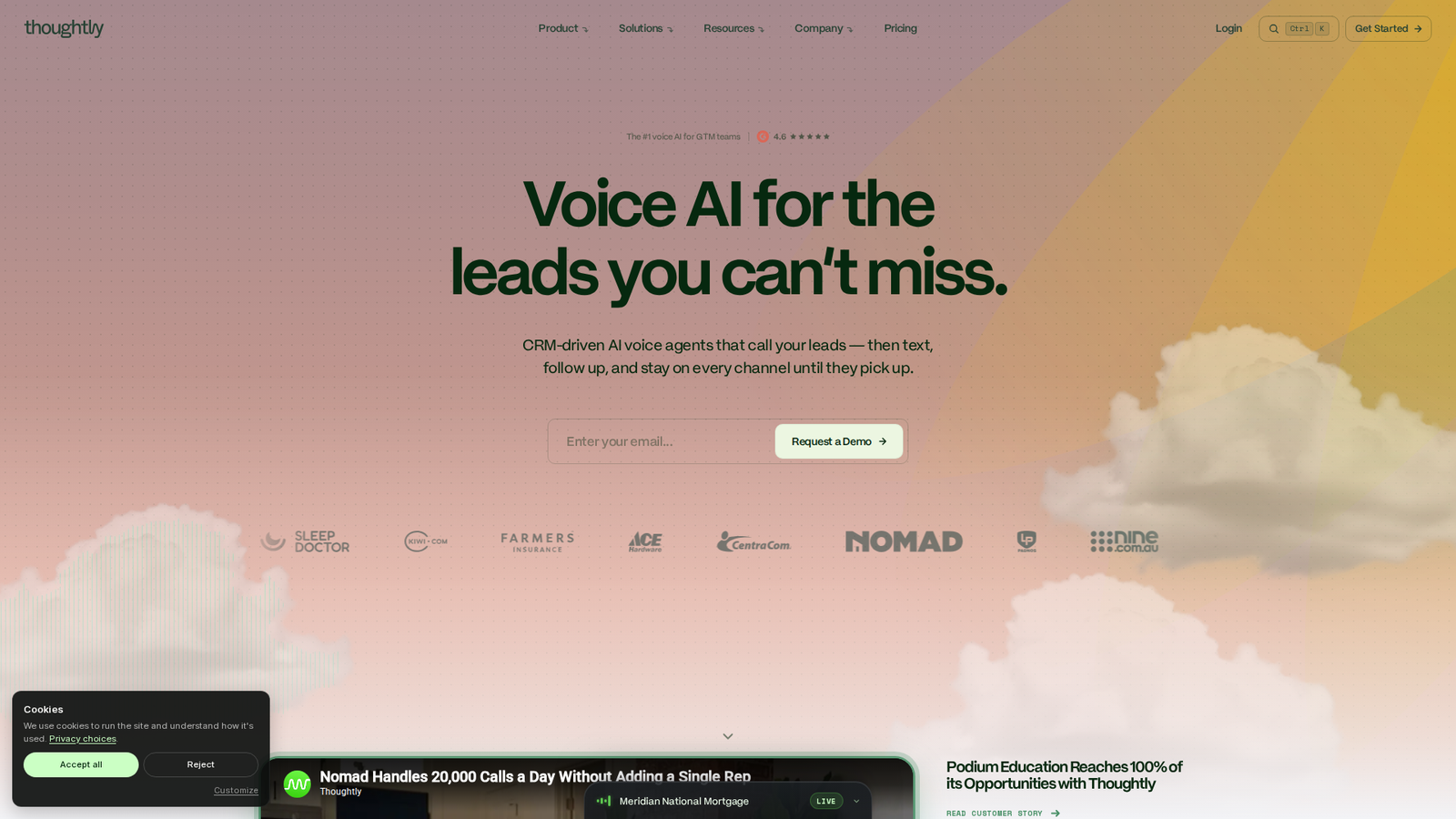
Thoughtly is the strongest Cognigy alternative when the buyer is not trying to deflect support calls, but to convert inbound leads that already raised their hand. The platform is built for high-volume, high-consideration consumer funnels: insurance quote requests, mortgage inquiries, real estate leads, education enrollment, elective healthcare, home services, automotive, financial services, and legal intakeLegal intakeLegal intake captures a potential client’s matter details, urgency, location, eligibility, and preferred next step before routing.. Thoughtly agents call quickly, continue by SMS and email, qualify fit, book or warm-transfer qualified conversations, and write outcomes back to CRM records. That makes it a better fit than Cognigy when RevOps, sales, or growth owns the funnel and the KPI is booked revenue, not containment rate.
Choose Thoughtly if your Cognigy evaluation is really about speed-to-lead, missed-lead recovery, appointment settingAppointment settingAppointment setting captures availability, confirms fit, and books a qualified prospect on the correct calendar without requiring manual chasing., warm transfer, or lead re-engagement. Choose a CX/contact-center platform instead if your main metric is reducing support handle time or containing existing customer calls.
Thoughtly uses per-minute pricing. Contact Thoughtly for a quote based on volume, channels, integrations, and implementation scope.
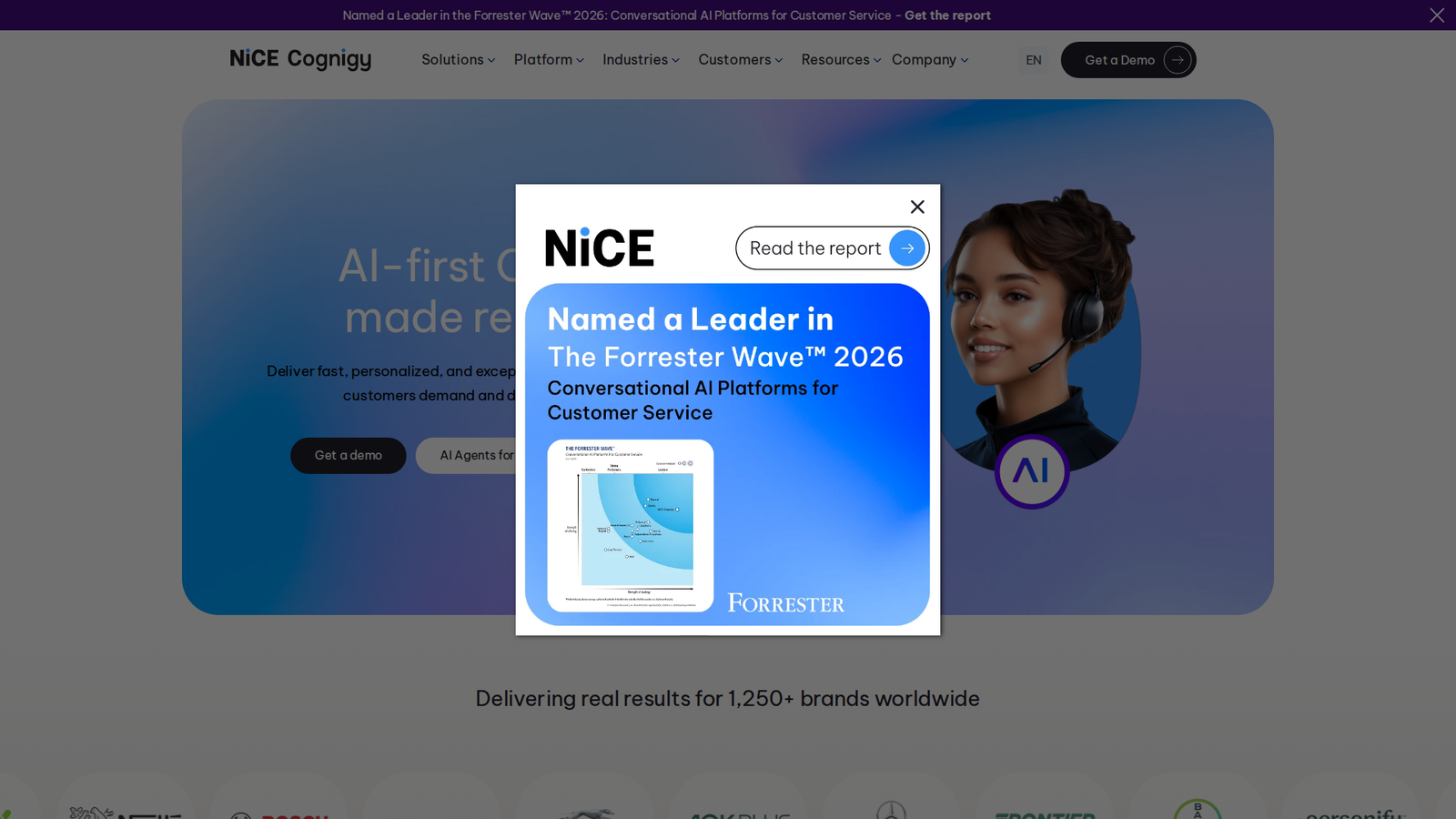
Cognigy remains a credible choice for large enterprises standardizing conversational AI inside the contact centerContact centerA contact center is a centralized operation that handles customer or prospect interactions across voice and digital channels.. Its website positions NiCE Cognigy around AI agents for business, voice AI agents, chat and messaging, agent copilot, contact-center integrations, and enterprise customer experience. The platform is strongest when CX leaders need to automate support interactions across voice and digital channels while connecting to existing CCaaS and service systems. It is less natural when the problem is a revenue team trying to reach new leads in seconds and push clean outcomes into a CRM.
Choose Cognigy if you are a CX or contact-center leader modernizing support, IVR, agent assist, and service automation. Choose Thoughtly if you are a revenue operator trying to convert inbound demand without buying a broad enterprise CX layer.
Contact Cognigy for pricing. Buyers should ask for platform fees, implementation services, channel costs, CCaaS integration scope, LLMLarge Language Model (LLM)A large language model (LLM) is a machine-learning model trained on large text collections to interpret and generate language from prompts and context./usage costs, and support terms.
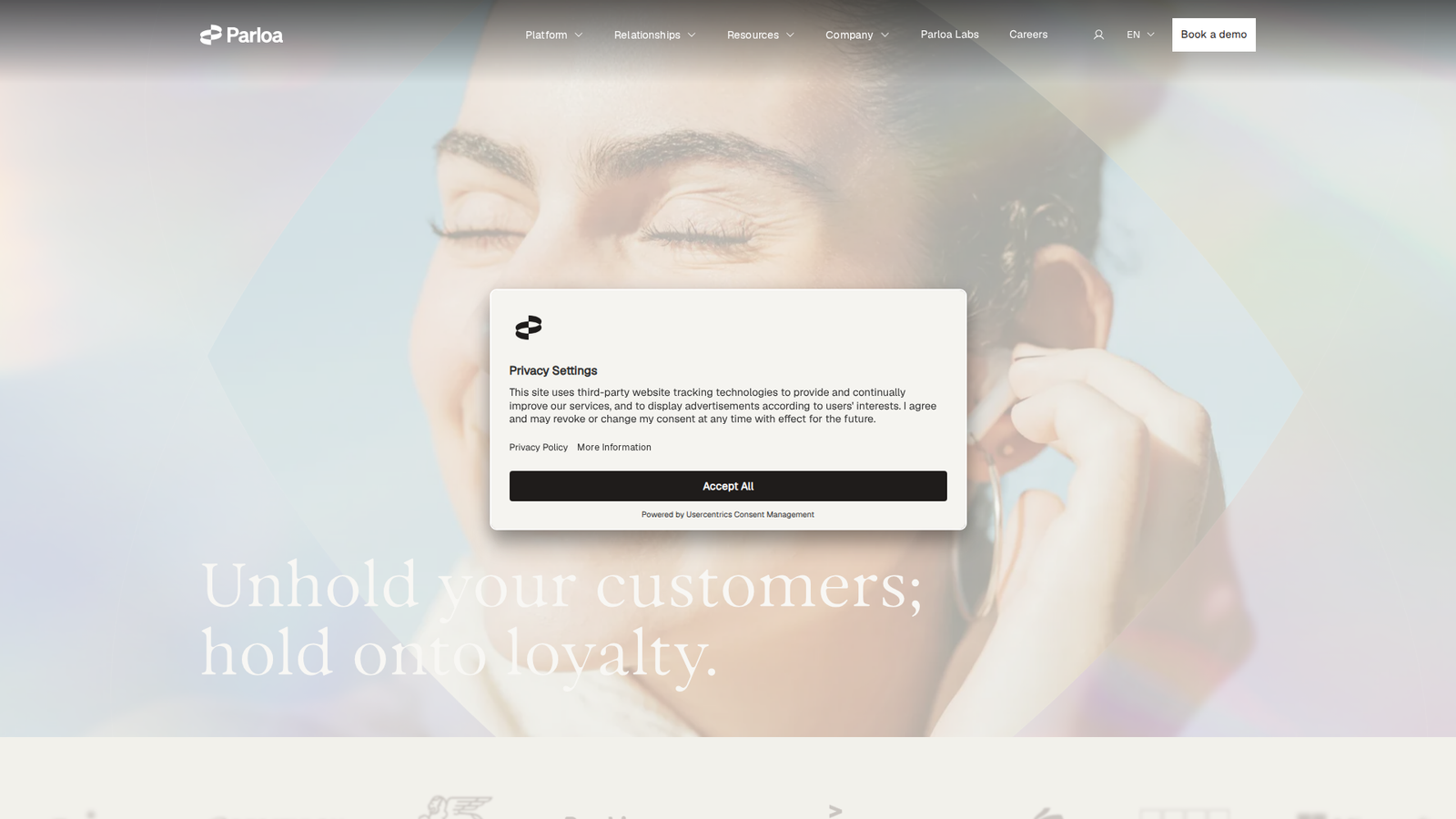
Parloa is a voice-first enterprise AI platform for customer-service organizations that want to transform phone support. Its public messaging centers on AI agents for customer experience, loyalty, and contact-center automation. It is a strong Cognigy alternative when the team wants a more focused voice CX platform and has the budget and implementation appetite for an enterprise program. For lead conversion, the tradeoff is similar to Cognigy: Parloa is built around the customer-service operating model, not the CRM-first revenue follow-up motion.
Choose Parloa if your team wants an enterprise voice AI partner for customer-service calls and contact-center modernization. Choose Thoughtly if the first moment that matters is a new lead hitting Salesforce, HubSpot, or another CRM.
Contact Parloa for pricing. Ask about platform fees, voice minutes, implementation services, integrations, support, and minimum commitments.
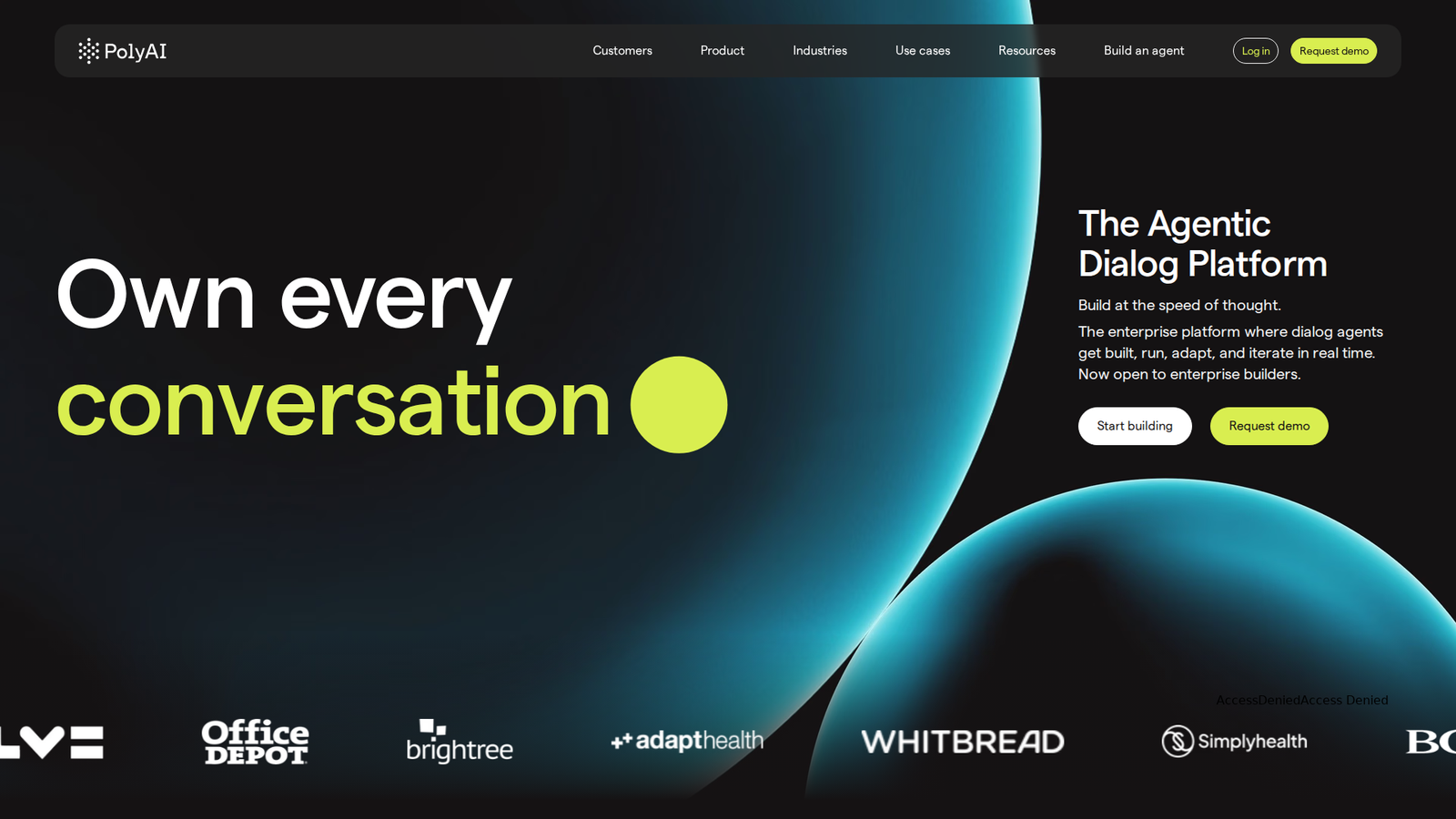
PolyAI is a dialog-agent platform for enterprise customer engagement, especially voice conversations in service-heavy environments. Its own site describes an Agentic Dialog Platform where dialog agents are built, run, adapted, and governed at enterprise scale. Thoughtly’s compare page frames PolyAI as voice AI for customer-service contact centers: IVR replacement, deflection, and post-purchase automation. That is a real job, but it is different from converting new inbound leads into customers.
Choose PolyAI if your KPI is service-call containment or IVR modernization. Choose Thoughtly if your KPI is reached leads, booked meetings, warm transfers, quote starts, or applications completed.
Contact PolyAI for pricing. Buyers should model enterprise platform fees, services, voice usage, CCaaS integration, and ongoing iteration support.
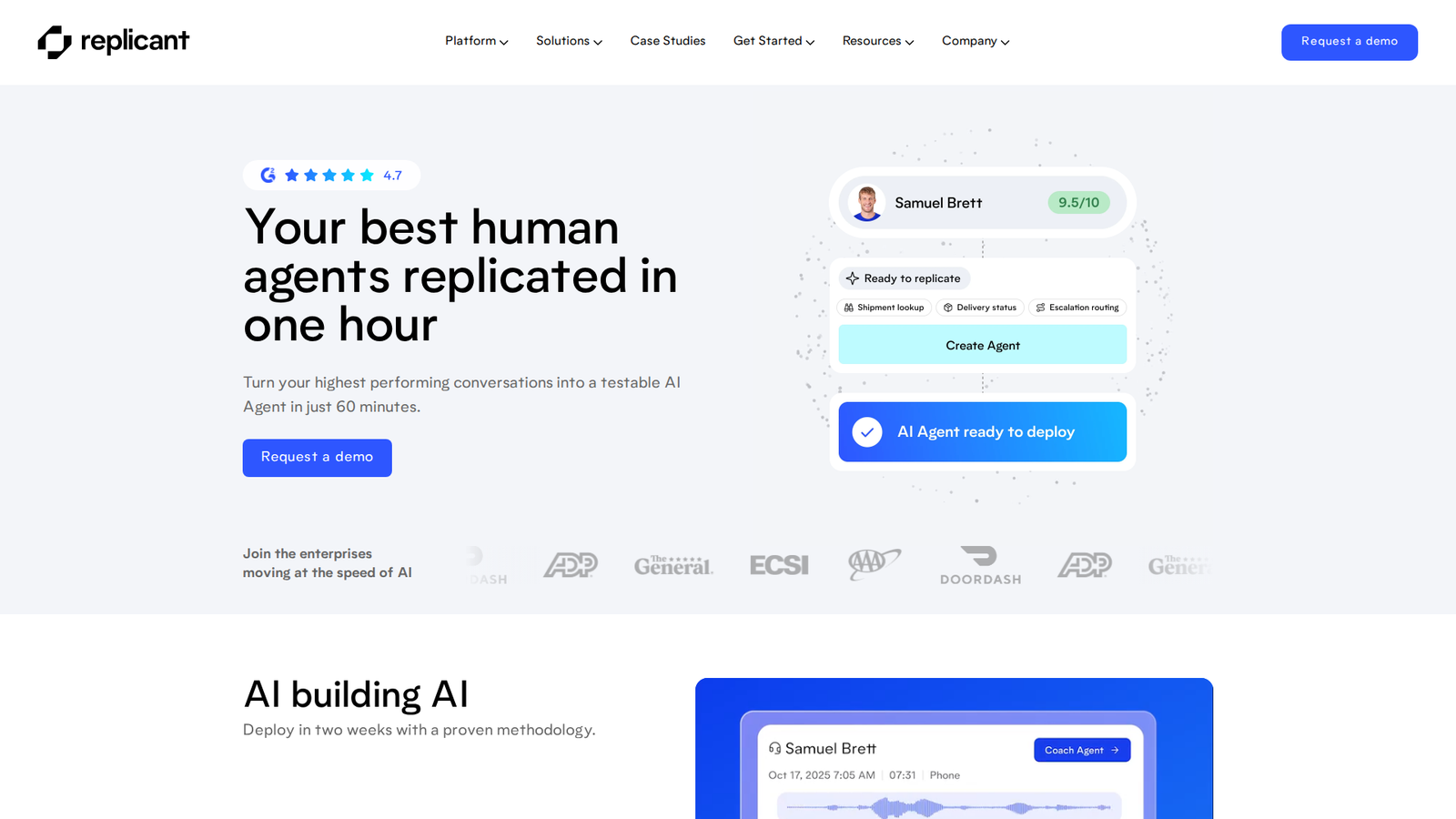
Replicant focuses on AI agents for contact centers and markets a fast path from real conversations to testable automation. Its site highlights voice, chat, and SMS conversation automation, conversation intelligence, enterprise security, CCaaS/CRM integrations, and more than 1B minutes across customer interactions. That makes it a credible Cognigy alternative for support teams trying to automate repeatable service calls. It is a weaker fit when the lead journey needs persistent same-agent outreach, qualification, booking, and CRM write-back owned by RevOps.
Choose Replicant if you run a contact center and want to automate routine customer-service calls. Choose Thoughtly if your business problem is the long tail of inbound leads your human team never reaches.
Contact Replicant for pricing. Ask about implementation services, volume commitments, channel mix, integrations, and reporting/analytics scope.
Yellow.ai is a broad enterprise agentic AI platform for customer and employee experiences. Its website positions the product around human-like conversations across voice, chat, and email, 15+ LLMs, 150+ integrations, and 1,300+ global brands. It can be a strong Cognigy alternative for global enterprises that want one platform for CX and EX automation across many channels and use cases. The risk for lead-conversion teams is platform breadth: a horizontal CX/EX suite may be too broad, too implementation-heavy, and too service-oriented for a focused inbound revenue workflowWorkflowA workflow is a defined sequence of steps, decisions, actions, delays, and outcomes used to complete a business process..
Choose Yellow.ai if you need a broad CX/EX automation layer for many departments and geographies. Choose Thoughtly if your priority is inbound revenue coverage and CRM-first action in high-consideration consumer funnels.
Contact Yellow.ai for pricing. Ask for platform fees, implementation costs, LLM/usage costs, channel charges, and integration scope.
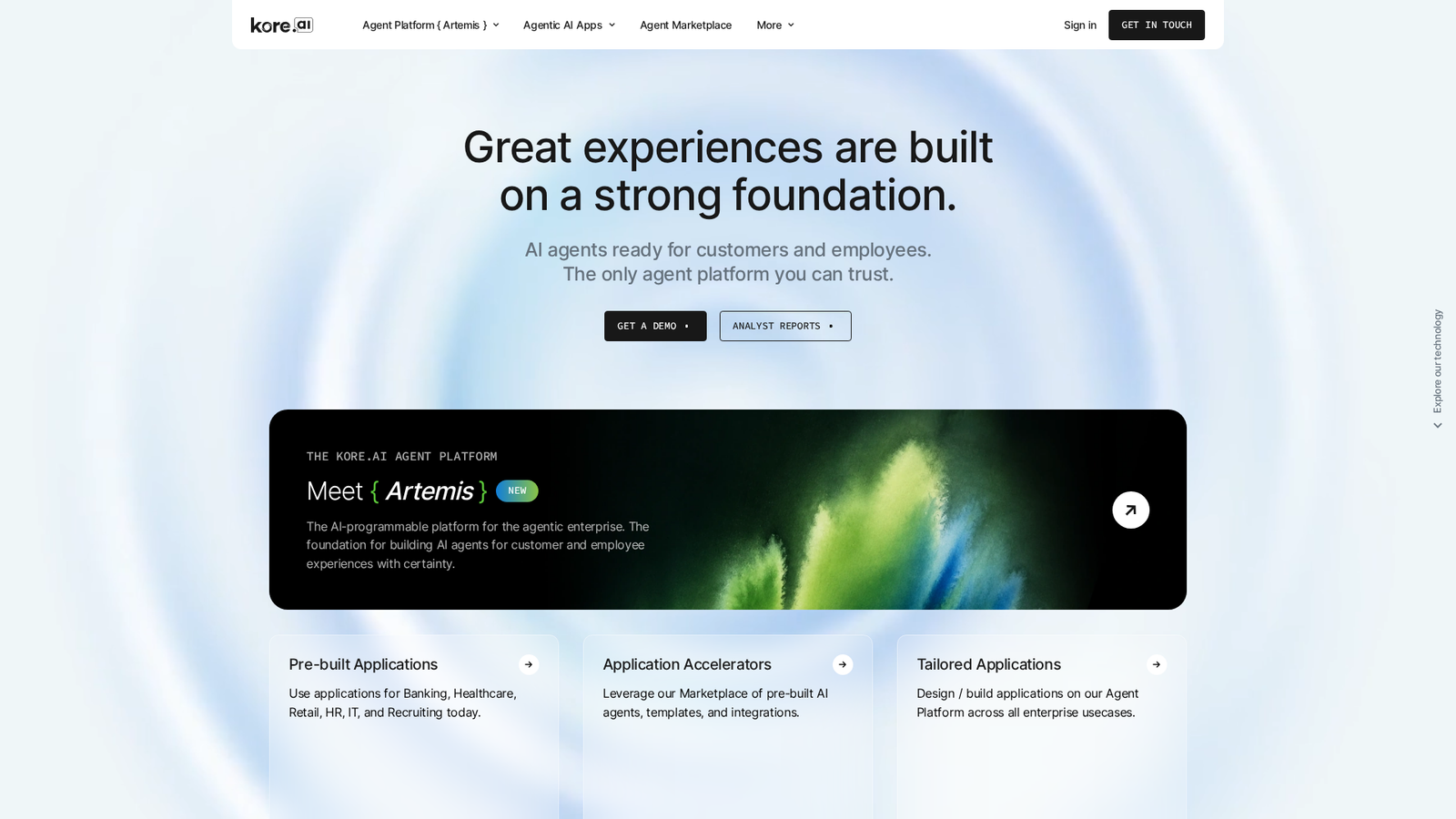
Kore.ai is a broad enterprise agent platform for customer and employee experiences. Its public site positions Kore.ai around AI agents ready for customers and employees, prebuilt applications, application accelerators, tailored applications, and an agentic enterprise foundation. That makes it a Cognigy alternative for large organizations that want multiple virtual assistants across service desk, HR, banking, customer service, and internal workflows. It is less direct for RevOps teams that need a packaged lead-conversion agent rather than an enterprise assistant program.
Choose Kore.ai if you need a multi-department virtual assistant platform and have enterprise technical ownership. Choose Thoughtly if one revenue team needs every inbound lead followed up quickly without building an enterprise assistant program.
Contact Kore.ai for pricing. Model platform, application, channel, implementation, support, and usage components.
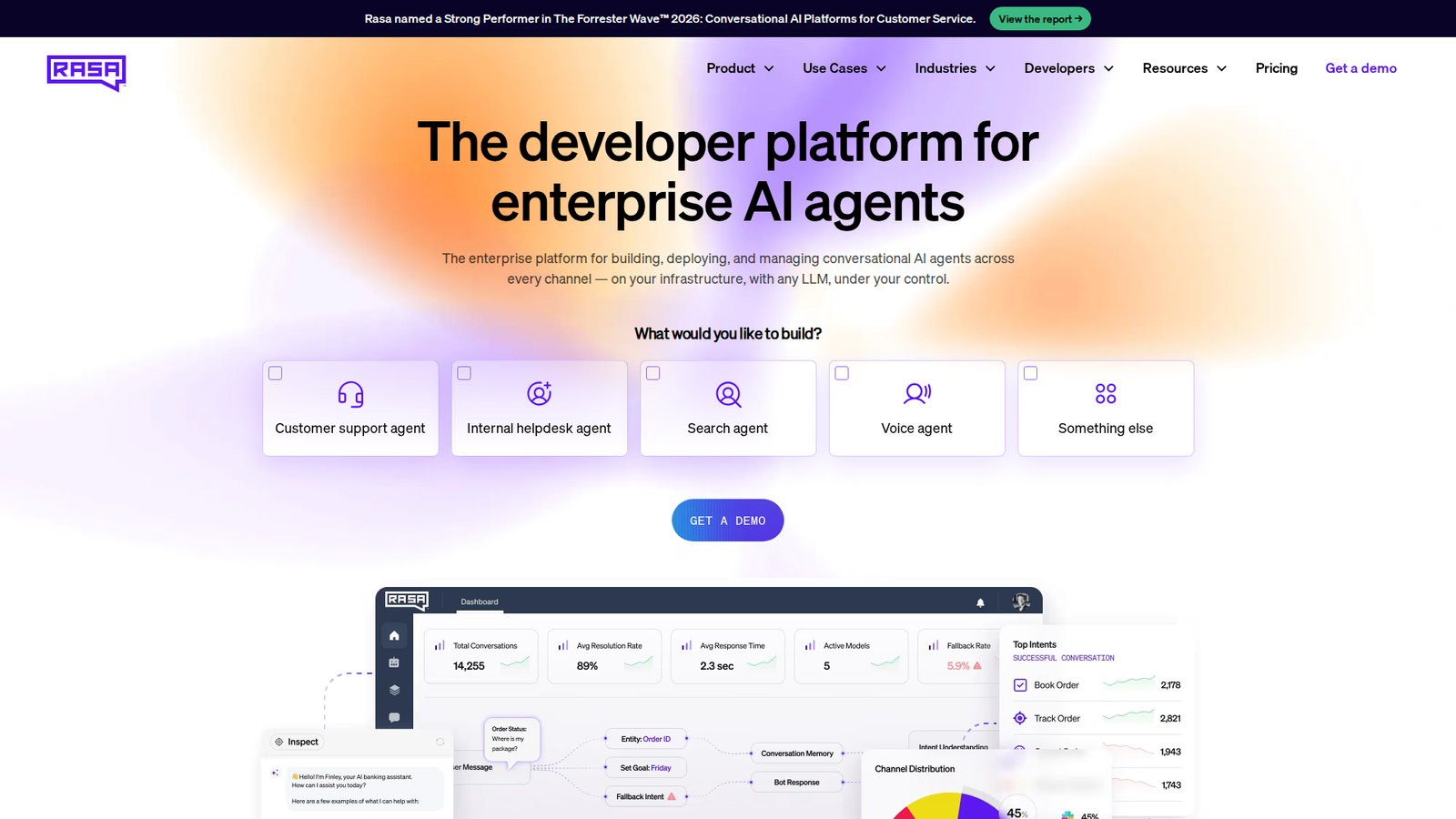
Rasa is the developer-oriented alternative in this set. Its website positions Rasa as a developer platform for enterprise AI agents, extending LLMs with business logic and giving teams control over behavior, deployment, infrastructure, integrations, and model choice. It is a good Cognigy alternative when technical teams want more control, private deployment, or a deeply customized assistant architecture. It is not the right default for a non-technical revenue team that wants a managed inbound conversion workflow.
Choose Rasa if engineering needs to build and govern custom AI agents on controlled infrastructure. Choose Thoughtly if RevOps needs a production lead-conversion platform with CRM workflows and managed launch support.
Rasa publishes subscription options including a free Developer Edition and enterprise plans. Check current Rasa pricing for plan limits and deployment requirements.
LivePerson is a mature conversational AI and messaging platform with a long enterprise history. Its current website emphasizes predictable conversational AI, simulation/validation, human and AI agent orchestration, digital conversations, voice integrations, and measurable business outcomes. It can be a Cognigy alternative for enterprises where chat, messaging, and conversational commerce are the core motion. It is not the most direct alternative for teams that primarily need fast outbound response to new inbound leads by voice, then SMS/email persistence and CRM action.
Choose LivePerson if your main channel is digital messaging and you need enterprise AI/human orchestration. Choose Thoughtly if the first channel must be a fast phone call and the journey must continue through SMS, email, booking, and CRM write-back.
Contact LivePerson for pricing. Ask about messaging volume, AI features, voice integrations, implementation, and support packages.
The most expensive mismatch is buying a customer-service automation platform when the real bottleneck is lead conversion. A service platform optimizes for containment, handle time, queue deflection, and agent assist. A revenue platform optimizes for speed-to-lead, contact rateContact rateContact rate is the percentage of eligible outreach attempts or lead records that result in a live, meaningful connection., qualification, booking, transfer, and CRM outcome data.
Before choosing a Cognigy alternative, write the KPI at the top of the evaluation. If it says “contain more support calls,” shortlist contact-center AI platforms. If it says “reach and convert every new lead,” prioritize platforms that own voice, SMS, email, and CRM actions together.
Cognigy, Parloa, PolyAI, Replicant, Yellow.ai, Kore.ai, Rasa, and LivePerson can all make sense when CX, IT, or contact-center operations owns the roadmap. Those buyers usually have the implementation teams, governance requirements, integrations, and procurement cycles to support a broader enterprise AI program.
That is not a criticism; it is a category boundary. The wrong move is forcing a RevOps lead-conversion problem into a CX transformation purchase because both involve AI conversations.
For revenue teams, the platform should prove what happens after the first call attempt. Can it text the lead with context? Can it email from the same agent identity? Can it book or warm-transfer? Can it write the transcriptTranscriptA transcript is the written record generated from a spoken conversation, typically showing what the caller and agent said during a call., disposition, next step, and campaign attribution back to the CRM?
If the answer requires three more vendors and an implementation project, the “alternative” is really infrastructure. That may be fine for engineering-led builds, but it is not the cleanest route to inbound revenue coverage.
Thoughtly is the best fit when the job is converting opted-in inbound leads across voice, SMS, email, booking, warm transfer, re-engagement, and CRM write-back. Cognigy is better framed as an enterprise CX/contact-center automation platform.
Common reasons include pricing opacity, implementation scope, contact-center complexity, ownership mismatch, or a need for a more focused platform. Some teams need a lighter or more specialized product for lead conversion, voice-first service, messaging, developer control, or broad enterprise assistant programs.
It depends on the job. Cognigy is broad enterprise conversational AI for CX; PolyAI is especially strong for dialog-first voice service; Replicant is focused on contact-center conversation automation. None of those is automatically better for lead conversion than a platform built around revenue follow-up.
Rasa can be a better fit when engineering needs deep control over business logic, infrastructure, model choice, and deployment. Cognigy can be better when the organization wants a packaged enterprise CX platform. RevOps teams without technical ownership should be cautious with either if the goal is a fast lead-conversion launch.
Ask who owns implementation, how pricing scales, whether voice/SMS/email share context, how CRM read/write works, what happens on missed calls, how human handoffHuman handoffHuman handoff transfers a conversation, context, and next action from an automated agent to a person. is handled, how reporting maps to your KPI, and which customer references match your funnel stage.
Thoughtly product overview, integrations, pricing, docs, and compare pages.
Cognigy homepage, AI agents, voice AI agents, and contact-center integrations pages.
Parloa, PolyAI, Replicant, Yellow.ai, Kore.ai, Rasa, and LivePerson official websites.
Public review and comparison references from Gartner Peer Insights, TrustRadius, G2, Rasa, Balto, CX Foundation, and AWS Marketplace.


