8 Best Decagon Alternatives for AI Customer Support in 2026
Decagon's enterprise AI support platform comes with $386K median contracts, no free trial, and Zendesk-only Agent Assist. Here are 8 alternatives — from inbound lead conversion platforms to budget-friendly AI chatbots — that match different teams, budgets, and jobs to be done.
Last updated
8 Best Decagon Alternatives for AI Customer Support in 2026
Decagon has built an impressive enterprise AI support platform — voice, chat, email, SMS — with customers like Duolingo, Chime, and ClassPass reporting deflection rates above 70%. But at a median annual contract around $386,000, no public pricing, no free trial, and Agent Assist locked to Zendesk only, many teams start looking for alternatives before they ever finish the sales cycle.
I evaluated the platforms that teams most commonly consider alongside Decagon. The criteria: deployment speed, channel coverage, pricing transparency, integration depth, and whether the platform's core job matches what your team actually needs. Some of these alternatives are direct CX competitors; one — Thoughtly — is a fundamentally different tool for teams whose real bottleneck is converting inbound leads rather than deflecting support tickets.
Why teams look for Decagon alternatives
The most common triggers I see in G2 reviews, Reddit threads, and procurement discussions:
Pricing opacity. Decagon has no pricing page. Third-party procurement data from Vendr puts the median annual contract at approximately $386,000, with a range from $95,000 to $590,000 or more. Usage-based billing makes costs unpredictable during volume spikes.
No self-serve evaluation. No free trial, no sandbox, no public documentation. You cannot test the product without committing to a sales cycle and, in many cases, a multi-week onboarding engagement.
Agent Assist limited to Zendesk. Decagon's AI copilot for human agents only works inside Zendesk. If your team runs Freshdesk, Intercom, Salesforce Service Cloud, or another helpdesk, your human agents get no AI assistance.
Product maturity gaps. Multiple G2 reviewers note that Decagon is still a relatively young product, flagging recent additions like regression testing and ongoing work on guardrails and analytics depth.
Engineering resources still required. While Agent Operating Procedures (AOPs) promise natural-language workflow creation, advanced customization often still requires developer involvement, extending onboarding timelines.
Wrong job to be done. Some teams evaluating Decagon realize their primary need is converting inbound leads — not deflecting support tickets. That requires a fundamentally different platform.
How I evaluated these alternatives
1. Core job alignment
Does the platform's primary design match what your team actually needs? Some platforms are purpose-built for deflecting support volume. Others are built for converting inbound leads into revenue. Choosing the wrong category means fighting the product's architecture instead of using it. I looked for platforms where the default workflows, metrics, and integrations map to the buyer's actual motion — whether that is ticket deflection, agent augmentation, or lead conversion.
2. Deployment speed and self-serve capability
How quickly can a non-engineering team get from purchase to production? Decagon's white-glove onboarding takes weeks. Some alternatives offer same-day deployment with no-code builders. I favored platforms where the team that owns the outcome — CX ops, RevOps, or growth — can ship and iterate without filing engineering tickets, because time-to-value directly affects ROI and internal buy-in.
3. Pricing transparency and cost predictability
Can you model costs before signing a contract? Decagon requires a sales call with no published pricing. I looked for platforms with published plans, per-resolution or per-minute pricing that teams can model against their own volume, and options that let you start small before committing to six-figure annual contracts.
4. Channel coverage and integration depth
How many channels does the platform cover natively, and how deep are the integrations with your existing stack? Decagon supports voice, chat, email, and SMS — but its Agent Assist only works with Zendesk. I evaluated whether each alternative covers the channels your team needs and integrates with the CRMCRMA CRM is the system used to manage leads, contacts, accounts, opportunities, activity, ownership, and follow-up.Read full definition →, helpdesk, or revenue stack you already run.
5. Autonomous resolution quality
Can the AI resolve issues or convert leads without human intervention, and how reliably? I looked at published resolution rates, hallucinationHallucinationAn AI hallucination, also called a confabulation, is a plausible-sounding response that is false, unsupported, or inconsistent with the available source information.Read full definition → controls, escalationEscalationEscalation moves a conversation to a person, specialist, supervisor, or alternate workflow when the agent should not continue alone.Read full definition → logic, and whether the platform provides transparency into how the AI reaches decisions — versus operating as a black box.
Quick comparison: Decagon alternatives at a glance
Platform
Best for
Primary strength
Key limitation
Thoughtly
Inbound lead conversion across voice, SMS, email
CRM-native revenue execution; RevOps-owned
Not a CX/support deflection tool
Intercom Fin AI
Product-led teams wanting AI messaging
Deep helpdesk integration; 50M+ conversations resolved
Per-resolution pricing gets expensive at scale
Sierra
Enterprise CX for global brands
White-glove enterprise deployment; proven at scale
Six-figure+ deals; multi-quarter implementation
Zendesk AI
Existing Zendesk customers adding AI agents
Native integration with massive Zendesk ecosystem
Locked to Zendesk; limited outside that ecosystem
Gladly
Consumer brands wanting LTV-driven CX
People-centered service model; revenue attribution
Enterprise pricing; retail/DTC focus
Freshdesk (Freddy AI)
Budget-conscious teams on Freshworks
Affordable AI with strong out-of-box automation
Less depth for complex multi-step workflows
Forethought
High-volume ticket triage and autonomous resolution
5-agent architecture covering full support lifecycle
20K+ ticket minimum; median $59K/year contracts
Tidio (Lyro AI)
SMBs and e-commerce wanting fast AI chat
Free tier; 67% resolution rate guarantee
Limited enterprise features; chat-primary
8 best Decagon alternatives for AI customer support in 2026
1. Thoughtly — Best when the real job is converting inbound leads
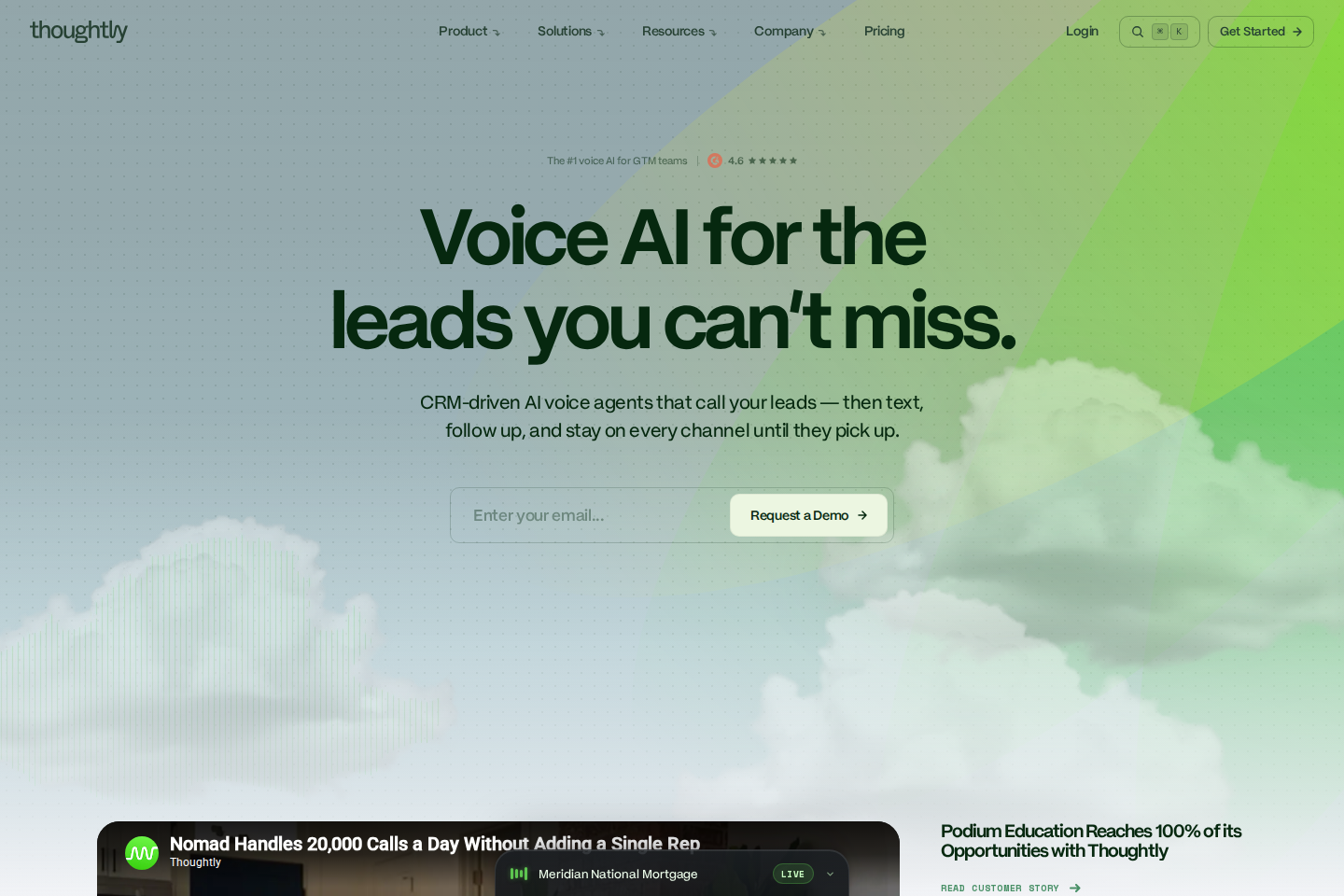
Thoughtly is built for a fundamentally different job than Decagon. Where Decagon deflects customer support tickets, Thoughtly converts inbound leads into revenue — calling, texting, and emailing every lead that hits your CRM until someone is ready to talk to a human. The platform combines AI voiceAI voiceAn AI voice is synthetic speech produced by a text-to-speech model, using a selected or cloned voice to speak an agent's generated or scripted response.Read full definition → agents, SMS follow-upSMS follow-upSMS follow-up uses compliant two-way text messages to continue a conversation after an inquiry, call, voicemail, or prior interaction.Read full definition →, email sequences, and multi-step workflows with native two-way CRM syncCRM syncCRM sync keeps selected lead, contact, conversation, outcome, and next-step data aligned between an agent platform and a CRM.Read full definition → to over 200 tools including Salesforce, HubSpot, and GoHighLevel.
This matters because many teams evaluating enterprise CX platforms like Decagon discover partway through the sales cycle that their actual bottleneck is not deflecting support volume — it is that 60 to 80 percent of their inbound leads never get a follow-up call within the first hour. Thoughtly is purpose-built for that problem. RevOps and growth teams ship agents in days via a no-code builder, without engineering tickets or multi-week professional services engagements.
Thoughtly is strongest in high-consideration consumer industries where speed-to-lead and persistent multi-channel follow-upMulti-channel follow-upMulti-channel follow-up uses more than one communication channel, commonly voice, SMS, and email, after a prospect raises their hand.Read full definition → directly drive revenue: insurance, mortgage, real estate, automotive, education enrollment, elective healthcare, home services, and financial services.
Pros
Sub-60-second speed-to-lead across voice, SMS, and email — every inbound lead gets contacted, not just the ones a human rep has time to reach.
No-code builder lets RevOps and growth teams ship and iterate on agents without engineering support. Time to first production agent is measured in days, not quarters.
Two-way CRM sync with 200+ integrations, including Salesforce, HubSpot, GoHighLevel, Zoho, and Pipedrive. Lead data, call outcomes, and next steps write back to the CRM automatically.
Same-agent continuity across voice, SMS, and email — the lead's entire journey lives in one conversation thread rather than being fragmented across channel-specific tools.
Watch for
Thoughtly is not a customer support deflection tool. If your primary job is reducing ticket volume or handling post-purchase inquiries, it is the wrong category.
Best suited for teams with enough inbound lead volume and defined qualification logic to justify automation. Requires upfront definition of qualification rules, escalation paths, and follow-up sequences.
Best fit
Revenue teams in high-consideration consumer industries — insurance, mortgage, real estate, education enrollment, healthcare, home services, financial services — where inbound lead conversionInbound lead conversionInbound lead conversion turns opted-in calls, form submissions, quote requests, and other inquiries into qualified conversations, appointments, or transfers.Read full definition → and speed-to-lead are the primary bottleneck, not support ticket deflection.
Pricing
Custom plans with transparent pricing tiers. No six-figure minimums. Contact Thoughtly for pricing based on volume and channels needed.
2. Intercom Fin AI — Best for product-led teams wanting AI messaging
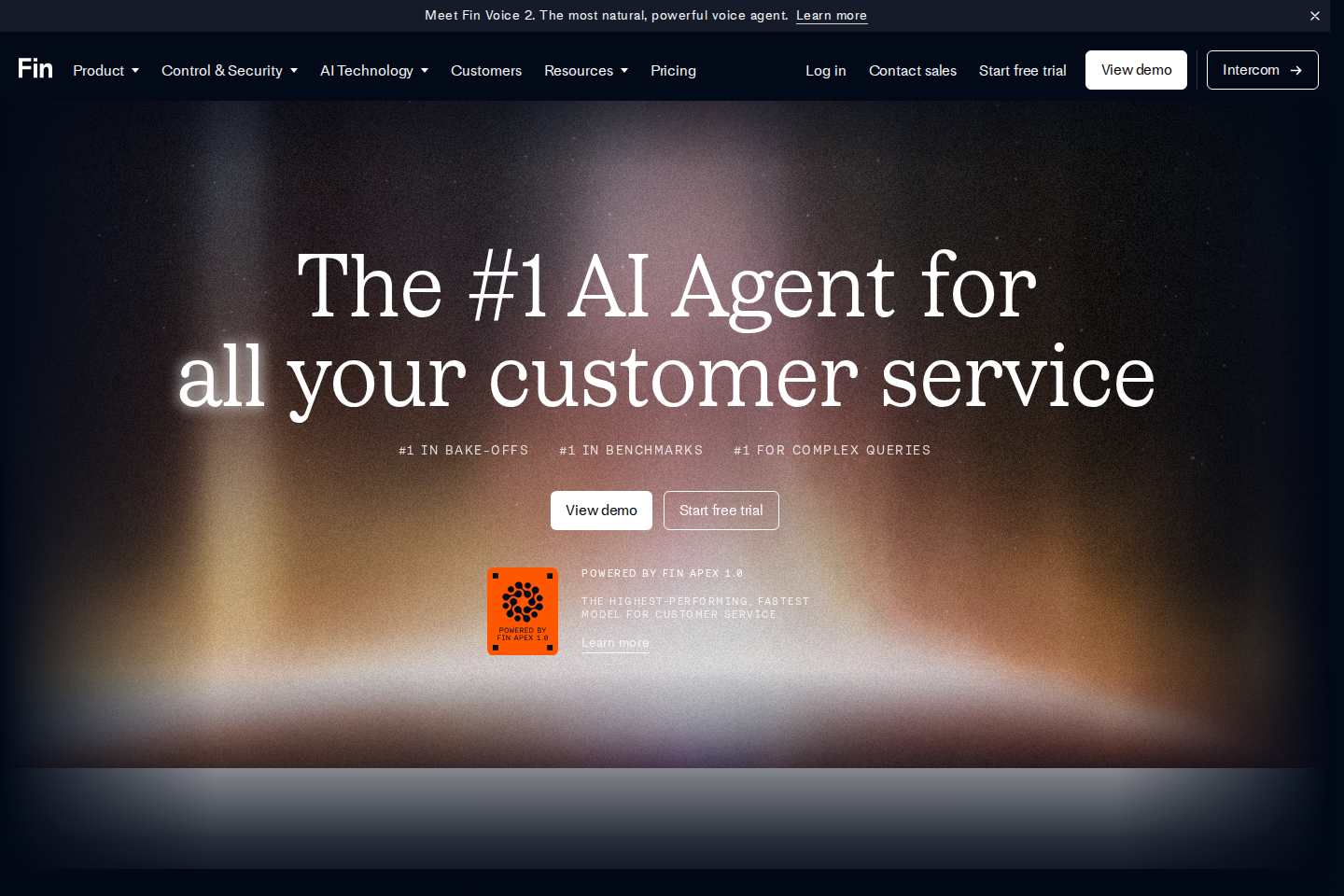
Intercom Fin is the AI agent embedded directly inside Intercom's customer messaging platform. It has resolved over 50 million conversations since launch and claims an average 86% resolution rate across customers. Fin works natively within Intercom's messenger, help center, and inbox — meaning teams already on Intercom can deploy AI support without adding a separate vendor or integration layer.
Fin uses retrieval-augmented generation grounded in your help center, knowledge baseKnowledge baseA knowledge base is a maintained collection of approved business information that an agent can use to answer questions.Read full definition →, and conversation history. It supports 45+ languages and can be configured with custom instructions, tone controls, and escalation rules. The product also includes Fin AI Copilot for human agents — unlike Decagon's Zendesk-only Agent Assist, Fin Copilot works inside Intercom's own inbox.
The main tension with Fin is pricing. At $0.99 per resolution, costs scale linearly with the AI's success — meaning your bill goes up precisely when Fin gets better. Reddit threads and G2 reviews consistently flag this, with some teams reporting bills that get "expensive fast" once Fin handles the majority of conversations. Copilot adds another $35 per agent per month on top.
Pros
Deep native integration within the Intercom ecosystem — messenger, help center, inbox, and workflows all share context without separate connectors.
50M+ conversations resolved; battle-tested at scale across SaaS, fintech, and e-commerce verticals.
Fin Copilot provides AI-assisted drafting for human agents directly inside Intercom, unlike Decagon's Zendesk-only copilot.
Self-serve setup with a free trial. You can evaluate the product before committing, which Decagon does not offer.
Watch for
Per-resolution pricing at $0.99 can become expensive at high volumes. Your costs scale with AI success — the better Fin performs, the more you pay.
Some knowledge sources (Notion, Confluence) are limited to copilot mode only and cannot power autonomous customer-facing replies.
Strongest within the Intercom ecosystem. Teams not already on Intercom for their helpdesk face a platform migration to get full value.
Best fit
Product-led SaaS and fintech teams already running Intercom for customer messaging who want to add AI resolution without introducing a second vendor. Best for teams whose primary channel is chat and messaging rather than voice.
Pricing
$0.99 per Fin resolution. Intercom platform plans start at $29/seat/month (Essential) up to $132/seat/month (Expert). Fin AI Copilot is $35/agent/month additional. Free trial available.
3. Sierra — Best for enterprise CX at global brand scale
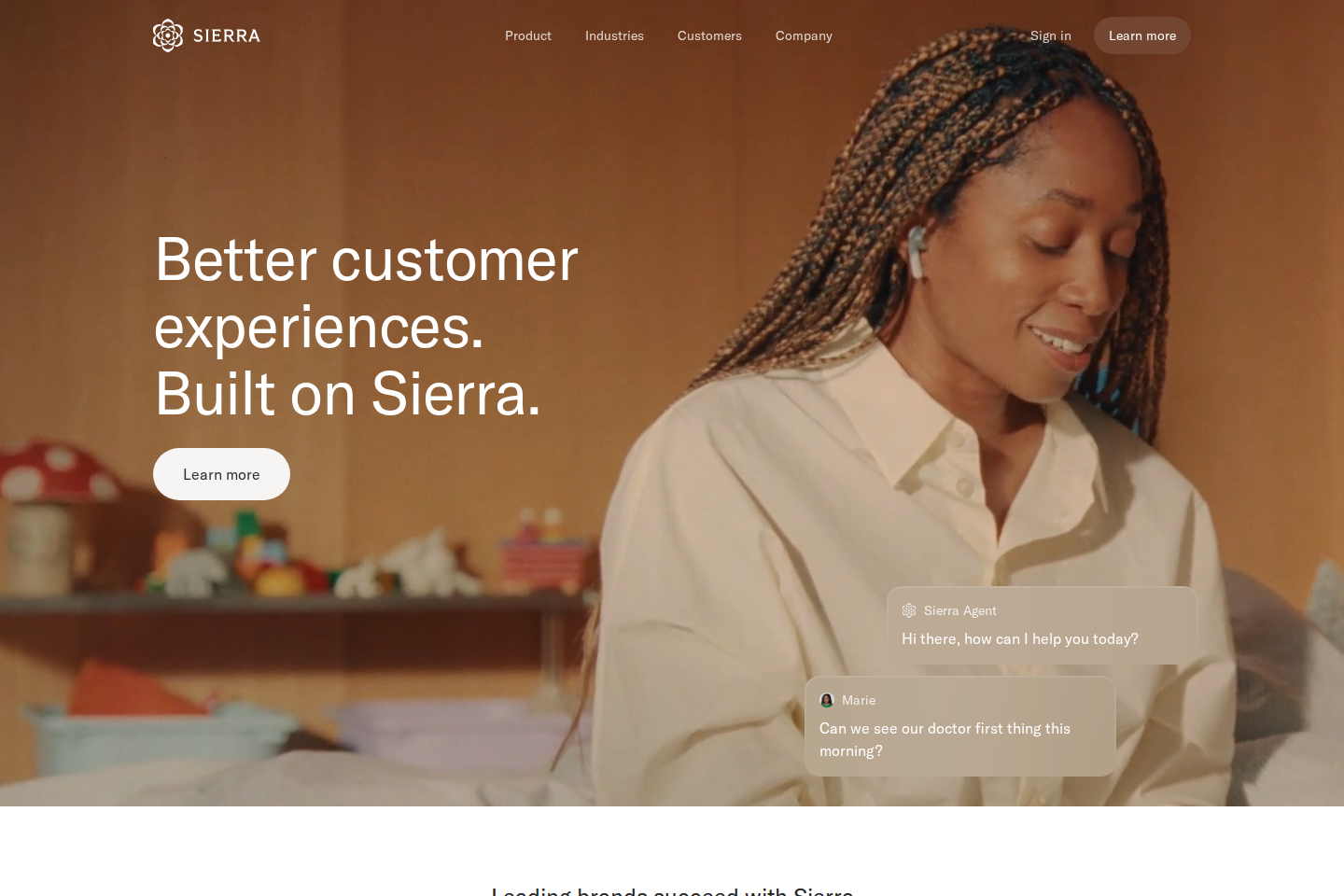
Sierra is the closest direct competitor to Decagon in the enterprise CX agent space. Founded by Bret Taylor (former Salesforce co-CEO) and Clay Bavor (former Google VP), Sierra builds AI customer experience agents for brands like SiriusXM, Sonos, ADT, and WeightWatchers. The product handles post-purchase support, returns, account management, and complex multi-step customer service workflows.
Where Decagon positions around its Agent Operating Procedures and natural-language workflowWorkflowA workflow is a defined sequence of steps, decisions, actions, delays, and outcomes used to complete a business process.Read full definition → creation, Sierra takes a more consultative, white-glove approach. Sierra's team typically works alongside your CX org during deployment — which means higher-touch implementation but also longer time to value. The deployments are multi-quarter services engagements, and deal sizes are reportedly in the six-figure range with no transparent pricing.
The key question when comparing Sierra to Decagon is whether you need Sierra's brand-level customization and the credibility of its customer roster, or whether Decagon's faster AOPs-driven iteration loop is a better fit for your team's operating model. Both are enterprise-only, both require sales-driven procurement, and both focus on post-purchase CX rather than lead conversion.
Pros
Proven at brand-tier scale — SiriusXM, Sonos, ADT, and WeightWatchers are publicly referenceable customers with real deployments.
Founded by Bret Taylor and Clay Bavor, bringing deep enterprise credibility and AI research pedigree.
Handles complex, multi-step customer service workflows including returns, account changes, and subscription management.
Watch for
Multi-quarter, services-led deployment timeline. Teams looking for fast time-to-value may find this prohibitive.
No transparent pricing. Deal sizes are reportedly $250,000 or more annually, making it inaccessible to mid-market teams.
Post-purchase CX focus means it does not cover pre-sale lead conversion, appointment setting, or inbound lead follow-up.
Best fit
Enterprise brands with established CX organizations, dedicated contact centerContact centerA contact center is a centralized operation that handles customer or prospect interactions across voice and digital channels.Read full definition → teams, and procurement capacity for six-figure annual contracts. Best for post-purchase support, returns processing, and account management at scale — not for lead conversion or pre-sale engagement.
Pricing
Enterprise-only, custom pricing. No published plans. Industry sources estimate annual contracts starting at $250,000 or higher. No free trial or self-serve signup.
4. Zendesk AI — Best for existing Zendesk customers adding AI agents
Zendesk AI is the native AI layer built into the Zendesk Support and Suite ecosystem. For teams already running Zendesk as their primary helpdesk, adding Zendesk AI agents means no separate vendor, no new integration, and no data migration — the AI agents share the same ticket history, knowledge base, macros, and routing rulesRouting rulesRouting rules decide where a lead, call, appointment, or task goes using criteria such as intent, location, urgency, language, licensing, ownership, or availability.Read full definition → your team already uses.
Zendesk acquired Ultimate.ai in 2024 to strengthen its autonomous resolution capabilities, and the integrated product now handles automated responses, ticket triage, agent assist, and workflow automationWorkflow automationWorkflow automation uses software to execute and coordinate repeatable steps such as intake, follow-up, qualification, routing, booking, and system updates.Read full definition → across chat, email, and messaging. The AI draws from your existing Zendesk knowledge base and can be configured with specific personas, escalation rules, and business-hours logic.
The limitation is ecosystem lock-in. Zendesk AI's deepest capabilities — agent assist, intelligent triage, macro suggestions — work exclusively within Zendesk. If your support stack includes Freshdesk, Intercom, Salesforce, or another helpdesk, Zendesk AI is not a standalone option. Additionally, advanced AI features require Suite Professional or Enterprise plans, pushing the effective per-agent cost above the base plan pricing.
Pros
Zero-integration deployment for existing Zendesk customers. AI agents inherit your existing ticket history, knowledge base, and routing rules immediately.
Mature ecosystem with thousands of marketplace apps, extensive API documentation, and a massive user community for troubleshooting.
Covers chat, email, and messaging channels natively. Voice support available through Zendesk Talk add-on.
Watch for
Completely locked to the Zendesk ecosystem. Not a viable option for teams running other helpdesk platforms.
Advanced AI features (intelligent triage, AI-powered intents, advanced analytics) require Suite Professional ($115/agent/month) or Enterprise plans.
Some users on G2 report that AI resolution quality degrades with complex, multi-step issues that require context from multiple data sources outside the Zendesk knowledge base.
Best fit
Mid-market to enterprise teams already running Zendesk Suite who want to add AI resolution without introducing a second vendor. Strongest for teams with well-maintained Zendesk knowledge bases and clearly defined ticket categories.
Pricing
Zendesk Suite starts at $55/agent/month (Team) up to $169/agent/month (Enterprise). Advanced AI add-on pricing is custom. Autonomous resolution pricing varies by plan tier. Free trial available.
5. Gladly — Best for consumer brands driving customer lifetime value
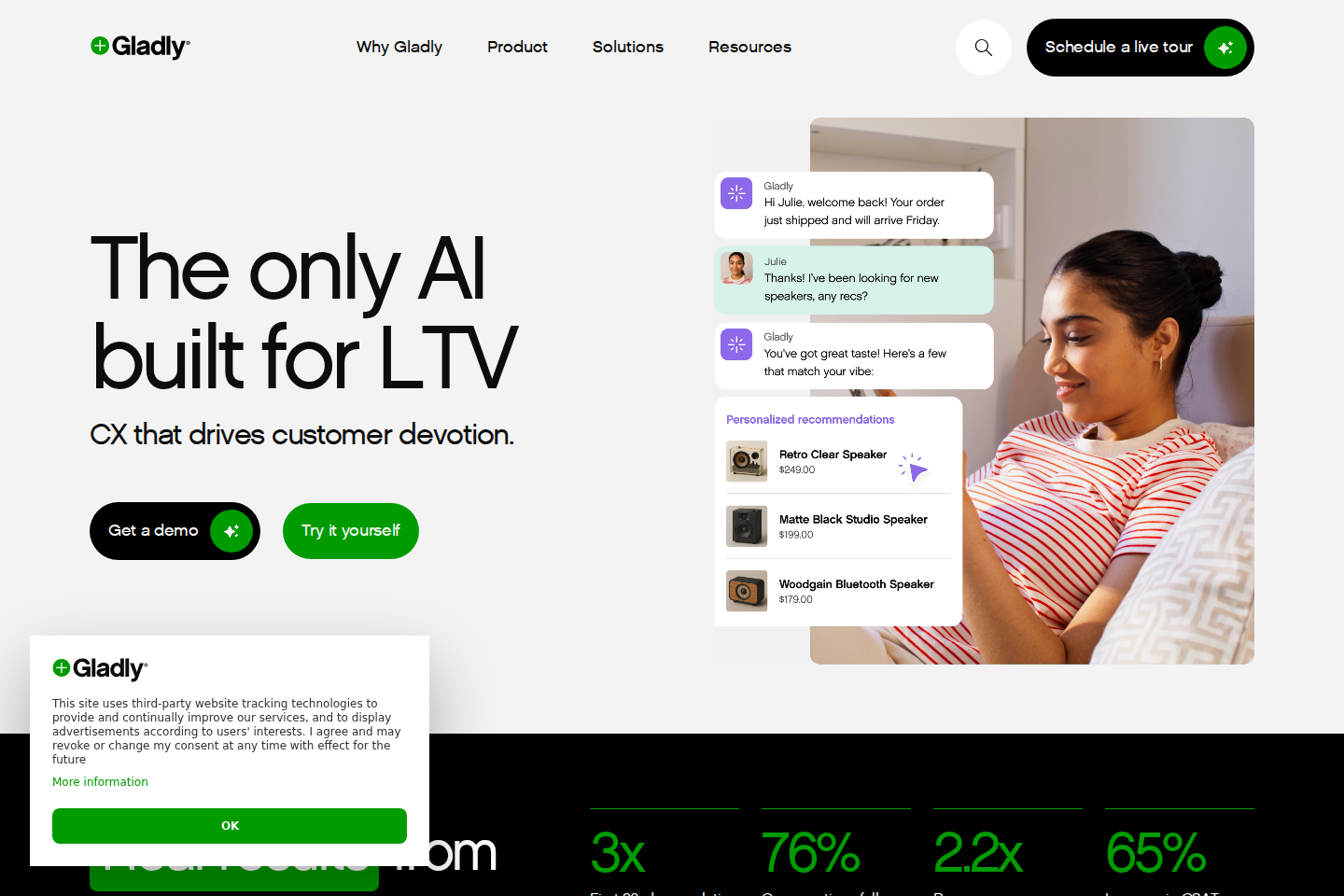
Gladly takes a fundamentally different approach to customer service: people-centered rather than ticket-centered. Instead of organizing support around ticket numbers, Gladly organizes every interaction around the customer's identity and lifetime history — which means AI agents and human agents share a unified conversation timeline regardless of whether the customer contacted you by phone, chat, email, or SMS.
Gladly's AI layer, called Hero, handles autonomous resolution across channels and includes revenue-attribution features that connect support interactions to downstream purchases. The company claims customers see a 2.2x increase in revenue per conversation and 76% of conversations fully resolved by AI. Notable customers include Nordstrom, TUMI, Ulta, Crate & Barrel, and HOKA — predominantly retail and DTC consumer brands.
The trade-off is that Gladly is most naturally suited for retail, e-commerce, and consumer brands where customer lifetime value and repeat purchasing are the primary CX metrics. Teams in B2B SaaS, financial services, or regulated industries may find the platform's retail-native features less aligned with their workflow needs.
Pros
People-centered architecture eliminates ticket silos. Every customer interaction — voice, chat, email, SMS — is unified in a single lifetime conversation thread.
Revenue attribution built into the CX workflow. Gladly connects support interactions to purchase outcomes, making it easier to tie CX spend to LTV.
Strong roster of consumer brand customers (Nordstrom, TUMI, Ulta, Crate & Barrel) providing social proof for retail and DTC teams.
Watch for
Enterprise pricing with no published plans. Gladly is positioned for mid-market to enterprise consumer brands, not SMBs or early-stage teams.
Retail and DTC focus means the platform's default workflows, metrics, and integrations are optimized for consumer purchasing journeys rather than B2B support or lead conversion.
Fewer public G2 reviews compared to Intercom or Zendesk, making independent evaluation harder before committing to a sales cycle.
Best fit
Mid-market to enterprise consumer brands — retail, DTC, hospitality, fashion — where customer lifetime value is the primary CX metric and the team wants a unified, people-centered service model rather than a traditional ticket-based helpdesk.
Pricing
Custom enterprise pricing. Gladly uses a per-hero (per-agent) pricing model. Contact Gladly for quotes. No published pricing page.
6. Freshdesk (Freddy AI) — Best budget-friendly AI for existing Freshworks teams
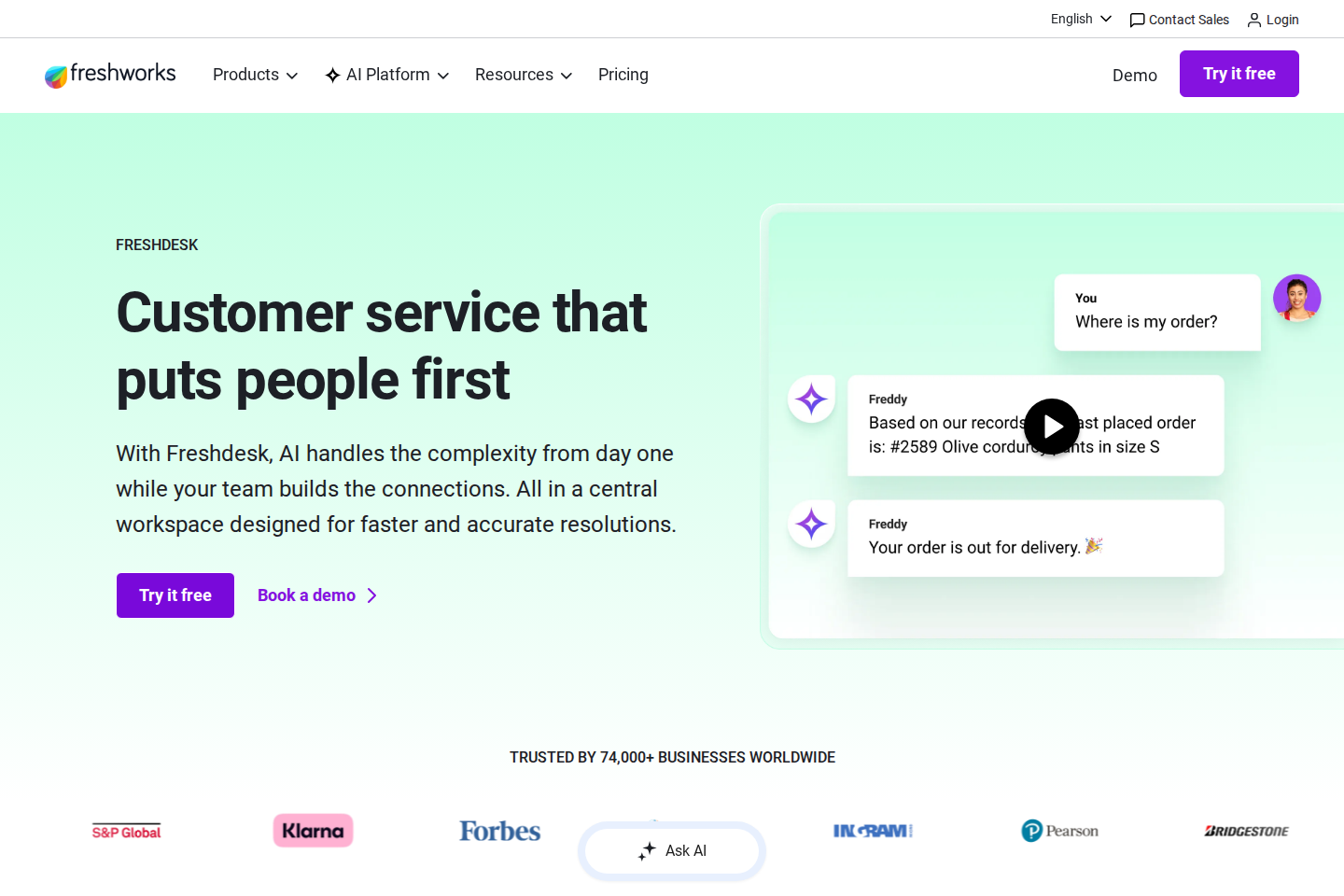
Freshdesk is Freshworks' customer support platform, and Freddy AI is the AI layer that handles automated responses, ticket triage, agent assist, and self-service across chat, email, and messaging channels. For teams already in the Freshworks ecosystem — particularly those using Freshdesk alongside Freshsales or Freshcaller — Freddy AI adds intelligent automation without requiring a separate vendor or complex integration.
Freshdesk's main advantage over Decagon is accessibility. Plans start at $15/agent/month (Growth) with a free tier for up to two agents. Freddy AI capabilities are available across paid plans, making it one of the most affordable paths to AI-powered customer support. The platform supports 26+ languages, includes a built-in knowledge base, and offers marketplace apps for extending functionality.
The limitation is depth. Freddy AI handles straightforward ticket deflection and FAQ-style resolutions well, but teams with complex multi-step workflows, advanced voice AI requirements, or enterprise-scale customization needs may find Freshdesk's AI less capable than Decagon's AOPs or Intercom's Fin. Analytics and reporting are also more basic at lower plan tiers.
Pros
Accessible pricing starting at $15/agent/month with a free tier. Orders of magnitude more affordable than Decagon's six-figure contracts.
Native integration within the Freshworks ecosystem — Freshsales, Freshcaller, Freshchat — providing a unified customer view for small and mid-market teams.
Self-serve setup with a 14-day free trial. Teams can evaluate the product independently without committing to a sales cycle.
Marketplace with 1,000+ apps and integrations for extending platform functionality.
Watch for
AI capabilities are less sophisticated than Decagon or Intercom for complex, multi-step resolution workflows. Freddy works best for FAQ-style deflection and basic ticket routing.
Advanced features (custom objects, IP range restriction, skill-based routing) require Enterprise plans at $79/agent/month, narrowing the price gap with competitors.
Best fit
SMB to mid-market teams looking for affordable AI-powered customer support without enterprise procurement cycles. Strongest for teams already using Freshworks products or those with straightforward support workflows where basic deflection and triage provide sufficient value.
Pricing
Free tier (up to 2 agents). Growth: $15/agent/month. Pro: $49/agent/month. Enterprise: $79/agent/month. All plans billed annually. 14-day free trial available.
7. Forethought — Best AI-first ticket triage and autonomous resolution
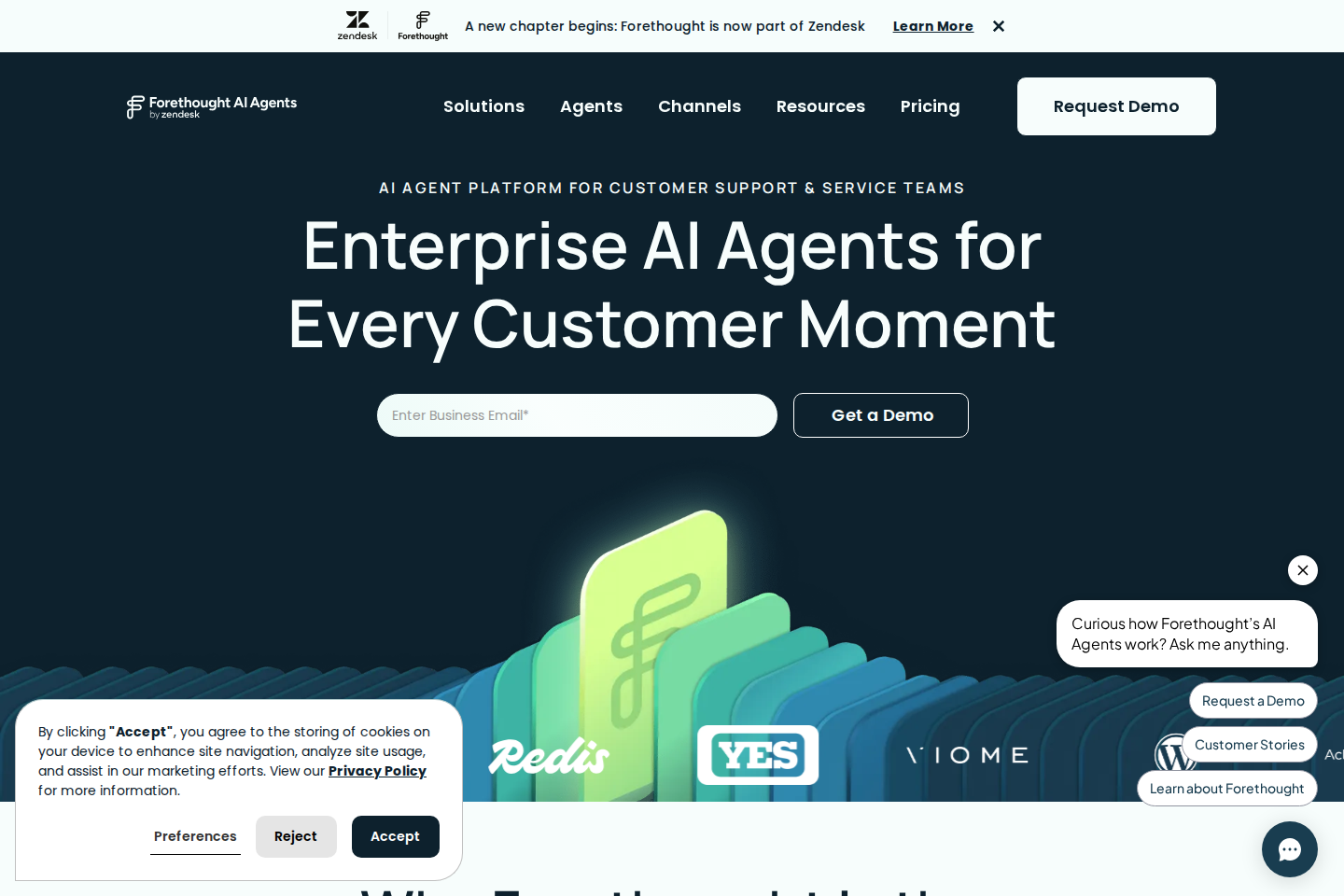
Forethought offers a 5-agent AI architecture covering the full support lifecycle: Solve (autonomous resolution), Triage (intelligent routing), Assist (agent copilot), Discover (insight extraction), and Autoflows (workflow automation using natural language). The platform was recently acquired by Zendesk, though it continues to operate as a standalone product and integrates with Salesforce, Freshdesk, and other helpdesks in addition to Zendesk.
Forethought's strength is its triage intelligence. The platform uses intent detection and historical ticket analysis to route tickets to the right team, agent, or AI workflow — reducing misrouted tickets and improving first-contact resolution. Published case studies show resolution rates ranging from 44% to 87% depending on data quality, ticket complexity, and knowledge base depth.
The barrier to entry is significant. Forethought requires a minimum of 20,000 historical tickets and 2,000+ monthly ticket volume to onboard effectively. Implementation takes 30 to 90 days, and there is no free trial or self-serve signup. Procurement data from Vendr puts the median annual contract at approximately $59,500 — more accessible than Decagon's $386,000 median but still a substantial commitment.
Pros
5-agent architecture covers triage, resolution, agent copilot, insights, and workflow automation in a single platform.
Strong intent detection and intelligent routing reduce misrouted tickets and improve first-contact resolution rates.
Works with multiple helpdesks (Zendesk, Salesforce, Freshdesk), unlike Decagon's Zendesk-only Agent Assist.
Watch for
High barriers to entry: 20,000+ historical tickets, 2,000+ monthly volume minimum, 30–90 day implementation, no free trial.
Procurement data shows a median annual contract of approximately $59,500, with no self-serve pricing.
G2 buyer satisfaction is 4.3/5, but Trustpilot end-user ratings are notably lower at 2.5/5, with common complaints about chatbot loops and difficulty reaching human agents — suggesting a gap between what buyers experience and what their customers experience.
Best fit
Enterprise support teams with high ticket volumes (20,000+ historical, 2,000+ monthly) who need intelligent triage and routing as much as autonomous resolution. Best for teams with complex routing rules, multiple specialized support tiers, and the budget for a mid-five-figure annual commitment.
Pricing
Custom enterprise pricing. No published plans. Procurement data from Vendr estimates median annual contracts at approximately $59,500, ranging from $40,000 to $155,000. No free trial; Forethought offers a guided Proof of Value evaluation instead.
8. Tidio (Lyro AI) — Best for SMBs and e-commerce wanting fast AI chat
Tidio is a customer service platform built for small and mid-market businesses, and Lyro is its AI chatbot that handles autonomous customer conversations using your existing knowledge base, help center articles, and FAQ content. The product is positioned as the accessible alternative to enterprise AI support platforms — no minimum volume requirements, no mandatory sales cycle, and a free tier to start.
Tidio claims a 67% resolution rate for Lyro and backs it with a guarantee: if Lyro does not lift your resolution rate to at least 50%, you get your money back. The platform supports chat and messaging channels natively, with email and helpdesk functionality available in higher-tier plans. Tidio's smart actions feature allows Lyro to execute workflows like checking order status, processing returns, or updating account information — not just answering questions.
The limitation is scope. Tidio is primarily a chat-first platform designed for e-commerce and SMB customer service. It lacks the enterprise voice AI, advanced multi-step workflow orchestration, and deep CRM integrationCRM integrationA CRM integration connects an agent or communications platform with a CRM so the systems can exchange records, events, and actions.Read full definition → that platforms like Decagon or Thoughtly provide. For teams outgrowing their current support tool or needing enterprise-grade features, Tidio may become a transitional choice rather than a long-term platform.
Pros
Free tier available with no minimum volume requirements. The most accessible entry point among all alternatives on this list.
67% resolution rate with a money-back guarantee if the platform does not lift your rate to at least 50%.
Self-serve setup: sign up, connect your knowledge base, and deploy within hours rather than weeks.
Smart actions let Lyro execute workflows — order tracking, returns, account updates — not just answer questions.
Watch for
Chat-primary platform. Voice AI capabilities are limited compared to Decagon, Sierra, or Thoughtly.
Enterprise features, advanced analytics, and multi-channel orchestration are limited or absent at lower plan tiers.
Best fit
SMB and mid-market e-commerce teams looking for fast, affordable AI chat support without enterprise procurement. Best for teams with straightforward FAQ-style support workflows, Shopify or WooCommerce stores, and budget constraints that make Decagon's $386,000 median contract untenable.
Pricing
Free tier available. Starter: $29/month. Growth: from $59/month. Plus: from $749/month. Enterprise: custom. Lyro AI conversations are included at varying tiers. Free trial available on all paid plans.
How to choose the right Decagon alternative
The most important decision is not which AI platform is best — it is which job you are actually hiring the platform to do.
If your job is converting inbound leads into revenue: Thoughtly. It is a different category entirely — voice + SMS + email + CRM, built for speed-to-lead and lead follow-up in high-consideration consumer industries.
If your job is deflecting support tickets and you are already on Intercom: Intercom Fin AI. Native integration, self-serve deployment, and proven at scale.
If your job is enterprise CX with white-glove implementation: Sierra. Closest to Decagon in scope and scale, with stronger brand-tier social proof.
If your job is adding AI to an existing Zendesk support operation: Zendesk AI. Zero integration overhead for Zendesk customers.
If your job is LTV-driven CX for a consumer brand: Gladly. People-centered support model with revenue attribution.
If your job is affordable AI support with a quick start: Freshdesk (Freddy AI) for mid-market teams, or Tidio (Lyro) for SMBs and e-commerce.
If your job is intelligent triage and routing at high volume: Forethought. Strong ticket classification and multi-helpdesk support.
FAQ
How much does Decagon cost?
Decagon does not publish pricing. All contracts are custom and require a sales call. Third-party procurement data from Vendr puts the median annual contract at approximately $386,000, with a range from $95,000 to $590,000 or more. Pricing is usage-based, typically per conversation or per resolution, with no per-seat fees.
Is Decagon good for small businesses?
Decagon is not positioned for small businesses. The lack of self-serve signup, no free trial, no published pricing, and six-figure annual contracts make it inaccessible to most SMBs. Small businesses evaluating AI customer support should consider Tidio, Freshdesk, or Intercom, which offer free tiers or affordable entry plans.
Can Decagon handle lead conversion and sales?
Decagon is built for customer support — ticket deflection, post-purchase service, and CX automation. It is not designed for pre-sale lead conversion, speed-to-lead follow-up, or inbound lead qualificationLead qualificationLead qualification captures fit signals such as intent, urgency, location, eligibility, consent, and availability before the next step.Read full definition →. Teams whose primary need is converting inbound leads should evaluate Thoughtly, which is purpose-built for that job across voice, SMS, and email.
What are the biggest complaints about Decagon?
Recurring themes in G2 reviews and independent analysis include: opaque pricing with no published plans, Agent Assist restricted to Zendesk only, no self-serve evaluation path (no trial, no sandbox, no public docs), product maturity gaps with features like regression testing only recently added, and advanced customization still requiring engineering resources despite the natural-language AOPs promise.
How long does Decagon take to deploy?
Decagon deployments typically take several weeks, with white-glove onboarding that includes dedicated Account Project Managers and Field Deployment Engineers. This is faster than Sierra's multi-quarter timeline but significantly slower than self-serve alternatives like Intercom Fin, Freshdesk, or Tidio, which can be deployed in hours to days.
Sources and further reading
Decagon homepage and product overview — decagon.ai