

Industry insights
Best Dialpad Alternatives for AI Voice Platforms in 2026
Compare Dialpad alternatives for AI voice, inbound lead conversion, contact centers, CRM workflows, and multichannel follow-up.
Industry insights
Compare Dialpad alternatives for AI voice, inbound lead conversion, contact centers, CRM workflows, and multichannel follow-up.
Last updated
Dialpad is a strong communications platform when a company wants business phone, meetings, messaging, contact centerContact centerA contact center is a centralized operation that handles customer or prospect interactions across voice and digital channels., and AI features under one vendor. It is often a sensible shortlist pick for teams standardizing employee communications or modernizing a support contact center.
But teams looking for Dialpad alternatives usually have a more specific operating problem. They may need faster inbound lead response, deeper CRMCRMA CRM is the system used to manage leads, contacts, accounts, opportunities, activity, ownership, and follow-up. execution, more persistent follow-up across voice, SMS, and email, or a contact-center platform with a different scale and administration model.
I evaluated these alternatives through the lens that matters for high-consideration revenue teams: which platforms help teams reach, qualify, route, book, and re-engage leads without forcing a full communications-suite decision when the real problem is conversion.
The strongest reason to evaluate alternatives is fit, not failure. Dialpad can be a good unified communications and AI contact-center platform, but a consumer lead-conversion team may not want the center of gravity to be phone-system consolidation. It may need an AI agent that calls every form fill, keeps context across SMS and email, writes back to the CRM, books the next step, and keeps trying until the lead responds or opts out.
External review research also surfaces recurring buyer questions around support responsiveness, call reliability, pricing clarity, and whether contact-center packaging matches the team’s actual workflowWorkflowA workflow is a defined sequence of steps, decisions, actions, delays, and outcomes used to complete a business process.. Those themes should be validated in procurement, especially if the team is moving from a general communications suite to a revenue-critical AI voiceAI voiceAn AI voice is synthetic speech produced by a text-to-speech model, using a selected or cloned voice to speak an agent's generated or scripted response. workflow.
I looked for platforms that can own the workflow after a lead raises a hand: fast first call, qualification, routing, booking, disposition capture, and CRM update. Stronger platforms reduce the gap between “lead submitted” and “qualified next step booked.” Weaker fits assume a human queue or a separate automation stack will handle that work.
Voice is the highest-intent moment, but missed calls are normal. I gave more credit to platforms that can continue through SMS and email with the same context instead of making teams stitch together a phone system, texting tool, and marketing automation sequence. This matters most for insurance, mortgage, education enrollment, healthcare, real estate, automotive, home services, legal, and financial-services funnels.
A voice platform is only useful if the CRM knows what happened. I looked for bidirectional CRM syncCRM syncCRM sync keeps selected lead, contact, conversation, outcome, and next-step data aligned between an agent platform and a CRM., structured dispositions, routing rulesRouting rulesRouting rules decide where a lead, call, appointment, or task goes using criteria such as intent, location, urgency, language, licensing, ownership, or availability., scheduling handoff, and workflow triggers. A clean call recordingCall recordingCall recording captures phone audio for review, quality assurance, training, dispute handling, or regulated retention. is not enough if reps still wake up to manual notes, duplicate records, or unclear next steps.
Some buyers genuinely need a broader contact-center platform with routing, workforce management, agent desktop, QA, and omnichannelOmnichannelOmnichannel is a coordinated customer journey in which context and state carry across voice, SMS, email, web, and human interactions. support. For those teams, RingCentral, Talkdesk, Genesys, and Zoom may belong in the comparison. For lead conversion, that same breadth can become operating weight.
Dialpad’s AI Agent pricing is conversation-based, while many UCaaS and CCaaS tools use seat, usage, add-on, or quote-based pricing. I looked for where buyers should verify AI usage, telephony, SMS, CRM connectors, support levels, implementation, and contract terms. The cheapest base plan rarely tells the real operating cost.
| Platform | Best fit | Primary strength | Key limitation |
|---|---|---|---|
| Thoughtly | Inbound lead conversion across voice, SMS, email, and CRM | AI agents work every opted-in lead, qualify, book, transfer, re-engage, and write back to the CRM. | Not a full UCaaS replacement for company-wide phone, meetings, and chat. |
| RingCentral RingCX | Companies standardizing business communications and contact center | AI-first contact-center suite paired with a large communications platform footprint. | Can be more communications-suite than lead-conversion operating layer. |
| Zoom Contact Center | Teams already standardized on Zoom | Connected Zoom CX ecosystem with contact-center, AI, and familiar collaboration workflows. | Best when Zoom consolidation matters; less specialized for persistent revenue follow-up. |
| Aircall | Sales and support teams that want a fast cloud phone layer | Cloud calling, monitoring, analytics, and integrations without a giant CCaaS rollout. | Voice-centric compared with same-agent multichannel lead conversion. |
| CloudTalk | SMB and mid-market call-center teams | Cloud calling, routing, analytics, power dialer, and sales/support integrations. | May be lighter than enterprise CCaaS and less complete than AI-led CRM execution. |
| Talkdesk | Industry-specific service operations | AI-powered CX suite with omnichannel service and vertical packages. | Contact-center-first; can be overbuilt for inbound lead follow-up. |
| Genesys Cloud CX | Enterprise contact-center transformation | Mature experience orchestration for global service and support operations. | Implementation and administration can be heavy for a RevOps-owned conversion workflow. |
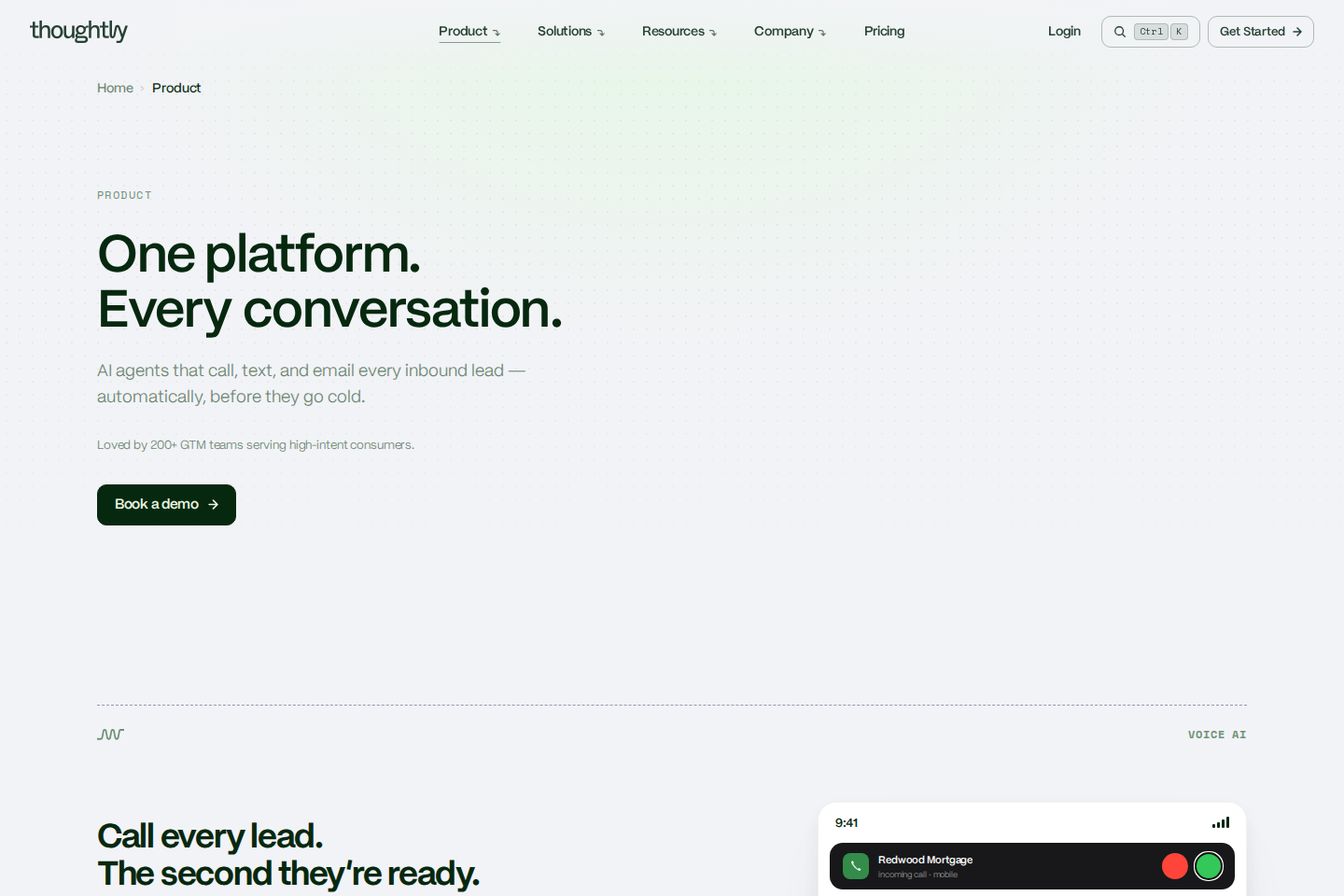
Thoughtly is the strongest Dialpad alternative when the buying problem is not “replace the phone system,” but “convert every inbound lead we already paid for.” Its AI agents call, text, and email opted-in leads, qualify intent and urgency, book or transfer the next step, and write the outcome back to the CRM. That makes Thoughtly a better fit for RevOps, enrollment, admissions, insurance, mortgage, real estate, automotive, healthcare, home services, legal, and financial-services teams that care about response speed and follow-up persistence. It is intentionally narrower than a full communications suite, which is the point: the platform is built around revenue action after the lead arrives.
Choose Thoughtly if Dialpad feels too broad for the workflow you actually need: converting inbound leads quickly and consistently. It is best when the business wants AI to do the first-touch and follow-up work, then hand humans qualified conversations instead of another queue to manage.
Thoughtly pricing is usage- and implementation-based. Contact Thoughtly for a plan based on call volume, channels, integrations, compliance needs, and support scope.
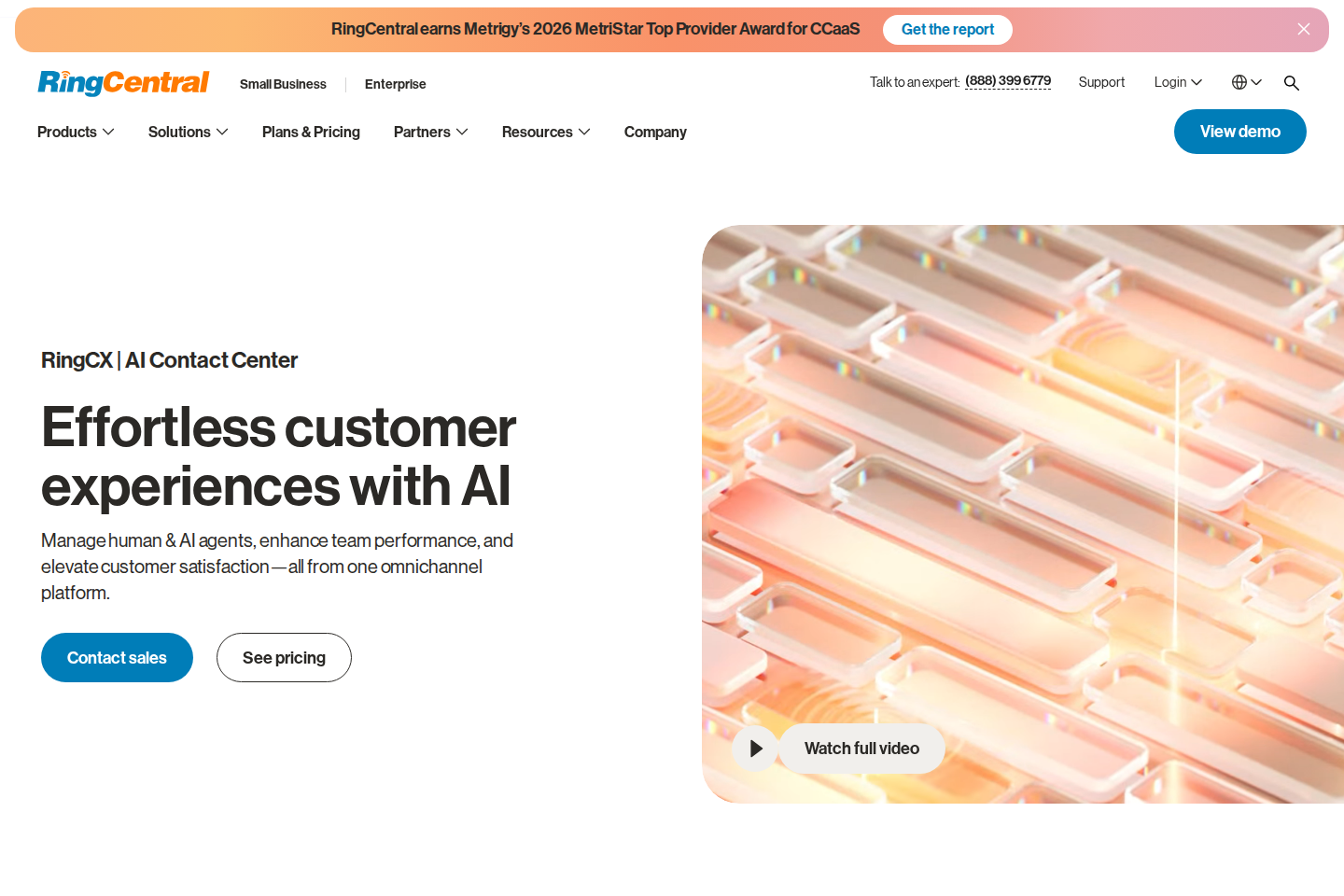
RingCentral is a credible Dialpad alternative for organizations that want communications and contact-center capabilities from a large, established vendor. RingCX positions itself as an AI-first contact-center solution, while RingCentral’s broader portfolio covers business phone, messaging, events, and conversational intelligence. It belongs here because many Dialpad evaluations are really communications-suite decisions. The tradeoff is that RingCentral’s breadth can be unnecessary if the real job is AI-led lead conversion inside the CRM.
Choose RingCentral when the project is communications standardization and the contact center needs to live beside the company phone system. Choose Thoughtly when the team does not need a new communications suite and instead needs every inbound lead worked immediately until there is a qualified next step.
RingCentral pricing varies by product and package. Confirm RingCX, AI, telephony, SMS, integration, support, implementation, and contract terms before comparing against Dialpad or narrower automation tools.
Zoom Contact Center is a natural Dialpad alternative for companies already standardized on Zoom meetings, phone, webinars, and collaboration. Its contact-center product emphasizes a connected CX ecosystem, AI-native resolution, and customer interactions on a familiar Zoom foundation. That familiarity can reduce change management when the contact-center team already lives in Zoom. The limitation is focus: Zoom is a collaboration ecosystem first, while Thoughtly is built for inbound lead conversionInbound lead conversionInbound lead conversion turns opted-in calls, form submissions, quote requests, and other inquiries into qualified conversations, appointments, or transfers. workflows that need persistent outreach and CRM ownership.
Choose Zoom Contact Center when the company wants contact-center capabilities inside the Zoom ecosystem. Choose Thoughtly when the workflow starts with an inbound form fill, quote requestQuote requestA quote request is an inbound inquiry asking for pricing, coverage, or a cost estimate for a product or service., or appointment inquiry and needs AI agents to call, text, email, book, transfer, and update the CRM without waiting for a human queue.
Zoom Contact Center pricing depends on package and region, with public pricing available for some plans. Confirm AI capabilities, telephony, integrations, channels, support, and implementation requirements.
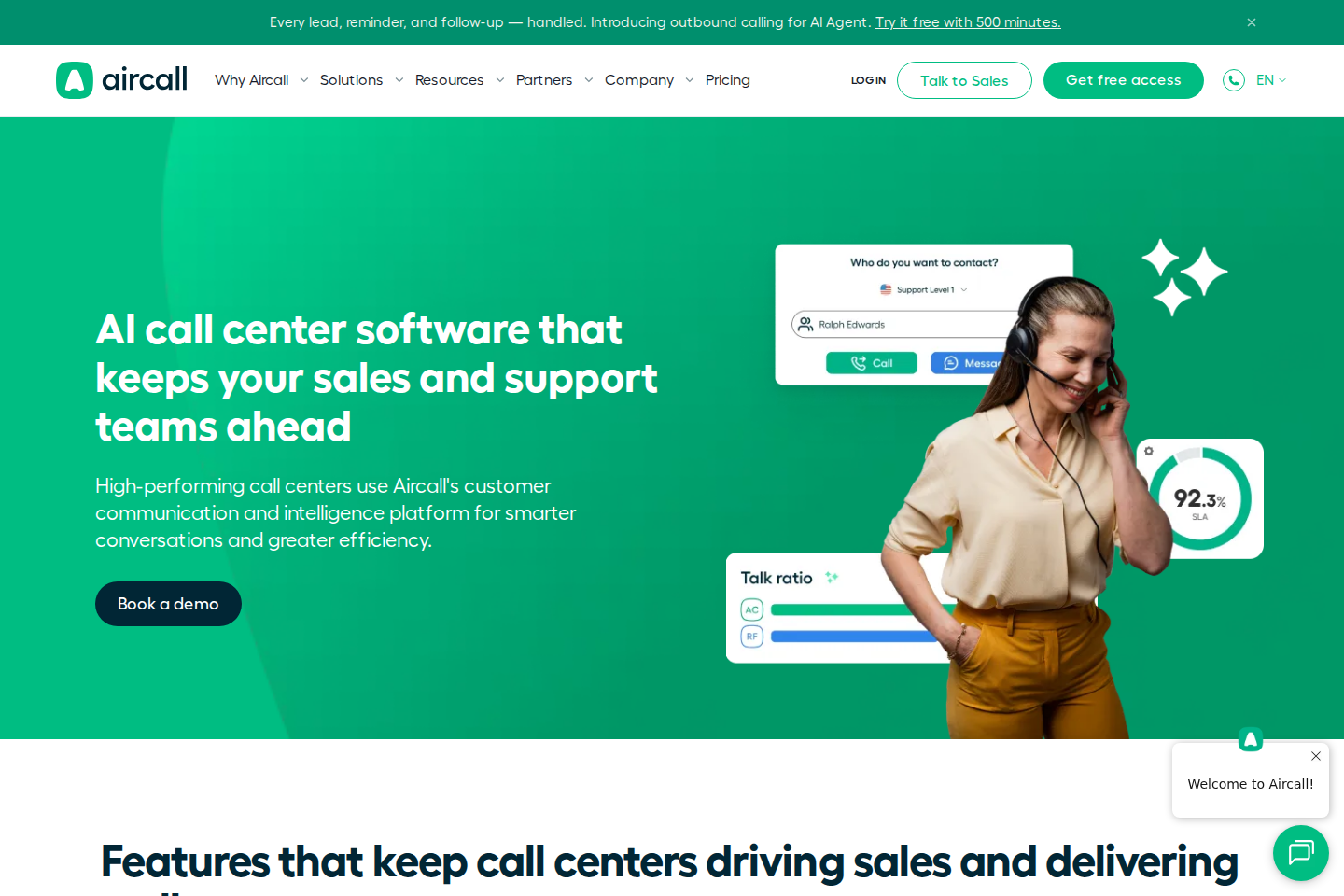
Aircall is a strong Dialpad alternative for sales and support teams that want a cloud phone and call-center layer without committing to a heavy enterprise CCaaS suite. It emphasizes calling workflows, call monitoring, analytics, coaching, and integrations with common sales and support tools. Aircall is useful when the operational gap is better call handling by human teams. It is less complete when the buyer wants AI agents to own multichannel lead conversion from first call through re-engagement.
Choose Aircall when the goal is to modernize human calling workflows for a sales or support team. Choose Thoughtly when AI should make the first call, keep trying through SMS and email, qualify intent, book the next step, and update the CRM automatically.
Aircall publishes plan-based pricing for several packages, with add-ons depending on region and setup. Confirm AI, analytics, numbers, SMS, integrations, and support details.
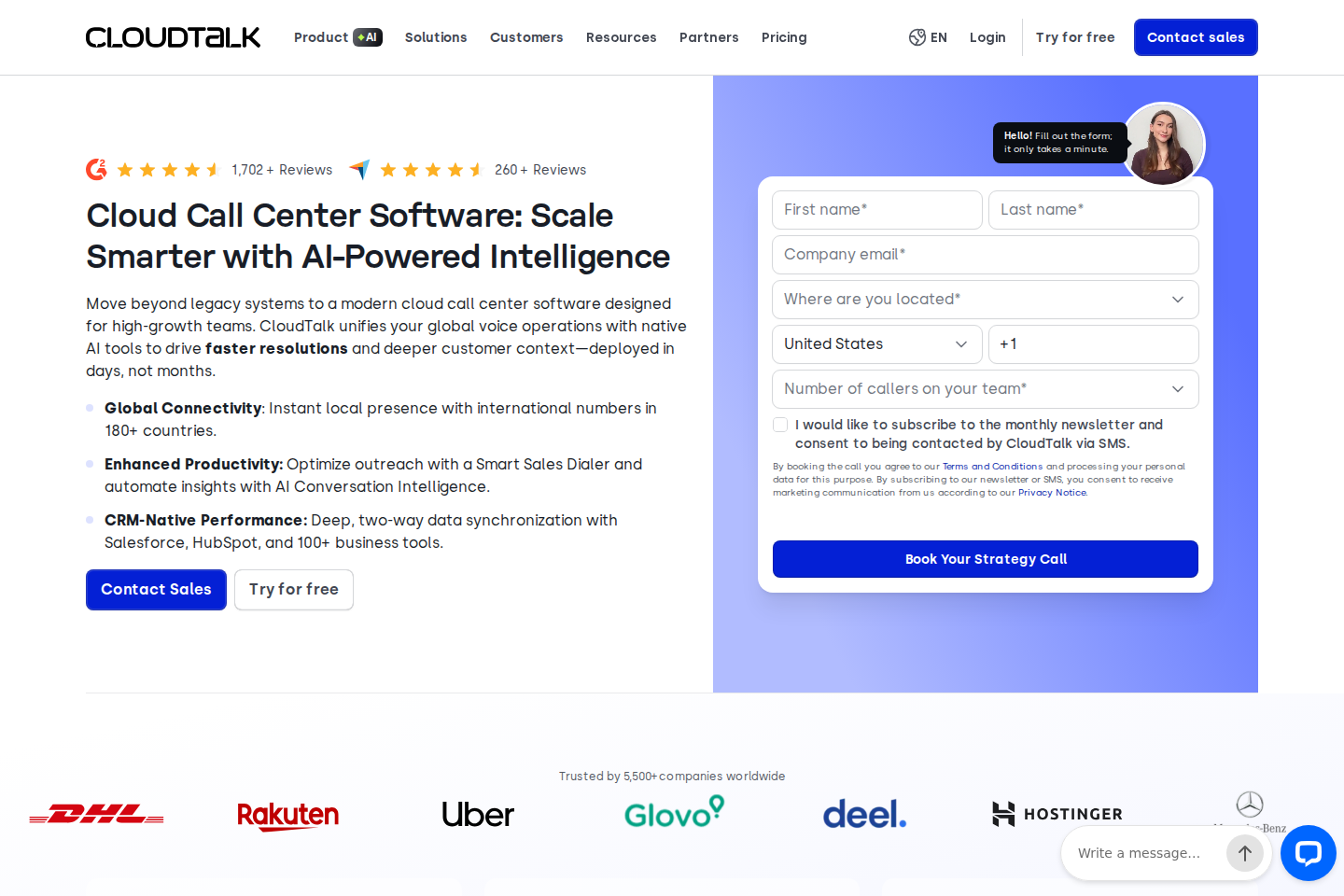
CloudTalk is a Dialpad alternative for SMB and mid-market teams that want cloud call-center software, routing, analytics, and sales/support integrations. It can work well when the team needs a lighter contact-center layer and does not want the largest enterprise platform footprint. CloudTalk belongs in the comparison because it targets practical call operations rather than broad collaboration-suite consolidation. The tradeoff is that call-center productivity is not the same as AI-led lead conversion across every channel.
Choose CloudTalk when the team mainly needs a flexible cloud call-center tool for reps and managers. Choose Thoughtly when the team wants AI agents to execute the lead-conversion workflow directly and only escalate qualified or urgent conversations to humans.
CloudTalk publishes tiered pricing for some plans, with features and numbers varying by package. Confirm AI, power dialerPower dialerA power dialer automatically calls contacts in sequence while keeping one person or automated agent available for each connected conversation., SMS, call recording, integrations, and usage costs.
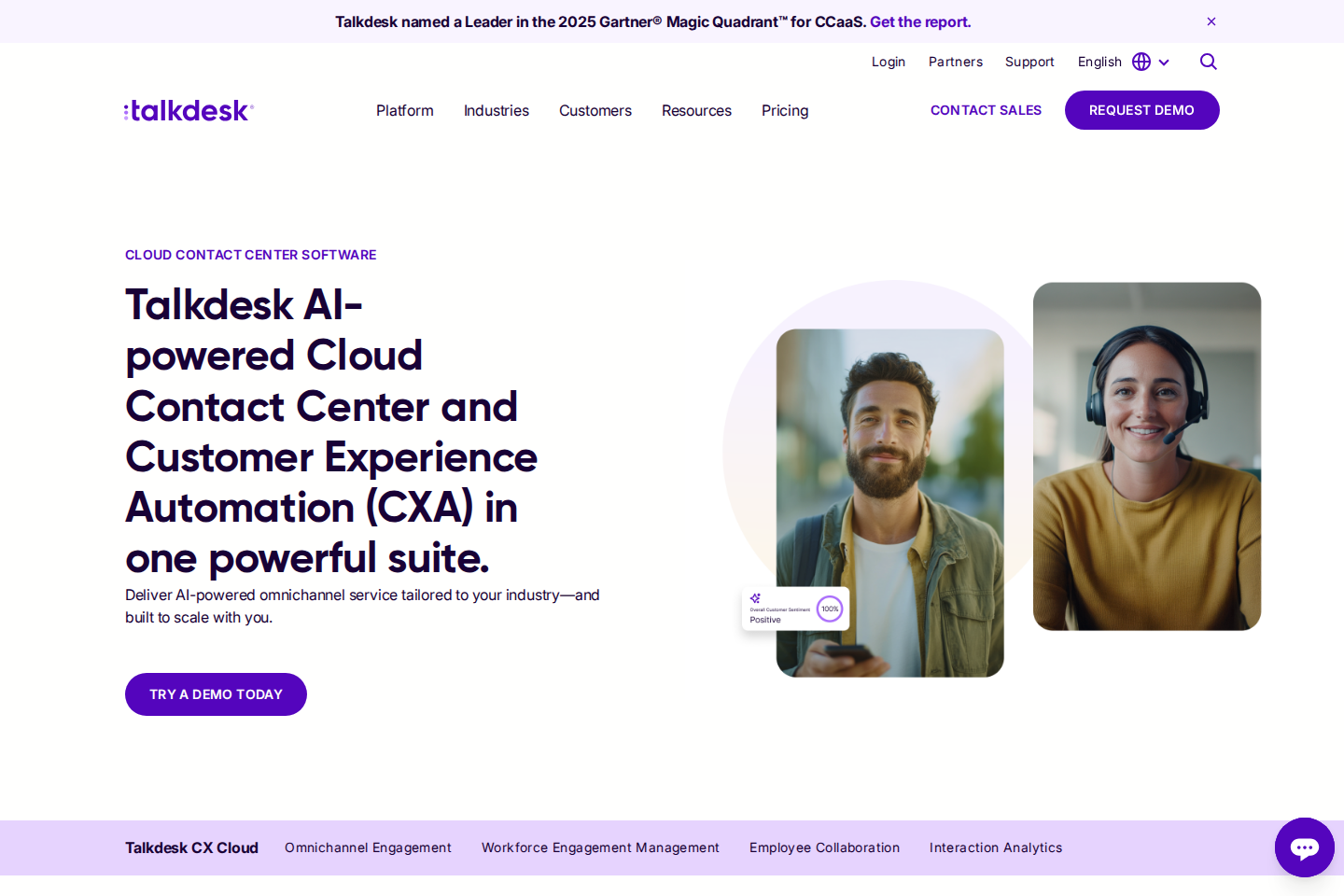
Talkdesk is a strong Dialpad alternative for companies that want an AI-powered cloud contact center with industry-specific CX packages. It emphasizes omnichannel service, workforce engagement, employee collaboration, integrations, analytics, and automation in a full CX suite. Talkdesk makes sense when the buying committee is centered on customer-service operations. For revenue teams, the question is whether that suite is too contact-center-first for a workflow that mainly needs fast lead response and persistent follow-up.
Choose Talkdesk when the project is a service and CX transformation with contact-center operations at the center. Choose Thoughtly when the team’s bottleneck is inbound lead conversion and the desired operating model is AI agents working the funnel before humans step in.
Talkdesk pricing is typically quote-based by package and scope. Confirm AI Agent, industry-package, telephony, digital-channel, workforce, integration, and implementation costs.
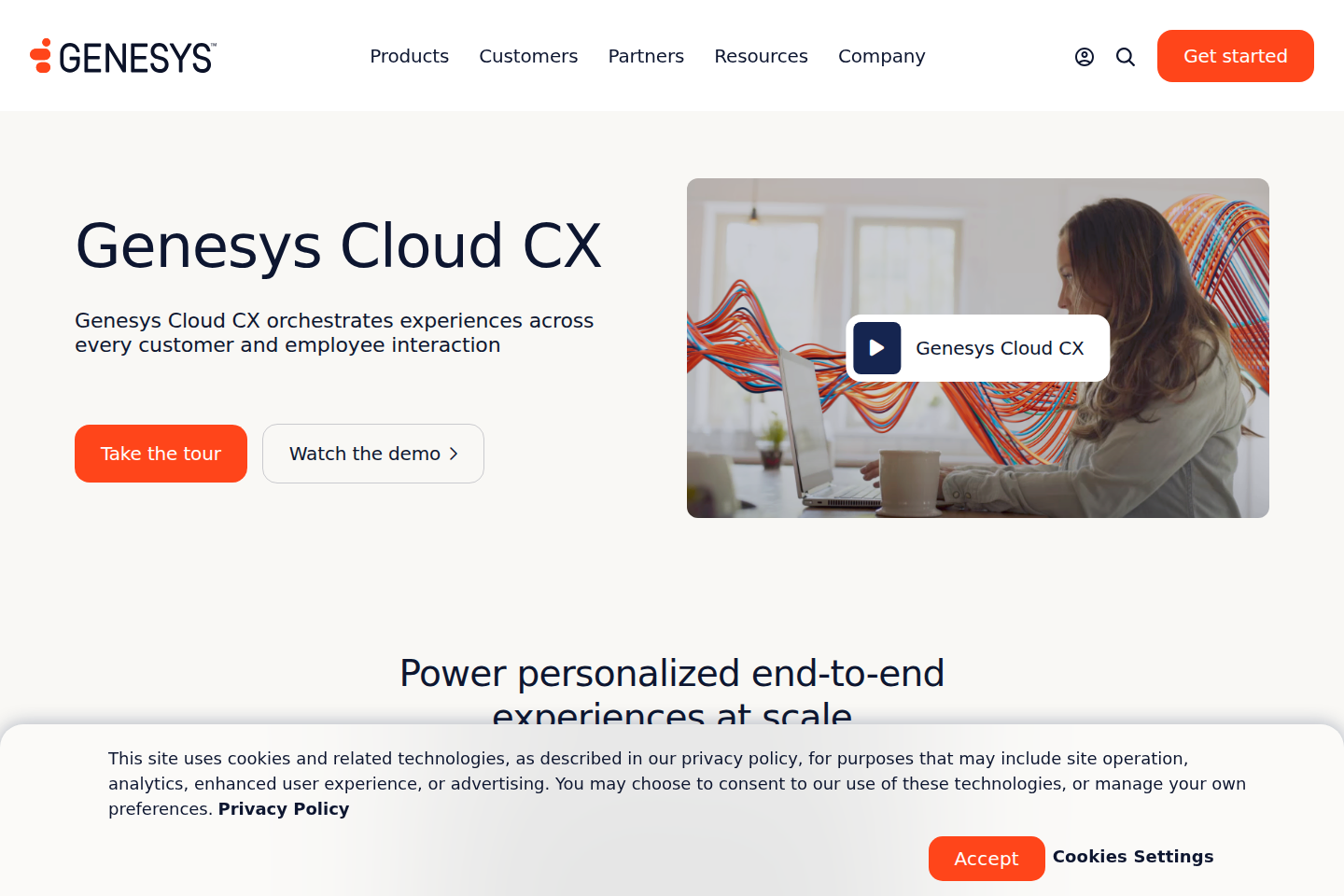
Genesys Cloud CX is a Dialpad alternative for larger enterprises that need mature contact-center and experience-orchestration capabilities. Its platform is designed to coordinate customer and employee interactions across channels, journeys, routing, AI, analytics, and operational controls. Genesys belongs here when the buyer wants enterprise-grade CCaaS rather than communications-suite simplicity. It is a heavier fit when the business problem is specifically missed lead follow-upLead follow-upLead follow-up is the sequence of calls, texts, emails, and tasks used after a prospect expresses interest. or slow speed-to-lead.
Choose Genesys when the organization is transforming a large service contact center. Choose Thoughtly when the business wants a focused AI layer that turns inbound leads into qualified conversations with fast calls, follow-up messages, booking, transfers, and CRM updatesCRM updatesCRM updates are changes written after or during a conversation, such as status, notes, owner, next step, appointment, or disposition..
Genesys Cloud CX pricing is generally quote-based and package-dependent. Confirm AI, WEM, digital channels, telephony, integrations, professional services, and support tiers.
Compare RingCentral, Zoom, and Dialpad directly. These platforms make the most sense when phone, meetings, messaging, contact center, administration, and vendor consolidation are part of the same decision.
Compare Aircall and CloudTalk. They are practical when managers want better call visibility, routing, analytics, coaching, and integrations for human sales or support teams without a large enterprise CCaaS rollout.
Compare Talkdesk and Genesys Cloud CX. They are better fits when the organization needs omnichannel service operations, workforce management, routing, QA, analytics, and governance across a large contact-center environment.
Start with Thoughtly. The buying question is different: how quickly can you call every opted-in lead, how persistently can the same agent follow up through SMS and email, how reliably can it book or transfer the next step, and how cleanly does the CRM reflect the outcome?
Thoughtly is the strongest fit when the goal is fast, persistent conversion of existing inbound leads. It is built around AI agents that call, text, email, qualify, book, transfer, re-engage, and update the CRM.
It depends on the operating model. Dialpad, RingCentral, and Zoom are all credible communications and contact-center platforms, but the best choice depends on whether the company prioritizes UCaaS consolidation, contact-center operations, AI features, pricing, support, and existing stack fit.
Revenue teams often need an AI system of action for leads, not only a communications platform for employees. Thoughtly is purpose-built to work every inbound lead quickly across voice, SMS, and email, then write the result back to the CRM for clean human handoffHuman handoffHuman handoff transfers a conversation, context, and next action from an automated agent to a person..
Some publish plan pages, while AI agent and contact-center pricing often depends on package, seats, conversation volume, telephony, channels, integrations, support, and implementation. Buyers should compare total operating cost, not only the entry plan.
Not always. Support teams often need routing, agent desktop, QA, workforce operations, and ticketing. Sales, enrollment, and consumer revenue teams should prioritize speed-to-lead, persistence, CRM execution, booking, transfer, and re-engagement.
RingCentral Trustpilot reviews


