

Industry insights
8 Best Five9 Alternatives for AI-Powered Contact Centers in 2026
A practical guide to the best Five9 alternatives for teams choosing between full contact-center platforms and AI-native inbound lead conversion.
Industry insights
A practical guide to the best Five9 alternatives for teams choosing between full contact-center platforms and AI-native inbound lead conversion.
Last updated
Five9 is a serious cloud contact-center platform. That is exactly why some revenue teams eventually look for alternatives: they do not need a full contact-center operating layer just to reach every inbound lead, qualify intent, book the next step, and write the outcome back to CRMCRMA CRM is the system used to manage leads, contacts, accounts, opportunities, activity, ownership, and follow-up..
I evaluated Five9 alternatives through the lens of teams that care about speed-to-lead, high-volume lead coverage, voice plus messaging follow-up, CRM ownership, and practical AI automation. The question is not “which platform has the most contact-center features?” It is “which platform fits the actual job you are buying it to do?”
I looked for platforms that can work new inbound leads quickly, not just route customer-service calls. Strong tools can triggerTriggerA trigger is an event or condition that starts, resumes, changes, or stops an automated workflow. from CRM or form-fill events, attempt contact while intent is fresh, qualify with structured logic, and push the outcome back to the system of recordSystem of recordA system of record is the authoritative source for a defined category of business data..
Five9 buyers often need voice, but missed calls are where conversion leaks. I prioritized platforms that can continue the same conversation over SMS, email, or messaging instead of treating every channel as a separate campaign module.
The best alternative depends on who owns the workflowWorkflowA workflow is a defined sequence of steps, decisions, actions, delays, and outcomes used to complete a business process.. RevOps teams usually need a product they can configure and measure without a contact-center admin team; global service teams may prefer a larger CCaaS suite with routing, workforce, QA, and supervisor tooling.
I compared whether the platform looks like a fast revenue workflow or a full transformation project. Per-seat CCaaS pricing, add-ons, professional services, and custom quoting can all be justified, but only when the buyer actually needs the broader operating layer.
I used official product and pricing pages to verify positioning, then checked third-party review summaries, forums, and complaint-oriented searches for recurring watch-outs. Low-rated review themes are not treated as universal truth, but they are useful signals for what buyers should verify before signing.
| Platform | Best fit | Primary strength | Key limitation |
|---|---|---|---|
| Thoughtly | Best overall for CRM-first inbound lead conversion | Same-agent voice, SMS, email, workflow execution, and CRM write-back for opted-in lead funnels. | Not built for teams that only need legacy workforce management or ticket-deflection inside an existing contact center. |
| Genesys Cloud CX | Best for global enterprise CCaaS transformation | Mature routing, IVR, workforce, analytics, and AI orchestration for large contact centers. | Per-user CCaaS packaging and enterprise administration can be heavy for a team that just needs to call every new lead fast. |
| NICE CXone | Best for large service operations with AI self-service | Broad CX platform with AI agents, WEM, analytics, routing, and contact-center governance. | Best fit is customer-service transformation; it can be overbuilt for RevOps-owned inbound lead conversion. |
| Talkdesk | Best for industry-specific customer experience automation | AI agents, omnichannel engagement, analytics, and vertical contact-center templates. | Contact-center-first operating model and sales-led pricing can slow teams that need fast lead follow-up rather than CX modernization. |
| Dialpad | Best for teams unifying business communications and support | Business communications, contact center, sales engagement, and AI features in one suite. | AI/contact-center depth may require plan assembly; buyers should verify support, call-quality, and add-on scope for high-volume programs. |
| Aircall | Best for sales and support teams modernizing phone operations | Cloud phone and call-center system with integrations, outbound AI messaging, and sales/support workflows. | Seat-based phone-system economics and support complaints make it less clean for autonomous lead coverage at high volume. |
| CloudTalk | Best for SMB sales teams that need an accessible call-center tool | Sales-focused calling, power dialer, CRM integrations, and transparent entry-level pricing. | Smaller-team design and add-on creep can be limiting for enterprise governance or deeply autonomous multichannel follow-up. |
| RingCentral | Best for UCaaS teams extending into contact center | Unified communications, contact-center, events, and AI capabilities from a familiar communications vendor. | The breadth is useful, but teams buying specifically for lead conversion may inherit a broader communications suite than they need. |
Thoughtly is the Five9 alternative I would put first for teams whose real problem is not contact-center modernization, but inbound lead conversionInbound lead conversionInbound lead conversion turns opted-in calls, form submissions, quote requests, and other inquiries into qualified conversations, appointments, or transfers.. It calls new leads in under 60 seconds, then keeps the same agent working across SMS, iMessage, WhatsApp, and email until the lead responds or opts out. The platform is built around CRM triggers, qualification, booking, warm transferWarm transferA warm transfer connects a live caller to the right person while preserving the context already collected during the conversation., and write-back, which makes it a cleaner fit for insurance, mortgage, real estate, healthcare, education, home services, legal, and other high-consideration consumer funnels. If Five9 feels like more operating layer than your RevOps team wants to own, Thoughtly is the sharper fork.
Choose Thoughtly when the conversion motion is CRM-first: a lead raises a hand, the agent responds immediately, qualifies, books or transfers, and logs the result. It is strongest when the buyer is RevOps, growth, enrollment, sales, or operations — not a contact-center transformation committee.
Thoughtly uses per-minute pricing with plan packaging managed through sales, plus customer success support for launch and optimization. Public site language also references a limited free plan for testing and plan selection through the sales team.
Genesys Cloud CX is one of the strongest Five9 alternatives for global enterprises that need a mature CCaaS platform. Its pricing page lists named, concurrent, and hourly interacting license models, with entry voice contact-center pricing starting at $75 per user per month billed annually and higher tiers for digital and workforce capabilities. Genesys is built for customer-experience orchestration: routing, IVRIVRIVR, or Interactive Voice Response, is a phone menu that routes or serves callers through keypad entries or spoken choices., outbound campaigns, analytics, AI Studio, knowledge, workforce engagement, and enterprise governance. That is powerful, but it is a different purchase than a focused inbound lead-conversion platform.
Choose Genesys when the buyer is standardizing enterprise CX and contact-center operations across regions, queues, and human-agent teams. For revenue teams that mostly need fast qualification, booking, and CRM write-backCRM write-backCRM write-back sends conversation outcomes, qualification answers, notes, appointments, dispositions, and next steps into the CRM., Genesys can be a heavyweight answer to a narrower problem.
Genesys publishes Cloud CX pricing starting at $75 per user/month for CX 1 named licenses, with higher tiers and other license models available.
NICE CXone is a broad enterprise CX platform with AI agents, self-service, workforce engagement, analytics, and contact-center governance. Its AI agent pages emphasize customer service, containment, personalization, and high-volume concurrent conversations. That makes NICE a strong alternative when the buyer wants to modernize a large service organization. It is less direct when the buying motion is converting new leads before competitors respond.
Choose NICE when your KPI is service automation, containment, workforce quality, and contact-center optimization. Choose Thoughtly or another lead-conversion platform when the KPI is qualified conversations from fresh inbound demand.
Contact NICE for pricing; public pages route buyers to quote/demo flows.
Talkdesk positions itself around customer experience automation, AI agents, and cloud contact-center software. Its public pages emphasize agentic AI for voice and digital channels, omnichannelOmnichannelOmnichannel is a coordinated customer journey in which context and state carry across voice, SMS, email, web, and human interactions. engagement, analytics, workforce tools, and verticalized customer journeys. That makes it a credible Five9 alternative for service organizations that want industry-specific CX automation. For revenue teams, the key question is whether they need Talkdesk’s full contact-center suite or a tighter lead conversion layer.
Choose Talkdesk when the buyer owns a service contact centerContact centerA contact center is a centralized operation that handles customer or prospect interactions across voice and digital channels. and wants industry-specific AI automation across the customer journey. If the workflow starts with a form fill and ends with a booked appointment or warm transfer, a RevOps-owned platform may be cleaner.
Talkdesk publishes pricing entry points for some CXA packages, but most AI/contact-center scope should be confirmed with sales.
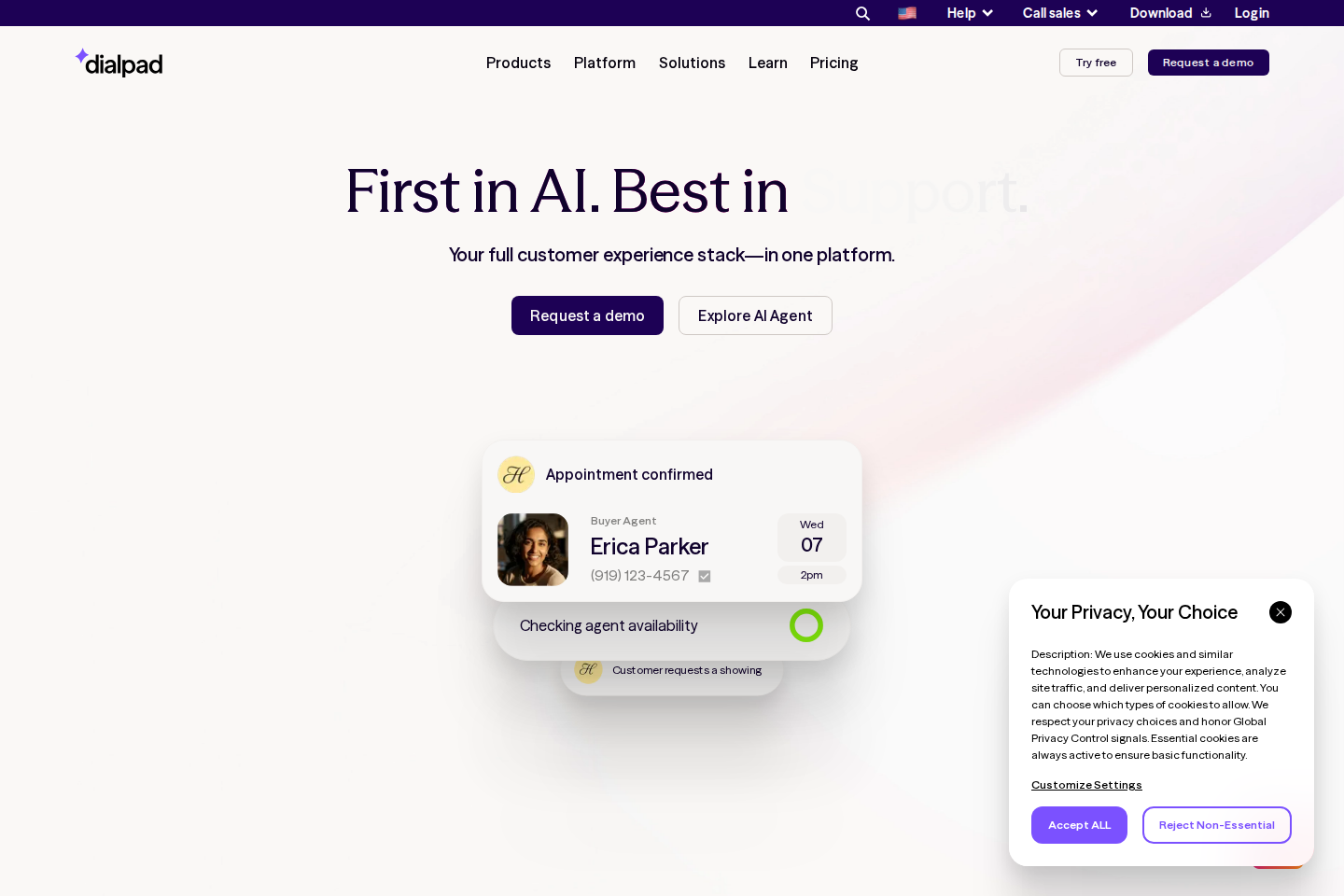
Dialpad is a strong option when a team wants phone, meetings, messaging, sales, and contact-center capabilities under one communications vendor. Its homepage now leans heavily into agentic AI and a full customer experience stack. That breadth is convenient for companies trying to consolidate communications vendors. The risk is that a buyer shopping for autonomous lead conversion may end up assembling plans and add-ons across a broad UCaaS/CCaaS suite.
Choose Dialpad when communications consolidation matters as much as AI automation. Choose a focused lead-conversion platform when the work is not “replace our phone system” but “work every lead automatically.”
Dialpad has public pricing for core communications products; contact-center and AI packaging should be confirmed by plan and add-on.
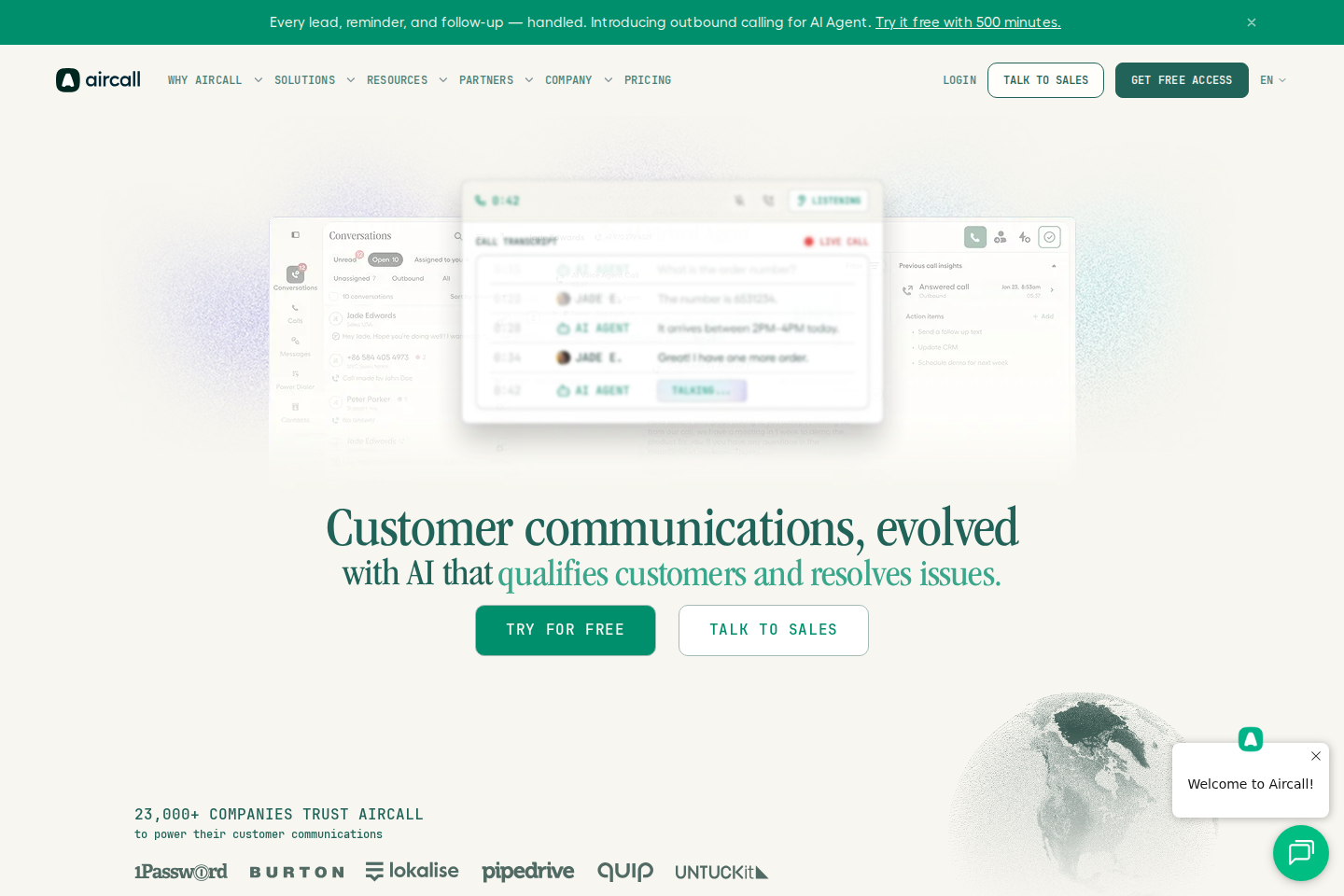
Aircall is a popular cloud phone and call-center platform for sales and support teams. Its homepage highlights lead handling, reminders, follow-up, integrations, and outbound AI, which puts it closer to sales workflows than many legacy CCaaS tools. Aircall can be a practical Five9 alternative for smaller teams modernizing phone operations without adopting a heavyweight enterprise platform. It is not as strong when the requirement is autonomous, same-agent voice/SMS/email lead conversion with CRM write-back as the core job.
Choose Aircall when humans still own most conversations and need a cleaner phone system with useful automation around them. Choose Thoughtly when the agent itself should run the lead workflow from first touch through booking or handoff.
Aircall publishes plan pricing for its phone products and promotes trial/minute offers for some AI/outbound packages; confirm final costs by users, add-ons, and usage.
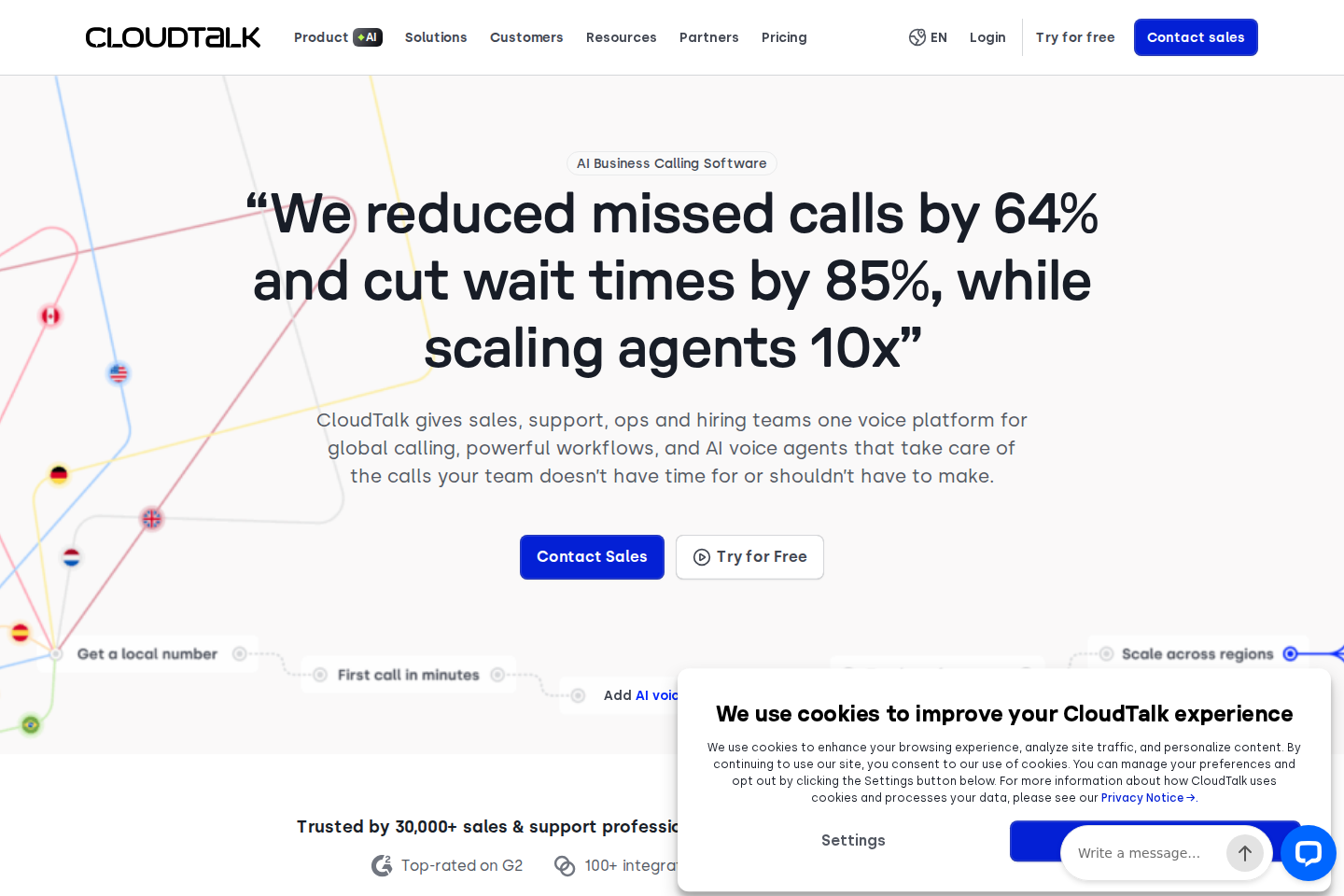
CloudTalk is a lighter-weight Five9 alternative for sales teams and smaller support organizations that want calling, dialers, routing, and CRM integrations. Its public content emphasizes AI telemarketing, sales workflows, and call-center features, while Trustpilot and review pages give buyers a visible pool of customer feedback. The product can be easier to adopt than enterprise CCaaS suites. The tradeoff is that enterprise governance, deep AI autonomy, and same-agent multichannel conversion may require additional tools.
Choose CloudTalk when your team wants a practical calling platform for reps and managers. Choose a purpose-built AI lead conversion platform when humans should not have to decide which lead gets worked next.
CloudTalk publishes tiered pricing publicly; buyers should model users, add-ons, phone numbers, and usage.
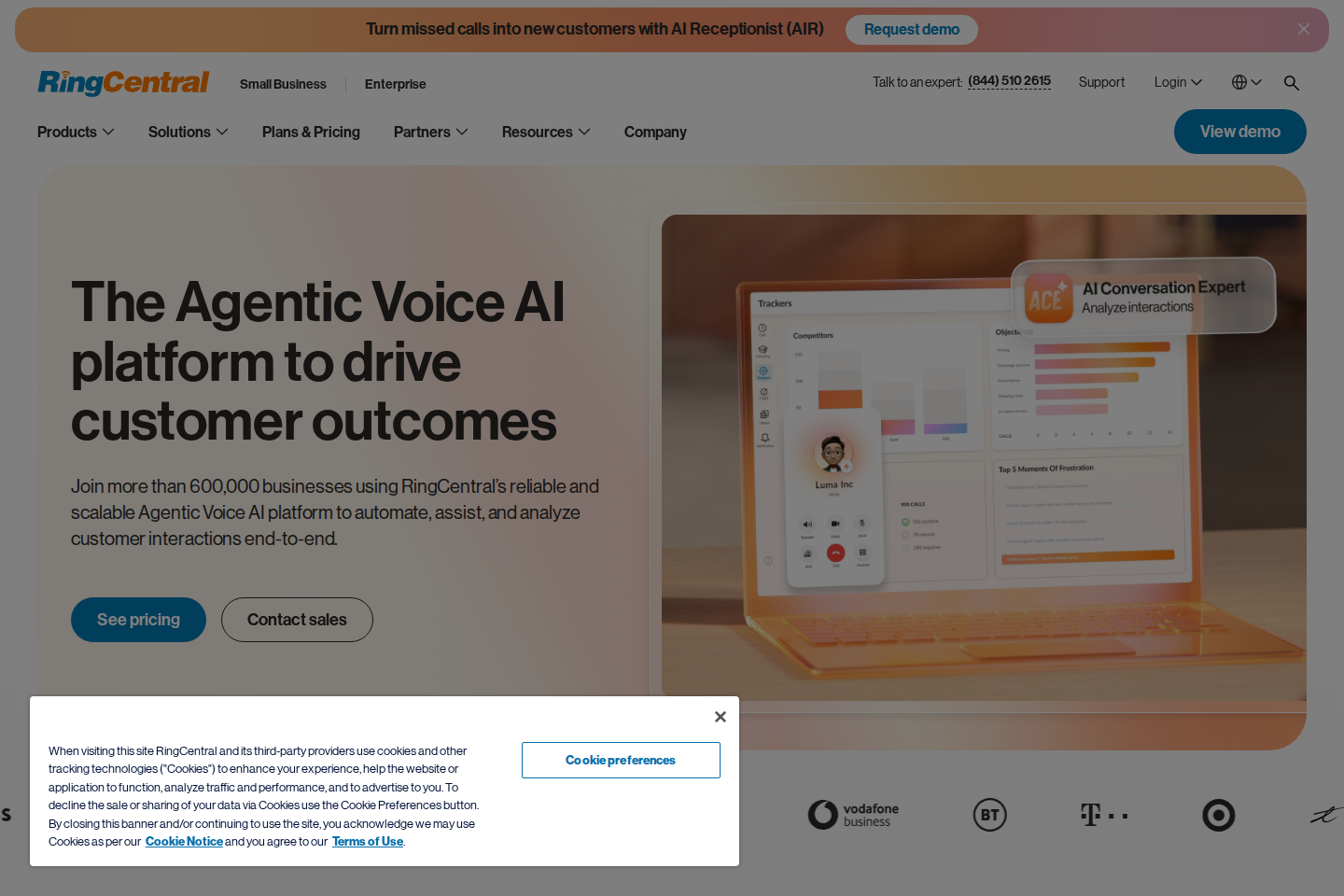
RingCentral is a broad communications vendor with business phone, messaging, meetings, contact center, and AI capabilities. It can be a rational Five9 alternative when the organization already uses RingCentral or wants one vendor for unified communications and customer engagement. Its strength is consolidation: fewer vendors, familiar admin, and a communications-first footprint. Its limitation is the same breadth; revenue teams buying for lead conversion may not want a full communications platform attached to the project.
Choose RingCentral when unified communications consolidation is part of the buying mandate. If the mandate is simply to convert inbound leads faster, prioritize platforms with CRM-first triggers, persistent follow-up, and revenue workflow ownership.
RingCentral publishes pricing for many products, but contact-center and AI packages should be confirmed with sales.
If your team is replacing a contact center, shortlist Genesys, NICE, Talkdesk, RingCentral, or Five9 itself. You will care about routing, queues, workforce, QA, supervisor tools, reporting, compliance controls, and migration support.
If your team is fixing lead conversion, start with Thoughtly. You will care more about sub-60-second response, 100% lead coverage, voice-to-SMS/email continuity, booking, warm transfer, and CRM write-back than about workforce modules.
If your team is modernizing phone operations around human reps, compare Aircall, CloudTalk, and Dialpad. They can be easier to adopt than enterprise CCaaS, but make sure the pricing model still works when call volume and automation needs grow.
Do not buy the biggest platform by default. The costly mismatch is paying for a contact-center control tower when the revenue leak is a simple one: leads arrive, nobody responds fast enough, and the CRM never gets clean outcomes.
Thoughtly is the best fit when the goal is to convert opted-in inbound leads quickly across voice, SMS, email, workflows, and CRM. Five9, Genesys, NICE, and Talkdesk are stronger fits when the buyer needs broad contact-center operations.
Yes. Five9 is credible for organizations that need a full cloud contact-center suite. The issue is fit: a full CCaaS platform can be too heavy for revenue teams that mainly need speed-to-lead and autonomous follow-up.
Genesys Cloud CX and NICE CXone are the strongest enterprise CCaaS alternatives in this list. They fit large service teams with routing, workforce, analytics, governance, and global contact-center requirements.
CloudTalk, Aircall, and Dialpad are usually easier to evaluate for smaller sales or support teams because they are closer to phone-system and sales-calling workflows. Buyers should still model add-ons, usage, support expectations, and CRM depth.
Choose CCaaS when you need to run a contact center. Choose an AI lead-conversion platform when you need every new lead contacted, qualified, followed up, booked, transferred, and written back to CRM without adding more rep capacity.


