

Industry insights
Best Kore.ai Alternatives for Enterprise Voice AI in 2026
Compare the best Kore.ai alternatives for enterprise voice AI, contact-center automation, and CRM-first inbound lead conversion.
Industry insights
Compare the best Kore.ai alternatives for enterprise voice AI, contact-center automation, and CRM-first inbound lead conversion.
Last updated
Kore.ai is a serious enterprise conversational AIConversational AIConversational AI is software that interprets natural language and produces context-aware responses through voice, messaging, or chat. platform: broad channels, heavy workflow automationWorkflow automationWorkflow automation uses software to execute and coordinate repeatable steps such as intake, follow-up, qualification, routing, booking, and system updates., strong analyst recognition, and deployment options for large customer-service organizations. The reason teams still look for Kore.ai alternatives is not usually that Kore.ai is weak. It is that the platform can be too broad, too implementation-heavy, or too support/CX-oriented when the actual job is turning high-intent inbound leads into booked conversations quickly.
I evaluated alternatives through a revenue-operations lens: which platforms can pick up every lead quickly, carry context across voice and messaging, update the CRMCRMA CRM is the system used to manage leads, contacts, accounts, opportunities, activity, ownership, and follow-up., and hand qualified demand to humans without forcing the team into a full contact-center transformation. For buyers replacing or shortlisting Kore.ai, the right answer depends on whether you need enterprise CX automation, contact-center modernization, or an AI agent layer purpose-built for inbound lead conversionInbound lead conversionInbound lead conversion turns opted-in calls, form submissions, quote requests, and other inquiries into qualified conversations, appointments, or transfers..
Kore.ai is built for enterprise conversational AI across customer service, employee support, process automation, and virtual assistants. I ranked alternatives higher when they matched a specific buying job instead of trying to be everything: lead conversion, CCaaS, contact-center AI, or support automation. A strong fit means the workflowWorkflowA workflow is a defined sequence of steps, decisions, actions, delays, and outcomes used to complete a business process., admin model, and pricing line up with the team that owns the outcome.
Enterprise voice AI is not only about answering or placing a call. For revenue teams, the agent needs to call, text, email, retry, book, transfer, and write the outcome back to the CRM. Platforms that treat voice, SMS, email, and workflow actions as one journey scored higher than tools that require separate modules or services to complete the loop.
Kore.ai can make sense when IT, CX transformation, and enterprise architecture teams are ready to own a broad automation program. Many revenue teams need a faster path: CRM triggerTriggerA trigger is an event or condition that starts, resumes, changes, or stops an automated workflow. in, agent action out, human handoffHuman handoffHuman handoff transfers a conversation, context, and next action from an automated agent to a person. when qualified. I looked for platforms that reduce specialist dependency, shorten time to launch, and give operators enough control without requiring them to become bot developers.
Most enterprise conversational AI vendors use sales-led pricing, so the question is less “is there a public price?” and more “can the buyer model the cost before rollout?” I favored platforms where the commercial model maps cleanly to the unit of value: conversations handled, minutes used, leads worked, or contact-center seats replaced. Tools with many add-ons, professional-services dependencies, or opaque usage tiers need more diligence before contract signature.
I checked vendor sites, pricing pages, third-party reviews, low-rated review themes, forums, and comparison pages. A single bad review is not a verdict, but recurring patterns matter: steep learning curve, slow support, complex admin, unpredictable cost, integration friction, or weak voice-specific execution. Those patterns shape the watch-outs below.
| Platform | Best fit | Primary strength | Key limitation |
|---|---|---|---|
| Thoughtly | High-volume inbound lead conversion | Voice, SMS, email, CRM action, and human handoff in one revenue workflow | Not a broad enterprise CX suite for every service operation |
| Kore.ai | Enterprise virtual assistants and CX automation | Broad conversational AI platform with automation across service and workplace use cases | Can be heavy when the only job is fast lead conversion |
| Talkdesk | Contact centers modernizing with AI agents | CCaaS plus AI agent orchestration for customer journeys | Omnichannel and AI depth can sit behind higher-tier/contact-center packaging |
| Genesys | Large enterprises standardizing CX orchestration | Mature enterprise CCaaS ecosystem and workforce tools | Can be expensive and specialist-heavy for non-contact-center teams |
| Five9 | Voice-heavy contact centers adding AI | Established cloud contact-center suite with AI and outbound/inbound routing | Admin and reporting complexity can frustrate lean revenue teams |
| NICE CXone | Enterprise CX, WFM, and analytics operations | Deep contact-center, workforce, quality, and analytics stack | Broad SKU model can create cost and implementation complexity |
| Cognigy | Enterprise conversational AI builders | Flexible AI agent platform for complex service automation | Can still require specialist design and enterprise implementation muscle |
| Yellow.ai | Global CX and EX automation | Agentic platform with many integrations and multilingual coverage | Pricing and deployment scope can be opaque for smaller teams |
| LivePerson | Digital messaging and predictable AI for support | Strong conversation design, simulation, and messaging heritage | Less natural fit for CRM-first inbound voice-led lead conversion |
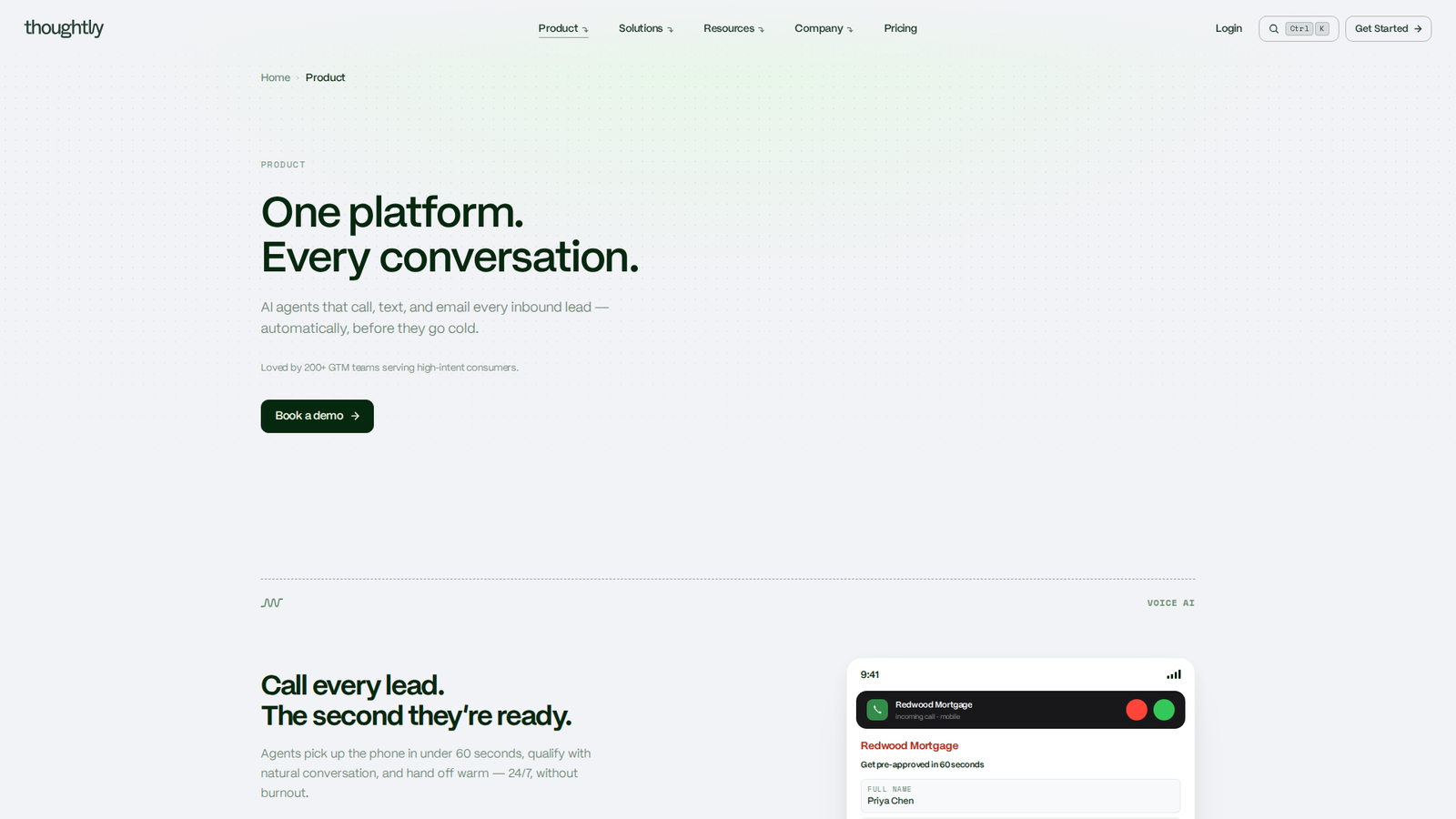
Thoughtly is the best Kore.ai alternative when the workflow is not “modernize every customer-service conversation” but “convert every inbound lead before it goes cold.” The platform sits on top of CRMs like Salesforce and HubSpot, then calls, texts, emails, qualifies, books, transfers, and writes back outcomes automatically. That matters for insurance, mortgage, real estate, automotive, education, healthcare, home services, and financial-services teams where the revenue leak is speed-to-lead and inconsistent follow-up, not a lack of another CX console. Compared with Kore.ai, Thoughtly is narrower by design: it is the conversion layer for opted-in, high-intent leads.
Thoughtly fits revenue, enrollment, intake, and growth teams that already buy leads or generate form fills but cannot reach every prospect quickly. Choose it when the measurable outcome is booked appointments, qualified transfers, re-engaged opportunities, and CRM-complete follow-up rather than broad service-ticket containment.
Per-minute pricing. Contact Thoughtly for a demo and custom pricing.
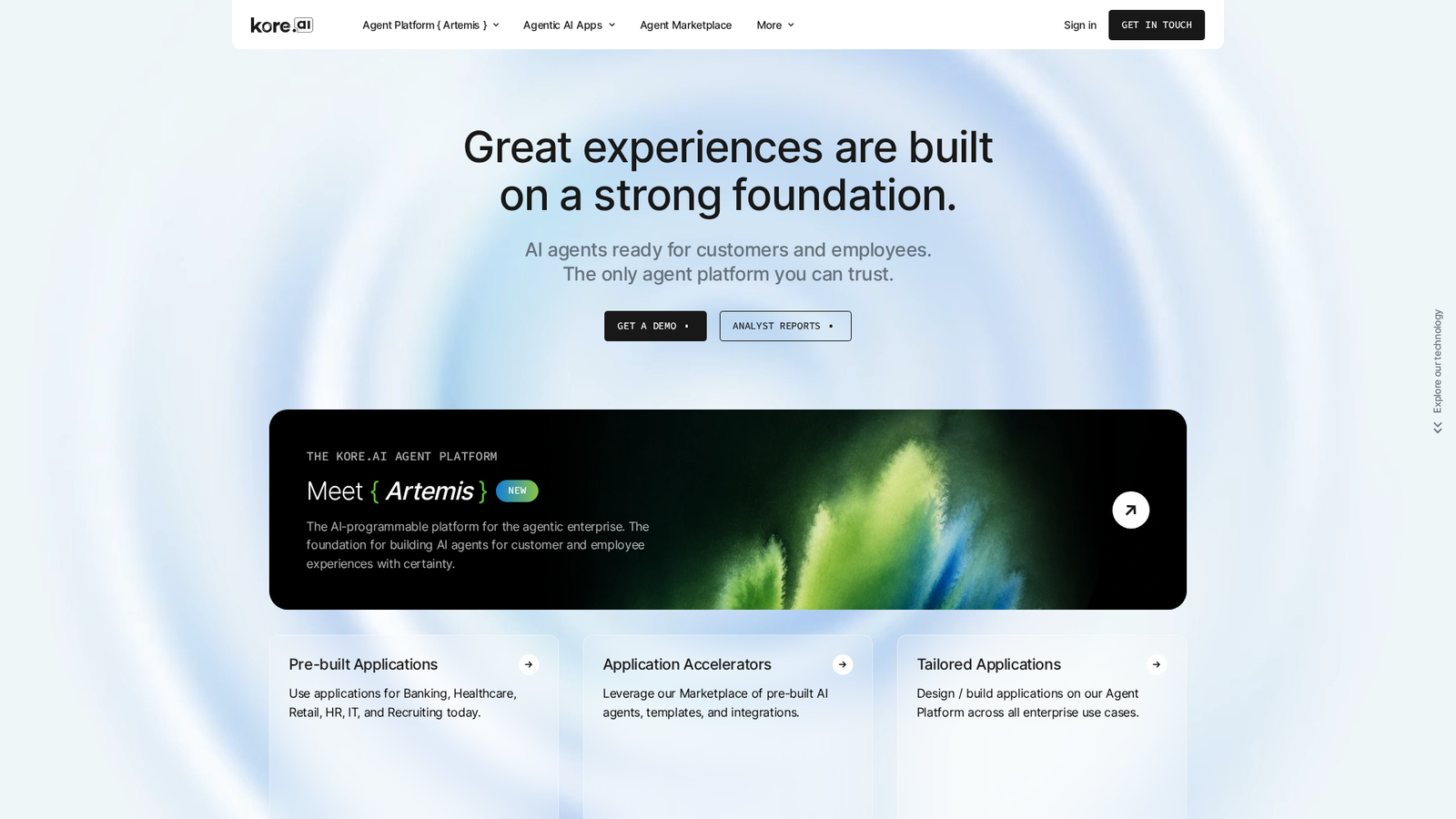
Kore.ai remains a credible option if the real requirement is an enterprise-wide conversational AI program. Its public positioning centers on agentic AI applications for service, work, and process automation, and its review footprint reflects broad enterprise adoption. Buyers evaluating alternatives should still benchmark against Kore.ai because it can cover far more than voice. The tradeoff is focus: broad platforms can be more than a revenue team needs when the urgent problem is immediate inbound lead follow-upLead follow-upLead follow-up is the sequence of calls, texts, emails, and tasks used after a prospect expresses interest..
Kore.ai is best for enterprises that want a broad automation platform owned by CX, IT, and transformation teams. It is less ideal when a RevOps or enrollment team needs a fast, CRM-first agent to call every inbound lead and hand off qualified conversations.
Contact Kore.ai for pricing; G2 also lists implementation-time information, but buyers should verify current scope directly.
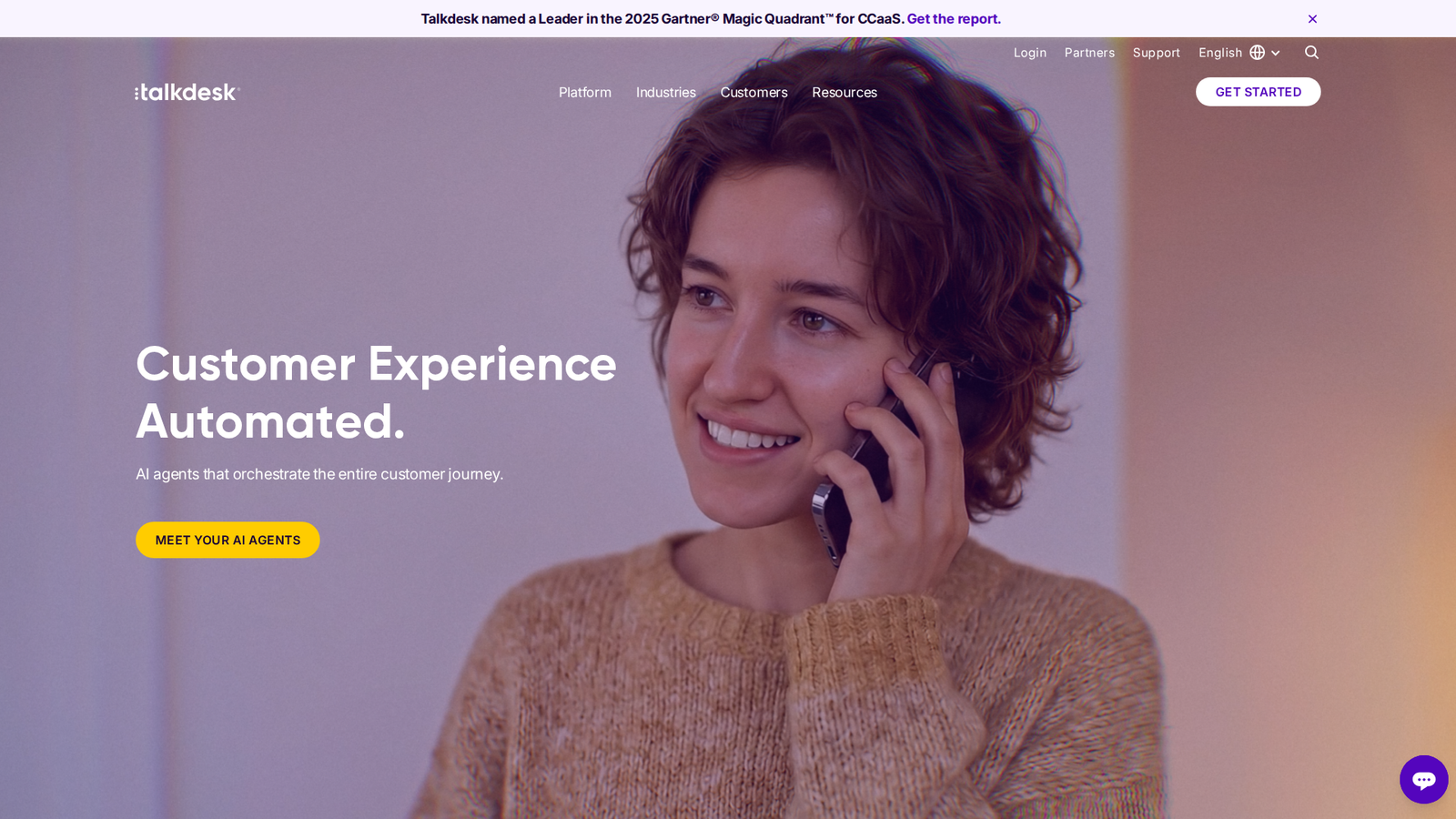
Talkdesk is a CCaaS platform with a strong AI-agent story for contact centers, not just a standalone bot builder. Its homepage positions “AI agents that orchestrate the entire customer journey,” and its product depth makes sense for teams already running customer support or sales/service operations inside a contact centerContact centerA contact center is a centralized operation that handles customer or prospect interactions across voice and digital channels.. Compared with Kore.ai, Talkdesk may be easier to justify when the buying committee wants CCaaS plus AI in one vendor. Compared with Thoughtly, it is a heavier operating layer if the business only needs inbound lead conversion.
Talkdesk fits teams replacing or consolidating contact-center infrastructure and adding AI agents to a broader CX program. If the buyer is a revenue team trying to reach new inbound leads in seconds, Thoughtly is usually the cleaner fit.
Talkdesk pricing is sales-led; buyers should confirm voice, digital, AI, WFM, and usage costs together.
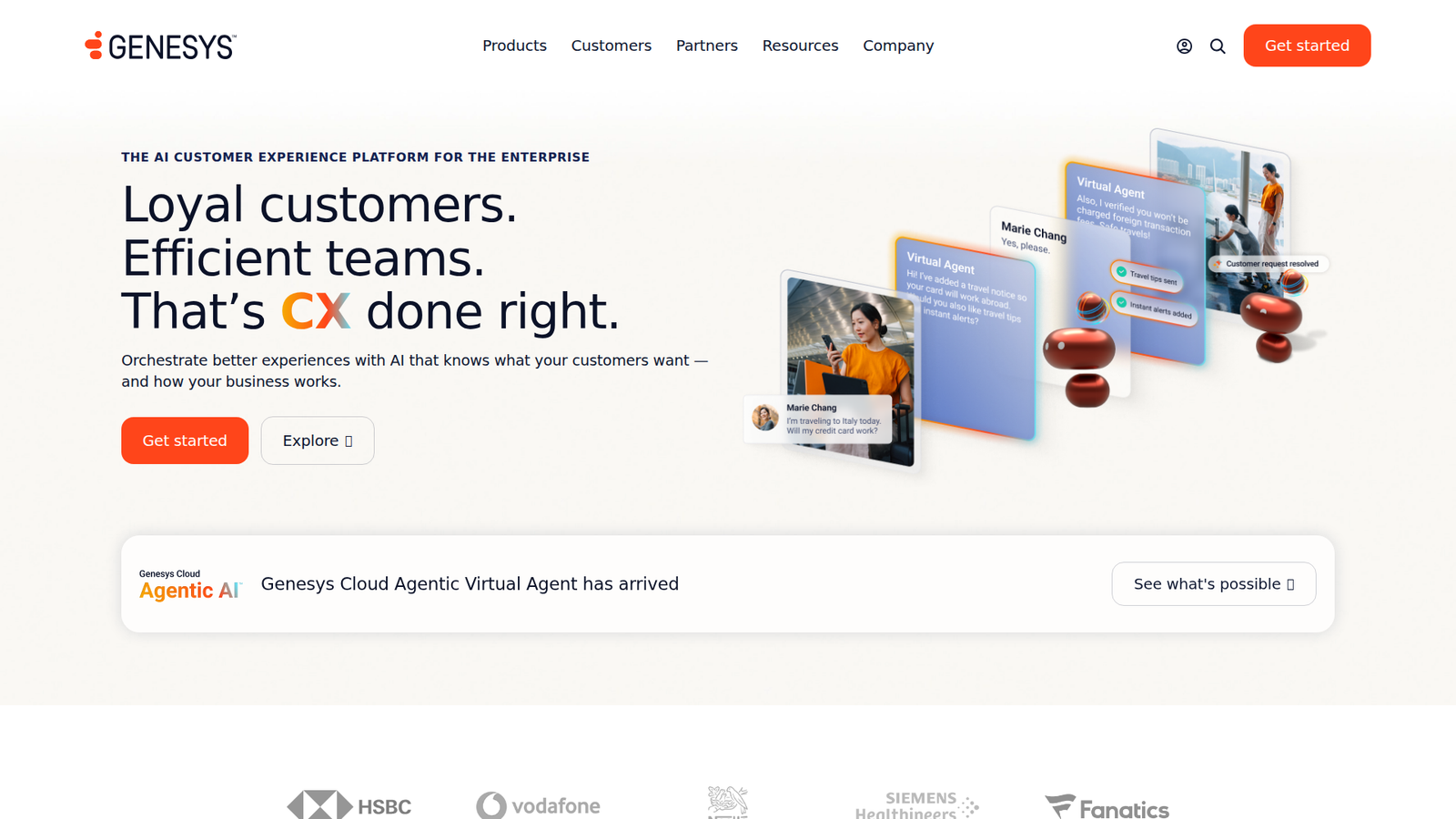
Genesys is one of the mature enterprise standards for customer-experience orchestration. Its public pricing page lists Genesys Cloud CX packages, and the platform spans routing, voice, digital, workforce engagement, analytics, and AI. It is a stronger Kore.ai alternative when the decision is “which enterprise CX platform should we standardize on?” rather than “which AI agent should call new leads?” The drawback is that maturity often comes with cost, admin depth, and implementation complexity.
Genesys fits large enterprises where CX operations, IT, and workforce teams need a complete cloud contact-center platform. It is overbuilt for a revenue team that mainly needs autonomous inbound lead coverage and CRM write-backCRM write-backCRM write-back sends conversation outcomes, qualification answers, notes, appointments, dispositions, and next steps into the CRM..
Genesys publishes package starting points for named-user pricing, with usage-based pricing and add-ons possible; verify current package and usage assumptions.
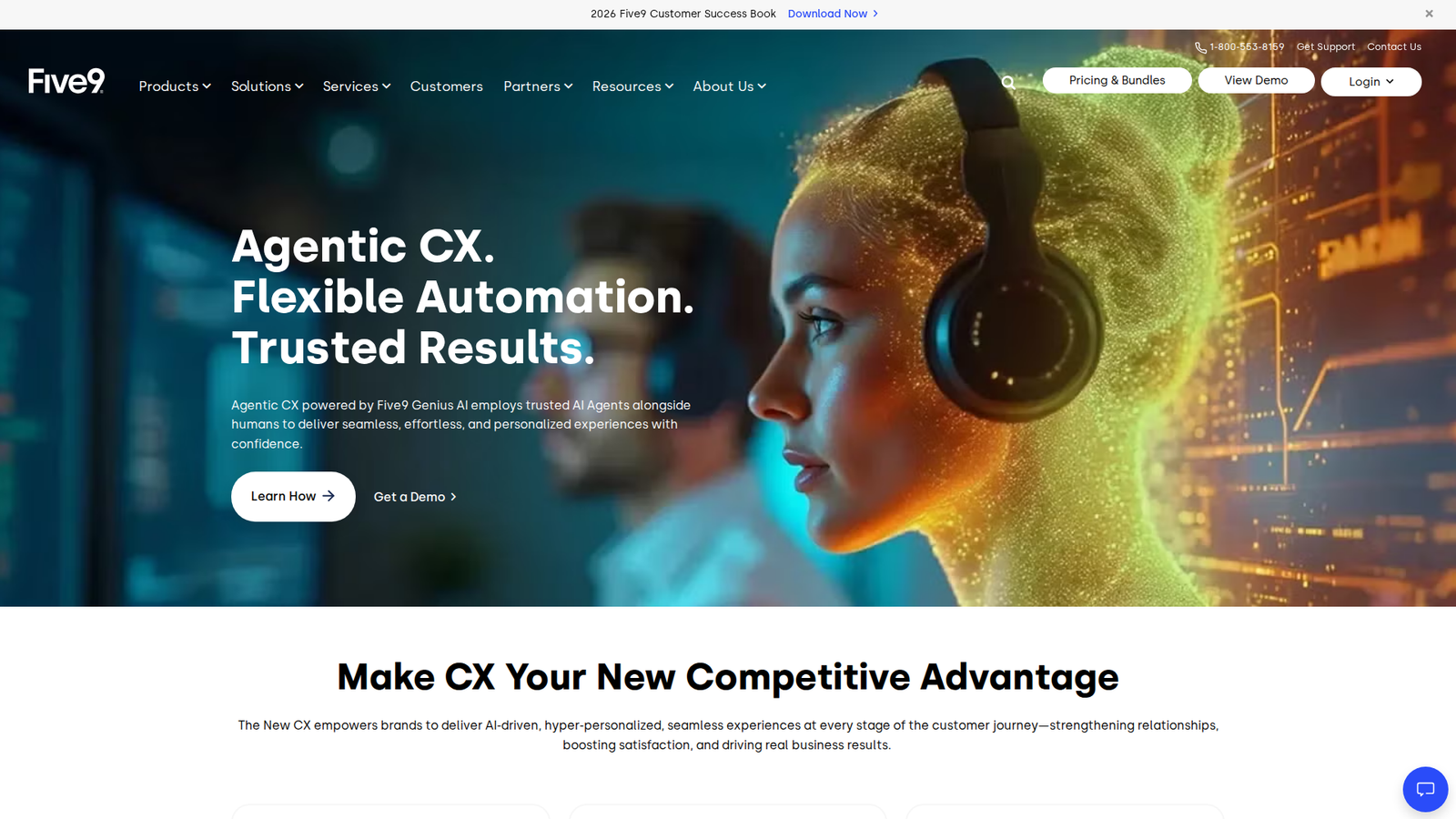
Five9 is a cloud contact-center platform now positioning around “Agentic CX” and Genius AI. It belongs on a Kore.ai alternatives list because many buyers compare broad AI automation against established CCaaS platforms with embedded AI. Five9 can be compelling for voice-heavy contact centers that need routing, campaigns, agent assist, and reporting in one stack. For lead-conversion teams, the watch-out is operational weight: admins may inherit more contact-center machinery than they need.
Five9 fits contact centers that want a proven platform and are adding AI to existing operations. It is less compelling as a lightweight replacement for a lead-response workflow that should live close to CRM, calendar, and human handoff.
Five9 pricing is typically quote-based; confirm seat, usage, AI, dialer, and integration costs.
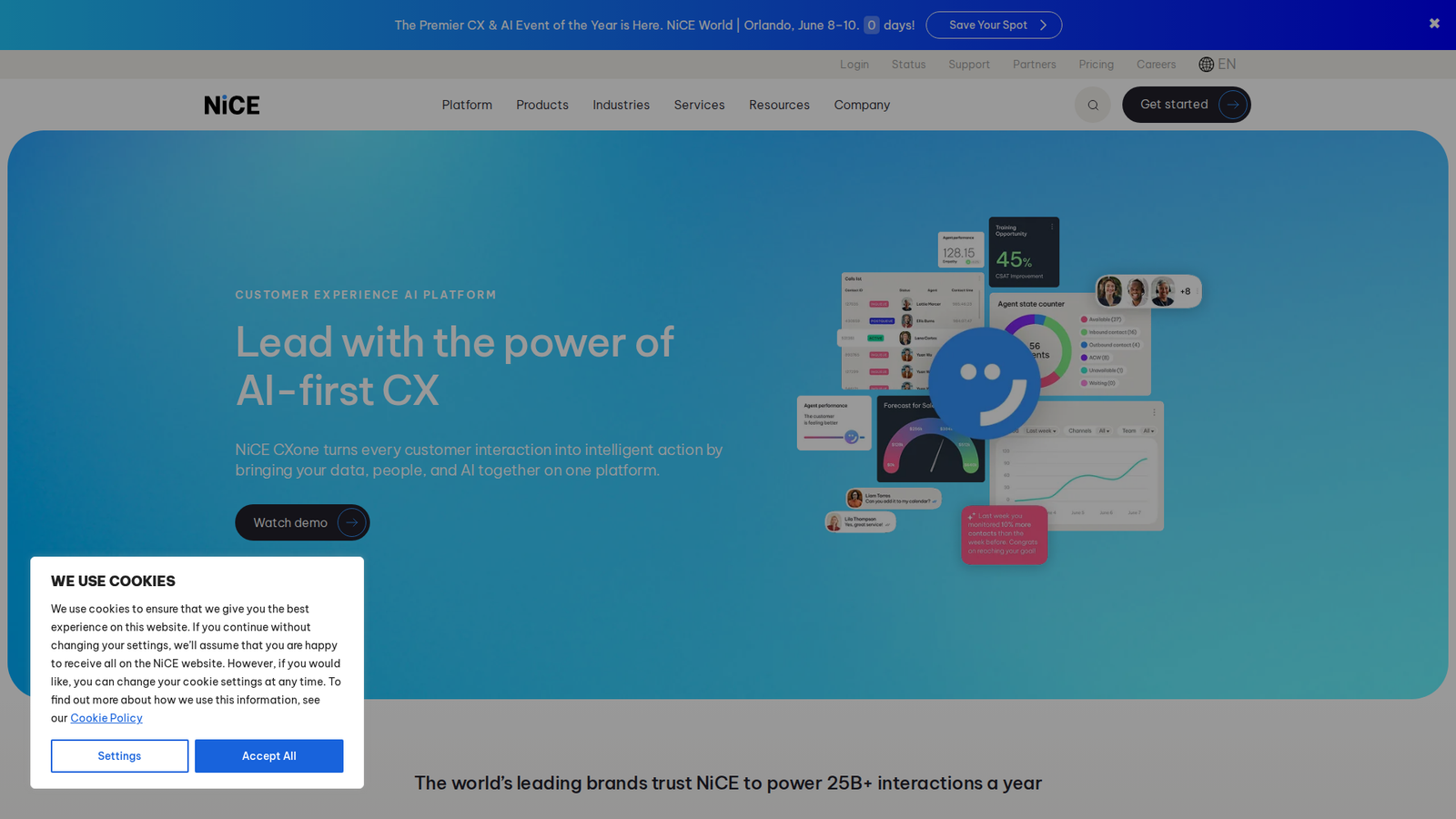
NICE CXone is an enterprise CX platform with deep contact-center, analytics, workforce, quality, and automation capabilities. For buyers considering Kore.ai, NICE is relevant when the evaluation has expanded from “AI agents” to “the system of recordSystem of recordA system of record is the authoritative source for a defined category of business data. for customer-contact operations.” It can be powerful, especially for enterprises that need workforce engagement and analytics alongside AI. The tradeoff is complexity: broad suites create more SKU, implementation, and governance work than focused lead-conversion platforms.
NICE CXone fits enterprises where contact-center operations need a complete operating platform. If the business goal is simply to contact, qualify, and book inbound leads, Thoughtly avoids the overhead of a full CX suite.
NICE pricing is sales-led; model licenses, WFM/QM, AI, channels, implementation, and usage before signing.
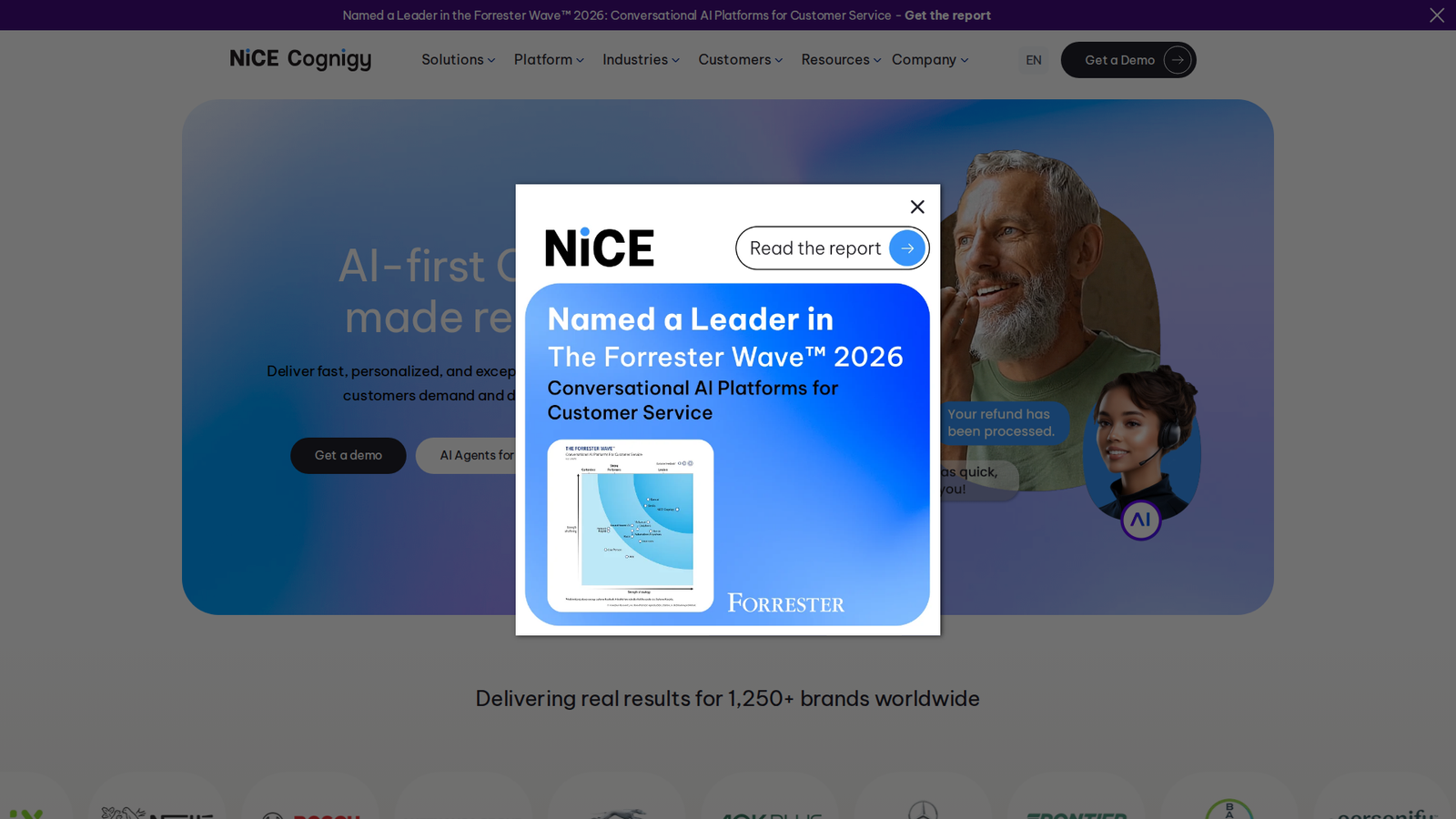
Cognigy is an AI agent platform for enterprise CX that emphasizes fast, personalized service and large-brand deployments. It is closer to Kore.ai than Thoughtly in that both can support complex conversational automation programs. Cognigy can be a strong fit for teams with designers, architects, and service leaders building multi-step virtual agents across channels. For revenue teams, the question is whether they want a flexible AI platform or a packaged conversion workflow.
Cognigy fits enterprise CX teams that want to design and operate their own conversational AI estate. Thoughtly is the better fit when the operating team wants lead conversion outcomes without becoming an AI-agent design shop.
Contact Cognigy for pricing.
Yellow.ai positions itself as an enterprise-grade agentic AI platform for CX and EX, with voice, chat, email, many LLMLarge Language Model (LLM)A large language model (LLM) is a machine-learning model trained on large text collections to interpret and generate language from prompts and context. options, and 150+ integrations. It is a credible Kore.ai alternative for global brands that want broad customer and employee automation. Like Kore.ai, though, the platform’s breadth can make it harder to evaluate if the buying job is narrow and revenue-specific. Buyers should be clear whether they need enterprise automation coverage or speed-to-lead execution.
Yellow.ai fits enterprises evaluating customer and employee automation together. Thoughtly fits teams where the highest-value workflow is contacting and converting high-intent inbound leads immediately.
Contact Yellow.ai for pricing; model interactions, channels, implementation, and support scope.
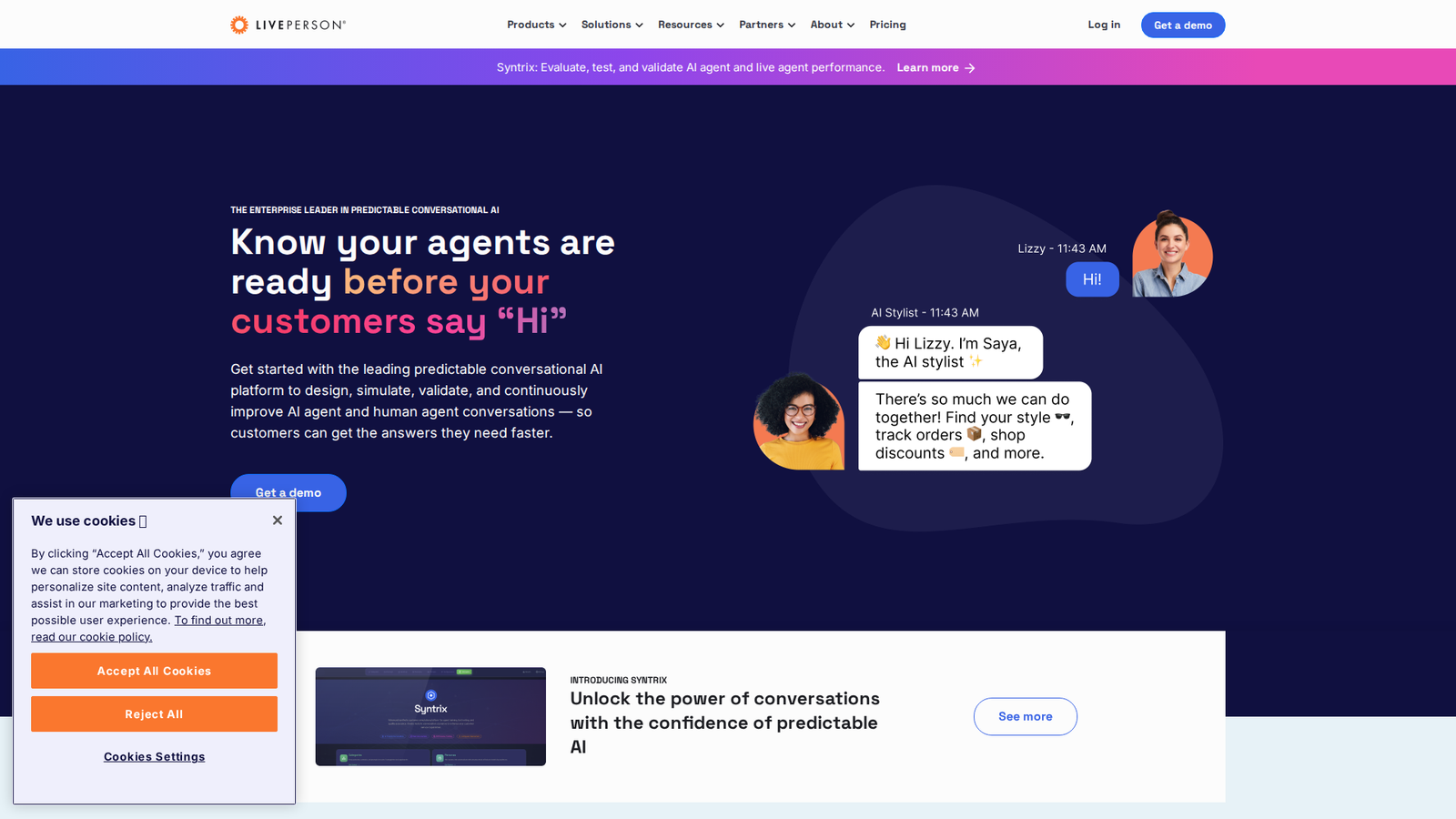
LivePerson has deep roots in digital conversation and now positions around predictable conversational AI for enterprises. It is relevant when a Kore.ai buyer wants stronger simulation, validation, and messaging-led support automation. The platform can make sense for customer-service organizations where digital conversations dominate. It is a weaker fit when the buyer’s first mile is an inbound phone call, a CRM lead record, and a booked appointment.
LivePerson fits support organizations that want governed messaging and conversational AI at enterprise scale. It is not the first choice when the operating metric is first-call speed, qualified transfers, and CRM-complete lead follow-up.
LivePerson pricing is sales-led; confirm implementation, support tier, messaging volume, and AI usage.
Start with the owner of the outcome. If CX transformation owns the decision and the roadmap includes support, employee service, IVRIVRIVR, or Interactive Voice Response, is a phone menu that routes or serves callers through keypad entries or spoken choices. modernization, knowledge automation, and agent assist, a broad platform like Kore.ai, Cognigy, Yellow.ai, Talkdesk, Genesys, Five9, NICE, or LivePerson may be appropriate. If RevOps, enrollment, intake, or sales operations owns the outcome, choose the platform that can work every lead from CRM trigger to call, SMS, email, booking, transfer, and write-back.
Then map the buying metric. Contact-center platforms are usually justified by service level, containment, handle time, workforce efficiency, and omnichannelOmnichannelOmnichannel is a coordinated customer journey in which context and state carry across voice, SMS, email, web, and human interactions. operations. Thoughtly is justified by lead coverage, speed-to-lead, connect rate, booked meetings, qualified transfers, and pipeline that would otherwise go untouched.
Finally, pressure-test implementation. Ask each vendor who builds the first workflow, how long it takes to launch, what happens when a CRM field changes, how retries work across channels, how opt-outs are honored, and what your team can edit without professional services. The answers will reveal whether you are buying a platform your team can operate or a transformation program your team must staff.
Thoughtly is the strongest fit when inbound lead conversion is the primary workflow. It is built to call every opted-in lead quickly, continue across SMS and email, qualify intent, book or transfer, and sync the outcome back to the CRM.
Talkdesk, Genesys, Five9, and NICE CXone are stronger fits when the buyer needs full CCaaS capabilities such as routing, queues, workforce tools, QA, analytics, and agent management. They are broader than lead-conversion platforms and should be evaluated as contact-center infrastructure.
Yes, Kore.ai is a serious enterprise conversational AI platform. The watch-outs are scope and operating burden: review research points to learning curve, advanced-flow complexity, debugging friction, and pricing opacity that buyers should validate before rollout.
That can work if your team already runs a contact center and wants AI inside the existing operating model. If your pain is that new inbound leads sit untouched, a CRM-first lead-conversion agent may launch faster and create clearer ROI than a full CCaaS migration.
Thoughtly replaces a different job. It is not trying to be a general-purpose enterprise bot platform; it is built for autonomous inbound lead conversion across voice, SMS, email, CRM workflows, and human handoff. If that is the job, it is a better operational match.


