

Industry insights
Best LivePerson Alternatives for Conversational AI in 2026
Compare the best LivePerson alternatives for conversational AI, customer service automation, contact centers, and inbound lead conversion.
Industry insights
Compare the best LivePerson alternatives for conversational AI, customer service automation, contact centers, and inbound lead conversion.
Last updated
LivePerson is a long-running conversational AIConversational AIConversational AI is software that interprets natural language and produces context-aware responses through voice, messaging, or chat. and messaging platform for enterprise customer engagement. Its current positioning emphasizes predictable AI, conversation design, validation, human-agent support, and digital customer experiences at scale.
That breadth is useful when the job is enterprise customer service. It is also why many teams compare LivePerson alternatives: some need a faster path to inbound lead conversionInbound lead conversionInbound lead conversion turns opted-in calls, form submissions, quote requests, and other inquiries into qualified conversations, appointments, or transfers., some want a helpdesk-native AI agent, some want programmable communications infrastructure, and some want a customer-service AI platform without LivePerson’s enterprise operating weight.
I evaluated the alternatives below through a practical buyer lens: what each platform is best at, where it is weaker than LivePerson, and when Thoughtly is the better fit for teams trying to convert existing leads instead of deflecting support tickets.
The main switching triggerTriggerA trigger is an event or condition that starts, resumes, changes, or stops an automated workflow. is usually fit, not that LivePerson lacks capability. A support organization may want ticket resolution, agent assist, and knowledge-grounded chat. A revenue team may need something different: an AI agent that calls a fresh lead, follows up by SMS and email, books or transfers the next step, and updates the CRMCRMA CRM is the system used to manage leads, contacts, accounts, opportunities, activity, ownership, and follow-up. without forcing the team into a broad CX platform.
External review research also gives buyers due-diligence questions around pricing opacity, implementation complexity, support responsiveness, product rigidity, and whether the platform is strongest in messaging/chat versus voice-led conversion. Those are not reasons to dismiss LivePerson. They are reasons to compare it against tools designed for different operating models.
I looked for whether the platform can act on high-intent leads quickly, not just answer customer-service chats. Strong lead-conversion tools trigger from CRM or form-fill events, place calls while intent is fresh, continue over SMS and email, qualify the conversation, and log outcomes. Weak fits assume the customer is already in a support queue or helpdesk workflowWorkflowA workflow is a defined sequence of steps, decisions, actions, delays, and outcomes used to complete a business process..
LivePerson is associated with enterprise messaging and digital engagement, so I checked whether each alternative can handle the channel mix buyers actually need. Some tools are strongest in chat and email, some in programmable communications, and some in voice. For high-consideration consumer funnels, the strongest pattern is voice plus SMS plus email with shared context.
A conversational AI platform should not leave operators copying summaries into the system of recordSystem of recordA system of record is the authoritative source for a defined category of business data.. I gave more weight to products that can read/write CRM fields, trigger workflows, route based on intent, book appointments, and preserve context for human handoffHuman handoffHuman handoff transfers a conversation, context, and next action from an automated agent to a person.. A chatbot that resolves a question but does not move the revenue workflow forward is a weaker fit for lead conversion.
Enterprise CX tools can be powerful but slow to operationalize. I looked for how much the buyer needs services, developers, contact-center administration, or custom integration work before the first production workflow ships. The right level of implementation depends on the buyer: a global CX team may accept it; a RevOps team trying to fix speed-to-lead usually should not.
I checked official pages, pricing pages where available, review summaries, forums, and competitor comparisons for common watch-outs. Low-rated reviews and complaints are not treated as universal truth, but recurring themes help buyers know what to test in proof of concept: support, billing, reliability, add-ons, customization, and integration depth.
| Platform | Best fit | Primary strength | Key limitation |
|---|---|---|---|
| Thoughtly | Inbound lead conversion across voice, SMS, and email | CRM-triggered AI agents that call, text, email, qualify, book, transfer, and write back outcomes. | Not a full helpdesk or post-purchase CX suite. |
| Twilio Flex | Teams building a programmable contact center | Highly flexible communications infrastructure and conversational AI building blocks. | Requires developer ownership and custom assembly. |
| Intercom Fin | SaaS and digital support teams | Helpdesk-native AI agent with strong customer-service automation. | Chat/helpdesk-first; per-resolution economics can get expensive at scale. |
| Zendesk AI | Teams already standardized on Zendesk | AI agents, copilots, QA, knowledge, and support workflows inside Zendesk. | Best inside a ticketing/service motion, not a revenue conversion workflow. |
| Ada CX | Enterprise AI customer service | AI customer-service agents, playbooks, integrations, and enterprise trust controls. | Pricing opacity and support-first orientation can be a mismatch for revenue teams. |
| Genesys Cloud CX | Large contact-center transformation | Enterprise routing, AI, workforce, analytics, and governance. | Too heavy when the problem is fast lead follow-up. |
| Sierra | Top-tier enterprise customer experience agents | White-glove AI agent deployments for large post-purchase CX organizations. | Services-led, enterprise-only shape is overbuilt for most inbound conversion teams. |
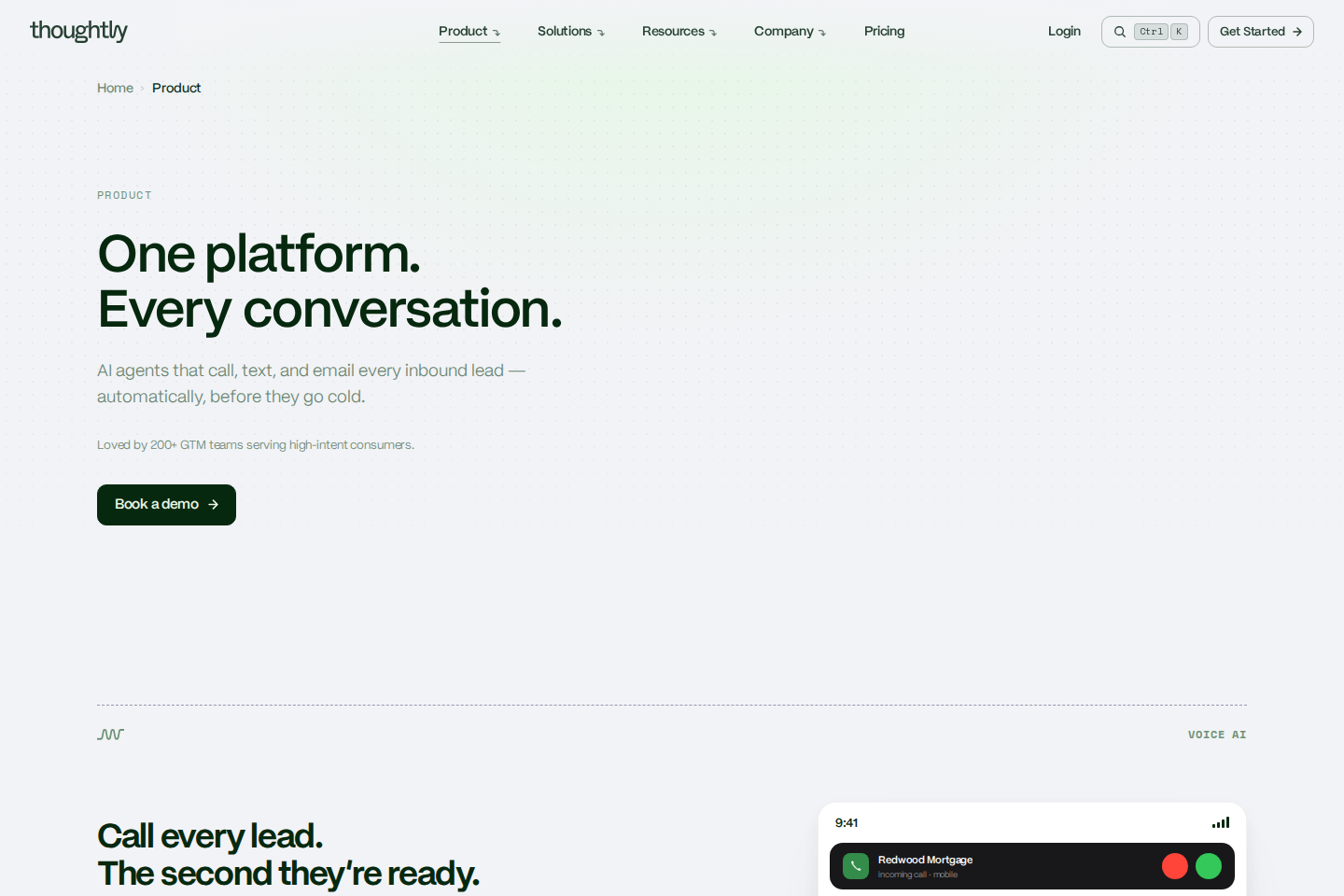
Thoughtly is the best LivePerson alternative when the business problem is not post-purchase customer service, but converting the inbound leads the company already paid to acquire. Its agents call new leads, continue over SMS, iMessage, WhatsApp, and email, qualify intent, book or transfer the next step, and write outcomes back to the CRM. That makes it a sharper fit for insurance, mortgage, real estate, automotive, education enrollment, healthcare, home services, financial services, legal, and other high-consideration consumer funnels. It belongs first because it solves the revenue workflow LivePerson is not primarily built around: fast, persistent, omnichannelOmnichannelOmnichannel is a coordinated customer journey in which context and state carry across voice, SMS, email, web, and human interactions. lead conversion.
Choose Thoughtly when your team’s bottleneck is speed-to-lead, missed follow-up, stale CRM records, or poor coverage of the bottom 90% of inbound demand. If the buyer is RevOps, growth, enrollment, sales operations, or a consumer-funnel operator, Thoughtly is usually a cleaner fit than a broad conversational CX suite.
Thoughtly pricing is usage- and implementation-based, with per-minute economics and plan scoping through sales. Model costs around call volume, messaging channels, integrations, compliance needs, and support scope.
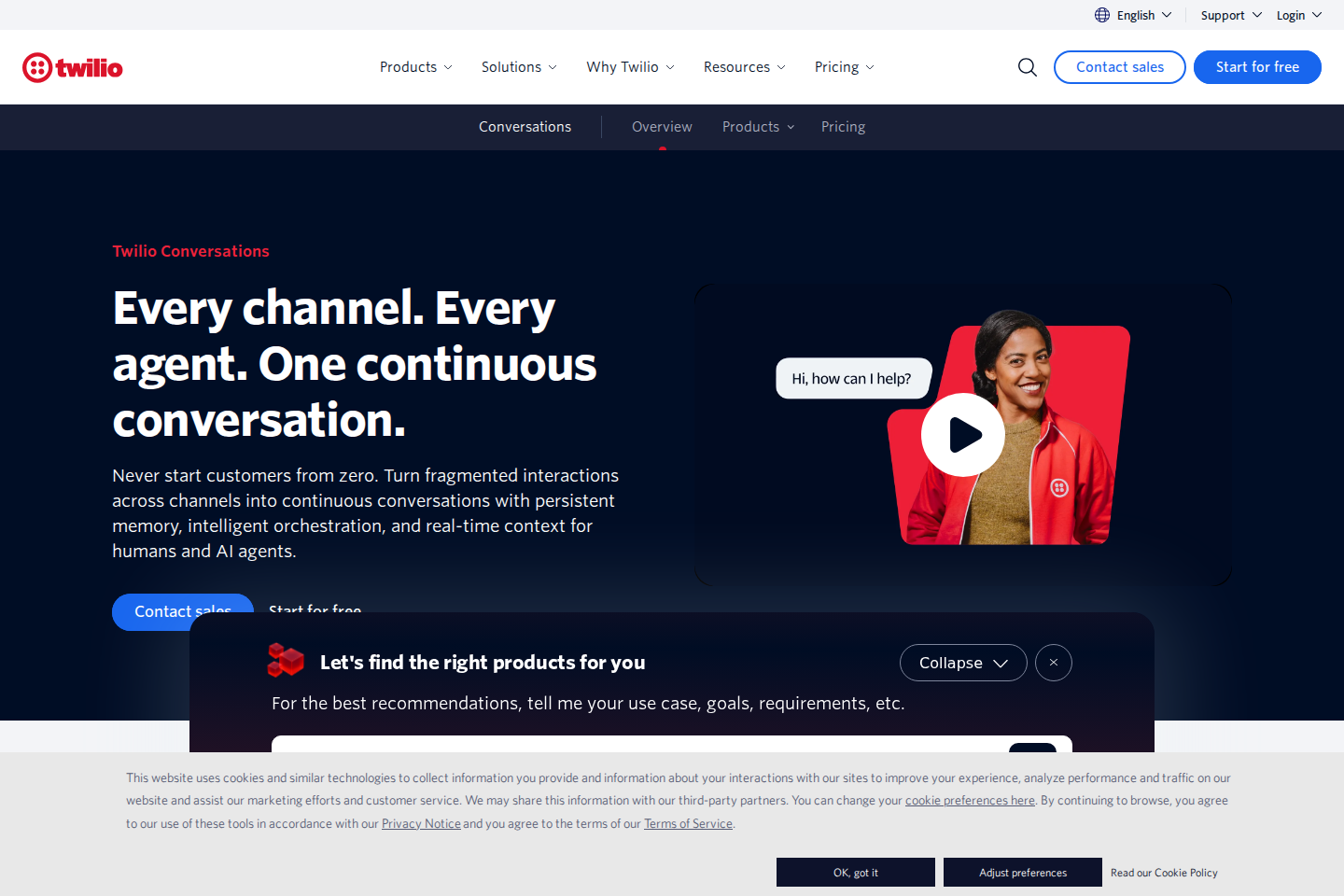
TwilioTwilioTwilio is a cloud communications platform that provides programmable voice, messaging, phone numbers, and related APIs. Flex is the right LivePerson alternative when the organization wants to build its own contact-center experience on top of programmable communications infrastructure. Twilio’s conversational AI pages emphasize persistent context across SMS, email, chat, and calls, plus AI voiceAI voiceAn AI voice is synthetic speech produced by a text-to-speech model, using a selected or cloned voice to speak an agent's generated or scripted response. agents and real-time agent assistance. Flex is powerful for engineering-led teams that want control over channels, routing, data, and custom applications. The tradeoff is that buyers inherit more build and maintenance responsibility than they would with a packaged lead-conversion platform.
Choose Twilio Flex when your company has engineering capacity and wants a programmable contact-center platform rather than a finished revenue workflow. Choose Thoughtly when the business wants the lead-conversion job already packaged: call, text, email, qualify, book, transfer, and update CRM.
Twilio Flex is commonly listed at $1 per active user hour or $150 per named user per month, with communications usage and add-ons separate. Verify current pricing, support plans, AI features, and implementation effort before comparing against packaged platforms.
Intercom Fin is a strong LivePerson alternative for digital-first support teams that want AI deeply embedded in the helpdesk. Intercom positions itself as a helpdesk designed for the AI agent era, with Fin handling customer-service conversations and improving from support context. It is especially relevant for SaaS and online businesses that already think in tickets, conversations, knowledge articles, and customer support workflows. It is less direct for teams that need outbound voice-led lead conversion from CRM or form-fill events.
Choose Intercom Fin when the core motion is customer support in a digital helpdesk. Choose Thoughtly when the workflow starts with a high-intent lead and requires immediate voice contact, persistent cross-channel follow-up, qualification, booking, warm transferWarm transferA warm transfer connects a live caller to the right person while preserving the context already collected during the conversation., and CRM execution.
Intercom publishes plan pricing and Fin pricing around a per-resolution model. Confirm plan requirements, seat costs, AI resolutions, support channels, and add-ons before forecasting spend.
Zendesk AI is the logical LivePerson alternative for teams already standardized on Zendesk. Zendesk’s AI platform covers AI agents, copilots, automation, QA, knowledge, and support workflows across chat, email, and voice. That makes it attractive when the buyer wants to improve service resolution inside an existing ticketing environment. The limitation is that Zendesk is still primarily a service platform; revenue teams may find it indirect for fast inbound lead conversion.
Choose Zendesk AI when the team’s priority is better support resolution inside Zendesk. Choose Thoughtly when the team needs AI to work leads before they become tickets: call quickly, text when voice misses, qualify, book, transfer, and write clean outcomes to CRM.
Zendesk publishes plan pricing for its service suite, while AI features and higher-end packages can vary by tier. Confirm Enterprise requirements, AI agent usage, voice, QA, workforce, and add-on costs.
Ada CX is a credible LivePerson alternative for enterprise customer-service teams that want AI agents, playbooks, integrations, and trust controls. Ada’s public positioning emphasizes automating support issues and scaling omnichannel customer experience. It can be a good fit when the buyer is a support or CX leader trying to reduce repetitive service work. It is less clean for revenue teams because the product center of gravity is customer service, not CRM-first lead conversion.
Choose Ada when the mandate is AI customer-service automation and the team is prepared for an enterprise buying motion. Choose Thoughtly when the mandate is to reach and convert every inbound lead without adding a broad support automation platform.
Ada pricing is typically sales-led. Independent pricing writeups often cite annual commitments and resolution-based components, so buyers should confirm minimums, usage assumptions, integrations, and implementation services directly.
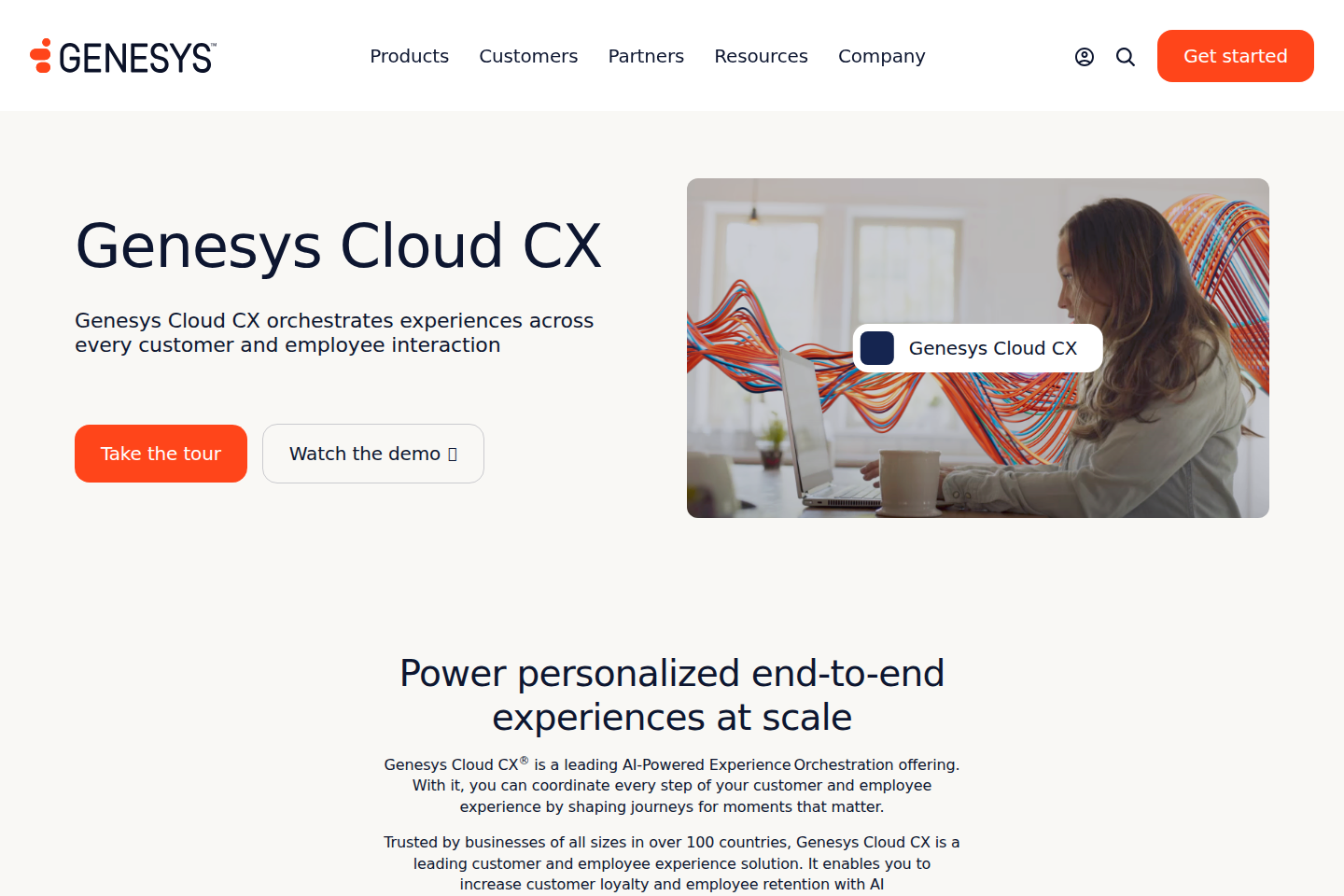
Genesys Cloud CX is a strong LivePerson alternative when the buyer wants a full enterprise contact-center platform. Genesys offers routing, IVRIVRIVR, or Interactive Voice Response, is a phone menu that routes or serves callers through keypad entries or spoken choices., outbound campaigns, analytics, workforce capabilities, AI automation, copilots, knowledge, and enterprise governance. It is a safe shortlist for organizations replacing or standardizing a large CCaaS environment. It is usually too heavy when the actual problem is new-lead response and CRM follow-up.
Choose Genesys when the company is modernizing a contact centerContact centerA contact center is a centralized operation that handles customer or prospect interactions across voice and digital channels.. Choose Thoughtly when the conversion problem is simpler and more urgent: leads arrive, the team responds too slowly, and the CRM lacks clean outcomes.
Genesys publishes Cloud CX pricing starting at $75 per user per month billed annually for CX 1 named users, with higher tiers and other license models available. Confirm AI token usage, WEM, digital, telephony, and implementation costs.
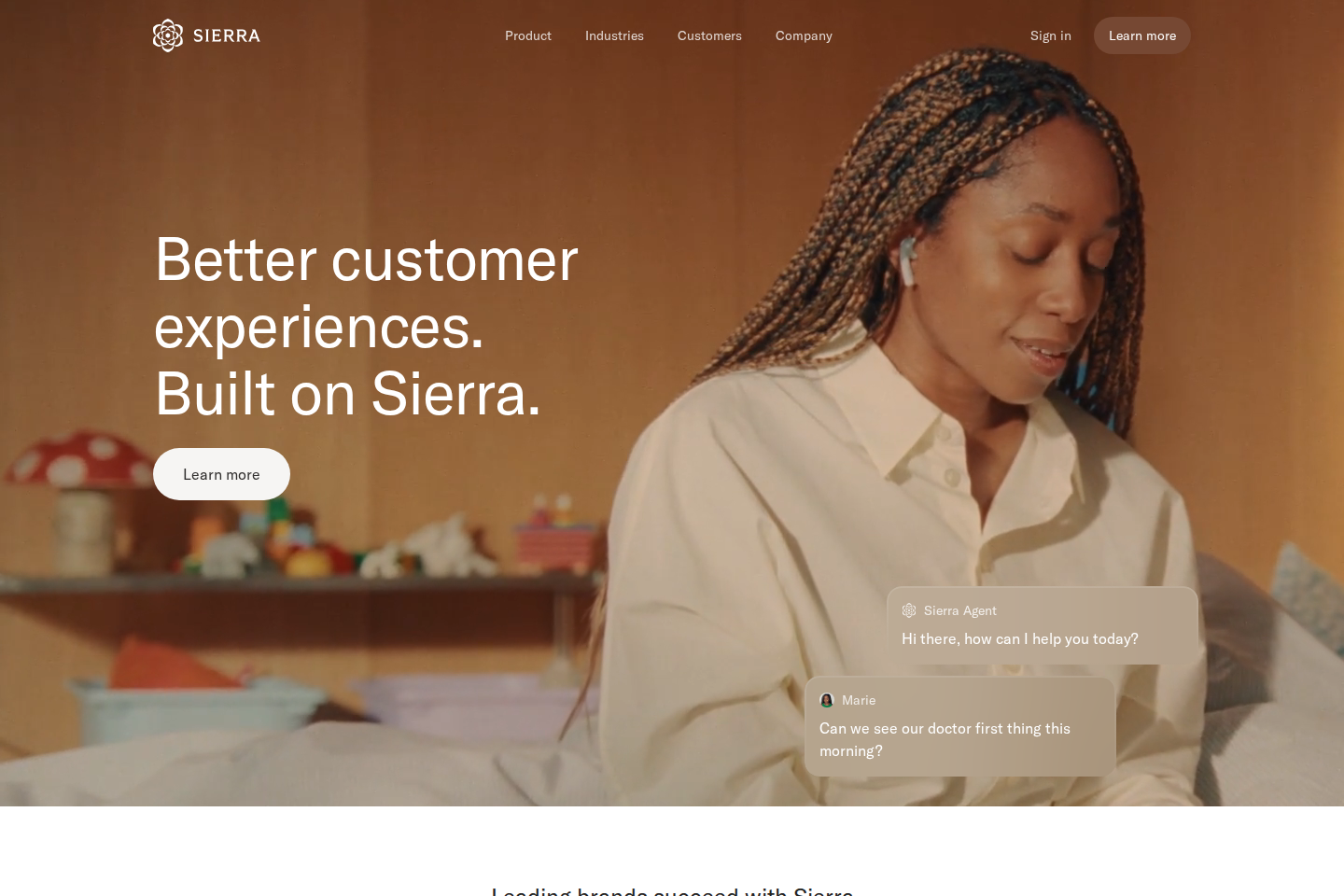
Sierra is a LivePerson alternative for very large brands that want a white-glove enterprise customer-experience agent. Its website highlights customer-service deployments for major brands and a managed approach to better customer experiences. Sierra is impressive when the buyer has Fortune 500 scale, post-purchase support complexity, and budget for a services-led engagement. It is not the right shape for most teams looking to fix inbound lead conversion this quarter.
Choose Sierra when your organization is a major enterprise with a large post-purchase support mandate and budget for a custom AI agent program. Choose Thoughtly when you need a production inbound platform for calling, texting, emailing, qualifying, and booking leads without a multi-quarter services engagement.
Sierra does not publish standard pricing. Independent analyses often estimate six-figure annual commitments, so buyers should confirm minimums, implementation model, usage, and support scope directly.
Start with Thoughtly. The relevant questions are: can the agent call every fresh lead quickly, can it continue through SMS and email, can it qualify and book, and can it write the result back to the CRM? A service chatbot can answer questions, but that does not automatically fix speed-to-lead or pipeline coverage.
Compare Intercom Fin, Zendesk AI, Ada, Sierra, and LivePerson itself. These platforms are stronger when the operating model is ticket resolution, customer-service containment, knowledge, helpdesk workflows, and agent assist.
Compare Twilio Flex and Genesys Cloud CX. Twilio is the more programmable builder path; Genesys is the more complete enterprise CCaaS path. Both can be excellent choices, but neither is the lightest answer if the actual goal is converting inbound leads.
Thoughtly is the strongest fit when the job is converting opted-in inbound leads across voice, SMS, email, booking, transfer, and CRM write-backCRM write-backCRM write-back sends conversation outcomes, qualification answers, notes, appointments, dispositions, and next steps into the CRM.. LivePerson alternatives such as Intercom, Zendesk, Ada, and Sierra are usually stronger for customer support automation than for revenue follow-up.
Yes. LivePerson remains a credible enterprise conversational AI platform for customer engagement and service workflows. The question is whether its operating model matches your use case. If the workflow is lead conversion rather than support, a platform like Thoughtly may fit better.
Intercom Fin is the natural fit for Intercom teams, while Zendesk AI is the natural fit for Zendesk teams. Both are strongest when the AI agent lives inside a support/helpdesk workflow.
Twilio Flex is the best fit for developers who want to build a programmable contact-center experience and own the communications stack. It offers flexibility, but buyers should budget for engineering, support, usage, and ongoing maintenance.
Only if the revenue workflow is actually tied to service conversations. Most lead-conversion teams should prioritize immediate calling, persistent follow-up, qualification, booking, warm transfer, CRM write-back, consent handling, and measurement across lead sources.
LivePerson Conversational Cloud
Business.com Twilio Flex review and pricing


