

Industry insights
8 Best Parloa Alternatives for Conversational AI in 2026
Compare the best Parloa alternatives for conversational AI, from inbound lead conversion to enterprise contact-center automation.
Industry insights
Compare the best Parloa alternatives for conversational AI, from inbound lead conversion to enterprise contact-center automation.
Last updated
Parloa is a serious enterprise conversational AIConversational AIConversational AI is software that interprets natural language and produces context-aware responses through voice, messaging, or chat. platform for customer-service contact centers. It is strongest when a large CX team wants to design, test, scale, and optimize AI agents for high-volume service interactions across a mature contact-center operation.
That is also why teams look for Parloa alternatives. If your goal is inbound lead conversionInbound lead conversionInbound lead conversion turns opted-in calls, form submissions, quote requests, and other inquiries into qualified conversations, appointments, or transfers., speed-to-lead, CRM write-backCRM write-backCRM write-back sends conversation outcomes, qualification answers, notes, appointments, dispositions, and next steps into the CRM., or a platform a revenue team can own without a long services motion, Parloa can be more contact-center platform than you need. I evaluated alternatives around the switching triggers that matter most: faster launch, clearer ownership, voice quality, channel coverage, integration depth, pricing predictability, and whether the platform is built for conversion or support containment.
Parloa frames its platform around AI agent management for contact centers, so I scored alternatives by the actual operating job they solve. A strong Parloa replacement should be clear about whether it is built for customer service, contact-center transformation, inbound lead conversion, employee support, or developer-led voice infrastructure. Weak fits blur those jobs and leave buyers paying for a platform shape that does not match their KPI.
I looked for who owns day-to-day changes after launch. Enterprise CX platforms often require admin teams, implementation partners, or vendor services for complex changes; that can be appropriate for global service operations, but it slows revenue teams that need to iterate scripts, routing, and follow-up logic weekly. The best fit depends on whether your operating owner is RevOps, CX, IT, or engineering.
Voice alone is not enough for many conversion workflows. I scored platforms higher when the same agent context can carry across phone, SMS, email, workflows, and CRMCRMA CRM is the system used to manage leads, contacts, accounts, opportunities, activity, ownership, and follow-up. records. For customer-service containment, voice and chat may be enough; for inbound leads, missed calls, booking, and re-engagement, channel continuity is usually the difference between a useful demo and a working revenue system.
Parloa buyers usually care about contact-center and enterprise-system integrations. For this list, I separated basic event pushes from operational write-back: call summaries, dispositions, routing decisions, booking status, captured fields, and next steps. A platform that only handles the conversation but leaves the CRM messy creates work somewhere else.
I looked for public pricing, plan shape, usage model, and common review themes around hidden costs or services-heavy deployment. Enterprise software is rarely cheap, and it should not pretend to be. The practical question is whether the cost model lines up with the value metric you actually want: contained service calls, completed conversations, booked appointments, or converted leads.
| Platform | Best fit | Primary strength | Key limitation |
|---|---|---|---|
| Thoughtly | Revenue teams converting inbound leads | Voice + SMS + email + CRM workflows for high-consideration funnels | Not a broad enterprise CX suite for post-purchase service transformation |
| NiCE Cognigy | Large contact centers already in, or moving toward, NiCE CXone | Enterprise conversational AI depth across voice, chat, agent assist, and CCaaS integrations | Broad scope can mean heavier governance, admin, and learning curve |
| Replicant | Contact centers focused on service-call containment | Voice automation for routine customer-service calls and live-agent deflection | Less suited to CRM-first lead conversion or multichannel sales follow-up |
| PolyAI | Enterprises replacing IVR with lifelike voice agents | Natural voice experiences for service-heavy contact centers | Enterprise pricing and contact-center orientation can be overbuilt for revenue teams |
| Sierra | Global brands building custom enterprise CX agents | White-glove CX agent deployments for large support organizations | Opaque enterprise pricing and services-led implementation are heavy for lead conversion |
| Five9 | Teams standardizing on cloud contact center operations | Mature CCaaS platform with AI, routing, workforce, and supervisor tooling | Legacy contact-center breadth can create admin complexity and add-on cost |
| Genesys Cloud CX | Large enterprises needing full experience orchestration | Omnichannel CCaaS, journey orchestration, WEM, and AI capabilities | Pricing and platform scope can be too much when the job is simply reaching leads fast |
| Yellow.ai | Enterprises automating CX and EX across many channels | Broad agentic AI platform with voice, chat, email, SMS, and knowledge tooling | Review themes flag learning curve, customization, integration complexity, and pricing opacity |
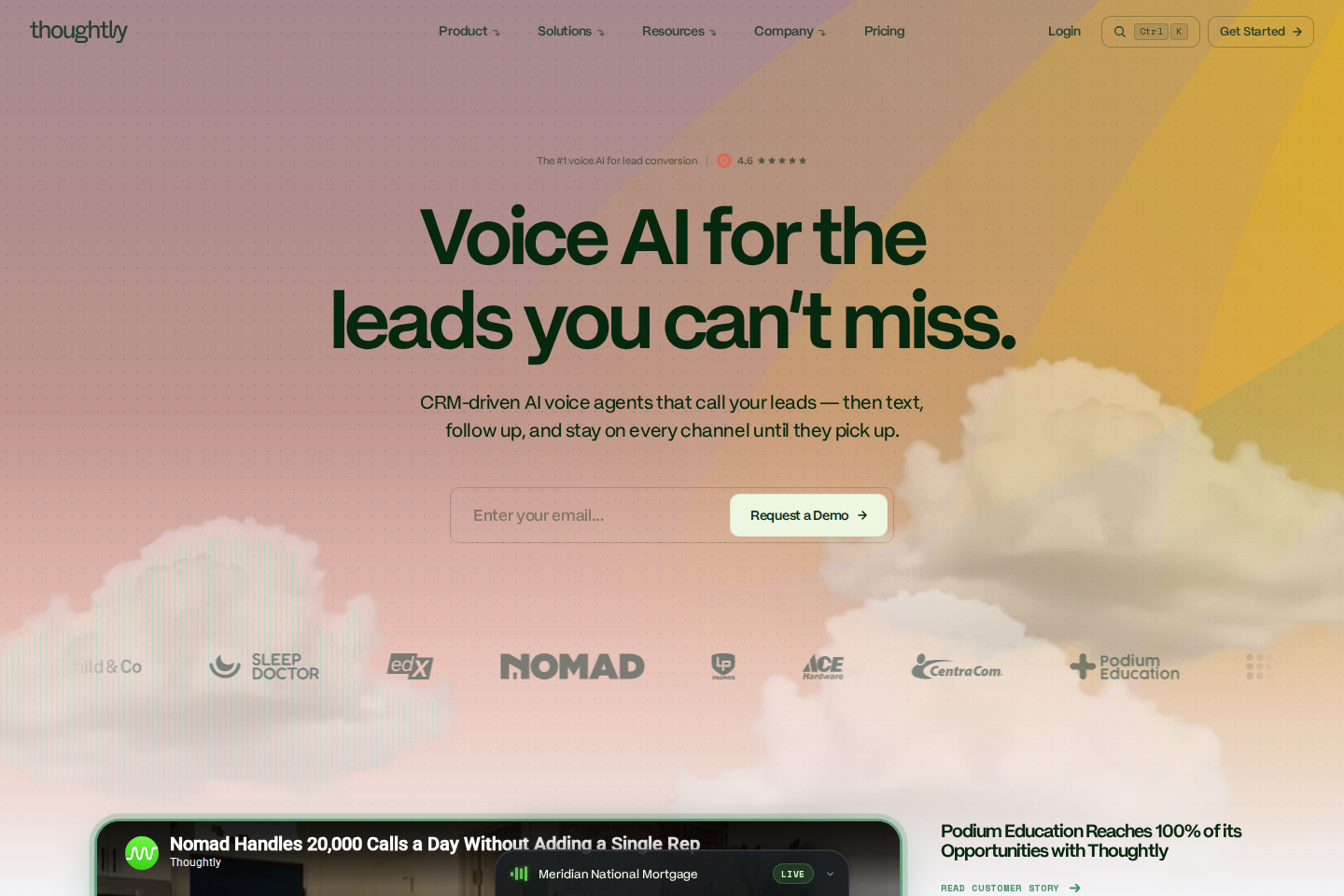
Thoughtly is the best Parloa alternative when the problem is not customer-service containment, but converting the inbound leads your company already paid to acquire. Its agents call, text, and email every new lead, qualify interest, book meetings or warm-transfer, and write the result back into the CRM. The product is shaped for high-consideration consumer funnels like insurance, mortgage, real estate, education enrollment, healthcare, home services, financial services, legal, automotive, and similar teams with real inbound volume. Compared with Parloa, the important fork is ownership: Thoughtly is a RevOps and growth platform for lead-stage execution, not a CX transformation suite for post-purchase service.
Choose Thoughtly if your team is measured on how many inbound leads get contacted, qualified, booked, transferred, and updated in the CRM. It is especially strong when the alternative is buying a contact-center platform just to solve a revenue follow-up problem.
Thoughtly uses per-minute pricing with paid plans tailored through the sales team. The docs also describe a limited free plan and a 14-day trial for building and testing agents before moving to a paid plan.
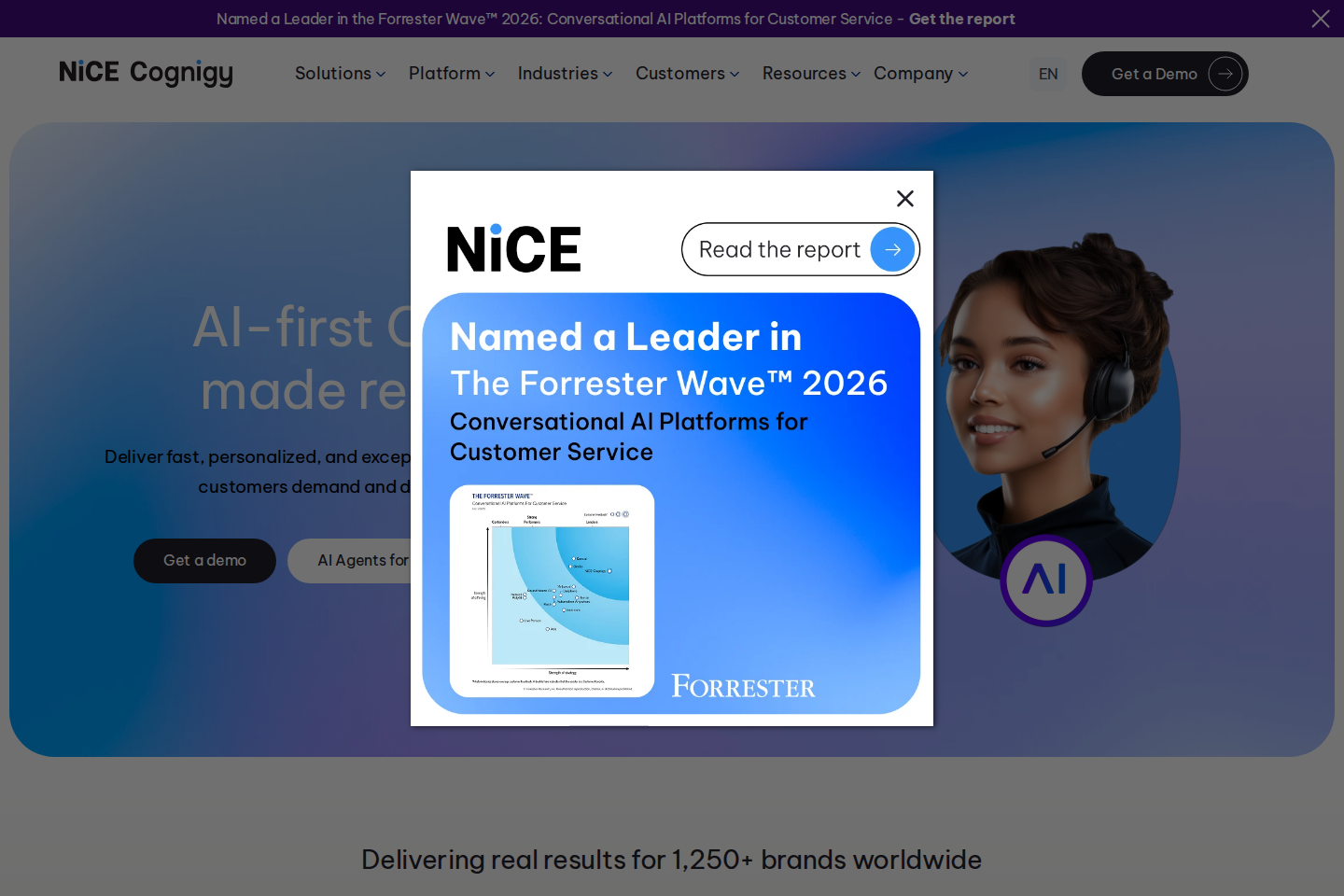
NiCE Cognigy is a broad enterprise conversational AI platform for customer-service automation. Its site positions it around AI agents for voice, chat, messaging, agent assist, contact-center integrations, knowledge, orchestration, and enterprise experience management. It belongs high on a Parloa alternatives list because it solves a similar buyer problem: large organizations that want governed AI agents across service channels. The tradeoff is that Cognigy is a platform program, not a narrow revenue-conversion tool.
Choose Cognigy if your contact-center team needs a governed conversational AI layer across voice, chat, agent assist, and enterprise integrations. Choose Thoughtly instead if your immediate problem is lead-stage conversion and CRM follow-up rather than CX-wide automation.
Contact NiCE Cognigy for pricing. Buyers should clarify licensing, conversation usage, CCaaS dependencies, implementation services, and any add-on AI costs during evaluation.
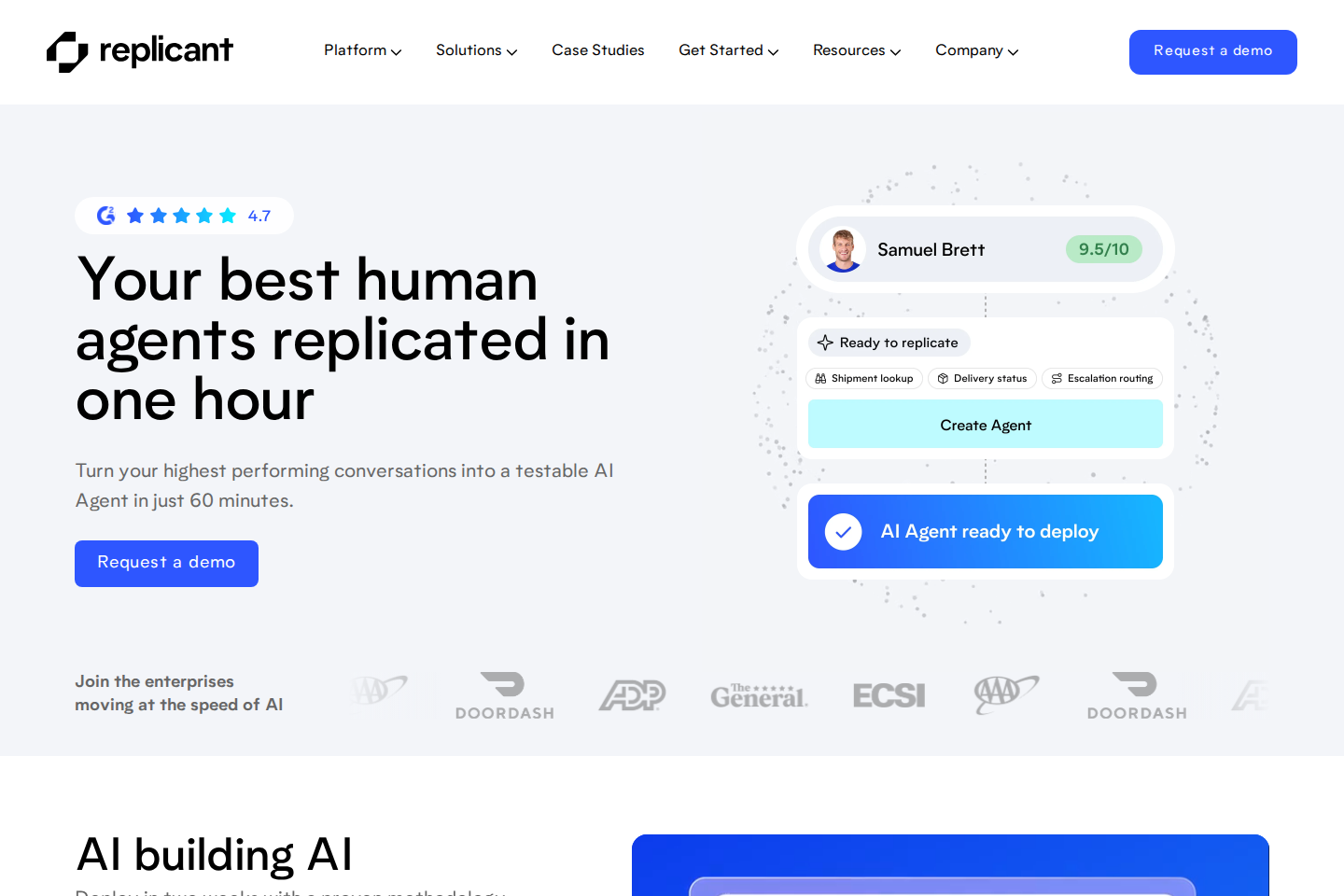
Replicant is a voice AI platform for contact centers that want to automate routine customer-service conversations. Its public positioning emphasizes replicating top agents, resolving conversations without adding headcount, conversation automation, conversation intelligence, and industries such as insurance, health services, home services, financial services, travel, retail, and transportation. That makes Replicant a credible Parloa alternative when the use case is service automation rather than lead conversion. The mismatch appears when a revenue team needs same-agent voice, text, email, booking, and CRM follow-up for new leads.
Choose Replicant when your business case is reducing live-agent load inside a service contact centerContact centerA contact center is a centralized operation that handles customer or prospect interactions across voice and digital channels.. Choose Thoughtly when the call is the beginning of a revenue journey and the agent must keep working the lead across channels after the first touch.
Contact Replicant for pricing. Independent review pages describe enterprise quote-based pricing, so buyers should verify minimum commitments, implementation scope, and integration costs.
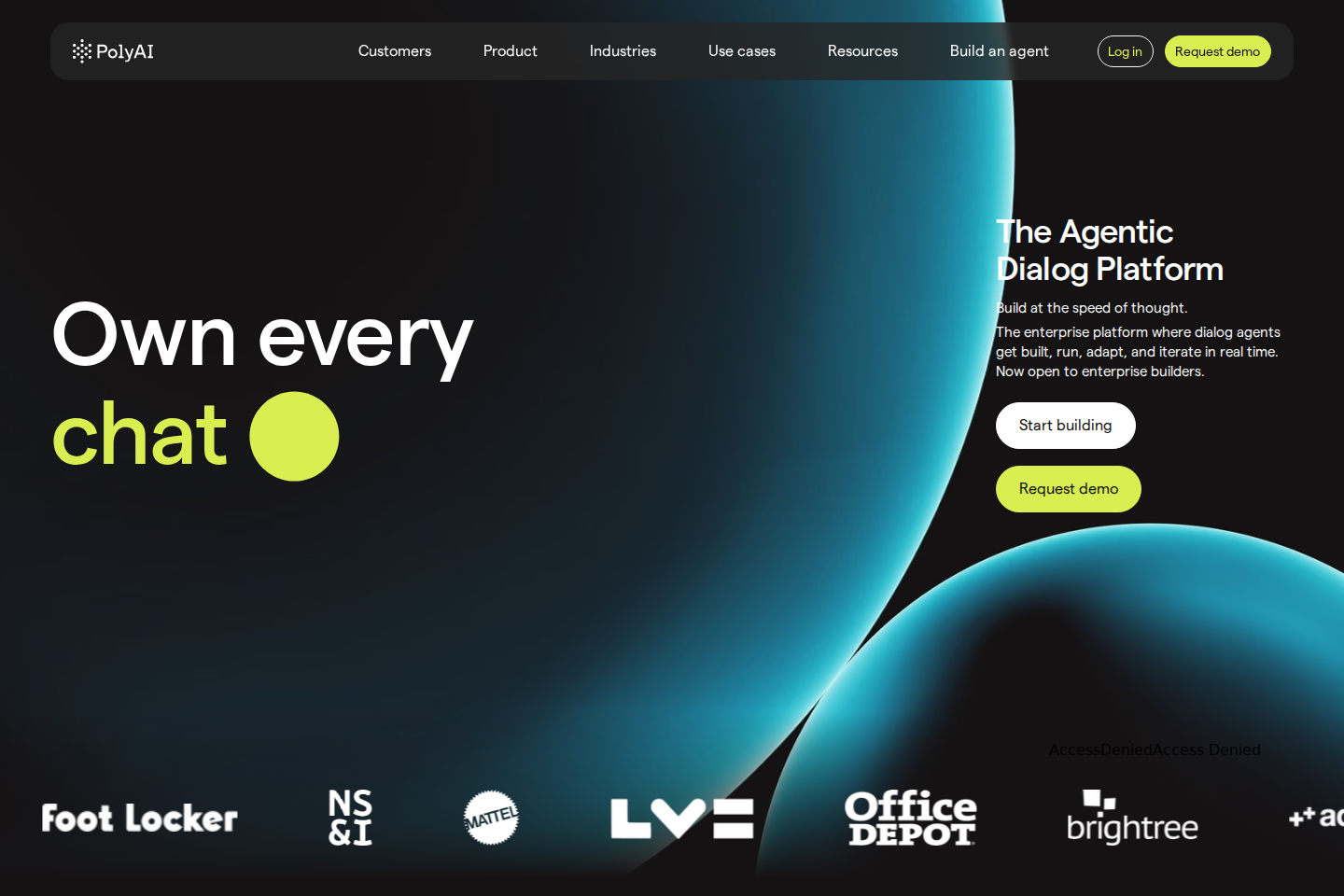
PolyAI is a strong Parloa alternative for enterprises that want high-quality voice agents in customer-service environments. Its website emphasizes lifelike voice AI agents, Agent Studio, pricing, security, integrations, data and insights, and industries such as financial services, healthcare, insurance, retail, telecom, travel, utilities, restaurants, and hotels. PolyAI is especially relevant when the buyer cares about replacing rigid IVRIVRIVR, or Interactive Voice Response, is a phone menu that routes or serves callers through keypad entries or spoken choices. with more natural voice experiences. It is less direct when the goal is turning new inbound demand into booked revenue conversations.
Choose PolyAI if your team wants a polished voice layer for service automation and IVR modernization. Choose Thoughtly if you need every inbound form fill worked across calls, texts, emails, booking, transfer, and CRM updatesCRM updatesCRM updates are changes written after or during a conversation, such as status, notes, owner, next step, appointment, or disposition..
PolyAI has a pricing page, but detailed plan economics generally require a sales conversation. Validate annual minimums, usage tiers, implementation support, and contact-center integration costs.
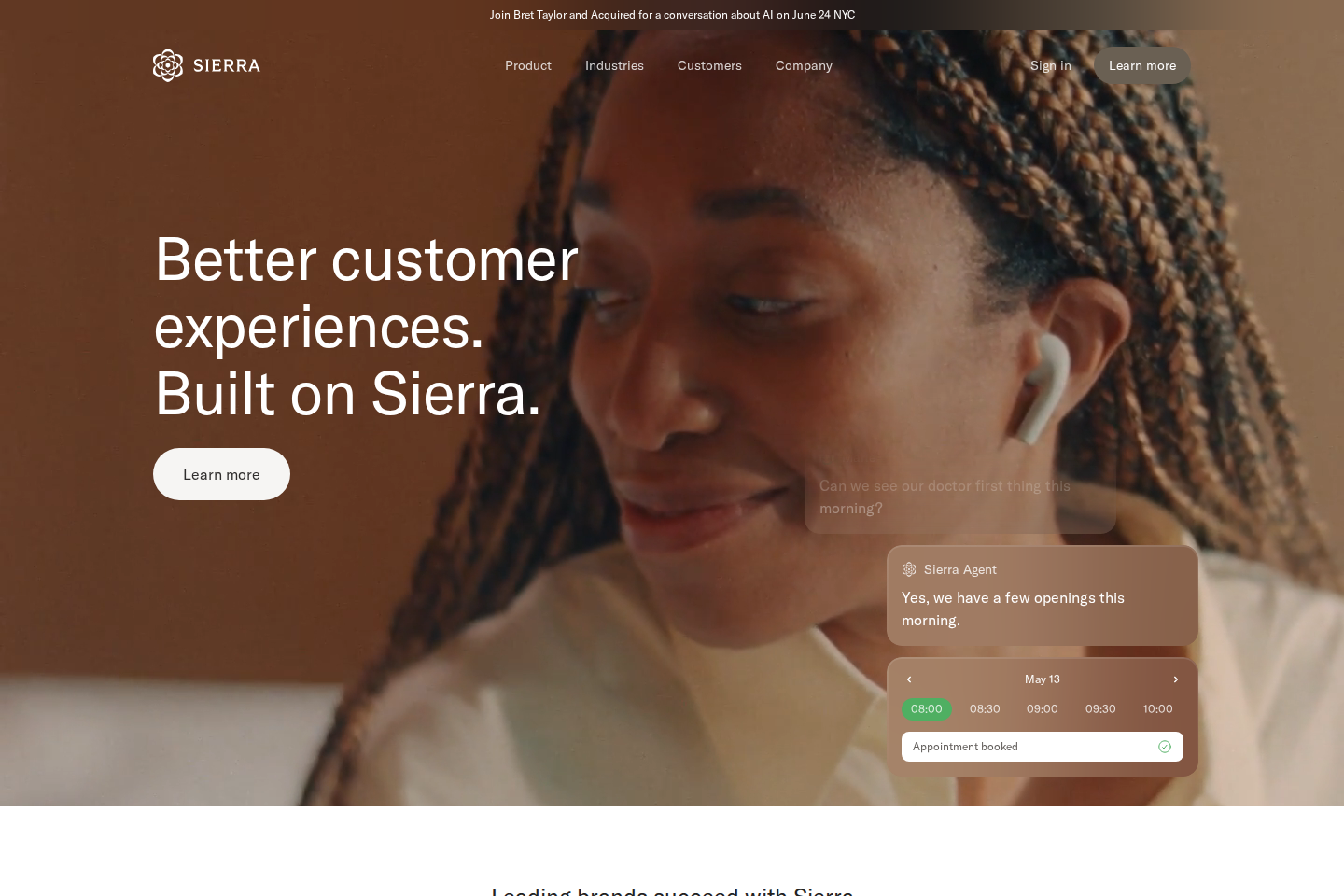
Sierra is an enterprise CX agent platform for major brands that want custom AI agents across customer-experience workflows. Its homepage highlights better customer experiences, recognizable enterprise customers, and outcome-based pricing. Sierra is a real alternative to Parloa when the buyer is a global CX organization with complex support, account-management, returns, or service journeys. For a lead-conversion team, Sierra can be too broad, too enterprise, and too services-led for the job.
Choose Sierra if you are a large enterprise CX team buying a strategic AI agent program. Choose Thoughtly if you want revenue teams to launch inbound conversion agents quickly without turning the project into a broad CX transformation.
Contact Sierra for pricing. Buyers should ask about outcome definitions, minimum commitments, implementation fees, integration scope, and what happens when volumes or use cases change.
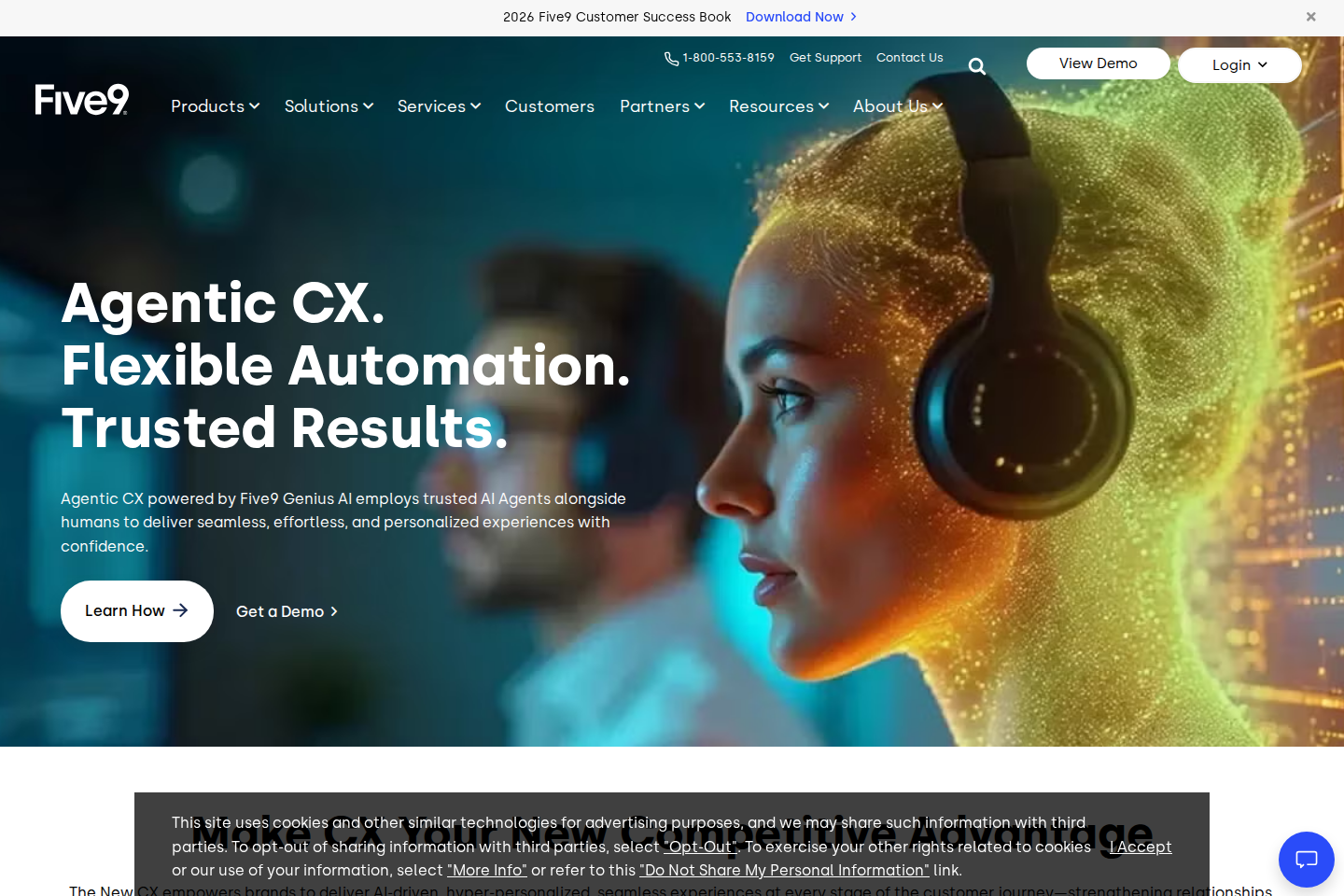
Five9 is not just a Parloa alternative; it is a full cloud contact-center platform with AI layered into a broader CCaaS stack. Its public site highlights contact-center software, global voice, agent desktop, supervisor tooling, workflow automationWorkflow automationWorkflow automation uses software to execute and coordinate repeatable steps such as intake, follow-up, qualification, routing, booking, and system updates., CRM integrations, and pricing bundles. That breadth is useful when the business is modernizing the entire contact-center operation. It is heavier than necessary when the only job is fast inbound lead follow-upLead follow-upLead follow-up is the sequence of calls, texts, emails, and tasks used after a prospect expresses interest..
Choose Five9 when you need a cloud contact-center backbone and AI is one part of that operating model. Choose Thoughtly when your CRM is the center of gravity and the agent’s job is to create qualified pipeline, not manage a live-agent floor.
Five9 publishes pricing and bundle entry points, but final costs depend on package, seats, channels, AI, integrations, and services. Confirm add-ons before comparing against usage-based lead-conversion platforms.
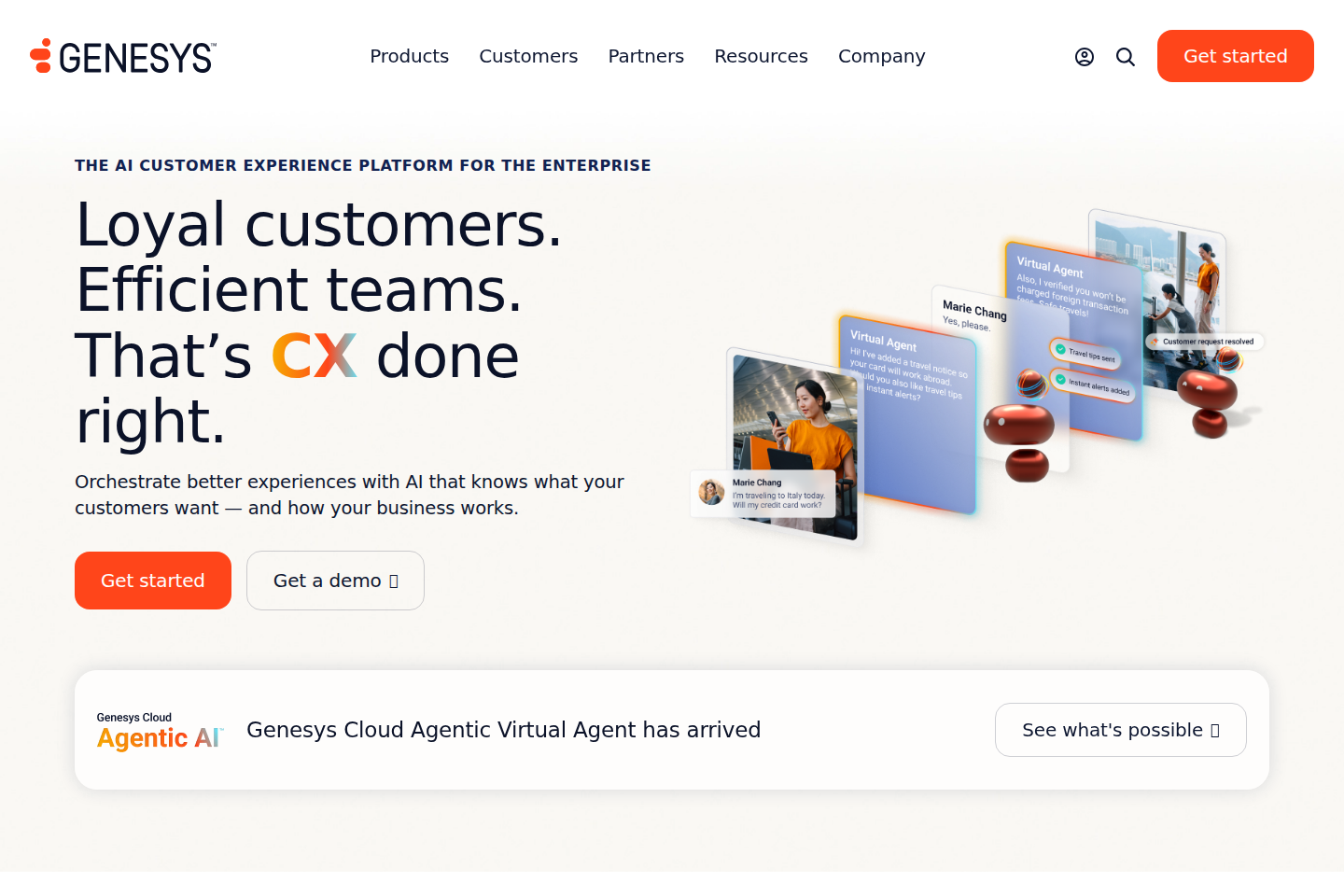
Genesys Cloud CX is a heavyweight alternative for enterprises that need omnichannelOmnichannelOmnichannel is a coordinated customer journey in which context and state carry across voice, SMS, email, web, and human interactions. customer experience orchestration, not just AI agents. Its public navigation spans virtual agents, copilots, AI Studio, IVR, inbound voice, messaging apps, WhatsApp, email, social, workforce engagement, quality, journey analytics, and orchestration. For Parloa buyers already thinking in CCaaS terms, Genesys is a natural evaluation. For revenue teams, the platform scope can introduce cost and operational gravity that the lead-conversion use case does not require.
Choose Genesys if your organization needs an enterprise CX operating system. Choose Thoughtly if the faster path to value is a lead-conversion layer that plugs into your CRM and works the funnel your team already owns.
Genesys publishes plan pricing, but buyers should model seats, AI tokens, digital channels, integrations, workforce tools, and implementation support before comparing total cost.
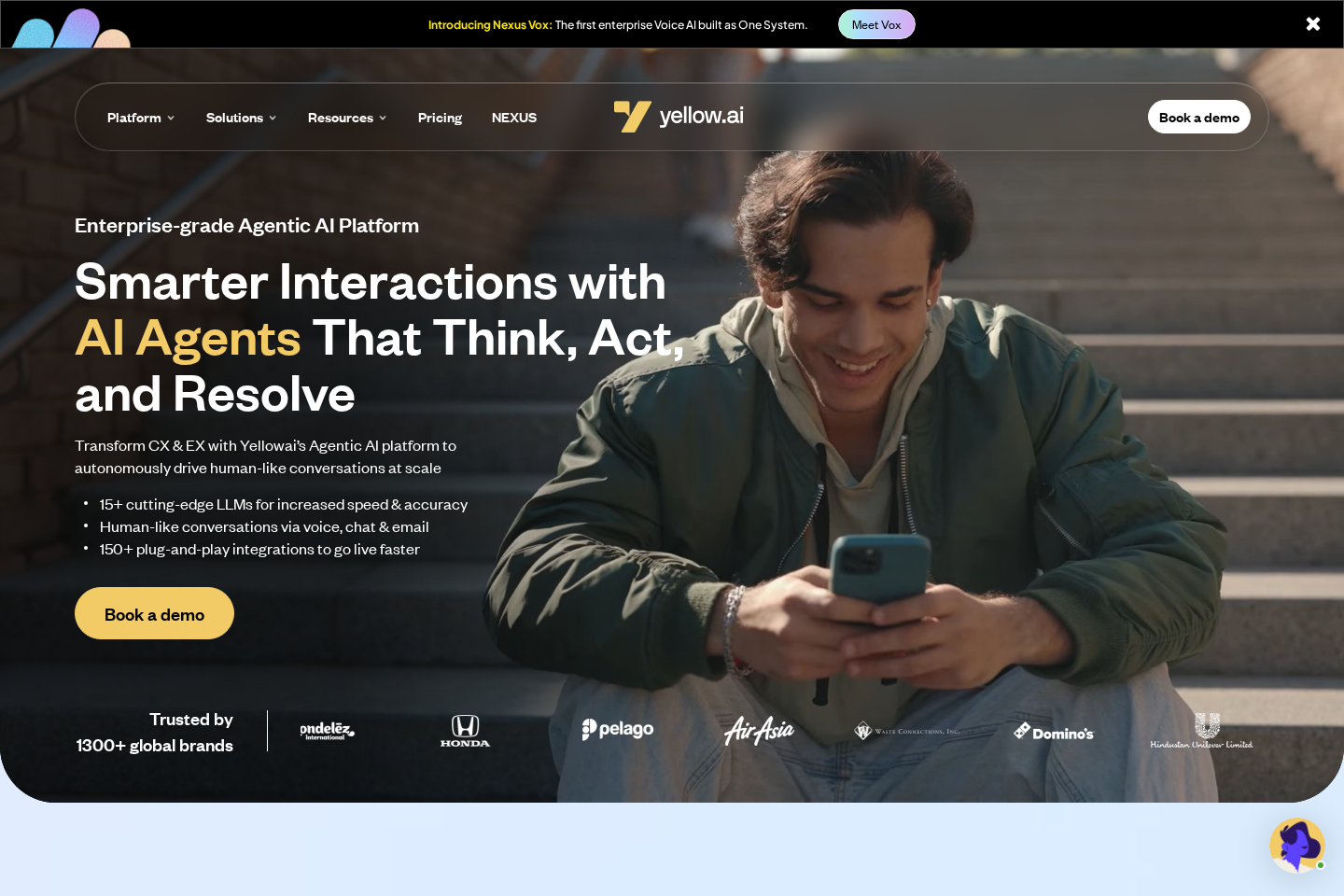
Yellow.ai is a broad agentic AI platform for customer and employee experience automation. Its site highlights an enterprise-grade platform, AI Agent Builder, conversational knowledge baseKnowledge baseA knowledge base is a maintained collection of approved business information that an agent can use to answer questions., AI copilot, testing, analytics, voice and calls, text and chat, email automation, and agent assist. It belongs on a Parloa alternatives list because it covers many of the same enterprise automation concerns across channels. The risk is the same as other broad platforms: impressive scope can become more platform than a focused revenue team needs.
Choose Yellow.ai if your enterprise wants a multi-channel automation layer across CX and EX. Choose Thoughtly when the buyer is RevOps or growth and the operating question is simpler: did every lead get reached, qualified, booked, and updated?
Yellow.ai publishes a pricing page, but final pricing is tailored. Confirm channel limits, AI-agent counts, success metrics, implementation services, and add-ons before committing.
The cleanest decision rule is the metric. If your team is measured on quote requests reached, appointments booked, applicants contacted, prospects reactivated, or CRM records advanced, prioritize a revenue conversion platform. Contact-center suites can technically make calls, but they often bring operating models designed for service queues, live-agent routing, and containment.
If your goal is reducing live-agent load, replacing IVR, automating account questions, and improving service-call resolution, Parloa, Cognigy, Replicant, PolyAI, Five9, Genesys, Sierra, and Yellow.ai all deserve evaluation. In that world, the buyer should care about containment rate, escalationEscalationEscalation moves a conversation to a person, specialist, supervisor, or alternate workflow when the agent should not continue alone. quality, QA, workforce tooling, and contact-center integration depth.
Enterprise AI platforms often look comparable in demos, then diverge during implementation. Ask who builds the first agent, who changes it later, whether CRM or CCaaS admins can own changes, what professional services are mandatory, what usage metrics drive overages, and how quickly a workflowWorkflowA workflow is a defined sequence of steps, decisions, actions, delays, and outcomes used to complete a business process. can be edited after launch.
For lead conversion, ask vendors to show one lead moving from form fill to phone call, missed-call SMS, email follow-upEmail follow-upEmail follow-up sends timely, context-aware replies or reminders that move an inbound lead toward qualification, scheduling, or handoff., booking, warm transferWarm transferA warm transfer connects a live caller to the right person while preserving the context already collected during the conversation., and CRM write-back with the same context. If the demo breaks into separate modules, your operating team will inherit those seams.
Thoughtly is the best fit when the use case is inbound lead conversion rather than customer-service containment. It is built for speed-to-lead, voice + SMS + email persistence, CRM write-back, qualification, booking, and warm transfer.
NiCE Cognigy, Five9, Genesys Cloud CX, Replicant, and PolyAI are stronger fits when the buyer is a contact-center or CX team. The right choice depends on whether you need a full CCaaS platform, voice-only containment, IVR modernization, or multi-channel customer-service automation.
Common switching triggers include implementation effort, pricing opacity, contact-center-first scope, learning curve, and the need for faster iteration by non-technical teams. Some companies are not leaving because Parloa is weak; they are leaving because their actual job is narrower or different.
Parloa can support customer-facing automation, but its public positioning is contact-center and customer-service oriented. Revenue teams that need inbound lead follow-up, qualification, scheduling, re-engagement, and CRM execution should compare it carefully against a conversion-specific platform.
Choose CCaaS if you need live-agent operations, workforce management, routing, QA, IVR, and service automation. Choose a lead-conversion platform if the priority is contacting every inbound lead quickly, following up across channels, and pushing qualified outcomes into your CRM.
Thoughtly homepage — product positioning, channels, CRM workflow, and inbound lead conversion language.
Thoughtly billing docs — free plan, trial, paid-plan, and billing model details.
Thoughtly vs PolyAI and Thoughtly vs Replicant — adjacent competitive framing for contact-center AI versus inbound conversion.
Parloa homepage and Parloa AI voiceAI voiceAn AI voice is synthetic speech produced by a text-to-speech model, using a selected or cloned voice to speak an agent's generated or scripted response. agents guide — Parloa positioning and customer-service voice AI evaluation criteria.
Gartner Peer Insights Parloa ratings — review distribution and customer-experience ratings surfaced during research.
NiCE Cognigy, Replicant, PolyAI, Sierra, Five9 pricing, Genesys pricing, and Yellow.ai pricing — official vendor positioning and pricing references.


