

Industry insights
Best Regal.io Alternatives for Revenue Engagement in 2026
Compare the best Regal.io alternatives for revenue engagement, including Thoughtly, Conversica, Kixie, Aloware, Calldrip, Verse.io, and Regal itself.
Industry insights
Compare the best Regal.io alternatives for revenue engagement, including Thoughtly, Conversica, Kixie, Aloware, Calldrip, Verse.io, and Regal itself.
Last updated
Regal.io is a strong revenue engagement platform for contact-center and CX teams that want AI phone agents, human agent workflows, journey orchestration, and conversation intelligence in the same environment. It is not the wrong tool; it is just a specific one. Teams usually start looking for Regal alternatives when the buying question shifts from “How do we improve a human-led contact centerContact centerA contact center is a centralized operation that handles customer or prospect interactions across voice and digital channels.?” to “How do we convert every opted-in lead across voice, SMS, email, and CRMCRMA CRM is the system used to manage leads, contacts, accounts, opportunities, activity, ownership, and follow-up. workflows without building a heavier contact-center stack?”
I evaluated Regal alternatives around that switching point: high-consideration consumer lead conversion, speed-to-lead, multichannel follow-up, CRM write-backCRM write-backCRM write-back sends conversation outcomes, qualification answers, notes, appointments, dispositions, and next steps into the CRM., operational ownership, pricing clarity, and how much human-agent infrastructure the platform assumes. Thoughtly ranks first for teams that want AI-native inbound conversion, but Regal still belongs on the shortlist when the organization is built around hybrid human and AI contact-center operations.
The strongest reason to evaluate alternatives is fit, not failure. Regal positions itself as a voice AI platform built for CX leaders by contact-center operators, with AI agents, SMS and chat agents, journey builder, IVRIVRIVR, or Interactive Voice Response, is a phone menu that routes or serves callers through keypad entries or spoken choices., unified customer profiles, analytics, conversation intelligence, branded caller ID, spam remediation, and a unified agent desktop. That breadth is useful when a contact-center leader needs one place to manage AI agents and human teams.
It can be heavier than necessary for revenue teams whose core problem is missed or slow inbound lead follow-upLead follow-upLead follow-up is the sequence of calls, texts, emails, and tasks used after a prospect expresses interest.. If your team wants an AI agent to call a new insurance, mortgage, education, healthcare, home-services, or real-estate lead in seconds, continue by SMS or email, qualify intent, book the next step, and write everything back to Salesforce or HubSpot, you may not want to buy a platform shaped around contact-center supervision. The alternatives below are ranked for that revenue-engagement use case.
I looked for the job each platform is designed to do first. A strong Regal alternative for revenue teams should handle high-intent inbound leads, missed calls, appointment requests, reactivation lists, and follow-up sequences without assuming a supervisor-managed contact-center queue. A weaker fit may be excellent for support containment or power dialing but less natural for autonomous lead conversion.
Revenue engagement rarely ends with a single phone call. I prioritized platforms that can continue the conversation across SMS, email, chat, or workflowWorkflowA workflow is a defined sequence of steps, decisions, actions, delays, and outcomes used to complete a business process. actions when a lead misses the first call or asks to talk later. Voice-only tools can still be valuable, but teams should plan for the extra systems needed to run coordinated follow-up.
The best tools do more than place calls. They read lead context from the CRM, update dispositions, log transcripts or summaries, triggerTriggerA trigger is an event or condition that starts, resumes, changes, or stops an automated workflow. routing, and keep human reps from rebuilding context after handoff. I gave more weight to platforms that make CRM ownership clear for RevOps instead of treating CRM syncCRM syncCRM sync keeps selected lead, contact, conversation, outcome, and next-step data aligned between an agent platform and a CRM. as a side integration.
A platform can be powerful and still be a poor fit if every change needs engineering, a contact-center admin, or a long services cycle. I looked for tools that a revenue operations, growth, enrollment, or sales operations team can own day to day. That includes no-code builders, clear testing paths, reusable workflows, and implementation models that do not require a full contact-center transformation.
Pricing matters because AI engagement often scales with lead volume, call minutes, SMS volume, and workflow complexity. Public pricing, clear usage models, and predictable packaging make comparison easier. When pricing is quote-based, I noted that buyers should model total cost across platform fees, usage, implementation, add-ons, and any human-agent seats that remain in the workflow.
| Platform | Best fit | Primary strength | Key limitation |
|---|---|---|---|
| Thoughtly | Revenue teams converting opted-in inbound leads | Voice + SMS + email + CRM execution in one AI-native workflow | Best when lead sources and qualification logic are clearly defined |
| Regal.io | CX/contact-center teams blending AI and human agents | Broad contact-center orchestration with AI agents, journey builder, QA, and agent desktop | Can be more platform than needed for lean inbound conversion teams |
| Conversica | Teams that want email-first AI lead follow-up | Long-running AI assistant model for automated conversations and nurture | Less centered on immediate voice-first conversion |
| Kixie | Sales teams that want human reps to call faster | Power dialer, SMS, routing, and sales engagement around live reps | AI autonomy is not the whole operating model |
| Aloware | SMB and mid-market teams needing speed-to-lead phone/SMS | AI-powered phone system with CRM-connected outreach history | May require more sales-dialer operations than AI-native orchestration |
| Calldrip | Teams optimizing instant callback response | Fast lead response, call tracking, SMS, virtual assistant, and call scoring | Narrower than full multichannel revenue-agent platforms |
| Verse.io | Teams prioritizing managed SMS lead qualification | Two-way texting and long-tail follow-up for every lead | SMS-first; voice and email strategy may need other tools |
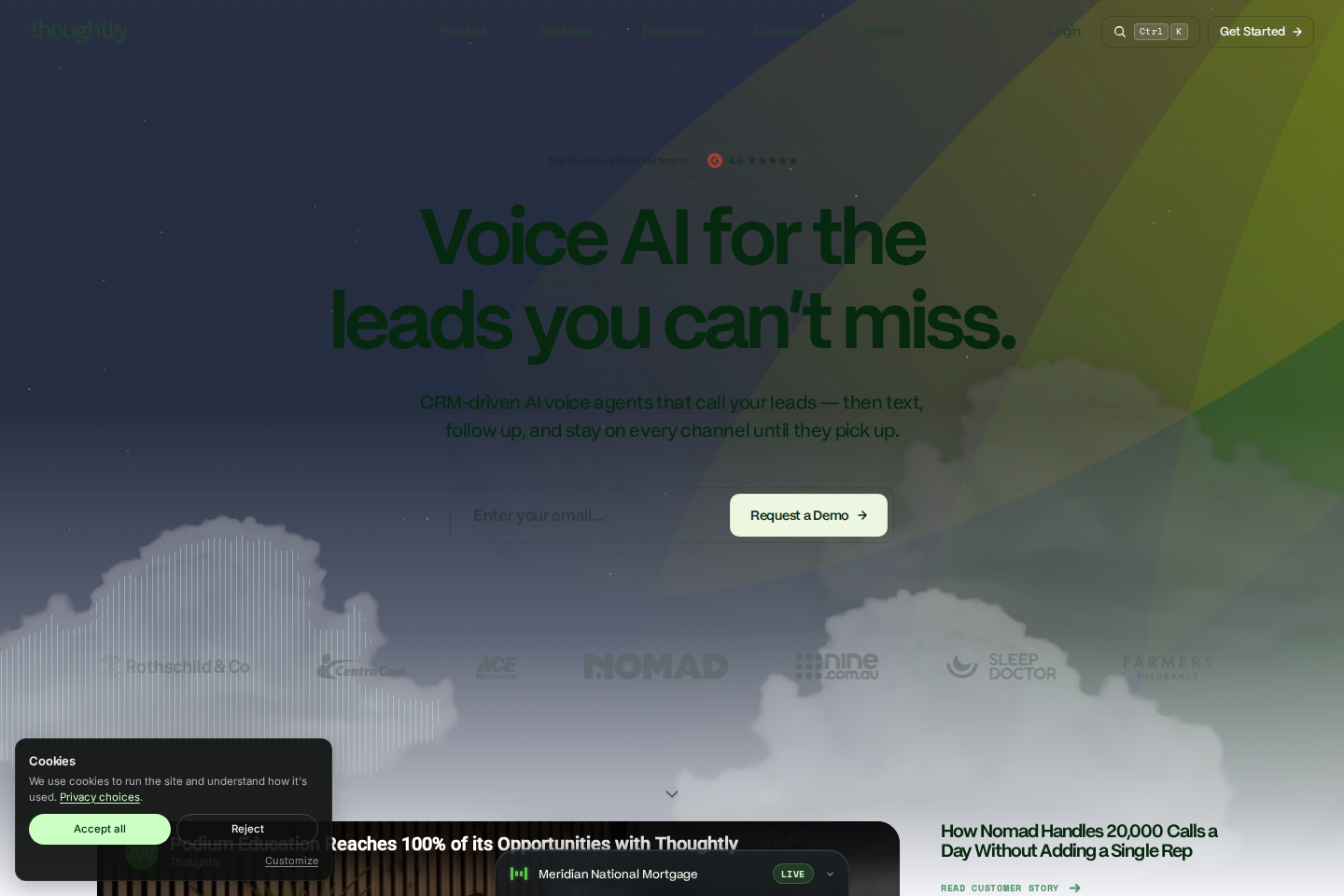
Thoughtly is built for revenue teams that need every opted-in inbound lead worked quickly across voice, SMS, email, and CRM workflows. Instead of starting from a contact-center queue, Thoughtly starts from the moment a lead enters Salesforce, HubSpot, a form, a booking flow, or another system of recordSystem of recordA system of record is the authoritative source for a defined category of business data.. The agent calls in seconds, qualifies intent, follows up on other channels when the call misses, books or transfers qualified conversations, and writes context back to the CRM. That makes it strongest for high-consideration consumer funnels where speed, coverage, and clean handoff matter more than supervisor tools for a human-agent floor.
Choose Thoughtly when the goal is to convert leads the business already paid to acquire, not simply improve a dialer team. It is especially strong for RevOps, growth, enrollment, and sales teams that want AI to own the first touch, persistence, qualification, and CRM update before a human gets involved.
Thoughtly pricing is per-minute. Contact Thoughtly for a quote based on volume, channels, integrations, and implementation needs.
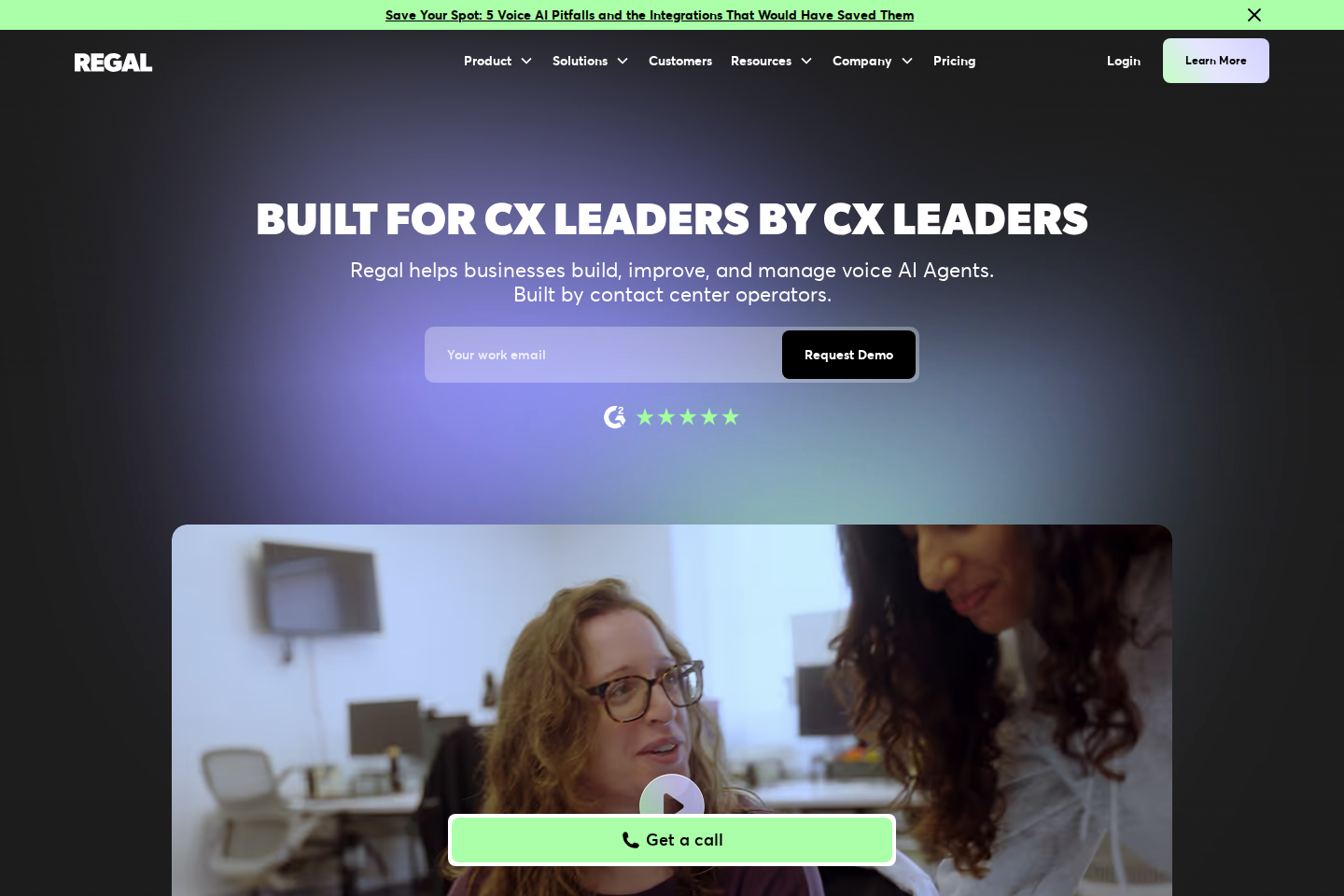
Regal.io should be treated as the incumbent category choice here, not as a neutral “also good” option. Its public product surface is broad: phone AI agents, SMS and chat agents, WebRTC voice agents, journey builder, IVR, unified customer profiles, analytics, conversation intelligence, branded caller ID, spam remediation, and unified agent desktop. That is a real advantage if the buyer is a CX leader modernizing a contact center. It is also exactly why many revenue teams should look elsewhere: if the core problem is missed inbound conversion, Regal can make the project feel like a contact-center transformation when the business really needs the CRM to act.
Choose Regal if your contact center is the operating center and AI needs to augment human-agent workflows. Choose Thoughtly if your CRM is the operating center and the goal is to work every opted-in lead across voice, SMS, email, booking, handoff, and CRM write-back before the lead goes cold.
Contact Regal for pricing. Model the total cost of platform fees, usage, implementation, reporting, and remaining human-agent seats against the revenue lift from faster lead conversion.
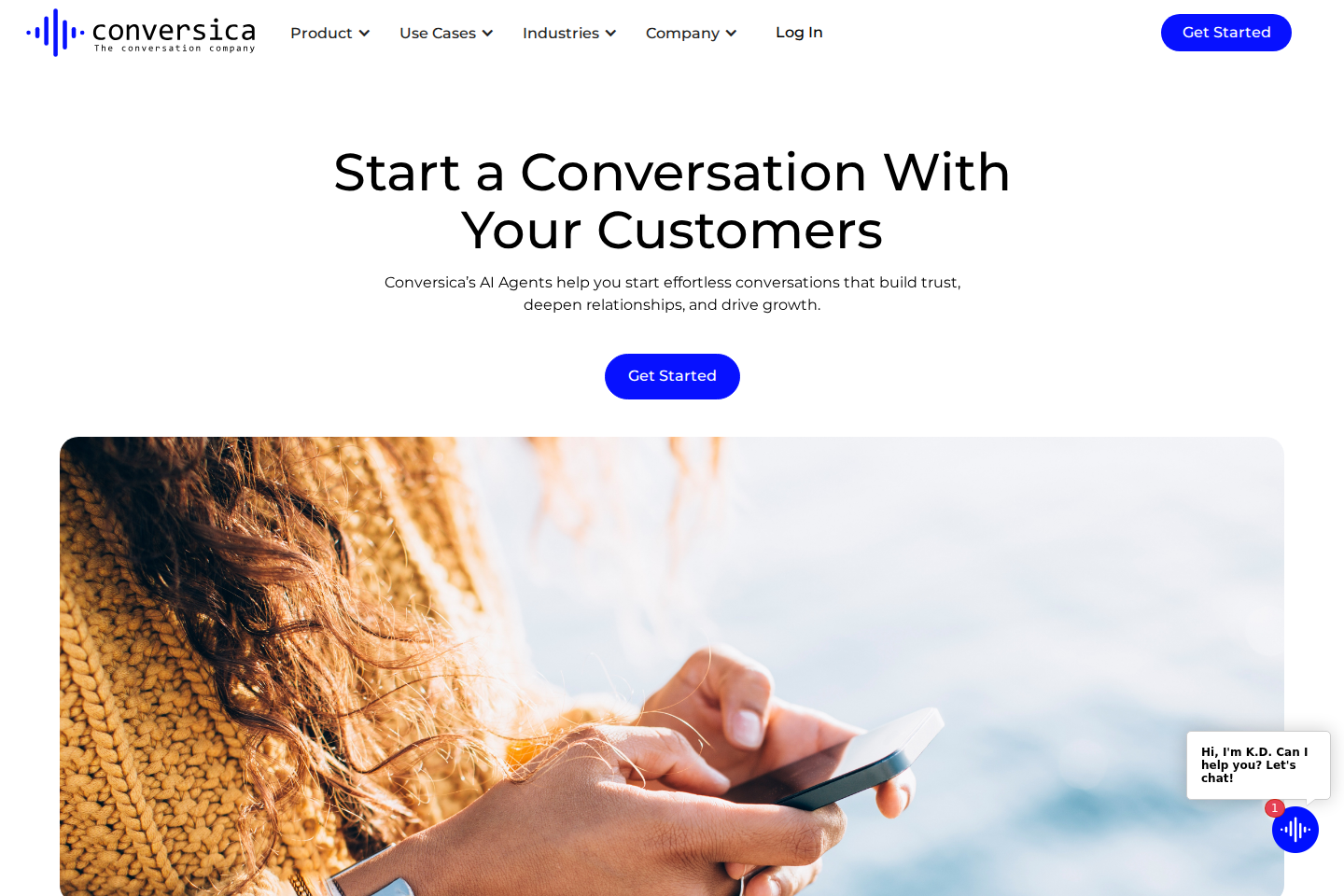
Conversica is one of the older names in AI sales assistant and customer-conversation automation. Its current site frames the product around starting customer conversations, building relationships, and driving growth, with large enterprise customer logos across business categories. Compared with Regal, Conversica is less about contact-center supervision and more about AI-led outreach and nurture. That makes it relevant when teams want persistent follow-up but do not need a voice-first platform as the center of the workflow.
Choose Conversica when email-first or digital-first follow-up is the main gap and speed-to-call is secondary. It is a credible Regal alternative for teams that want automated lead nurture but may not be the right replacement if the business case depends on calling every form fill within seconds.
Contact Conversica for pricing. Expect quote-based packaging tied to use case, volume, and enterprise requirements.
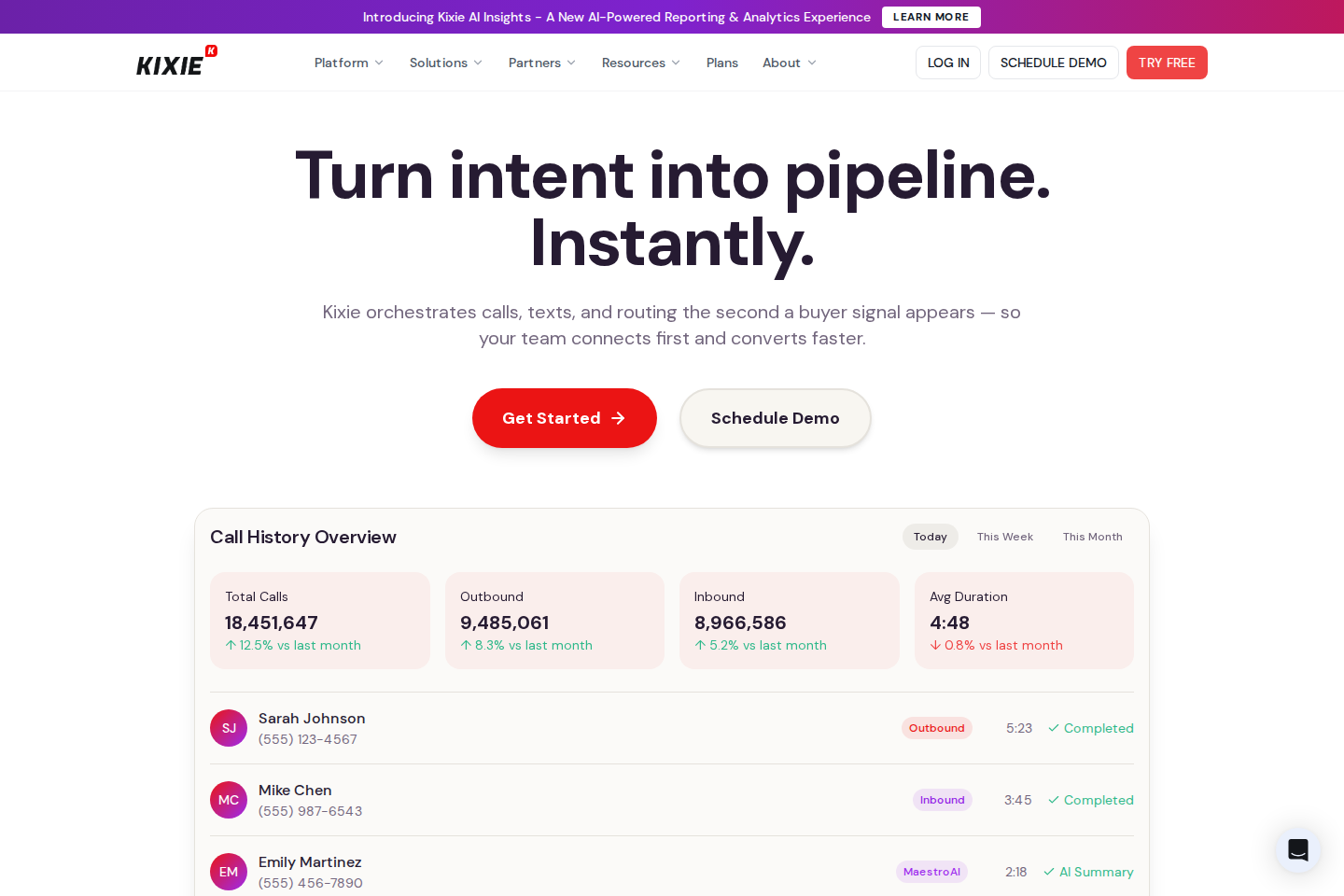
Kixie is a revenue calling and texting platform for teams that want to turn buyer intent into pipeline quickly. Its homepage emphasizes calls, texts, routing, campaign performance, time-to-first-response, SMS response, call connect lift, and a unified RevTech stack. Compared with Regal, Kixie is usually easier to understand as a sales-engagement and power-dialer layer around human reps. It is a good alternative when the operating model is “help reps respond and call faster,” not “let autonomous agents own the whole conversion motion.”
Choose Kixie if your reps are staying in the workflow and the goal is to make them faster, better routed, and more productive. If the goal is to replace the missed-first-touch problem with an AI agent that works every lead, compare Kixie against more autonomous platforms carefully.
Kixie publishes package information in sales flows and commonly sells by seat and capability. Confirm current pricing, AI features, SMS/calling usage, and CRM requirements with Kixie.
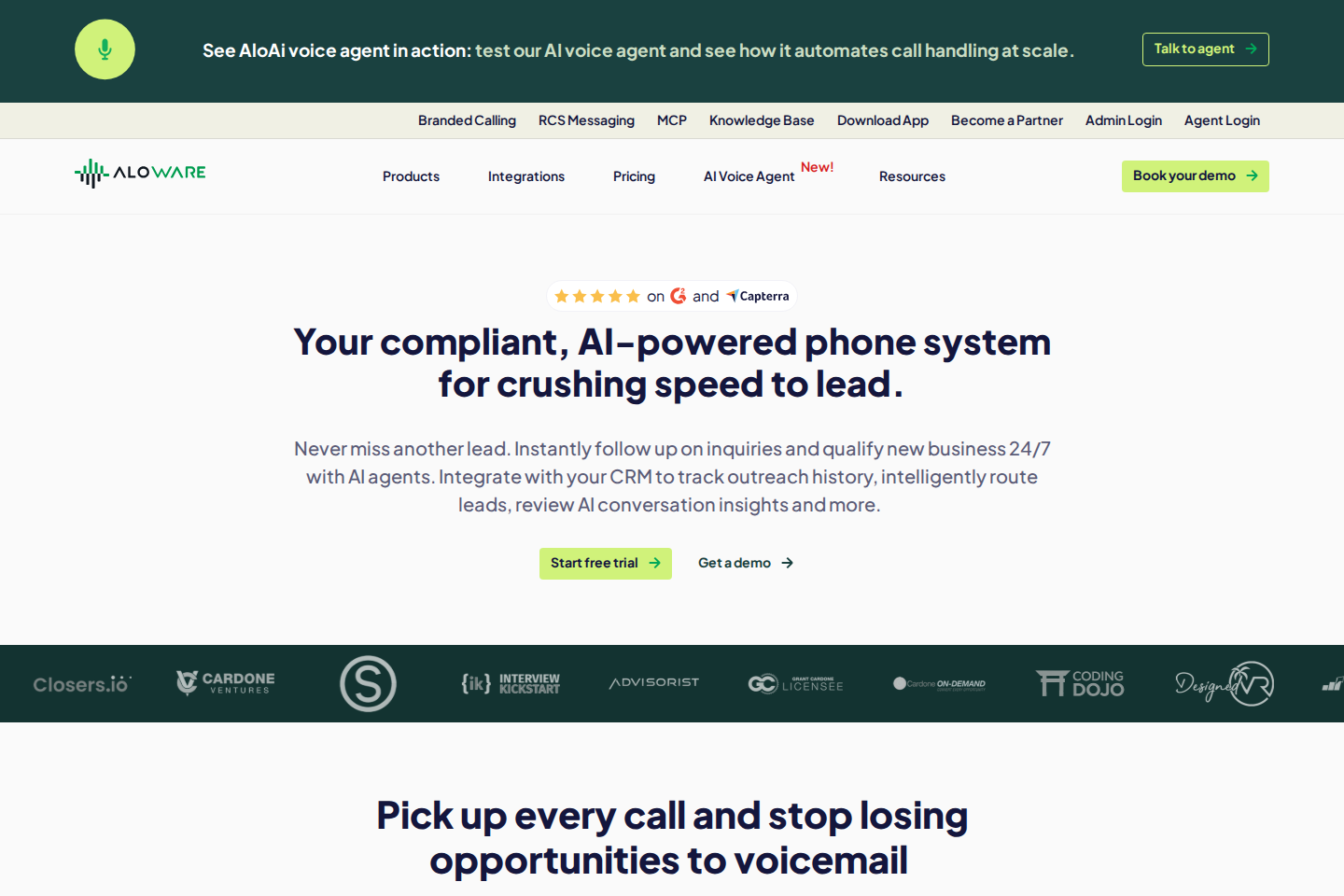
Aloware positions itself as a compliant, AI-powered phone system for crushing speed to leadSpeed to leadSpeed to lead is the elapsed time between an inbound inquiry and the first meaningful response from the business.. Its homepage says teams can instantly follow up on inquiries, qualify new business 24/7 with AI agents, integrate with CRM, track outreach history, route leads, and review AI conversation insights. Compared with Regal, Aloware feels more like a phone/SMS revenue operations tool than a broad CX contact-center platform. It is a practical option for teams that want quick lead response, CRM-connected calling, and AI assistance without buying an enterprise contact-center suite.
Choose Aloware when speed-to-lead phone operations and CRM-connected outreach are the main requirements. For more complex inbound conversion across voice, SMS, email, routing, and re-engagement, compare how much orchestration happens natively versus in surrounding tools.
Aloware advertises demo and trial paths. Confirm current plan pricing, AI agent usage, calling/SMS rates, and CRM integrationCRM integrationA CRM integration connects an agent or communications platform with a CRM so the systems can exchange records, events, and actions. costs directly.
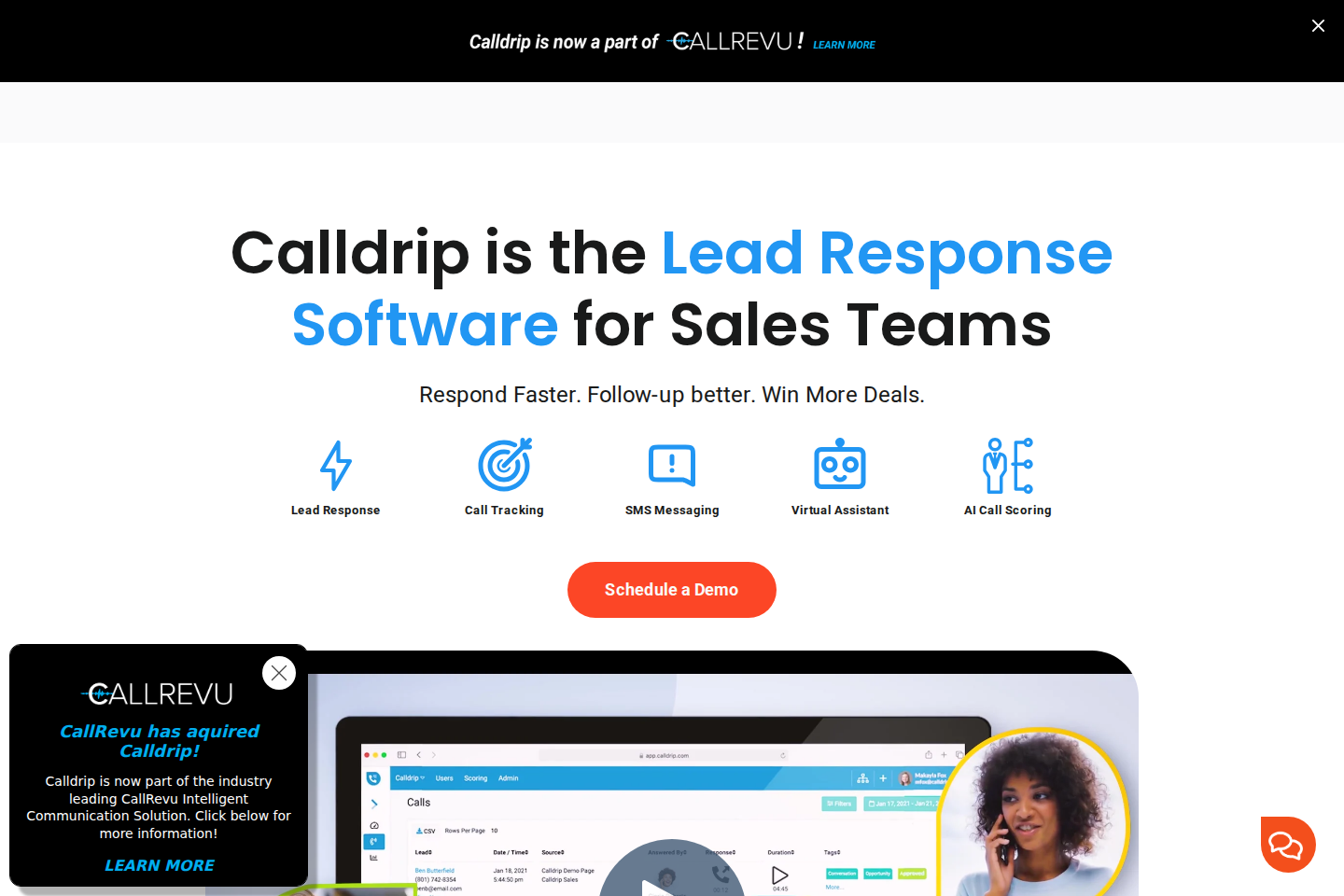
Calldrip is purpose-built around fast lead response. Its homepage highlights lead response, call tracking, SMS messaging, a virtual assistant, and AI call scoring, with customer quotes about reducing response times and increasing appointments. That makes it a meaningful Regal alternative for teams whose biggest revenue leak is slow first contact. It is narrower than full revenue-agent platforms, but narrow can be good when the project is specifically “call the lead now.”
Choose Calldrip if the core problem is instant callback and your team already has the rest of the sales process covered. It is less ideal if you need one AI agent to manage the entire lead journey after the first touch.
Contact Calldrip for current pricing. Buyers should confirm lead volume, calling/SMS usage, integrations, and AI feature packaging.
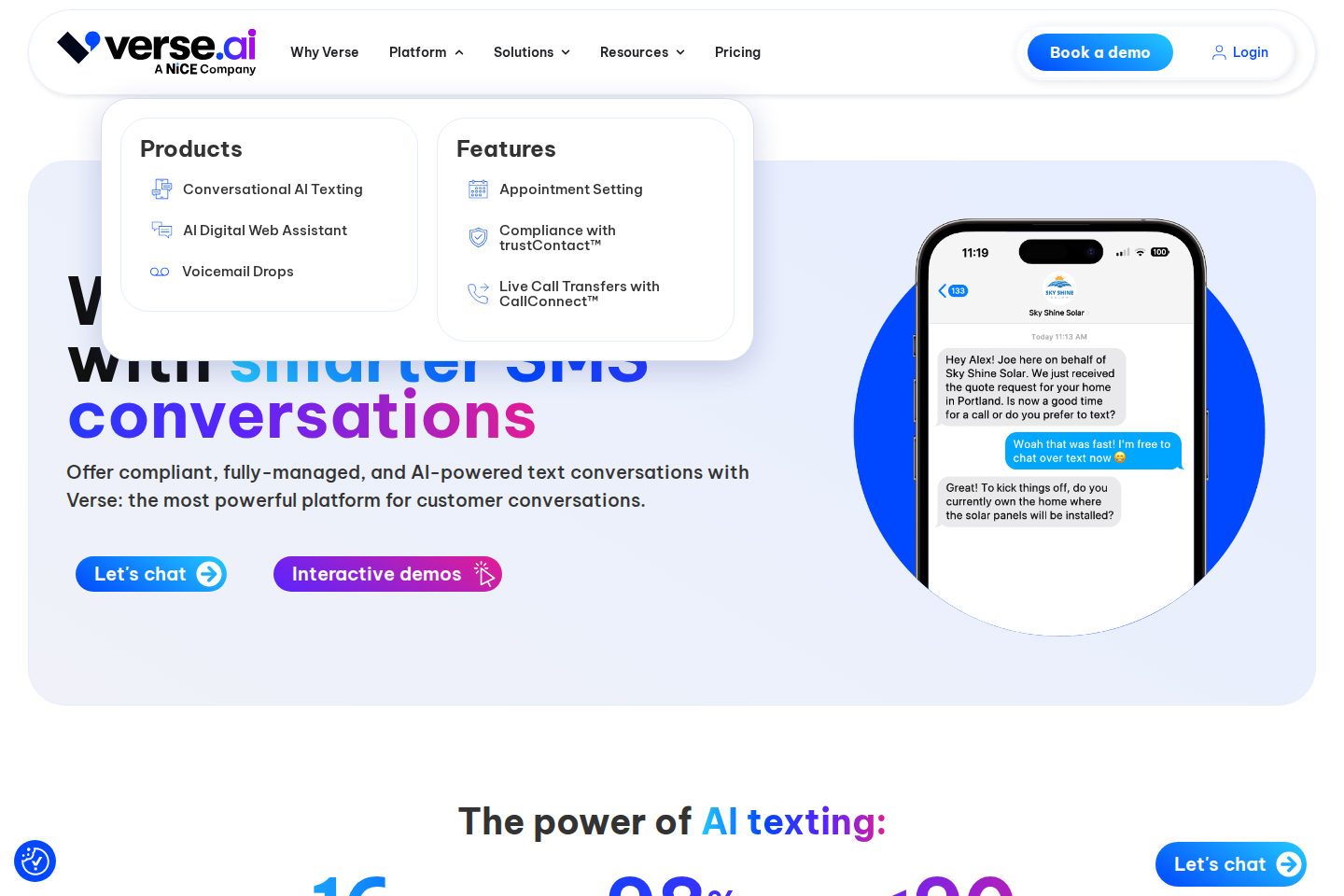
Verse.io is centered on intelligent two-way SMS for lead engagement, qualification, and follow-up. Its homepage says Verse can engage immediately, use scripts, respond quickly, follow up for up to six months, and pass warm qualified leads to a human team. That makes it useful when the phone is not the only or primary channel. Compared with Regal, Verse is simpler and more focused: it is about text conversations that keep leads warm and qualified.
Choose Verse when texting is the channel your leads actually answer and your sales team wants warmer handoffs. For voice-first speed-to-lead or multichannel conversion, compare Verse as a channel specialist rather than a full Regal replacement.
Contact Verse for pricing. Confirm whether pricing is based on lead volume, managed service scope, message usage, integrations, and qualification workflows.
If the business already generates opted-in leads but only reaches a fraction of them quickly, Thoughtly is the cleanest fit. It is built to work every lead across voice, SMS, email, and CRM action until the lead is qualified, booked, transferred, or properly dispositioned.
Regal makes sense when the organization already has contact-center leadership, human-agent workflows, QA programs, conversation intelligence, and blended AI/human staffing. In that environment, the extra platform surface area is a feature rather than overhead.
Kixie, Aloware, Calldrip, and Verse can be the better operational choice when the bottleneck is specific: human sales calling, phone/SMS speed-to-lead, instant callback, or managed texting. The trade-off is that you may need other systems to cover the full journey that platforms like Thoughtly or Regal handle more broadly.
Thoughtly is the best Regal alternative when the goal is to convert opted-in inbound leads across voice, SMS, email, CRM updatesCRM updatesCRM updates are changes written after or during a conversation, such as status, notes, owner, next step, appointment, or disposition., scheduling, and handoff. Regal is stronger when the team is optimizing a broader contact-center environment with human and AI agents together.
No. Regal can support revenue engagement and customer journeys, but its public positioning, product categories, and feature set are strongly shaped around CX and contact-center operations. That makes fit the key question: do you need contact-center orchestration, or do you need AI-native lead conversion?
Verse.io is the most SMS-focused option in this list. Thoughtly is stronger when SMS needs to work alongside voice, email, CRM write-back, routing, and scheduling inside one conversion workflow.
Kixie and Aloware are good fits when human reps remain central and the goal is faster calling, texting, routing, and CRM-connected outreach. Thoughtly is a better fit when AI should own the first-touch and follow-up workload before handing qualified leads to humans.
Do not compare platform fees alone. Model call minutes, SMS volume, email or channel add-ons, CRM integrations, implementation fees, support requirements, and the human-agent capacity each workflow still requires. AI-native tools can look more expensive per minute but cheaper per qualified contact if they remove manual rep work.
Thoughtly homepage and product context — current Thoughtly positioning, channels, integrations, and customer-fit language.
Thoughtly vs Regal.ai compare page — Thoughtly-owned comparison positioning for Regal.
Regal.ai homepage — official Regal product positioning and feature categories.
Regal.ai G2 reviews — public review rating and review distribution captured during research.
Conversica homepage, Kixie homepage, Aloware homepage, Calldrip homepage, and Verse.io homepage — official vendor positioning used for the alternatives analysis.


