

Industry insights
8 Best Sierra Alternatives for Enterprise CX in 2026
A practical guide to Sierra alternatives for teams choosing between enterprise CX automation and inbound lead conversion platforms.
Industry insights
A practical guide to Sierra alternatives for teams choosing between enterprise CX automation and inbound lead conversion platforms.
Last updated
Sierra is a serious enterprise AI agent platform for customer experience. Its website highlights major customer brands, customer-service use cases, and agents that help companies deliver better post-purchase experiences across moments that matter.
That strength is also why teams compare Sierra alternatives. If the job is customer support at Fortune 500 scale, Sierra belongs in the room. If the job is converting inbound leads before they go cold, the better shortlist looks different: faster deployment, CRM-first action, voice plus SMS and email persistence, booking, warm transferWarm transferA warm transfer connects a live caller to the right person while preserving the context already collected during the conversation., and revenue reporting instead of a broad CX transformation program.
I anchored the Thoughtly positioning in the current Thoughtly product, pricing, integrations, docs, and Thoughtly vs Sierra compare page. For competitors, I cross-checked official vendor pages, FireCrawl research packs, public review pages, Reddit/forum results where available, and independent pricing/limitations coverage.
| Platform | Best fit | Primary strength | Key limitation |
|---|---|---|---|
| Thoughtly | Revenue teams converting opted-in inbound leads | Voice, SMS, email, workflows, booking, warm transfer, and CRM write-back in one platform | Not built for post-purchase support deflection |
| Sierra | Large enterprises automating customer experience | White-glove enterprise CX agents for support, returns, account management, and customer engagement | Enterprise-only shape can be overbuilt for lead-stage revenue work |
| Decagon | Enterprise customer-support teams replacing repetitive support work | AI concierge model for customer support with optimization and proactive agents | Sales-led, high-commitment fit; buyers should verify costs, customization, and implementation scope |
| Ada | Digital-first customer-service automation | Mature AI support automation and agentic CX positioning | Best for service resolution, not fast phone-first lead conversion |
| Intercom Fin | Support teams already using Intercom | Outcome-priced AI agent inside a mature helpdesk/messaging platform | Tied to support resolution economics and Intercom operating model |
| Zendesk AI | Zendesk customers modernizing service operations | AI built into a widely adopted service platform | Ticket/service platform first; advanced setup and pricing can grow with scale |
| Cognigy | Enterprise contact centers standardizing conversational AI | Broad voice/chat CX automation with contact-center integrations | Heavy when the job is RevOps-owned inbound conversion |
| PolyAI | Large service contact centers automating phone calls | Dialog-first voice AI for customer engagement | Containment and IVR modernization are different from lead conversion |
The first filter was whether the platform is built for new-lead conversion or post-purchase service. Sierra, Decagon, Ada, Intercom Fin, Zendesk AI, Cognigy, and PolyAI can all automate customer conversations, but most are optimized for CX, support, ticket resolution, containment, or agent assist. Thoughtly scored higher for revenue teams because the public product motion starts when a lead hits the CRMCRMA CRM is the system used to manage leads, contacts, accounts, opportunities, activity, ownership, and follow-up. and needs immediate follow-up.
Good lead-conversion fit means speed-to-lead, same-agent voice/SMS/email persistence, qualification, booking, warm transfer, and CRM outcome data. Good customer-service fit means knowledge resolution, ticket deflection, service workflows, human-agent escalationEscalationEscalation moves a conversation to a person, specialist, supervisor, or alternate workflow when the agent should not continue alone., quality monitoring, and support analytics. Mixing those jobs creates expensive procurement theater. Glamorous, but still theater.
I looked at who owns the platform after purchase. Enterprise CX tools often assume customer-service operations, IT, implementation partners, or vendor services are part of the operating model. That can be right for a global brand with a mature support org.
For inbound lead conversionInbound lead conversionInbound lead conversion turns opted-in calls, form submissions, quote requests, and other inquiries into qualified conversations, appointments, or transfers., implementation ownership should sit closer to RevOps, sales, growth, enrollment, intake, or local operations. The platform should connect to the CRM, launch quickly, and let non-engineering teams adjust qualification, routing, and follow-up logic without creating a multi-quarter transformation program.
A polished chat agent is not enough when the buyer journey starts with a form fill and a phone number. I prioritized platforms that can call quickly, fail over to SMS, continue by email, preserve context, book or warm-transfer, and write clean data back to Salesforce, HubSpot, or the system of recordSystem of recordA system of record is the authoritative source for a defined category of business data..
This is where CX platforms often need careful scrutiny. Many can support multiple channels, but the practical question is whether one agent owns the journey and revenue outcome, or whether the buyer has to stitch together voice, messaging, email, CRM updatesCRM updatesCRM updates are changes written after or during a conversation, such as status, notes, owner, next step, appointment, or disposition., and reporting after the contract is signed.
I used official pages for product claims and independent sources for risk signals, especially pricing opacity, implementation burden, customization limits, support friction, and reviews that mention complexity. Sierra does not publish pricing, and multiple independent 2026 pricing guides estimate enterprise-level annual commitments, so buyers should validate minimums directly rather than relying on demos.
For every vendor, I kept the claim strength proportional to the evidence. Public review marketplaces and forum threads are useful for pattern-finding, but they are not proof that every customer has the same experience. The safe buyer move is to turn recurring public themes into procurement questions.
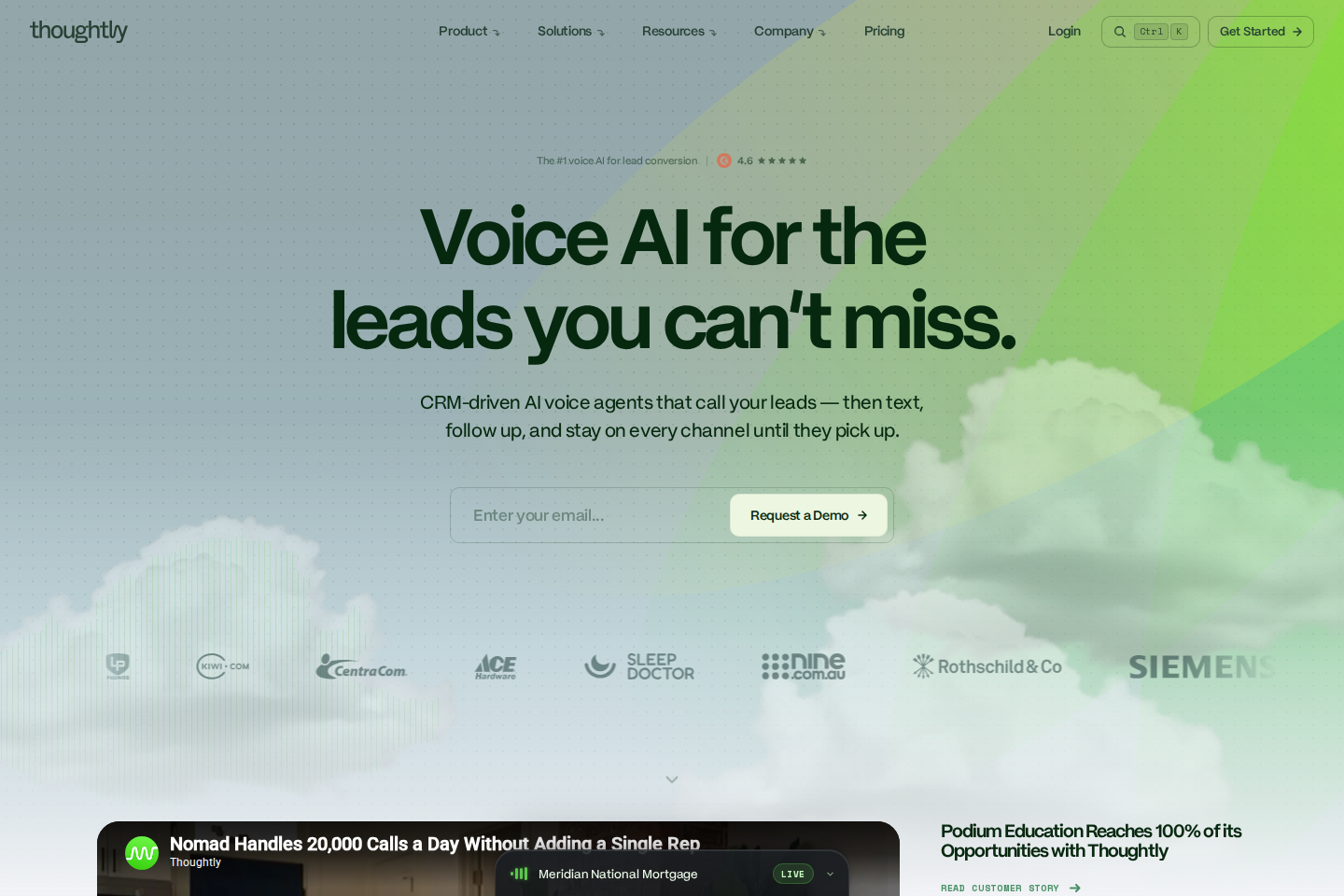
Thoughtly is the Sierra alternative for teams whose “customer experience” problem is actually a lead-conversion problem. It is built for high-volume, high-consideration consumer funnels where new inquiries need to be called quickly, qualified, booked, transferred, and updated in the CRM without waiting for a human queue. The platform works across voice, SMS, iMessage, WhatsApp, and email with shared conversation context, so a missed call does not become a dead lead. Compared with Sierra’s enterprise CX orientation, Thoughtly is narrower in the best way: it focuses on converting opted-in inbound demand into pipeline.
Choose Thoughtly if your team owns inbound lead conversion in insurance, mortgage, real estate, education enrollment, elective healthcare, home services, automotive, financial services, legal, or a similar high-consideration funnel. Choose a Sierra-style CX platform if the buyer is the Chief Customer Officer and the metric is support resolution rather than revenue coverage.
Thoughtly uses per-minute pricing. Contact Thoughtly for a quote based on call volume, channels, integrations, and launch scope.
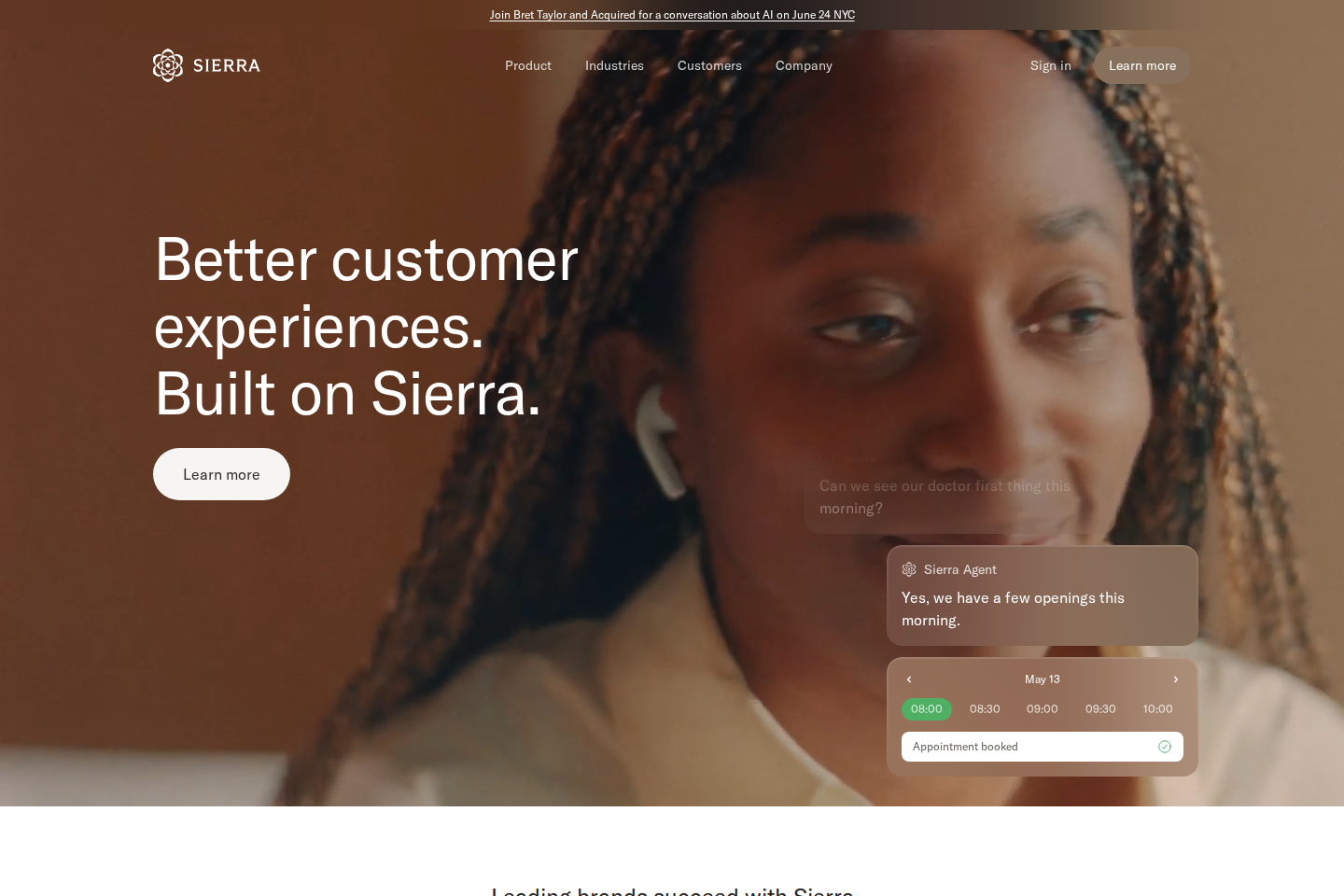
Sierra is the reference point for this list because it is built for enterprise customer experience, not lightweight chatbot deployment. Its site highlights customer stories and logos across brands such as Rocket Mortgage, SiriusXM, SoFi, Sutter Health, ADT, Sonos, and more, with positioning around better customer experiences and personalized interactions. Thoughtly’s Sierra compare page frames the category split clearly: Sierra is for post-purchase support, account management, returns, and enterprise CX programs. That is valuable, but it is not the same job as calling a fresh lead in under a minute and routing them to a revenue team.
Choose Sierra if you are a large enterprise with a sprawling customer base, a CX team ready to staff implementation, and a need to automate post-purchase customer interactions. Do not choose Sierra just because “AI agent” sounds close to lead conversion; category mismatch is how good software becomes expensive shelfware.
Sierra does not publish pricing. Public third-party pricing guides estimate enterprise annual commitments, but buyers should verify current minimums, implementation fees, usage terms, and support scope directly with Sierra.
Decagon positions itself as an AI concierge for every customer, with agents that can be built, optimized, and scaled for customer support. Its website highlights proactive agents and a support-oriented operating model. Decagon belongs on a Sierra alternatives shortlist when the buyer is looking at enterprise AI agents for customer service rather than pure voice automation. For revenue teams, the watch-out is that Decagon’s center of gravity is still support and customer operations, not sub-60-second inbound lead conversion.
Choose Decagon if your CX team wants an AI-native support platform and has the procurement appetite for a sales-led enterprise purchase. Choose Thoughtly if your pain is that inbound leads are not being reached, qualified, and handed to humans quickly enough.
Contact Decagon for pricing. Ask about annual minimums, implementation services, AI usage, integration work, proactive-agent scope, support, and cancellation/expansion terms.
Screenshot note: local browser capture was blocked or rendered a security/cookie overlay during this run, so I omitted the image rather than publishing a bad screenshot.
Ada is a mature AI customer-service automation platform with public positioning around agentic CX, AI agents, automated resolution, and support productivity. Its strongest fit is digital-first service teams that need to answer common customer questions, reduce support load, and improve self-service coverage. Ada can be a Sierra alternative for buyers who want a more established customer-service automation platform. It is less direct for teams that need voice-first speed-to-lead and persistent follow-up across SMS and email.
Choose Ada if the primary goal is customer-service automation and the buyer is support or CX. Choose Thoughtly if the first workflowWorkflowA workflow is a defined sequence of steps, decisions, actions, delays, and outcomes used to complete a business process. is contacting a new lead by phone, continuing by text/email, and logging a revenue outcome in the CRM.
Contact Ada for pricing. Ask whether pricing is based on resolutions, usage, seats, channels, platform fees, implementation, or a mix.
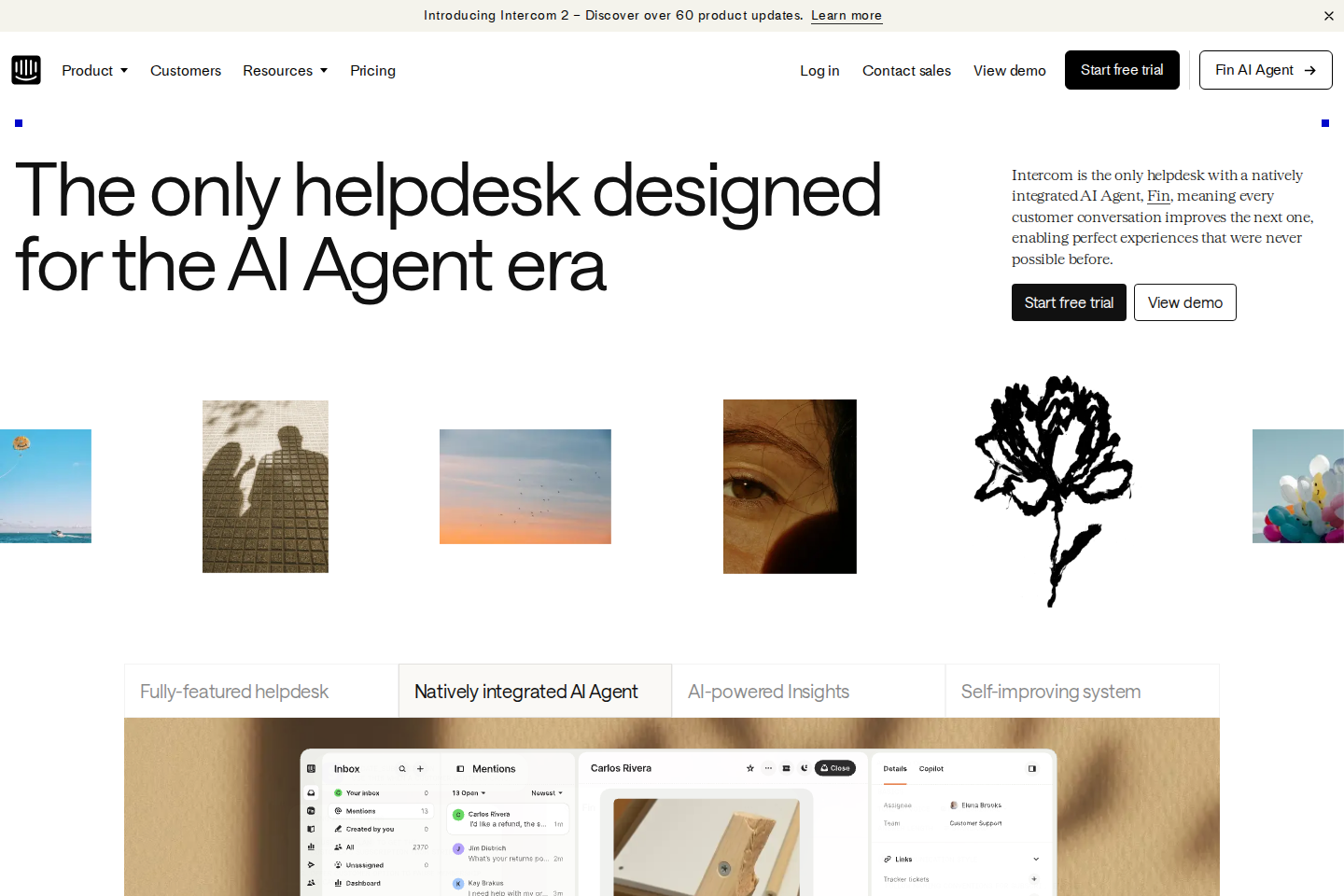
Intercom Fin is the cleanest Sierra alternative for companies that already run customer support inside Intercom. Its website positions Fin as a customer-service AI agent for complex queries across channels, with procedures, knowledge, testing, deployment, and analysis inside the Fin operating model. The biggest advantage is focus: Fin is not trying to be every enterprise CX transformation at once. The limitation is also focus: it is tied to support resolution and Intercom’s ecosystem, not a standalone revenue conversion layer.
Choose Intercom Fin if your support team already uses Intercom and wants an AI agent embedded in that workflow. Choose Thoughtly if your revenue team needs to work CRM leads, not just resolve support conversations.
Intercom publicly documents outcome pricing for Fin and paid add-ons. Verify the current per-resolution price, platform plan, seats, add-ons, and channels before comparing against Sierra or Thoughtly.
Screenshot note: local browser capture was blocked or rendered a security/cookie overlay during this run, so I omitted the image rather than publishing a bad screenshot.
Zendesk AI is a practical Sierra alternative for companies that already rely on Zendesk as their service platform. Its AI pages position Zendesk around an AI-first service platform, resolution quality, reporting, analytics, marketplace integrations, actions, governance, and trust. The advantage is obvious: many support teams do not need a separate enterprise CX agent platform if their existing helpdesk is already where tickets, agents, knowledge, and reporting live. The tradeoff is that Zendesk remains service-platform-first, not lead-conversion-first.
Choose Zendesk AI if your service team already runs on Zendesk and wants to modernize ticket resolution, agent assist, and support automation. Choose Thoughtly if the business problem starts before a ticket exists: new demand enters the CRM and needs immediate conversion.
Zendesk publishes plan pricing for core suites, with AI capabilities and add-ons varying by package. Confirm the current suite, AI add-ons, usage limits, seats, and implementation requirements.
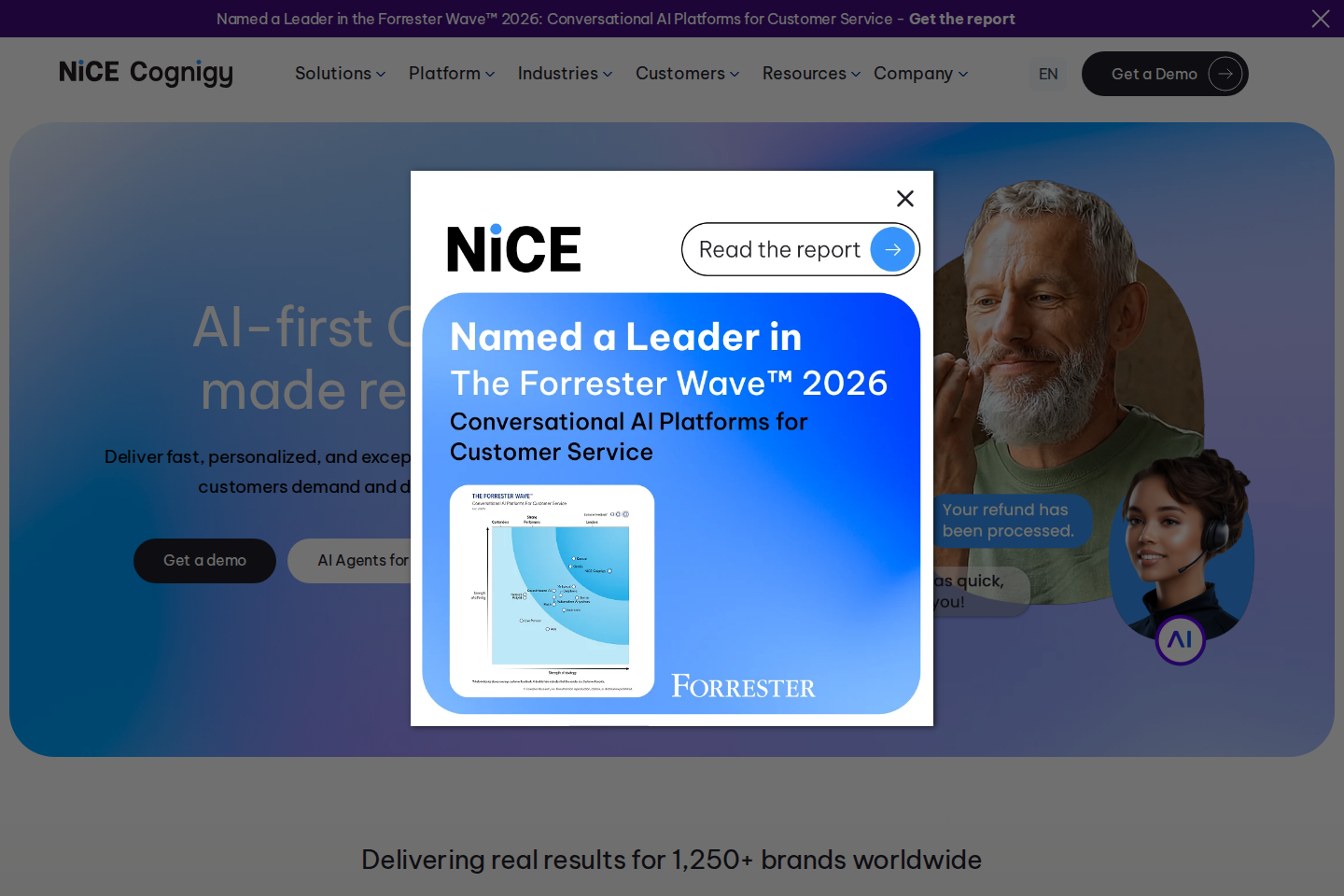
Cognigy is a strong Sierra alternative for enterprise CX teams that want a broad conversational AIConversational AIConversational AI is software that interprets natural language and produces context-aware responses through voice, messaging, or chat. platform spanning voice, chat, agent assist, knowledge, analytics, and contact-center integrations. Its site positions the platform as AI-first CX for 1,250+ brands worldwide. That makes it a better fit for contact-center transformation than for a narrow lead-conversion workflow. If the buyer is RevOps, Cognigy may be more platform than the problem requires.
Choose Cognigy if your team needs enterprise conversational AI across service channels and contact-center systems. Choose Thoughtly if the job is getting every inbound lead worked, qualified, booked, transferred, and recorded in the CRM.
Contact Cognigy for pricing. Ask about platform fees, implementation services, channel costs, LLMLarge Language Model (LLM)A large language model (LLM) is a machine-learning model trained on large text collections to interpret and generate language from prompts and context./usage costs, CCaaS integrations, and support.
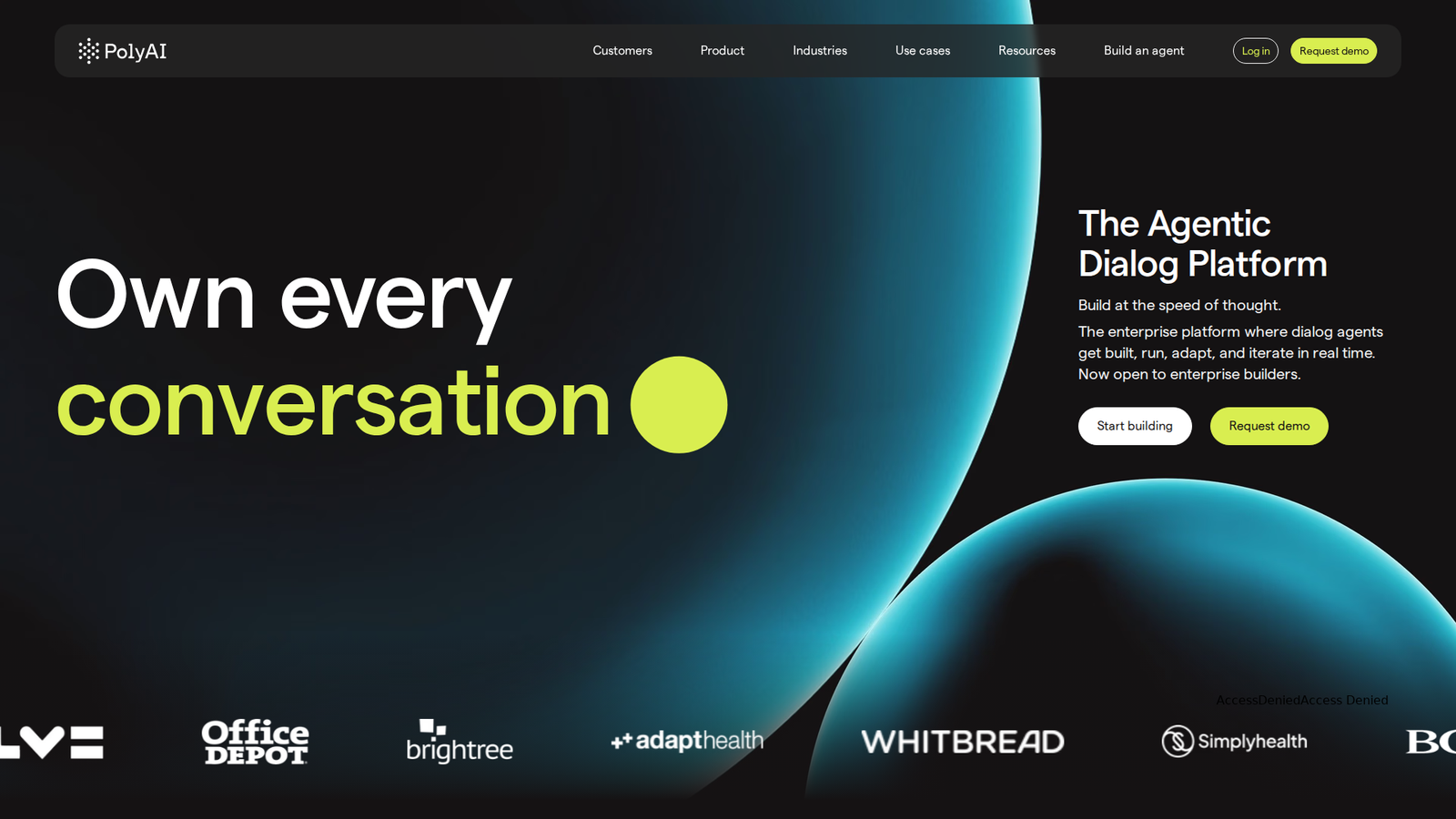
PolyAI is a dialog-agent platform built around enterprise customer engagement, especially phone conversations. Its website describes an Agentic Dialog Platform where dialog agents are built, run, adapted, and governed in real time. It is a credible Sierra alternative for service contact centers that want better voice automation or IVRIVRIVR, or Interactive Voice Response, is a phone menu that routes or serves callers through keypad entries or spoken choices. replacement. It is not the obvious choice when the outcome is revenue conversion instead of support containment.
Choose PolyAI if your priority is enterprise phone service automation. Choose Thoughtly if your priority is reaching every inbound lead before competitors do and handing qualified conversations to a human with full CRM context.
Contact PolyAI for pricing. Ask about platform fees, implementation, voice minutes, CCaaS integrations, analytics, and ongoing optimization support.
A lead-conversion platform should prove it can read the lead sourceLead sourceLead source identifies the channel, campaign, marketplace, partner, form, or referral that generated an inquiry., call quickly, continue across channels, qualify fit, book or warm-transfer, and write the outcome back to the CRM. If a vendor starts the conversation with service tickets, deflection, containment, or agent assist, it may still be excellent software — just not for this job.
For insurance, mortgage, real estate, education enrollment, healthcare, home services, automotive, financial services, and legal intakeLegal intakeLegal intake captures a potential client’s matter details, urgency, location, eligibility, and preferred next step before routing. teams, the expensive failure mode is not “the bot answered one support question poorly.” It is “we paid for the lead, then nobody reached them while intent was hot.”
Sierra, Decagon, Ada, Intercom Fin, Zendesk AI, Cognigy, and PolyAI all have stronger cases when the buyer owns support, CX, service operations, or contact-center automation. They help with knowledge resolution, queue pressure, agent assist, containment, QA, and post-purchase customer journeys.
That is a different operating model from inbound revenue coverage. A clean evaluation separates the two before demos begin, otherwise every vendor looks plausible and the spreadsheet becomes decorative.
Ask for pricing minimums, implementation services, integration responsibilities, production timeline, channel costs, AI usage costs, support model, fallbackFallbackA fallback is a safe alternate path used when input is unexpected, a tool fails, or the agent cannot complete the intended step confidently. behavior, reporting schema, and references from teams with your exact funnel stage. If the vendor cannot show how a new lead gets called, texted, emailed, booked, transferred, and updated in your CRM, do not let a polished CX demo distract you.
For Sierra specifically, verify whether you are buying an enterprise CX agent engagement or a repeatable workflow your team can operate this quarter. Both can be valid. Only one is likely to fix speed-to-lead.
Thoughtly is the best Sierra alternative when the job is converting opted-in inbound leads across voice, SMS, email, booking, warm transfer, and CRM write-backCRM write-backCRM write-back sends conversation outcomes, qualification answers, notes, appointments, dispositions, and next steps into the CRM.. Sierra is better framed as an enterprise CX agent platform for post-purchase customer experience.
Common reasons include pricing opacity, enterprise implementation scope, CX ownership mismatch, or a need for a narrower platform. Some buyers want customer-service automation inside Intercom or Zendesk; others want phone-first service automation; revenue teams usually need fast CRM-first lead conversion.
It depends on the operating model. Sierra is a white-glove enterprise CX agent platform, Decagon is an AI-native customer-support platform, and Ada is a mature customer-service automation platform. The right choice depends on channels, implementation ownership, support volume, pricing tolerance, and whether the KPI is service resolution or revenue conversion.
Thoughtly can replace Sierra only when the intended use case is inbound lead conversion, appointment settingAppointment settingAppointment setting captures availability, confirms fit, and books a qualified prospect on the correct calendar without requiring manual chasing., lead re-engagement, or CRM-first revenue follow-up. If the intended use case is post-purchase support, returns, account management, or broad customer-service automation, Sierra or another CX platform may be the better fit.
Ask what the platform is truly optimized for, who owns implementation, how pricing scales, how channels share context, how CRM or helpdesk write-back works, how human handoffHuman handoffHuman handoff transfers a conversation, context, and next action from an automated agent to a person. is handled, and which references match your exact use case. Ask for the pricing floor before the second demo. Everyone will survive.
Thoughtly product overview, pricing, integrations, docs, and Thoughtly vs Sierra comparison.
Sierra homepage and customer pages.
Decagon, Ada, Intercom Fin, Zendesk AI, Cognigy, and PolyAI official pages.
Independent pricing, review, and comparison references from My AskAI, Featurebase, Lorikeet, TrustRadius, G2, and Reddit discussion results where publicly available.


