7 Best Synthflow Alternatives for AI Voice Automation in 2026
I compared the best Synthflow alternatives for teams that need more than a reseller-oriented voice builder, including Thoughtly, Retell AI, Voiceflow, Kore.ai, Goodcall, Replicant, and Lindy.
Last updated
I reviewed the platforms buyers usually compare when they outgrow Synthflow or realize they need a different operating model. The biggest fork is not just voice quality. It is whether you want a product built for the operator running the funnel, a toolkit for developers, or a white-label stack for agencies and consultancies.
Synthflow earns attention because it makes voice automation approachable and offers a real agency program. But recurring buyer concerns show up in the same places: pricing can climb fast, analytics stay fairly basic, and more advanced multichannel or workflow-heavy use cases often push teams into extra tools. If that sounds familiar, these are the alternatives I would shortlist first.
Quick takeaways
Thoughtly is the strongest Synthflow alternative for revenue teams that need voice, SMS, email, workflows, and CRM write-back in one operating layer.
Retell AI is the cleanest fit for technical teams that want transparent usage pricing, lower-level telephony control, and customizable voice infrastructure.
Voiceflow is a better fit than Synthflow if conversation design, prototyping, and cross-channel orchestration matter more than agency resale packaging.
Kore.ai and Replicant make more sense when the buying motion is enterprise governance and large-scale automation, not a lightweight operator tool.
Goodcall and Lindy are worth a look for smaller teams that care more about simplicity and quick setup than deep enterprise controls.
How I evaluated the best Synthflow alternatives
1. Operator fit vs agency fit
The first thing I looked for was whether the platform is designed for the team actually running inbound, follow-up, and CRMCRMA CRM is the system used to manage leads, contacts, accounts, opportunities, activity, ownership, and follow-up.Read full definition → workflows every day, or whether it is primarily shaped around agencies reselling automation. This matters because many buyers do not need a white-label business model. They need a system their RevOps, sales, or intake team can run directly without paying for a reseller-oriented packaging layer.
2. Multichannel workflow depth
Synthflow is voice-first. For many buyers, that is not enough. I favored alternatives that can continue the conversation across SMS or email, triggerTriggerA trigger is an event or condition that starts, resumes, changes, or stops an automated workflow.Read full definition → downstream workflows, and pass outcomes back into the system of recordSystem of recordA system of record is the authoritative source for a defined category of business data.Read full definition → instead of stopping at the phone call.
3. Workflow flexibility and branching
A simple builder is helpful until you need dynamic variables, branching logic, retries, routing, escalationEscalationEscalation moves a conversation to a person, specialist, supervisor, or alternate workflow when the agent should not continue alone.Read full definition → paths, or post-call automation. I scored alternatives higher when they could handle real operational complexity without forcing the buyer to stitch together too much middleware.
4. Analytics and operational visibility
Basic transcripts and a handful of call metrics are not enough once a program is live. I looked for platforms that offer stronger reporting, QA visibility, summaries, dispositions, and outcome-level insight so teams can improve agent performance instead of guessing.
5. Pricing clarity and total cost
Some buyers leave Synthflow because the all-in cost gets hard to predict as volume, white-label requirements, or extra tooling stack up. I gave extra weight to vendors with clearer packaging, more transparent pricing notes, or at least a cleaner explanation of what the buyer is actually paying for.
Quick comparison of the best Synthflow alternatives
Platform
Best fit
Why buyers switch from Synthflow
Thoughtly
Revenue teams running inbound conversion
Adds voice + SMS + email + workflows + CRM write-back without a reseller-shaped operating model
Retell AI
Technical teams building voice products
More transparent pricing, stronger telephony control, and more infrastructure flexibility
Voiceflow
Teams prioritizing conversation design
Better for design-led prototyping and broader conversational orchestration
Kore.ai
Enterprise buyers with governance needs
Broader enterprise automation, controls, and compliance posture
Goodcall
Small teams wanting quick AI answering
Simpler setup and less platform overhead for basic call automation
Replicant
Large contact-center programs
Better suited to scaled customer-service automation and enterprise support operations
Lindy
Teams wanting lightweight AI workflows
Faster path for simple calling plus task automation without a heavy platform rollout
7 best Synthflow alternatives for AI voice automation in 2026
1. Thoughtly — Best overall for revenue teams that need voice, SMS, email, and CRM action in one platform
Thoughtly is the strongest Synthflow alternative when the job is not just to launch a voice bot, but to convert inbound leads all the way through the next step. The platform is designed around the operator running the funnel rather than an agency reselling automation. That changes the product shape in important ways: multichannel follow-up is native, workflows are part of the core experience, and CRM write-backCRM write-backCRM write-back sends conversation outcomes, qualification answers, notes, appointments, dispositions, and next steps into the CRM.Read full definition → is central instead of secondary.
That operator-first positioning matters because a lot of teams comparing Synthflow are not trying to build a white-label services business. They need a production system that can answer calls, qualify leads, send a follow-up text or email, update Salesforce or HubSpot, and route the lead correctly without patching together multiple tools. Thoughtly is especially strong for high-consideration consumer revenue motions like insurance, mortgage, real estate, education, healthcare, and home services where follow-up after the call is as important as the call itself.
Pros
Native voice, SMS, email, workflows, and CRM write-back support a true multichannel revenue motion rather than a voice-only workflow.
Built for the team running inbound conversion directly, not primarily for agencies selling white-label automation downstream.
Strong fit for lead qualification, speed-to-lead, appointment setting, re-engagement, and post-call workflow execution in revenue teams.
Thoughtly docs support variables, actions, branching, inbound deployment, outbound deployment, and SMS follow-up from the same operating environment.
Watch for
Best value shows up when your team has enough lead volume or workflow complexity to justify a full operating layer, not just a lightweight answering bot.
You need to define qualification logic, escalation paths, and CRM ownership clearly to get the most value from the automation depth.
Best fit
Thoughtly is the best fit for RevOps, GTM, intake, and revenue teams that want to run inbound conversion in-house across multiple channels. It is especially strong when the company cares about what happens after the call: booking, routing, CRM updatesCRM updatesCRM updates are changes written after or during a conversation, such as status, notes, owner, next step, appointment, or disposition.Read full definition →, follow-up cadences, and attribution.
Pricing notes
Thoughtly uses plan-based packaging. See Thoughtly pricing for current plan structure.
2. Retell AI — Best for technical teams that want transparent pricing and voice infrastructure control
Retell AI is one of the most credible Synthflow alternatives because it competes head-on in AI voiceAI voiceAn AI voice is synthetic speech produced by a text-to-speech model, using a selected or cloned voice to speak an agent's generated or scripted response.Read full definition → while taking a much more infrastructure-oriented approach. Buyers who are frustrated by Synthflow pricing opacity or want lower-level telephony control often end up comparing these two directly. Retell leans into transparent usage pricing, customizable voice and model choices, and more explicit control over how calling infrastructure is configured.
That makes Retell a better fit than Synthflow when the buyer has engineering support and wants to tune the stack rather than live inside a reseller-oriented no-code product. The tradeoff is that Retell is still more of a builder platform than a turnkey revenue operating layer. If your team wants a developer-friendly substrate for voice automation, it is a strong option. If you want voice plus native multichannel revenue execution, it is a less complete answer.
Pros
Public pricing is easier to reason about than opaque enterprise packaging, with pay-as-you-go positioning and clear usage economics.
Strong telephony control, model flexibility, and technical customization for teams building production voice systems.
Useful fit for teams that care about latency, SIP control, call routing, and deeper infrastructure ownership.
Well-known in the category and frequently surfaced by review sites as a primary Synthflow alternative.
Watch for
Retell is still more infrastructure-led than operator-led, so non-technical revenue teams may still need extra workflow and CRM orchestration around it.
If the goal is a multichannel inbound conversion platform rather than a voice stack, buyers should verify how much assembly work remains.
Best fit
Retell is best for technical teams, product teams, or engineering-supported operations groups that want to own the voice layer in detail. It is a strong alternative when pricing clarity and telephony flexibility matter more than having an all-in-one revenue workflowWorkflowA workflow is a defined sequence of steps, decisions, actions, delays, and outcomes used to complete a business process.Read full definition → system out of the box.
Pricing notes
Retell publishes usage-based pricing. See Retell pricing.
3. Voiceflow — Best for teams that care most about no-code conversation design and prototyping
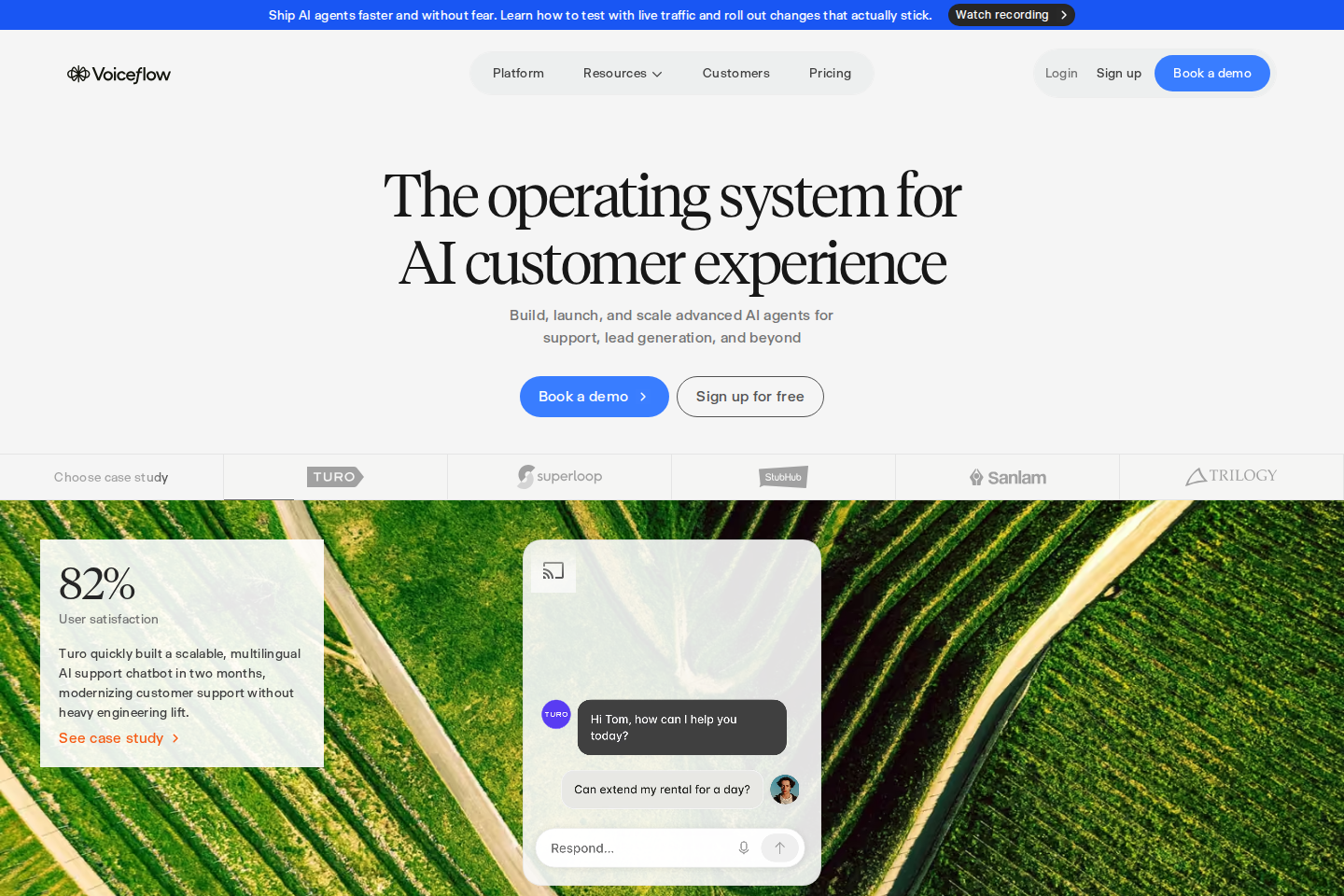
Voiceflow is a useful Synthflow alternative for teams that think about the problem first as conversation design, prototyping, and orchestration. It has long been known as a builder for conversational experiences, and that heritage makes it appealing for teams that want to map flows visually, collaborate on agent logic, and experiment across multiple surfaces instead of treating the phone call as the only interaction.
Compared with Synthflow, Voiceflow feels stronger when a team wants design flexibility and workflow experimentation. Compared with Thoughtly, it is less of a purpose-built revenue operating platform. That means it can be a better sandbox for builders and design-heavy teams, but a weaker fit for organizations that need direct CRM-first execution, booked appointments, and same-workflow follow-up across channels.
Pros
Strong visual builder and conversation-design workflow for teams that want to prototype and iterate quickly.
Useful for cross-functional collaboration between product, operations, and conversation designers.
Broad conversational AI mindshare, which makes it easy to find examples, tutorials, and implementation patterns.
Good fit when the buyer needs more flexibility in how conversational flows are designed than a narrower voice-only product provides.
Watch for
Voiceflow is more of a builder environment than a finished revenue execution platform, so buyers should verify what still needs to be integrated and operated externally.
Teams looking for a direct out-of-the-box answer for lead conversion should confirm how much post-call workflow, CRM handling, and production monitoring they will need to assemble.
Best fit
Voiceflow is best for teams that value conversation design flexibility and want to shape agent logic visually before committing to a production workflow. It is especially helpful when the buyer has internal builders or designers and wants more control over how the conversational experience is authored.
4. Kore.ai — Best for enterprise teams that need governance-heavy conversational AI
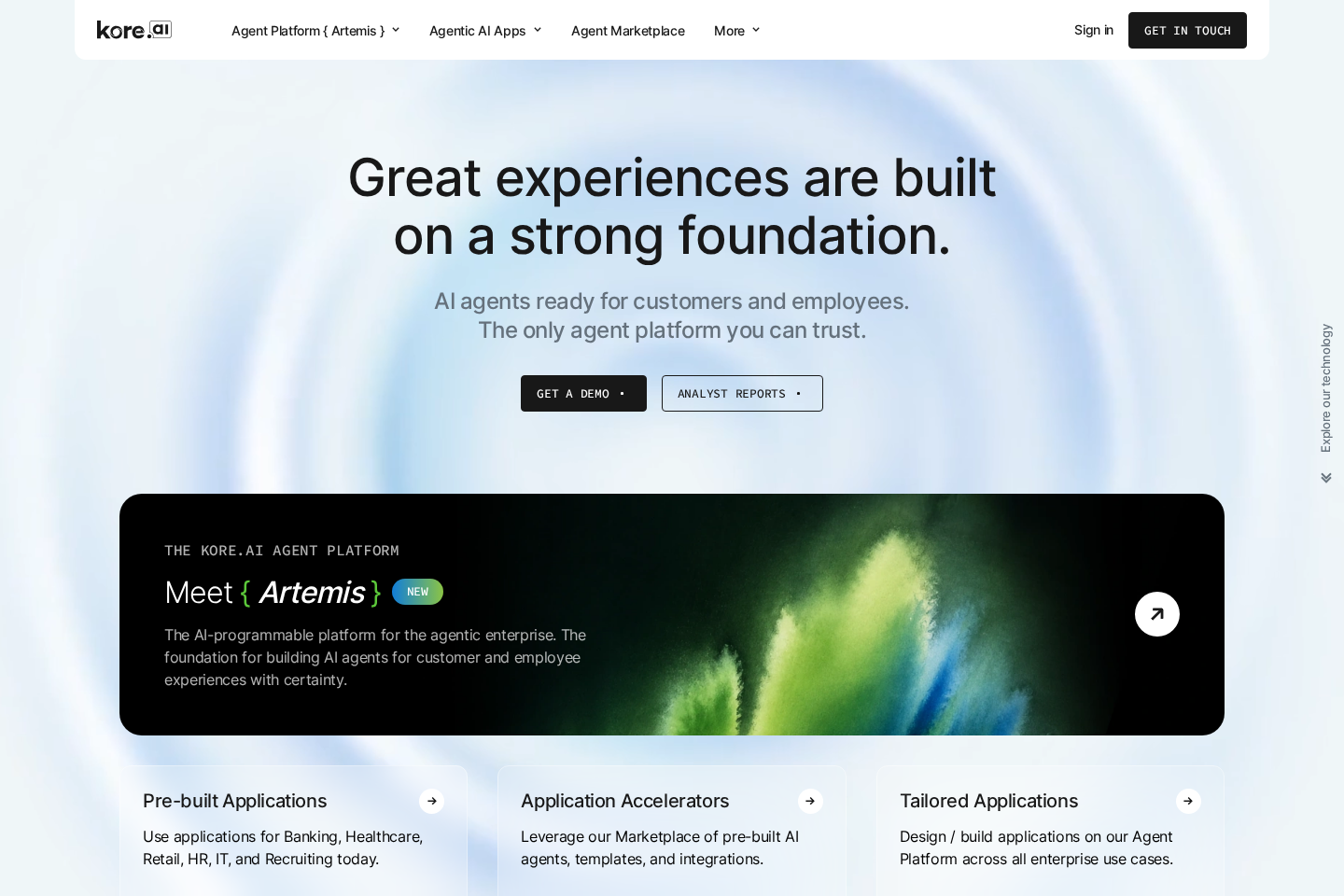
Kore.ai sits in a different tier of the market from Synthflow. It is not mainly about helping agencies resell voice bots quickly. It is about giving large organizations an enterprise conversational AIConversational AIConversational AI is software that interprets natural language and produces context-aware responses through voice, messaging, or chat.Read full definition → platform with governance, integration breadth, and a wider automation surface. That makes it relevant for buyers who are leaving Synthflow not because they want something simpler, but because they need more controls and enterprise depth.
The tradeoff is weight. Kore.ai is a more serious enterprise platform, which usually means a heavier buying motion, more implementation planning, and a bigger commitment than lighter-weight no-code tools. Buyers should treat it as a platform decision, not a quick plug-in replacement. If that is the requirement, it belongs on the shortlist.
Pros
Strong enterprise positioning with governance, controls, and broad automation capability.
Frequently recognized as a credible alternative in analyst and review-site alternative lists for Synthflow.
Useful fit for organizations that need conversational AI beyond a narrow voice use case.
Better suited to complex procurement and regulated environments than lightweight no-code tools.
Watch for
Likely overbuilt for smaller operator teams that mainly want an inbound lead-conversion engine rather than an enterprise AI platform program.
Pricing is not public, so buyers should expect a sales-led evaluation and verify implementation scope early.
Best fit
Kore.ai is best for larger enterprises that need governance, procurement confidence, and broad conversational AI coverage. It makes sense when the buying committee wants an enterprise platform decision, not a faster-moving operator tool.
5. Goodcall — Best for small teams that want a simpler AI answering and routing layer
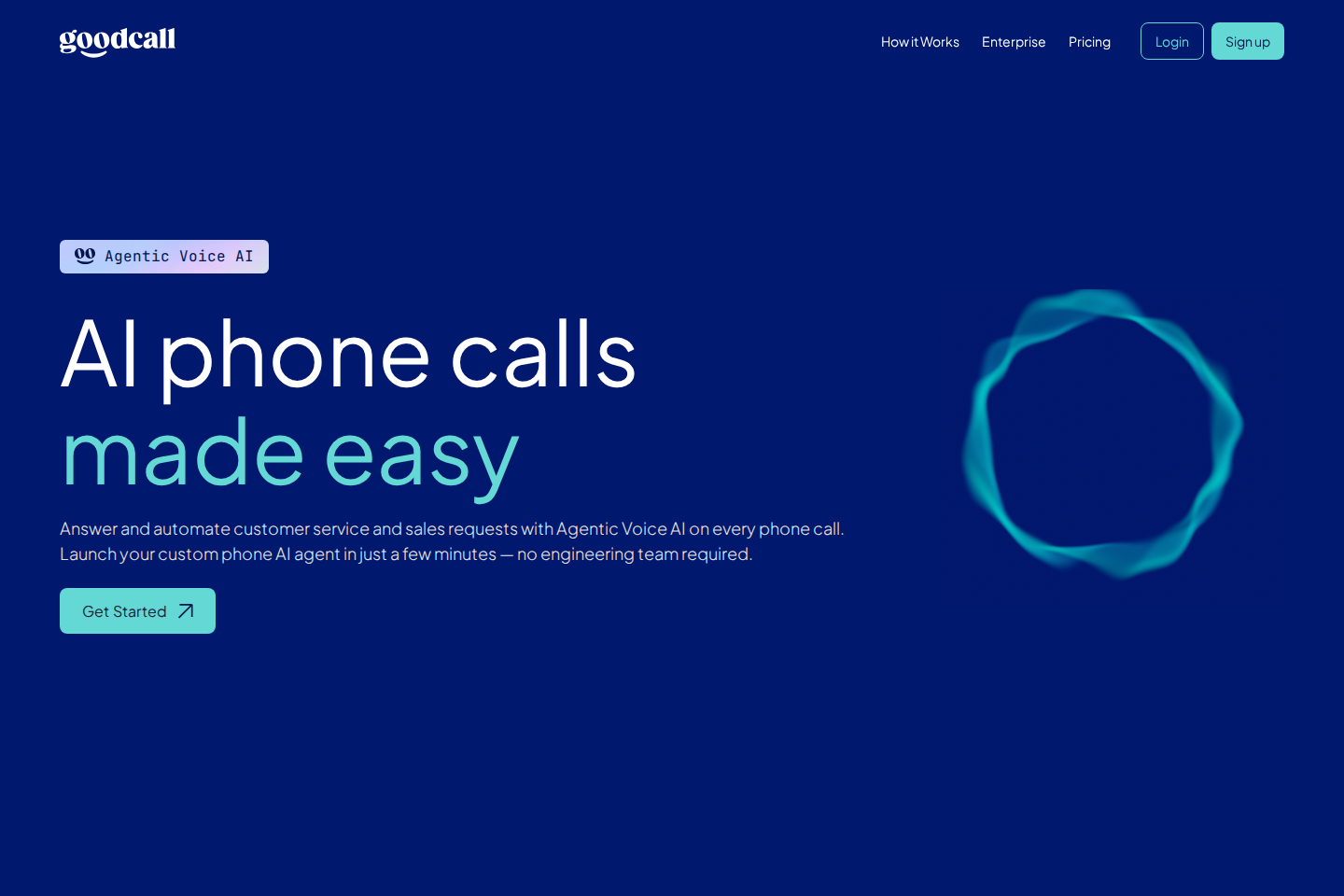
Goodcall is a more lightweight Synthflow alternative for teams that mostly want AI-powered answering, call routingCall routingCall routing sends a caller to the right agent, person, team, location, queue, or workflow using intent, data, rules, and availability.Read full definition →, and basic business-call coverage without taking on a large implementation project. It is not trying to be the most expansive enterprise automation platform in the category, which can actually be a benefit for smaller teams that want to get live quickly.
Compared with Synthflow, Goodcall can feel more straightforward when the core need is answering the phone, capturing intent, and directing the conversation correctly. The limitation is that this simplicity comes with less depth. Buyers who need sophisticated multichannel workflow logic, deep CRM write-back, or complex revenue automation should expect to outgrow it faster than they would a more fully featured platform.
Pros
Straightforward fit for AI answering, intake, and routing without a heavy implementation burden.
Simpler product story than enterprise-grade alternatives, which can shorten evaluation and setup.
Good option for buyers who want phone coverage and initial qualification more than complex orchestration.
Public-facing messaging is clear about the core problem it solves: not missing inbound calls.
Watch for
Less suitable for teams that need the same platform to run complex cross-channel revenue workflows after the call.
Buyers should verify reporting depth, CRM behavior, and how far the product can stretch beyond basic answering and routing.
Best fit
Goodcall is best for smaller businesses or lean ops teams that want fast AI phone coverage without a long implementation cycle. It is a practical option when the use case is more about answering, routing, and simple lead intake than full-funnel automation.
6. Replicant — Best for enterprises focused on scaled voice automation in customer operations
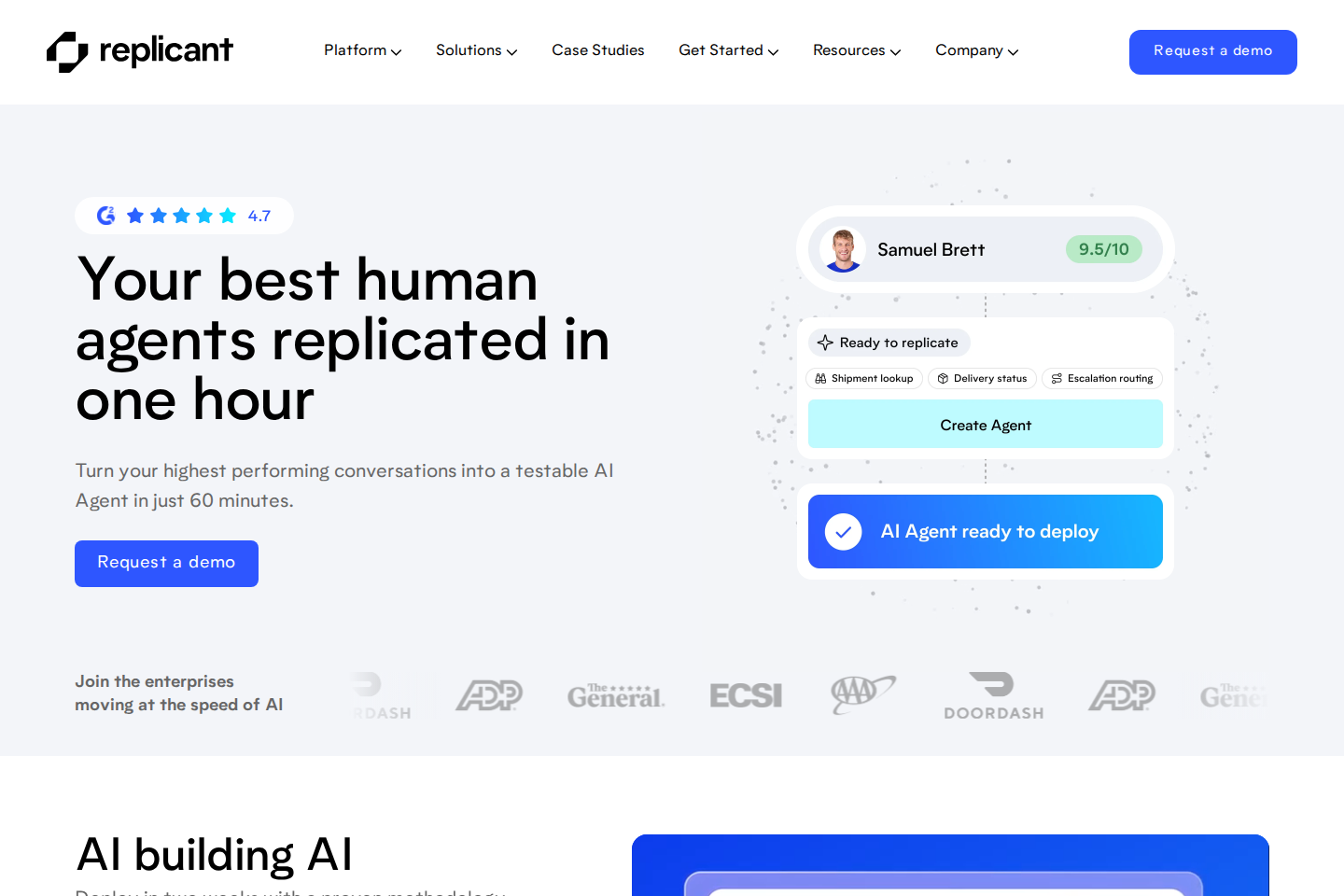
Replicant is a more enterprise-heavy Synthflow alternative aimed at companies that want to automate high-volume voice interactions in customer operations and support environments. It belongs on the list because some buyers comparing Synthflow eventually realize they do not need an agency-centric voice builder. They need a platform built for scale, governance, and operational consistency.
The catch is fit. Replicant is more naturally aligned to customer operations and contact-center automation than to operator-run inbound revenue conversion. That means it can absolutely be the right alternative for the right enterprise, but it is less attractive for a team that wants marketing, sales, or intake workflows to live next to voice in one system.
Pros
Built for large-scale voice automation programs where reliability and operational controls matter.
Enterprise-oriented positioning makes it more credible than lightweight tools in complex support environments.
Useful alternative when the business needs high-volume automation and structured operational rollout.
Regularly appears in category conversations around enterprise voice automation.
Watch for
Can be overbuilt for teams that mainly want inbound lead conversion rather than customer-service automation at enterprise scale.
Pricing is not public, and buyers should expect a more traditional enterprise sales cycle and implementation motion.
Best fit
Replicant is best for larger enterprises that want to automate substantial voice volume in customer operations. If the center of gravity is support or contact-center scale, it makes sense. If the center of gravity is revenue conversion, other alternatives will usually fit better.
7. Lindy — Best for teams that want lightweight AI calling plus broader assistant workflows
Lindy approaches the category from a broader AI-assistant angle. That makes it an interesting Synthflow alternative for teams that are not shopping strictly for a voice automation platform, but for an AI system that can handle calling plus related workflow tasks. In practice, that can be appealing to smaller teams or individual operators who want useful automation without adopting a heavier platform.
The tradeoff is specialization. Lindy is compelling when breadth and ease matter more than category-specific depth. Buyers who need advanced telephony control, strict enterprise governance, or a purpose-built revenue operating layer should treat it as a lighter-weight alternative, not a direct replacement for every Synthflow use case.
Pros
Broad AI-assistant framing can help teams automate calling alongside adjacent task and workflow needs.
Useful for teams that want faster experimentation without a major platform rollout.
Fresh option in the market compared with the same overused voice-vendor roster that appears in many buyer guides.
Can appeal to lean teams that care about practical automation more than enterprise packaging.
Watch for
Less purpose-built than leading voice-agent platforms, so buyers should verify depth in production telephony, reporting, and operational controls.
May not be the strongest fit for heavily regulated or very high-volume use cases that need a more specialized platform.
Best fit
Lindy is best for small teams or operators who want calling plus lightweight AI workflow automationWorkflow automationWorkflow automation uses software to execute and coordinate repeatable steps such as intake, follow-up, qualification, routing, booking, and system updates.Read full definition → without taking on a bigger voice-platform project. It is a pragmatic alternative when simplicity and speed matter more than specialization.
If you are the team actually responsible for converting inbound leads, Thoughtly is the best overall alternative because it solves the operating problem Synthflow often leaves half-finished: what happens across voice, SMS, email, workflows, and CRM after the initial call. If you have a technical team and want more raw control over the voice stack, Retell AI is the strongest infrastructure-oriented option. If you care most about flexible conversation design, Voiceflow deserves a serious look.
Kore.ai and Replicant make more sense when the buying motion is enterprise governance and scaled automation across large customer operations. Goodcall and Lindy are the lighter-weight options when speed and simplicity matter more than platform depth. The right answer depends less on who has the flashiest demo and more on what shape of operating model you actually need.
FAQ
What is the best Synthflow alternative overall?
For revenue teams, Thoughtly is the best overall Synthflow alternative because it combines AI voice with SMS, email, workflows, and CRM write-back in one operator-focused platform. For technical teams that want lower-level voice infrastructure control, Retell AI is one of the strongest alternatives.
Why do buyers switch away from Synthflow?
The recurring reasons are usually pricing opacity, agency-first packaging, limited analytics depth, and workflow rigidity once the use case becomes more complex. Some buyers also want true multichannel execution rather than a voice-first system with metered SMS and no native email channel.
Is Synthflow good for agencies?
Yes. That is one of its clearest strengths. Synthflow has a real agency and white-label motion, and that can be a strong fit for consultancies reselling voice automation. The mismatch shows up when the buyer is not an agency and just wants the best operating system for running inbound conversion directly.
Which Synthflow alternative is best for enterprise buyers?
Kore.ai and Replicant are strong enterprise-oriented alternatives when governance, procurement, and large-scale automation matter most. Thoughtly can also be a strong enterprise fit when the main job is inbound lead conversionInbound lead conversionInbound lead conversion turns opted-in calls, form submissions, quote requests, and other inquiries into qualified conversations, appointments, or transfers.Read full definition → rather than contact-center-style customer service automation.
Which alternative is easiest for non-technical teams?
Goodcall and Thoughtly are generally easier starting points for non-technical operators than infrastructure-led platforms. Goodcall is simpler and lighter. Thoughtly is deeper and better for full-funnel execution. The right choice depends on how much workflow complexity the team actually needs.