

Industry insights
Best Talkdesk Alternatives for AI Call Centers in 2026
Compare the best Talkdesk alternatives for AI call centers, inbound lead conversion, enterprise CCaaS, phone systems, and revenue follow-up workflows.
Industry insights
Compare the best Talkdesk alternatives for AI call centers, inbound lead conversion, enterprise CCaaS, phone systems, and revenue follow-up workflows.
Last updated
Talkdesk is a serious cloud contact centerContact centerA contact center is a centralized operation that handles customer or prospect interactions across voice and digital channels. platform, but it is not the right answer for every team that says it needs an AI call center. The usual switching triggerTriggerA trigger is an event or condition that starts, resumes, changes, or stops an automated workflow. is not that Talkdesk cannot route calls or support a service queue. It is that the buyer realizes the real job is different: convert inbound leads quickly, coordinate voice with SMS and email, write outcomes back to the CRMCRMA CRM is the system used to manage leads, contacts, accounts, opportunities, activity, ownership, and follow-up., and avoid turning every change into a contact-center administration project.
I evaluated Talkdesk alternatives through that lens: which platforms are strongest for AI-assisted service operations, which ones are better for classic CCaaS, and which ones are built for revenue teams trying to reach every opted-in lead before intent fades. Thoughtly is first because its product shape is different from Talkdesk: it is an AI-native lead conversion layer, not a seat-based contact center suite with AI added around the edges.
I looked for platforms that can do more than answer or deflect calls. Strong options can trigger from a CRM or form fill, call quickly, continue by SMS or email when voice misses, qualify intent, book or transfer, and write the result back to the revenue system.
A credible AI call center alternative needs production automation, not just transcriptionSpeech-to-Text (STT)Speech-to-Text (STT) converts spoken audio into text that a voice agent can interpret, store as a transcript, and use in downstream actions. or agent assist. I weighted autonomous workflows, natural voice handling, routing logic, analytics, and whether AI is part of the core product or an add-on that still assumes a human rep at the center.
Talkdesk is strongest when contact-center administrators own the workflowWorkflowA workflow is a defined sequence of steps, decisions, actions, delays, and outcomes used to complete a business process.. For revenue teams, the better fit is often a system RevOps can own directly: native CRM read/write, campaign source context, routing rulesRouting rulesRouting rules decide where a lead, call, appointment, or task goes using criteria such as intent, location, urgency, language, licensing, ownership, or availability., and reporting that sales and marketing can act on without a separate CCaaS layer.
AI call-center projects fail when every script change, routing update, or integration tweak requires a services ticket. I favored platforms that can be launched and tuned quickly, while still giving enterprise teams the governance, compliance, and reporting they need.
Talkdesk publishes seat-based pricing that starts at $85 per user per month for digital and $105 per user per month for voice, with higher tiers for workforce management and industry packages. I compared that against usage-based, quote-based, and SMB-friendly models because the right answer changes when the bottleneck is lead coverage rather than staffed seats.
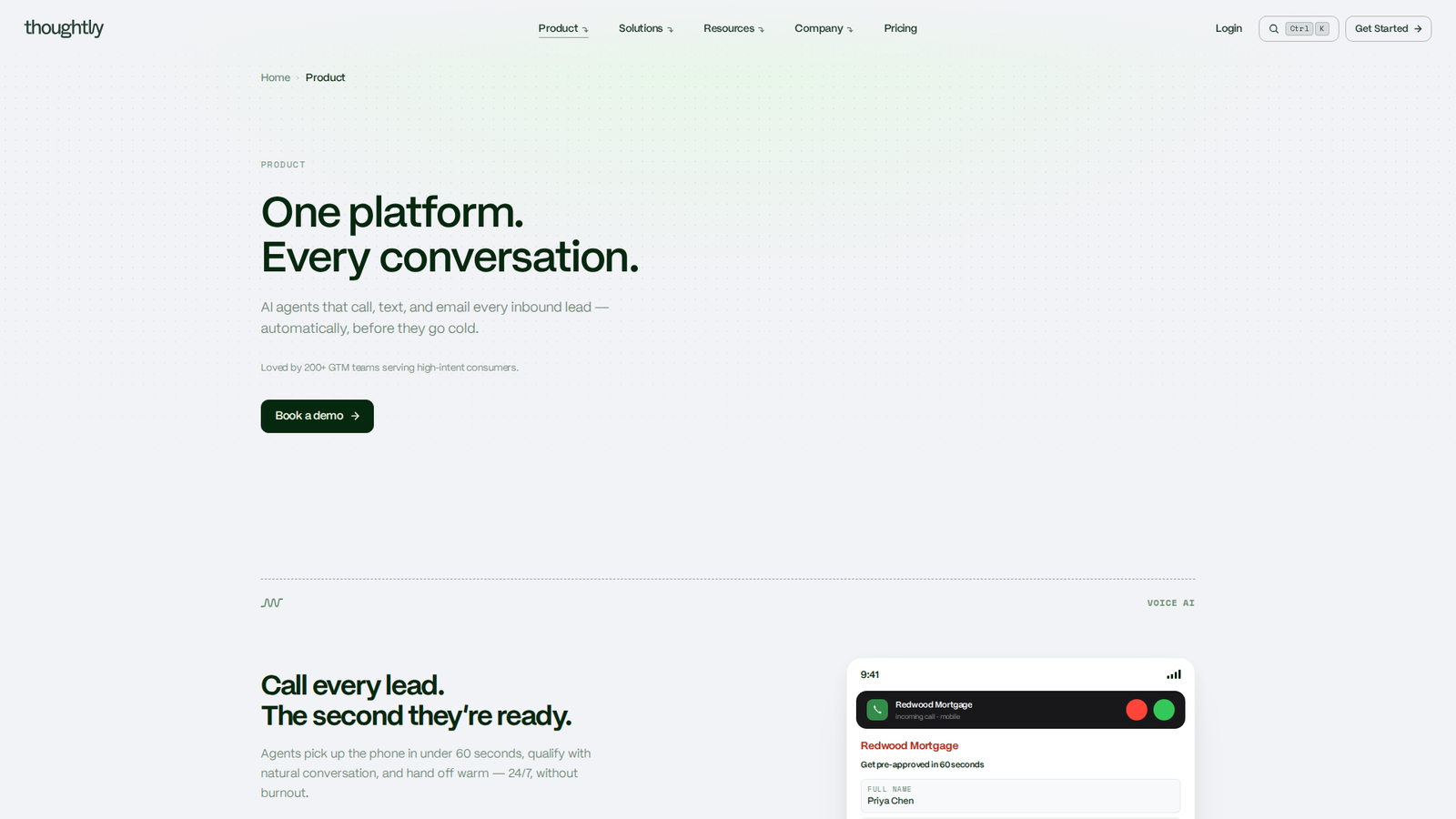
Thoughtly is the best Talkdesk alternative when the problem is not “we need a better service desk,” but “we are losing leads after they already raised their hand.” It calls every inbound lead quickly, then keeps the same agent context across SMS, email, workflows, and CRM updatesCRM updatesCRM updates are changes written after or during a conversation, such as status, notes, owner, next step, appointment, or disposition.. That matters for insurance, mortgage, real estate, healthcare, education, home services, automotive, and other high-consideration funnels where the first team to reach the lead often wins. Compared with Talkdesk, Thoughtly is less about staffing a contact center and more about turning the CRM into an active conversion engine.
Choose Thoughtly when the expensive gap is speed-to-lead, missed-call recoveryMissed-call recoveryMissed-call recovery reconnects with a caller who reached the business but did not connect with the intended person or team., aged-lead reactivation, appointment settingAppointment settingAppointment setting captures availability, confirms fit, and books a qualified prospect on the correct calendar without requiring manual chasing., or warm handoff. It is strongest when sales, marketing, and RevOps need every lead worked automatically while humans focus on qualified conversations.
Thoughtly pricing is per minute, with customer success support for build, launch, and optimization.
Talkdesk remains a credible option for teams that want a full contact center suite and are comfortable operating inside a CCaaS model. Its current positioning centers on customer experience automation, AI agents, routing, analytics, workforce tools, and industry clouds. The platform is a better fit for CX leaders managing staffed service operations than for revenue teams whose core KPI is converting fresh leads. If your existing Talkdesk deployment works and your next priority is incremental AI inside the same stack, replacing it may not be necessary.
Keep Talkdesk when the buyer is CX, the queue is staffed, and success is measured through service levels, containment, workforce adherence, and agent productivity. Look elsewhere when the real problem is reaching new leads in seconds across channels without adding another contact-center layer.
Talkdesk publishes Digital Essentials at $85/user/month, Voice Essentials at $105/user/month, Elite at $165/user/month, and Industry Experience Clouds at $225/user/month in the U.S. pricing page.
Five9 is a long-standing enterprise CCaaS platform for inbound, outbound, blended, and omnichannelOmnichannelOmnichannel is a coordinated customer journey in which context and state carry across voice, SMS, email, web, and human interactions. contact-center operations. It belongs on a Talkdesk alternatives list because the buyer motion is similar: enterprise teams comparing routing, agent desktops, analytics, workforce tools, AI, and integrations. Five9 can be strong when you already have a large staffed contact center and need a broader operating system for agents and supervisors. It is less clean when the job is autonomous lead follow-upLead follow-upLead follow-up is the sequence of calls, texts, emails, and tasks used after a prospect expresses interest. owned by RevOps rather than contact-center administration.
Choose Five9 when you need a conventional enterprise contact center and have the operations team to administer it. Choose Thoughtly when the goal is lead-stage conversion, not a rep-centric service queue.
Five9 pricing is generally quote-based, with third-party pricing research commonly describing enterprise per-seat packages and add-ons; buyers should confirm minimums, AI costs, CRM integrationCRM integrationA CRM integration connects an agent or communications platform with a CRM so the systems can exchange records, events, and actions. costs, and implementation services directly.
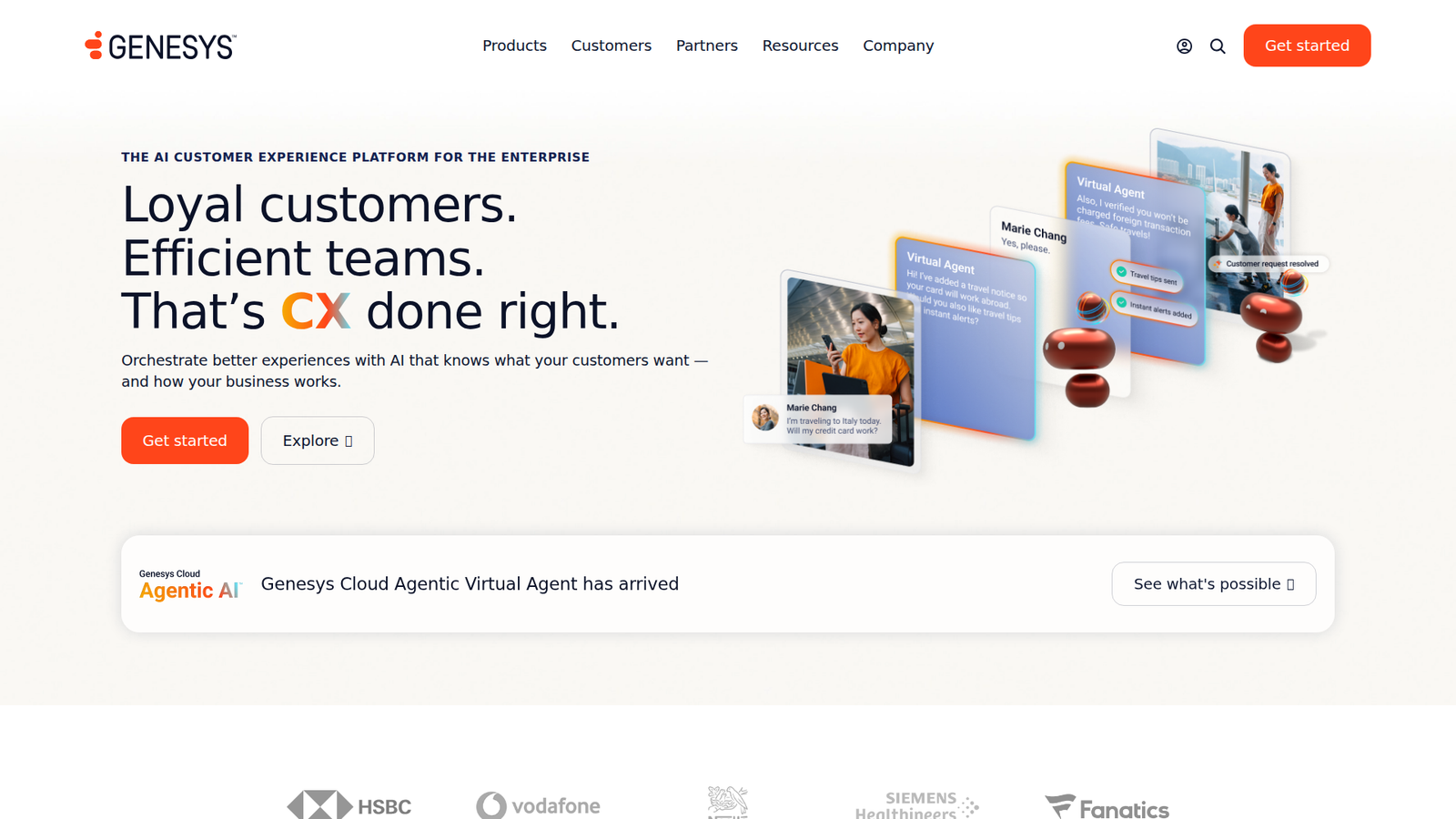
Genesys Cloud CX is one of the strongest choices for large enterprises standardizing customer experience across regions, channels, business units, and complex routing models. It is a Talkdesk alternative for teams that want more enterprise orchestration depth, AI studio capabilities, workforce engagement, and governance. Genesys is built for CX transformation, not only a phone queue. That depth is useful, but it can be much heavier than what a revenue team needs to convert inbound leads quickly.
Choose Genesys when the contact center is a strategic enterprise platform and multiple teams need one governed CX environment. Choose Thoughtly when the key workflow is fresh-lead engagement from CRM to call, text, email, booking, and handoff.
Genesys publishes pricing plan information, but enterprise totals vary by package, usage, AI, workforce, and services requirements. Confirm final pricing with Genesys.
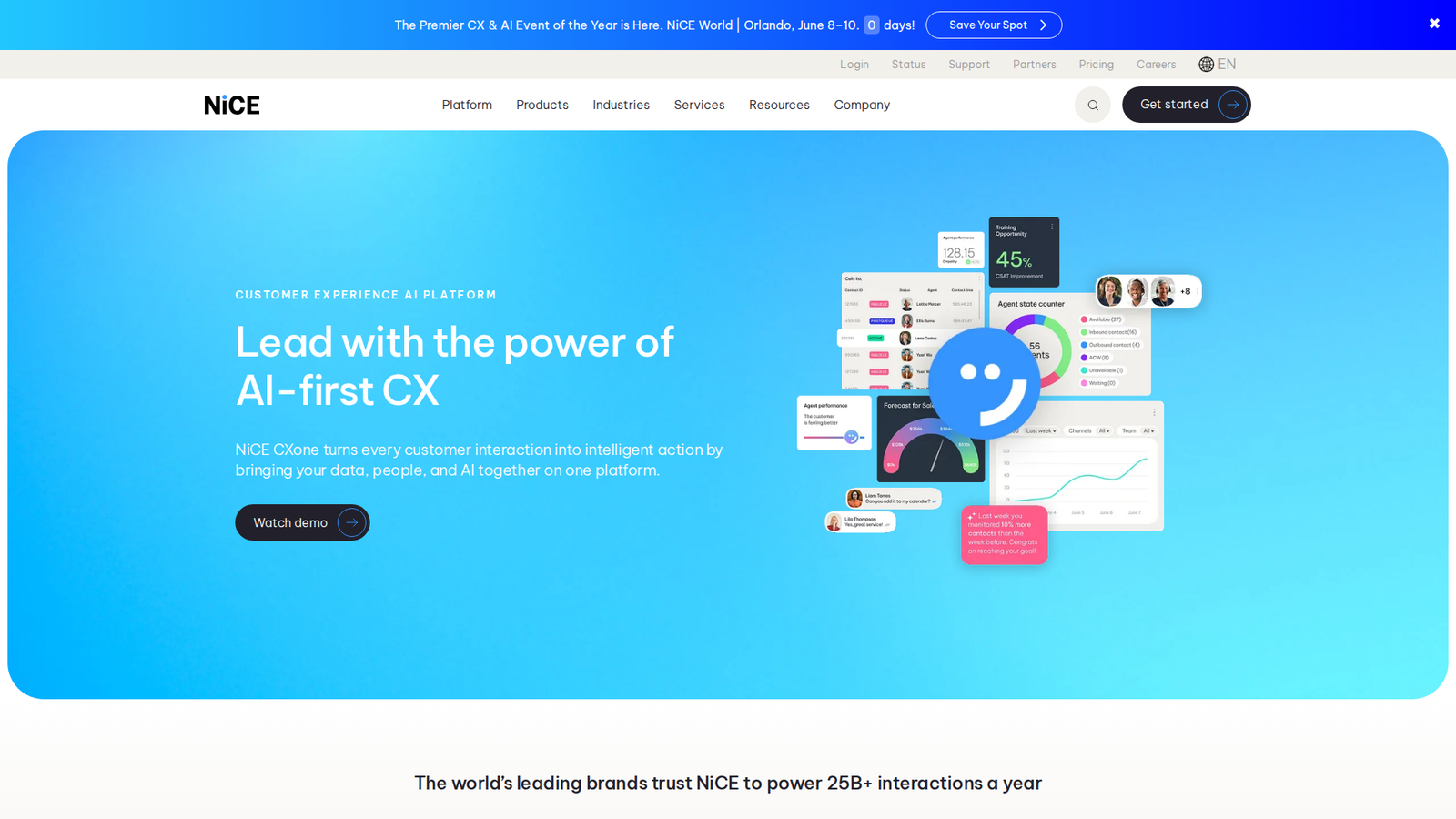
NICE CXone is built for large service organizations that care deeply about workforce engagement, analytics, quality, compliance, and contact-center scale. It is a credible Talkdesk alternative when the buying team wants an enterprise CX AI platform rather than a lighter business phone or revenue-agent tool. NICE’s strength is the service operating layer around human and AI agents. That is exactly why it may be a mismatch for teams whose main pain is speed-to-lead and CRM follow-up.
Choose NICE CXone when you run a large customer-service operation and workforce management is a first-order requirement. Choose Thoughtly when the primary buyer is RevOps or growth and the metric is leads reached, qualified, booked, and handed off.
NICE pricing is typically quote-based; third-party pricing pages often describe enterprise seat packages, but buyers should validate current CXone and AI pricing directly.
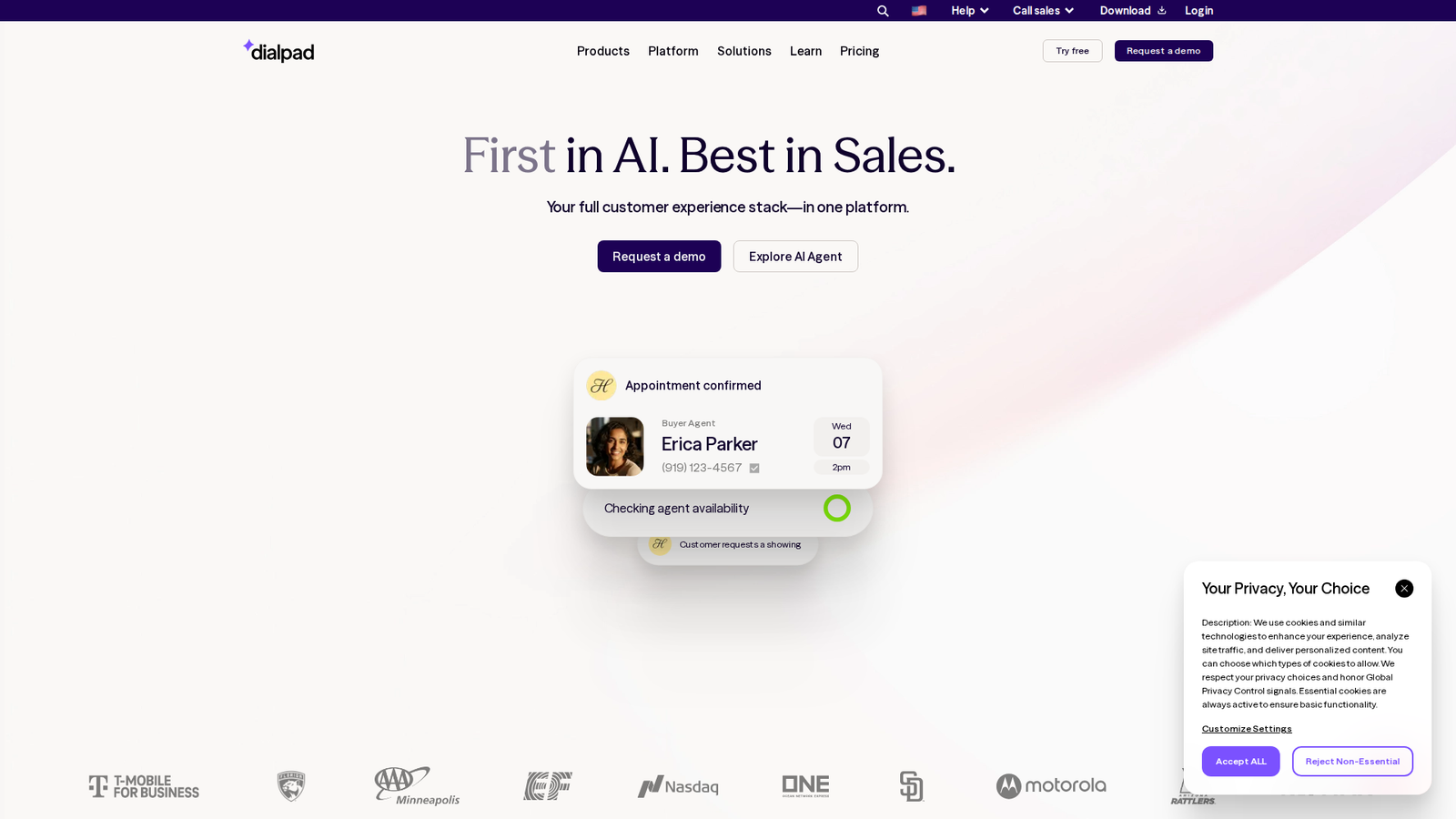
Dialpad is a good Talkdesk alternative for companies that want business phone, meetings, messaging, sales, support, and AI features in one communications platform. Its current positioning leans hard into agentic AI and a unified customer-experience stack, which can be attractive for teams consolidating tools. Dialpad is usually easier to evaluate for everyday communications than enterprise CCaaS suites. The tradeoff is that buyers should test whether its contact-center and AI workflows are deep enough for their exact queue and revenue process.
Choose Dialpad when your team wants one communications platform with AI layered across calls, meetings, support, and sales. Choose Thoughtly when the specific workflow is automated inbound lead conversionInbound lead conversionInbound lead conversion turns opted-in calls, form submissions, quote requests, and other inquiries into qualified conversations, appointments, or transfers. with persistent follow-up across voice, SMS, and email.
Dialpad publishes plan pricing for several product lines and uses conversation-based pricing for AI Agents; confirm the exact mix of Support, Sell, Connect, and AI Agent costs.
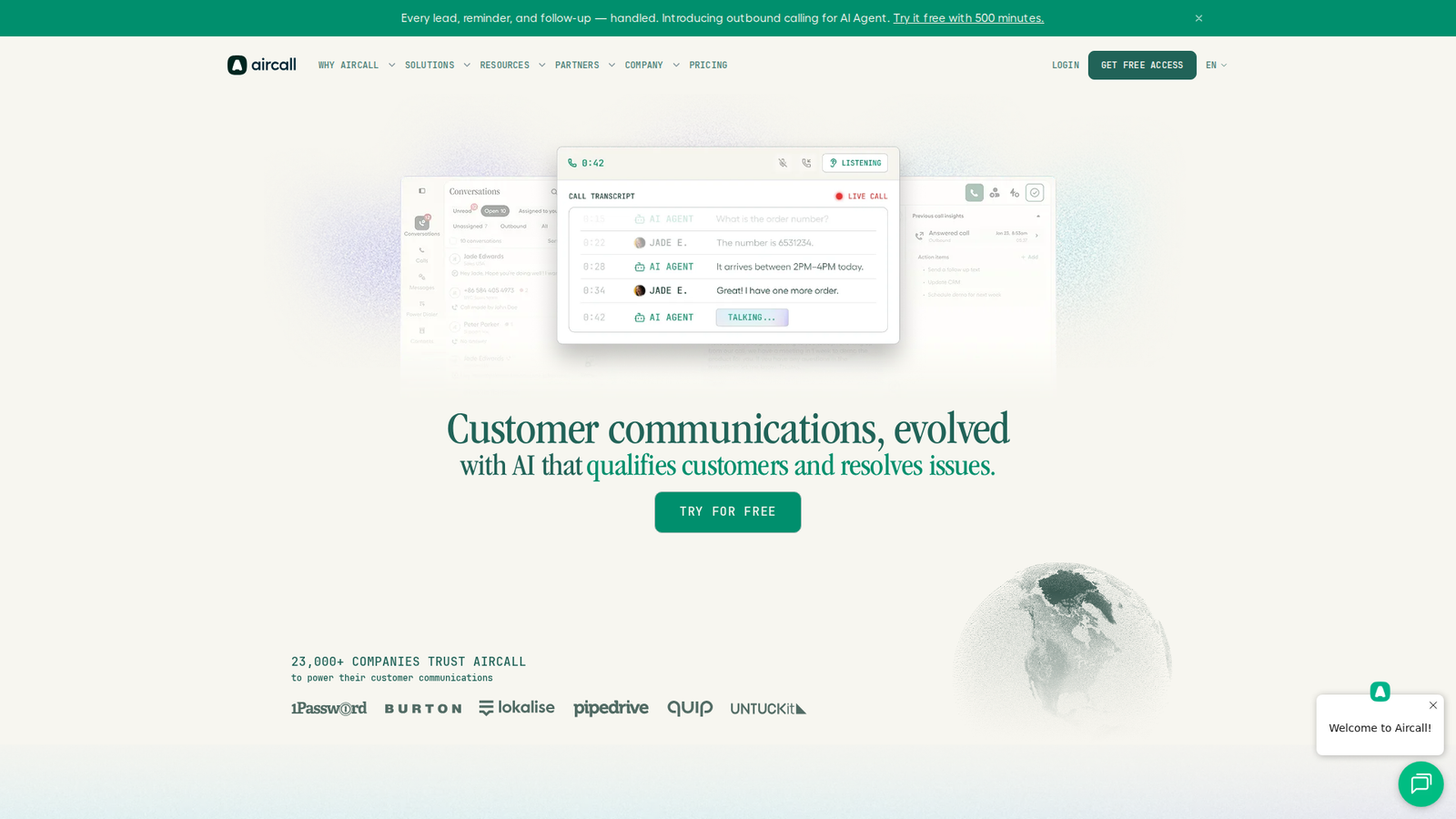
Aircall is a strong Talkdesk alternative for SMB and mid-market teams that want a modern phone system with fast setup, transparent pricing, and CRM integrations. It is especially relevant for sales and support teams that do not need the full weight of enterprise CCaaS. Aircall’s own comparison material positions it as easier and more transparent than Talkdesk, with Essentials starting at $30 per user per month and Professional at $50. The limitation is that AI autonomy and enterprise contact-center governance are not the same as a purpose-built conversion agent or large CCaaS suite.
Choose Aircall when the team needs a straightforward phone and call-center layer for reps. Choose Thoughtly when you need the agent to own the whole lead journey after the first missed or answered call.
Aircall publishes Essentials at $30/user/month and Professional at $50/user/month, with additional packages and AI features depending on plan and volume.
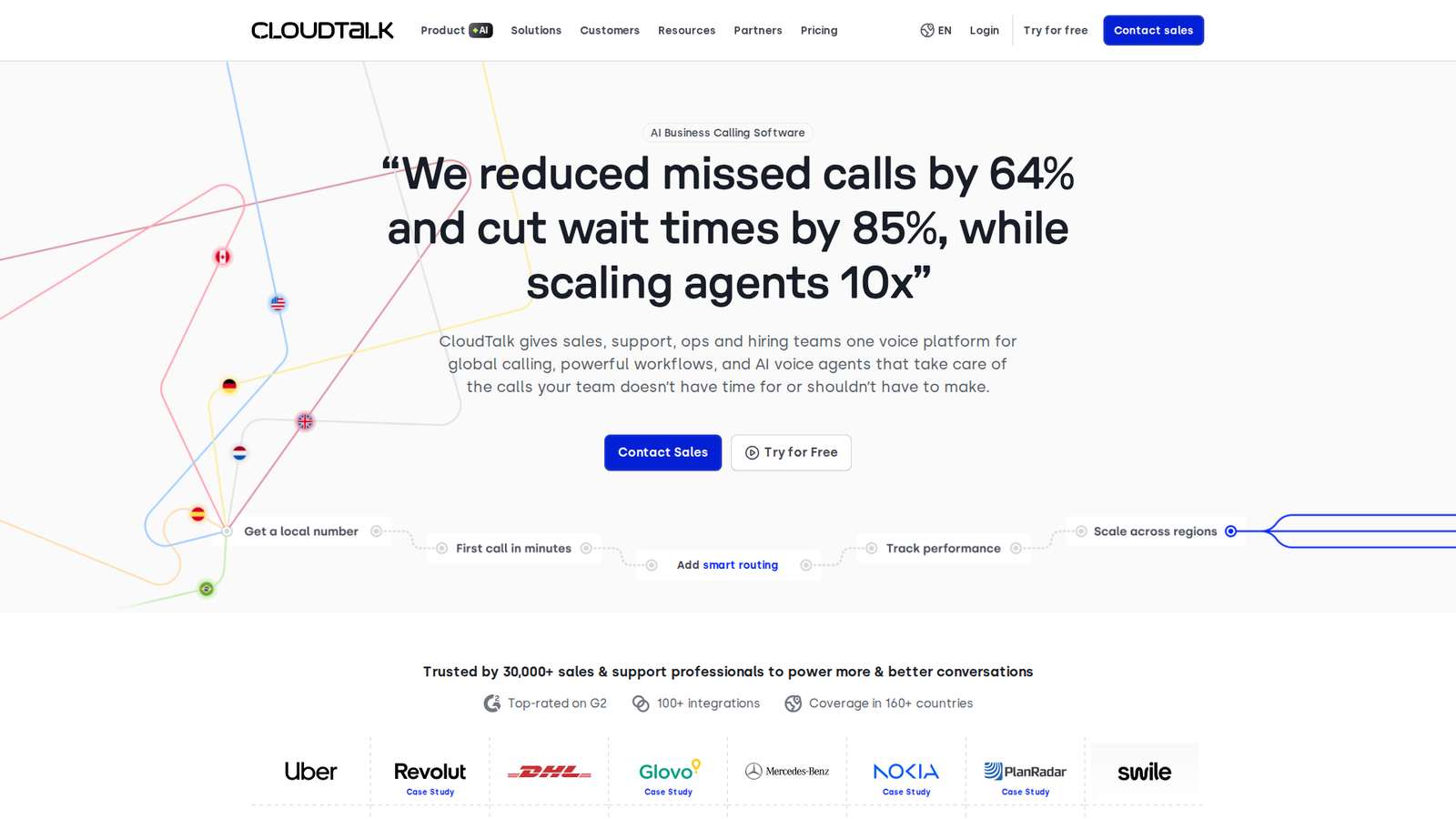
CloudTalk is a useful Talkdesk alternative for teams that need international numbers, call routingCall routingCall routing sends a caller to the right agent, person, team, location, queue, or workflow using intent, data, rules, and availability., analytics, and a simpler cloud call-center footprint. It often fits sales and support teams that want to move faster than an enterprise CCaaS procurement cycle. CloudTalk’s strength is practical telephony and call-center operations for distributed teams. It is not the same thing as an AI revenue agent that autonomously coordinates voice, SMS, email, CRM updates, and booking logic.
Choose CloudTalk when a distributed team needs a practical cloud call center and fast rollout. Choose Thoughtly when the business case is reaching every inbound lead and executing follow-up until the lead responds, books, opts out, or gets handed to a person.
CloudTalk publishes tiered pricing on its website; confirm current plan limits, AI features, and international calling costs before purchase.
Start by naming the job. If the job is staffed customer service, compare Talkdesk, Five9, Genesys, NICE, Dialpad, Aircall, and CloudTalk around routing, workforce management, supervisor workflows, reporting, uptime, and total seat cost. If the job is inbound revenue conversion, compare whether the platform can call immediately, continue across SMS and email, qualify with context, book or transfer, and update the CRM without human busywork.
Then run a proof of concept on the exact workflow that creates revenue risk. Use a real lead sourceLead sourceLead source identifies the channel, campaign, marketplace, partner, form, or referral that generated an inquiry., real CRM fields, realistic routing rules, after-hours scenarios, missed-call recovery, opt-outOpt-outAn opt-out is a person’s request to stop receiving a particular category of calls, texts, emails, or other communications. handling, and handoff requirements. The wrong platform will look impressive in a generic demo and still fail the moment your team needs same-agent persistence across channels.
Thoughtly is the strongest fit when the use case is inbound lead conversion rather than customer-service containment. It is built to call, text, email, qualify, book, transfer, and write back to the CRM after an opted-in lead enters the funnel.
Five9, Genesys Cloud CX, and NICE CXone are the most natural enterprise contact-center alternatives. The best choice depends on workforce-management depth, global routing, existing systems, implementation resources, and AI roadmap.
Talkdesk publishes pricing that starts at $85 per user per month for Digital Essentials and $105 per user per month for Voice Essentials, with higher tiers at $165 and $225 per user per month. Total cost can increase with add-ons, AI, workforce tools, implementation, and support requirements.
A sales team should choose Talkdesk if it wants a contact-center system for staffed reps and supervisors. It should choose a revenue-agent platform like Thoughtly if the goal is to automate rapid lead response, persistent follow-up, qualification, scheduling, and CRM updates.
Aircall, CloudTalk, and Dialpad are usually easier to deploy than large enterprise CCaaS suites. Thoughtly is the faster fit when the desired deployment is an AI agent for inbound lead conversion rather than a general phone/contact-center migration.


