7 Best Vapi Alternatives for AI Voice Automation in 2026
I evaluated six Vapi alternatives for teams that need more than voice infrastructure — from fully managed multichannel platforms to no-code builders to open-source frameworks. See which platform fits your revenue workflow.
Last updated
I evaluated the platforms that buyers actually compare when Vapi's voice infrastructure isn't the right fit — whether because the team doesn't have engineers to wire together STTSpeech-to-Text (STT)Speech-to-Text (STT) converts spoken audio into text that a voice agent can interpret, store as a transcript, and use in downstream actions.Read full definition →, LLMLarge Language Model (LLM)A large language model (LLM) is a machine-learning model trained on large text collections to interpret and generate language from prompts and context.Read full definition →, TTSText-to-Speech (TTS)Text-to-Speech (TTS) converts written text into spoken audio, producing the voice a caller hears from an automated or AI-driven system.Read full definition →, and telephony providers, or because the real cost of Vapi's component-based billing has become unpredictable at scale.
Vapi is a strong tool for engineering teams who want maximum control over their voice stack. But it's deliberately not a complete platform — there's no bundled CRMCRMA CRM is the system used to manage leads, contacts, accounts, opportunities, activity, ownership, and follow-up.Read full definition →, no native SMS or email follow-upEmail follow-upEmail follow-up sends timely, context-aware replies or reminders that move an inbound lead toward qualification, scheduling, or handoff.Read full definition →, no marketer-friendly GUI, and the $0.05/min platform fee is just the start of a stack that typically includes 4–6 separate provider bills. If your team is running a revenue funnel rather than building voice infrastructure, those gaps matter.
This evaluation covers six Vapi alternatives that each solve a different piece of the problem — from fully managed multichannel platforms to no-code builders to open-source real-time frameworks. I ranked them based on how well they serve teams that need to convert leads, not just orchestrate API calls.
Quick takeaways
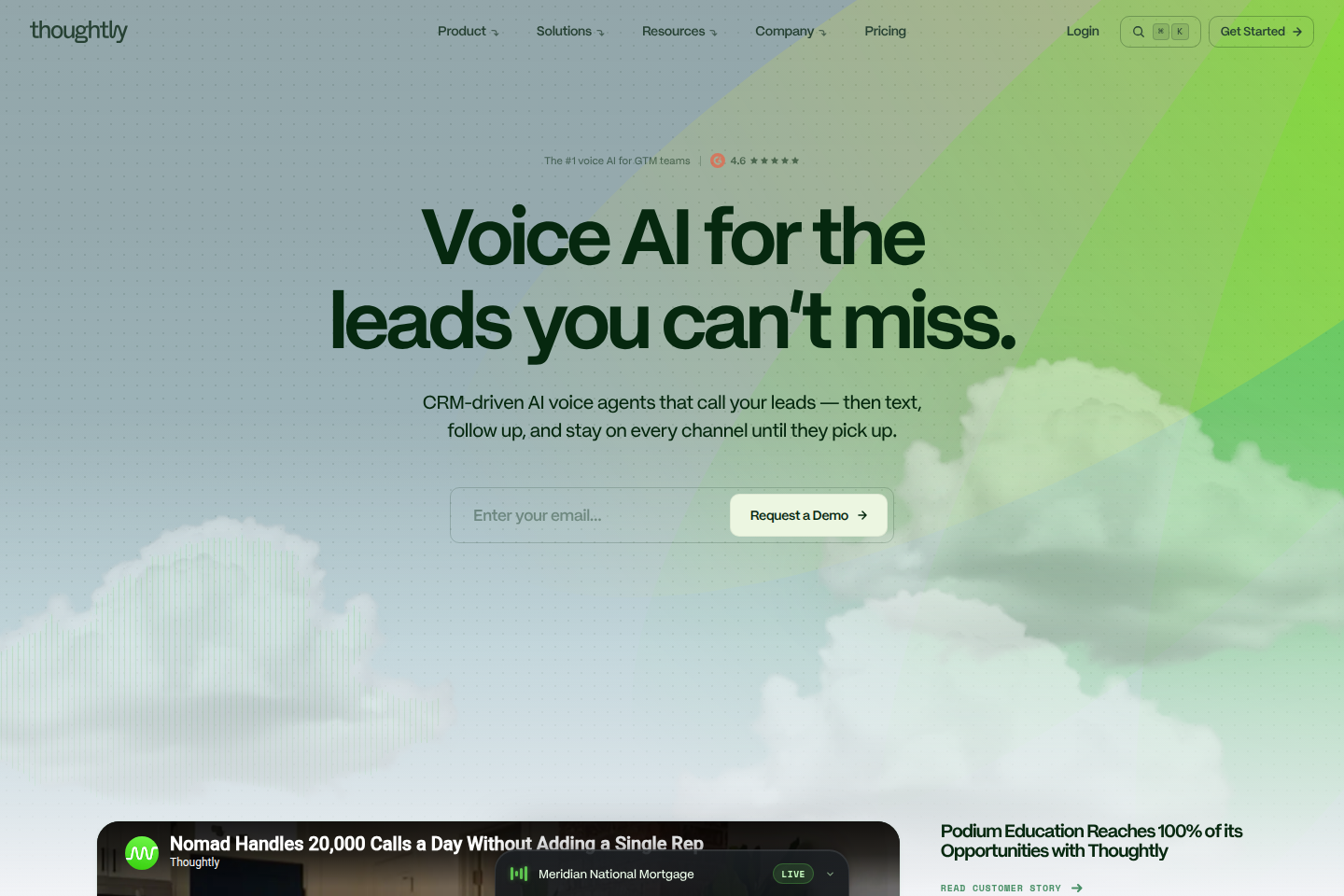
Thoughtly is the best overall Vapi alternative for revenue teams that need voice, SMS, email, and CRM execution in one platform — no developer required.
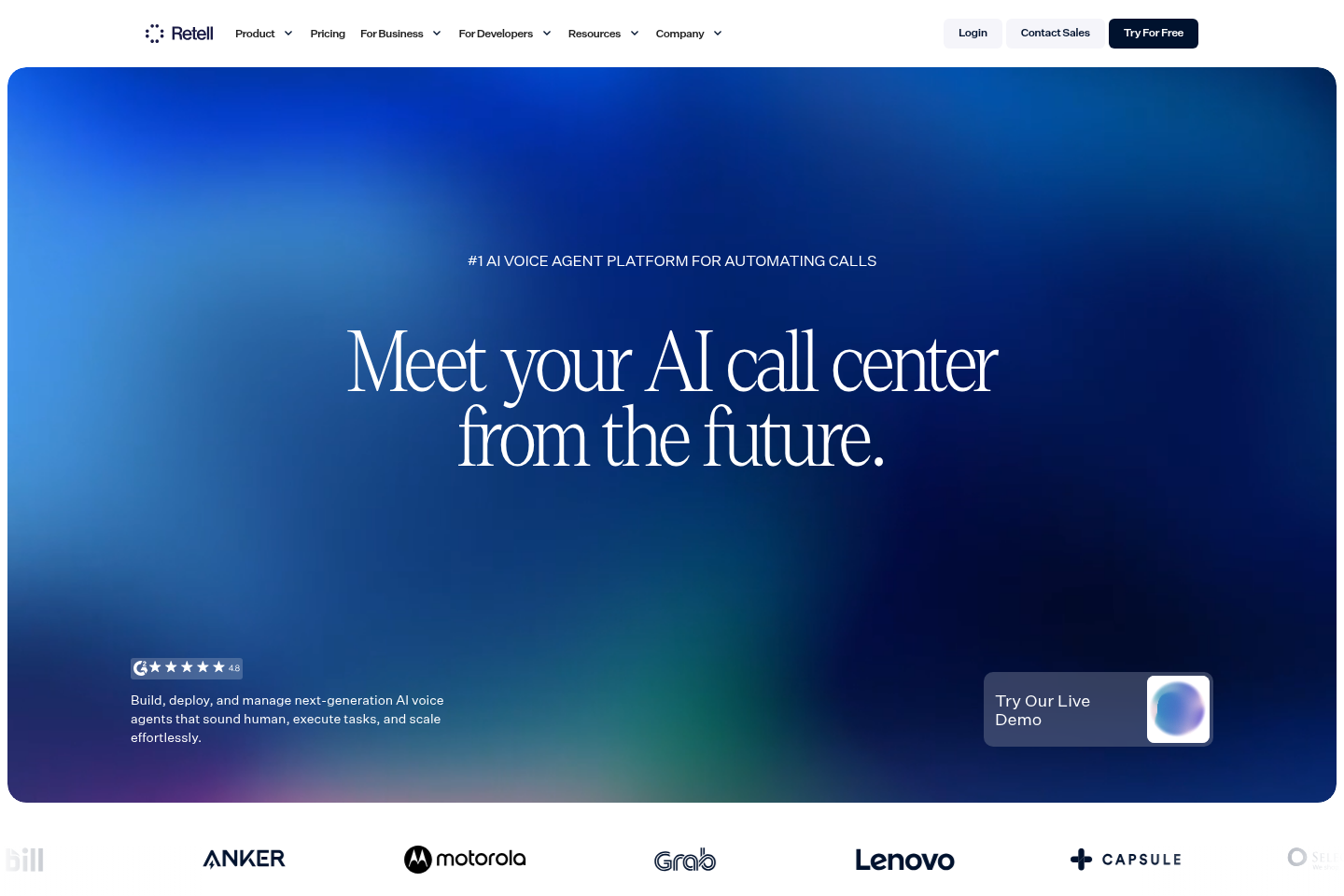
Retell AI is the closest API-first peer to Vapi, with better dashboard tooling but similar stacked-pricing concerns.
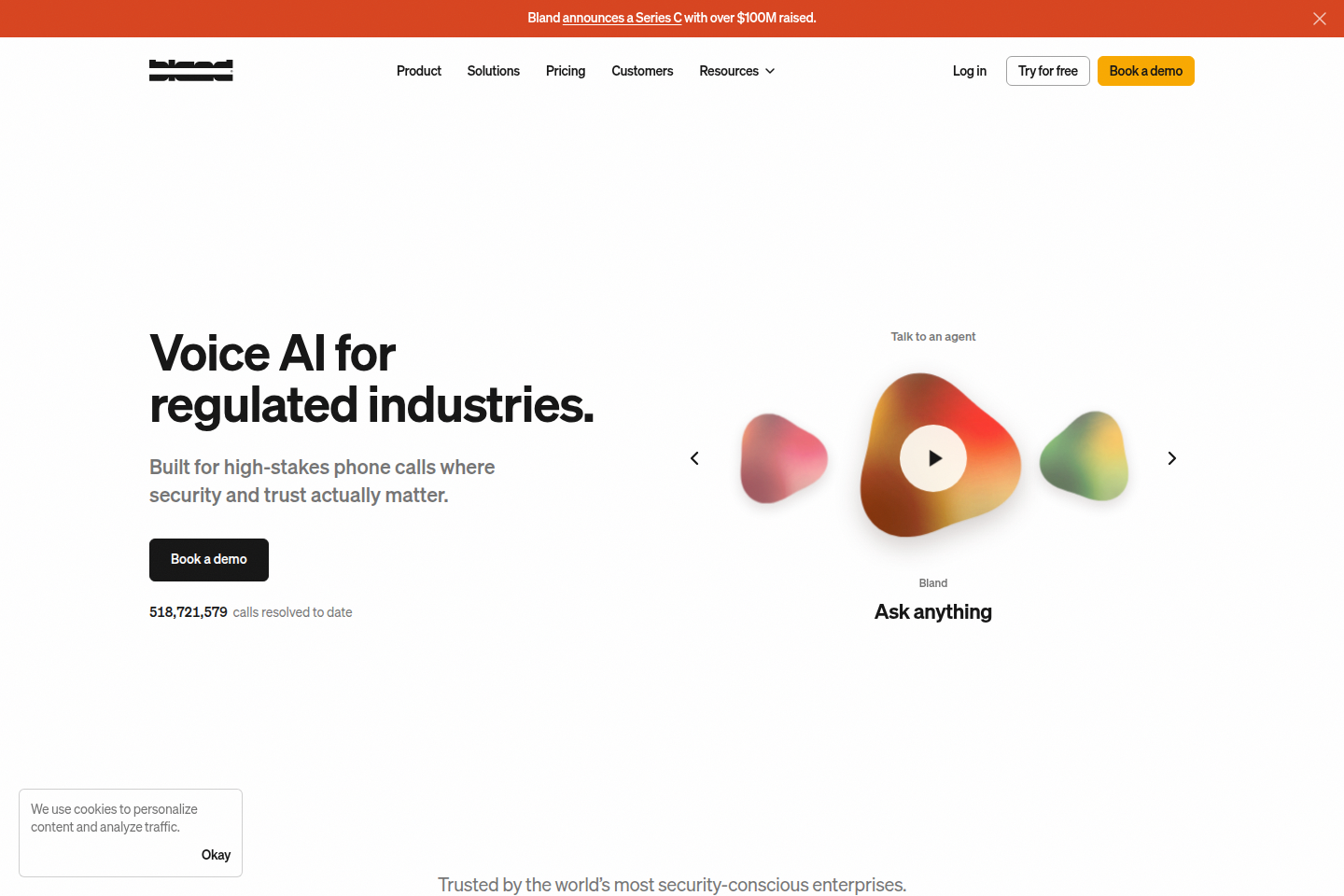
Bland AI offers high-volume programmable calling but requires technical ownership and lacks native multichannel follow-up.
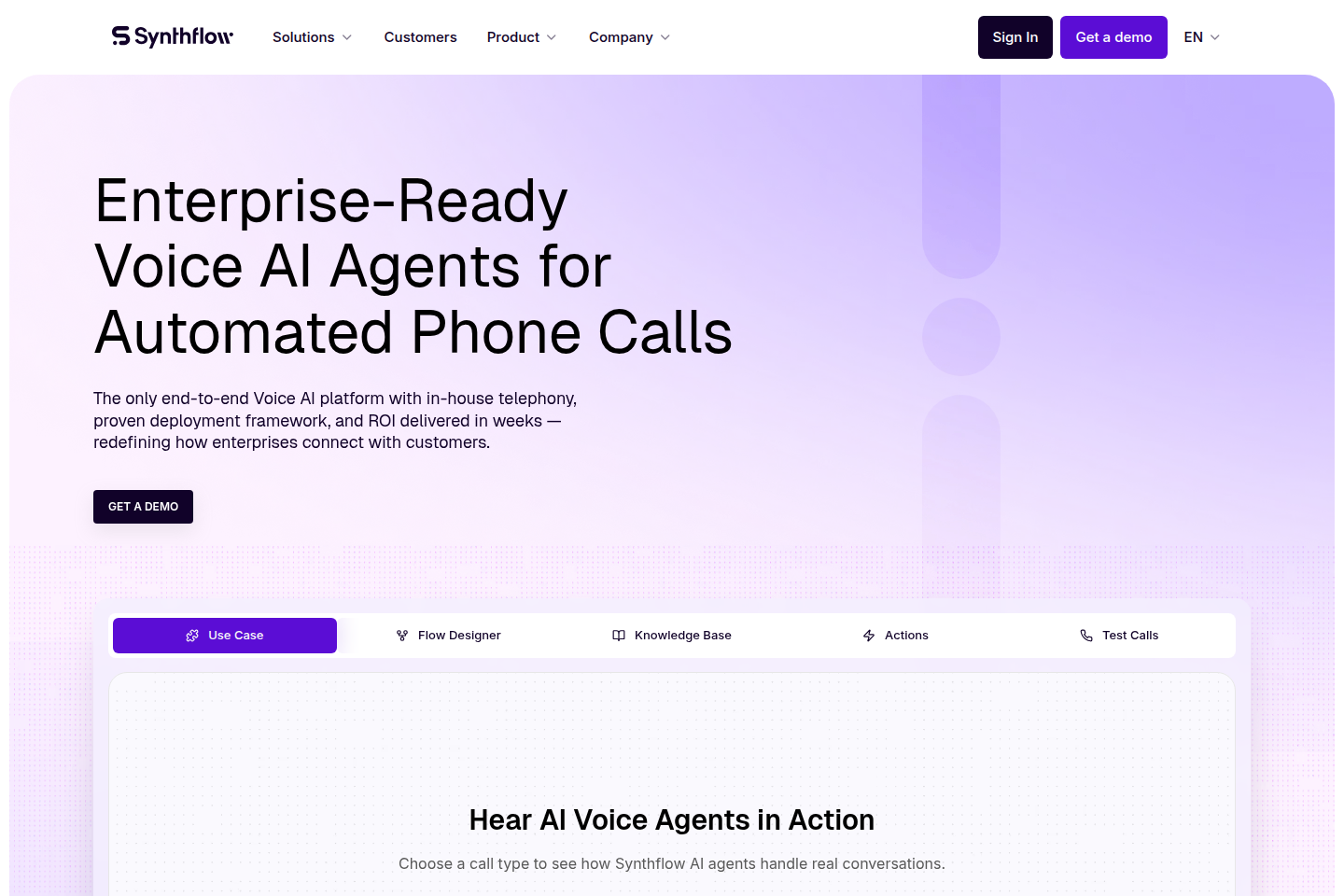
Synthflow AI is the strongest no-code option for agencies and resellers who want visual flow building without touching APIs.
LiveKit is the best open-source real-time framework for teams that want full infrastructure control without vendor lock-in.
Ringly.io is the best Vapi alternative for Shopify and e-commerce brands that need a purpose-built AI phone agent, not a developer toolkit.
How I evaluated these Vapi alternatives
I looked at what actually happens after a team picks a voice platform: who configures it, who maintains it, what it costs at production volume, and whether it can follow up after the call ends. Vapi's strengths — developer flexibility, BYO-LLM architecture, low platform fee — are real, but they're only half the evaluation. The other half is whether the platform can run a revenue motion end-to-end.
1. Total cost of ownership
Vapi's $0.05/min platform fee is genuinely cheap on paper. In production, most deployments require billing relationships with 4–6 providers — Vapi, STT (Deepgram or similar), LLM (OpenAI, Anthropic), TTS (ElevenLabs or Cartesia), telephony (TwilioTwilioTwilio is a cloud communications platform that provides programmable voice, messaging, phone numbers, and related APIs.Read full definition → or TelnyxTelnyxTelnyx is a cloud communications provider offering voice, messaging, phone numbers, and network services through APIs.Read full definition →), and optionally HIPAAHIPAAHIPAA is a US federal law whose Privacy, Security, and Breach Notification Rules govern protected health information for covered entities and business associates.Read full definition → at $2,000/month. Multiple independent reviews and the SquawkVoice Vapi review put real-world all-in costs between $0.13 and $0.33 per minute. I scored alternatives on whether pricing is bundled and predictable or component-based and hard to forecast.
2. Multichannel follow-up execution
Vapi is voice-only. No native SMS, no email, no CRM-driven follow-up sequences. If a call ends and the lead isn't ready to talk, the next step is someone else's problem. For revenue teams, that gap is where most conversion happens — the callback, the text confirmation, the email nurture. I looked at whether each alternative can close that loop natively or requires additional integration work.
3. Non-developer accessibility
Vapi is API-first with no GUI for non-technical users. Flow Studio exists but multiple reviewers describe it as a prototyping scratchpad rather than a production environment. I evaluated whether each alternative can be configured, tuned, and operated by a RevOps or growth team member without writing code.
4. CRM and workflow integration
Voice calls that don't sync back to CRM are expensive noise. Vapi leaves CRM integrationCRM integrationA CRM integration connects an agent or communications platform with a CRM so the systems can exchange records, events, and actions.Read full definition → entirely to your engineering team. I checked whether each alternative offers native CRM connectors (HubSpot, Salesforce, Pipedrive, Zoho, GoHighLevel) and workflow automationWorkflow automationWorkflow automation uses software to execute and coordinate repeatable steps such as intake, follow-up, qualification, routing, booking, and system updates.Read full definition → that writes call outcomes, dispositions, and next steps back to the system of recordSystem of recordA system of record is the authoritative source for a defined category of business data.Read full definition →.
5. Production reliability and support
Multiple Reddit threads, G2 reviews, and the SquawkVoice analysis cite slow customer support, refund delays, and stability issues following platform upgrades as recurring Vapi complaints. I looked at whether each alternative offers SLA-backed support, named contacts, and a track record of not breaking working agents during updates.
6. Speed-to-lead and conversion features
For teams buying a voice platform to convert inbound leads, sub-60-second response time, lead qualificationLead qualificationLead qualification captures fit signals such as intent, urgency, location, eligibility, consent, and availability before the next step.Read full definition → logic, warm transferWarm transferA warm transfer connects a live caller to the right person while preserving the context already collected during the conversation.Read full definition →, and appointment settingAppointment settingAppointment setting captures availability, confirms fit, and books a qualified prospect on the correct calendar without requiring manual chasing.Read full definition → are the features that actually move pipeline. Vapi can do all of this — but only if your engineering team builds it. I scored alternatives on whether these capabilities are available out of the box.
Quick comparison of the best Vapi alternatives
Platform
Best for
Key advantage over Vapi
Key limitation
Thoughtly
Revenue teams converting inbound leads
Voice + SMS + email + CRM in one platform, no developer needed
Best when GTM workflow is clearly defined
Retell AI
Engineering teams building voice apps
Better dashboard and tooling, strong conversation quality
Same component-stacked pricing model as Vapi
Bland AI
High-volume programmable outbound
Higher concurrency and throughput tooling
Voice-only, lacks multichannel follow-up
Synthflow AI
Agencies and no-code builders
Visual Flow Studio that non-technical users can operate
Workflow depth and support complaints reported
LiveKit
Teams wanting open-source infrastructure
Full control, no vendor lock-in, real-time expertise
Requires significant engineering investment
Ringly.io
Shopify and e-commerce brands
Purpose-built for e-commerce, Shopify-native
Narrow vertical focus, not a general-purpose platform
7 best Vapi alternatives for AI voice automation in 2026
1. Thoughtly — Best overall for revenue teams converting inbound leads
Thoughtly is the platform Vapi isn't: a fully bundled, multichannel inbound conversion system that combines AI voiceAI voiceAn AI voice is synthetic speech produced by a text-to-speech model, using a selected or cloned voice to speak an agent's generated or scripted response.Read full definition → agents, SMS follow-upSMS follow-upSMS follow-up uses compliant two-way text messages to continue a conversation after an inquiry, call, voicemail, or prior interaction.Read full definition →, email campaigns, workflow automation, and CRM syncCRM syncCRM sync keeps selected lead, contact, conversation, outcome, and next-step data aligned between an agent platform and a CRM.Read full definition → in one product. Where Vapi gives you an orchestration layer and expects you to wire the rest, Thoughtly ships with native integrations to HubSpot, Salesforce, Pipedrive, Zoho, GoHighLevel, Attio, and more — no integration glue required.
The platform is built for RevOps and growth teams, not engineering teams. Agents are configured through a no-code promptbook interface, qualification rules and escalationEscalationEscalation moves a conversation to a person, specialist, supervisor, or alternate workflow when the agent should not continue alone.Read full definition → paths are defined in plain language, and call outcomes sync back to CRM automatically. For companies in insurance, mortgage, real estate, education enrollment, elective healthcare, legal intakeLegal intakeLegal intake captures a potential client’s matter details, urgency, location, eligibility, and preferred next step before routing.Read full definition →, and home services, Thoughtly's positioning maps directly to the inbound lead conversionInbound lead conversionInbound lead conversion turns opted-in calls, form submissions, quote requests, and other inquiries into qualified conversations, appointments, or transfers.Read full definition →workflow those industries depend on.
Pros
Bundled voice, SMS, email, and CRM workflow execution — no need to assemble and maintain 4–6 separate provider relationships.
No-code promptbook builder lets RevOps and growth teams create, tune, and deploy agents without engineering involvement.
Native CRM integrations with HubSpot, Salesforce, Pipedrive, Zoho, GoHighLevel, Attio, and others — call dispositions and next steps write back automatically.
Multichannel follow-up: after a call, the same agent can send SMS, trigger email sequences, and update workflow status without a separate tool.
Compliance features including TCPA, DNC scrubbing, consent management, and HIPAA support for healthcare workflows.
Cons
Requires your company to have a clear CRM, lead source, or system of record to get the most value — the platform is designed to execute against a defined funnel, not build one from scratch.
Requires upfront definition of qualification rules, escalation paths, and follow-up logic before deployment — less flexible than Vapi for teams that want to experiment in code.
Testing notes
Thoughtly's strength is what Vapi deliberately doesn't try to do: be a complete revenue platform. The promptbook approach means non-technical teams can build, test, and iterate on agent behavior directly, and the multichannel follow-up loop means a call that doesn't convert can still triggerTriggerA trigger is an event or condition that starts, resumes, changes, or stops an automated workflow.Read full definition → an SMS or email sequence automatically. For teams that have been assembling Vapi + Twilio + ElevenLabs + Zapier + HubSpot workflows, Thoughtly collapses that stack into one product.
Who should use it
RevOps, growth, and GTM teams at mid-market and enterprise companies in high-consideration consumer industries — insurance, mortgage, real estate, education, healthcare, legal, home services — who need to convert inbound leads across voice, SMS, and email with full CRM write-backCRM write-backCRM write-back sends conversation outcomes, qualification answers, notes, appointments, dispositions, and next steps into the CRM.Read full definition →. Not for engineering teams who want to build custom voice infrastructure from scratch.
Pricing
Thoughtly offers packaged pricing based on call volume and use case. Contact Thoughtly for a custom quote that bundles voice, SMS, email, and CRM integration — no per-component provider billing.
2. Retell AI — Best for configurable voice AI infrastructure
Retell AI is the closest peer to Vapi in this evaluation — an API-first voice AI platform that gives engineering teams a orchestration layer for STT, LLM, TTS, and telephony. Like Vapi, it's built for developers. Unlike Vapi, it offers a more polished dashboard, better conversation quality controls, and a customer roster that includes major enterprises. Retell has raised funding and processes significant call volume across its platform.
The core tradeoff between Retell and Vapi is tooling and quality versus cost. Retell's dashboard is more usable, its conversation engine handles interruptions more gracefully, and its support is generally rated higher. But Retell uses the same stacked pricing model — you pay for the platform plus underlying model costs — and independent reviews consistently flag forecasting difficulty as the top complaint.
Better dashboard and agent management tooling than Vapi, with more visibility into call analytics and conversation flows.
Enterprise-grade reliability and a growing customer base including NY Life, major contact centers, and Fortune 500 deployments.
Developer-friendly API with good documentation and active community support.
Cons
Stacked pricing model creates the same forecasting pain as Vapi — platform fee plus STT, LLM, TTS, and telephony costs that scale independently.
Voice-only with no native SMS, email, or CRM workflow execution — teams need additional tools for multichannel follow-up.
Still primarily a developer platform — non-technical teams cannot configure or tune agents without engineering support.
Testing notes
Retell is the strongest like-for-like Vapi alternative if your team wants to stay in an API-first model but get better tooling and conversation quality. The main improvement over Vapi is dashboard usability and call quality. The main shared weakness is pricing complexity and the absence of multichannel execution. If your team is already comfortable wiring together providers, Retell is a better-engineered version of the Vapi pattern.
Who should use it
Engineering teams building custom voice applications who want better tooling and conversation quality than Vapi provides, and who are comfortable with component-based pricing and integration work.
Pricing
Retell uses a platform fee plus pass-through model costs. Contact Retell for pricing — real-world per-minute costs typically range higher than the headline platform rate once STT, LLM, TTS, and telephony are included.
3. Bland AI — Best for high-volume programmable outbound calling
Bland AI positions itself as a programmable voice AI platform built for high-volume calling — outbound campaigns, call blasts, and concurrent call throughput. Where Vapi is an orchestration layer that expects you to bring your own telephony, Bland bundles more of the calling infrastructure and offers tools specifically designed for outbound at scale.
The platform has gained traction with teams running large outbound campaigns — debt collection, solar lead follow-upLead follow-upLead follow-up is the sequence of calls, texts, emails, and tasks used after a prospect expresses interest.Read full definition →, real estate prospecting — where call volume and concurrency matter more than conversation sophistication. However, Bland shares Vapi's voice-only limitation: no native SMS or email follow-up, and CRM integration is largely a self-service engineering task. Reddit threads and independent reviews also flag unresponsive support and a steep learning curve for the platform's blank-canvas approach.
Pros
Strong concurrency and throughput tooling designed specifically for high-volume outbound campaigns.
Bundled telephony infrastructure — less provider assembly than Vapi for teams that just need to make calls at scale.
Programmable API and webhook system for teams that want to build custom outbound workflows.
Competitive per-minute pricing for high-volume use cases.
Cons
Voice-only with no native SMS, email, or multichannel follow-up — teams need separate tools for post-call nurturing.
Reddit reviewers consistently flag unresponsive support and a blank-canvas experience that's difficult for non-technical users.
Limited CRM integration depth — call outcomes and dispositions require custom engineering to sync back to systems of record.
Testing notes
Bland is the right pick if your primary use case is blasting outbound calls at high concurrency and you have an engineering team to handle integration. It's a narrower tool than Vapi — less focused on conversation quality, more focused on throughput. For inbound lead conversion or multichannel follow-up, Bland leaves significant gaps that require additional tooling to fill.
Who should use it
Outbound-focused teams running high-volume call campaigns — solar, debt collection, real estate prospecting, lead buying — who prioritize concurrency and throughput over multichannel follow-up and CRM-native workflows.
Pricing
Bland offers per-minute pricing with volume tiers. Contact Bland for specific rates — pricing is generally competitive for high-volume outbound but requires careful monitoring of total cost at scale.
4. Synthflow AI — Best no-code voice AI builder for agencies and resellers
Synthflow AI is a no-code voice AI platform built primarily for agencies, resellers, and white-label operators who want to build and deploy voice agents without writing code. Its Flow Studio visual builder is more accessible than Vapi's developer-first approach, and the platform supports white-label deployments for agencies managing multiple client accounts.
Synthflow occupies a different niche than Vapi — it trades API flexibility for visual building and agency-friendly multi-tenant management. The platform has a strong following among marketing agencies and SMB service providers. However, Reddit threads and G2 reviews flag recurring issues with platform updates breaking working agents, and the support team's responsiveness is a common complaint — particularly for agencies white-labeling the platform to end clients.
Pros
Visual Flow Studio builder that non-technical users can operate without developer support — a genuine no-code experience.
White-label and multi-tenant support designed for agencies managing multiple client voice agents.
Pre-built templates for common use cases — appointment scheduling, FAQ, lead qualification — that speed up deployment.
Active community and growing template marketplace for agency use cases.
Cons
Reddit reviewers report platform updates breaking working agents, with a lack of communication about breaking changes.
Support responsiveness is a recurring complaint — particularly problematic for agencies whose end clients experience the issues directly.
Less workflow depth than Vapi for teams that need complex conditional logic, external data lookups, or multi-step reasoning — Flow Studio is better for simple paths than production-grade conversation design.
Testing notes
Synthflow is the right choice if your team cannot write code and needs a visual builder to deploy voice agents quickly. The agency and white-label features are genuinely useful for multi-tenant management. The main risk is platform stability — if Synthflow pushes an update that breaks your agent, you're dependent on their support team's responsiveness to fix it. For production revenue workflows where uptime is critical, that risk is worth weighing carefully.
Who should use it
Marketing agencies, white-label resellers, and small-to-mid businesses that need a no-code voice AI builder and don't have engineering resources. Best for teams prioritizing speed of deployment over deep customization and platform control.
Pricing
Synthflow offers tiered pricing including a starter plan and agency/white-label plans. Contact Synthflow for specific rates — pricing is generally more accessible than Vapi for small teams but scales with usage and seat count.
5. LiveKit — Best open-source real-time framework for voice AI
LiveKit is an open-source real-time communication framework that has become a serious infrastructure choice for teams building voice AI agents. Unlike Vapi, which is a managed orchestration layer, LiveKit gives you the real-time transport layer — WebRTC-based audio streaming, participant management, and multi-party communication — and leaves the AI orchestration to your team. It's the closest thing to building your own Vapi from scratch, with the benefit of being open-source and community-maintained.
LiveKit has gained traction with engineering teams that want full infrastructure control, no vendor lock-in, and the ability to run on their own cloud infrastructure. The platform supports any LLM, STT, and TTS provider, and its real-time framework is used in production by companies building custom voice applications. The tradeoff is straightforward: maximum control in exchange for maximum engineering investment. There's no managed telephony, no CRM, no marketer-friendly surface — LiveKit is infrastructure for teams that want to build everything themselves.
Pros
Open-source with no vendor lock-in — teams can self-host and maintain full control over their infrastructure.
Real-time WebRTC expertise and production-grade audio transport that handles latency, buffering, and multi-party communication well.
Works with any STT, LLM, and TTS provider — maximum flexibility for engineering teams.
Active community and growing ecosystem of tools, agents, and integrations built on the framework.
Cons
Requires significant engineering investment — LiveKit is infrastructure, not a platform. Your team builds everything on top.
No managed telephony, no CRM integration, no multichannel follow-up — all of that is your team's responsibility.
No vendor support SLA unless you pay for LiveKit Cloud, the managed hosting offering.
Testing notes
LiveKit is the right pick if your team has strong real-time engineering experience and wants to own the entire voice infrastructure stack. It's not a Vapi replacement in the usual sense — it's a lower-level building block. Teams that choose LiveKit are making a deliberate trade: they get full control and no lock-in, but they take on far more build responsibility than they would with Vapi or any managed platform.
Who should use it
Engineering teams with real-time communication experience who want to build and self-host their own voice AI infrastructure, and who have the capacity to maintain telephony, CRM integration, and conversation logic on top of the framework.
Pricing
LiveKit is open-source and free to self-host. LiveKit Cloud, the managed hosting offering, has usage-based pricing. Contact LiveKit for details on Cloud pricing and enterprise plans.
6. Ringly.io — Best Vapi alternative for Shopify and e-commerce brands
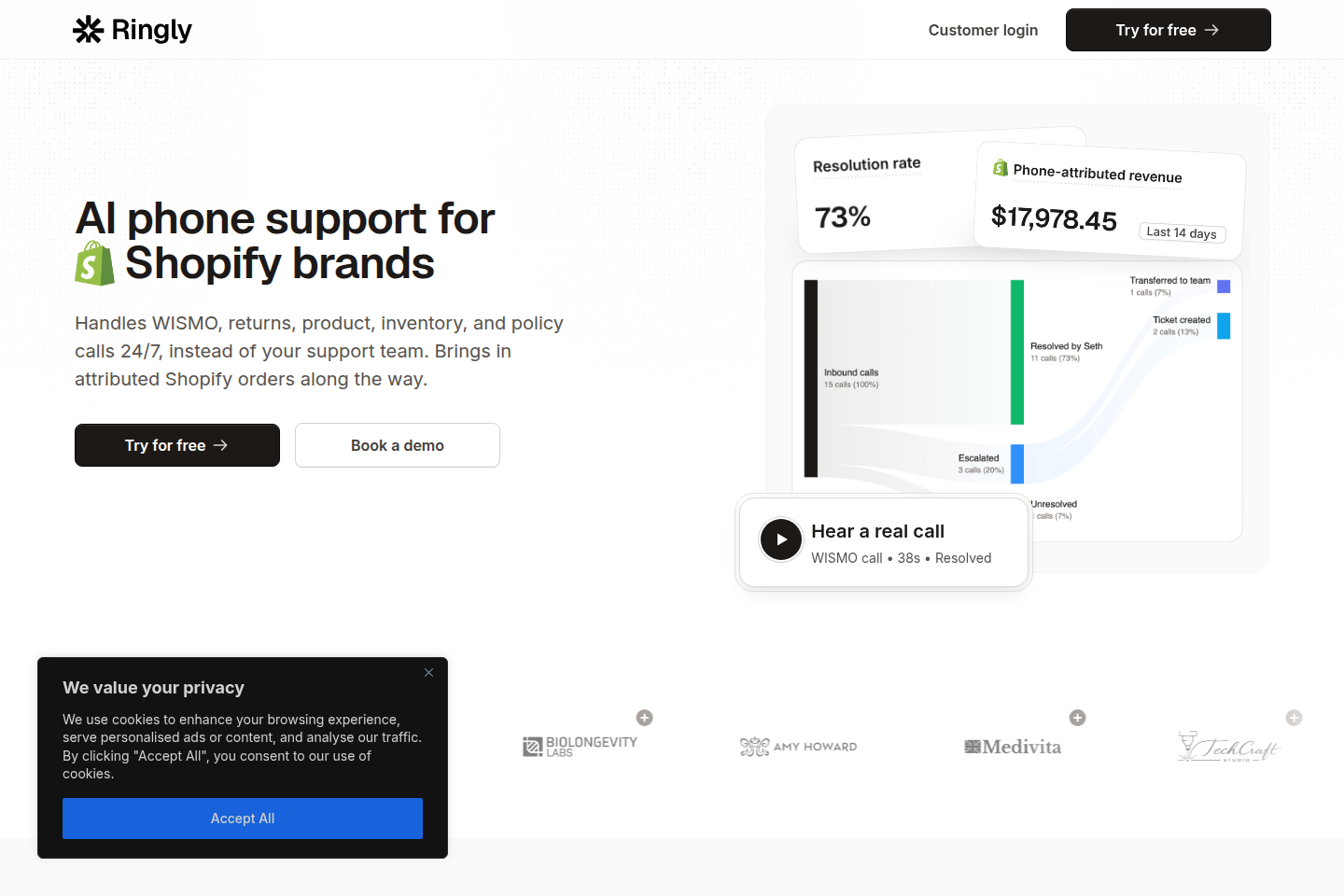
Ringly.io is a purpose-built AI phone agentAI phone agentAn AI phone agent is software that conducts phone conversations to answer, qualify, book, route, or follow up with callers under rules set by the business.Read full definition → for Shopify and e-commerce brands. Where Vapi is a general-purpose voice orchestration layer that could be configured for e-commerce (with sufficient engineering effort), Ringly is designed specifically for the Shopify ecosystem — it installs as a Shopify app, connects to order data, and handles the call types that e-commerce brands actually receive: order status, returns, product questions, shipping updates.
The platform reports resolving 73% of calls without human intervention, handling customer service inquiries that would otherwise require staffing a support team. Ringly is a narrow tool compared to Vapi — it doesn't try to be a general-purpose voice platform. But for Shopify brands, that narrowness is a strength: the agent is pre-trained on e-commerce workflows, integrates with Shopify order data natively, and deploys in hours rather than weeks.
Pros
Shopify-native integration — installs as a Shopify app and connects to order, product, and customer data out of the box.
Pre-trained on e-commerce call types: order status, returns, shipping questions, product inquiries — no custom training required for standard workflows.
Reports 73% call resolution rate without human escalation, reducing the need for front-line support staffing.
Faster deployment than any Vapi configuration — hours, not weeks, for a working e-commerce phone agent.
Cons
Narrow vertical focus — Ringly is built for Shopify and e-commerce. Teams in insurance, mortgage, healthcare, or other verticals will find it too specialized.
Limited customization for complex qualification, lead routing, or CRM-driven workflows — it's a customer service tool, not a revenue conversion platform.
Not designed for outbound calling or multichannel follow-up sequences — Ringly is an inbound support agent.
Testing notes
Ringly is the right pick if you're a Shopify brand that needs an AI phone agent for customer service calls. It's not competing with Vapi for general-purpose voice infrastructure — it's competing with hiring a support team. For e-commerce brands that want to resolve order, return, and product calls without human agents, Ringly is a more practical choice than configuring Vapi from scratch.
Who should use it
Shopify and e-commerce brands that receive customer service calls about orders, returns, and product questions, and want to resolve those calls automatically without staffing a front-line support team.
Pricing
Ringly offers tiered pricing based on call volume. Contact Ringly for specific rates — pricing is designed to be more accessible than building a custom Vapi integration for the same use case.
Which Vapi alternative should you choose?
The right Vapi alternative depends on what your team is actually trying to accomplish. If you're an engineering team building custom voice applications and want better tooling than Vapi provides, Retell AI is the closest peer upgrade. If you're running high-volume outbound campaigns and need throughput above all else, Bland AI is purpose-built for that workload. If you're an agency or reseller that needs a no-code builder, Synthflow AI is the strongest visual platform.
If you're a RevOps or growth team trying to convert inbound leads — not build voice infrastructure — Thoughtly is the clear choice. It's the only platform on this list that bundles voice, SMS, email, CRM sync, and workflow automation in one product, and it's designed for non-technical teams to operate directly. The question isn't whether Thoughtly is a better API than Vapi — it's whether your team should be assembling APIs at all, or running a platform that handles the full conversion motion end-to-end.
If you want full infrastructure control and have the engineering team to support it, LiveKit is the most flexible open-source foundation. And if you're a Shopify brand specifically, Ringly.io solves a narrower problem — customer service call automation — better than any general-purpose platform.
FAQ
What is the best Vapi alternative for non-developers?
Thoughtly is the best Vapi alternative for non-technical teams. It offers a no-code promptbook builder, native CRM integrations, and multichannel follow-up — all configurable without writing code. Synthflow AI is also a strong no-code option, particularly for agencies.
Is Vapi free to use?
Vapi is not free. The platform charges $0.05/min for calls, plus you pay for STT, LLM, TTS, and telephony providers. The Build plan includes 60+ minutes and 10 concurrent lines, with additional lines at $10/month each. HIPAA compliance is an add-on at $2,000/month. Real-world per-minute costs typically range from $0.13 to $0.33 once all provider costs are included.
Can Vapi send SMS or email follow-ups?
Vapi is voice-only. The platform does not include native SMS, email, or multichannel follow-up capabilities. Teams that need to follow up with leads after a call must integrate additional tools. Thoughtly is the strongest alternative for teams that need voice, SMS, email, and CRM workflow execution in one platform.
What is the cheapest Vapi alternative?
LiveKit is free to self-host as open-source infrastructure, but requires significant engineering investment. Among managed platforms, Synthflow AI and Ringly.io offer accessible entry-level pricing. Thoughtly offers bundled pricing that can be more cost-effective than Vapi's component-stacked model when you factor in the total cost of assembling and maintaining separate providers.
Does Vapi have CRM integration?
Vapi does not offer native CRM integration. CRM sync, call disposition write-back, and workflow automation must be built by your engineering team using Vapi's API and webhooks. Platforms like Thoughtly offer native CRM integrations with HubSpot, Salesforce, Pipedrive, Zoho, GoHighLevel, and others out of the box.