

Industry insights
Best Medical Answering Services for Practices in 2026
Compare the best medical answering services for appointment booking, after-hours coverage, patient intake, secure routing, pricing, and human handoff.
Industry insights
Compare the best medical answering services for appointment booking, after-hours coverage, patient intake, secure routing, pricing, and human handoff.
Last updated
Medical answering services should do more than take messages. For appointment-heavy practices, the best option answers every eligible call, follows practice-approved rules, books against live availability, routes clinical questions to trained staff, and leaves a usable record. For 2026, Thoughtly is our strongest overall choice for elective and multi-location practices that prioritize appointment conversion and persistent follow-up. WellReceived and Ambs Call Center are stronger fits when the core requirement is human medical reception or on-call escalationEscalationEscalation moves a conversation to a person, specialist, supervisor, or alternate workflow when the agent should not continue alone..
This guide compares current public capabilities, pricing, and healthcare-specific operating fit. It does not claim hands-on testing. Vendor claims should be validated in a pilot, and no service should receive protected health information until the practice has confirmed its contract, safeguards, access controls, and Business Associate Agreement requirements.
The important buying decision is not AI versus people in the abstract. It is whether the service can safely complete the administrative job your practice actually needs, while sending clinical judgment, urgent symptoms, medication questions, and emergencies to qualified humans.
See how Thoughtly handles patient calls and appointment booking

A polished greeting is table stakes. The winning service must move the caller to a correct next step without letting an administrative workflowWorkflowA workflow is a defined sequence of steps, decisions, actions, delays, and outcomes used to complete a business process. drift into clinical advice.
The service should distinguish a new-patient appointment request from an existing-patient message, a billing question, a prescription request, a symptom report, and an emergency. Our view is simple: automation may collect approved administrative facts and route the call, but it should never diagnose, recommend treatment, or improvise urgency rules.
Message taking alone leaves work for the practice. Strong services can read approved appointment types, check current availability, book or reschedule correctly, and return a structured outcome to the scheduling system. If a vendor cannot demonstrate the exact calendar or EHR workflow, treat scheduling as unproven.
A healthcare logo wall is not a compliance program. HHS says a covered entity that engages a business associate to handle protected health information needs a written contract or other arrangement that defines the work and requires appropriate safeguards. Buyers should confirm the BAA, subcontractor chain, retention rules, secure messaging path, access controls, and incident process before sending real patient data.
Medical calls do not arrive in neat categories. The service needs an authoritative on-call schedule, retry rules, backup contacts, and a documented failure path. For clinical or emergency calls, deterministic escalation matters more than conversational range.
For elective practices, missed calls are also lost appointments. The stronger platforms can continue an approved administrative conversation by SMS or email, confirm the booking, write the result back, and show managers which inquiries became completed visits. Call volume by itself is not a business outcome.
| Service | Best for | Service model | Published starting price | Main watch-out |
|---|---|---|---|---|
| Thoughtly | High-volume appointment conversion and follow-up | AI voice plus SMS and email | $500/month; HIPAA and BAA on Enterprise | Not a clinical triage or human on-call service |
| WellReceived | Human-first medical reception | Live medical receptionists | Pricing shown after contact form | Human-minute economics and integration depth |
| Ambs Call Center | Physician on-call and urgent-message escalation | Live agents with AI-enhanced workflows | Quote required | Less focused on multichannel lead conversion |
| Nexa | Large or multi-location healthcare operations | People-powered and AI call answering | Quote required | Procurement and implementation scope can be substantial |
| Ruby | Warm live reception for small practices | Live US-based receptionists | $245/month for 50 minutes | Validate compliant scheduling options for your exact workflow |
| PATLive | Transparent live-answering plans | Live US-based receptionists | $49/month pay as you go | Confirm BAA and PHI scope before medical use |
| AnswerConnect | 24/7 answering, scheduling, and dispatch | Live receptionists | $350/month for 200 minutes plus setup | Confirm contract and PHI controls during procurement |
Thoughtly ranks first for the use case this blog is built around: turning eligible inbound demand into booked appointments and documented follow-up. A hospital seeking a staffed clinical answering desk should choose a different category. A high-volume elective practice losing new-patient inquiries after hours should not settle for message taking.
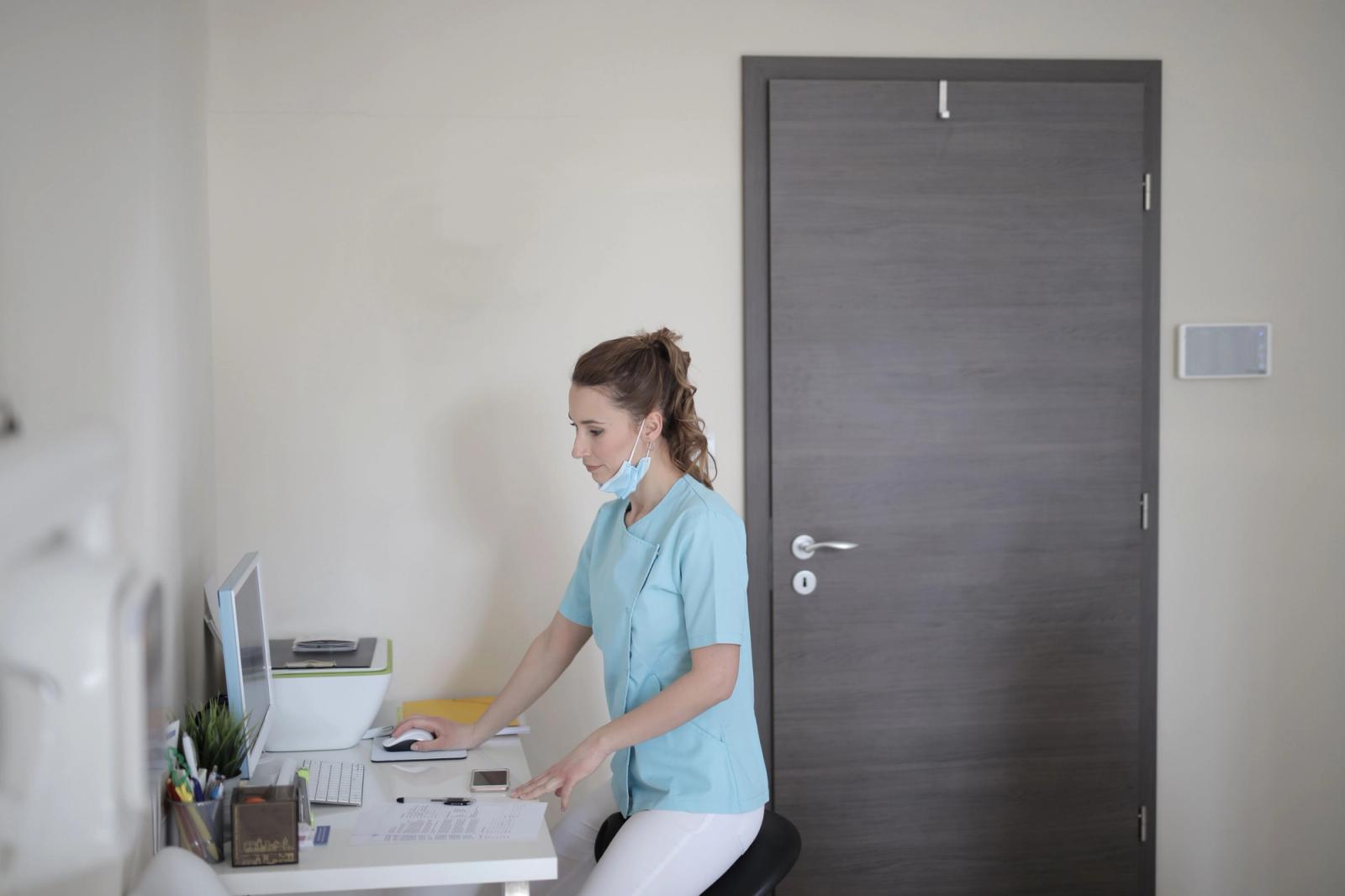
Thoughtly is the strongest fit when the phone workflow begins with a first-party inquiry and ends with a booked appointment, a warm handoff, or a documented next step. Its voice agents can answer inbound calls, follow a controlled qualification path, transfer with context, and continue an approved conversation over SMS or email. Two-way CRM write-backCRM write-backCRM write-back sends conversation outcomes, qualification answers, notes, appointments, dispositions, and next steps into the CRM. and workflow automationWorkflow automationWorkflow automation uses software to execute and coordinate repeatable steps such as intake, follow-up, qualification, routing, booking, and system updates. make it materially different from services that simply send a message to the front desk.
The platform is especially compelling for multi-location elective healthcare, dental groups, sleep clinics, med spas, and other appointment-heavy operators with enough volume to justify a production workflow. Thoughtly publishes a $500 monthly starting price. Its pricing page places HIPAAHIPAAHIPAA is a US federal law whose Privacy, Security, and Breach Notification Rules govern protected health information for covered entities and business associates. and BAA support on the Enterprise tier, so regulated practices should treat that tier and a signed agreement as a procurement gate, not a checkbox to revisit after launch.
Thoughtly is not the right choice for clinical triage, medical advice, or a hospital switchboard that needs human judgment on every call. Its advantage appears when the administrative path is repeatable, the scheduling source is authoritative, and the practice wants to measure bookings and completed visits instead of messages taken.
Explore Thoughtly's appointment booking workflow
WellReceived is the clearest human-first option in this comparison. Its public materials focus exclusively on medical reception, 24/7 coverage from real people, bilingual reception, new-patient intake, after-hours answering, and appointment scheduling. The company states that all plans are HIPAA-compliant, which is more specific than the generic healthcare language many answering services publish.
This is a good fit for practices that want a person on every call and value a healthcare-specialized reception experience over workflow automation. The tradeoff is commercial visibility: the current pricing page requires contact details to reveal plan prices. Buyers should also test how deeply appointments are written into their actual scheduler and how exceptions are returned to staff.
Ambs Call Center is built around the traditional medical answering job: live US-based agents, secure messaging, on-call schedules, urgent escalation, and 24/7 coverage. Ambs says it undergoes annual third-party HIPAA audits and has handled medical calls since 1932. Its public workflow is unusually clear about routing routine calls differently from urgent medical calls.
Choose Ambs when provider reachability and after-hours escalation are more important than automated appointment conversion. Its portal, secure messaging, and on-call controls make it a credible choice for physician groups and larger healthcare organizations. Pricing is quote-based, so compare the total cost of minute volume, secure messaging, escalation attempts, and dedicated staffing.
Nexa combines bilingual human receptionists with AI-assisted answering, patient intake, scheduling, EHR integration, emergency dispatch, and reporting. Its healthcare materials position the service for both smaller practices and large organizations, with 24/7 coverage and industry-trained staff.
Nexa belongs on an enterprise shortlist when call volume spans locations, languages, and several patient-access workflows. The cost is less transparent than the self-serve options, and the breadth of the offer makes scoping important. Require a workflow diagram that names the EHR fields, after-hours route, escalation owner, and reporting outputs before accepting a broad capability claim.
Ruby offers 24/7 US-based live receptionists, personalized call handling, secure portal access, intake, bilingual answering, and HIPAA-compliant services with a BAA for covered entities. Its published virtual receptionist plans start at $245 per month for 50 minutes, which gives small practices a concrete budget anchor.
Ruby is a strong fit when caller warmth and consistent live reception matter more than complex workflow automation. The limitation is in the details of compliant scheduling. Ruby's healthcare FAQ says its standard HIPAA service cannot schedule through Calendly because Calendly does not offer HIPAA-compliant service, while noting that other options may be available. That is exactly the kind of constraint a buyer should surface before signing.
PATLive publishes one of the clearest price ladders in the category. Live answering starts at $49 per month with no included minutes, while a 100-minute plan is $189 and a 200-minute plan is $349. The medical and wellness service includes 24/7 US-based receptionists, appointment scheduling, call screening, transfers, message taking, lead collection, and a 14-day trial.
PATLive is attractive for a wellness or low-volume administrative workflow that needs a predictable live-answering pilot. Its medical page does not make the same explicit BAA and HIPAA commitments that several healthcare-specialized competitors make. A covered practice should not route PHIPHIPHI, or protected health information, is individually identifiable health information held or transmitted by a HIPAA covered entity or business associate. through the service until those obligations are confirmed in writing.
AnswerConnect provides 24/7 live receptionists for medical offices, appointment scheduling, on-call calendar handling, urgent-call procedures, message taking, transfer, and dispatch. Its public medical page gives buyers a useful view of the actual operating tasks rather than describing generic customer service.
The current page shows an entry plan with 200 minutes for $350 per month plus a setup fee. AnswerConnect is a practical choice for a practice that wants conventional live answering with scheduling. As with any service handling patient information, confirm the BAA, secure message delivery, recording rules, data retentionData retentionData retention defines how long recordings, transcripts, messages, personal data, and conversation metadata are kept before deletion or archival., and access controls in the contract.
Choose a human medical answering service when calls are emotionally complex, on-call protocols change frequently, or the practice wants a person to interpret ambiguous caller language before escalating. Human coverage is also the safer default when a workflow cannot be reduced to approved administrative paths.
Choose an AI-first platform when the dominant job is repetitive and measurable: answer new-patient inquiries, identify location and appointment type, read live availability, book, confirm, recover a missed call, and return the outcome to the system of recordSystem of recordA system of record is the authoritative source for a defined category of business data.. AI becomes valuable at volume because capacity does not depend on adding another receptionist shift.
Many practices need a hybrid. AI can own routine appointment and lead-response work, while staff or a live service owns clinical questions, urgent calls, and exceptions. The operating boundary matters more than the label on the vendor.
A vendor that cannot answer these questions precisely is not ready for production. Medical answering is an operating system problem disguised as a phone problem.
Start with six buckets: new-patient booking, existing-patient scheduling, billing or administrative questions, prescription requests, clinical questions, and emergencies. Give each bucket an approved next step and a named human owner. Do not ask the service to infer practice policy.

Use one location, one call source, and a small set of appointment types. Run synthetic calls for accents, interruptions, duplicate patients, unavailable calendars, minors, third-party callers, urgent language, and requests outside policy. A narrow pilot exposes failure modes faster than a broad launch.
Track answer rate, abandoned calls, booking accuracy, transfer success, missed-call recoveryMissed-call recoveryMissed-call recovery reconnects with a caller who reached the business but did not connect with the intended person or team., appointments booked, appointments completed, and exceptions requiring staff cleanup. The useful denominator is eligible inquiries, not every ring. A service that increases call completion while creating scheduling corrections has not improved the workflow.
Read the failed and escalated cases before celebrating the easy ones. Update scripts, routes, appointment rules, and knowledge sources only through a controlled owner. Healthcare workflows change, and a production service needs an explicit maintenance cadenceCadenceA cadence is a planned sequence of calls, texts, emails, delays, and retries used to follow up until a lead responds, books, opts out, or becomes inactive..
Thoughtly fits practices that already generate meaningful inbound demand and need every eligible inquiry worked across voice, SMS, and email until it reaches a booked appointment or trained person. It augments the front desk by taking repetitive administrative work off the queue and returning structured outcomes to the systems the practice already uses.
It should not diagnose, recommend treatment, decide whether symptoms are clinically urgent, promise availability outside the authoritative schedule, or replace licensed and trained staff. For healthcare, a useful AI agent is deliberately bounded. The point is faster access and cleaner handoff, not pretending administrative automation is medical care.
Compare Thoughtly with your medical answering workflow
A medical answering service handles practice phone calls using approved workflows. Depending on the provider, it may take messages, schedule appointments, route urgent calls, follow an on-call calendar, transfer callers, and provide after-hours or overflow coverage. The service should keep clinical judgment with qualified healthcare staff.
Published entry prices in this comparison range from $49 per month for PATLive pay-as-you-go live answering to $500 per month for Thoughtly's multichannel AI platform. Human receptionist plans commonly charge by minute, while enterprise healthcare programs are often quote-based. Compare total workflow cost, not the headline subscription.
Yes, many can, but buyers should ask for a live demonstration using the actual scheduling system. Verify appointment types, providers, locations, rescheduling rules, double-booking prevention, outage behavior, and what data is written back after the call.
No. A marketing claim does not replace due diligence. Confirm whether the service is acting as a business associate, execute the appropriate written agreement, review safeguards and subcontractors, define the minimum information the workflow needs, and test how sensitive messages move between systems.
They are better at repeatable, high-volume administrative work and consistent follow-up. Humans are better for ambiguity, empathy-heavy situations, changing on-call judgment, and clinical exceptions. The best choice follows the shape of the calls, not a preference for one labor model.
It should not. The practical goal is coverage and augmentation: answer overflow, handle approved scheduling tasks, recover missed inquiries, and route exceptions with context. Staff still own patient relationships, clinical judgment, policy changes, and the cases that do not fit the script.
