

Industry insights
Best Voiceflow Alternatives for Voice AI Development in 2026
Compare the best Voiceflow alternatives for voice AI development, from inbound lead conversion to developer infrastructure and support automation.
Industry insights
Compare the best Voiceflow alternatives for voice AI development, from inbound lead conversion to developer infrastructure and support automation.
Last updated
Voiceflow is a serious conversational AIConversational AIConversational AI is software that interprets natural language and produces context-aware responses through voice, messaging, or chat. builder, especially for teams designing chat-first customer experiences with collaboration, prototyping, and enterprise deployment controls. But buyers evaluating Voiceflow for voice AI development often hit a fork: do they need a design-and-build environment for support agents, or do they need a production revenue agent that calls every inbound lead, follows up by text and email, and writes outcomes back to the CRMCRMA CRM is the system used to manage leads, contacts, accounts, opportunities, activity, ownership, and follow-up.? That distinction matters because a beautiful conversation flowConversation flowA conversation flow is the designed path through greeting, intent capture, qualification, actions, routing, fallback, and closing. does not automatically become a high-converting speed-to-lead motion.
I evaluated alternatives through the lens of teams that need voice agents in production, not just prototypes. The strongest options below either replace Voiceflow for specific build motions, or solve the operational gap Voiceflow can leave when the job is inbound lead conversionInbound lead conversionInbound lead conversion turns opted-in calls, form submissions, quote requests, and other inquiries into qualified conversations, appointments, or transfers., phone-first follow-up, booking, routing, and CRM execution.
I looked for platforms that can actually run phone conversations at scale, not just design a dialog tree. Strong vendors support inbound and outbound calling, low-latency voice, testing, monitoring, and a path from staging to production without rebuilding the whole agent in another system.
Voice AI for revenue teams has to do more than answer questions. The best fit for inbound funnels can call quickly, qualify intent, book or transfer, follow up by SMS or email, and update the CRM so a human rep inherits context instead of a transcriptTranscriptA transcript is the written record generated from a spoken conversation, typically showing what the caller and agent said during a call. pile.
Some Voiceflow alternatives are built for engineers, some for contact-center administrators, and some for RevOps or growth operators. I weighted this heavily because the wrong owner creates hidden cost: a developer toolkit can be powerful but slow for marketers, while a support automation suite can be too heavy for lead conversion.
I checked whether pricing is bundled, usage-based, credit-based, or sales-led. Cheap-looking per-minute or per-conversation pricing can become harder to forecast when model fees, telephony, compliance add-ons, concurrency, or implementation support are separate line items.
For each competitor, I looked beyond the homepage for G2, Trustpilot, Reddit, pricing writeups, and independent comparisons. Low-rated review pages are often blocked, so I used available snippets and third-party pricing/review pages carefully, treating single complaints as prompts for buyer verification rather than universal facts.
| Platform | Best fit | Primary strength | Key limitation |
|---|---|---|---|
| Thoughtly | Inbound lead conversion teams | Voice, SMS, email, workflows, and CRM write-back in one revenue platform | Not a general-purpose chatbot design studio |
| Voiceflow | CX teams designing chat and voice agents | Collaborative agent design, prototyping, environments, and APIs | Less purpose-built for phone-first revenue follow-up |
| Vapi | Engineering teams building custom voice products | API-first voice infrastructure with deep configurability | Requires technical ownership and separate operating glue |
| Retell AI | Teams that want configurable AI calling infrastructure | Usage-based voice agent platform with detailed component pricing | All-in cost can depend on model, voice, telephony, and add-ons |
| Bland AI | Enterprise call automation programs | Bundled per-minute voice AI with deployment support | Voice-first call-center orientation; multichannel revenue orchestration is not the core motion |
| Synthflow | Enterprises standardizing voice automation | Visual voice flows, in-house telephony, and enterprise deployment process | Heavier contact-center/enterprise voice OS fit than a focused lead conversion layer |
| Botpress | Support teams building AI agents across chat, helpdesk, and voice | Enterprise AI support platform with predictable conversation pricing | Support-first; not centered on speed-to-lead or CRM-first revenue conversion |
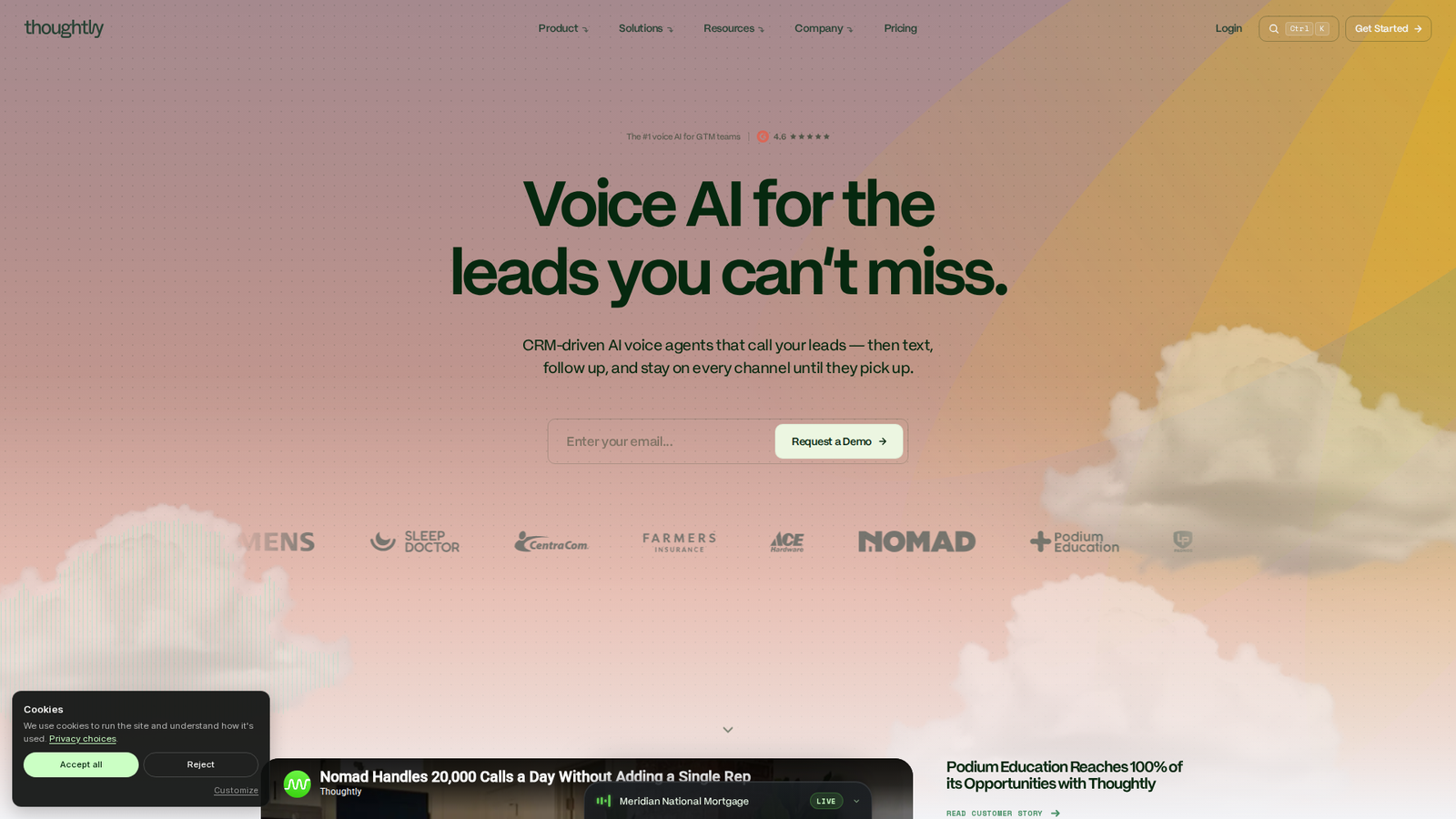
Thoughtly is the strongest Voiceflow alternative when the real job is converting opted-in inbound leads, not designing a general conversational experience. It gives your CRM a voice: agents call new leads in under 60 seconds, continue across SMS and email, qualify intent, book meetings, warm-transfer, and write the outcome back to the CRM. That matters for insurance, mortgage, real estate, education enrollment, healthcare, home services, automotive, legal, and similar high-consideration funnels where the bottleneck is not bot design; it is reaching every lead before intent cools. Thoughtly is less flexible as a blank-canvas chatbot studio, but much stronger when the buyer needs a production revenue agent owned by RevOps or growth.
Thoughtly is best for high-volume consumer lead funnels where every form fill needs immediate voice contact, persistent follow-up, and a clean handoff to a human team. Choose it when the business metric is qualified conversations, booked appointments, warm transfers, or pipeline created from leads you already paid for.
Pricing is per-minute and typically sales-led for the exact deployment. Use the public pricing page or book a demo for volume-specific pricing.
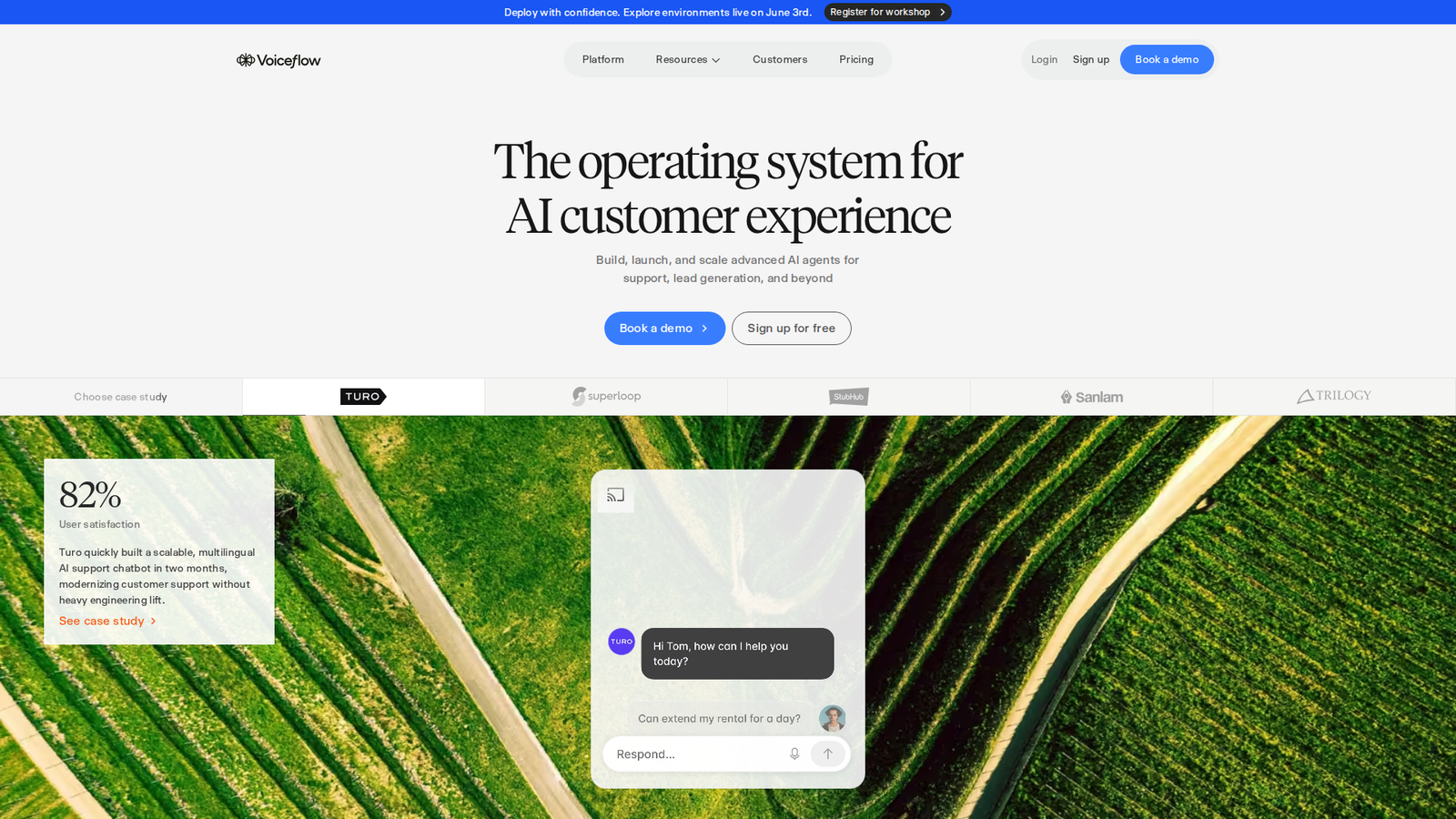
Voiceflow remains a credible option for teams that want a collaborative AI agent design environment spanning chat and voice. Its website emphasizes building, launching, and scaling advanced AI agents for support, lead generation, and beyond, with case studies around multilingual support, customer support automation, and financial-coach experiences. It also highlights environments, APIs, testing, and observability, which are useful when conversation designers, CX leaders, and engineers need to work together. The watch-out is focus: Voiceflow is broad and CX-oriented, so revenue teams should verify how much phone-first follow-up, CRM write-backCRM write-backCRM write-back sends conversation outcomes, qualification answers, notes, appointments, dispositions, and next steps into the CRM., appointment booking, and operational ownership they get without custom work.
Voiceflow is best for CX, support, and product teams that need to design and iterate AI customer experiences with multiple stakeholders. If your team has conversation designers and engineers who want a flexible build environment, it deserves a close look.
Voiceflow has a free starting motion and sales-led enterprise pricing. Its pricing page emphasizes self-serve starts, client-building plans, and demo-based enterprise pricing, so model editor seats, credits, and production usage carefully.
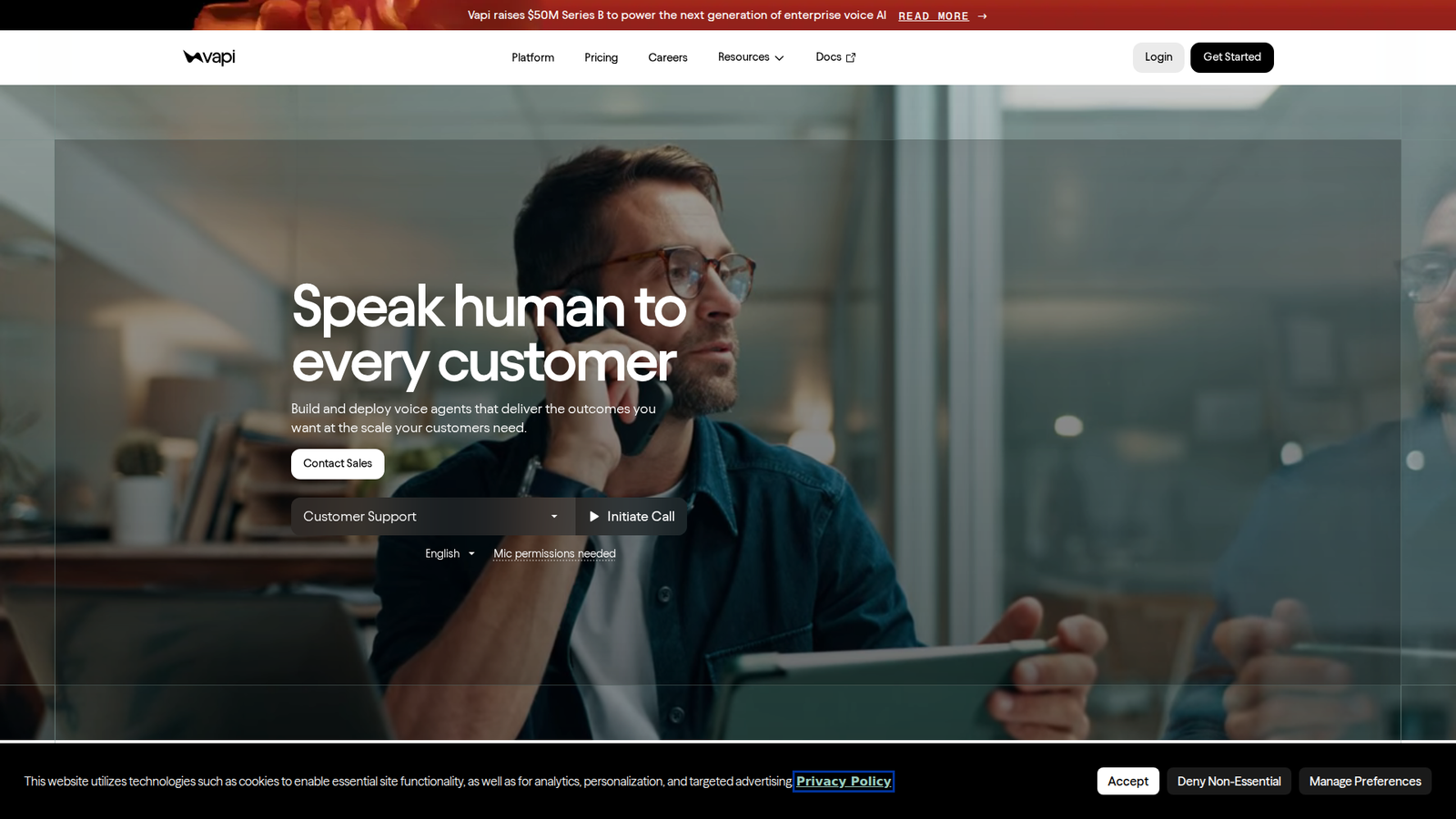
Vapi is a strong alternative when the team wants to build custom voice agents with engineering control. Its homepage positions the product around voice agents for customer support, lead qualificationLead qualificationLead qualification captures fit signals such as intent, urgency, location, eligibility, consent, and availability before the next step., and appointment scheduling, with API-first configurability, monitoring, and enterprise capabilities. Compared with Voiceflow, Vapi is less of a conversation-design collaboration suite and more of a production voice infrastructure layer. That is powerful if engineering owns the roadmap, but it can become expensive in time when RevOps needs fast content edits, CRM workflows, attribution, and multichannel follow-up without waiting on a sprint.
Vapi is best for engineering teams building custom voice products or embedding voice AI into an existing application. Choose it when developer control matters more than a ready-to-run revenue workflowWorkflowA workflow is a defined sequence of steps, decisions, actions, delays, and outcomes used to complete a business process. owned by sales or marketing operations.
Vapi pricing lists usage-based calls at $0.05 per minute, SMS/chat at $0.005 per message, model costs passed through, 10 included concurrency lines with extra lines at $10 per line per month, HIPAAHIPAAHIPAA is a US federal law whose Privacy, Security, and Breach Notification Rules govern protected health information for covered entities and business associates. at $2,000/month, and zero data retentionData retentionData retention defines how long recordings, transcripts, messages, personal data, and conversation metadata are kept before deletion or archival. at $1,000/month.
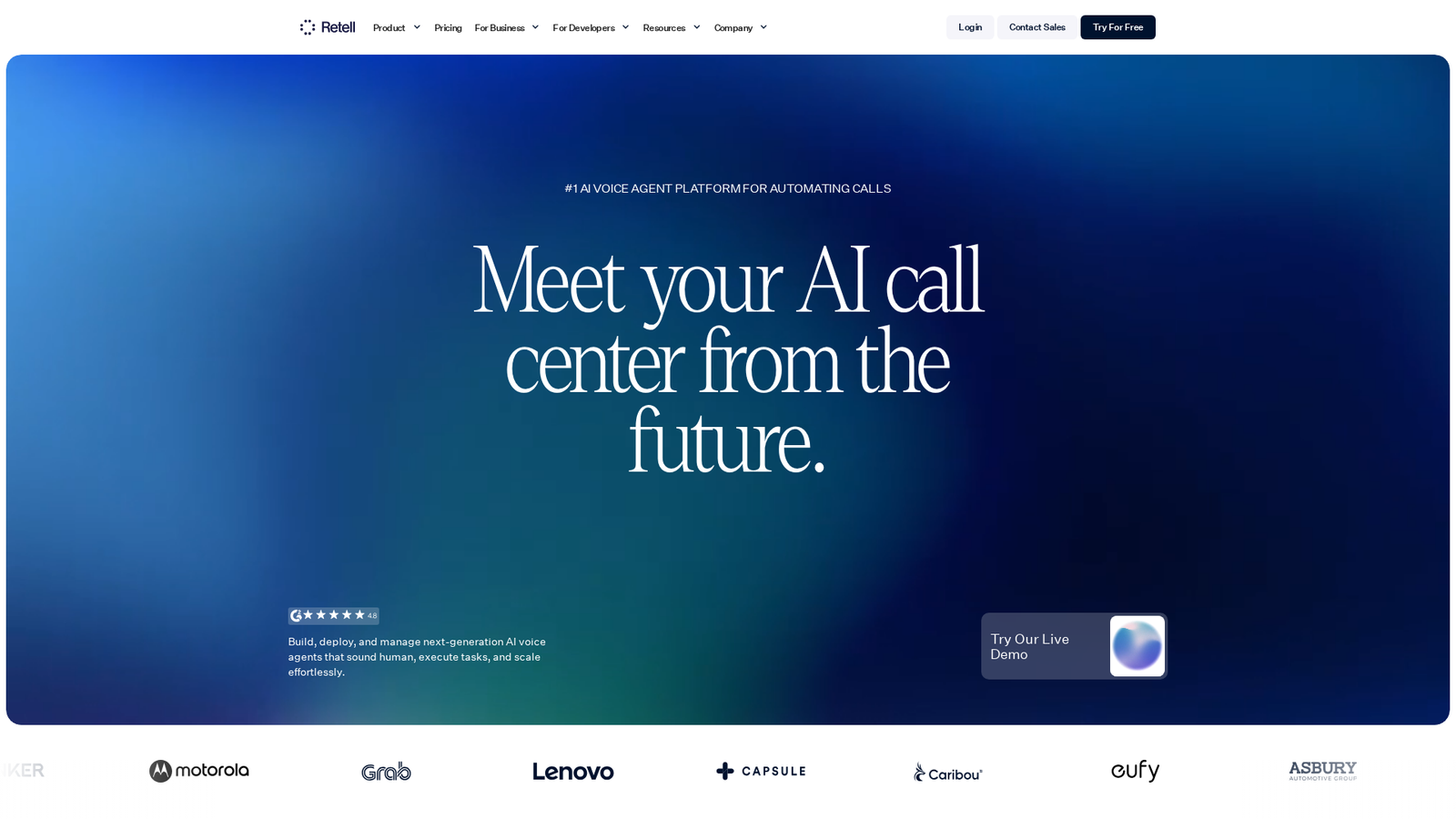
Retell AI is a voice-agent platform for teams that want to build, deploy, and manage AI phone agents with detailed control over voice, LLMLarge Language Model (LLM)A large language model (LLM) is a machine-learning model trained on large text collections to interpret and generate language from prompts and context., telephony, and add-ons. Its current homepage emphasizes AI call-center automation, humanlike voice agents, SMS, API access, SIP trunking, verified phone numbers, and enterprise security. Compared with Voiceflow, Retell is closer to production calling infrastructure than collaborative conversation design. The tradeoff is cost modeling and ownership: pricing is transparent, but the total depends on voice infrastructure, model choice, TTSText-to-Speech (TTS)Text-to-Speech (TTS) converts written text into spoken audio, producing the voice a caller hears from an automated or AI-driven system., telephony, knowledge baseKnowledge baseA knowledge base is a maintained collection of approved business information that an agent can use to answer questions., branded calling, QA, SMS, concurrency, and other add-ons.
Retell is best for teams comfortable managing a configurable voice AI stack and comparing component-level costs. It is especially relevant when engineering or technical operations owns deployment quality and wants fine-grained provider choices.
Retell lists pay-as-you-go voice agents at $0.07–$0.31 per minute and enterprise custom pricing. Its pricing page also lists detailed component rates and monthly add-ons such as phone numbers, SMS, concurrency, knowledge base, verified phone numbers, branded calls, and AI QA.
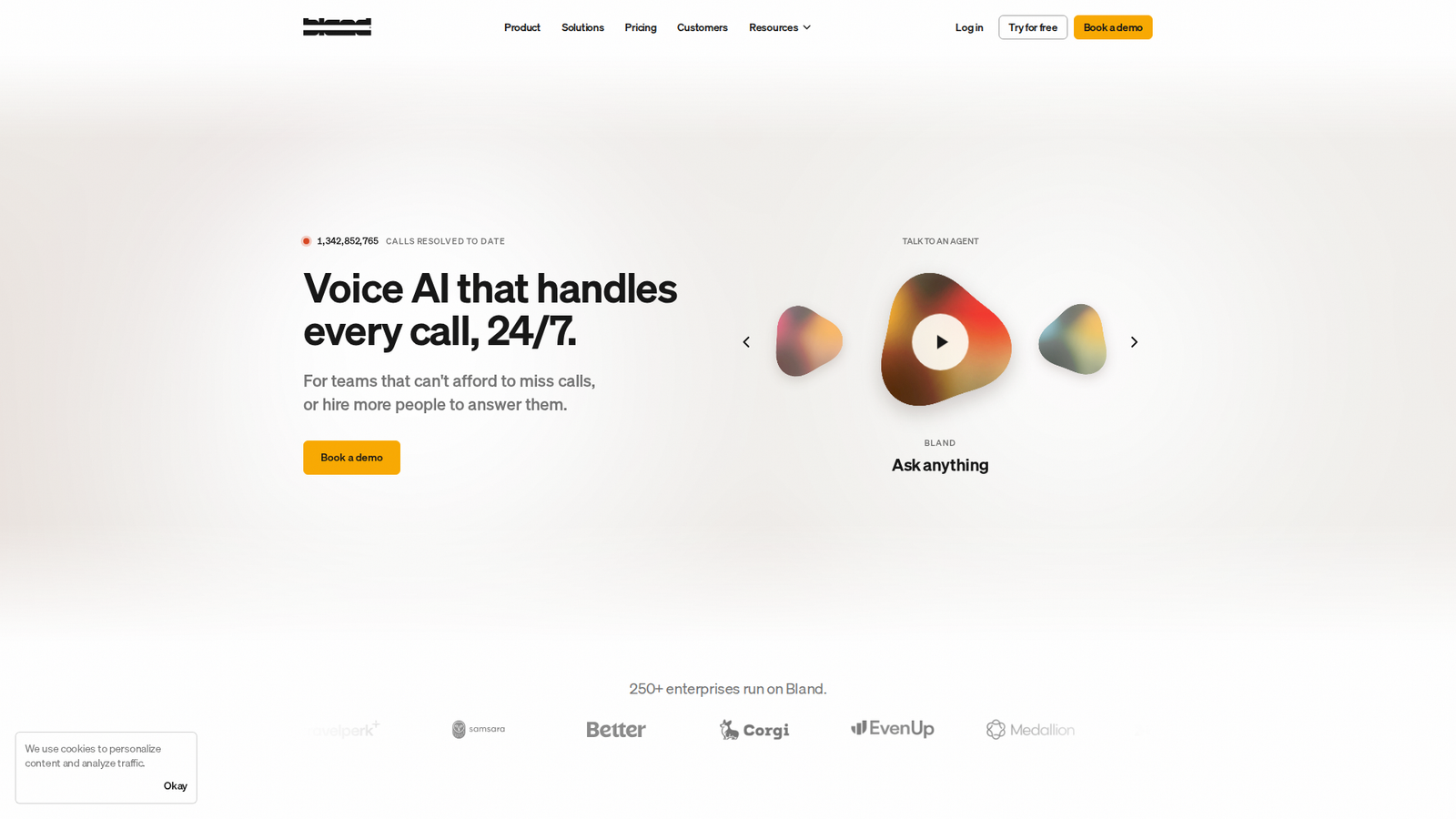
Bland AI is a voice-first enterprise platform built around handling calls at scale. Its website emphasizes 24/7 call handling, enterprise deployments, CRM and scheduling integrations, custom voice, transfer flows, and an all-in per-minute pricing model. For teams considering Voiceflow, Bland is a stronger fit when the need is phone automation rather than chat-and-voice experience design. The mismatch appears when the buyer wants the same agent to own inbound lead conversion across voice, SMS, email, CRM workflows, and revenue attribution rather than primarily automating call-center style interactions.
Bland is best for enterprises modernizing high-volume phone operations where calls are the central workflow. It is less ideal if the core requirement is a CRM-first lead conversion system where voice is one channel in a broader follow-up sequence.
Bland lists $0.14/min on Start, $0.12/min plus a $299/month platform fee on Build, $0.11/min plus a $499/month platform fee on Scale, and custom Enterprise pricing.
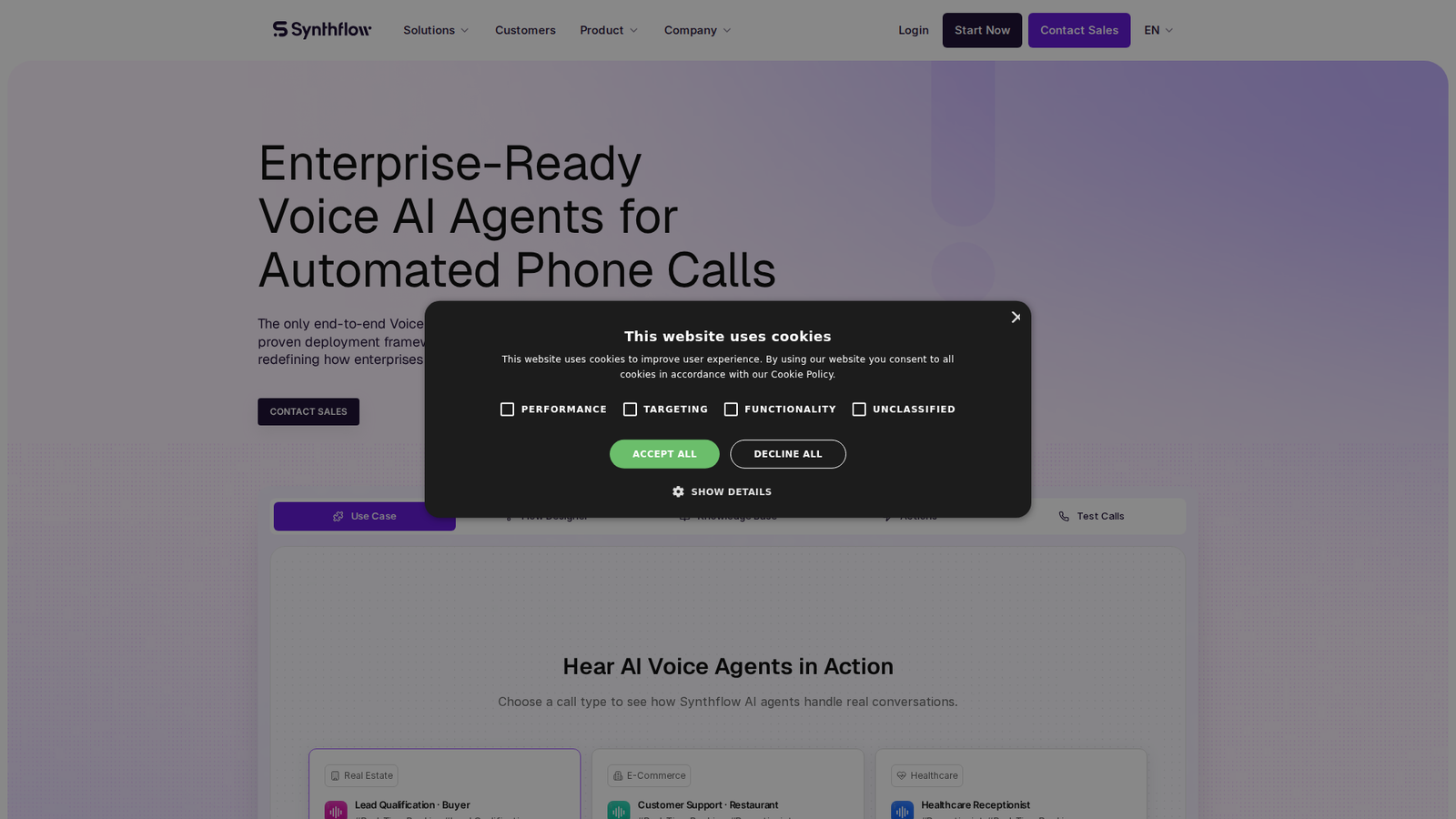
Synthflow is a voice AI platform aimed at enterprises that want a structured deployment process, visual voice flows, in-house telephony, monitoring, and integrations into systems like CRMs and CCaaS platforms. Its current site emphasizes automated phone calls, enterprise reliability, its BELL framework, real-time monitoring, API-connected flows, and compatibility with existing telephony stacks. That makes it a legitimate Voiceflow alternative when the buyer wants a more phone-centric automation layer. It can be a heavier fit, though, for revenue teams that simply need every inbound lead called, texted, emailed, booked, and logged without adopting a broader voice operating system.
Synthflow is best for enterprises that view voice AI as an operating layer across support, front desk, sales qualification, and contact-center workflows. Choose it when voice operations is the main transformation project, not just a lead conversion gap.
Synthflow pricing is primarily sales-led in the current public website experience. Contact sales for plan and volume pricing.
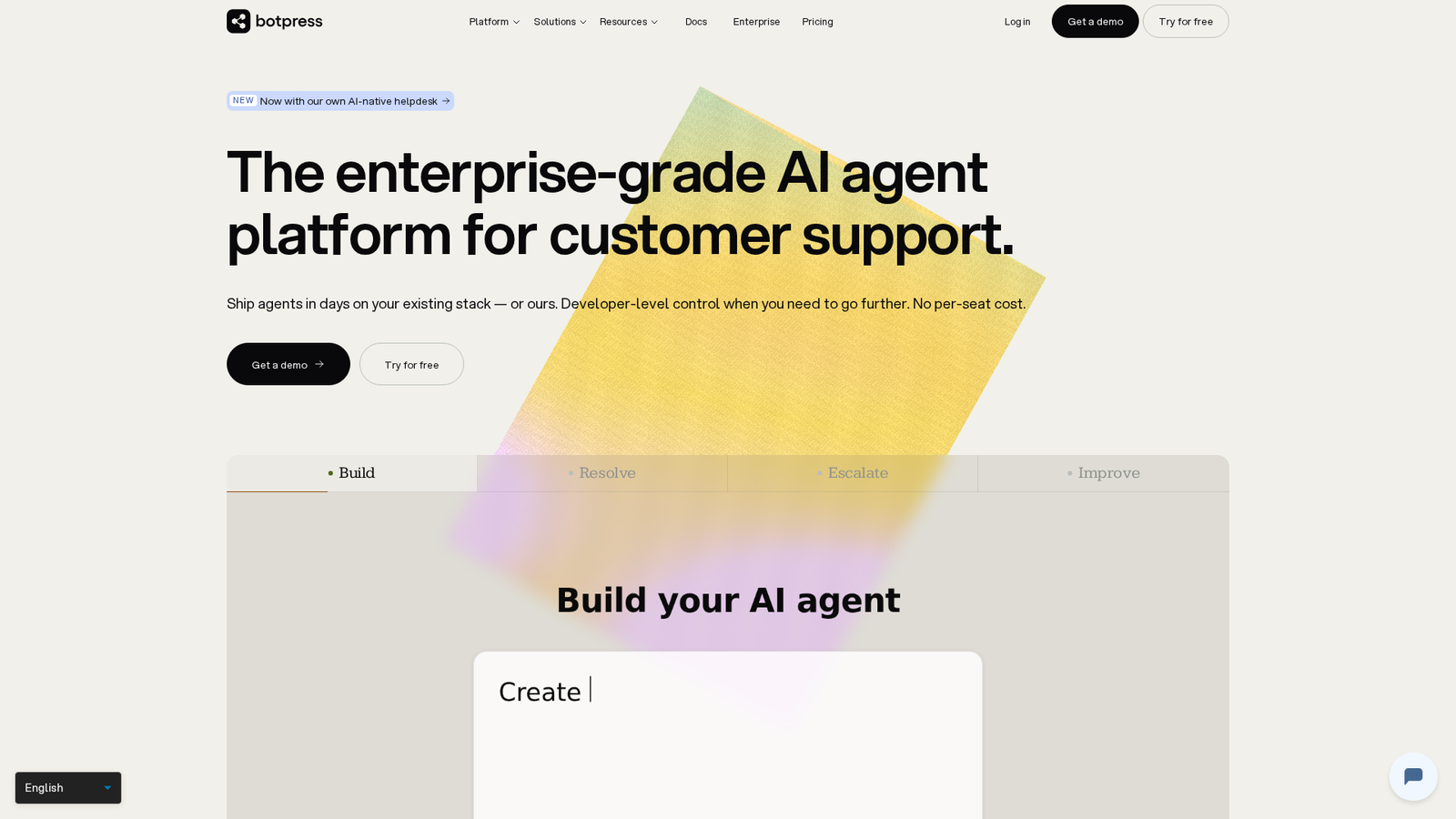
Botpress is an enterprise AI agent platform for customer support, with webchat, WhatsApp, voice, helpdesk workflows, knowledge bases, escalationEscalationEscalation moves a conversation to a person, specialist, supervisor, or alternate workflow when the agent should not continue alone., and analytics. Its current homepage is explicit about support outcomes: resolving tickets, reducing per-seat costs, and working with Zendesk, Intercom, or Botpress Desk. For Voiceflow buyers, Botpress is attractive when the project is support automation with enough flexibility for developers or support ops to extend it. It is less compelling as a revenue conversion replacement because speed-to-lead, outbound call persistence, CRM pipeline write-back, and booking/warm-transfer motions are not the center of the product narrative.
Botpress is best for support leaders automating complex tickets across helpdesk and messaging channels. It belongs on a Voiceflow shortlist when the agent project is customer support; it is not the first pick for inbound sales or appointment-setting conversion.
Botpress lists a free plan, Plus at $150/month annually or $189/month monthly with 250 conversations included, Team at $750/month annually or $939/month monthly with 1,500 conversations included, and custom Enterprise pricing.
Choose Thoughtly if missed inbound leads, slow follow-up, or poor CRM hygiene are the problem. The key question is not whether an agent can talk; it is whether the agent can work the full revenue motion across voice, SMS, email, booking, transfer, and CRM updatesCRM updatesCRM updates are changes written after or during a conversation, such as status, notes, owner, next step, appointment, or disposition. without waiting for a human.
Choose Voiceflow if the team needs a collaborative design environment for customer experiences across chat and voice. It is strongest when conversation designers, CX leaders, and engineers are iterating on flows, testing agents, and deploying support-oriented experiences.
Choose Vapi or Retell if engineering wants voice infrastructure primitives and is prepared to own the surrounding system. Choose Bland or Synthflow when the project is broad enterprise phone automation. Choose Botpress when the problem is support ticket resolution across helpdesk and messaging channels.
Thoughtly is the best fit when inbound lead conversion is the job because it is built around immediate calling, persistent follow-up, booking, transfer, and CRM write-back. Voiceflow can help design agents, but Thoughtly is the better match when the funnel needs every lead worked across channels.
Voiceflow can support voice experiences and is strong for agent design, testing, collaboration, and API-connected experiences. Buyers should verify whether its voice deployment, phone operations, CRM write-back, and follow-up depth match their exact production use case.
Vapi and Retell are the strongest developer-oriented options in this list. Vapi is more API-first and infrastructure-shaped, while Retell provides configurable AI calling with detailed component pricing.
Botpress is the most support-centered option here, with helpdesk, webchat, WhatsApp, voice, knowledge, escalation, and analytics. Synthflow and Bland can also fit support-heavy voice operations when phone calls are the main channel.
Ask who will own production changes, how voice calls are monitored, whether SMS and email follow-upEmail follow-upEmail follow-up sends timely, context-aware replies or reminders that move an inbound lead toward qualification, scheduling, or handoff. are native, how CRM records are updated, what compliance add-ons cost, and how pricing behaves at your real monthly volume. The answer usually reveals whether you need a design platform, a voice infrastructure layer, a support suite, or a revenue conversion platform.
Thoughtly homepage and product context


