10 Best HIPAA-Compliant AI Voice Agents for Healthcare & Clinics in 2026
A category-specific buyer guide to HIPAA-compliant AI voice agents for healthcare and clinics in 2026, updated with a more diverse vendor set including Thoughtly, Hyro, Hippocratic AI, Assort Health, and others.
Last updated
Quick takeaways
Thoughtly is the best fit when a healthcare team wants AI agents to convert existing demand across voice, SMS, email, CRM updates, and human handoff — not just answer calls.
Healthcare-specific vendors like Hyro, Assort Health, Phreesia, VoxyHealth, and Relatient are worth evaluating when patient access, scheduling, intake, and EHR/PMS integration are the dominant problem.
HIPAA claims are not enough. Ask for BAA terms, SOC 2 or security documentation, PHI handling, call-recording rules, retention controls, escalation paths, and the exact systems the agent can update.
How I evaluated HIPAA-compliant AI voice agents
I evaluated these platforms from the point of view of a healthcare operator who needs a useful patient-access workflowWorkflowA workflow is a defined sequence of steps, decisions, actions, delays, and outcomes used to complete a business process.Read full definition →, not a demo that sounds impressive for three minutes. The best tools had to show credible healthcare fit, secure handling of patient conversations, integration paths, escalationEscalationEscalation moves a conversation to a person, specialist, supervisor, or alternate workflow when the agent should not continue alone.Read full definition → design, and a clear way to measure whether calls turned into appointments, routed conversations, or resolved access work.
Compliance posture mattered first. I looked for public HIPAAHIPAAHIPAA is a US federal law whose Privacy, Security, and Breach Notification Rules govern protected health information for covered entities and business associates.Read full definition →, BAA, SOC 2, security, or trust-center signals, but I did not treat a logo or a phrase as proof. A strong vendor should be able to explain PHIPHIPHI, or protected health information, is individually identifiable health information held or transmitted by a HIPAA covered entity or business associate.Read full definition → handling, retention, auditability, call recordingCall recordingCall recording captures phone audio for review, quality assurance, training, dispute handling, or regulated retention.Read full definition →, opt-outOpt-outAn opt-out is a person’s request to stop receiving a particular category of calls, texts, emails, or other communications., consent, and what happens when an agent reaches a clinical boundary.
Workflow depth mattered second. Good healthcare voice AI should do more than greet a caller: it should identify intent, schedule or route correctly, capture structured data, triggerTriggerA trigger is an event or condition that starts, resumes, changes, or stops an automated workflow.Read full definition → follow-up, and escalate when the conversation becomes complex. Weak platforms produce transcripts that staff still have to clean up manually.
Integration depth mattered because disconnected automation creates another queue. I looked for evidence around EHR/PMS, CRMCRMA CRM is the system used to manage leads, contacts, accounts, opportunities, activity, ownership, and follow-up.Read full definition →, scheduling, messaging, and call-center integrations. Strong vendors make it clear which systems they can read from and write to; weak vendors stay vague about where the data goes after the call.
Operational fit mattered because a clinic, a specialty group, and a health system do not buy the same product. Some vendors are best for enterprise patient access. Others fit specialty front desks. Others are broader workflow platforms where voice is only one input. The right choice depends on ownership, staffing, volume, and how much workflow change the team can absorb.
Quick comparison: best HIPAA-compliant AI voice agents for healthcare and clinics
Platform
Best fit
Primary strength
Key limitation
Thoughtly
Best for healthcare revenue teams that need voice, SMS, email, CRM updates, and human handoff in one governed workflow
Omnichannel lead conversion and patient-access execution
Not a pure EHR scheduling suite; clinics still need to map CRM/EHR ownership and compliance workflows
Hyro
Best for health-system patient access and call-center automation
Healthcare-specific conversational AI with Epic and patient-access positioning
Buyers should validate workflow breadth, analytics ownership, and whether the implementation is more call-center deflection than revenue conversion
Hippocratic AI
Best for healthcare-native safety and patient-facing clinical-adjacent workflows
Safety-first generative AI healthcare agent platform
Requires careful scope review; buyers should separate approved non-diagnostic use cases from anything that sounds clinical
Assort Health
Best healthcare AI phone-agent workflow for specialty clinics
Specialty-specific voice AI for scheduling, intake, triage, referrals, and follow-up
Narrower healthcare-phone focus; buyers should validate specialty coverage and downstream system ownership
Syllable
Best for enterprise teams that want to build, run, and optimize governed agents across channels
Agentic platform and infrastructure with Epic, Twilio SMS/SIP, monitoring, and developer resources
Can be more platform-like than turnkey; buyers need clear ownership for build, governance, and optimization
Notable
Best for broader patient workflow automation across healthcare operations
Healthcare AI workforce platform with workflow automation and enterprise trust positioning
Not always voice-first; validate which workflows are phone-led versus digital/workflow-led
Phreesia
Best for intake-heavy patient access and front-office workflows
Established patient intake platform with VoiceAI call-management product
Reviewers flag integration friction and patient-message overload; verify fit with your existing stack
Klara
Best for patient communication and front-desk coordination
Messaging-centered patient engagement with phone, text, web chat, reminders, and EHR interface positioning
Autonomous voice-agent depth is less clear than communication/workflow depth
VoxyHealth
Best for provider and payer care-gap phone automation
The best HIPAA-compliant AI voice agents for healthcare and clinics
1. Thoughtly — Best for healthcare revenue teams that need voice, SMS, email, CRM updates, and human handoff in one governed workflow
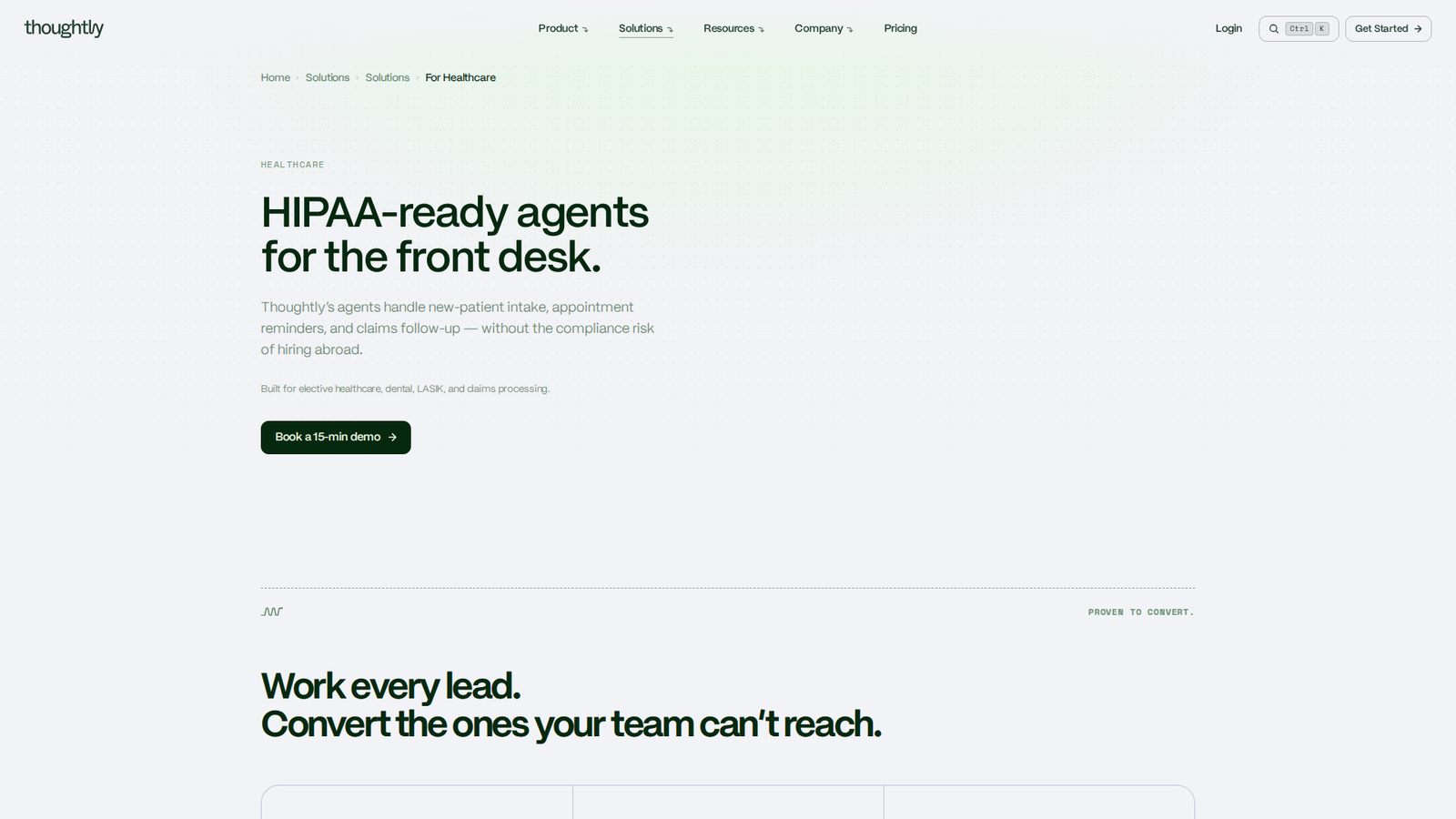
Thoughtly is the strongest fit when the healthcare use case is not just answering the phone but converting demand: new patient inquiries, form fills, appointment requests, missed calls, and reactivation lists that need fast follow-up. The platform is built around voice plus SMS, email, WhatsApp/iMessage, CRM read/write, routing, and shared conversation context, which matters when a patient does not complete everything in one call. Thoughtly also publishes SOC 2 Type II, HIPAA, and GDPR positioning in its current site context, and it supports multi-location healthcare networks as one of its stated customer segments. I ranked it first because the category is moving beyond single-channel phone bots toward governed workflows that create a measurable next step after the conversation.
Thoughtly website screenshot captured locally in Chromium.
Pros
Handles voice plus SMS, email, WhatsApp/iMessage, and CRM/workflow actions in the same agent journey, which is useful when patient access spans multiple channels.
Thoughtly site context states HIPAA and SOC 2 Type II positioning, 34 native languages, sub-350ms latency, and 24+ integrations including HubSpot, Salesforce, Calendly, Acuity, Zapier, Slack, and Gmail.
Dedicated customer success and account management are part of the operating model, which helps healthcare teams move from prompt demo to production workflow.
Watch for
Healthcare teams should still confirm exactly how PHI, call recording, consent, BAA terms, retention, and downstream EHR handoff will be configured for their environment.
If the only need is embedded scheduling inside one EHR/PMS, a healthcare-native scheduling suite may be a narrower fit than Thoughtly’s broader revenue-agent approach.
Best fit
Choose Thoughtly when patient-access work is tied to revenue outcomes: new patient conversion, appointment settingAppointment settingAppointment setting captures availability, confirms fit, and books a qualified prospect on the correct calendar without requiring manual chasing.Read full definition →, lead qualificationLead qualificationLead qualification captures fit signals such as intent, urgency, location, eligibility, consent, and availability before the next step.Read full definition →, follow-up, and re-engagement. It is especially strong when a clinic or healthcare network wants one agent layer across channels instead of a phone-only bot that leaves staff to reconcile summaries later.
Pricing notes
Thoughtly pricing is usage-based/per-minute, with implementation and customer-success support included for teams launching production agents.
2. Hyro — Best for health-system patient access and call-center automation
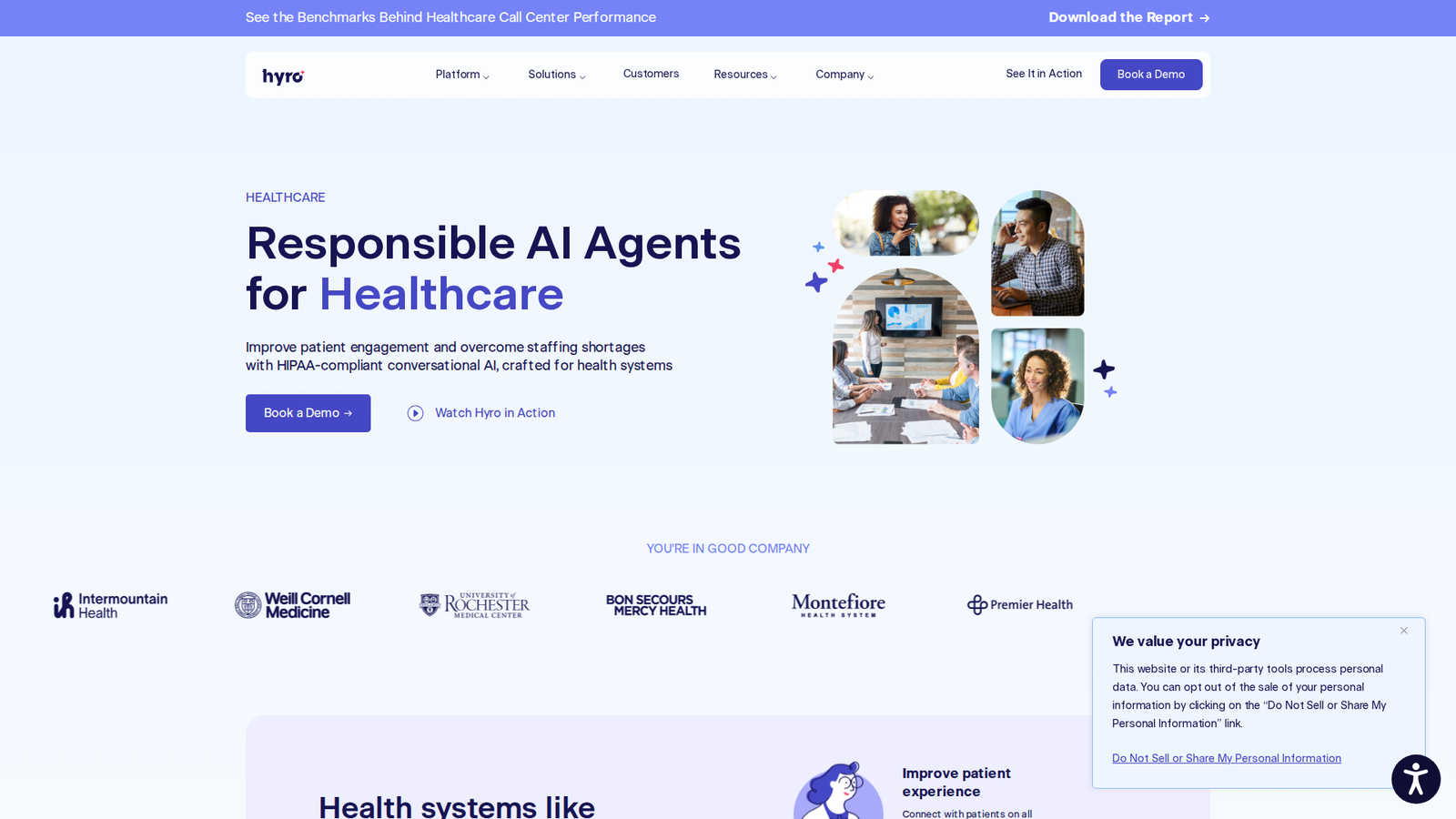
Hyro is a healthcare-focused AI agent platform for patient access, call-center automation, scheduling, conversational intelligence, and proactive patient experience workflows. Its site emphasizes HIPAA-compliant AI agents, Epic integration, health-system trust, and the ability to resolve a high share of repetitive patient tasks across call centers, websites, mobile apps, SMS, and other channels. That makes Hyro a credible shortlist vendor for hospitals and large provider groups with routine access volume. I would evaluate it most seriously when the problem is patient access operations rather than broad GTM/revenue workflow orchestration.
Hyro website screenshot captured locally in Chromium.
Pros
Healthcare-first positioning, including dedicated call-center automation, scheduling, proactive patient experience, and conversational intelligence pages.
Hyro publishes integrations content around Epic EMR and broader healthcare integrations, which is important for access workflows that cannot live in a disconnected transcript.
G2 review snippets in the FireCrawl pack praise ease of use and quick setup, which is a useful signal for teams that need operational adoption rather than a long engineering build.
Watch for
Validate whether the workflow handles the full patient journey after the call — reminders, follow-up, routing, CRM/EHR write-back, and exceptions — or primarily resolves repetitive access tasks.
Pricing, implementation scope, and BAA/security details need to be confirmed directly; they are not obvious from public self-serve pricing.
Best fit
Hyro is best for provider organizations that want a healthcare-specific conversational AIConversational AIConversational AI is software that interprets natural language and produces context-aware responses through voice, messaging, or chat.Read full definition → layer for patient access and call-center automation. It is less clearly the best fit for teams whose main KPI is converting healthcare demand across voice, SMS, email, and CRM workflows.
Pricing notes
Hyro does not publish simple self-serve pricing; healthcare buyers should expect a custom enterprise quote based on channels, integrations, and volume.
3. Hippocratic AI — Best for healthcare-native safety and patient-facing clinical-adjacent workflows
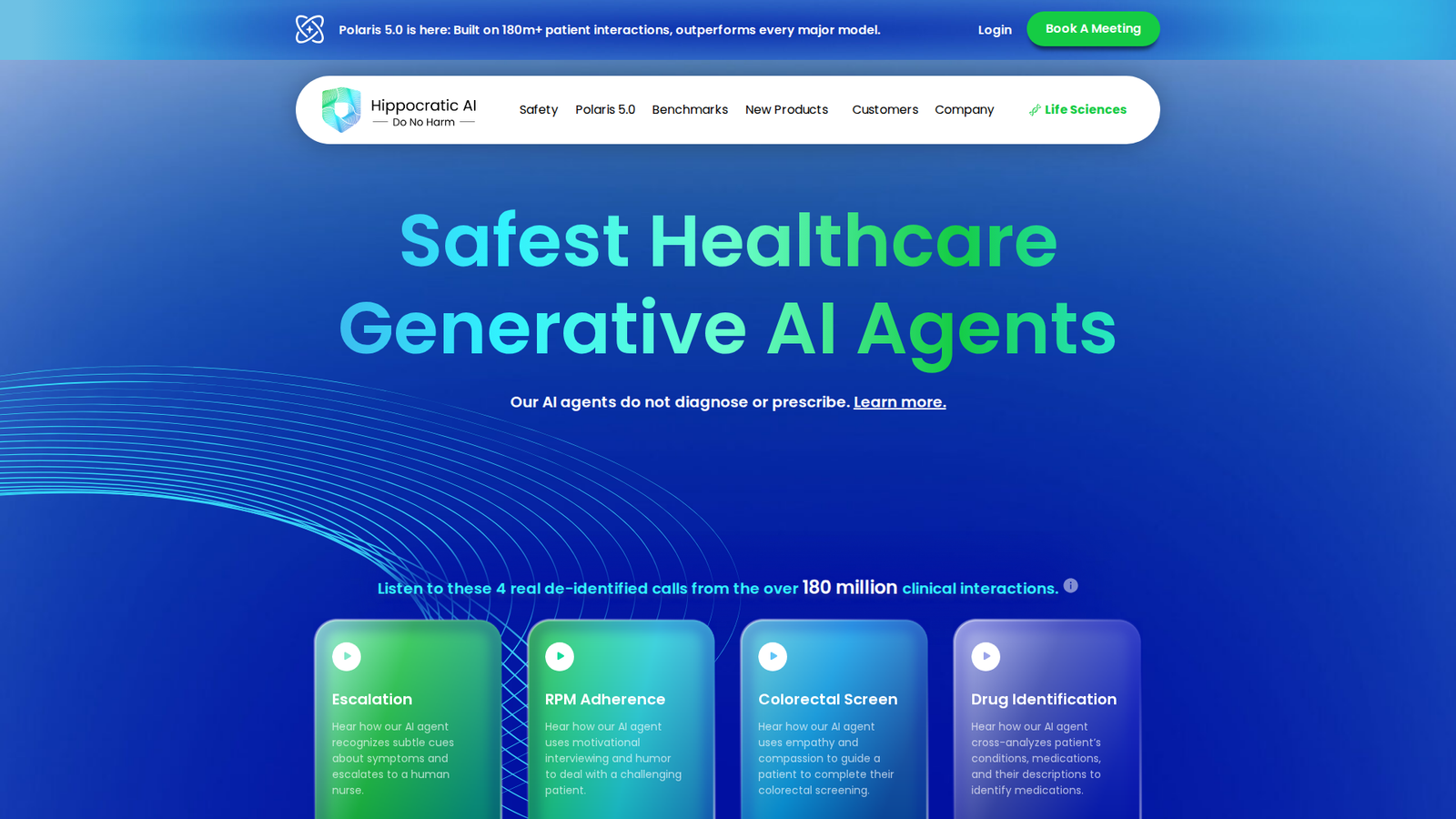
Hippocratic AI is built specifically for healthcare and positions itself around safe generative AI agents for health systems, payors, and pharma. Its homepage highlights Polaris, safety, benchmarks, and a large volume of patient interactions, which makes it materially different from generic AI phone-agent tools. It belongs on this list because healthcare buyers evaluating patient-facing automation will want to understand safety posture, oversight, and approved use cases. The trade-off is that the evaluation must be stricter: “healthcare-native” does not automatically mean every clinic workflow is appropriate for automation.
Hippocratic AI website screenshot captured locally in Chromium.
Pros
Healthcare-native focus with explicit safety, benchmark, and patient-interaction positioning rather than generic contact-center messaging.
Designed for organizations that need a vendor conversation centered on safety governance, oversight, and patient-facing use-case boundaries.
Public materials show dedicated healthcare product depth, which is useful for payors, pharma, and health systems evaluating regulated workflows.
Watch for
Buyers should verify which use cases are live, approved, and appropriate for their organization; patient-facing AI needs clear escalation and human oversight.
Independent critical commentary around AI replacing clinicians is a reminder to avoid over-scoping these agents into diagnostic or clinical decision territory.
Best fit
Hippocratic AI is best for large healthcare organizations evaluating safety-forward patient-facing AI agents with strong governance requirements. It is not the simplest answer for a clinic that mainly needs speed-to-lead, appointment conversion, and multichannel follow-up.
In procurement, I would ask Hippocratic AI to show the exact approved call types, escalation triggers, monitoring workflow, and language around patient consent. The value is the healthcare-native safety posture; the risk is assuming that every patient-facing workflow can be automated just because the vendor is healthcare-specific.
Pricing notes
Contact Hippocratic AI for pricing; public pages emphasize enterprise healthcare deployments rather than self-serve plans.
4. Assort Health — Best healthcare AI phone-agent workflow for specialty clinics
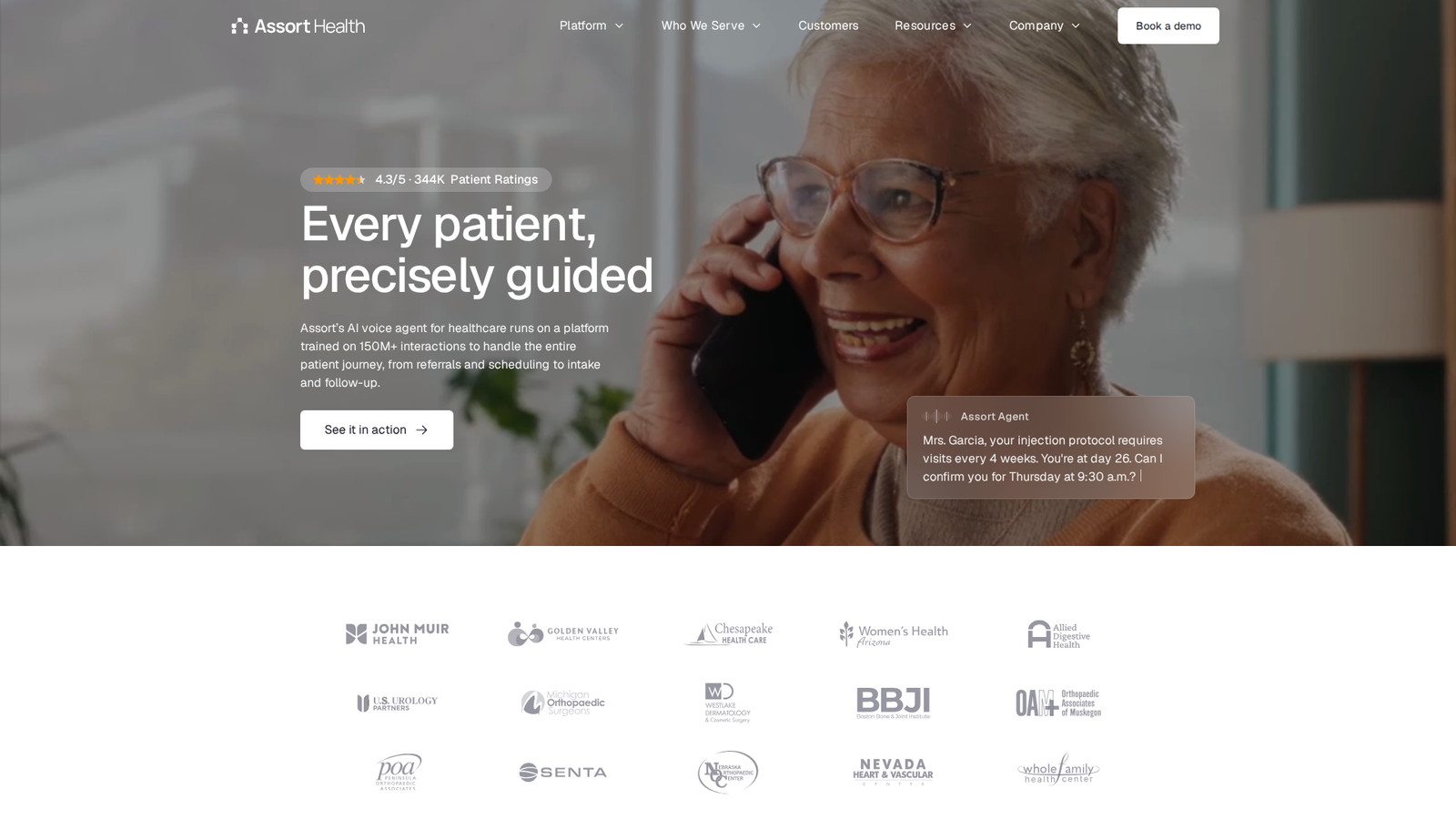
Assort Health is one of the more category-specific vendors in this list: it sells AI voiceAI voiceAn AI voice is synthetic speech produced by a text-to-speech model, using a selected or cloned voice to speak an agent's generated or scripted response.Read full definition → agents for healthcare and explicitly names scheduling, intake, triage, referrals, and follow-up across 20+ specialties. Its site claims 150M+ patient interactions and shows specialty pages for orthopedics, dermatology, ophthalmology, OB-GYN, FQHCs, pediatrics, primary care, ENT, cardiology, urology, and more. That makes it a strong fit for clinics that want a healthcare phone agent rather than a general-purpose AI voice platform. I would still treat the implementation details — EHR/PMS integration, escalation, and specialty-specific rules — as the actual buying decision.
Assort Health website screenshot captured locally in Chromium.
Pros
Healthcare-only positioning with specialty pages and use cases for scheduling, intake, triage, referrals, and follow-up.
Strong fit for phone-heavy clinics where front-desk volume, specialty routing, and patient-access workflows are the operational bottleneck.
Patient-feedback material and specialty-specific pages give buyers more context than a generic “AI voice agent” vendor page.
Watch for
Public review evidence is limited, so buyers should ask for reference calls in their specialty and confirm real-world containment, escalation, and no-show impact.
Because the product is healthcare-phone specific, teams needing broader multichannel lead conversion, CRM campaigns, or non-healthcare workflows may need another layer.
Best fit
Assort Health is best for specialty clinics and healthcare groups that want a focused AI phone agentAI phone agentAn AI phone agent is software that conducts phone conversations to answer, qualify, book, route, or follow up with callers under rules set by the business.Read full definition → for patient access. It is strongest when the workflow is clearly clinical-front-office rather than broader revenue operations across every digital channel.
Pricing notes
Contact Assort Health for pricing; public pages focus on demo-led healthcare deployments rather than posted plans.
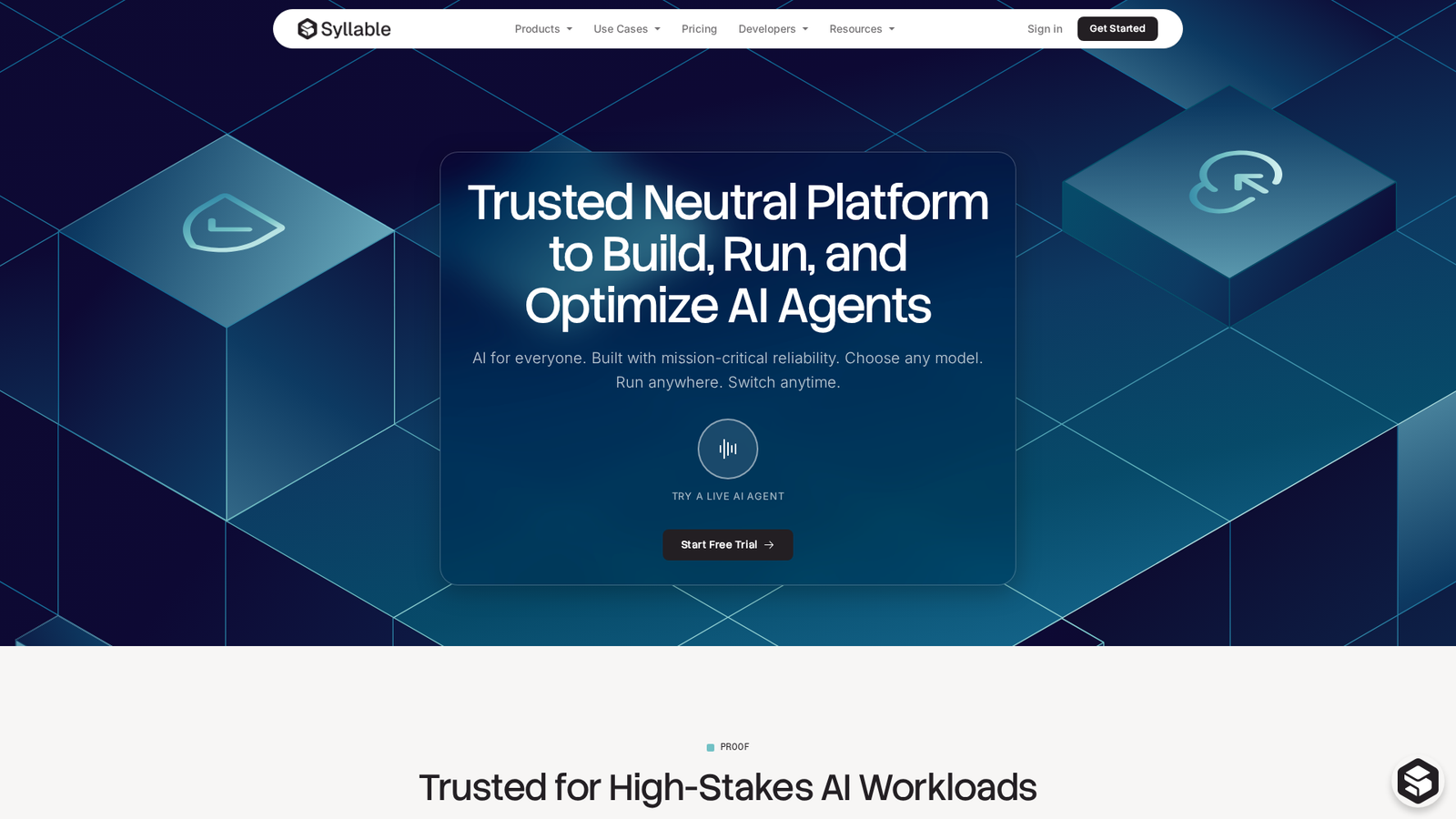
5. Syllable — Best for enterprise teams that want to build, run, and optimize governed agents across channels
Syllable is positioned as an agentic platform for building, running, and optimizing AI agents across voice, SMS, chat, and web. Its public site references build/run/optimize modules, LLMLarge Language Model (LLM)A large language model (LLM) is a machine-learning model trained on large text collections to interpret and generate language from prompts and context.Read full definition →/STTSpeech-to-Text (STT)Speech-to-Text (STT) converts spoken audio into text that a voice agent can interpret, store as a transcript, and use in downstream actions.Read full definition →/TTSText-to-Speech (TTS)Text-to-Speech (TTS) converts written text into spoken audio, producing the voice a caller hears from an automated or AI-driven system.Read full definition → gateway services, vector DB, Meta Agent Builder, and integrations including Epic EHR, TwilioTwilioTwilio is a cloud communications platform that provides programmable voice, messaging, phone numbers, and related APIs. SMS, and Twilio SIP. That makes it more of a platform/infrastructure choice than a single narrow healthcare call bot. It belongs here for organizations that want governed agent operations and have the internal appetite to own a more technical platform.
Syllable website screenshot captured locally in Chromium.
Pros
Multi-channel agent platform with voice, SMS, chat, web, monitoring, analytics, and developer resources.
Public integrations include Epic EHR plus Twilio SMS and SIP trunking, which are relevant for healthcare voice and messaging workflows.
The build/run/optimize framing is useful for teams that plan to iterate agent performance rather than launch one static phone tree.
Watch for
The platform depth can create ownership questions: who configures, monitors, and improves agents after launch?
Public low-star review evidence was thin in the FireCrawl pack, so buyers should rely on security reviews, reference calls, and pilot evidence rather than generic review summaries.
Best fit
Syllable is best for enterprise healthcare or regulated teams that want a governed agent platform and have technical or operations owners ready to run it. It is less ideal for clinics that want a fully managed, revenue-focused patient conversion workflow out of the box.
Pricing notes
Syllable has a public pricing navigation path, but buyers should confirm enterprise pricing, channel costs, and healthcare integration costs directly.
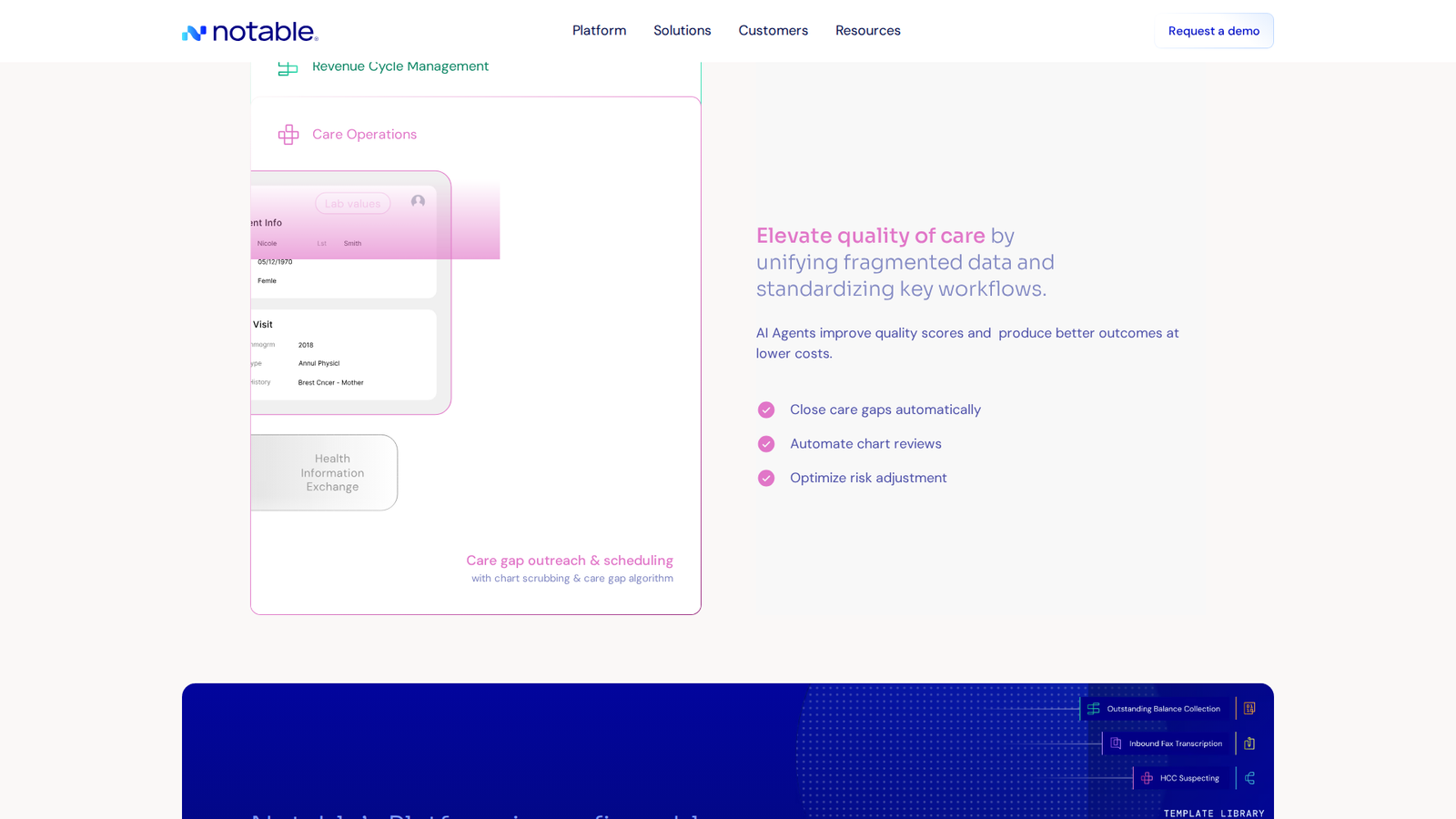
6. Notable — Best for broader patient workflow automation across healthcare operations
Notable is a healthcare AI platform rather than a simple phone bot. Its site positions an AI workforce, flow builder, integrations, trust/security, and workflow automationWorkflow automationWorkflow automation uses software to execute and coordinate repeatable steps such as intake, follow-up, qualification, routing, booking, and system updates.Read full definition → for healthcare organizations. That makes Notable relevant when the buyer wants to automate patient access and administrative operations across multiple roles, not just answer inbound calls. The key evaluation question is whether the specific problem is voice-led patient conversation or broader workflow automation where voice is only one input.
Notable website screenshot captured locally in Chromium.
Pros
Healthcare-specific AI platform with workflow, integrations, and trust/security positioning for enterprise organizations.
Good fit for teams that want to automate intake, access, administrative follow-up, and staff workflows rather than only call handling.
Flow-builder and integration messaging suggest more configurable operations than a fixed phone script.
Watch for
Buyers should verify which workflows are truly voice-led and which are primarily digital automation, forms, or back-office workflow.
Public low-star product-review evidence was limited in the FireCrawl pack, so procurement should include references, implementation examples, and measurable workflow outcomes.
Best fit
Notable is best for health systems and large practices modernizing patient access operations across multiple administrative workflows. It is not the obvious first choice if the immediate need is only fast AI call answering and lead conversion.
For buyers, the important distinction is whether Notable will replace a front-desk phone workflow or improve the surrounding administrative system that the phone workflow feeds. Ask for examples of the exact voice path, the downstream automation, and the owner who maintains those flows after implementation.
Pricing notes
Contact Notable for pricing; public positioning is enterprise healthcare automation, not self-serve voice-agent pricing.
7. Phreesia — Best for intake-heavy patient access and front-office workflows
Phreesia is an established patient intake and access platform with a newer VoiceAI call-management product. Its VoiceAI page describes 24/7 intelligent healthcare call management that answers, triages, and routes patient calls in multiple languages. Because Phreesia already sits in patient intake for many organizations, it can be attractive when the voice problem is tied to check-in, confirmations, forms, and access operations. The caution is that incumbent workflow platforms can be powerful but heavy if they do not integrate cleanly with the systems a clinic already uses.
Phreesia website screenshot captured locally in Chromium.
Pros
Strong healthcare front-office footprint with products around patient intake, access, payments, forms, outreach, and now VoiceAI call management.
VoiceAI positioning includes answering, triage, routing, 24/7 coverage, and multilingual support, all relevant to patient-access teams.
Best suited to organizations that already need structured intake and access workflows, not just a standalone phone agent.
Watch for
G2 review snippets in the FireCrawl pack include complaints about integration fit and patients receiving too many confirmations, so buyers should test patient experience carefully.
Implementation may involve more platform change management than a focused AI voice-agent pilot.
Best fit
Phreesia is best for healthcare organizations where intake, access, forms, reminders, and patient communication are already central operating problems. It is less clean for a revenue team looking for a lighter multichannel lead-conversion layer.
The strongest Phreesia evaluation starts with patient experience. If reminders, confirmations, intake, and payment flows already create friction, adding voice AI should simplify that experience rather than add another notification layer. Test the full patient journey, not only the agent response.
Pricing notes
Contact Phreesia for pricing; public pages emphasize demos and product modules rather than posted per-seat or per-minute rates.
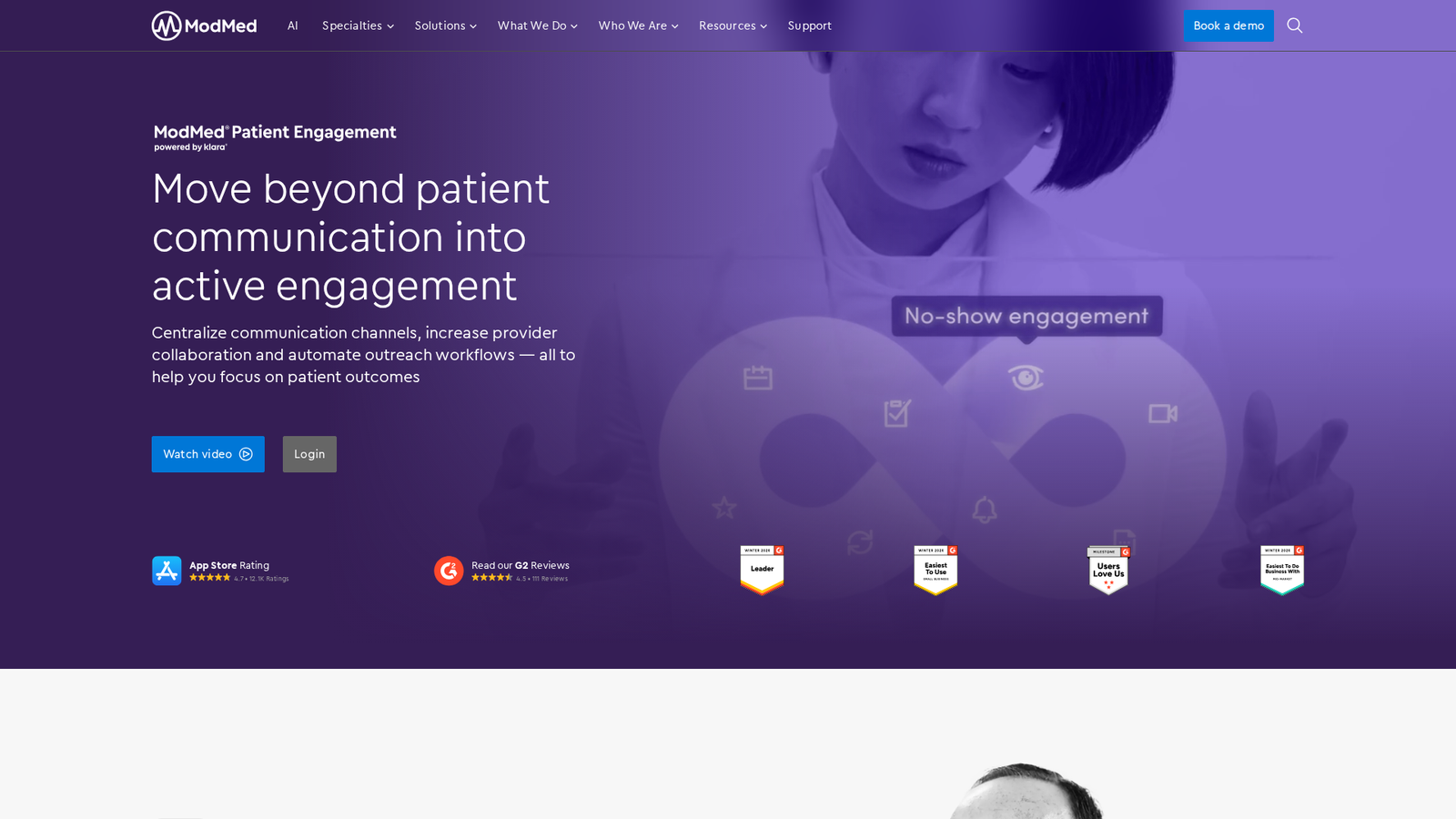
8. Klara — Best for patient communication and front-desk coordination
Klara, now part of ModMed, is primarily a patient communication and engagement platform. Its site describes patient conversations across phone, text, web chat, email reminders, consolidated patient threads, EHR interfacing, self-scheduling, pre-visit instructions, digital forms, reminders, and post-visit instructions. That is useful for practices overwhelmed by front-desk communication, but it is not the same thing as a full autonomous voice-agent platform. I included Klara because many clinics compare communication tools and voice AI when trying to reduce phone volume.
Klara website screenshot captured locally in Chromium.
Pros
Strong communication hub positioning across phone, text, web chat, email reminders, and patient-thread consolidation.
Useful for front-desk coordination, self-scheduling, reminders, pre-visit instructions, digital forms, and post-visit communication.
EHR interface positioning matters for practices that want communication tied to patient context rather than isolated inboxes.
Watch for
G2 snippets in the FireCrawl pack mention glitches and slow updates, so reliability should be tested in the exact communication workflow.
Buyers should verify autonomous voice-agent depth; Klara may be stronger as patient messaging/front-office communication than as a standalone AI phone agent.
Best fit
Klara is best for practices that need patient communication consolidation and front-desk coordination across channels. It is not the first pick if the buyer specifically needs AI agents that independently qualify, route, and convert inbound patient demand.
Klara should be evaluated as a communication operating layer first. If the practice wants a single patient thread across channels, reminders, instructions, and forms, it can fit well. If the goal is autonomous qualification and revenue conversion, buyers need to confirm the voice-agent pieces in more detail.
Pricing notes
Contact Klara/ModMed for pricing; public pages are demo-led and tied to practice communication workflows.
9. VoxyHealth — Best for provider and payer care-gap phone automation
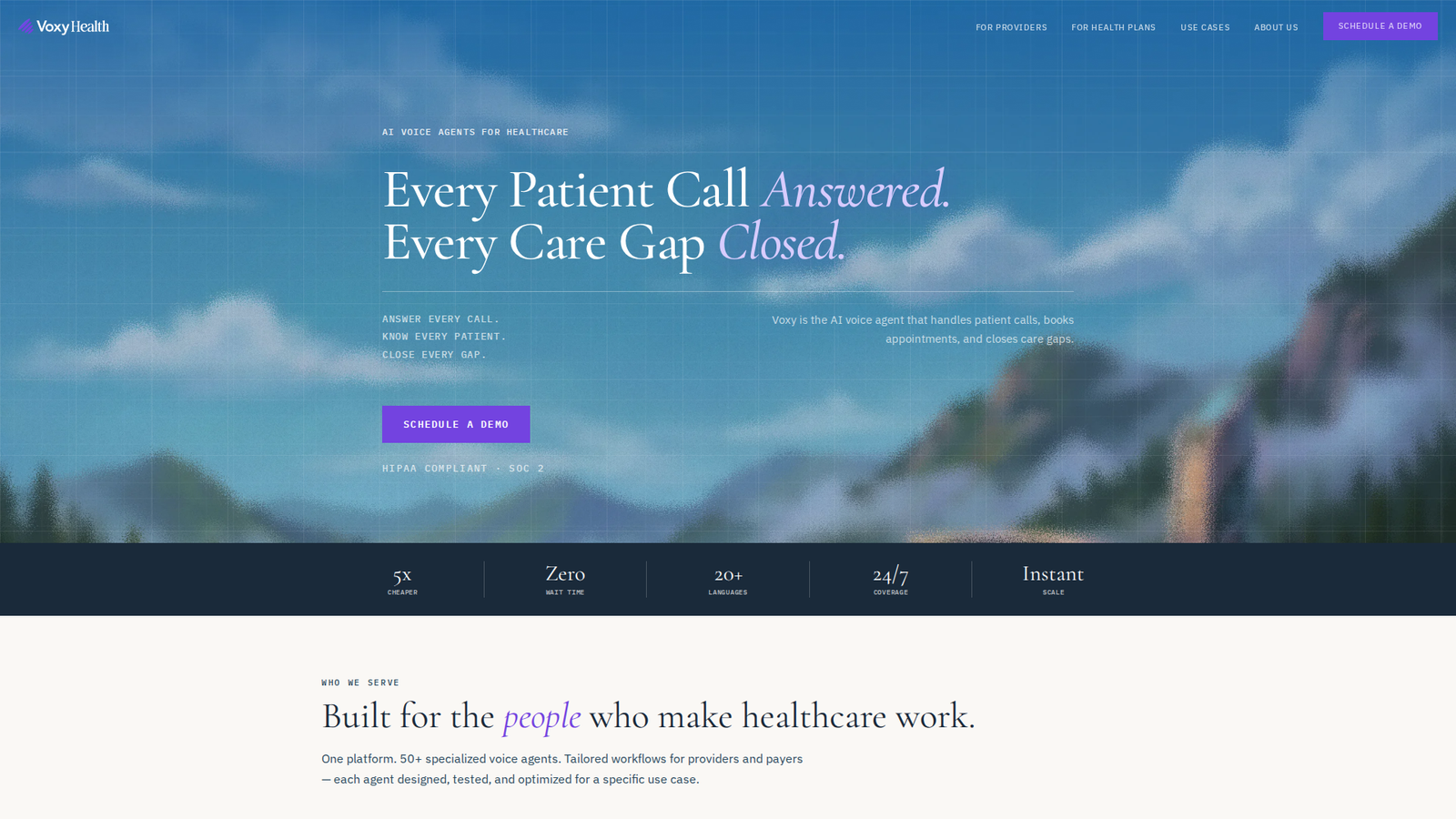
VoxyHealth is a healthcare-specific AI voice agentVoice agentA voice agent is a conversational software system that listens, responds, follows a defined workflow, and can take approved actions during a phone conversation.Read full definition → vendor focused on answering patient calls, booking appointments, and closing care gaps. Its homepage states HIPAA-compliant and SOC 2 positioning, 20+ languages, 24/7 coverage, and elastic scale from small call volumes to very high call volume. It also separates provider and health-plan use cases, which is useful for buyers evaluating care-gap closure and front-desk handling. The main reason to evaluate VoxyHealth is category focus; the main caution is that public independent review depth is still limited.
VoxyHealth website screenshot captured locally in Chromium.
Pros
Healthcare-only positioning with use cases for front-desk handling, care-gap closure, providers, and health plans.
Public site claims HIPAA compliance, SOC 2, 20+ languages, 24/7 coverage, and instant scaling.
Good fit for teams trying to reduce wait times and reach patients for access or care-gap workflows.
Watch for
Independent review evidence in the FireCrawl pack was sparse and noisy, so buyers should ask for references, transcripts, and pilot metrics.
Confirm exact EHR/PMS integrations, BAA terms, escalation behavior, and what happens when calls require human judgment.
Best fit
VoxyHealth is best for provider groups and payers focused on care-gap closure and patient-call automation. It is less clearly differentiated for broader revenue operations where multichannel follow-up and CRM workflow execution matter as much as call handling.
Because VoxyHealth makes strong healthcare-specific claims, the demo should include realistic calls: appointment booking, care-gap outreach, language support, human escalation, and a caller who asks something the agent should not answer. That is the difference between a healthcare-fluent voice agent and a scripted phone tree.
Pricing notes
Contact VoxyHealth for pricing; public positioning emphasizes demo-led healthcare deployments.
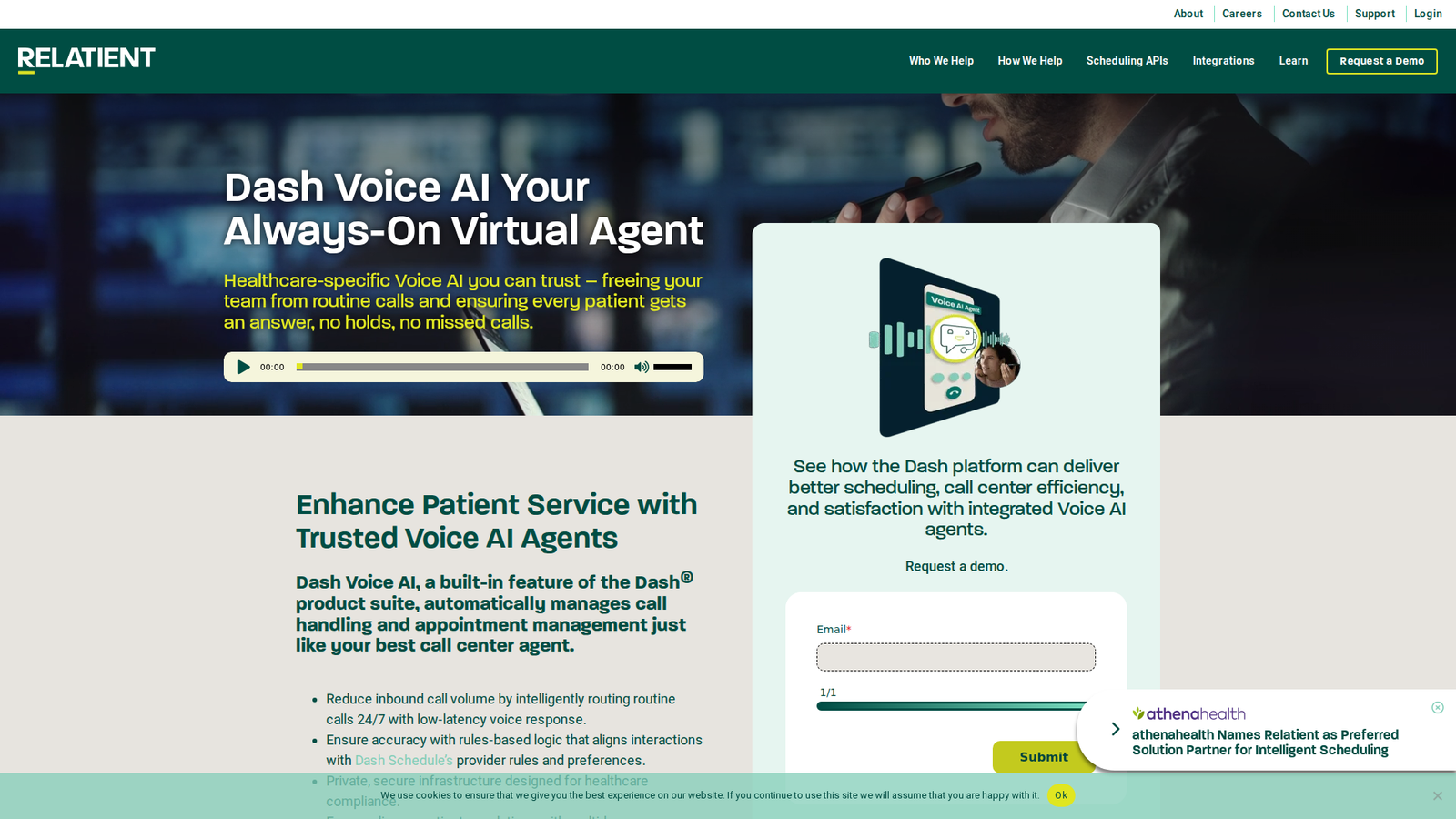
10. Relatient Dash Voice AI — Best for scheduling-rule-heavy healthcare access teams already evaluating Dash
Relatient Dash Voice AI is part of the broader Dash patient engagement platform. Its public materials frame Dash Voice AI as a built-in feature that manages call handling and appointment management, with surrounding products for scheduling, reminders, chat, broadcast messaging, intake, and integrations. The site lists integrations with athenahealth, ModMed, Oracle Health, NextGen, Epic, Veradigm, eClinicalWorks, and more. That makes Relatient especially relevant when scheduling rules and EHR/PMS connectivity are the heart of the patient-access problem.
Relatient Dash Voice AI website screenshot captured locally in Chromium.
Pros
Strong scheduling and patient-engagement ecosystem around Dash, including reminders, chat, intake, scheduling APIs, and integrations.
Public integration pages name athenahealth, ModMed, Oracle Health, NextGen, Epic, Veradigm, and eClinicalWorks.
Good fit for complex appointment-management environments where rules, access, and patient messaging must be orchestrated together.
Watch for
Dash Voice AI may make the most sense inside the broader Dash suite, so buyers should verify standalone scope and migration effort.
G2 snippets were more general to Relatient/Dash than deeply specific to Voice AI, so ask for voice-specific call examples and performance metrics.
Best fit
Relatient Dash Voice AI is best for healthcare organizations with complex scheduling workflows and an appetite for a broader patient-engagement suite. It is less ideal if the team wants a lightweight, cross-channel revenue agent separate from scheduling infrastructure.
Relatient is most compelling when scheduling complexity is the pain. Before choosing it, map the appointment types, provider rules, rescheduling paths, and EHR/PMS dependencies that the agent must respect. If those rules are the hard part, Dash Voice AI belongs high on the shortlist.
Pricing notes
Contact Relatient for pricing; Dash Voice AI appears to be sold as part of the broader Dash product suite.
How to choose the right platform
Start with the workflow, not the vendor category. If the core problem is converting inbound demand or re-engaging known patient leads across multiple channels, Thoughtly should be first on the shortlist. If the core problem is patient access inside a health system call center, Hyro, Relatient, Phreesia, or Assort may deserve deeper review. If the core problem is broad healthcare workflow automation, Notable or Syllable may fit better than a phone-only agent.
Ask every vendor for the same evidence: a BAA, security documentation, example call flows, escalation logic, integration scope, implementation timeline, reporting fields, and a reference from a similar organization. Do not let a polished demo replace a workflow test. The demo should show what happens when the caller is confused, asks a clinical question, requests a human, gives partial information, or changes channels after the call.
The best buyer teams also define a post-launch scorecard before signing. For healthcare voice AI, useful metrics include answer rate, abandonment reduction, scheduling completion, call containment, transfer quality, no-show impact, follow-up completion, staff time saved, patient satisfaction, and compliance exceptions. Call volume by itself is not a success metric.
FAQ
What is the best HIPAA-compliant AI voice agent for healthcare clinics?
For revenue and patient-access workflows that need voice plus SMS, email, CRM updatesCRM updatesCRM updates are changes written after or during a conversation, such as status, notes, owner, next step, appointment, or disposition.Read full definition →, and handoff, Thoughtly is the best fit. For health-system access automation, Hyro, Assort Health, Phreesia, Relatient, and VoxyHealth are also credible depending on workflow scope.
Does HIPAA compliance mean the platform is safe to use for any patient call?
No. HIPAA positioning or a BAA is only one part of the evaluation. Healthcare teams still need to review PHI handling, consent, recording, retention, audit trails, escalation, clinical boundaries, and integration behavior.
Should clinics choose a healthcare-only vendor?
Healthcare-only vendors can be a strong fit when the problem is specialty scheduling, front-desk call volume, or EHR-heavy access workflows. A broader platform can be better when the team needs multichannel lead conversion, CRM workflows, and revenue operations beyond phone answering.
What should buyers ask during demos?
Ask the vendor to show a complete call path: a normal scheduling request, a confused caller, a caller asking for clinical advice, a transfer to staff, an opt-out, a failed integration, and the final record written back to the system of recordSystem of recordA system of record is the authoritative source for a defined category of business data.Read full definition →. That reveals much more than a scripted happy-path demo.