

Industry insights
Best 11x Alternatives for AI SDR in 2026
Compare the best 11x alternatives for AI SDR, outbound prospecting, and opted-in lead conversion, including Thoughtly, Conversica, Artisan, AiSDR, Nooks, Unify, and Orum.
Industry insights
Compare the best 11x alternatives for AI SDR, outbound prospecting, and opted-in lead conversion, including Thoughtly, Conversica, Artisan, AiSDR, Nooks, Unify, and Orum.
Last updated
11x is a serious AI SDR platform, and it deserves credit for making the “digital worker” category feel concrete. Alice is built around outbound prospecting, market tracking, personalized email, LinkedIn-style sequencing, and meeting booking; Julian extends the brand into phone-led inbound and follow-up. That is useful when the core problem is not enough top-of-funnel activity.
But the teams that compare 11x alternatives usually have a more specific concern: they do not just need more automated outbound. They need a system that fits their actual revenue motion, budget model, compliance posture, and handoff process. If you already have opted-in leads from forms, ads, partners, events, marketplaces, renewals, or old CRMCRMA CRM is the system used to manage leads, contacts, accounts, opportunities, activity, ownership, and follow-up. records, a cold-first AI SDR can be the wrong center of gravity.
This guide compares the strongest 11x alternatives for revenue teams in 2026. I focused on platforms that can replace part of the AI SDR workflowWorkflowA workflow is a defined sequence of steps, decisions, actions, delays, and outcomes used to complete a business process., improve lead follow-upLead follow-upLead follow-up is the sequence of calls, texts, emails, and tasks used after a prospect expresses interest., or support adjacent motions like warm outbound, inbound conversion, signal-based prospecting, live dialing, and long-cycle lead nurture.
I looked at five practical criteria because “AI SDR” can mean anything from a prospecting database with email generation to a full revenue agent that calls, texts, emails, updates CRM fields, and routes live conversations. The goal was not to find the flashiest demo. It was to separate tools by the revenue job they actually perform.
The first question is whether the platform is designed to create net-new demand or convert demand that already exists. A strong cold-outbound tool needs account research, enrichment, sequencing, deliverability, and personalization. A strong inbound-conversion tool needs speed-to-lead, live voice, SMS/email fallbackFallbackA fallback is a safe alternate path used when input is unexpected, a tool fails, or the agent cannot complete the intended step confidently., CRM write-backCRM write-backCRM write-back sends conversation outcomes, qualification answers, notes, appointments, dispositions, and next steps into the CRM., scheduling, routing, and compliant consent handling.
I weighted platforms higher when they could operate across the channels buyers actually use: phone, SMS, email, and CRM/workflow actions. “Books meetings” is not enough if the tool only sends email and leaves the rest of the follow-up to reps. The better systems preserve context when a lead moves from a call to a text to a calendar booking.
AI SDR platforms often look impressive until RevOps has to reconcile the data. I looked for two-way CRM syncCRM syncCRM sync keeps selected lead, contact, conversation, outcome, and next-step data aligned between an agent platform and a CRM., routing logic, ownership rules, outcome fields, activity logging, and integration patterns that keep Salesforce, HubSpot, or another system of recordSystem of recordA system of record is the authoritative source for a defined category of business data. clean. A weak fit here turns automation into a second pipeline your team has to babysit.
Cold outbound, AI calling, SMS, and regulated vertical follow-up carry different risk profiles. For insurance, mortgage, healthcare, education, financial services, and home services, opted-in lead conversion is a materially different motion from cold AI prospecting. The more a platform depends on third-party prospecting data and unsolicited outreach, the more teams need legal review, DNC controls, consent logic, and brand-risk guardrailsGuardrailsAI guardrails are instructions, rules, data boundaries, and escalation paths that constrain what an agent may say or do..
I compared public pricing where available, third-party pricing reports where vendor pricing is gated, and likely implementation effort. A platform can be worth a high annual contract if it replaces a clearly measured workflow. It becomes harder to justify when results depend on a long calibration period, extra data tools, mailbox setup, human reply handling, or a second product for inbound calls.
| Platform | Best fit | Primary strength | Key limitation |
|---|---|---|---|
| Thoughtly | Inbound and opted-in lead conversion teams | Voice + SMS + email + CRM workflows for high-consideration leads | Not built for cold prospecting or LinkedIn outbound |
| 11x | B2B SaaS teams replacing or augmenting outbound SDR capacity | Named AI workers for outbound prospecting and phone follow-up | Cold-first motion, gated pricing, and heavier governance needs |
| Conversica | Enterprise lead nurture and long-cycle follow-up | Conversation automation across email/SMS for customer lifecycle teams | Less phone-first and less speed-to-lead oriented than dedicated voice platforms |
| Artisan | Teams that want an autonomous AI BDR for outbound campaigns | Lead finding, outreach, objection handling, and meeting booking in one outbound workflow | Best for B2B outbound, not regulated inbound consumer funnels |
| AiSDR | Sales teams wanting AI-assisted prospecting and email sequences | Broad sales outreach tooling with HubSpot-oriented positioning | Primarily outbound/email-led; verify phone and CRM depth for complex routing |
| Nooks | Outbound teams that still want reps in the loop | AI sequencing plus power dialing and live rep productivity tools | More sales-floor workspace than autonomous inbound conversion layer |
| Unify | Signal-based outbound and RevOps-led warm account plays | Buying-signal orchestration and campaign execution for warm accounts | Outbound GTM platform; not a voice-first conversion agent |
| Orum | High-volume sales dialing teams | Parallel dialing and live-call productivity for reps | Human-rep dialer, not an autonomous multichannel AI agent |
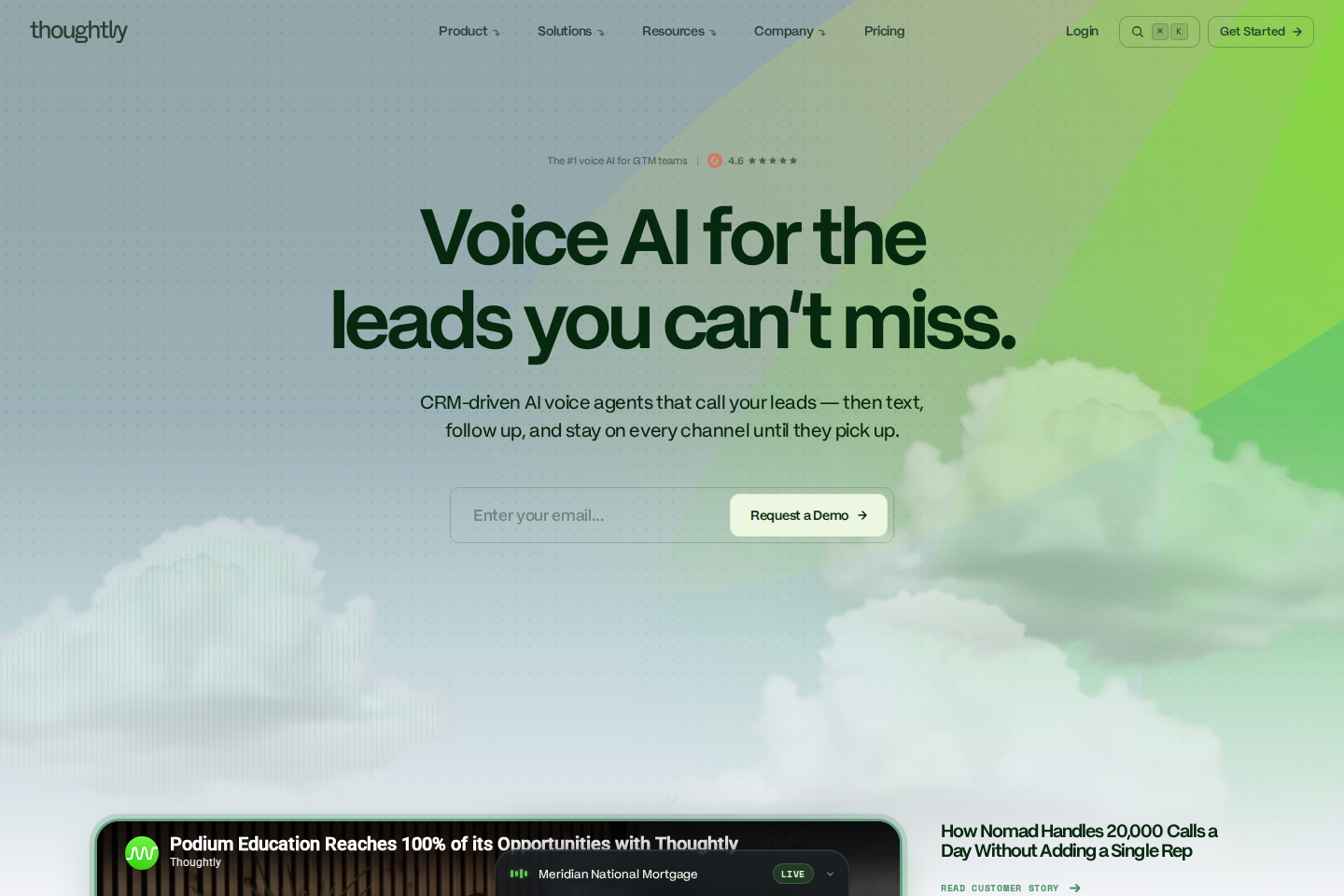
Thoughtly is the strongest 11x alternative when the issue is not “we need more strangers to email,” but “we are wasting the leads we already paid to acquire.” Its agents call new inbound leads quickly, then keep working across SMS, iMessage, WhatsApp, and email until the lead responds, books, qualifies out, or needs a human. That makes it especially relevant for high-consideration consumer funnels like insurance, mortgage, real estate, education enrollment, elective healthcare, home services, legal, automotive, and financial services.
Compared with 11x, the difference is the center of gravity. 11x’s flagship motion is AI SDR prospecting; Thoughtly is a CRM-driven conversion layer for opted-in leads. If your team cares about response time, consent, routing, CRM write-back, and multichannel follow-up after the first call, Thoughtly is the more natural fit.
Choose Thoughtly if inbound speed, follow-up coverage, and CRM execution are the bottlenecks. It is best for RevOps and GTM leaders who already generate demand and need every opted-in lead worked quickly, consistently, and compliantly.
Thoughtly publishes per-minute pricing language and sells plans based on usage and deployment needs. Contact Thoughtly for a quote tied to lead volume, channels, integrations, and compliance requirements.
Source: https://thoughtly.com/

11x remains one of the most visible AI SDR platforms in the market. Its public site positions Alice as an outbound digital worker that tracks markets, researches prospects, engages buyers across channels, and books meetings; Julian extends the platform into phone and inbound use cases. For B2B SaaS teams that need more outbound activity and are comfortable with AI-led prospecting, 11x belongs on the shortlist.
The trade-off is that 11x is not simply a lead-conversion tool. Its flagship identity is still outbound pipeline generation, which means teams need to evaluate deliverability, list quality, compliance exposure, message quality, and pricing structure before treating it as a replacement for reps or for inbound follow-up software.
Choose 11x if your sales motion is B2B outbound, you need prospecting capacity, and you have RevOps/legal ownership for AI outbound governance. It is less compelling if your highest-value problem is fast follow-up on warm leads already sitting in your CRM.
11x does not publish a simple public pricing page. Third-party pricing articles commonly cite custom enterprise pricing, annual commitments, and starting estimates around $5,000/month or higher; confirm directly with 11x.
Source: https://www.11x.ai/
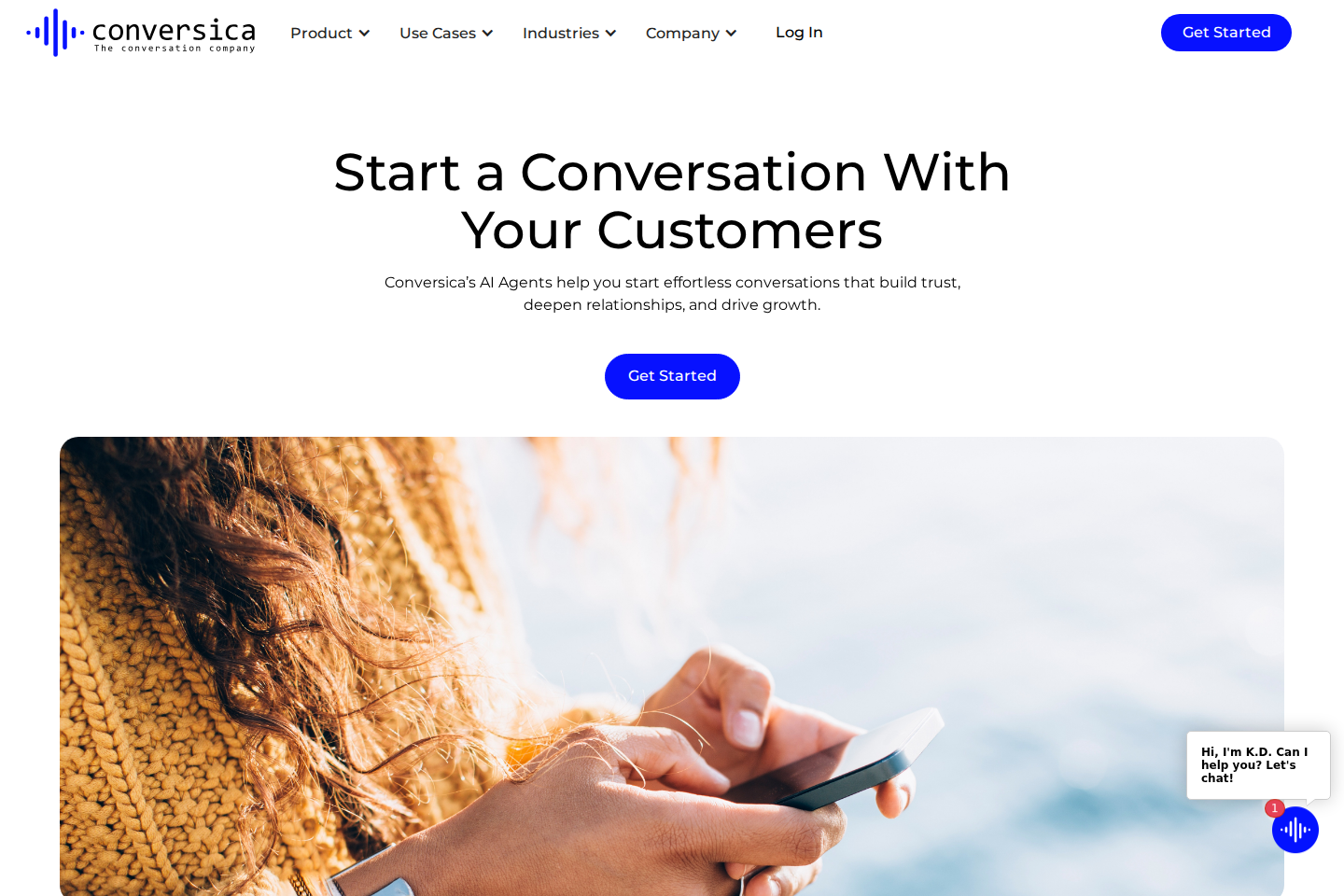
Conversica is a long-running conversational AIConversational AIConversational AI is software that interprets natural language and produces context-aware responses through voice, messaging, or chat. platform focused on starting and continuing customer conversations across acquisition, service, and retention. Its current homepage emphasizes AI agents that generate demand, deliver service, and keep customers engaged, with logos across automotive, enterprise software, sports, and other industries. For teams comparing 11x alternatives, Conversica is most relevant when the job is persistent lead nurture rather than cold prospecting alone.
The platform’s strength is structured follow-up at enterprise scale. It is less of a direct 11x clone and more of a lifecycle conversation system, which can be a good thing if your pipeline leaks because leads need repeated, contextual touches before they are ready for sales.
Choose Conversica when your team needs enterprise-grade nurture and persistent conversation management more than a pure outbound AI SDR. It fits long-cycle revenue teams with lots of leads that require patient follow-up and qualification.
Conversica pricing is not published as a simple self-serve rate card. Contact vendor for pricing and implementation scope.
Source: https://www.conversica.com/

Artisan’s Ava is positioned directly as an autonomous AI BDR. The site says Ava finds leads, sends personalized outreach, handles objections, and books meetings, which makes Artisan one of the cleaner 11x alternatives for teams that still want the outbound-SDR replacement model. It is also more publicly self-serve than many enterprise-only AI SDR platforms, with a trial and credit-based entry point advertised on the homepage.
Artisan is a better fit when the mandate is “build outbound capacity” than when the mandate is “call every inbound insurance, mortgage, or education lead within a minute.” That distinction matters. Strong outbound automation can still miss the operational details of consented lead conversion: call routingCall routingCall routing sends a caller to the right agent, person, team, location, queue, or workflow using intent, data, rules, and availability., SMS fallback, human handoffHuman handoffHuman handoff transfers a conversation, context, and next action from an automated agent to a person., and CRM dispositioning.
Choose Artisan if you want an AI BDR for outbound prospecting and meeting generation, especially in B2B segments with clear ICP lists. Look elsewhere if your highest-leverage workflow is opted-in voice/SMS/email follow-upEmail follow-upEmail follow-up sends timely, context-aware replies or reminders that move an inbound lead toward qualification, scheduling, or handoff. after a lead requests information.
Artisan advertises a trial with free credits on its homepage. Buyers should confirm paid tiers, credit usage, and contract terms with Artisan.
Source: https://www.artisan.co/

AiSDR positions itself as a sales outreach platform with AI prospecting, strategy, CRM-oriented workflows, and email-led engagement. Its site highlights a broad menu of sales features, including AI prospecting, AI strategy, HubSpot sales support, and calling-related integrations. For teams considering 11x alternatives, AiSDR is relevant when the team wants AI assistance across outbound workflows without necessarily buying into a fully autonomous “digital worker” narrative.
The practical question is how much autonomy you actually want. AiSDR can be attractive for teams that still want humans controlling sales strategy while AI handles research, sequencing, and follow-up mechanics. It is less direct for teams trying to automate live inbound response across voice and SMS.
Choose AiSDR if your team wants AI-powered prospecting and outreach while keeping human sales oversight. It is best for B2B teams improving outbound workflow efficiency rather than consumer lead-conversion teams needing instant voice follow-up.
AiSDR publishes demo-led buying paths and product pages; exact plan details can vary. Contact vendor for pricing.
Source: https://www.aisdr.com/

Nooks is not just an AI SDR replacement; it is a workspace for outbound teams. Its site positions the platform around reps working alongside AI agents for sequencing across calls, emails, social, and more, with a strong reputation in live outbound sales teams. That makes Nooks a good 11x alternative for organizations that still believe reps should own the sales conversation but want AI to remove busywork and improve productivity.
Compared with 11x, Nooks is less about handing the whole SDR job to a named digital worker and more about making outbound teams faster. That distinction is valuable for larger SDR orgs where coaching, call blocks, rep behavior, and live conversations still matter.
Choose Nooks if you have an outbound team and want AI to support, prioritize, sequence, and accelerate rep work. Do not choose it as the center of a regulated inbound consumer lead workflow unless your team also has humans actively running the sales floor.
Nooks uses a demo/contact-sales motion for pricing. Contact vendor for plan and seat details.
Source: https://www.nooks.ai/

Unify is a GTM platform for signal-based outbound and revenue orchestration. Its homepage emphasizes bringing Sales, Marketing, Growth, and RevOps under one roof so teams can act on warm accounts and clarify attribution. For teams comparing 11x alternatives, Unify is strongest when the problem is not “replace SDRs with an agent” but “turn buying signals into coordinated outbound plays.”
This makes Unify a smart adjacent option. It can help teams identify and act on account signals, but it is not a direct voice-first lead conversion platform. Pairing signal orchestration with a voice/SMS/email conversion layer may make more sense than expecting one AI SDR product to own every part of GTM.
Choose Unify if your GTM team has strong account data and wants to run smarter warm outbound from signals. It is not the best standalone choice if the biggest leak is immediate follow-up on opted-in consumer leads.
Unify is primarily demo-led. Contact vendor for pricing and package details.
Source: https://www.unifygtm.com/
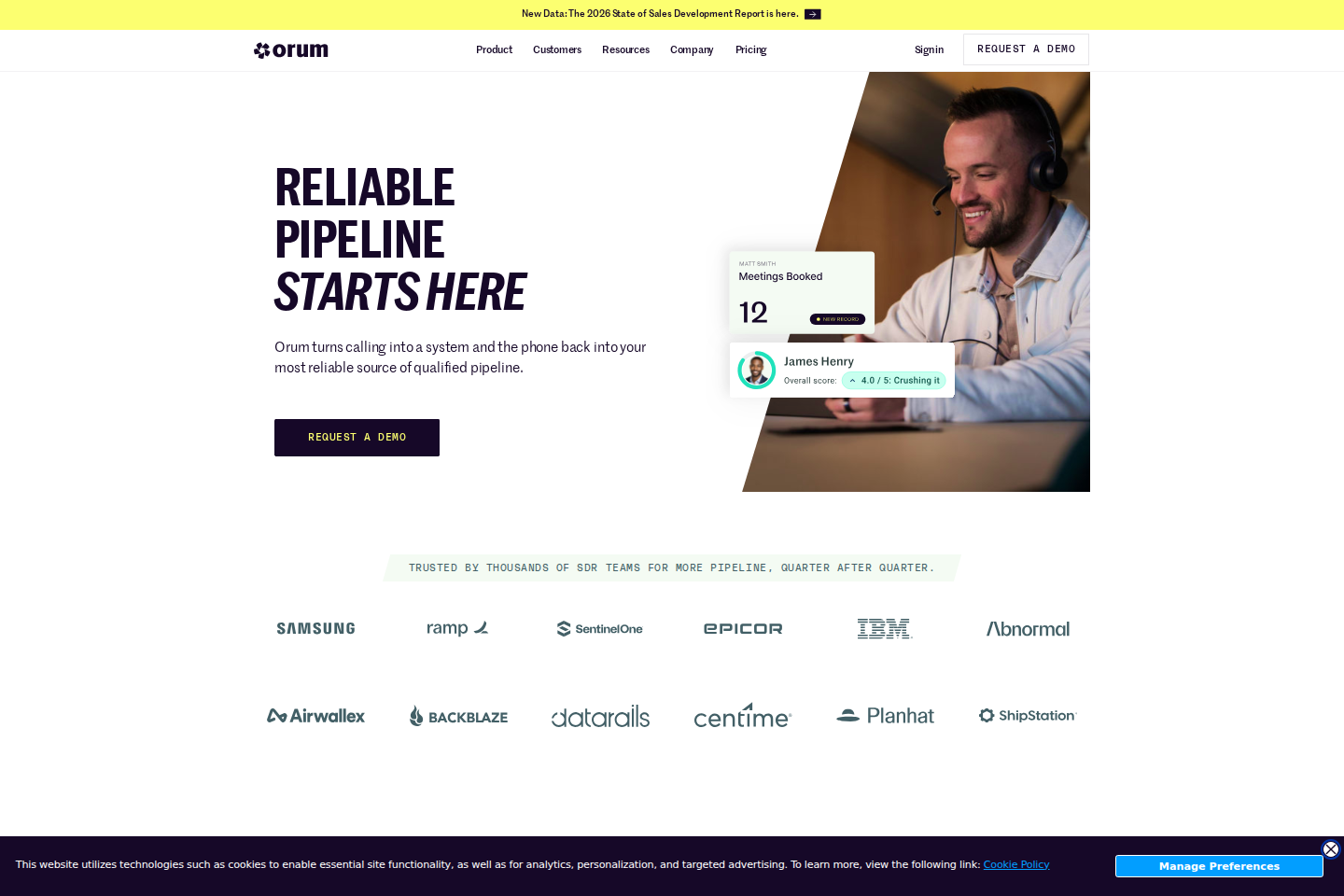
Orum is a sales dialing platform built to help reps connect with more prospects. Its value is not autonomous AI SDR replacement; it is outbound calling productivity for human teams. That makes it a useful 11x alternative only when your concern is call capacity and connect rates rather than full AI prospecting or inbound conversion automation.
For many outbound teams, this is exactly the point. If reps still need to own discovery and objection handling, a dialer that improves live conversations can beat an AI worker that automates too much of the wrong motion. For inbound lead conversionInbound lead conversionInbound lead conversion turns opted-in calls, form submissions, quote requests, and other inquiries into qualified conversations, appointments, or transfers., though, Orum usually needs to sit beside a system that can autonomously qualify, text, email, schedule, and update CRM records.
Choose Orum if the bottleneck is rep dialing productivity and you already have people ready to work the phones. Choose a different platform if you need AI agents to own follow-up after hours, across SMS/email, or without a rep in every interaction.
Orum pricing is quote-based. Contact vendor for seat, dialer, and package details.
Source: https://www.orum.com/
Start by naming the motion you are actually trying to improve. If you need more top-of-funnel pipeline, compare outbound platforms like 11x, Artisan, AiSDR, Nooks, Unify, and Orum. If you already have inbound demand and your team is slow to respond, prioritize Thoughtly or another conversion platform that can call, text, email, schedule, route, and write back to the CRM.
Then separate automation from accountability. A tool that sends more messages is not automatically a revenue system. The winning platform should make clear who owns data quality, consent, routing, offer logic, handoffs, failed follow-up, reporting, and suppression rules.
Finally, model the full operating cost. For AI SDR tools, include enrichment, mailbox infrastructure, deliverability work, CRM admin time, compliance review, and human reply handling. For inbound conversion tools, include call minutes, SMS/email volume, integrations, implementation, and the value of reaching leads while intent is still fresh.
Thoughtly is the best fit when the team already has opted-in leads and needs faster follow-up across voice, SMS, email, and CRM workflows. It is built for converting existing demand, not cold prospecting.
Artisan, AiSDR, Nooks, Unify, and Orum are all credible depending on the exact outbound motion. Artisan and AiSDR lean more toward AI-powered outreach, Nooks and Orum keep reps closer to the workflow, and Unify is strongest for signal-based warm outbound.
No. 11x now markets both Alice for outbound and Julian for phone/inbound use cases. But the brand’s core public positioning is still anchored in AI SDR and outbound prospecting, so teams should verify whether the inbound product fits their workflow before buying it as a lead-conversion platform.
11x does not publish a simple public rate card. Third-party pricing sources commonly estimate enterprise contracts starting around $5,000 per month or more, often annual, but buyers should confirm current pricing, usage limits, onboarding fees, and cancellation terms directly with 11x.
They can, but cold outbound requires careful legal and operational review. Regulated or high-consideration teams often get more leverage from opted-in lead conversion, where the buyer has already requested information and the system’s job is fast, compliant follow-up rather than unsolicited prospecting.
Thoughtly homepage and product context


