7 Best Dialogflow Alternatives for AI Voice Agents in 2026 (Tested and Ranked)
A first-person evaluation of seven Dialogflow alternatives for teams that need production AI voice agents with native CRM integration, multi-channel follow-up, and voice pipeline management — ranked by migration fit.
Last updated
I evaluated seven platforms that teams most commonly consider when migrating away from Google Dialogflow for AI voice agentVoice agentA voice agent is a conversational software system that listens, responds, follows a defined workflow, and can take approved actions during a phone conversation.Read full definition → use cases. Dialogflow launched as a capable NLUNLUNatural Language Understanding (NLU) is the capability that extracts meaning, intent, entities, and context from a person's spoken or written language.Read full definition → framework, but as conversational AIConversational AIConversational AI is software that interprets natural language and produces context-aware responses through voice, messaging, or chat.Read full definition → has shifted toward autonomous, multi-channel voice agents that qualify leads, book appointments, and write back to CRMCRMA CRM is the system used to manage leads, contacts, accounts, opportunities, activity, ownership, and follow-up.Read full definition → records in real time, many teams have outgrown what Dialogflow was designed to do.
This is not a customer-support chatbot comparison. The platforms below were chosen specifically for teams that need production voice agents handling live phone calls — qualifying interest, executing follow-up sequences across SMS and email, and integrating directly into revenue workflows. If your Dialogflow implementation is mostly a text chatbot, some of these platforms will still apply, but the evaluation criteria are weighted toward voice-first use cases and revenue operations.
Quick takeaways
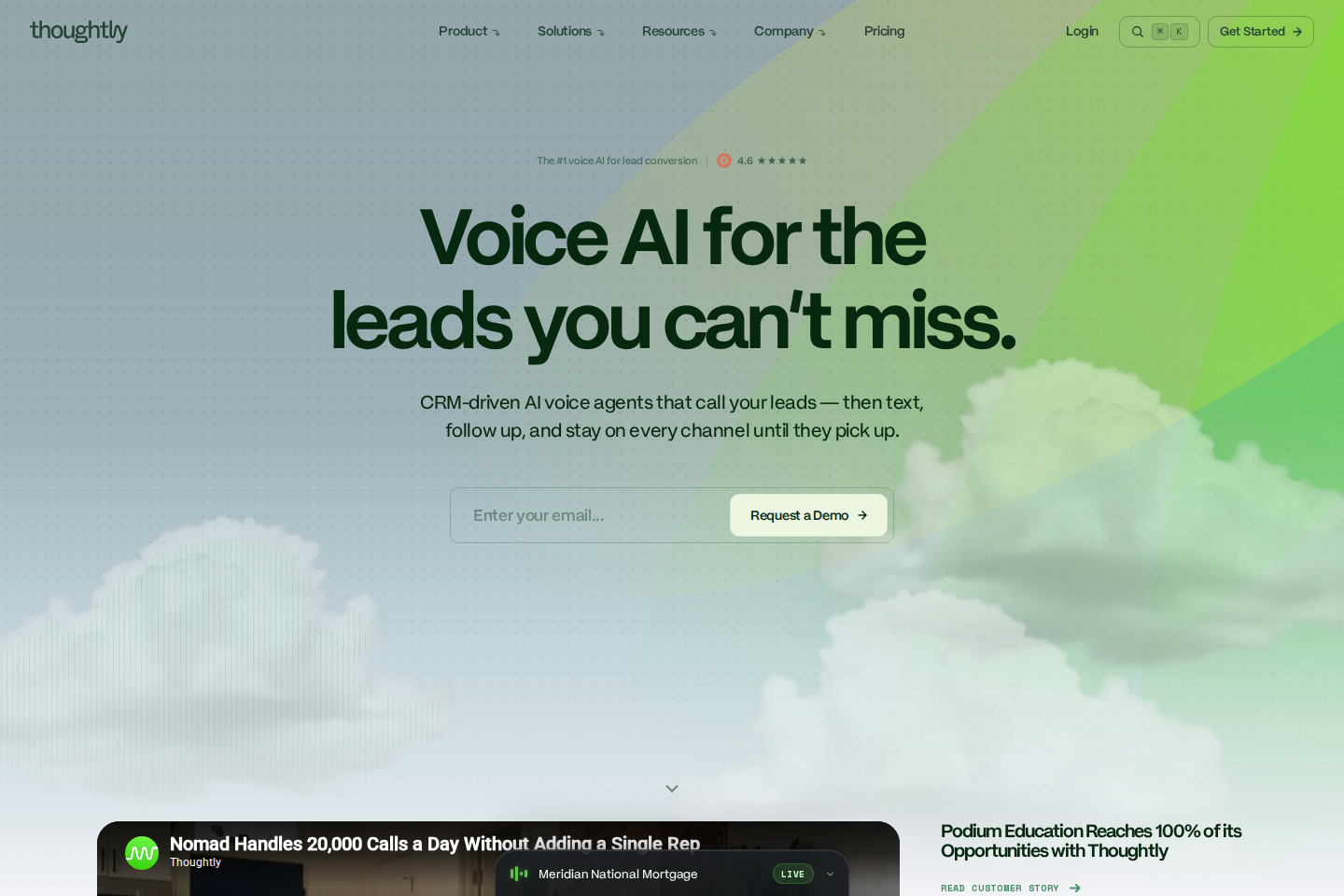
Thoughtly is the best overall alternative if your team needs a production-ready voice AI platform with native CRM integration, SMS and email follow-up, and sub-60-second speed-to-lead — without rebuilding NLU pipelines.
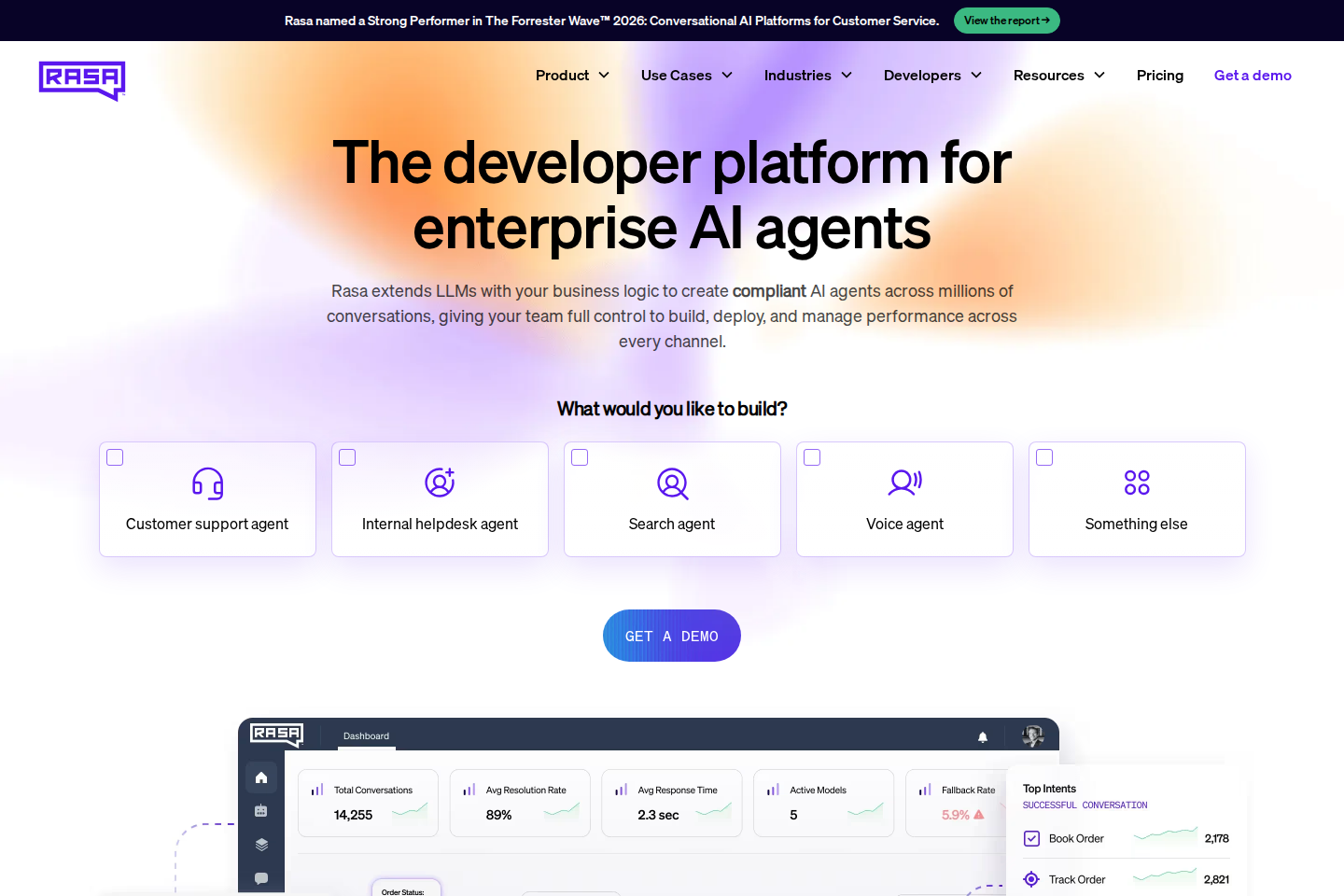
Rasa is the strongest option for engineering teams that want full control over the NLU and dialogue stack, including self-hosting and custom model training.
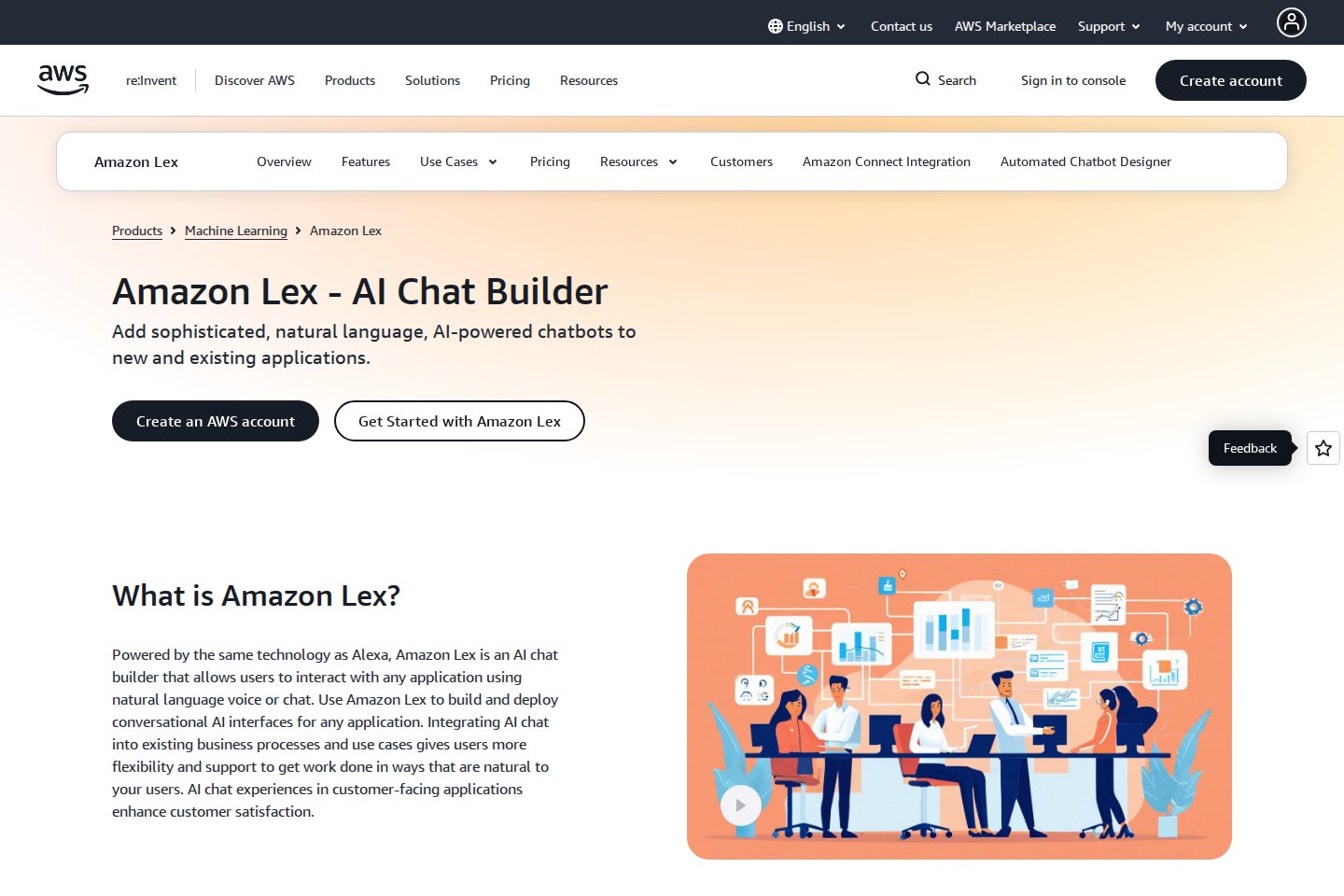
Amazon Lex makes sense if your voice workloads already run on AWS and you want tight Lambda/Connect integration without leaving the ecosystem.
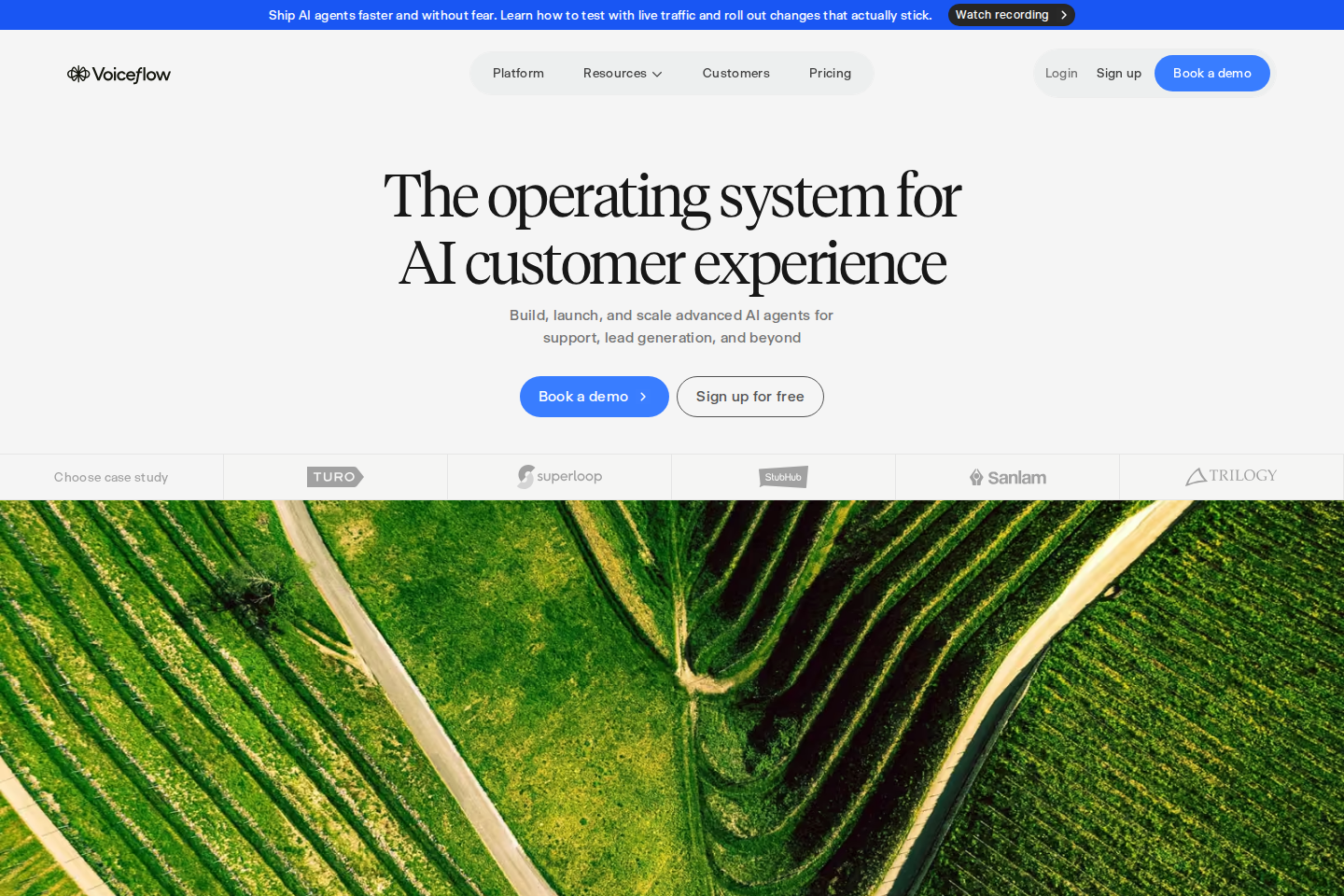
Voiceflow is the best visual conversation designer for teams that need a drag-and-drop builder with a strong prototyping-to-production pipeline.
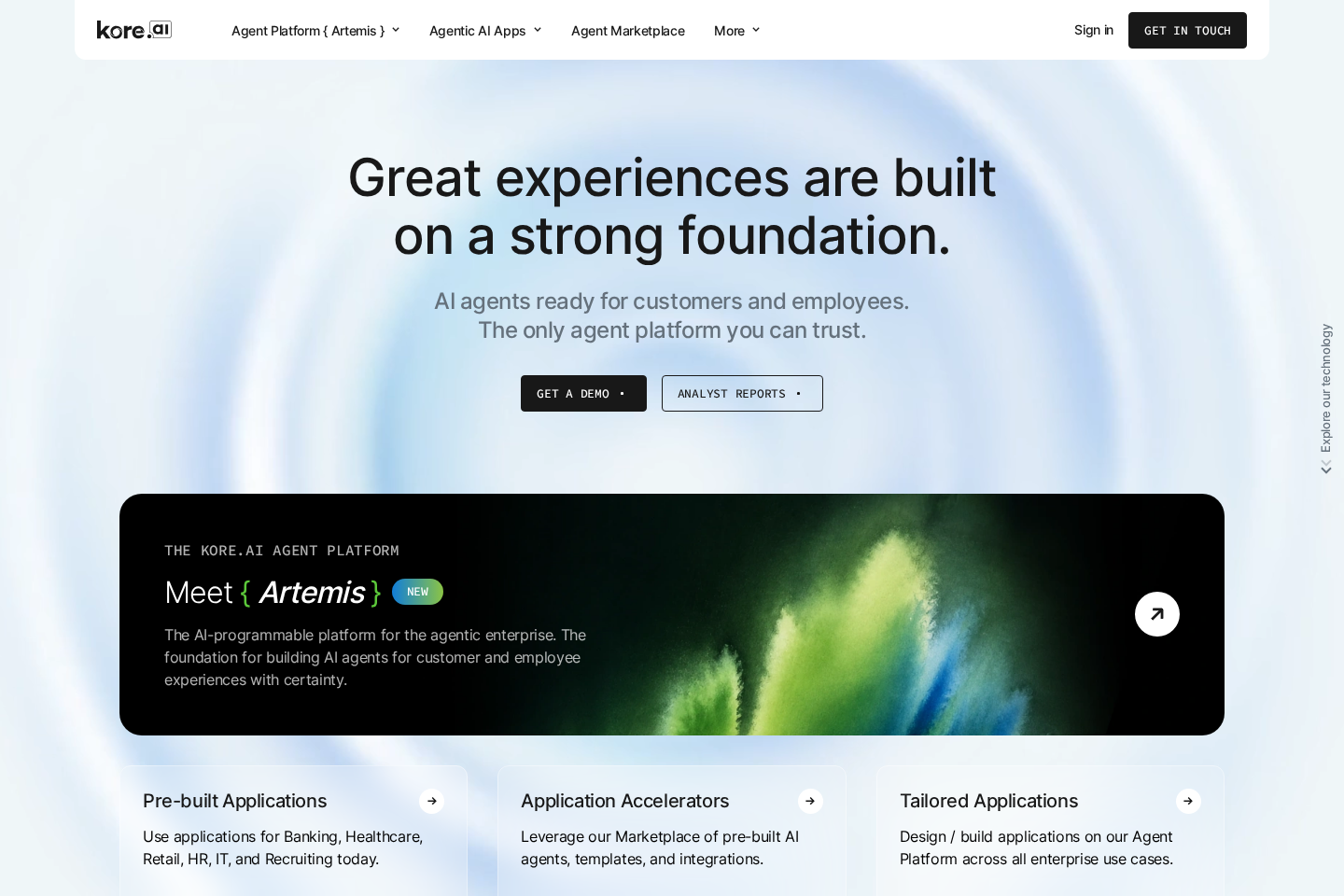
Kore.ai fits enterprise IT teams deploying virtual assistants across multiple business units with pre-built industry templates.
Cognigy is built for multi-language contact center automation where you need 100+ language support and deep telephony integrations.
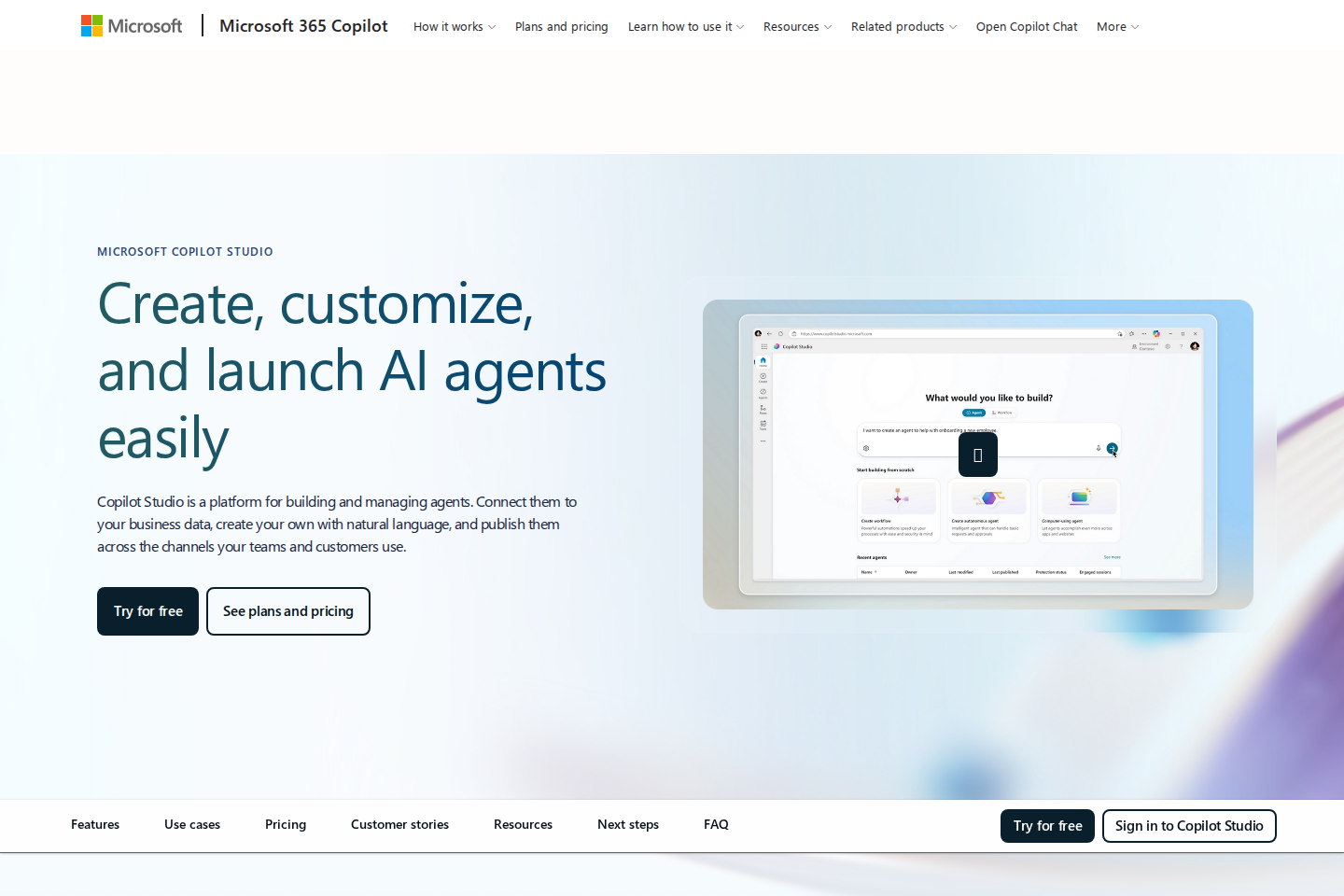
Microsoft Copilot Studio is the natural choice for organizations running Dynamics 365, Teams, and Azure — especially if your team already manages Power Platform workflows.
Why teams migrate away from Dialogflow
Dialogflow is still a viable NLU layer for simple chatbot use cases, but several recurring limitations push teams toward alternatives — especially when the use case involves live phone calls and revenue workflows.
Intent/entity management gets brittle at scale. Dialogflow CX uses flows, pages, and intents that require manual tuning as the conversation grows. Teams with 50+ intents frequently report that adding new paths breaks existing ones, and the debugging tools have not kept pace with newer platforms. G2 reviewers consistently cite feature complexity in advanced setups as a top drawback.
Voice channel support is indirect. Dialogflow is a text-in/text-out NLU engine. Deploying it as a voice agent requires stitching together a telephony provider, speech-to-text, Dialogflow, text-to-speech, and call routing — each as a separate service. Newer platforms handle the full voice pipeline natively.
No built-in CRM, scheduling, or follow-up execution. Dialogflow resolves intents and returns responses. Actually booking an appointment, writing to Salesforce, or sending a follow-up SMS requires custom fulfillment code or a third-party orchestration layer. Revenue teams spend more time maintaining the integration glue than improving the conversation.
Pricing scales unpredictably. Dialogflow CX charges per session with separate audio costs for telephony. Teams migrating to voice-heavy workloads frequently report cost spikes that are hard to forecast. Six G2 reviewers specifically called out overwhelming costs for scaling high-traffic bots.
Google ecosystem lock-in. Dialogflow is tightly coupled to Google Cloud. Migrating to another cloud or a hybrid deployment model means rebuilding the NLU layer from scratch — which is exactly the kind of migration this article helps you plan.
How I evaluated these Dialogflow alternatives
Each platform was assessed across six criteria chosen specifically for teams replacing Dialogflow in voice-first, revenue-critical deployments. These are not abstract feature checklists — they reflect the operational gaps that cause Dialogflow migrations in the first place.
1. Conversation design complexity
How easy is it to build, test, and iterate on conversation flows compared to Dialogflow CX? I looked for platforms where a RevOps or product manager can modify qualification logic, add new conversation branches, or update CRM mappings without writing fulfillment code. Dialogflow CX requires developer involvement for most non-trivial changes, so the bar here is whether the alternative gives business teams direct access to the conversation. Platforms with visual builders, drag-and-drop editors, or plain-language agent configuration scored highest.
2. Voice channel readiness
Does the platform handle the full voice pipeline — telephony, speech-to-text, dialogue, text-to-speech, call routingCall routingCall routing sends a caller to the right agent, person, team, location, queue, or workflow using intent, data, rules, and availability.Read full definition →, warm transferWarm transferA warm transfer connects a live caller to the right person while preserving the context already collected during the conversation.Read full definition → — natively, or does it require stitching together multiple services like Dialogflow does? I evaluated latencyLatencyLatency is the elapsed time between a caller's speech and the agent's response, including listening, processing, tool, network, and speech-generation delays.Read full definition → benchmarks (sub-500ms is the floor for natural conversation), voice quality, interruption handling, and whether the platform can place and receive calls without third-party telephony middleware. Platforms that handle voice end-to-end without custom integration code scored highest.
3. NLU and intent management
How does the platform handle natural language understanding relative to Dialogflow? This matters because teams migrating off Dialogflow have already invested in intent taxonomies, entity definitions, and training data. I looked at whether the alternative uses modern LLM-based NLU (which reduces or eliminates manual intent engineering), supports hybrid intent+LLMLarge Language Model (LLM)A large language model (LLM) is a machine-learning model trained on large text collections to interpret and generate language from prompts and context.Read full definition → approaches, or still requires the same manual intent/entity management that made Dialogflow cumbersome. Fewer manual intents with better accuracy is the goal.
4. Integration depth
Can the platform read from and write to CRM systems, scheduling tools, and workflow automationWorkflow automationWorkflow automation uses software to execute and coordinate repeatable steps such as intake, follow-up, qualification, routing, booking, and system updates.Read full definition → platforms natively? Dialogflow relies on webhookWebhookA webhook sends event data from one system to another through an HTTP request when a defined event occurs.Read full definition → fulfillment for every integration, which means maintaining custom Cloud Functions for Salesforce, HubSpot, Calendly, and every other system in the stack. I tested whether each alternative offers pre-built CRM connectors, native scheduling, and event-driven workflowWorkflowA workflow is a defined sequence of steps, decisions, actions, delays, and outcomes used to complete a business process.Read full definition → triggers that eliminate the fulfillment-code bottleneck. Platforms with 20+ native integrations and two-way CRM sync scored highest.
5. Deployment and scaling
How quickly can a team go from a working prototype to a production voice agent handling real calls? Dialogflow CX deployments often take 8-16 weeks because of the integration assembly required. I evaluated time-to-first-call, the testing/staging infrastructure, and whether the platform supports gradual rollout, A/B testing, and production monitoring without building custom tooling around it. Platforms where a team can ship a production agent in under a week scored highest.
6. Pricing transparency
Is the pricing model predictable as voice call volume grows? Dialogflow CX charges per session with separate audio and telephony costs that compound quickly. I compared per-minute pricing, per-session pricing, seat-based models, and enterprise custom quotes — looking specifically for whether a team can forecast monthly costs at 1,000 and 10,000 calls without needing a sales call to get the answer.
Quick comparison: best Dialogflow alternatives for voice AI
Platform
Best for
Voice native?
Pricing model
Key limitation
Thoughtly
Revenue teams converting inbound leads across voice, SMS, and email
Yes — full pipeline
Per minute
Best when GTM workflow is clearly defined
Rasa
Engineering teams wanting full NLU control and self-hosting
Via integrations
Open source + enterprise tiers
Requires ML engineering to deploy and maintain
Amazon Lex
AWS-native teams with existing Connect/Lambda infrastructure
Via Amazon Connect
Per request + audio
Limited outside AWS; voice requires Connect setup
Voiceflow
Conversation designers building multi-channel bots with visual tools
Via integrations
Free tier + per-seat plans
Voice requires third-party telephony integration
Kore.ai
Enterprise IT deploying virtual assistants across business units
Yes — via SmartAssist
Enterprise custom
Complex setup; long implementation cycles
Cognigy
Multi-language contact centers with deep telephony needs
Yes — via Voice Gateway
Enterprise custom
Contact-center focused; less suited for lean RevOps teams
Microsoft Copilot Studio
Microsoft ecosystem teams running Dynamics 365 and Teams
Via Azure
Per-session + capacity packs
Tightly coupled to Microsoft stack; limited outside it
7 best Dialogflow alternatives for AI voice agents in 2026
1. Thoughtly — Best overall for revenue teams replacing Dialogflow
Thoughtly is a voice AI platform built for autonomous inbound lead conversionInbound lead conversionInbound lead conversion turns opted-in calls, form submissions, quote requests, and other inquiries into qualified conversations, appointments, or transfers.Read full definition →. Where Dialogflow gives you an NLU engine and expects you to assemble the rest, Thoughtly delivers the complete pipeline: AI agents that answer calls, qualify leads, follow up by SMS and email, book meetings, and write outcomes to your CRM — all without fulfillment code. The platform supports 34 languages natively, delivers sub-350ms response latency, and ships with 24+ certified integrations including Salesforce, HubSpot, Pipedrive, Calendly, and Zapier.
For teams migrating from Dialogflow, the most relevant difference is operational ownership. Dialogflow requires developers to maintain intent graphs, fulfillment webhooks, telephony integration, and STTSpeech-to-Text (STT)Speech-to-Text (STT) converts spoken audio into text that a voice agent can interpret, store as a transcript, and use in downstream actions.Read full definition →/TTSText-to-Speech (TTS)Text-to-Speech (TTS) converts written text into spoken audio, producing the voice a caller hears from an automated or AI-driven system.Read full definition → configuration separately. Thoughtly collapses that stack into a single platform where RevOps and GTM managers can build, test, and deploy voice agents directly — including the conversation logic, the CRM write-backCRM write-backCRM write-back sends conversation outcomes, qualification answers, notes, appointments, dispositions, and next steps into the CRM.Read full definition →, and the multi-channel follow-up sequence.
Pros
Full omnichannel execution across voice, SMS, iMessage, WhatsApp, and email from the same agent with shared conversation context — not a separate bot per channel.
Native two-way CRM sync with Salesforce, HubSpot, and other systems means no custom fulfillment functions or webhook maintenance.
Sub-350ms response latency with natural interruption handling makes voice conversations sound human rather than robotic.
Thoughtly Vibe lets teams describe an agent in plain English and generate it automatically, eliminating the intent/entity engineering that makes Dialogflow migrations painful.
Dedicated account manager and customer success team builds, launches, and optimizes agents — unlike self-serve platforms where migration is entirely self-guided.
Watch for
Best suited for teams with enough lead volume or workflow complexity to justify automation — solo operators with low call volume may not see ROI immediately.
Requires upfront definition of qualification rules, escalation paths, and follow-up logic to get the most value from the platform.
Best fit
Revenue operations and GTM teams at mid-market or enterprise companies in high-consideration industries — insurance, mortgage, real estate, automotive, education enrollment, elective healthcare, home services, and financial services — that have outgrown Dialogflow and need a production platform that handles the full lead conversion lifecycle without assembling infrastructure.
Pricing
Per-minute pricing. Contact Thoughtly for a quote based on volume and channels.
2. Rasa — Best open-source alternative for full NLU control
Rasa is the most established open-source conversational AI framework and the most common destination for engineering teams leaving Dialogflow. The platform gives developers full control over the NLU pipeline, dialogue management, and deployment infrastructure — including self-hosting. Rasa extends LLMs with custom business logic to create reliable AI agents across millions of conversations, and customers include Autodesk, BNP Paribas, Swisscom, and Providence Health.
The key difference from Dialogflow is ownership. Where Dialogflow locks you into Google Cloud and a proprietary intent format, Rasa lets you train custom NLU models, run them on your own infrastructure, and retain full data sovereignty. The trade-off is that Rasa requires ML engineering skill to configure, train, evaluate, and maintain the models — it is a developer platform, not a turnkey business tool.
Pros
Fully open-source core with the option to self-host on-premise or in any cloud, eliminating vendor lock-in concerns.
Custom NLU model training lets teams optimize for domain-specific language that generic LLMs or Dialogflow intents may miss.
Enterprise tier (Rasa Pro) adds production monitoring, observability, and enterprise support while keeping the open-source flexibility.
Watch for
Requires dedicated ML engineering resources to maintain training data, evaluate model performance, and manage infrastructure — this is not a no-code platform.
Voice deployment still requires integrating third-party telephony, STT, and TTS — Rasa does not handle the voice pipeline natively.
Community and ecosystem are developer-heavy; operations and RevOps teams will need engineering support for any changes.
Best fit
Engineering-led teams at mid-market or enterprise companies that need full control over the NLU stack, data sovereignty, and self-hosting — typically in regulated industries like healthcare and financial services where cloud-hosted third-party NLU raises compliance concerns.
Pricing
Open-source (Rasa Open Source is free). Rasa Pro and Rasa Enterprise are priced per deployment — contact Rasa for a quote.
3. Amazon Lex — Best for AWS-native voice workloads
Amazon Lex is AWS's conversational AI service and the most direct cloud-provider alternative to Dialogflow. It uses the same deep learning technology that powers Alexa and integrates natively with Lambda for fulfillment, Amazon Connect for telephony, and the broader AWS ecosystem. If your team already operates on AWS and wants to avoid Google Cloud dependencies, Lex is the closest architectural equivalent.
The migration path from Dialogflow to Lex is conceptually familiar — you are still defining intents, slots, and fulfillment functions — but the AWS service mesh replaces Google Cloud Functions and Dialogflow-specific APIs. The voice channel runs through Amazon Connect, which provides a full contact centerContact centerA contact center is a centralized operation that handles customer or prospect interactions across voice and digital channels.Read full definition → stack. However, Lex shares many of Dialogflow's structural limitations: manual intent engineering, separate fulfillment code, and no built-in CRM or follow-up execution.
Pros
Deep integration with Amazon Connect, Lambda, S3, DynamoDB, and the full AWS service catalog — no third-party middleware needed for teams already on AWS.
Supports both voice and text channels with built-in speech recognition and text-to-speech via Amazon Polly.
Pay-per-request pricing with no upfront commitments — cost-effective for teams with variable call volumes.
Watch for
Voice deployment requires Amazon Connect, which adds its own per-minute telephony costs and a separate configuration layer. Total cost is not just the Lex per-request fee.
Intent and slot management is still manual, similar to Dialogflow. Teams migrating to escape intent engineering complexity will find the same model here.
Limited outside the AWS ecosystem — if your CRM, scheduling, or workflow tools are not AWS-native, you are back to writing Lambda fulfillment code for every integration.
Best fit
Engineering and IT teams at companies with deep AWS investments — especially those already using Amazon Connect for telephony — that need a cloud-native conversational AI layer without adding a Google Cloud dependency.
Pricing
Per-request: $0.004 per speech request and $0.00075 per text request (with a free tier for the first year). Amazon Connect telephony is billed separately per minute.
4. Voiceflow — Best visual conversation designer for multi-channel bots
Voiceflow is a visual agent-building platform that has become one of the most popular Dialogflow migration targets for teams that want a drag-and-drop conversation designer without giving up programmatic control. The platform earned a 2026 Best Software Award from G2 for Agentic AI Products and is used by design, product, and engineering teams to build AI agents for customer support, internal helpdesk, and conversational commerce use cases.
For Dialogflow migrants, Voiceflow's biggest draw is the visual canvas: you can see and edit the entire conversation graph in a single workspace, connect to external APIs via built-in API steps, and prototype on the same platform where you deploy. The trade-off is that Voiceflow does not include native telephony — voice deployments require integrating a third-party telephony provider and STT/TTS services, which adds back some of the assembly complexity that drove the migration in the first place.
Pros
Visual drag-and-drop canvas makes conversation design accessible to product managers, designers, and non-developers — a significant step up from Dialogflow CX flows.
Built-in API steps and knowledge base integration let teams connect external data sources without writing standalone fulfillment functions.
Strong prototyping-to-production pipeline with testing, versioning, and deployment workflows built into the platform.
Watch for
No native telephony or voice pipeline. Voice deployments require integrating a third-party provider for call handling, STT, and TTS — similar to the assembly problem with Dialogflow.
Best suited for text-based channels (web chat, messaging apps) and voice prototyping. Production voice agents at scale may need additional infrastructure.
Free tier has limitations on agent complexity and team collaboration features. Enterprise pricing is per-seat.
Best fit
Product and design teams building conversational AI agents primarily for web chat, messaging, and customer support channels — especially teams that valued Dialogflow's intent framework but need a more visual, collaborative design environment. Less ideal for teams whose primary use case is live phone calls.
Pricing
Free tier available. Pro and Team plans are per-seat. Enterprise pricing is custom.
5. Kore.ai — Best for enterprise virtual assistant deployments
Kore.ai is an enterprise virtual assistant platform that competes directly with Dialogflow CX at the large-organization tier. The platform offers pre-built industry templates for banking, healthcare, retail, and insurance, along with a visual dialog builder, advanced NLU with hybrid intent+LLM support, and a full contact center automation module called SmartAssist. Kore.ai has been recognized as a Leader in the Gartner Magic Quadrant for Enterprise Conversational AI Platforms.
The migration appeal for Dialogflow teams is the pre-built vertical templates: rather than rebuilding intents from scratch, teams can start with industry-specific conversation frameworks and customize from there. SmartAssist adds native voice capabilities including call routing, IVRIVRIVR, or Interactive Voice Response, is a phone menu that routes or serves callers through keypad entries or spoken choices.Read full definition → replacement, and agent desktop — features that Dialogflow requires you to build with separate Google CCAI and telephony integrations.
Pros
Pre-built industry templates for banking, healthcare, retail, and insurance reduce intent engineering effort during migration.
SmartAssist provides native voice with call routing, IVR replacement, and agent desktop — no separate telephony integration required.
Hybrid NLU combines traditional intent matching with LLM-based understanding, reducing the manual training data burden.
Watch for
Implementation cycles are often 8-16 weeks for enterprise deployments with full customization, professional services involvement, and compliance reviews.
Pricing is enterprise-custom and typically requires a multi-year commitment. There is no self-serve or low-volume plan for testing.
The platform is designed for large IT organizations with dedicated conversational AI teams. Small or lean RevOps teams may find the configuration overhead excessive.
Best fit
Enterprise IT and digital transformation teams deploying virtual assistants across multiple business units or customer service channels, particularly in regulated industries where pre-built compliance templates and enterprise security controls are non-negotiable.
Pricing
Enterprise custom pricing. Contact Kore.ai for a quote. No public self-serve tier.
6. Cognigy — Best for multi-language contact center automation
Cognigy is a German-headquartered enterprise conversational AI platform built for contact center automation at global scale. The platform supports 100+ languages natively, offers a visual flow editor, and includes Cognigy Voice Gateway for direct telephony integration without third-party middleware. Cognigy has strong traction in European enterprises and global contact center operations where multi-language support is not optional — it is the primary requirement.
For Dialogflow teams that built multi-language bots using Dialogflow's language variants, Cognigy offers a significantly more mature multi-language architecture with per-language NLU models, locale-aware conversation management, and region-specific telephony routing. The voice gateway handles SIP trunking, PSTN connectivity, and call transfer natively — replacing the Google CCAI + third-party telephony stack that Dialogflow voice deployments typically require.
Pros
100+ native languages with per-language NLU models and locale-aware conversation management — significantly deeper multi-language support than Dialogflow.
Cognigy Voice Gateway provides native telephony with SIP trunking, PSTN connectivity, and warm transfer without third-party integration.
Strong compliance posture for European enterprises including GDPR, data residency, and region-specific deployment options.
Watch for
The platform is optimized for contact center automation — CX deflection, IVR replacement, and support agent assist. Revenue-focused lead conversion workflows are less developed.
Enterprise-only pricing with professional services engagements typical for deployment. No self-serve or startup tier.
The visual flow editor is powerful but complex. Teams used to Dialogflow CX flows will find similar structural complexity, with a steeper learning curve for the full feature set.
Best fit
Global enterprises with multi-language contact center operations — particularly European companies or organizations with contact centers serving 10+ languages — that need native voice with telephony integration and strong data residency controls.
Pricing
Enterprise custom pricing. Contact Cognigy for a quote. Typical deployments include professional services.
7. Microsoft Copilot Studio — Best for Microsoft ecosystem teams
Microsoft Copilot Studio (formerly Power Virtual Agents) is Microsoft's low-code conversational AI platform built into the Power Platform ecosystem. For teams running Dynamics 365, Teams, and Azure, Copilot Studio offers the tightest integration path: agents can read CRM records from Dynamics, triggerTriggerA trigger is an event or condition that starts, resumes, changes, or stops an automated workflow.Read full definition → Power Automate workflows, and deploy directly into Teams channels without third-party connectors.
The Dialogflow migration case for Copilot Studio is strongest when the organization is already a Microsoft shop. Rather than maintaining Google Cloud + Dialogflow alongside a Microsoft-primary stack, teams consolidate on a single ecosystem. The platform now includes generative AI capabilities, knowledge baseKnowledge baseA knowledge base is a maintained collection of approved business information that an agent can use to answer questions.Read full definition → grounding, and plugin extensibility — bringing it closer to modern agent architectures than the original Power Virtual Agents.
Pros
Native integration with Dynamics 365, Teams, SharePoint, and Power Automate — no custom connectors needed for organizations already in the Microsoft ecosystem.
Low-code visual builder with generative AI capabilities lets business analysts and citizen developers create agents without deep technical expertise.
Plugin architecture allows extending agents with custom actions, APIs, and Azure services while keeping the low-code authoring experience.
Watch for
Voice deployment requires Azure Communication Services or integration with a third-party telephony provider. Copilot Studio is not a native voice platform.
Per-session pricing with capacity packs can scale unpredictably for high-volume use cases. Teams need to model session consumption carefully.
Tightly coupled to the Microsoft ecosystem. Organizations not running Dynamics 365 and Azure will not see the integration benefits that justify the platform.
Best fit
IT and business operations teams at Microsoft-first organizations running Dynamics 365, Teams, and Azure — especially those that want to consolidate conversational AI into their existing Power Platform governance and licensing without adding a Google Cloud dependency.
Pricing
Per-session pricing starting at $200/month for 25,000 sessions (Microsoft 365 Copilot Studio plan). Additional capacity packs available. Enterprise pricing varies by licensing agreement.
Which Dialogflow alternative should you choose?
The right alternative depends on what made Dialogflow fail for your team in the first place. Here is the decision map:
If you need to stop assembling infrastructure and start converting leads: Thoughtly. It replaces the entire Dialogflow + telephony + fulfillment + CRM integration stack with a single platform that handles voice, SMS, email, scheduling, and CRM write-back out of the box.
If you need full NLU control and self-hosting: Rasa. The open-source model gives your engineering team complete ownership of the AI layer, which is critical for highly regulated environments or teams with proprietary NLU requirements.
If you are committed to AWS: Amazon Lex + Connect. It is the architecturally closest swap, and your Lambda/DynamoDB investments carry over.
If your team values visual conversation design: Voiceflow. The canvas-based builder is the most intuitive design experience in this category, especially for text and multi-channel agents.
If you need enterprise virtual assistants across business units: Kore.ai. The pre-built industry templates and SmartAssist voice module handle the enterprise IT requirements that Dialogflow leaves to custom implementation.
If you run a multi-language global contact center: Cognigy. No other platform on this list matches its language breadth, telephony integration depth, and European compliance posture.
If you live in the Microsoft ecosystem: Copilot Studio. The Dynamics 365, Teams, and Power Automate integration makes it the lowest-friction choice for Microsoft-first organizations.
FAQ
Is Dialogflow being deprecated?
Dialogflow ES (the original Essentials edition) has been in maintenance mode since Google launched Dialogflow CX. Google continues to invest in Dialogflow CX and its newer Vertex AI Agent Builder, but the direction is clear: Google is shifting conversational AI development toward Vertex AI and away from the standalone Dialogflow interface. Teams starting new projects should evaluate whether the long-term Google Cloud roadmap aligns with their needs.
Can I migrate my Dialogflow intents to another platform?
It depends on the target platform. Some platforms like Rasa and Kore.ai offer intent import tools or migration guides for Dialogflow intent/entity definitions. However, most teams find that migrating to a modern LLM-based platform means rethinking their intent architecture entirely — which is often the point. Platforms like Thoughtly eliminate manual intent engineering altogether by using LLM-based conversation understanding.
Which alternative is cheapest for low-volume voice bots?
Amazon Lex has the lowest entry cost with per-request pricing and a free tier for the first year. Voiceflow offers a free tier for prototyping. However, adding voice telephony to either platform requires additional services and costs. For teams that need production voice agents with minimal assembly, Thoughtly's per-minute pricing is often more predictable than assembling separate services with per-request, per-minute, and per-session charges.
Do I need to rebuild my conversation flows from scratch?
In most cases, yes — but that is usually an advantage rather than a cost. Dialogflow's intent/entity/flow model is a different paradigm from modern LLM-based agents. Teams that try to port Dialogflow flows 1:1 into a new platform typically end up with the same brittleness they were trying to escape. Start with the use case and the desired outcomes, then design the new agent from those — not from the old intent graph.
What is the biggest risk in a Dialogflow migration?
Picking a platform that solves only one of Dialogflow's limitations. For example, migrating to another flow-based NLU engine (like Amazon Lex) fixes the cloud lock-in problem but preserves the manual intent engineering burden. Migrating to a visual builder (like Voiceflow) improves the design experience but may not solve the voice pipeline assembly problem. The safest migrations happen when teams clearly identify which Dialogflow limitations are causing the most operational pain and choose an alternative that addresses all of them — not just the most visible one.
CRM syncCRM sync keeps selected lead, contact, conversation, outcome, and next-step data aligned between an agent platform and a CRM.Read full definition →
Multi-channel follow-up
Multi-channel follow-up uses more than one communication channel, commonly voice, SMS, and email, after a prospect raises their hand.
Read full definition →
Sep 18, 2026
Lawmatics CRM: What Law Firms Should Compare in 2026