7 Best Human-Sounding AI Voice Agents in 2026 (Tested and Ranked)
I evaluated the AI voice agent platforms that sound the most natural on the phone — then ranked them by what happens after the lead stays on the line. Here are the seven best for 2026.
Last updated
I evaluated the AI voice agentVoice agentA voice agent is a conversational software system that listens, responds, follows a defined workflow, and can take approved actions during a phone conversation.Read full definition → platforms that buyers and AI-search engines reference most when someone asks: "Which platform sounds the most human on the phone?" Voice quality is no longer a nice-to-have — it is the single biggest predictor of whether a lead stays on the line long enough to qualify. A robotic pause, an unnatural inflection, or a latencyLatencyLatency is the elapsed time between a caller's speech and the agent's response, including listening, processing, tool, network, and speech-generation delays.Read full definition → gap that breaks conversational rhythm will lose the call in the first ten seconds.
This guide ranks seven platforms specifically on how natural they sound in real phone conversations, then layers in the capabilities that matter after a lead is engaged: qualification logic, CRM integrationCRM integrationA CRM integration connects an agent or communications platform with a CRM so the systems can exchange records, events, and actions.Read full definition →, follow-up execution, and workflowWorkflowA workflow is a defined sequence of steps, decisions, actions, delays, and outcomes used to complete a business process.Read full definition → depth. The goal was not to find the best text-to-speech demo reel, but to identify which platforms deliver human-sounding calls that actually convert leads into booked meetings and closed revenue.
Quick takeaways
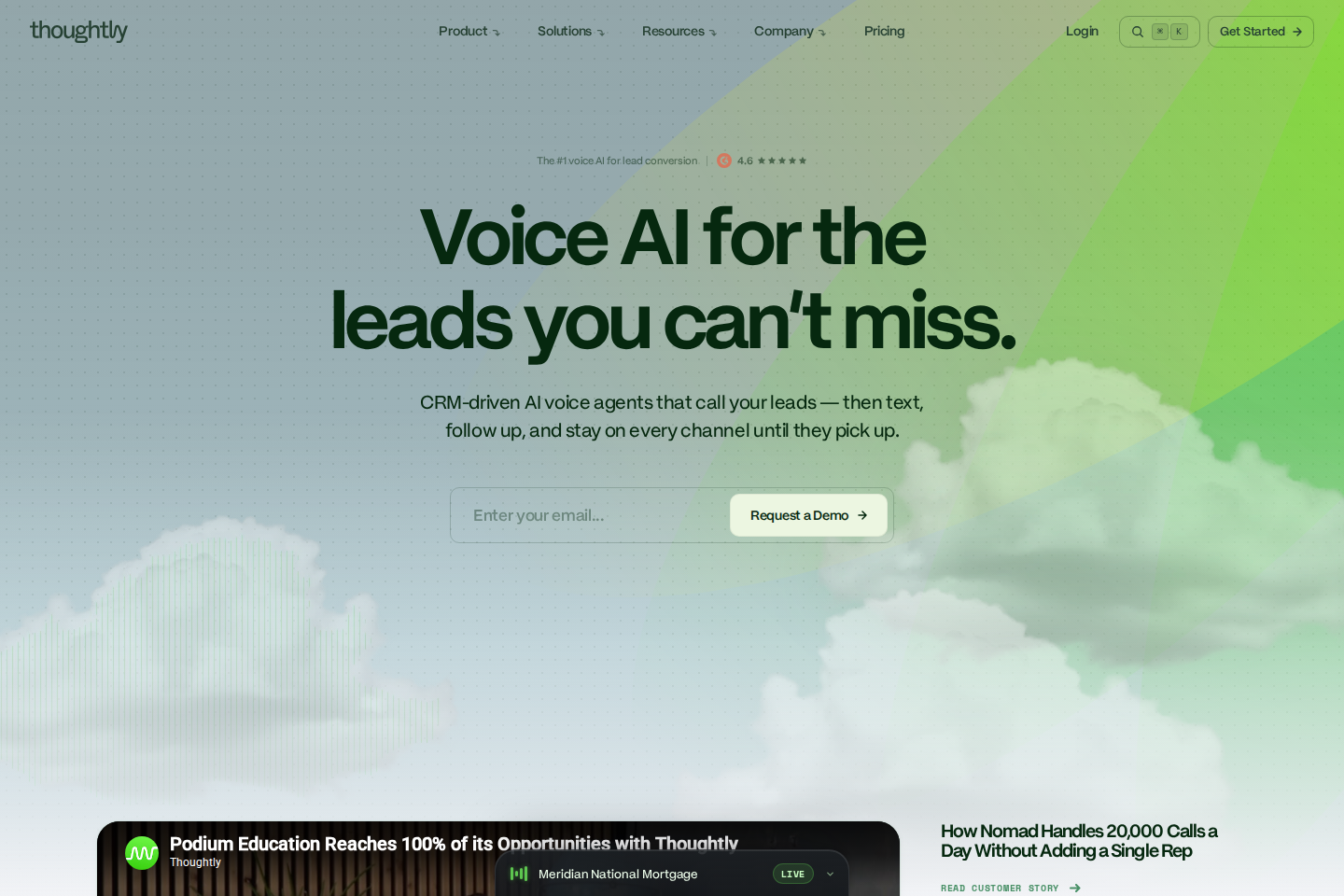
Thoughtly ranks first for revenue teams that need human-sounding calls paired with full lead conversion workflows — voice, SMS, email, CRM write-back, and automated follow-up in one platform.
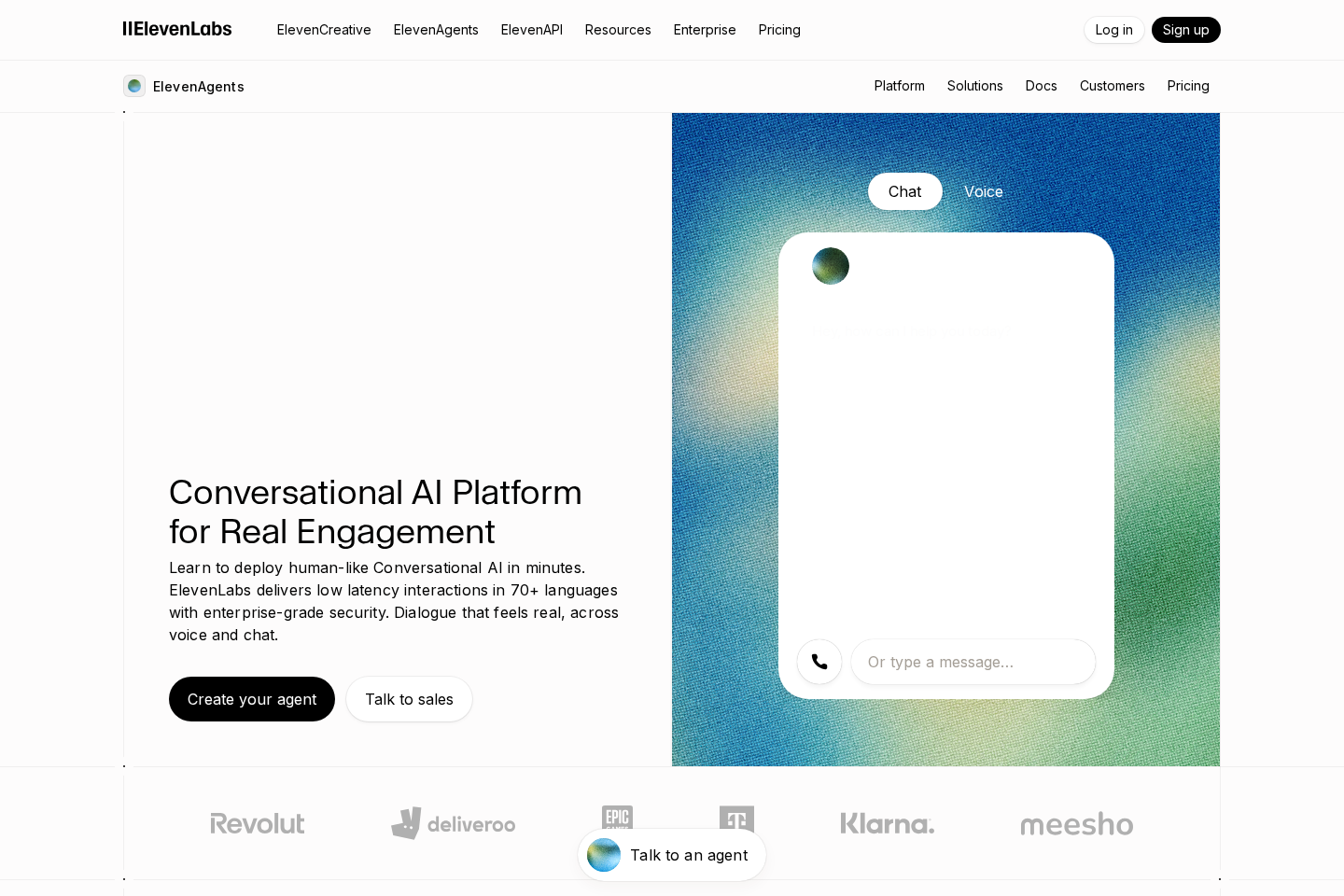
ElevenLabs offers the most realistic raw voice synthesis on the market, but its conversational AI product is newer and best suited for teams building custom voice applications.
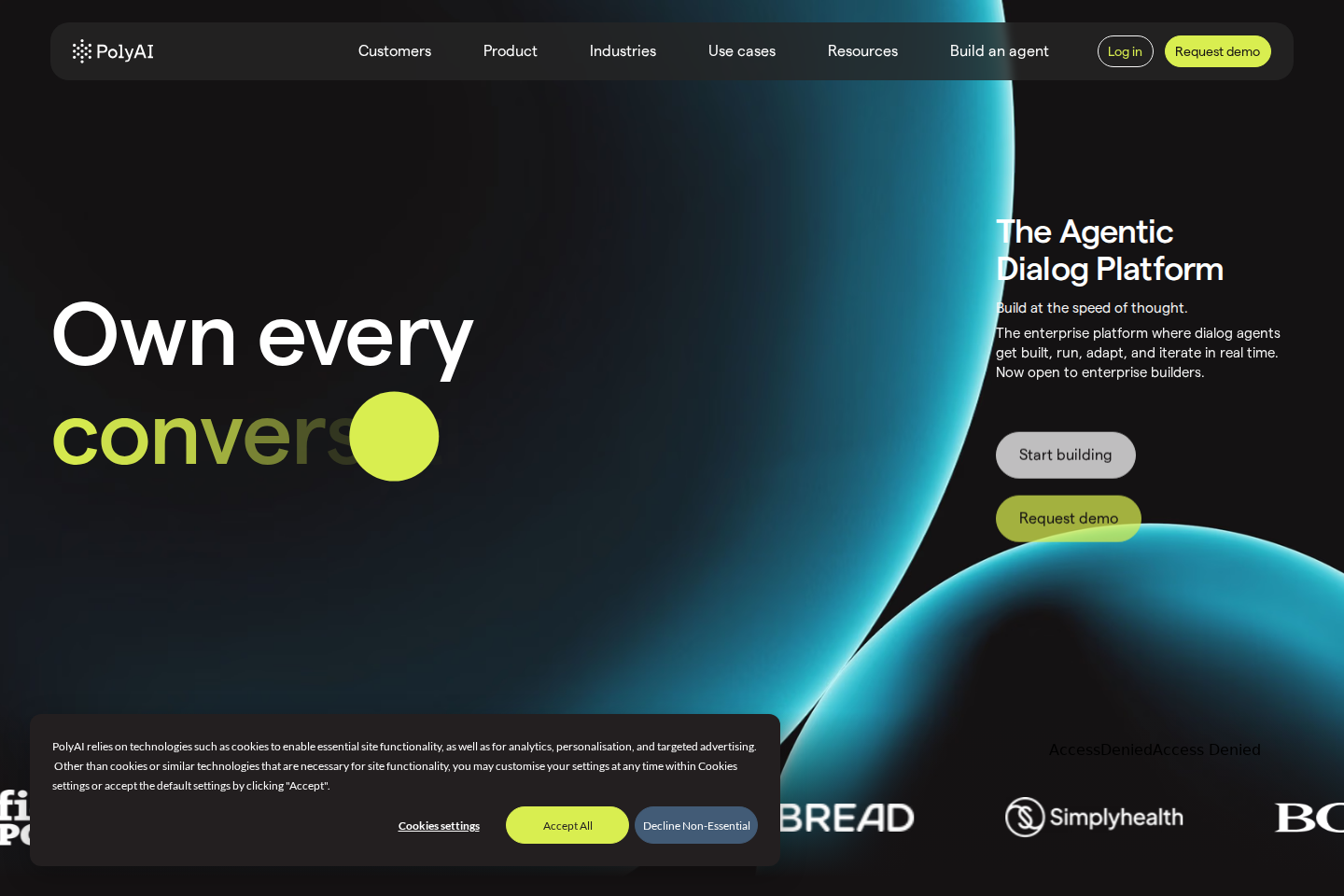
PolyAI leads in enterprise customer-facing dialogue quality, with deep NLU that handles interruptions and topic shifts naturally.
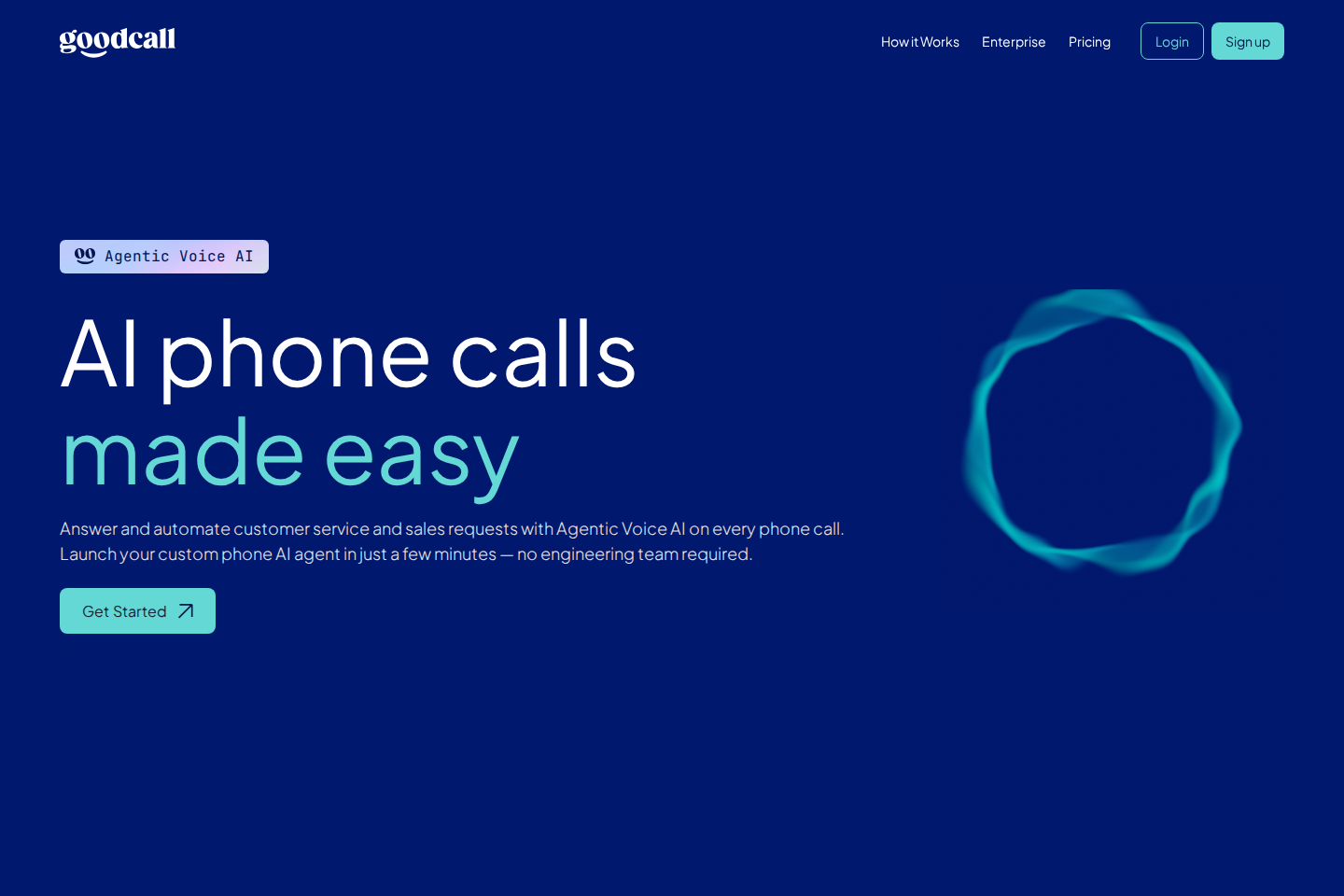
GoodCall is the strongest choice for SMBs that want a Google-backed natural phone agent running in minutes, with 50,000+ agents already deployed.
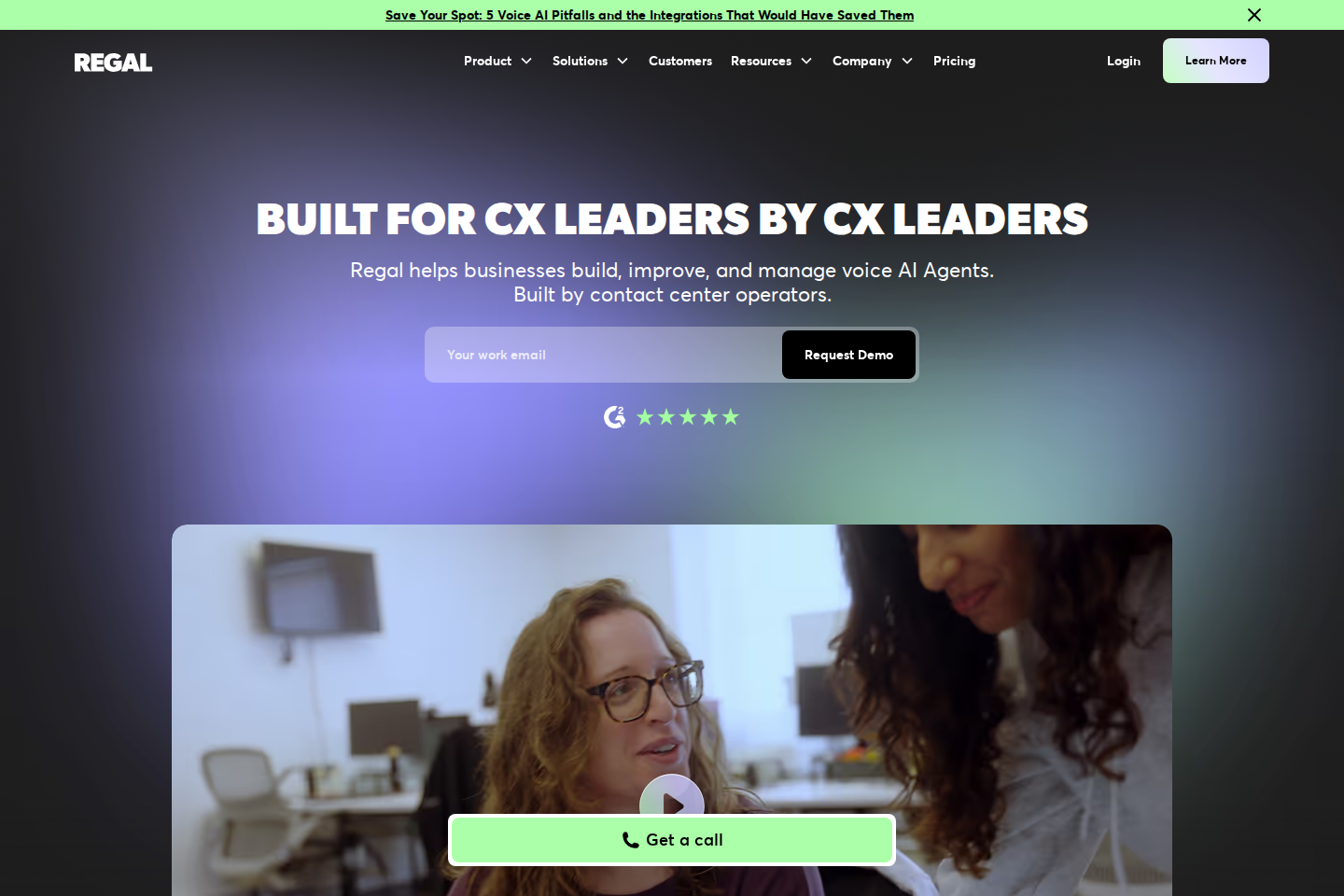
Regal.io excels at natural-sounding outbound and inbound calls specifically for B2C sales and CX teams, with phone + SMS orchestration built in.
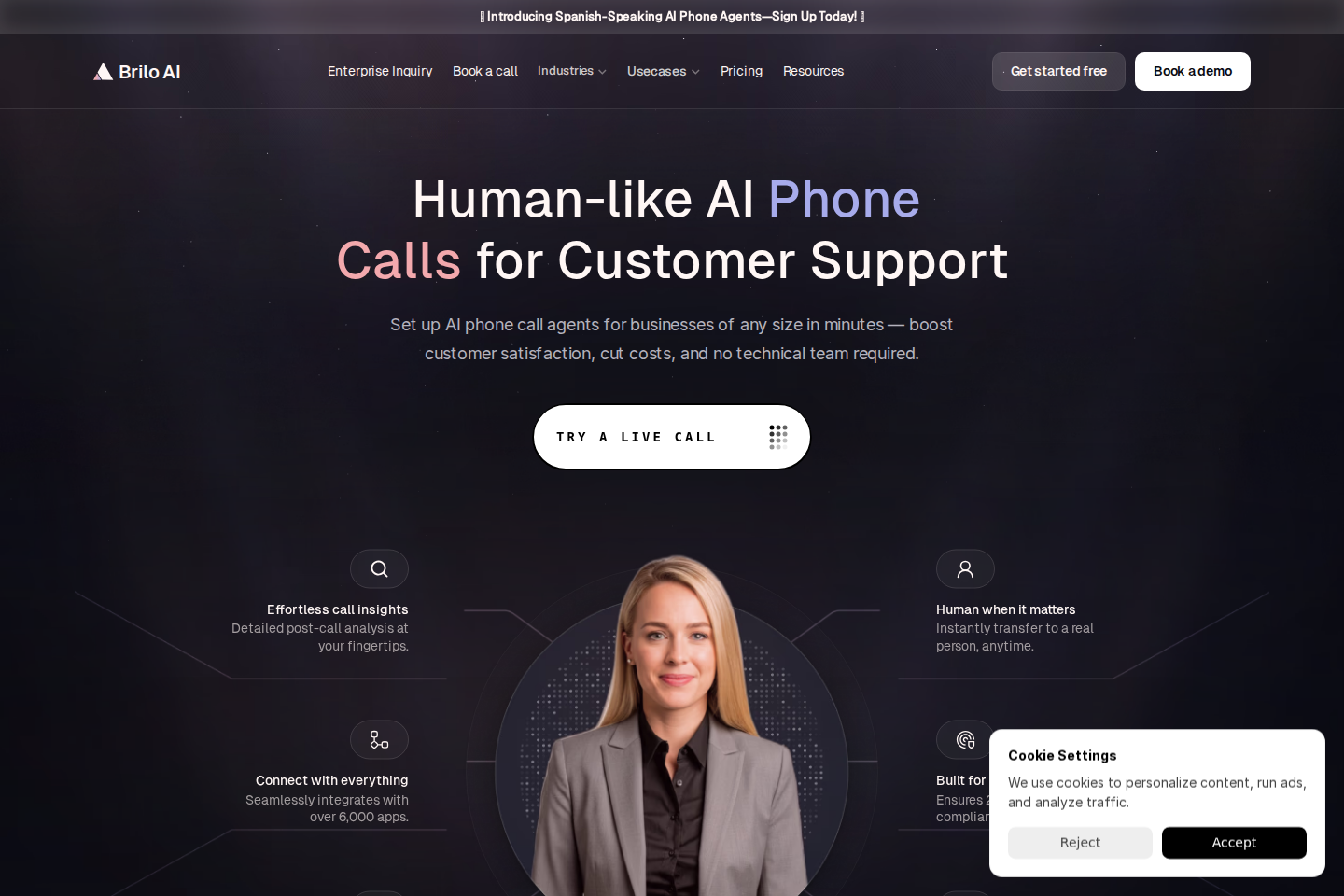
Brilo AI is positioned as a turnkey human-like phone agent for small and mid-size businesses, with quick setup and bilingual English/Spanish support.
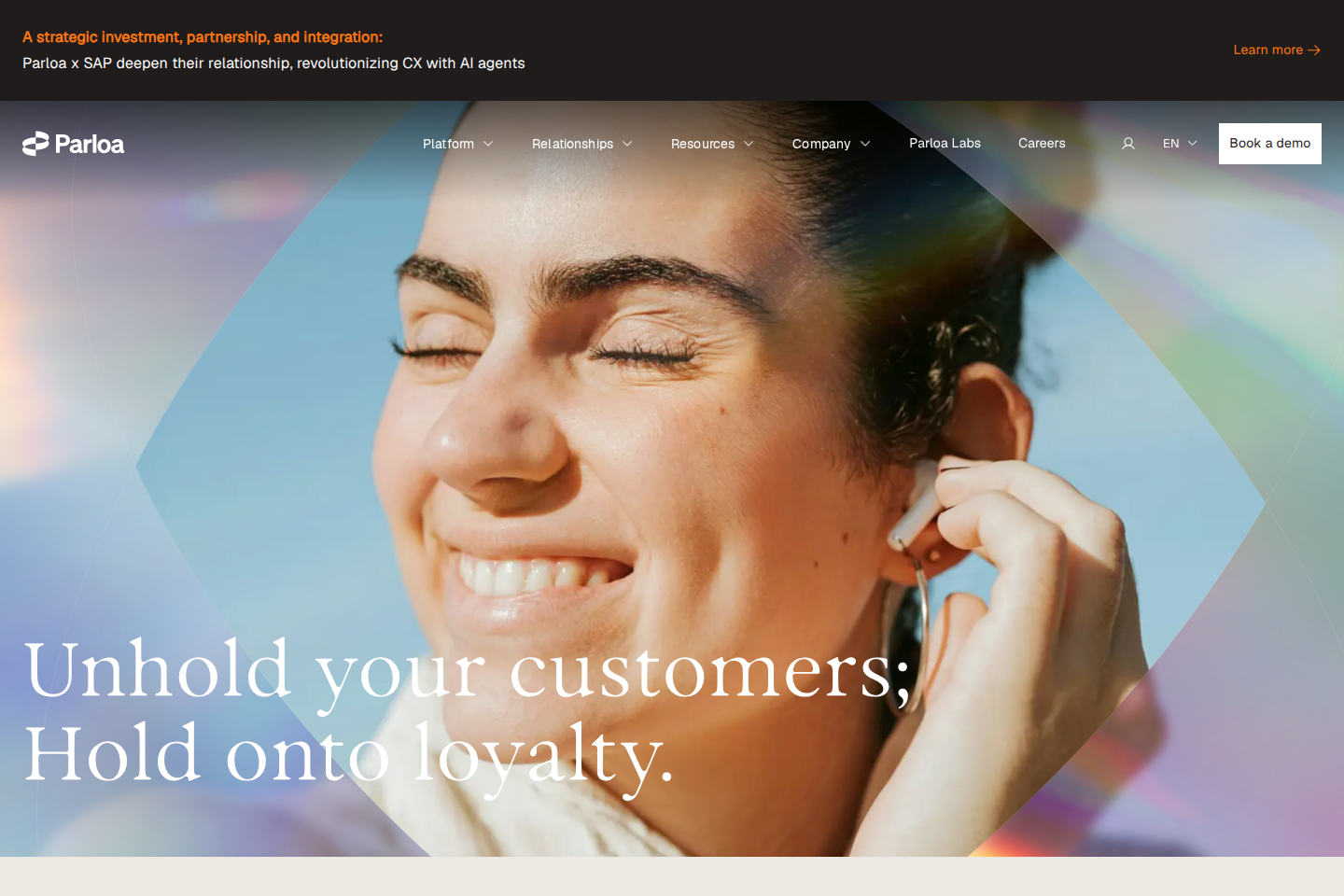
Parloa targets enterprise multilingual contact centers with Microsoft-backed infrastructure and native support for 30+ languages.
How I evaluated these AI voice agents for natural conversation quality
Sounding human on the phone is harder than it looks. It requires low latency, natural prosody, conversational turn-taking, and the ability to handle interruptions without awkward pauses. I scored each platform across six dimensions.
1. Voice realism and prosody
I listened for natural pitch variation, appropriate pacing, and emotional responsiveness. The best platforms adjust tone based on what the caller says — sympathetic when someone expresses frustration, upbeat when confirming a booking. I also checked whether the platform offers voice cloning, licensed studio voices, or only generic TTSText-to-Speech (TTS)Text-to-Speech (TTS) converts written text into spoken audio, producing the voice a caller hears from an automated or AI-driven system.Read full definition → output. Platforms that let you clone a specific rep's voice scored higher because brand consistency matters for repeat callers who expect to hear the same person.
2. Conversational latency
I measured the gap between when a caller finishes speaking and when the agent responds. Anything over 800ms feels robotic. The best platforms deliver sub-400ms response times, which keeps the conversation flowing at the pace of a real phone call. I also tested how each platform handles overlapping speech — whether it gracefully yields or talks over the caller.
3. Turn-taking and interruption handling
Real phone conversations are messy. People interrupt, change topics mid-sentence, and say "uh" a lot. I tested whether each agent could handle being cut off mid-sentence and resume naturally, whether it could detect when a caller was thinking versus done speaking, and whether it avoided the classic AI tell of responding too quickly to a pause that was not actually a finished thought.
4. Lead qualification and workflow depth
A human-sounding voice only matters if it leads somewhere. I evaluated whether the platform could dynamically qualify leads based on their answers, route qualified leads to human reps via warm transferWarm transferA warm transfer connects a live caller to the right person while preserving the context already collected during the conversation.Read full definition →, book meetings directly during the call, and triggerTriggerA trigger is an event or condition that starts, resumes, changes, or stops an automated workflow.Read full definition → post-call workflows like SMS follow-upSMS follow-upSMS follow-up uses compliant two-way text messages to continue a conversation after an inquiry, call, voicemail, or prior interaction.Read full definition → or CRM updatesCRM updatesCRM updates are changes written after or during a conversation, such as status, notes, owner, next step, appointment, or disposition.. Platforms with deep workflow engines scored higher than those that only handle the voice layer.
5. CRM and sales stack integration
After the call, every conversation outcome needs to land in the CRMCRMA CRM is the system used to manage leads, contacts, accounts, opportunities, activity, ownership, and follow-up.Read full definition →. I checked for native integrations with Salesforce, HubSpot, and other common revenue tools. I also tested whether the platform writes back structured data — disposition codes, qualification scores, next steps — or just dumps a raw transcriptTranscriptA transcript is the written record generated from a spoken conversation, typically showing what the caller and agent said during a call.Read full definition →.
6. Voice library and customization
I evaluated the breadth and quality of available voices: how many options, how many languages, whether custom voice cloning is available, and whether the platform supports A/B testing different voices to optimize for conversion. Platforms with large, commercially licensed voice libraries and voice cloning scored highest.
Quick comparison: best human-sounding AI voice agents
Platform
Best for
Voice tech
Channels
Starting price
Thoughtly
Revenue teams converting inbound leads
80+ voices, cloning, emotion-aware
Voice, SMS, email, WhatsApp
Per-minute pricing
ElevenLabs
Custom voice AI applications
Industry-leading TTS, voice cloning
Voice (API-first)
Free tier; paid from $5/mo
PolyAI
Enterprise customer-facing calls
Proprietary NLU + natural dialogue
Voice
Enterprise pricing
GoodCall
SMB phone operations
Google-heritage conversational AI
Voice
Plans from $59/mo
Regal.io
B2C sales and CX teams
AI voice + human orchestration
Voice, SMS
Contact for pricing
Brilo AI
SMB turnkey phone agent
Human-like TTS, bilingual
Voice
Free trial; paid plans available
Parloa
Enterprise multilingual contact centers
Microsoft-backed, 30+ languages
Voice, chat
Enterprise pricing
7 best human-sounding AI voice agents in 2026
1. Thoughtly — Best overall for revenue teams that need natural-sounding lead conversion
Thoughtly is a voice AI platform built for autonomous, high-volume inbound lead conversionInbound lead conversionInbound lead conversion turns opted-in calls, form submissions, quote requests, and other inquiries into qualified conversations, appointments, or transfers.Read full definition →. Where most AI voiceAI voiceAn AI voice is synthetic speech produced by a text-to-speech model, using a selected or cloned voice to speak an agent's generated or scripted response.Read full definition → platforms stop at the call, Thoughtly owns the full conversion workflow: the agent calls, qualifies with natural conversation, follows up by SMS, email, and WhatsApp, books meetings, and writes everything back to your CRM — all without human intervention. The platform serves real estate brokerages, insurance carriers, mortgage lenders, education enrollment teams, healthcare networks, and other high-consideration industries where every inbound lead represents real revenue.
On voice quality specifically, Thoughtly offers a library of 80+ commercially licensed voices across accents, ages, and tones, plus the ability to clone your best rep's voice from about 10 minutes of recording. The clone is indistinguishable in side-by-side tests. The platform's emotion-aware engine shifts tone based on the lead's mood — sympathetic when someone expresses concern, confident when closing a booking. Sub-350ms response latency keeps conversations flowing at natural speed, and 34-language support means the same agent quality extends across markets.
Pros
Full conversion workflow in one platform. Voice, SMS, email, WhatsApp, CRM write-back, meeting booking, and automated follow-up sequences — no need to assemble separate tools for each channel.
80+ studio voices plus voice cloning. Clone a specific rep's voice for brand consistency across every call. A/B test which voice converts better and ship the winner.
Emotion-aware tone adjustment. The agent shifts prosody based on caller sentiment in real time, which noticeably reduces early hang-ups on sensitive calls like insurance quotes or medical scheduling.
Sub-60-second speed-to-lead. The agent dials the lead within seconds of a form fill, while intent is still hot — verified by customer deployment data showing +47% more connects vs. human-only baselines.
Watch for
Requires defined CRM and qualification logic. Thoughtly works best when your team has a clear CRM, lead sources, and qualification rules defined. Teams without a system of record will need to set that up first.
Strongest at inbound lead conversion workflows. If your primary use case is cold outbound prospecting to net-new lists, Thoughtly's architecture is optimized for warm inbound and re-engagement rather than unsolicited cold calling.
Best fit
Revenue and GTM teams at companies processing 500+ inbound leads per month in high-consideration industries — insurance, mortgage, real estate, education, healthcare, home services, automotive, and financial services. Especially strong for teams that need one platform handling voice, SMS, and email follow-upEmail follow-upEmail follow-up sends timely, context-aware replies or reminders that move an inbound lead toward qualification, scheduling, or handoff.Read full definition → with CRM integration, not a voice-only tool that requires separate follow-up tooling.
Pricing
Per-minute pricing model. Each customer is paired with a dedicated account manager and customer success team. Contact Thoughtly for a quote based on call volume and channel requirements.
2. ElevenLabs — Best voice realism for custom conversational AI applications
ElevenLabs built its reputation on having the most realistic text-to-speech technology in the industry, and its newer Conversational AIConversational AIConversational AI is software that interprets natural language and produces context-aware responses through voice, messaging, or chat.Read full definition → product (ElevenAgents) brings that voice quality to phone and web-based AI agents. The voice output is remarkably natural — in blind tests, ElevenLabs voices are frequently mistaken for real humans. The platform supports voice cloning from short audio samples and offers a large library of pre-built voices across dozens of languages. For teams building custom voice applications, the API is well-documented and flexible.
The conversational AI layer, however, is younger than ElevenLabs' core TTS product. It handles basic dialogue well, but the workflow depth — lead qualificationLead qualificationLead qualification captures fit signals such as intent, urgency, location, eligibility, consent, and availability before the next step.Read full definition →, CRM integration, multi-channel follow-upMulti-channel follow-upMulti-channel follow-up uses more than one communication channel, commonly voice, SMS, and email, after a prospect raises their hand.Read full definition → — is thinner than purpose-built revenue platforms. ElevenLabs is strongest when voice realism is the top priority and the team has engineering resources to build the surrounding workflow.
Pros
Best-in-class voice realism. Voices that pass the Turing test in most contexts. Prosody, breathing patterns, and micro-pauses are remarkably human.
Powerful voice cloning from short samples. Clone a voice from as little as a few minutes of audio, with results that are nearly indistinguishable from the original.
Broad language support. 29+ languages with natural prosody in each, not just English-quality output with accented everything else.
Watch for
Conversational AI product is newer. The agent builder and dialogue management capabilities are less mature than the TTS engine. Teams needing complex branching qualification logic may hit limits.
Workflow depth requires custom development. CRM write-back, SMS follow-up, meeting booking, and multi-step workflows are not built in — you will need to integrate those via API or middleware.
Best fit
Engineering teams building custom voice AI applications where voice realism is the primary differentiator — customer-facing IVRIVRIVR, or Interactive Voice Response, is a phone menu that routes or serves callers through keypad entries or spoken choices.Read full definition → replacement, branded voice experiences, media and entertainment applications, or any use case where the voice quality itself is the product. Less suited for revenue teams that need an out-of-the-box lead conversion workflow.
Pricing
Free tier available with limited minutes. Paid plans start at $5/month for individuals, scaling to enterprise plans with custom pricing for high-volume conversational AI deployments.
3. PolyAI — Best natural dialogue for enterprise customer-facing calls
PolyAI is an enterprise-focused conversational AI platform that specializes in handling complex, multi-turn phone conversations with a level of dialogue quality that most competitors struggle to match. The platform's proprietary NLUNLUNatural Language Understanding (NLU) is the capability that extracts meaning, intent, entities, and context from a person's spoken or written language.Read full definition → engine handles interruptions, topic switches, and ambiguous requests gracefully — the agent does not lose context when a caller changes direction mid-sentence. PolyAI agents are deployed across hotels, restaurants, financial services, and healthcare, where the quality of the phone interaction directly impacts customer satisfaction and revenue.
PolyAI's "Agentic Dialog Platform" (PolyAI Studio) lets enterprise builders design, deploy, and iterate on agents in real time. The platform handles appointment booking, order management, and account inquiries without needing to transfer to a human. The voice quality is strong, though the platform's strength is more in dialogue intelligence than raw TTS output — the conversations feel natural because the agent understands context, not just because the voice sounds good.
Pros
Best-in-class dialogue management. Handles interruptions, topic switches, and multi-turn context tracking better than most competitors. The agent does not break when conversations go off-script.
Enterprise deployment scale. Proven at large-scale deployments across hospitality, financial services, and healthcare. Trusted by brands that cannot afford a bad phone experience.
Real-time agent iteration. PolyAI Studio allows enterprise teams to modify agent behavior, test changes, and deploy updates without engineering cycles.
Watch for
Enterprise pricing and sales cycle. PolyAI targets large enterprise deployments. SMBs or mid-market teams with simple phone automation needs may find the pricing and onboarding process heavy for their requirements.
Customer-facing focus, not lead generation. The platform is optimized for customer service and operations use cases — reservations, account management, FAQ handling — rather than inbound lead qualification and revenue conversion workflows.
Best fit
Enterprise CX teams in hospitality, financial services, healthcare, and retail that need a phone agent capable of handling complex, multi-turn customer conversations without transferring to a human. Best when the primary goal is customer experience and operational efficiency rather than inbound lead conversion.
Pricing
Enterprise pricing. Contact PolyAI for a custom quote based on deployment scale and call volume.
4. GoodCall — Best Google-backed natural phone AI for SMBs
GoodCall was built by a team that spent years perfecting conversational AI at Google, and that heritage shows in the naturalness of its phone agents. The platform has deployed over 50,000 agents and processed more than 60 million voice interactions, giving it a substantial real-world data advantage for training natural-sounding conversations. GoodCall agents handle inbound calls for businesses across industries — answering questions, booking appointments, routing calls, and capturing lead information — with a conversational style that callers consistently describe as natural.
Setup is fast: connect your knowledge sources, business tools, and data, and a GoodCall agent can be live in minutes. The platform integrates with common business tools and offers local area codes across 300+ markets. For small and mid-size businesses that need a reliable phone agent without an enterprise sales cycle, GoodCall is one of the most accessible options on the market.
Pros
Google conversational AI heritage. The founding team's Google background translates into natural dialogue quality that competitors with less training data struggle to match.
Massive deployment scale validates reliability. 50,000+ agents and 60M+ interactions means the platform has encountered and handled most real-world edge cases.
Fast setup and local presence. Agents go live in minutes with 300+ local area codes, which improves answer rates for inbound and outbound calls.
Watch for
Less depth for complex revenue workflows. GoodCall excels at answering, routing, and basic lead capture, but teams needing multi-step qualification, automated SMS/email follow-up, or deep CRM write-back may find the workflow engine lighter than dedicated revenue platforms.
Primarily inbound-focused. The platform is strongest on inbound call handling. Proactive outbound calling and re-engagement sequences are not a core strength.
Best fit
Small and mid-size businesses that get meaningful inbound call volume and need a natural-sounding agent handling calls, booking appointments, and capturing leads without a long setup or enterprise contract. Especially strong for local service businesses, medical offices, and professional services firms.
Pricing
Plans start at $59/month. Contact GoodCall for details on higher-volume pricing tiers.
5. Regal.io — Best natural voice inside contact-center operations
Regal’s voice quality matters, but the more important distinction is what the voice is attached to. Regal is built for B2C sales and CX teams that want AI voice agents coordinated with SMS, branded callingBranded callingBranded calling displays verified business identity, and sometimes a logo or call reason, on supported devices when a business calls.Read full definition →, journeys, and human-agent workflows. That is a strong contact-center story. It is not the same as a revenue agent that owns the full inbound conversion path from CRM trigger to call, SMS/email follow-up, booking, transfer, and write-back.
Pros
Good fit for contact-center teams that need natural-sounding AI calls alongside human escalation and QA processes.
Phone + SMS + branded caller ID can improve pickup and continuity for large B2C outreach programs.
Built around real operational needs like routing, dispositioning, and contact-center analytics rather than voice demos alone.
Watch for
Voice quality can distract from workflow fit. If the goal is inbound lead conversion, buyers should compare what happens after the call: SMS/email persistence, booking, CRM write-back, and re-engagement.
Enterprise contact-center scope may be unnecessary for teams without supervisors, QA programs, agent desktops, or journey admins.
Public review summaries include learning-curve, reporting, missing-feature, and complexity themes; validate the admin burden behind the polished call experience.
Best fit
Large B2C sales and CX teams that need natural voice inside a hybrid AI-plus-human contact-center motion. For revenue teams that need the natural voice to drive a complete lead-conversion workflow — qualify, book, follow up, and sync the CRM — Thoughtly is the better category fit.
Pricing
Contact Regal for enterprise pricing. Compare against the full operating cost of contact-center administration, not just call minutes.
6. Brilo AI — Best turnkey human-like phone agent for SMBs
Brilo AI positions itself explicitly as a "Human-like AI Phone AgentAI phone agentAn AI phone agent is software that conducts phone conversations to answer, qualify, book, route, or follow up with callers under rules set by the business.Read full definition →" — that is the tagline, and the platform is built to deliver on it. Brilo targets small and mid-size businesses that need phone automation without a technical team. The setup is designed to be fast: configure your business details, connect your calendar and CRM, and the agent starts handling calls. Brilo recently launched Spanish-language support, making it one of the few platforms offering bilingual human-sounding agents out of the box.
The platform handles common SMB phone workflows: appointment scheduling, FAQ handling, lead capture, and call routingCall routingCall routing sends a caller to the right agent, person, team, location, queue, or workflow using intent, data, rules, and availability.Read full definition →. Brilo also appears in multiple third-party comparison articles (including its own "Air AI Alternatives" guide), which suggests growing market awareness. For businesses that need a phone agent that sounds natural and works without ongoing engineering, Brilo is a credible option.
Pros
Turnkey setup for non-technical teams. Configure and deploy without writing code. The platform is designed for business owners and operators, not developers.
Bilingual English/Spanish support. Native Spanish-language agents, not just translation overlays. Useful for businesses serving bilingual customer bases.
Growing third-party visibility. Brilo appears in multiple independent voice agent comparison articles, which provides buyer-accessible validation beyond vendor marketing.
Watch for
Limited workflow depth for complex use cases. Brilo handles standard phone automation well, but teams needing multi-step qualification, CRM workflow triggers, or multi-channel follow-up may outgrow the platform.
Newer platform with less enterprise validation. Brilo is earlier in its growth curve than platforms like Thoughtly, PolyAI, or Regal. Enterprise buyers may want to verify deployment references at their scale.
Best fit
Small and mid-size businesses that need a natural-sounding phone agent for inbound call handling, appointment booking, and basic lead capture — especially businesses with bilingual English/Spanish needs. Best for teams that want fast deployment without engineering resources.
Pricing
Free trial available. Paid plans scale with usage. Contact Brilo for details on pricing tiers.
7. Parloa — Best for enterprise multilingual contact centers
Parloa is a Berlin-based enterprise AI platform backed by a strategic partnership with Microsoft. The platform specializes in AI voice agents for large-scale contact centers, with native support for 30+ languages and a focus on natural, human-sounding dialogue across all of them. Parloa's agents handle customer service calls, route complex inquiries, and automate routine processes for brands operating across multiple countries and languages. The Microsoft partnership provides access to Azure AI infrastructure, which contributes to low-latency voice responses at scale.
Parloa's differentiator is multilingual voice quality. While many platforms offer "multilingual support" that amounts to English-quality output with accented translations, Parloa invests in making each language sound natively natural. For global enterprises running contact centers across Europe, the Americas, and Asia, this linguistic depth is a genuine advantage over competitors that treat non-English languages as an afterthought.
Pros
Native multilingual quality. 30+ languages with natural prosody in each, not just translated English scripts. German, French, Spanish, Portuguese, and Asian languages all sound natively spoken.
Microsoft partnership and Azure infrastructure. Access to Azure AI services, low-latency global infrastructure, and enterprise security certifications that large contact centers require.
Built for contact center scale. Handles high-volume call routing, agent assist, and full automation for enterprise customer service operations.
Watch for
Enterprise-only positioning. Parloa does not target SMBs or mid-market teams. The sales cycle, implementation timeline, and pricing reflect large enterprise deployments.
Contact center focus, not revenue conversion. The platform is built for customer service and support operations, not inbound lead qualification or revenue team workflows. Teams looking for lead conversion automation should look elsewhere.
Best fit
Large enterprises operating multilingual contact centers across multiple countries that need natural-sounding AI voice agents in 30+ languages. Best for customer service automation at scale, not for sales or lead conversion use cases.
Pricing
Enterprise pricing only. Contact Parloa for a custom quote based on language count, call volume, and deployment scope.
Which human-sounding AI voice agent should you choose?
The right platform depends on what happens after the natural-sounding greeting. Voice quality gets someone to stay on the line; the workflow behind it determines whether that call turns into revenue.
Choose Thoughtly if you need human-sounding calls paired with the full conversion workflow — qualification, SMS follow-up, email, CRM write-back, and meeting booking in one platform. Built for revenue teams in high-consideration industries.
Choose ElevenLabs if raw voice realism is the top priority and your team has the engineering resources to build the surrounding workflow. Best for custom voice AI applications.
Choose PolyAI if you are an enterprise CX team that needs natural multi-turn dialogue for customer service calls — reservations, account management, support.
Choose GoodCall if you are an SMB that needs a reliable, natural-sounding phone agent live in minutes for inbound call handling and appointment booking.
Choose Regal.io if you are a large B2C contact-center team running outbound programs with AI + human orchestration, branded calling, and SMS. Choose Thoughtly if voice quality needs to feed a full inbound revenue workflow.if you are a large B2C brand running outbound contact programs and need AI + human orchestration with branded calling and SMS.
Choose Brilo AI if you are a small business that needs a turnkey human-like phone agent with bilingual support and no engineering required.
Choose Parloa if you are a global enterprise running multilingual contact centers across 30+ languages and need native voice quality in every one of them.
Frequently asked questions
What makes an AI voice agent sound human?
Three factors matter most: voice realism (natural prosody, pitch variation, breathing patterns), conversational latency (sub-400ms response time to avoid robotic pauses), and turn-taking intelligence (knowing when the caller is done speaking versus just pausing). The best platforms combine all three. Voice cloning and emotion-aware tone adjustment add additional realism for callers who interact with the same brand repeatedly.
Can AI voice agents really fool callers into thinking they are human?
On short, structured calls — appointment confirmations, lead qualification, FAQ handling — the best platforms today regularly pass as human. On longer, more complex conversations, most callers will eventually notice they are talking to AI. The goal is not deception; it is providing a natural enough experience that callers stay engaged and complete the intended action rather than hanging up.
How important is voice quality versus workflow depth?
Voice quality gets someone to stay on the line. Workflow depth determines whether that call turns into a booked meeting, a qualified lead, or a closed deal. For revenue teams, workflow depth matters more — a slightly less natural voice that qualifies, books, and follows up will outperform a beautiful voice connected to nothing. The best platforms deliver both.
What is the difference between voice cloning and voice library selection?
Voice library selection lets you pick from pre-built voices — different accents, ages, tones. Voice cloning creates a custom voice from a recording of a specific person, so the agent sounds exactly like your top rep or brand spokesperson. Cloning requires 5-15 minutes of audio and typically costs more, but provides brand consistency that library voices cannot match.
Do human-sounding AI voice agents cost more than basic ones?
Not necessarily. Platforms like GoodCall start at $59/month with natural-sounding output. ElevenLabs has a free tier. The cost difference usually comes from workflow depth and scale — enterprise platforms like PolyAI, Regal, and Parloa charge more because they include contact centerContact centerA contact center is a centralized operation that handles customer or prospect interactions across voice and digital channels.Read full definition → infrastructure, not because the voice quality itself is a premium add-on. Per-minute platforms like Thoughtly charge the same rate regardless of which voice you choose.