

Guides
Medical Answering Services for Ophthalmology: AI Voice Agent Guide
See how ophthalmology practices can use AI voice agents for visit classification, verified appointment booking, referral routing, and governed clinical handoff.
Guides
See how ophthalmology practices can use AI voice agents for visit classification, verified appointment booking, referral routing, and governed clinical handoff.
Last updated
Medical answering services for ophthalmology practices should do more than collect messages. A qualified AI voice agentVoice agentA voice agent is a conversational software system that listens, responds, follows a defined workflow, and can take approved actions during a phone conversation. should identify the administrative request, match it to a practice-approved visit path, use live scheduling data, and finish with a confirmed appointment or an owned staff task.
Our recommendation is to automate the bounded phone work around eye-care access, not the clinical judgment inside it. Routine exams, specialty consultations, diagnostic testing, surgery coordination, prescription questions, and sudden vision concerns do not belong on one improvised script. The practice should define which paths the agent may complete and where a trained person must take over.
See how Thoughtly handles healthcare inquiry response
The broad medical answering services buyer guide helps practices compare vendors, while the outpatient scheduling guide owns the general referral-to-appointment workflowWorkflowA workflow is a defined sequence of steps, decisions, actions, delays, and outcomes used to complete a business process.. Ophthalmology has a narrower deployment problem: appointment length, provider, location, equipment, referral state, and preparation may change with the requested visit type.
The AI voice agent should never translate a caller's symptoms into a diagnosis or decide which clinical service is appropriate. It should map only to the administrative categories the practice has approved. If a request does not match cleanly, the correct result is a staff review task, not a confident guess.

Start with terminal outcomes, then write the conversation. This keeps a pleasant call from being mistaken for completed work. Every route needs an allowed action, proof of completion, and a named person or queue when automation stops.
| Caller request | Allowed AI voice-agent action | Required result | Human owner when blocked |
|---|---|---|---|
| Routine eye exam | Match an approved visit type and offer live availability | Appointment ID or review task | Scheduling team |
| Specialty consultation | Collect limited routing facts and apply the approved service map | Eligible booking or assigned review | Patient-access team |
| Diagnostic test or imaging | Read the practice's readiness state and scheduling rules | Confirmed test slot or owned exception | Diagnostic scheduling |
| Surgery-related administrative question | Route by procedure, location, and staff ownership without clinical advice | Accepted transfer or assigned callback | Surgical coordinator |
| Prescription, result, symptom, or urgent concern | Stop routine booking and activate the practice-approved human path | Accepted handoff or visible task | Clinical team |
| Existing appointment change | Verify identity and modify only an eligible booking | Confirmed change or owned exception | Scheduling team |
A routine exam, retina consultation, glaucoma follow-up, cataract evaluation, and postoperative visit may use different templates and owners. The practice should maintain the mapping. The agent may follow it, but it should not infer a clinical category from the caller's description.
For referrals, diagnostic tests, and procedure-related appointments, the source system should return a simple administrative state such as ready to schedule, missing information, staff review, or stop and transfer. A voice agent should consume that state. It should not interpret an order, authorization, test result, or medical note.
Offer only slots returned for the approved location, provider class, equipment, and appointment type. Confirm the booking only after the system reports success and returns an identifier. A stale slot, timeout, duplicate record, or partial write is an exception. Softer language does not make a failed booking real.
Thoughtly's current AI voice agent product supports controlled qualification, real-time handoff, transcripts, and CRMCRMA CRM is the system used to manage leads, contacts, accounts, opportunities, activity, ownership, and follow-up. context. In an ophthalmology practice, it should sit beside the phone, scheduling, CRM, and approved messaging systems as the conversation and action layer.
A strong Thoughtly deployment can answer an inbound call, classify the administrative request, retrieve approved context, book live availability, record the result, send permitted follow-up, and transfer exceptions with the facts already gathered. It should not replace the EHR, choose a clinical service, evaluate symptoms, or promise coverage. Those limits are part of the buying decision, not fine print.
Explore Thoughtly AI voice agents for verified booking and handoff
An AI voice agent should not diagnose, assess vision changes, decide urgency, interpret results, recommend care, change clinical instructions, approve refills, or promise insurance coverage. It may recognize a practice-defined stop condition and activate the approved human or emergency path. Automating the administrative response is useful; automating clinical judgment is not.
Privacy and contracting are launch gates. HHS explains when business associate agreements apply and requires covered entities to use policies supporting the minimum necessary standard. The practice should approve the data scope, identity checks, access roles, recording, retention, connected systems, subcontractors, and exception owners before live calls.
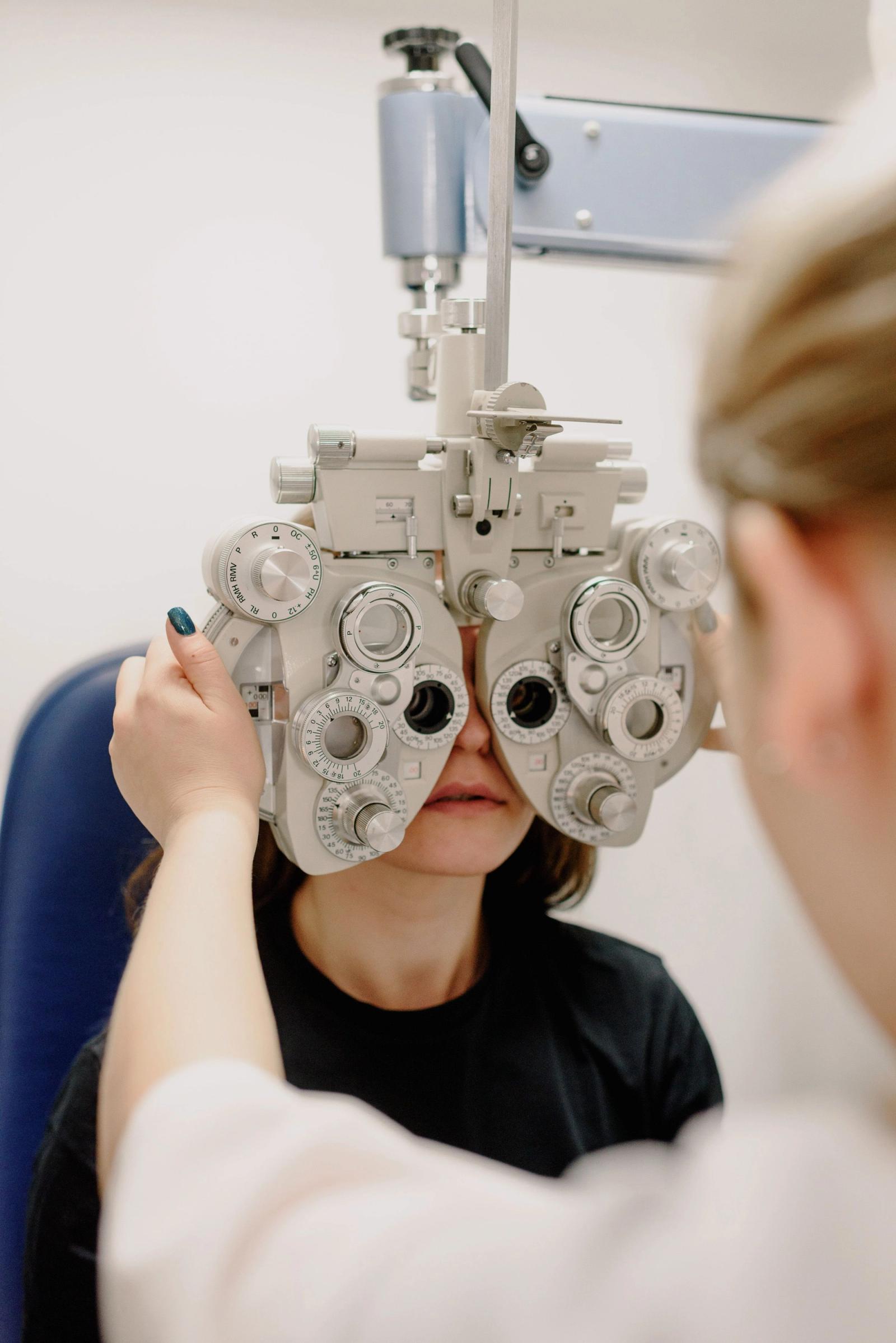
Begin with one location, one bounded appointment family, one scheduler, and one staffed exception queue. Test wrong-visit corrections, incomplete referrals, unavailable equipment, duplicate patient records, failed writes, rejected transfers, caller requests for a person, clinical questions, and after-hours rules before expanding.
Measure eligible calls, verified appointment classifications, confirmed bookings, accepted transfers, owned tasks, booking failures, duplicate records, staff repair time, and completed visits. Thoughtly should expand only when the practice can trace each call to a downstream result. Answer rate alone is a vanity metric.
The buying test should use the practice's real edge cases. A polished generic demo proves very little.
It can handle bounded administrative work such as new-patient inquiry capture, approved visit classification, location routing, live appointment booking, routine information, permitted follow-up, and structured handoff. The practice should keep clinical assessment and advice with qualified staff.
Yes, when the practice's system supplies an approved readiness state, test type, location, resource, and live availability. If the order, preparation, authorization, or appointment class is unclear, the agent should create an owned review task instead of booking.
No. It should use the practice-approved stop and handoff path without assessing the concern. The practice, not the model, defines the exact language, clinical destination, backup route, and documentation requirement.
Compare the models by completed administrative outcomes, human exception ownership, scheduling accuracy, data controls, reporting, and staff repair time. The strongest design is often hybrid: AI handles repeatable volume, while people receive the calls that require judgment or empathy.
Map an ophthalmology call workflow with Thoughtly
Product context: Thoughtly AI VoiceAI voiceAn AI voice is synthetic speech produced by a text-to-speech model, using a selected or cloned voice to speak an agent's generated or scripted response. Agents and Thoughtly for Healthcare. Privacy context: the HHS sources linked above. Photography: Antoni Shkraba and Ksenia Chernaya via Pexels under the Pexels License. This article is operational guidance, not medical, legal, privacy, security, billing, or coverage advice.


