

Industry insights
Thoughtly vs 11x: Revenue Autopilot vs AI SDR
A practical comparison of Thoughtly and 11x for revenue teams choosing between inbound lead conversion and AI SDR prospecting.
Industry insights
A practical comparison of Thoughtly and 11x for revenue teams choosing between inbound lead conversion and AI SDR prospecting.
Last updated
Thoughtly and 11x both talk about AI workers for revenue teams, but they solve opposite problems. 11x is built around AI SDRs that identify, research, personalize, and prospect into accounts across outbound channels. Thoughtly is built around the leads already in your funnel: the quote requestQuote requestA quote request is an inbound inquiry asking for pricing, coverage, or a cost estimate for a product or service., form fill, missed call, appointment inquiry, or reactivation list that needs a fast response and a booked next step.
That distinction is not cosmetic. If your company needs more top-of-funnel demand and is comfortable scaling cold prospecting, 11x belongs on the shortlist. If your company already pays to generate inbound demand and loses revenue because humans cannot call, text, email, qualify, route, and update the CRMCRMA CRM is the system used to manage leads, contacts, accounts, opportunities, activity, ownership, and follow-up. fast enough, Thoughtly is the cleaner fit.
I compared the platforms on buying motion, channel orchestration, CRM execution, compliance posture, pricing risk, and operational ownership. The short version: choose 11x when the job is AI SDR prospecting for B2B GTM teams; choose Thoughtly when the job is high-volume, opted-in lead conversion in insurance, mortgage, education enrollment, healthcare, home services, real estate, automotive, financial services, legal, and similar consumer funnels.
| Category | Thoughtly | 11x | Practical takeaway |
|---|---|---|---|
| Primary job | Convert existing inbound leads across voice, SMS, email, CRM, routing, booking, and handoff | Generate and work pipeline with AI digital workers, especially outbound SDR motions | Thoughtly is conversion infrastructure; 11x is prospecting infrastructure. |
| Best buyer | RevOps, growth, enrollment, patient access, sales ops, branch/franchise teams | B2B SaaS, sales, growth, RevOps, and GTM teams that need outbound capacity | Use the team’s actual funnel problem as the filter. |
| Lead source | Your CRM, form fills, missed calls, inbound quote requests, reactivation lists | Prospecting data, buying signals, website visitors, outbound lists, inbound queues | Thoughtly starts from declared intent; 11x often starts from target accounts. |
| Channels | Voice, SMS/iMessage/WhatsApp, email, CRM/workflows with shared context | Email, phone, social/LinkedIn-style outreach, SMS, inbound phone and qualification workflows | 11x has broader outbound sequencing; Thoughtly has stronger inbound conversion continuity. |
| CRM and workflow execution | Native CRM read/write, qualification, outcome tagging, scheduling, routing, warm transfer, and follow-up | CRM integrations, API, Slack, G2, analytics, lead database, research, personalization, and sequences | 11x consolidates GTM prospecting tools; Thoughtly owns the post-lead conversion loop. |
| Compliance fit | Inbound-only, opted-in motion with SOC 2 Type II, HIPAA, GDPR, opt-out handling, and regulated vertical fit | SOC 2 posture and enterprise security; cold/outbound usage requires careful consent and DNC controls | Regulated consumer funnels should avoid tools whose default motion increases cold-contact risk. |
| Pricing shape | Per-minute pricing quoted around the full lead-conversion workflow | Public pricing is limited; independent reviews and comparison pages commonly cite enterprise-style, opaque pricing and annual contracts | Compare cost per worked lead or booked conversation, not only platform fee. |
| When to choose | You have inbound demand leaking because follow-up is too slow or inconsistent | You need AI prospecting capacity and have a B2B outbound motion | Different jobs. Pretending otherwise is where bad software buys happen. |
Thoughtly is intentionally narrow about the motion it serves: opted-in leads raise their hand, land in the CRM or lead sourceLead sourceLead source identifies the channel, campaign, marketplace, partner, form, or referral that generated an inquiry., and get worked immediately across voice, messaging, email, routing, booking, and CRM updatesCRM updatesCRM updates are changes written after or during a conversation, such as status, notes, owner, next step, appointment, or disposition.. That is the right architecture when the business already has demand and the leak is speed, coverage, persistence, and handoff. The practical metric is not emails sent or accounts researched; it is how many real inquiries become qualified conversations, appointments, transfers, or updated pipeline records.
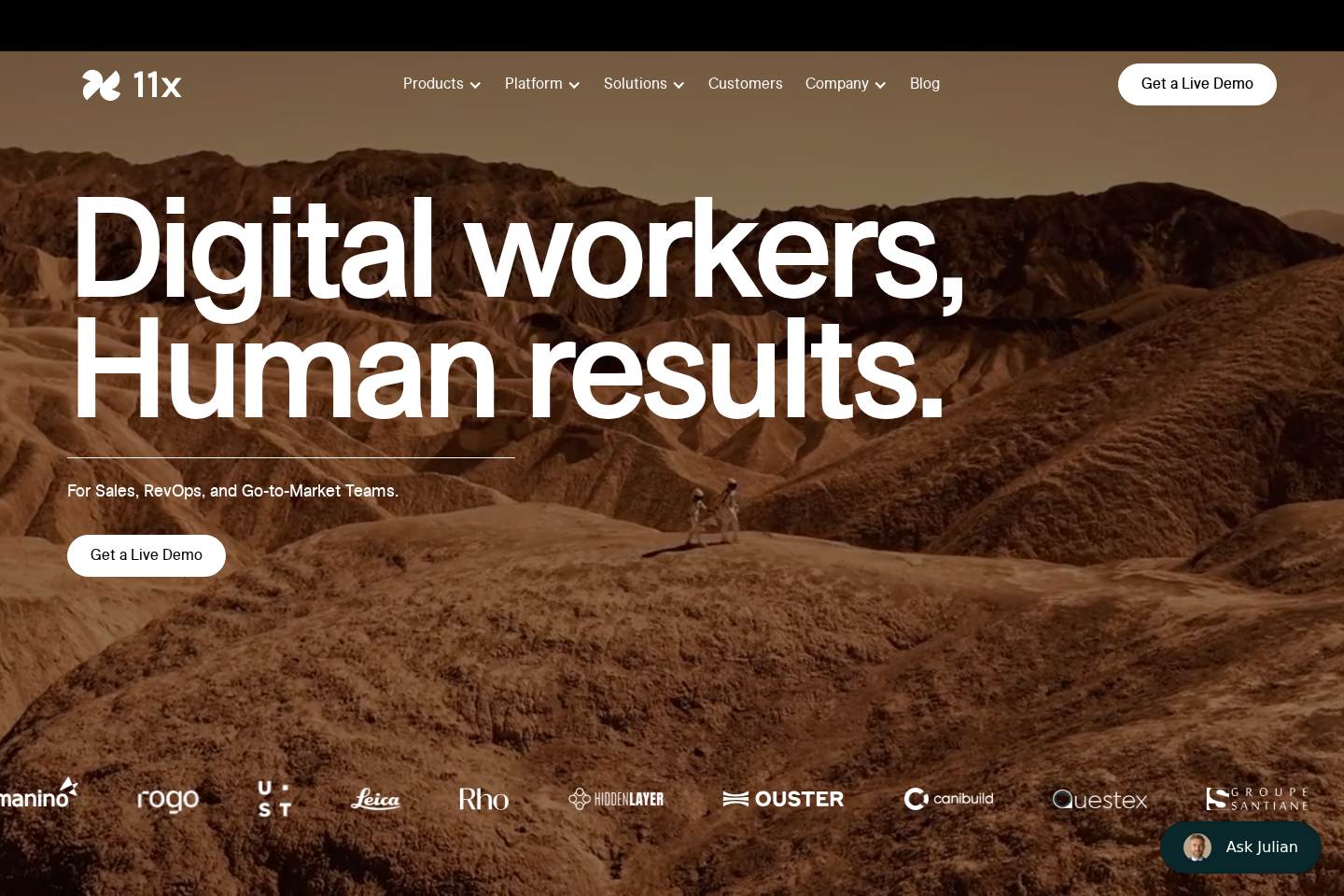
11x’s own website describes an AI Growth Engine for Sales, RevOps, and GTM teams. Its product navigation centers Alice as an outbound digital worker and Julian as an inbound digital worker, with use cases such as outbound lead generation, lead nurture, lead reactivation, competitive takeout, website visitor retargeting, event follow-up, speed to leadSpeed to leadSpeed to lead is the elapsed time between an inbound inquiry and the first meaningful response from the business., inbound qualification, and automated scheduling. That breadth is useful for B2B teams that want to automate prospecting and pipeline creation, but it is heavier than necessary when the only job is converting known, opted-in consumer demand.
Winner for inbound conversion: Thoughtly. Winner for AI outbound prospecting: 11x.
Thoughtly’s advantage is continuity after the first contact attempt. The same agent can call quickly, pivot to SMS or iMessage when the lead cannot talk, send email context, schedule a callback, book directly, warm-transfer, and keep the CRM record current. For mortgage, insurance, healthcare intake, education enrollment, legal intakeLegal intakeLegal intake captures a potential client’s matter details, urgency, location, eligibility, and preferred next step before routing., automotive, and home services, that same-agent continuity matters because buyers often answer in fragments across channels.
11x has a broader SDR-style channel story. Its website highlights multi-channel sequences, smart replies, multilingual outreach, consented outbound calling, AI phone agentAI phone agentAn AI phone agent is software that conducts phone conversations to answer, qualify, book, route, or follow up with callers under rules set by the business. capabilities, intelligent routing, LinkedIn-style/social outreach, and deliverability tooling. That is useful when the workflowWorkflowA workflow is a defined sequence of steps, decisions, actions, delays, and outcomes used to complete a business process. resembles prospecting and nurture, but buyers should verify how much of the inbound voice-to-SMS-to-email-to-CRM conversion loop works as a packaged operating motion versus a sequence that still needs GTM configuration.
Winner for persistent inbound follow-up: Thoughtly. Winner for outbound sequence breadth: 11x.
Thoughtly starts from the customer’s system of recordSystem of recordA system of record is the authoritative source for a defined category of business data.. The lead already exists in Salesforce, HubSpot, Zoho, a scheduler, a form tool, or another approved source, and the agent’s job is to contact, qualify, route, schedule, and write the result back. That keeps the workflow tied to consent, source, eligibilityEligibilityEligibility is the set of conditions that determines whether a prospect can move to a service, quote, appointment, application, or specialist., service areaService areaA service area is the geography in which a business can provide a particular service, product, appointment, or licensed activity., preferred next step, and the exact handoff path a human team would have used.
11x leans into data and lead generation. Its site lists real-time company and lead database, live web search and AI prospecting, lead qualificationLead qualificationLead qualification captures fit signals such as intent, urgency, location, eligibility, consent, and availability before the next step., website visitor tracking, signals and triggers, deep research, AI personalization, playbooks, and knowledge baseKnowledge baseA knowledge base is a maintained collection of approved business information that an agent can use to answer questions.. That is a strength for teams trying to create pipeline from target accounts, but it creates an extra data-quality and compliance surface when compared with contacting leads who have already requested information.
Winner for CRM-native conversion: Thoughtly. Winner for prospect discovery and enrichment: 11x.
Thoughtly is built around the work after the conversation: CRM write-backCRM write-backCRM write-back sends conversation outcomes, qualification answers, notes, appointments, dispositions, and next steps into the CRM., notes, outcome tagging, booked meetings, warm transfers, suppression handling, routing, re-engagement, and reporting. That is why the platform fits RevOps and GTM operators rather than only sales development managers. In a high-volume consumer funnel, a successful AI call still fails if the next step does not land cleanly in the CRM and the human team cannot trust the handoff.
11x also has workflow and integration breadth. Its website lists CRM integrationCRM integrationA CRM integration connects an agent or communications platform with a CRM so the systems can exchange records, events, and actions., Slack integration, G2 integration, API, analytics, lead routing, inbound handling, and deliverability controls. The buyer question is different: do you want one platform to consolidate prospecting, research, sequences, and inbound handling, or do you want a narrower system that owns the conversion path for known inbound demand?
Winner for full-funnel GTM automation breadth: 11x. Winner for focused lead-conversion workflow depth: Thoughtly.
Thoughtly’s public positioning is explicitly inbound-only for opted-in leads, with SOC 2 Type II, HIPAAHIPAAHIPAA is a US federal law whose Privacy, Security, and Breach Notification Rules govern protected health information for covered entities and business associates., GDPR, opt-outOpt-outAn opt-out is a person’s request to stop receiving a particular category of calls, texts, emails, or other communications. handling, consent-aware operations, branded callingBranded callingBranded calling displays verified business identity, and sometimes a logo or call reason, on supported devices when a business calls., and regulated vertical fit. That matters in insurance, mortgage, healthcare, education, financial services, legal, and other consumer categories where cold contact, quiet hoursQuiet hours, do-not-call exposure, and recordkeeping can change the risk profile quickly. The safest workflow is often not the one with the most outbound reach; it is the one that reliably works declared intent.
11x presents an enterprise-ready security posture and links to a trust center, with SOC 2 messaging on the public site. The watch-out is not that 11x lacks security seriousness; it is that AI SDR usage often touches cold or semi-cold outreach, third-party data, deliverability, consent, and DNC obligations. Teams can manage those issues, but they should not treat them as a checkbox hidden inside the platform.
Winner for regulated inbound lead conversionInbound lead conversionInbound lead conversion turns opted-in calls, form submissions, quote requests, and other inquiries into qualified conversations, appointments, or transfers.: Thoughtly. Winner for B2B outbound teams with a mature compliance process: depends on process and counsel.
Thoughtly’s pricing is per-minute and quoted around the full lead-conversion workflow. That is not as self-serve as a lightweight tool, but it makes sense when the buyer wants one commercial model for voice, messaging, email, CRM execution, reporting, implementation, and ongoing optimization. The relevant financial question is cost per worked lead, cost per qualified conversation, and cost per booked or transferred opportunity.
11x does not present simple public package pricing on the homepage captured during research. Independent review and comparison pages repeatedly flag opaque pricing, enterprise-style contracts, annual commitments, setup overhead, usage visibility questions, and cost ranges that can be too heavy for lean teams. Treat those as buyer diligence prompts rather than gospel: ask for the all-in price by use case, whether Alice and Julian are separate commercial motions, what implementation includes, what happens if volume underperforms, and how usage is reported.
Winner for bundled conversion economics: Thoughtly. Winner for teams that want a broader GTM automation contract and can justify enterprise spend: 11x.
Thoughtly is designed for revenue operators who need an agent launched against a real funnel, not a science project. A good Thoughtly deployment defines lead source, consent rules, qualification fields, routing, scripts, SMS/email pivots, calendar or transfer logic, CRM write-back, reporting, and exception handling. That work is still real, but it maps to how RevOps already thinks about conversion.
11x can be more expansive because it may touch prospecting data, ICP research, account selection, outbound messaging, deliverability, phone, inbound handling, and CRM orchestration. That can consolidate a messy GTM stack, but it also means implementation quality matters a lot. Several independent reviews praise onboarding and support, while critical reviews commonly focus on setup burden, message quality, pricing rigidity, or expectations that did not match outcomes.
Winner for focused deployment around existing leads: Thoughtly. Winner for a broader AI SDR transformation project: 11x, if the organization is ready for that operating change.
Choose Thoughtly when the expensive problem is lead leakage after demand is already created. This is common in high-consideration consumer industries where a buyer fills out a form, requests a quote, calls after hours, or asks for an appointment and expects a useful response immediately. Thoughtly is the better fit when your team wants every opted-in lead contacted, qualified, routed, scheduled, and written back to the CRM without turning the process into a cold outbound program.
Choose 11x when the real problem is creating more pipeline from target accounts and your company is committed to an AI SDR motion. 11x is credible because it covers more of the outbound GTM system than a simple email sequencer: prospecting, research, personalization, sequences, calls, inbound handling, analytics, deliverability, and integrations. That breadth is valuable when the buyer has a B2B motion and enough operational maturity to manage data quality, messaging, compliance, and sales follow-up.
| If this is true… | Choose |
|---|---|
| The buyer raised their hand and is already in your CRM | Thoughtly |
| The buyer has not heard of you and needs to be prospected | 11x |
| The workflow needs to call within seconds, then text, email, book, route, and update CRM | Thoughtly |
| The workflow needs account research, personalization, and outbound sequencing | 11x |
| The team is in a regulated consumer funnel and wants to avoid cold-contact risk | Thoughtly |
| The team is a B2B GTM org with mature outbound operations | 11x |
| Success is measured as booked inbound meetings or transferred qualified leads | Thoughtly |
| Success is measured as new pipeline generated from outbound accounts | 11x |
11x is better if the job is AI SDR prospecting and pipeline generation for a B2B sales team. Thoughtly is better if the job is converting inbound, opted-in leads across voice, SMS, email, CRM updates, scheduling, routing, and human handoffHuman handoffHuman handoff transfers a conversation, context, and next action from an automated agent to a person.. The wrong answer is pretending the two motions are the same.
Yes, when buyers are considering 11x for inbound speed-to-lead, lead qualification, lead reactivation, or automated scheduling. Thoughtly is not trying to replace 11x’s outbound prospecting motion. It is the stronger alternative when the lead already exists and the revenue team needs conversion coverage.
11x has Julian and public pages for speed to lead, inbound lead qualification, and automated meeting scheduling. Teams should still compare the operating model carefully: whether inbound handling is the main product motion, how pricing works, how CRM write-back is handled, and how much configuration is required for voice-to-SMS-to-email follow-up. Thoughtly is built around that inbound conversion workflow by default.
Thoughtly is the cleaner fit for regulated consumer lead conversion because it is built around opted-in inbound demand and public positioning includes SOC 2 Type II, HIPAA, GDPR, opt-out handling, and regulated vertical use cases. 11x may be appropriate for B2B teams with a strong compliance process, but cold or semi-cold outreach should be reviewed carefully with counsel.
There is no honest universal answer without volume, channels, implementation scope, and contract terms. Thoughtly quotes per-minute pricing around the conversion workflow. 11x public pricing is limited, and independent reviews frequently mention opaque pricing, annual contracts, and enterprise-style commitments. Compare cost per qualified or booked opportunity, not software line items in isolation.
Thoughtly vs 11x compare page — thoughtly.com/compare/thoughtly-vs-11x
Thoughtly product overview — thoughtly.com/product
Thoughtly integrations — thoughtly.com/product/integrations
11x homepage — 11x.ai
11x Alice product page — 11x.ai/worker/alice
11x Julian product page — 11x.ai/worker/julian
11x Trust Center — trust.11x.ai
11x reviews on G2 — g2.com/products/11x/reviews
11x customer reviews on Trustpilot — trustpilot.com/review/11x.ai
Coldreach 11x review — coldreach.ai/blog/11x.ai-review
Enginy 11x reviews overview — enginy.ai/blog/11x-reviews
Best 11x alternatives for AI SDR — thoughtly.com/blog/best-11x-alternatives-ai-sdr


