7 Best AI Voice Agent Platforms for Pipeline Analytics in 2026
I evaluated AI voice agent platforms by how well they turn phone conversations into CRM-ready pipeline data, attribution, follow-up, coaching signals, and revenue visibility.
Last updated
I evaluated AI voiceAI voiceAn artificially generated, natural-sounding voice produced by a TTS model. Thoughtly supports a library of AI voices and brand-specific cloning.Read full definition → agent platforms through one lens: whether phone conversations turn into usable pipeline data without making reps clean up the mess afterward. A good platform should not just complete a call. It should capture intent, qualification details, objections, appointment outcomes, source context, and next steps, then write the right data back to the CRMCRMThe system of record for leads, contacts, deals, and activity. Thoughtly reads from and writes to your CRM continuously.Read full definition → or revenue system.
This category is different from a normal AI phone-agent comparison. Conversation quality still matters, but the deciding question is what happens after the call: does the platform update Salesforce or HubSpot, feed dashboards, attribute revenue to the right campaign, triggerTriggerThe event or condition that starts an automated workflow, such as a new lead, missed call, CRM status change, calendar booking, or completed call.Read full definition → follow-up, and give managers a clean view of pipeline movement? If the answer is no, the voice agentVoice agentAn autonomous, conversational interface that interacts with humans over the phone — answering, qualifying, and routing calls without human staffing.Read full definition → may sound impressive while still leaving operations teams with stale records.
I prioritized platforms that connect voice conversations to pipeline analytics, CRM reporting, attribution, and revenue workflows. I also checked current vendor pages, pricing pages where available, public review patterns, and category-specific comparisons so the ranking reflects operational fit rather than a recycled list of familiar voice AI names.
Quick takeaways
Thoughtly is the strongest choice when the goal is closed-loop lead conversion: call, qualify, book, follow up, and write structured outcomes into the CRM.
Regal.ai is the best enterprise revenue-engagement option for teams that want AI calls and texts orchestrated around customer journeys.
Invoca is the best fit for marketing-led call attribution and conversation intelligence, but it is not a standalone autonomous voice-agent platform.
Revenue.io is strongest for Salesforce-native sales engagement and rep performance analytics, especially for teams that still depend on human sellers.
Cresta fits large contact centers that want conversation intelligence, agent assistance, and automation tied to operational performance metrics.
CloudTalk works well for sales and support teams that want a cloud phone system with AI summaries, call analytics, and CRM integrations.
Dialpad is a practical AI communications platform for teams that need calls, meetings, transcripts, and coaching insights in one business phone system.
Why pipeline analytics changes the buying criteria
A normal voice AI demo is easy to like. The agent answers quickly, handles a few objections, and sounds less robotic than the last generation of IVRIVRInteractive Voice Response — a phone menu system that routes callers using keypad or spoken inputs. AI agents often replace or augment rigid IVR trees.Read full definition →. Pipeline analytics exposes the harder question: can the system turn a live conversation into reliable operational data?
Revenue teams need structured call outcomes, campaign source, lead fit, urgency, appointment status, objection patterns, and next-step ownership. Managers need dashboards that show which sources create qualified conversations, which agents or journeys produce booked meetings, and which follow-up path moves prospects forward. Reps need the CRM record to be current before they open it.
That is why this ranking favors platforms with CRM read/write depth, structured extraction, attribution, workflowWorkflowAn automated, multi-step process — usually triggered by an event (form fill, new lead) and orchestrating one or more voice / SMS / email actions.Read full definition → triggers, and reporting over platforms that only provide low-latency voice infrastructure. Voice is the input. Pipeline clarity is the output.
How I evaluated these platforms
I used five criteria that matter when a phone conversation is supposed to become pipeline intelligence. Each criterion is weighted toward revenue operations and high-volume lead conversion, not just call-center containment.
CRM write-back and data structure
I looked for native CRM integrations, bidirectional sync, and the ability to write structured outcomes instead of dumping a transcriptTranscriptThe text record of a voice conversation, used for review, training, compliance audit, and search.Read full definition → into a note field. The best platforms capture fields like intent, urgency, budget range, service areaService areaThe geography where a business can serve a prospect. Service-area checks prevent routing or booking leads a team cannot actually handle.Read full definition →, appointment time, owner, and disposition. This matters because dashboards only work when the underlying data is consistent.
Attribution and revenue visibility
I checked whether the platform helps teams understand which campaigns, lead sources, agents, and call outcomes are driving pipeline. Basic call logs are not enough; teams need source-level and outcome-level reporting that can connect conversations to booked appointments or revenue stages. Attribution is especially important for paid lead channels, insurance quote flows, mortgage inquiries, education enrollment, and other high-consideration funnels.
Post-call workflow execution
A useful voice agent should do something with the data it captures. I looked for appointment booking, follow-up messages, lead routing, CRM task creation, lifecycle-stage updates, webhookWebhookAn event-based integration that sends data from one system to another when something happens, such as a form submission, booked appointment, or completed call.Read full definition → support, and escalationEscalationMoving a conversation to a human, specialist, supervisor, or alternate workflow when the agent detects risk, uncertainty, urgency, or a request it should not handle alone.Read full definition → rules. Platforms that require humans to interpret every transcript or manually trigger the next step scored lower.
Conversation intelligence and coaching
Pipeline analytics is not only about lead records. Managers also need insight into what was said: objections, sentiment, compliance language, missed questions, handoff quality, and rep performance. Platforms with strong transcriptionSpeech-to-Text (STT)The system that turns the caller's speech into text the agent can reason over.Read full definition →, summarization, topic detection, coaching, and QA workflows earned credit here.
Operational fit and time to value
Some buyers need a no-code revenue workflow that launches quickly; others need an enterprise contact-center layer with professional services. I considered implementation effort, pricing transparency, admin complexity, and whether the product is built for RevOps teams, marketing teams, sales managers, or contact-center leaders. The right choice depends on who owns the workflow after launch.
Quick comparison: AI voice platforms for pipeline analytics
Journey orchestration across calls, texts, agents, and customer context
Best fit for larger teams with implementation resources
Quote-based
Invoca
Marketing call attribution
Campaign attribution, call intelligence, and revenue execution reporting
Not a full autonomous voice-agent workflow
Quote-based
Revenue.io
Salesforce sales teams
Sales engagement analytics, call transcription, coaching, and activity capture
Built around human rep workflows more than autonomous lead conversion
Quote-based
Cresta
Enterprise contact centers
Conversation intelligence, QA, coaching, and automation insights
Enterprise-heavy and contact-center oriented
Custom pricing
CloudTalk
SMB and mid-market call teams
Call analytics, AI summaries, and CRM-connected phone workflows
AI agents are part of a broader phone platform
Published seat-based plans plus add-ons
Dialpad
Teams standardizing communications
Transcripts, summaries, coaching, and CRM-connected call records
Less focused on autonomous inbound lead conversion
Published seat-based plans
The 7 best AI voice agent platforms for pipeline analytics
1. Thoughtly — Best overall for turning inbound calls into CRM-ready pipeline
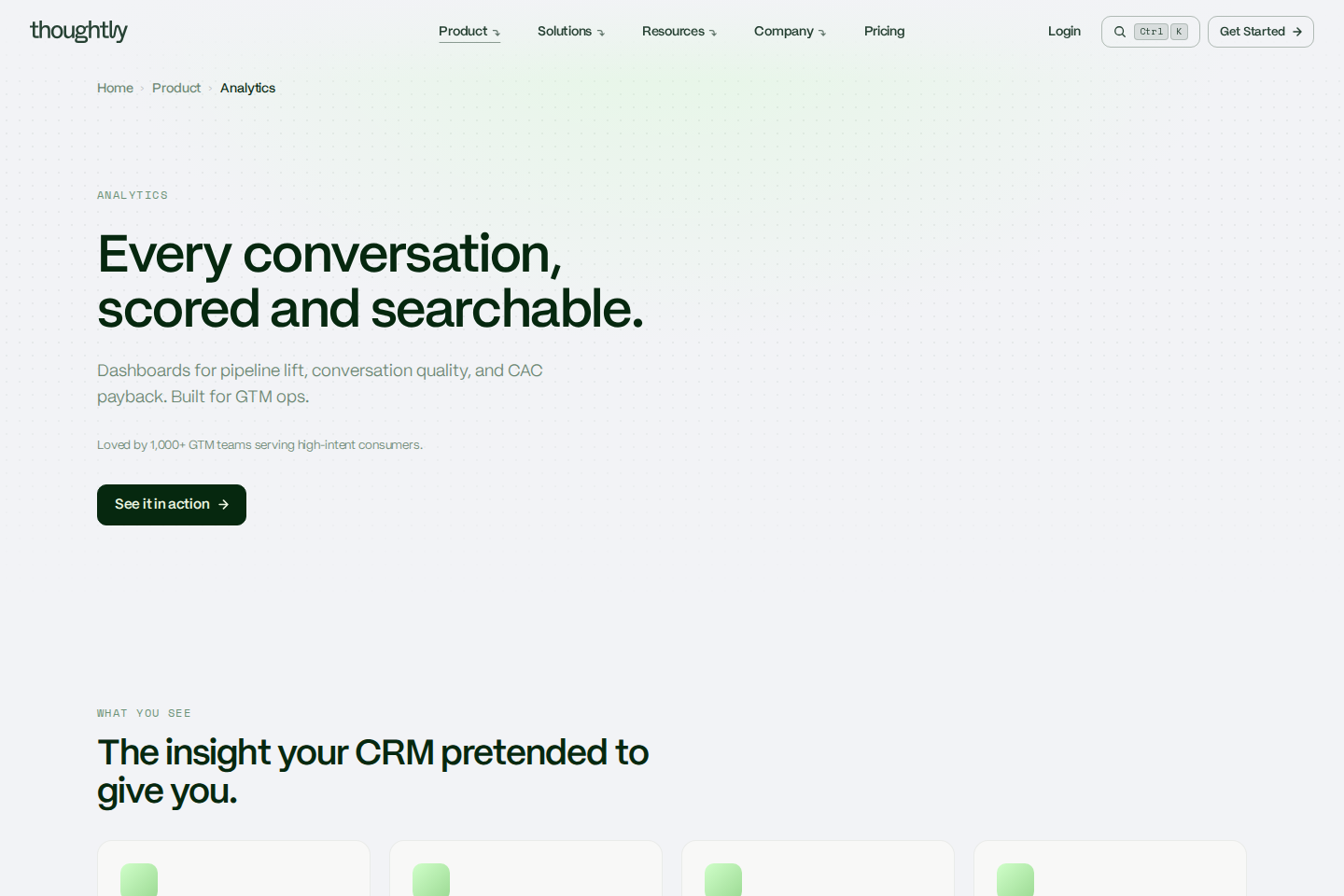
Thoughtly is built for teams that already have demand coming in and need every lead contacted, qualified, followed up, and reflected in the system of recordSystem of recordThe authoritative system where customer, lead, policy, loan, appointment, or account data is stored and updated.Read full definition →. It combines AI calling with SMS, email, CRM updatesCRM updatesCRM updates are the automatic changes an agent writes back after a conversation, such as status, notes, next step, owner, appointment, or disposition.Read full definition →, scheduling, routing, and contact-level history. That makes it a stronger pipeline analytics fit than voice-only infrastructure because the call outcome is not the end of the workflow; it becomes the trigger for the next action.
The public Thoughtly context describes native CRM read/write, shared conversation context across channels, sub-350ms response latencyLatencyThe delay between a caller speaking and the agent responding. Lower latency makes AI voice conversations feel more natural.Read full definition →, 34 supported languages, and certified integrations across CRMs, schedulers, dialers, and communications tools. The HubSpot and Salesforce integration pages are especially relevant here: Thoughtly can read records, call leads, write transcripts and summaries back to the timeline, update lifecycle stages or fields, and keep the CRM as the system of record. For RevOps teams, that is the difference between a voice agent and a conversion system.
Thoughtly also has a product-level analytics surface for campaign, agent, and workflow visibility. It is best suited to high-consideration consumer funnels where speed-to-lead, qualification, booking, and persistent follow-up directly influence pipeline conversion. Insurance, mortgage, real estate, automotive, education, elective healthcare, financial services, legal, and home services teams are the clearest fit.
Pros
Bidirectional Salesforce and HubSpot integrations can write transcripts, summaries, outcomes, and structured fields back to the CRM record.
Voice, SMS, email, routing, booking, and follow-up run from one contact context instead of separate tools stitched together after the call.
Revenue Autopilot-style workflows are designed around inbound lead conversion: answer, qualify, book, confirm, follow up, and escalate.
Analytics and contact history help teams see what happened across the lead journey, not just whether a call was completed.
Watch-outs
The platform works best when the team has already defined qualification rules, lead sources, owners, dispositions, and escalation paths.
Small teams with low call volume may not need the full workflow depth; Thoughtly is strongest when missed speed-to-lead and stale CRM data are real revenue problems.
Testing notes
For pipeline analytics, the strongest signal is the CRM write-backCRM write-backUpdating the CRM after an interaction with call outcomes, transcripts, qualification answers, notes, appointments, dispositions, and next-step fields.Read full definition → model. Thoughtly's public HubSpot page says calls can appear as call engagements with recording links, transcripts, summaries, structured outputs, and agent names; the Salesforce page describes completed call tasks, field updates, campaign/cadenceCadenceA cadence is the planned sequence of calls, texts, emails, delays, and retries used to follow up with a lead until they answer, opt out, book, or become inactive.Read full definition → actions, and queued writebacks if Salesforce is temporarily unavailable.
That matters because it reduces the usual gap between conversation and reporting. Instead of asking reps to read transcripts and update fields later, Thoughtly is designed to put call outcomes and next steps directly into the operational record.
Who should use it
Choose Thoughtly if your KPI is not simply call containment, but lead conversion. It is the best fit when marketing, RevOps, or sales leadership needs every inbound form fill, quote requestQuote requestAn inbound request for pricing or coverage information, common in insurance, mortgage, home services, solar, automotive, and other high-consideration funnels.Read full definition →, appointment inquiry, or reactivation lead contacted quickly and reflected cleanly in the CRM.
Do not choose it as a generic phone system replacement for a team with no defined pipeline process. The best deployments start with a clear lead sourceLead sourceThe channel, campaign, marketplace, referral partner, or form that generated a lead. Lead source often determines routing, compliance rules, and follow-up cadence.Read full definition →, qualification model, booking path, and owner handoff.
Pricing notes
Thoughtly uses per-minute pricing and pairs customers with account management and customer success support. Public pages direct buyers to request a demo for the exact plan and usage fit.
2. Regal.ai — Best for enterprise revenue engagement journeys
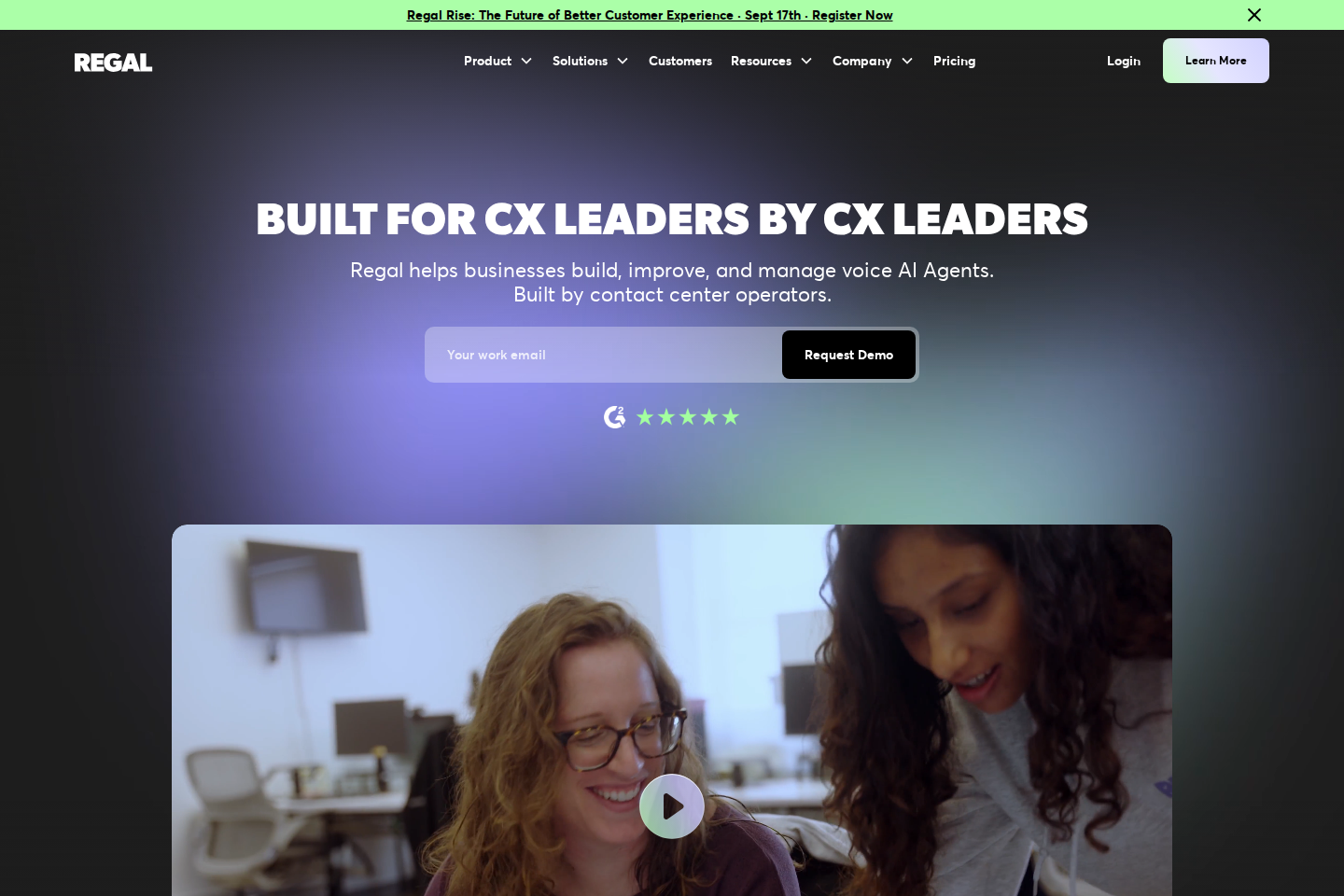
Regal.ai belongs on this list because it is one of the more relevant enterprise platforms at the intersection of AI voice, customer journeys, and revenue engagement. It is not just a dialer; Regal positions around voice AI agents, outbound and inbound orchestration, SMS, and human handoffHuman handoffThe moment an AI agent transfers context, call details, and the next step to a human rep, licensed specialist, or support team.Read full definition → workflows. That makes it useful for teams that want calls and texts coordinated around customer lifecycle moments.
For pipeline analytics, Regal's value is journey context. Enterprise teams can use it to understand which customer moments, triggers, and conversations are moving prospects toward conversion. The platform is a better fit for larger teams that already think in terms of journeys, segments, contact strategies, and contact-center or sales operations governance.
The tradeoff is complexity. Regal is more enterprise and implementation oriented than a lightweight self-serve AI phone agentAI phone agentAn AI agent that handles phone conversations — answering, qualifying, routing, booking, or following up with callers without requiring a human on every call.Read full definition →. That can be a strength when the workflow is large and regulated, but it can slow time to value for teams that just need fast lead response and CRM write-back.
Pros
Combines AI voice agents, outbound calling, SMS, and human handoff around revenue engagement workflows.
Strong fit for journey-based teams that need triggered outreach based on lifecycle events, not one-off call handling.
Enterprise posture makes sense for organizations with dedicated operations, compliance, and contact strategy owners.
Public content discusses the economics of AI agents versus human agents, which is useful for modeling operational cost tradeoffs.
Watch-outs
Pricing is not a simple public per-minute or per-seat card; buyers should expect a sales-led evaluation and implementation discussion.
Smaller RevOps teams may find the platform heavier than necessary if the immediate need is inbound speed-to-lead and clean CRM updates.
Testing notes
Regal is strongest when pipeline analytics is tied to a broader customer journey. The buyer should be ready to define triggers, audience segments, contact rules, escalation paths, and reporting views across both AI and human touches.
I would not treat Regal as a generic quick-start voice bot. It is a better enterprise revenue engagement choice when operational design is part of the project.
Who should use it
Use Regal if you have an established contact strategy and want AI voice agents inside that motion. It is a strong candidate for larger B2C teams, subscription businesses, financial services, healthcare, or other operations where calls and texts are part of a governed lifecycle program.
If your team wants a no-code lead conversion workflow owned directly by marketing or RevOps, compare Regal carefully against Thoughtly on implementation effort and CRM write-back depth.
Pricing notes
Regal uses quote-based pricing. Public pricing pages route buyers toward a demo rather than a simple self-serve plan.
3. Invoca — Best for marketing call attribution and revenue execution reporting
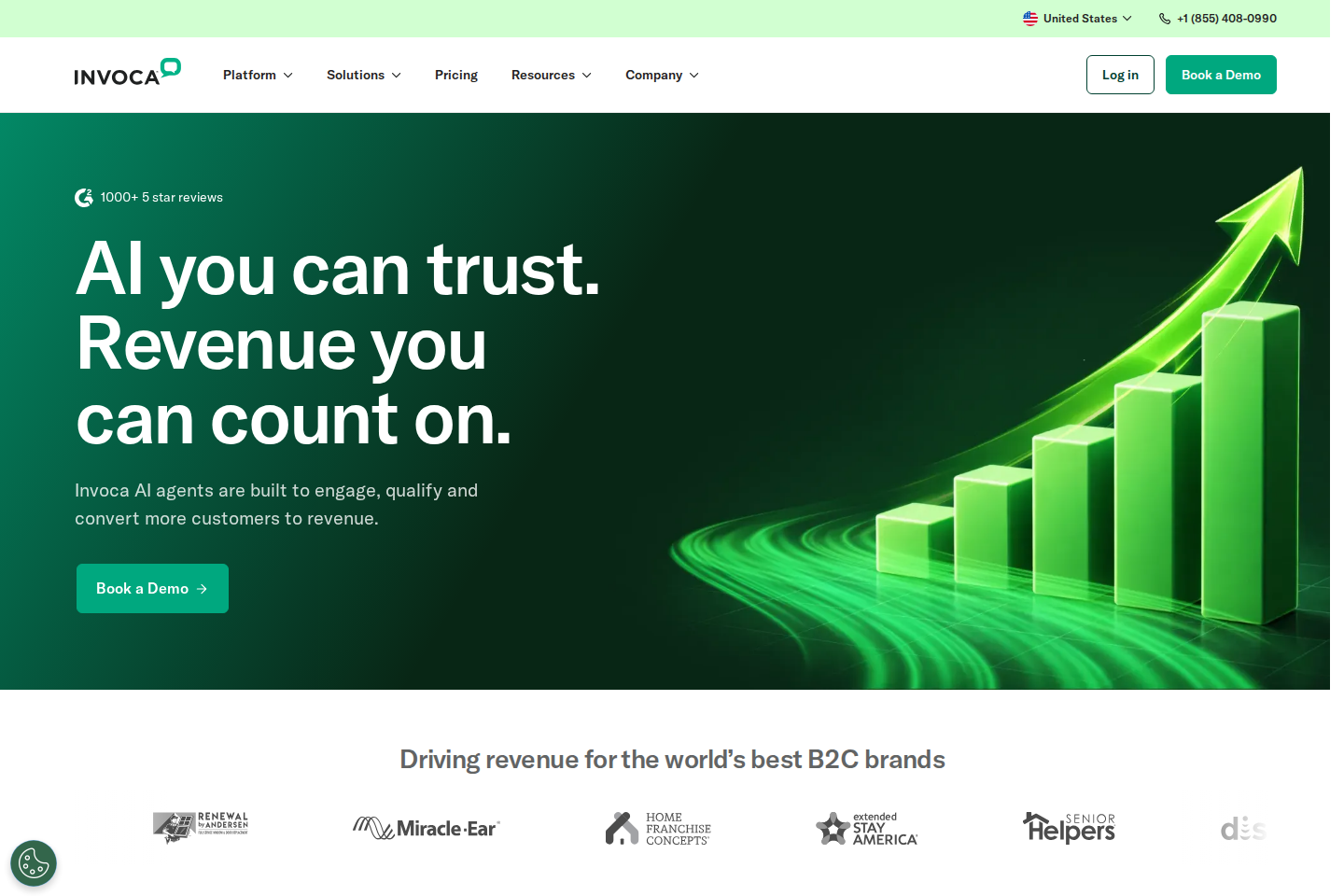
Invoca is different from most platforms in this list. It is not primarily an autonomous AI phone agent for qualifying inbound leads; it is a conversation intelligence and call tracking platform built to help marketing and contact-center teams understand which calls, campaigns, and customer conversations drive revenue. That distinction matters, because Invoca can be excellent for pipeline visibility even when another system handles the actual call workflow.
For marketing teams, Invoca's value is attribution. If paid search, affiliate, multi-location campaigns, or insurance/healthcare/financial-service ads generate phone calls, Invoca helps connect those calls to campaign performance and conversation outcomes. Its positioning around revenue execution is aimed at understanding and optimizing the caller journey, not replacing every rep with an AI agent.
That makes Invoca a strong fit when pipeline analytics means call attribution, routing insight, and conversion intelligence. It is less compelling if the buyer needs one platform to call leads, qualify them, book appointments, send follow-up, and update the CRM from end to end.
Pros
Strong call tracking and attribution capabilities for marketing teams that need to connect phone conversations to campaign performance.
Conversation intelligence can identify call outcomes, themes, and quality signals that matter for revenue reporting.
Useful for industries where phone calls are a major conversion event and marketing spend needs source-level accountability.
Integrations ecosystem and enterprise positioning fit teams with existing contact-center or martech infrastructure.
Watch-outs
Not a standalone autonomous voice-agent workflow for end-to-end lead conversion; many teams will still need a calling, routing, or agent platform alongside it.
Quote-based packaging and enterprise orientation can be overkill for smaller teams that mainly need fast outreach and CRM updates.
Testing notes
Invoca scored high on attribution and conversation intelligence, not on autonomous voice-agent execution. I would evaluate it when the main pain is knowing which campaigns create qualified phone conversations and which conversations produce revenue outcomes.
If the pain is speed-to-lead or abandoned form fills, Invoca should be compared as an analytics layer rather than the core conversion agent.
Who should use it
Choose Invoca if marketing owns the problem and needs reliable call attribution. It is especially relevant for paid media, multi-location, insurance, healthcare, financial services, and other call-heavy campaigns.
If RevOps owns the problem and needs AI agents to work leads directly, pair the Invoca evaluation with a platform like Thoughtly that can execute the conversation and CRM follow-up.
Pricing notes
Invoca pricing is quote-based. Its public pricing page directs buyers to get a quote, with different packaging for brands/agencies and pay-per-call or affiliate marketing use cases.
4. Revenue.io — Best for Salesforce-native sales engagement analytics
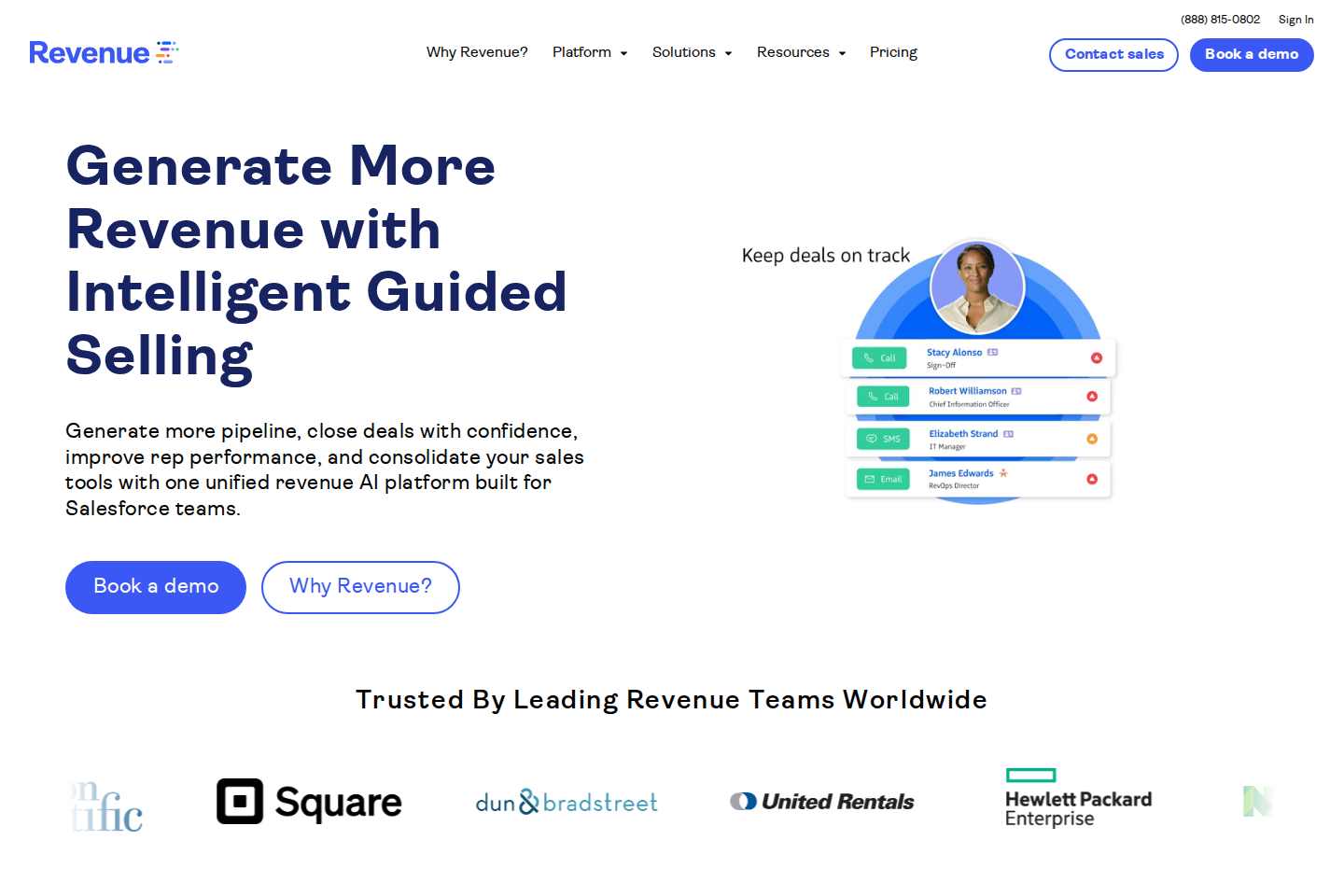
Revenue.io is best understood as an AI sales engagement and conversation intelligence platform for teams that live in Salesforce. It helps capture calls, transcribe conversations, surface coaching moments, and consolidate revenue activity around the sales process. For pipeline analytics, that Salesforce-centered orientation is the main reason it belongs here.
The platform is strongest when human sellers remain central to the workflow. It can help managers understand rep performance, call themes, objections, follow-up quality, and activity patterns. It is less of a fit when the buyer wants a fully autonomous AI agent to call every inbound lead, qualify it, book a meeting, send follow-up, and route only the warmest conversations to a rep.
Revenue.io's public positioning emphasizes pipeline generation, sales engagement, conversation intelligence, and Salesforce alignment. That is useful for sales teams trying to improve visibility across rep-led calls, but it is a different problem than autonomous inbound lead conversionInbound lead conversionThe process of turning opted-in inquiries, form fills, calls, and quote requests into qualified conversations, appointments, or transfers.Read full definition →.
Pros
Strong Salesforce fit for teams that want call activity, transcripts, and sales engagement data tied to the CRM.
Useful for revenue teams consolidating dialer, engagement, and analytics workflows around human sellers.
Public materials emphasize pipeline generation and rep performance, not just call completion.
Watch-outs
Best for rep-led sales workflows; not the cleanest choice for autonomous lead qualification across voice, SMS, and email.
Custom pricing and minimum-fit considerations may put it outside the range of smaller or simpler teams.
Testing notes
Revenue.io scored well for sales activity analytics because it is designed around Salesforce records and rep workflows. The public site highlights automatic recording, transcription, and call intelligence stored in Salesforce-friendly workflows.
The key buyer question is whether analytics is the main need or whether automation is. If the team still wants reps to own the calls, Revenue.io is relevant. If the team wants AI to work the lead queue directly, it is not the most direct option.
Who should use it
Use Revenue.io when sales leadership wants clearer call visibility, coaching, and activity capture inside Salesforce. It is a good fit for B2B sales teams with human reps and a mature Salesforce process.
Do not choose it as the first option for high-volume inbound consumer lead conversion unless the workflow is still primarily rep-led.
Pricing notes
Revenue.io uses sales-led pricing. Public pages route buyers to contact sales or book a demo rather than a simple self-serve price card.
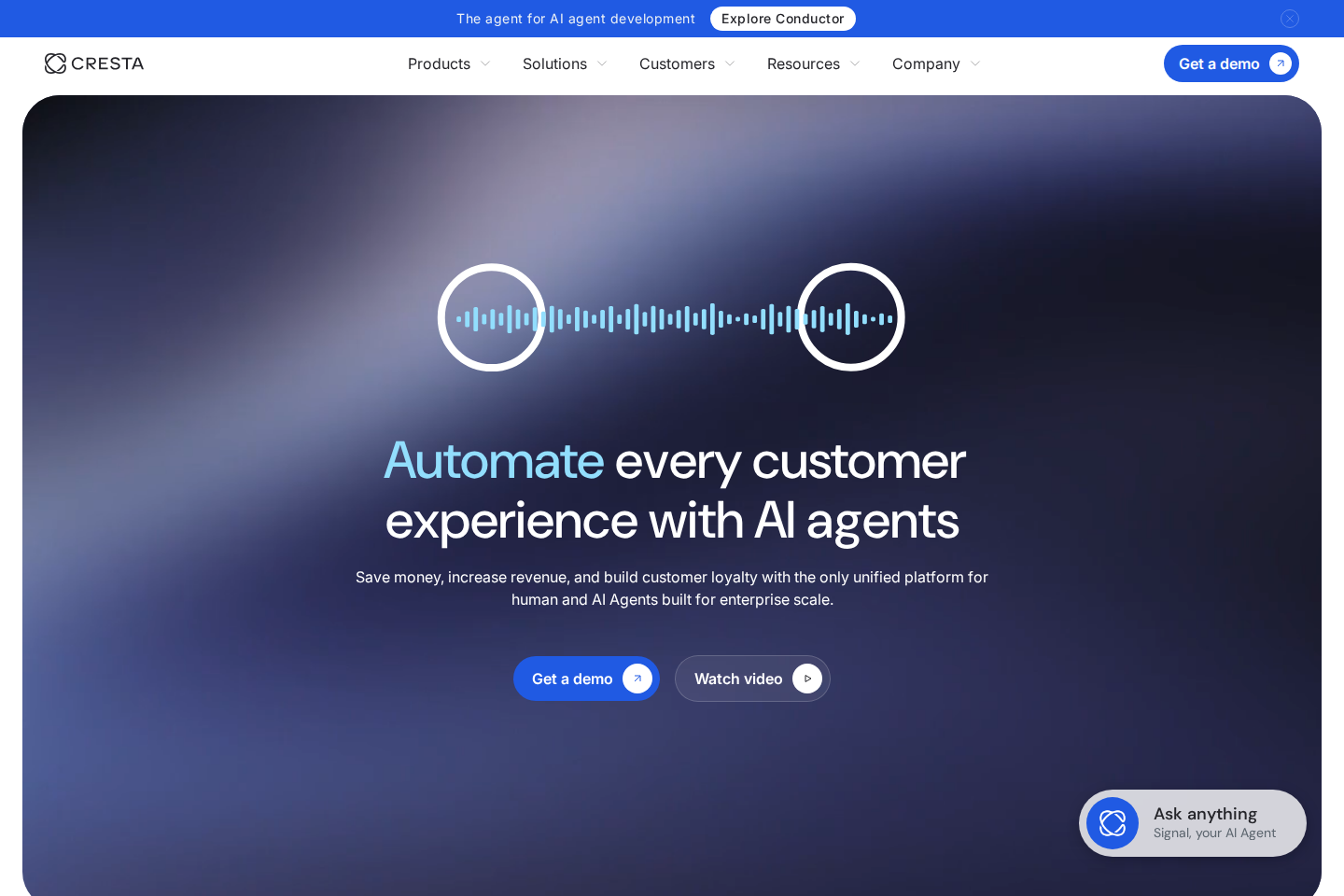
5. Cresta — Best for enterprise contact-center conversation intelligence
Cresta is an enterprise AI platform for contact centers, with a strong emphasis on conversation intelligence, agent assistance, quality management, and automation. It is relevant for pipeline analytics when the buyer's phone conversations happen inside a large contact-center environment rather than a lean RevOps lead-conversion motion. Cresta helps teams understand what happened on calls at scale: topics, outcomes, compliance gaps, agent behavior, and automation opportunities.
For revenue analytics, Cresta is strongest when pipeline quality depends on contact-center performance. It can help leaders see which conversations convert, where agents struggle, which objections recur, and where automation can reduce manual work. It is less focused on being a quick-start AI phone agent for inbound lead response.
The company publishes guides around conversation intelligence platforms and AI agents for customer experience, and those materials position Cresta as a unified enterprise layer for insights, augmentation, and automation. That is a good fit for organizations with mature contact-center operations and the budget to deploy enterprise software properly.
Pros
Strong conversation intelligence for identifying call themes, coaching opportunities, and operational performance patterns.
Enterprise contact-center focus fits teams that need QA, agent assist, automation, and analytics in the same program.
Public materials emphasize outcome-driven insights and integrations with major contact-center environments.
Useful when pipeline improvement depends on improving human and AI-assisted call quality at scale.
Watch-outs
Custom pricing and enterprise implementation make it heavier than necessary for teams that need a fast, RevOps-owned lead conversion agent.
Contact-center orientation can pull the evaluation toward service and support metrics instead of pure inbound revenue conversion.
Testing notes
Cresta scored highest on conversation intelligence and contact-center analytics. It is credible when leaders want to mine large call volumes for patterns, QA issues, rep coaching needs, and automation opportunities.
It scored lower for direct, no-code lead-conversion ownership because the product is not positioned as a simple replacement for a RevOps team building an inbound qualification workflow.
Who should use it
Use Cresta if you run a large contact centerContact centerA centralized operation that handles inbound and outbound customer interactions across voice, SMS, email, and digital channels, typically focused on service, support, or sales conversations.Read full definition → and need AI-driven visibility into call quality, performance, and automation opportunities. It is especially relevant when pipeline or retention depends on thousands of human-assisted conversations.
If the goal is to make every new lead ring within seconds and update HubSpot or Salesforce with a clean disposition, evaluate Thoughtly or Regal alongside Cresta.
Pricing notes
Cresta uses custom pricing. Its public comparisons describe custom or enterprise pricing for this category rather than simple self-serve plans.
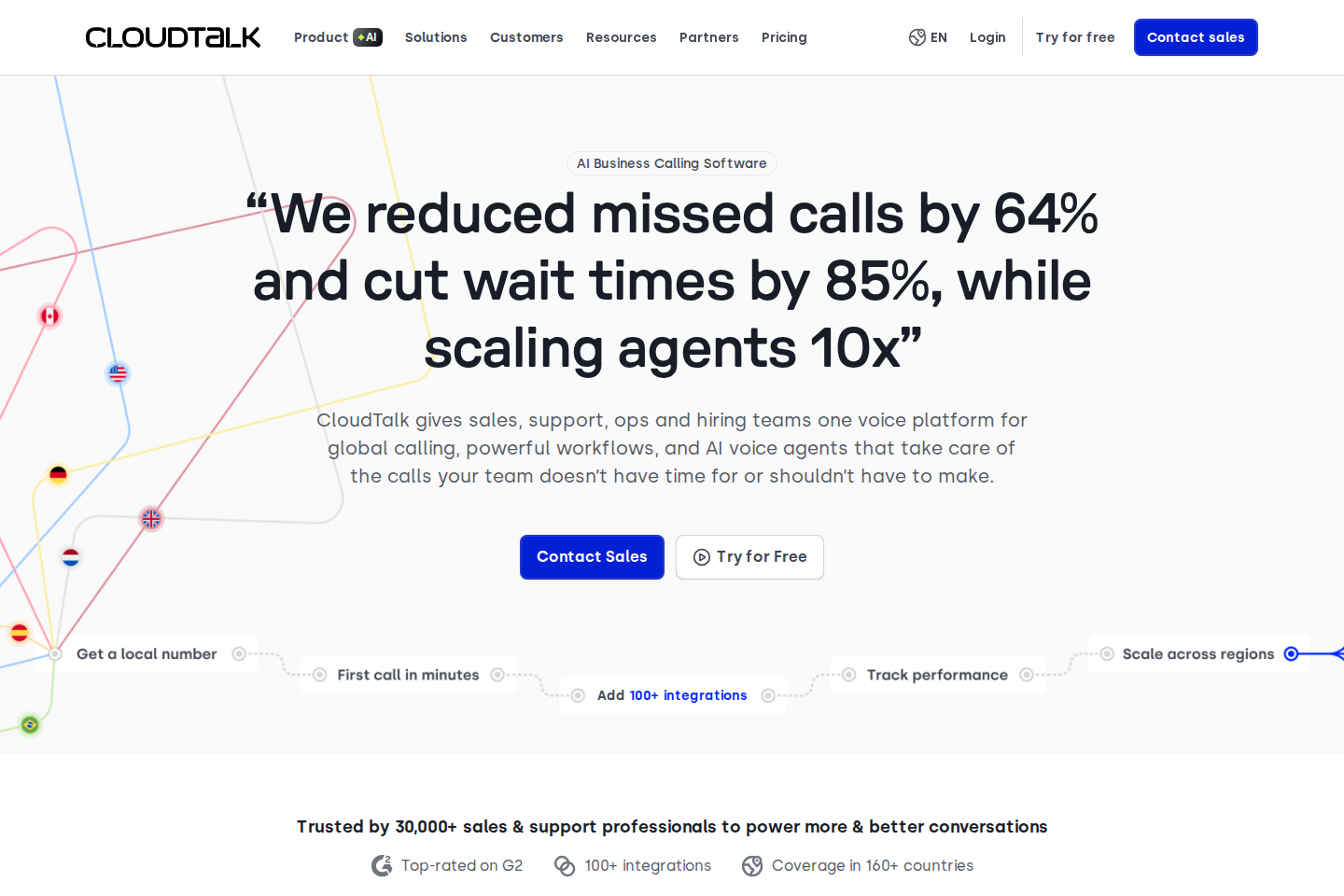
6. CloudTalk — Best phone-system option with AI call analytics
CloudTalk is a cloud phone system for sales and support teams that has been adding AI voice, call analytics, summaries, and automation features around its core calling platform. It belongs here because many teams looking for pipeline analytics are not ready for a standalone AI agent platform; they first need a modern calling system that logs activity, summarizes calls, and connects to the CRM. CloudTalk fits that middle ground.
For pipeline analytics, CloudTalk's strength is operational call visibility. Teams can centralize calling, track activity, connect calls to CRM records, and use AI summaries or analytics to reduce manual note-taking. It is useful for SMB and mid-market teams that want a practical phone stack before they move into more complex autonomous workflows.
The limitation is that CloudTalk is still primarily a phone and contact-center platform. Its AI agent capabilities are part of that broader platform, not the same as a revenue conversion system built from the ground up around AI qualification, booking, multichannel follow-up, and structured CRM write-back.
Pros
Established cloud phone platform with sales and support calling, routing, analytics, and CRM integrations.
AI summaries and call analytics can reduce manual note-taking and improve call-review workflows.
Published pricing and feature pages make initial budgeting easier than fully quote-based enterprise tools.
Good fit for teams that want a phone system plus AI enhancements rather than a pure AI-agent platform.
Watch-outs
AI voice agents are one part of a broader phone platform, so buyers should verify the exact automation depth they need before committing.
Complex post-call revenue workflows may still require extra configuration, integrations, or a dedicated AI conversion platform.
Testing notes
CloudTalk scored well for call operations and accessibility. Its public pages and review profiles emphasize SMB and mid-market calling, sales dialers, support teams, and AI-enhanced call workflows.
For pipeline analytics, I would test how cleanly CloudTalk writes dispositions, summaries, and outcomes back to the CRM fields your dashboards actually use. A transcript is useful, but structured reporting fields are the real test.
Who should use it
Use CloudTalk if your team needs to modernize calling and wants AI assistance, call analytics, and CRM-connected activity in the same phone platform. It is a practical choice for sales and support teams that still rely heavily on human agents.
Choose a more specialized platform if the requirement is autonomous speed-to-lead, qualification, booking, and multichannel nurture without human reps touching every call.
Pricing notes
CloudTalk publishes seat-based pricing and feature pricing pages, with AI voice and advanced features varying by package or add-on. Buyers should price the full call volume, AI features, SMS, and integrations together.
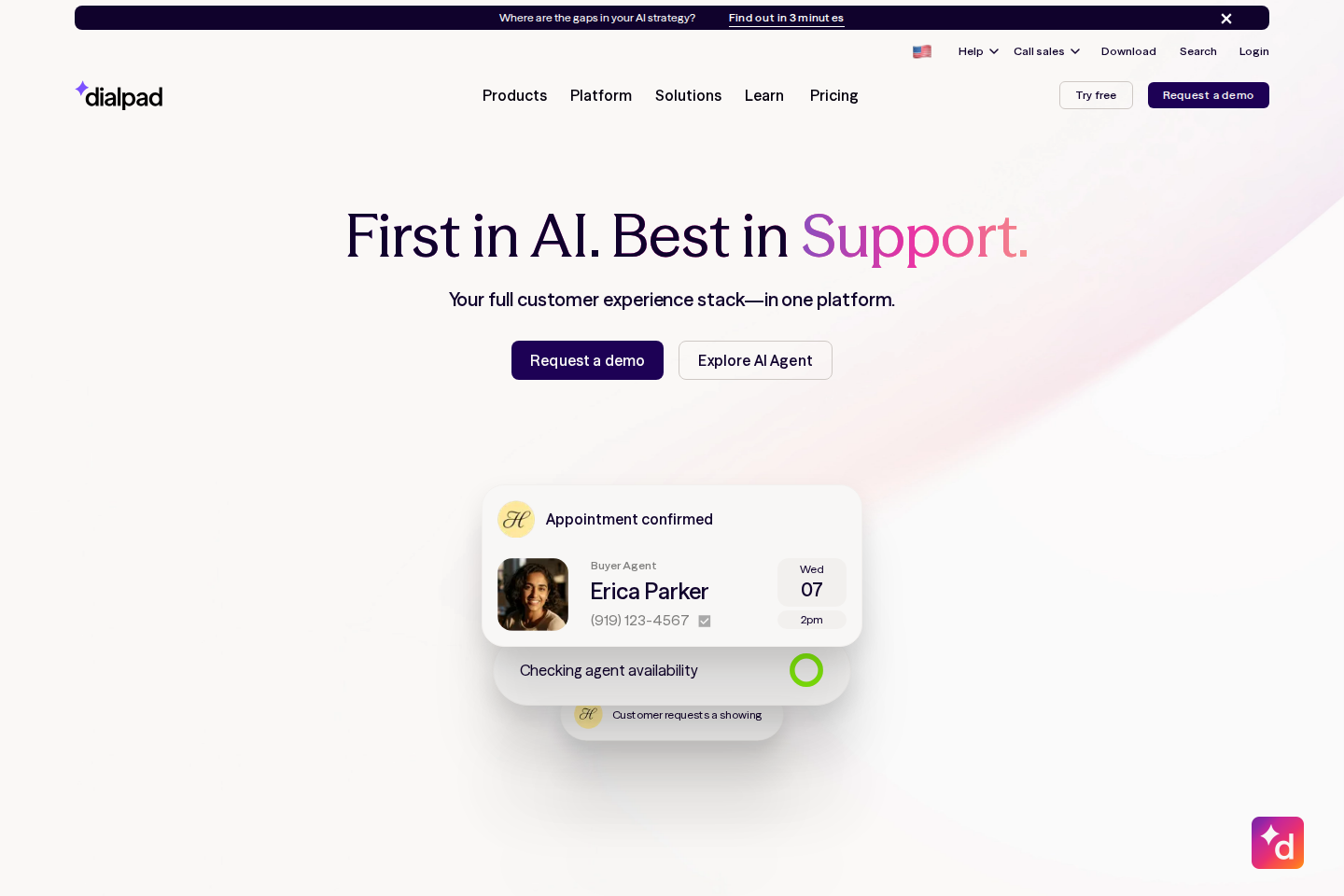
7. Dialpad — Best AI communications platform for transcripts, coaching, and call records
Dialpad is a broad AI communications platform covering business phone, meetings, contact center, messaging, transcription, summaries, and coaching. It belongs on this list because pipeline analytics often starts with basic call capture: what was said, who said it, what happened next, and whether the CRM record reflects reality. Dialpad is strong when a team wants AI layered across daily communications rather than a purpose-built autonomous lead agent.
Its value is breadth. Sales and support teams can use Dialpad to capture call activity, generate summaries, analyze conversations, and coach reps. For managers trying to improve pipeline hygiene, consistent transcripts and summaries can be a meaningful upgrade over scattered notes and missing call logs.
The tradeoff is specialization. Dialpad is not primarily built around high-volume inbound consumer lead conversion, persistent follow-up, or RevOps-owned AI qualification flows. It is a communications platform with AI analytics, which is useful, but different from an AI agent platform that owns the full conversion path after a form fill.
Pros
Broad communications suite that covers calling, meetings, messaging, contact center, and AI features in one vendor relationship.
AI transcripts, summaries, and coaching can improve call review and reduce manual CRM note-taking.
CRM integrations help connect call activity to the systems sales teams already use.
Published plans make it easier to evaluate for teams standardizing phone and meeting workflows.
Watch-outs
Less specialized for autonomous inbound lead conversion than platforms built around AI qualification, booking, and follow-up.
Teams may still need separate workflow automation if they want structured field updates, routing, and multichannel sequences after every call.
Testing notes
Dialpad scored well for communications analytics and day-to-day call intelligence. It is useful when the first problem is that teams lack reliable transcripts, summaries, coaching data, or call records.
It scored lower for end-to-end pipeline automation because the platform is broader than the specific use case of AI agents converting inbound leads across channels.
Who should use it
Use Dialpad if your organization wants to standardize communications and add AI summaries, transcripts, coaching, and CRM-connected call activity. It is a good operational upgrade for sales and support teams with human-led workflows.
If your pipeline analytics requirement starts with automated outreach to every new lead, then Dialpad should be evaluated against a more specialized AI lead-conversion platform.
Pricing notes
Dialpad publishes seat-based plans for business communications and contact-center products. Advanced AI, contact-center, and integration needs may change the final package.
Pick Thoughtly if you need AI agents to create cleaner pipeline, not just cleaner call recordings. It is the strongest fit when inbound leads need immediate voice follow-up, qualification, booking, SMS or email nurture, and CRM write-back in one workflow.
Pick Regal.ai if your revenue engagement motion is enterprise-grade and journey-based. It is a better fit when teams have mature segmentation, compliance, contact strategy, and implementation resources.
Pick Invoca if marketing attribution is the main problem. It is the best analytics layer here for understanding which campaigns and calls drive revenue, but it should not be confused with a standalone autonomous voice-agent platform.
Pick Revenue.io, Cresta, CloudTalk, or Dialpad when human-led call operations remain central. They can improve visibility, coaching, summaries, and activity capture, but buyers should test whether their CRM fields and dashboards improve without manual cleanup.
FAQ
What is pipeline analytics for AI voice agents?
Pipeline analytics is the reporting layer that turns phone conversations into usable revenue data: lead source, qualification outcome, appointment status, objection, next step, owner, and CRM disposition. Without that structure, teams may have transcripts but still lack trustworthy pipeline visibility.
Which AI voice platform is best for CRM write-back?
Thoughtly is the best fit in this ranking for closed-loop CRM write-back tied to AI lead conversion. Its public Salesforce and HubSpot pages describe reading records, triggering calls, logging transcripts and summaries, updating fields, and keeping the CRM as the system of record.
Is Invoca an AI voice agent platform?
Invoca is better described as a call tracking, attribution, and conversation intelligence platform. It can be extremely useful for revenue visibility, but teams that need an autonomous AI agent to qualify and follow up with leads will usually need a separate workflow platform.
Do transcripts count as pipeline analytics?
Transcripts are a useful raw input, but they are not enough. Pipeline analytics requires structured outcomes and reporting fields that managers can trust: qualified or not, appointment booked or not, buying intent, urgency, campaign source, and next owner.
What should I test before buying?
Run a real lead through the workflow and check the CRM afterward. Confirm whether the platform created the right activity record, filled the right fields, updated the right stage or disposition, triggered the next follow-up, and gave managers a usable reporting view without manual cleanup.