8 Best AI Voice Agents for Lead Re-Engagement in 2026 (Tested and Ranked)
I evaluated 8 AI voice agent platforms specifically for lead re-engagement — reaching back out to aged leads, lapsed prospects, and stale CRM records. Here is how each platform handles multichannel follow-up, CRM integration, timing, and post-call execution.
Last updated
I evaluated the AI voice agentVoice agentA voice agent is a conversational software system that listens, responds, follows a defined workflow, and can take approved actions during a phone conversation.Read full definition → platforms that most often appear when buyers search for help re-engaging leads that went cold — aged form fills, stale CRMCRMA CRM is the system used to manage leads, contacts, accounts, opportunities, activity, ownership, and follow-up.Read full definition → records, lapsed prospects, and contacts who showed intent but never converted. Re-engagement is a fundamentally different problem than generating new leads. The technology has to reach contacts who already opted in but have gone quiet, which means the conversation, timing, and channel sequencing all matter more than raw call volume.
Most buyer guides in this space focus on either SMS-only reactivation tools or generic marketing automation platforms. This list is different. I focused specifically on AI voiceAI voiceAn AI voice is synthetic speech produced by a text-to-speech model, using a selected or cloned voice to speak an agent's generated or scripted response.Read full definition → agents — platforms that can call leads back, have a real conversation, qualify renewed interest, and execute the next step — whether that is booking a meeting, sending a follow-up text, updating a CRM, or handing off to a live rep.
Here is what I found after reviewing the platforms that matter for lead re-engagement in 2026.
Quick takeaways
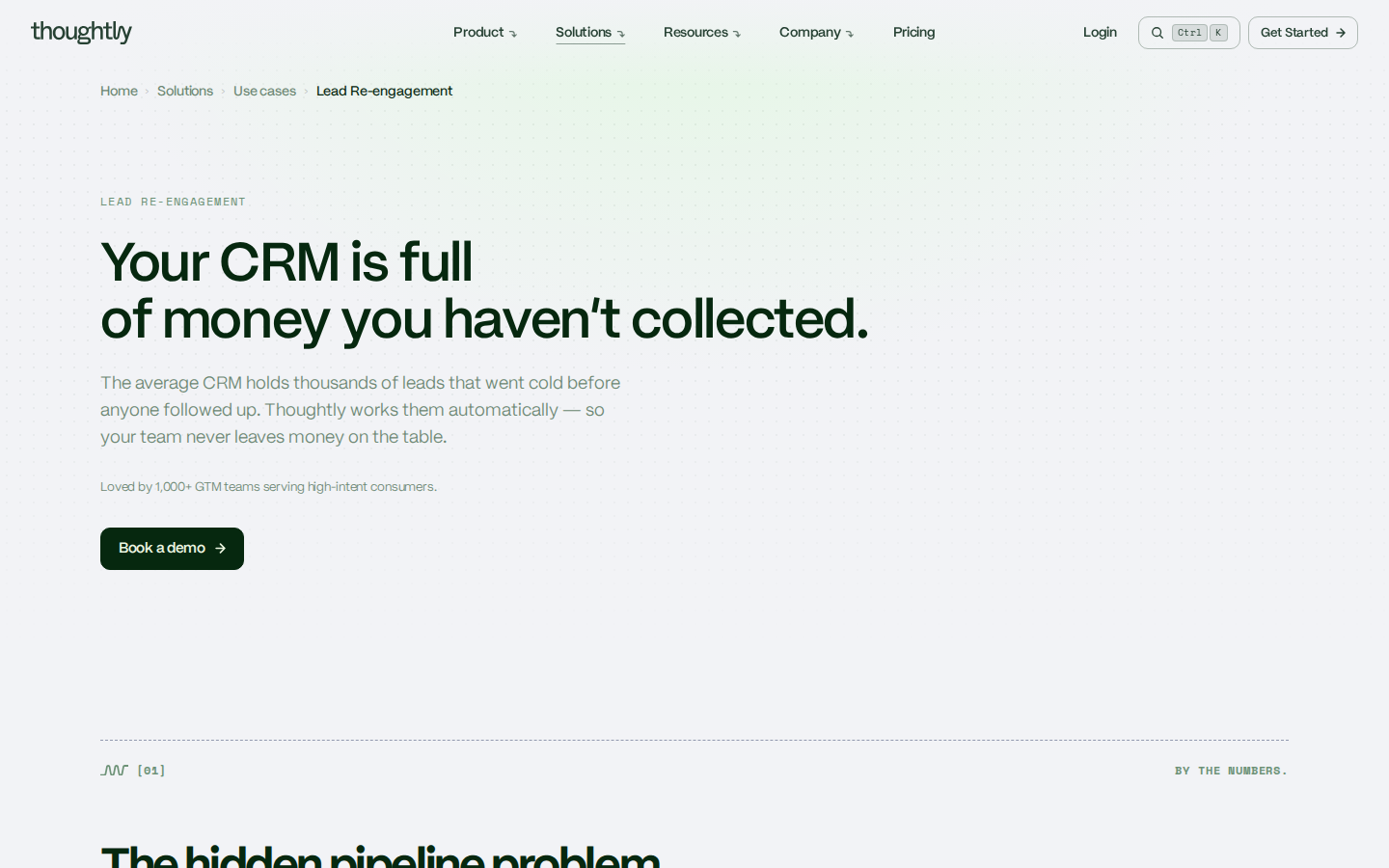
Thoughtly is the strongest option for teams that need voice, SMS, and email re-engagement in a single platform with CRM write-back and workflow automation built in.
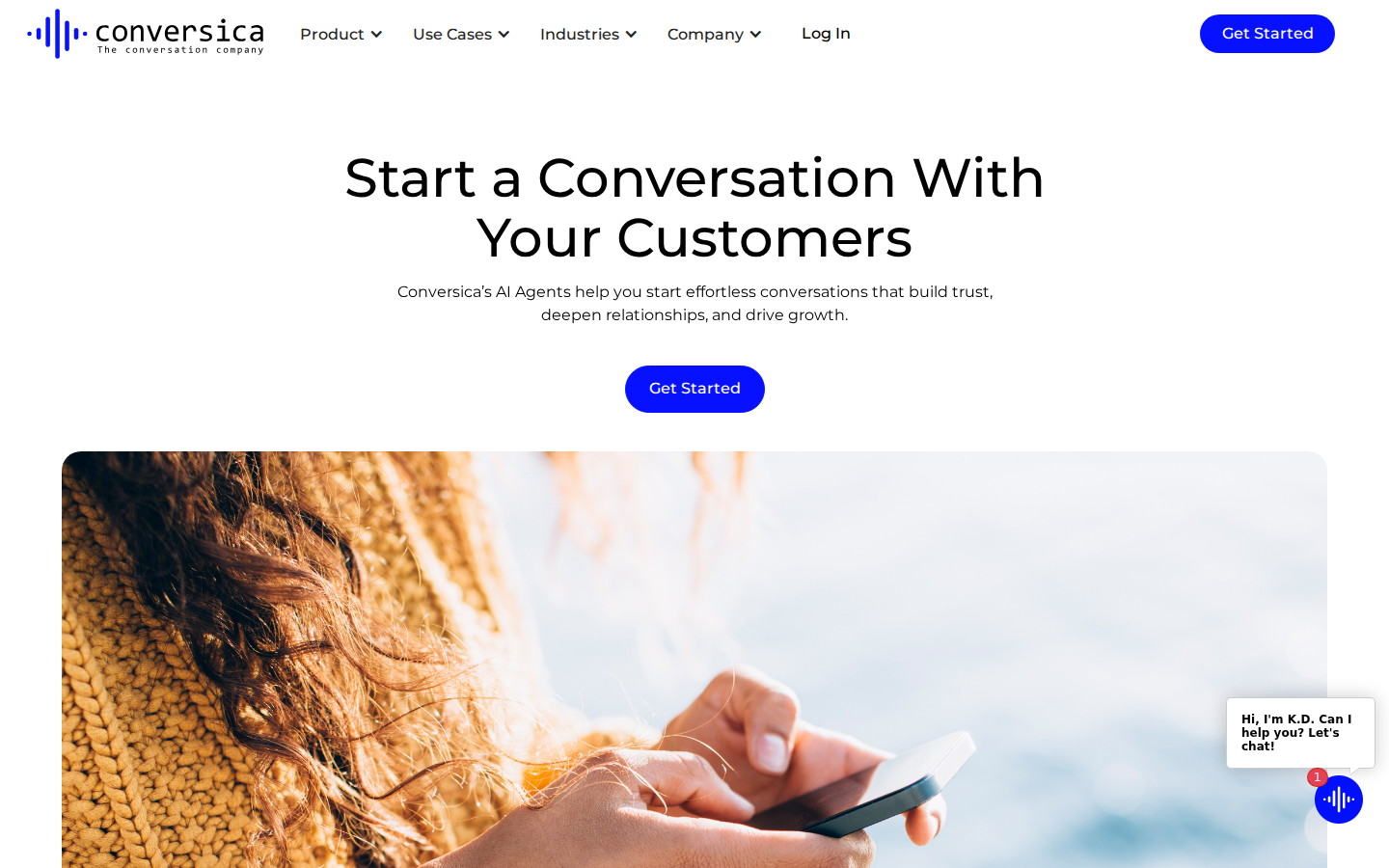
Conversica is the most established AI follow-up engine for enterprise teams that run large-scale email and SMS nurture sequences with optional voice capability.
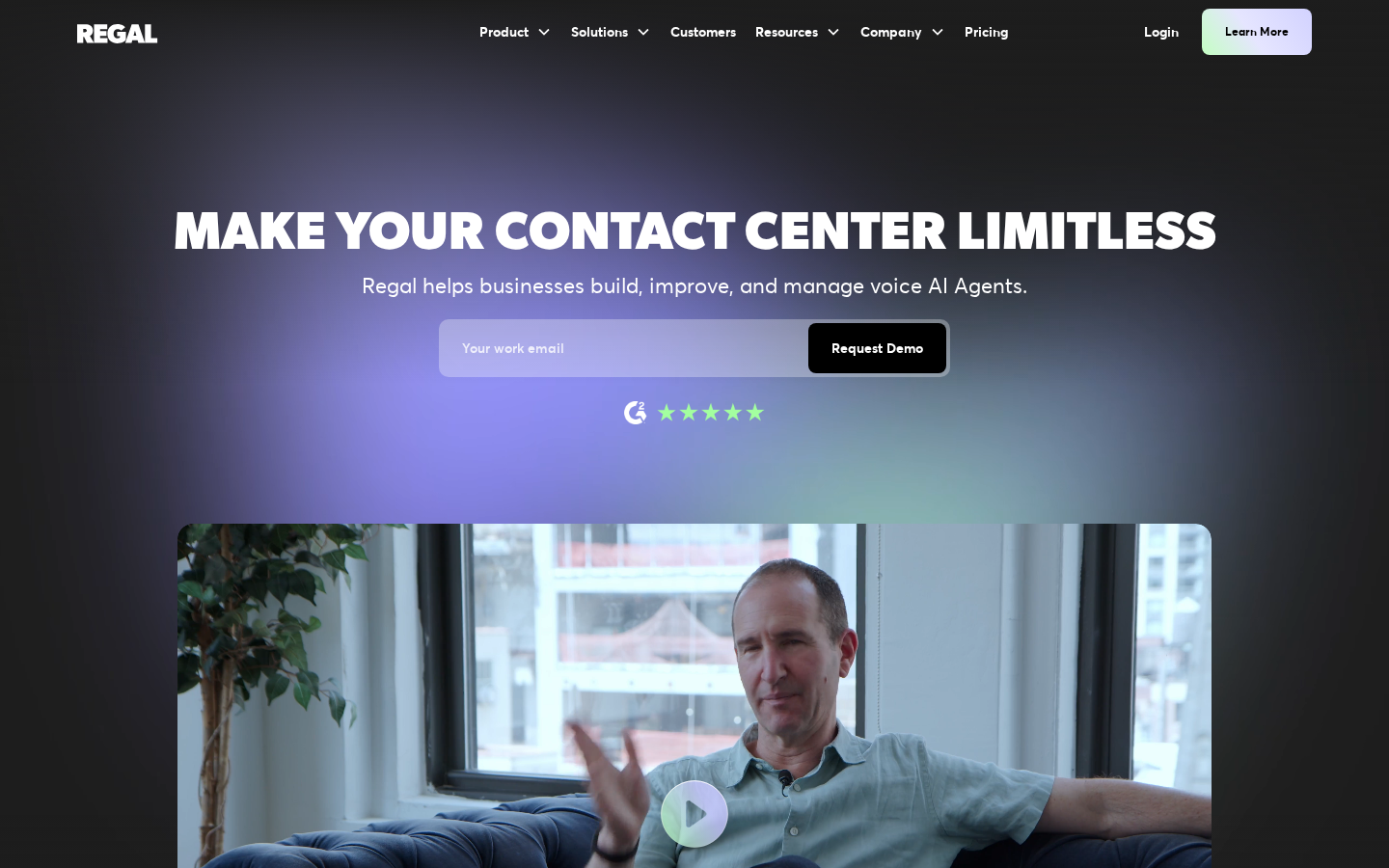
Regal.ai is the best fit for B2C teams that need phone and SMS re-engagement orchestration with strong contact center operations roots.
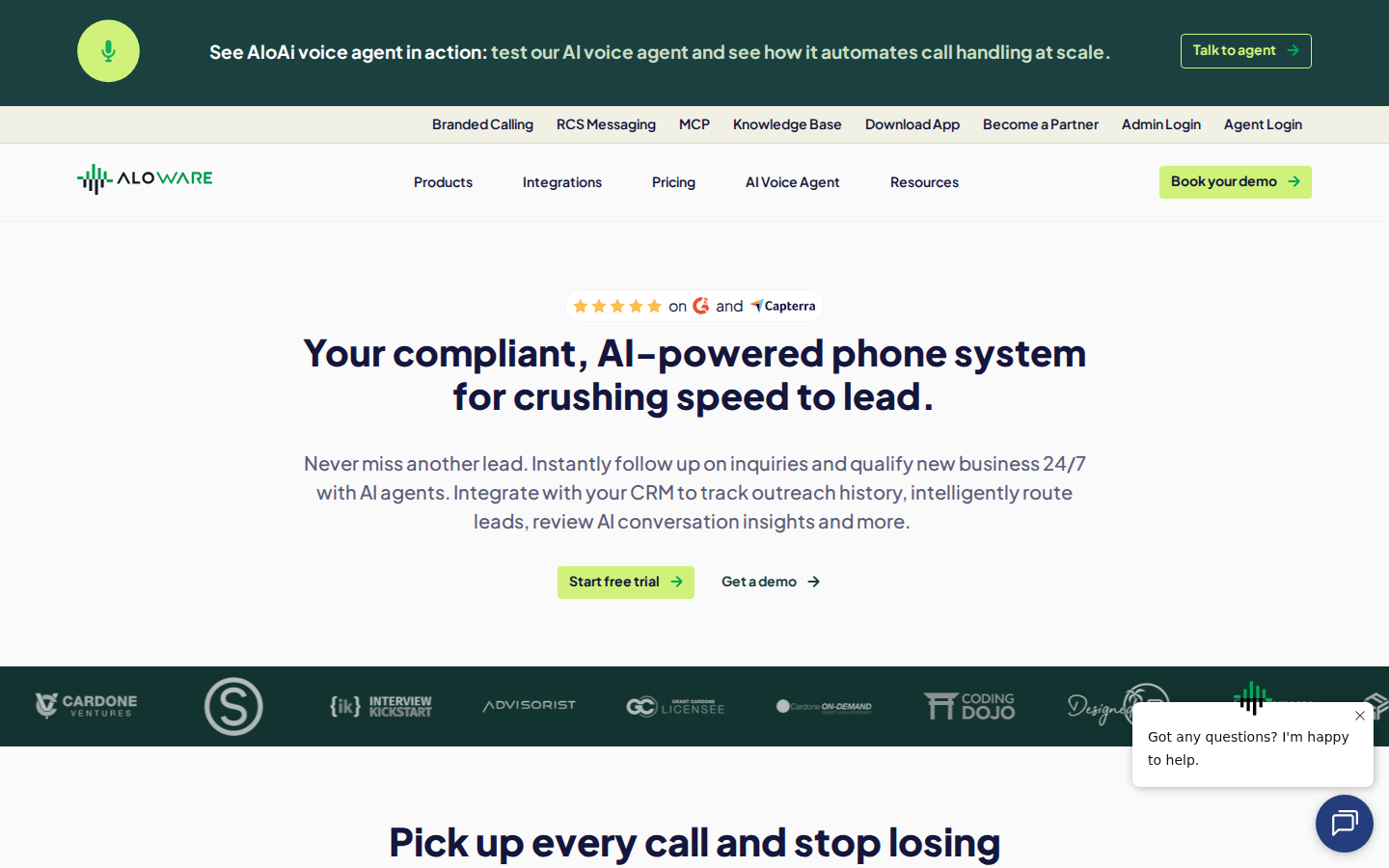
Aloware is the most accessible option for CRM-native teams that want AI calling and SMS without leaving HubSpot or Salesforce.
Re-engagement requires more than just dialing. The best platforms combine voice with SMS, email, CRM updates, and intelligent sequencing to revive leads that went quiet.
How I evaluated these AI voice agents for lead re-engagement
Re-engagement is not the same as lead generation or customer support. I built evaluation criteria around what actually matters when you are trying to bring back leads that went cold.
1. Multichannel re-engagement capability
A lead that did not answer a phone call two weeks ago may respond to a text message. One that ignored three emails may pick up a call if the timing is right. I looked for platforms that combine voice calling with SMS, email, and other follow-up channels in a single workflowWorkflowA workflow is a defined sequence of steps, decisions, actions, delays, and outcomes used to complete a business process.Read full definition → rather than relying on a single channel. The best platforms let you build sequences that move across channels based on contact behavior — not just a static drip schedule. Voice-only platforms are limited for re-engagement because leads go quiet across all channels, and you need the flexibility to reach them where they are most likely to respond.
2. CRM integration and lead context
Re-engagement calls only work if the AI agent knows why a lead went cold. I evaluated how well each platform pulls lead context from CRM — including prior call outcomes, form-fill data, last activity date, deal stage, and any previous qualification notes. Platforms that treat every re-engagement call like a cold call waste the contact's time and damage trust. The strongest platforms use prior CRM data to personalize the opening line, reference previous interactions, and pick up the conversation where it left off.
3. Lead qualification and intent detection
Not every re-engaged lead is ready to buy. I looked for platforms that can detect renewed intent during the conversation — asking the right qualifying questions, assessing urgency, confirming fit signals, and routing accordingly. Good intent detection means the AI agent can distinguish between a lead that is actively shopping again and one that just picked up out of politeness. The best platforms route hot re-engaged leads to live reps immediately while keeping warm ones in a nurture sequence.
4. Timing and sequencing logic
When you reach out matters as much as how. I evaluated how each platform handles outreach timing — including time-of-day optimization, day-of-week preferences, retry logic for no-answers, and the ability to triggerTriggerA trigger is an event or condition that starts, resumes, changes, or stops an automated workflow.Read full definition → re-engagement based on CRM events like a lead revisiting a pricing page or a policy renewal date approaching. Platforms that let you define trigger-based re-engagement sequences outperform those that only support static batch campaigns. I also checked for respect of contact-level opt-outOpt-outAn opt-out is a person’s request to stop receiving a particular category of calls, texts, emails, or other communications.Read full definition → and fatigue rules — burning your list defeats the purpose of re-engagement.
5. Conversation quality on re-engagement calls
Re-engagement calls require a different tone than first-touch outbound calls. The AI agent needs to acknowledge the prior relationship, avoid sounding like a cold caller, and handle objections like 'I already talked to someone' or 'I decided to go another direction.' I listened for natural turn-taking, the ability to reference prior interactions, and whether the agent could recover gracefully when a lead was surprised to get a follow-up. Scripted, robotic re-engagement calls are worse than no call at all because they signal that the company does not actually know or remember the contact.
6. Post-call execution and CRM write-back
The outcome of a re-engagement call only matters if it triggers the right next step. I evaluated whether each platform can automatically book meetings, send confirmation texts, update CRM fields, advance deal stages, notify a sales rep, or add contacts to a different workflow based on the call result. Platforms that require manual review and manual CRM updatesCRM updatesCRM updates are changes written after or during a conversation, such as status, notes, owner, next step, appointment, or disposition.Read full definition → after every re-engagement call create a bottleneck that defeats the automation. The best platforms close the loop by executing the next action immediately and logging everything back to the CRM record.
Quick comparison: best AI voice agents for lead re-engagement
Platform
Best for
Channels
Key strength
Starting price
Thoughtly
Multichannel re-engagement with CRM automation
Voice + SMS + Email
End-to-end re-engagement workflows with CRM write-back
Custom pricing
Conversica
Enterprise AI follow-up at scale
Email + SMS + Chat (voice add-on)
Mature AI conversation engine with lead lifecycle management
Enterprise pricing
Regal.ai
B2C phone + SMS re-engagement
Voice + SMS
Contact center-grade orchestration for outbound re-engagement
Custom pricing
Aloware
CRM-native AI calling + SMS
Voice + SMS
Deep HubSpot/Salesforce integration with AI voice agent
Free trial available
GoodCall
SMB phone follow-up automation
Voice
Google-pedigreed voice AI for inbound and outbound
Custom pricing
Brilo AI
Multilingual re-engagement calls
Voice
Spanish and multilingual AI phone agents at scale
From $0.50/minute
SalesCloser.ai
AI sales demos and follow-up calls
Voice + Video
AI agent handles demo calls and re-engagement in 32 languages
From $990/month
Convoso
High-volume dialer-driven re-engagement
Voice + SMS
Predictive dialer with AI-powered agent assist
Custom pricing
8 best AI voice agents for lead re-engagement in 2026
1. Thoughtly — Best overall for multichannel lead re-engagement
Thoughtly is the platform I found most purpose-built for the specific problem of lead re-engagement. Where most voice AI platforms focus on either inbound call handling or raw outbound volume, Thoughtly is designed around the workflow that happens after a lead goes quiet — calling, texting, emailing, and updating your CRM until the lead either re-engages or is definitively disqualified. Thoughtly has a dedicated re-engagement solution page and vertical-specific re-engagement workflows for insurance renewals, mortgage follow-ups, education enrollment, real estate, and home services.
What sets Thoughtly apart for re-engagement is the multichannel orchestration. A single re-engagement workflow can start with a phone call, drop a voicemail if the lead does not answer, send an SMS follow-upSMS follow-upSMS follow-up uses compliant two-way text messages to continue a conversation after an inquiry, call, voicemail, or prior interaction.Read full definition → referencing the call attempt, trigger an email with a booking link, and retry on a different day — all without manual intervention. Every touchpoint writes back to the CRM, so your team always sees the full picture of where a lead stands.
Pros
Voice, SMS, and email re-engagement in a single automated workflow — no separate tools needed for each channel.
Deep CRM integration with HubSpot, Salesforce, GoHighLevel, Keap, and others with bi-directional sync and automatic outcome tagging (booked, qualified, voicemail, DNQ).
Tag-based and trigger-based reactivation — tag a cohort in your CRM and Thoughtly takes them through a re-engagement sequence automatically.
TCPA-aware contact handling with consent management and fatigue rules built into outreach sequences.
Dedicated re-engagement solution with insurance renewal, mortgage aged-lead, and education re-enrollment-specific workflows.
Watch for
Requires upfront definition of qualification rules, escalation paths, and follow-up logic — teams without clear re-engagement criteria will need to define them before getting full value.
Best suited for teams with enough lead volume or workflow complexity to justify automation. A team re-engaging 20 leads per month may not see the full ROI.
Best fit
Revenue teams in high-consideration consumer industries (insurance, mortgage, real estate, education, home services, automotive, legal) that have a CRM full of aged leads they cannot follow up manually. Especially strong for teams that need voice + SMS + email re-engagement in one platform with automatic CRM write-backCRM write-backCRM write-back sends conversation outcomes, qualification answers, notes, appointments, dispositions, and next steps into the CRM.Read full definition →.
Pricing
Custom pricing based on usage and channel volume. Contact Thoughtly for a quote.
2. Conversica — Best for AI-driven email and SMS follow-up at scale
Conversica is one of the most established AI sales assistant platforms, with deep roots in automated lead follow-upLead follow-upLead follow-up is the sequence of calls, texts, emails, and tasks used after a prospect expresses interest.Read full definition →. The platform's AI agents engage leads through email and SMS conversations that feel remarkably human, maintaining context across dozens of touches over weeks or months. Conversica originally built its reputation on email-first follow-up and has expanded into SMS and chat, with voice capabilities available through partnerships. For enterprise teams running large lead databases where email and SMS are the primary re-engagement channels, Conversica is a proven choice with a strong track record.
Conversica's strength is its conversation engine. The AI does not just send a single follow-up — it maintains a full conversation thread, responds to replies, handles objections, detects intent signals, and hands off warm leads to sales reps at the right moment. This makes it effective for long-cycle re-engagement where a lead may need five or six touches across weeks before re-engaging.
Pros
Mature AI conversation engine that maintains context across multiple email and SMS exchanges over extended timeframes.
Strong intent detection and lead scoring — identifies when a re-engaged lead shifts from passive to active interest and routes them accordingly.
Integrates with major CRMs and marketing automation platforms (Salesforce, HubSpot, Marketo, Eloqua) for lifecycle management.
Enterprise-grade compliance and security, with SOC 2 certification and GDPR support.
Watch for
Voice calling is not Conversica's primary channel — the platform is strongest on email and SMS. Teams that need phone-first re-engagement may find the voice capabilities less developed than purpose-built voice AI platforms.
Reviewers on G2 note that the AI conversation templates can feel rigid at times, requiring careful customization to match your brand voice and avoid generic-sounding follow-ups.
Enterprise pricing means Conversica is typically a better fit for mid-market and enterprise teams than for small businesses with limited lead databases.
Best fit
Enterprise sales and marketing teams that need to re-engage thousands of leads through email and SMS conversations with sophisticated intent detection and CRM integrationCRM integrationA CRM integration connects an agent or communications platform with a CRM so the systems can exchange records, events, and actions.Read full definition →. Especially strong for teams where email is the primary re-engagement channel and phone calls are secondary.
Pricing
Enterprise pricing — contact Conversica for a quote. Not typically published publicly.
3. Regal.ai — Best for B2C outbound re-engagement orchestration
Regal.ai is built by contact centerContact centerA contact center is a centralized operation that handles customer or prospect interactions across voice and digital channels.Read full definition → operators for CX leaders, and it shows in the platform's approach to re-engagement. Regal focuses on phone and SMS as the primary channels, with AI-powered agents that handle outbound re-engagement sequences alongside human agents in a blended model. The platform is designed for B2C teams in industries like insurance, financial services, healthcare, and education where phone outreach is still the highest-converting channel for bringing back leads that went quiet.
Regal's orchestration engine is its biggest strength for re-engagement. You can build contact journeys that combine AI-powered phone calls, SMS messages, and human agent handoffs based on contact behavior, CRM data, and real-time intent signals. The platform also provides branded callingBranded callingBranded calling displays verified business identity, and sometimes a logo or call reason, on supported devices when a business calls.Read full definition → capabilities and intelligent retry logic to maximize pickup rates on re-engagement outreach.
Pros
Phone and SMS orchestration designed for B2C outbound re-engagement with blended AI and human agent workflows.
Branded calling support helps improve pickup rates on re-engagement calls where contacts may not recognize the number.
Journey builder for creating multi-step re-engagement sequences triggered by CRM events, time-based rules, or behavioral signals.
Trusted by enterprise B2C brands with strong compliance and security posture.
Watch for
Regal's product-market fit rating on RepVue is 3.2/5, suggesting the platform is still evolving and may not be the best fit for every B2C use case yet.
The platform is optimized for teams with existing contact center operations — smaller teams without dedicated CX staff may find the feature set more complex than needed.
Best fit
B2C companies with dedicated contact center or CX operations teams that need to orchestrate phone and SMS re-engagement at scale. Strongest in insurance, financial services, healthcare, and education where phone-based re-engagement drives measurable revenue.
Pricing
Custom enterprise pricing — contact Regal for a quote.
4. Aloware — Best for CRM-integrated AI calling and SMS
Aloware positions itself as an AI-powered phone system built for speed-to-lead, and its tight CRM integration makes it a practical choice for re-engagement. The platform operates natively inside HubSpot and Salesforce, which means sales teams can trigger re-engagement calls and SMS sequences directly from their CRM workflows without switching tools. Aloware's AI voice agent (AloAi) handles inbound and outbound calls, while the platform's SMS capabilities support two-way conversations for follow-up sequences.
What makes Aloware stand out for re-engagement is accessibility. The learning curve is low, the CRM integration is genuinely native (not just a webhookWebhookA webhook sends event data from one system to another through an HTTP request when a defined event occurs.Read full definition →), and the compliance tooling — including TCPA-aware dialing, A2P 10DLC10DLC10DLC is the US carrier registration framework for application-to-person messaging sent from standard ten-digit local phone numbers.Read full definition → registration, and spam label management — is built in rather than bolted on. For teams that want to re-engage leads without a heavyweight implementation, Aloware delivers.
Pros
Native HubSpot and Salesforce integration — call and text directly from CRM records with automatic activity logging and outcome tagging.
AI voice agent handles inbound and outbound calls with natural conversation capability and live agent handoff.
Built-in compliance tooling: TCPA-aware dialing, A2P registration assistance, NumberGuard for spam label prevention, and carrier-verified caller identity.
Free trial available, which is rare in this category and lets teams validate the re-engagement workflow before committing.
Watch for
The AI voice agent is a newer addition to Aloware's feature set — the platform's roots are in power dialing and SMS, and the voice AI capabilities are still maturing relative to purpose-built voice AI platforms.
Email is not a native channel in Aloware. Teams that need voice + SMS + email re-engagement in a single platform will need to pair Aloware with an email tool.
Best fit
Sales teams already using HubSpot or Salesforce that want to add AI-powered phone and SMS re-engagement without adopting a separate platform. Especially practical for teams that value compliance tooling and CRM-native workflows.
Pricing
Free trial available. Paid plans start at competitive per-user pricing — contact Aloware for current rates.
5. GoodCall — Best for SMB phone follow-up automation
GoodCall was born at Google and brings enterprise-grade conversational AIConversational AIConversational AI is software that interprets natural language and produces context-aware responses through voice, messaging, or chat.Read full definition → to small and mid-size businesses. The platform has powered over 60 million voice agent interactions across more than 50,000 unique agents, giving it a deep dataset for voice AI performance. GoodCall focuses on phone-based interactions — both inbound reception and outbound follow-up — with a setup process designed to get agents live in minutes rather than weeks.
For re-engagement, GoodCall's value is simplicity. The platform handles the phone call end of re-engagement well — calling leads back, qualifying interest, booking appointments, and routing to live agents when needed. It does not try to be a full multichannel orchestration engine, which makes it easier to deploy for teams that primarily need phone-based follow-up on aged leads.
Pros
Google-pedigreed conversational AI with over 60 million voice interactions across diverse industries and use cases.
Fast deployment — agents can go live in minutes, not weeks, which is valuable for teams that need to start re-engaging a backlog immediately.
Strong inbound and outbound call handling with natural conversation flow and live agent handoff.
Accessible for SMBs and solopreneurs — enterprise-grade voice AI without enterprise-grade implementation requirements.
Watch for
GoodCall is primarily a voice platform — SMS and email follow-up are not native capabilities, so teams needing multichannel re-engagement will need to integrate additional tools.
The platform's documentation and public pricing are limited, which can make evaluation harder before committing.
Best fit
Small and mid-size businesses in service industries (home services, legal, healthcare, real estate) that need reliable AI phone follow-up on missed calls and aged leads without complex implementation.
Pricing
Custom pricing — contact GoodCall for a quote. Enterprise plans available for large-scale operations.
6. Brilo AI — Best for multilingual re-engagement calls at scale
Brilo AI is an AI voice agent platform designed to handle and launch thousands of phone calls simultaneously. The platform stands out for its multilingual capability — it recently launched Spanish-speaking AI phone agents and supports additional languages for teams serving diverse customer bases. For re-engagement, Brilo's value is in high-volume outbound calling with AI agents that can have natural conversations, qualify interest, and route warm leads to human reps.
Brilo targets multiple industries including healthcare, real estate, insurance, and e-commerce, offering pre-built templates for common call scenarios. The platform provides real-time call analytics and sentiment tracking, which is useful for understanding how re-engagement calls perform across different lead segments and cohorts.
Pros
Multilingual AI phone agents including Spanish — critical for re-engaging leads in markets with diverse language needs.
Simultaneous call handling at scale — can dial thousands of re-engagement calls concurrently for large lead lists.
Real-time analytics and sentiment tracking on re-engagement calls to identify which cohorts and scripts perform best.
Free starter tier available for initial testing before scaling.
Watch for
Brilo is primarily a voice calling platform. SMS and email follow-up require integration with external tools, limiting the platform's ability to run multichannel re-engagement sequences natively.
Per-minute pricing ($0.50/minute and up) can add up quickly for high-volume re-engagement campaigns, especially when many calls go to voicemail or require multiple retries.
Best fit
Teams with large, multilingual lead databases that need high-volume AI phone re-engagement. Especially useful for businesses in regions where Spanish-language or multilingual capability is a requirement, not a nice-to-have.
Pricing
Pay-as-you-go starting at $0.50/minute. Starter plan from $25/user/month. Enterprise plans available.
7. SalesCloser.ai — Best for AI sales demos and re-engagement calls
SalesCloser.ai takes a different approach to re-engagement by combining AI voice calling with AI-powered video demo capability. The platform's AI sales agents can make phone calls, run discovery conversations, and even conduct product demos — all without human involvement. For teams where the re-engagement goal is to get a lapsed lead back into a demo or product walkthrough, SalesCloser automates the entire re-engagement-to-demo pipeline.
The platform supports 32 languages and is SOC 2 Type I compliant, making it viable for teams with international lead databases and enterprise security requirements. Trustpilot reviews highlight strong performance on complex sales calls, with one reviewer noting that the AI agent successfully handled a full conversation and close while the team member was asleep.
Pros
Combined phone call and video demo capability — uniquely suited for re-engaging leads that need to see the product again before converting.
32-language support for international re-engagement campaigns across diverse lead databases.
SOC 2 Type I compliant with enterprise security standards.
Positive Trustpilot reviews with specific examples of the AI successfully handling complex sales conversations.
Watch for
Starting at $990/month, SalesCloser is the most expensive option on this list — smaller teams may find the per-month cost hard to justify for re-engagement alone.
The platform is optimized for sales demo and discovery workflows. Teams that need simple re-engagement calling (check intent, book appointment, update CRM) may find the feature set more complex than necessary.
Best fit
B2B and high-ticket B2C sales teams that need to re-engage leads with product demos and discovery calls, especially in international markets. Best for teams where the re-engagement path includes showing the product, not just booking a callback.
Pricing
Plans start at $990/month, scaling to $2,500/month for higher usage tiers. Contact SalesCloser for enterprise pricing.
8. Convoso — Best for high-volume dialer-driven re-engagement
Convoso is a cloud-based outbound dialing platform with AI-powered capabilities that has been serving call centers and sales teams for years. The platform's predictive dialer, smart retry logic, and AI agent assist features make it a strong option for teams that need to work through large re-engagement lists at high volume. Convoso is not a standalone AI voice agent in the same way as other platforms on this list — it is a dialer-first platform with AI features layered on top — but for high-volume re-engagement campaigns, that approach has clear advantages.
Convoso's strength is in the dialing infrastructure. The platform's predictive dialer maximizes agent utilization, smart DID management improves pickup rates, and the compliance tooling (TCPATCPAThe TCPA is a US federal law governing certain calls and text messages, including restrictions tied to technology, consent, revocation, identification, and do-not-call protections.Read full definition →, state and federal DNC list scrubbing, consent managementConsent managementConsent management records, applies, updates, and revokes a person’s communication permissions across channels, purposes, senders, and systems.Read full definition →) handles the regulatory complexity that comes with re-engaging aged leads at scale. The AI capabilities assist human agents during calls and automate post-call workflows.
Pros
Predictive dialer optimized for high-volume outbound re-engagement — maximizes contact rates and agent utilization across large lead lists.
Smart DID reputation management and local caller ID help improve pickup rates on re-engagement calls where leads may not recognize the number.
Comprehensive compliance tooling: TCPA management, DNC list scrubbing, state and federal regulation support, and consent tracking.
Established platform with strong G2 reviews and a proven track record in outbound call center operations.
Watch for
Convoso is a dialer platform with AI assist, not a fully autonomous AI voice agent. Human agents are still a core part of the workflow, which means staffing costs remain a factor.
The platform is designed for teams with 20+ seats — smaller teams may find the feature set and pricing more than they need for lead re-engagement.
Capterra reviewers note the platform is optimized for outbound call centers, which can mean a steeper learning curve for teams without call center experience.
Best fit
Outbound sales teams and call centers with 20+ agents that need to work through large re-engagement lists at high volume with strong compliance controls and predictive dialing.
Pricing
Custom pricing based on seat count and usage — contact Convoso for a quote. Designed for teams with 20+ seats.
Which AI voice agent should you choose for lead re-engagement?
The right choice depends on your channels, lead volume, and team structure:
If you need multichannel re-engagement (voice + SMS + email) with CRM automation in a single platform, start with Thoughtly.
If email and SMS are your primary re-engagement channels and you have an enterprise-scale lead database, Conversica is the most mature option.
If you run B2C contact center operations and need phone + SMS orchestration with blended human and AI agents, Regal.ai fits.
If you are a CRM-native team on HubSpot or Salesforce and want to add AI calling and SMS without a separate platform, Aloware is the most accessible.
If you are an SMB that needs simple AI phone follow-up without complex implementation, GoodCall delivers.
If you have multilingual re-engagement needs, Brilo AI or SalesCloser.ai cover the most languages.
If you have a 20+ seat call center working large re-engagement lists, Convoso provides the dialing infrastructure.
For most revenue teams in high-consideration consumer industries — insurance, mortgage, real estate, education, home services — the strongest path is a platform that combines voice, SMS, and email re-engagement with CRM write-back. Re-engagement is an execution problem, and the platforms that win are the ones that do the work after the call ends: sending the text, updating the CRM, booking the appointment, and triggering the next touchpoint.
FAQ
What is lead re-engagement and how is it different from lead generation?
Lead re-engagement is the process of reaching back out to leads who previously showed interest but went quiet — aged form fills, lapsed prospects, stale CRM records, and contacts who started but did not complete a conversion. Lead generation is about acquiring new contacts. Re-engagement is about converting contacts you already have. The technology, timing, and messaging are different because these leads already interacted with your brand.
Can AI voice agents really re-engage cold leads effectively?
Yes, but it depends on the platform and the approach. AI voice agents that combine phone calls with SMS and email follow-upEmail follow-upEmail follow-up sends timely, context-aware replies or reminders that move an inbound lead toward qualification, scheduling, or handoff.Read full definition →, personalize based on CRM context, and use intelligent timing perform significantly better than batch calling with a generic script. The key is that the AI agent needs to know why the lead went cold and reference prior interactions — not treat the call as a cold introduction.
How quickly should you re-engage a lead after they go cold?
It depends on the vertical and the lead sourceLead sourceLead source identifies the channel, campaign, marketplace, partner, form, or referral that generated an inquiry.Read full definition →. For form fills and inbound inquiries, speed-to-lead best practices suggest following up within five minutes for initial contact and re-engaging within 24 to 48 hours if the first attempt fails. For aged CRM leads (30+ days inactive), the timing matters less than the trigger — re-engage based on a relevant event (renewal date approaching, new product launch, seasonal demand) rather than just picking a random date.
Do I need a multichannel platform for lead re-engagement or is voice enough?
Voice alone leaves significant re-engagement value on the table. Many leads who will not answer a phone call will respond to a text message, and vice versa. The most effective re-engagement sequences use multiple channels — typically voice, SMS, and email — in a coordinated sequence. That said, if your buyer persona strongly prefers phone calls (common in insurance, mortgage, and real estate), a voice-first platform with basic SMS follow-up may be sufficient.
What CRM integrations should I look for in a lead re-engagement platform?
At minimum, your re-engagement platform should integrate with your CRM bidirectionally — pulling lead context into the AI agent before the call and writing outcomes, notes, and next steps back after the call. Look for native integrations with HubSpot, Salesforce, GoHighLevel, or whichever CRM you use. The integration should support trigger-based workflows (e.g., automatically re-engage leads tagged as stale) and outcome-based routing (e.g., move a re-engaged lead to a different pipeline stage).
Is lead re-engagement compliant with TCPA and other regulations?
It can be, but compliance depends on the platform and your processes. Re-engagement campaigns must comply with TCPA, state telemarketing laws, and opt-out requirements. Key requirements include having prior express consent to contact (which most inbound leads provide when they fill out a form), honoring opt-out requests, scrubbing against DNC lists, and respecting state-specific calling hour restrictions. The platforms on this list that include built-in compliance tooling (Thoughtly, Aloware, Convoso) help manage this, but your legal team should review any large-scale re-engagement campaign before launch.